
Technology
What Is an AI Business Intelligence Platform?

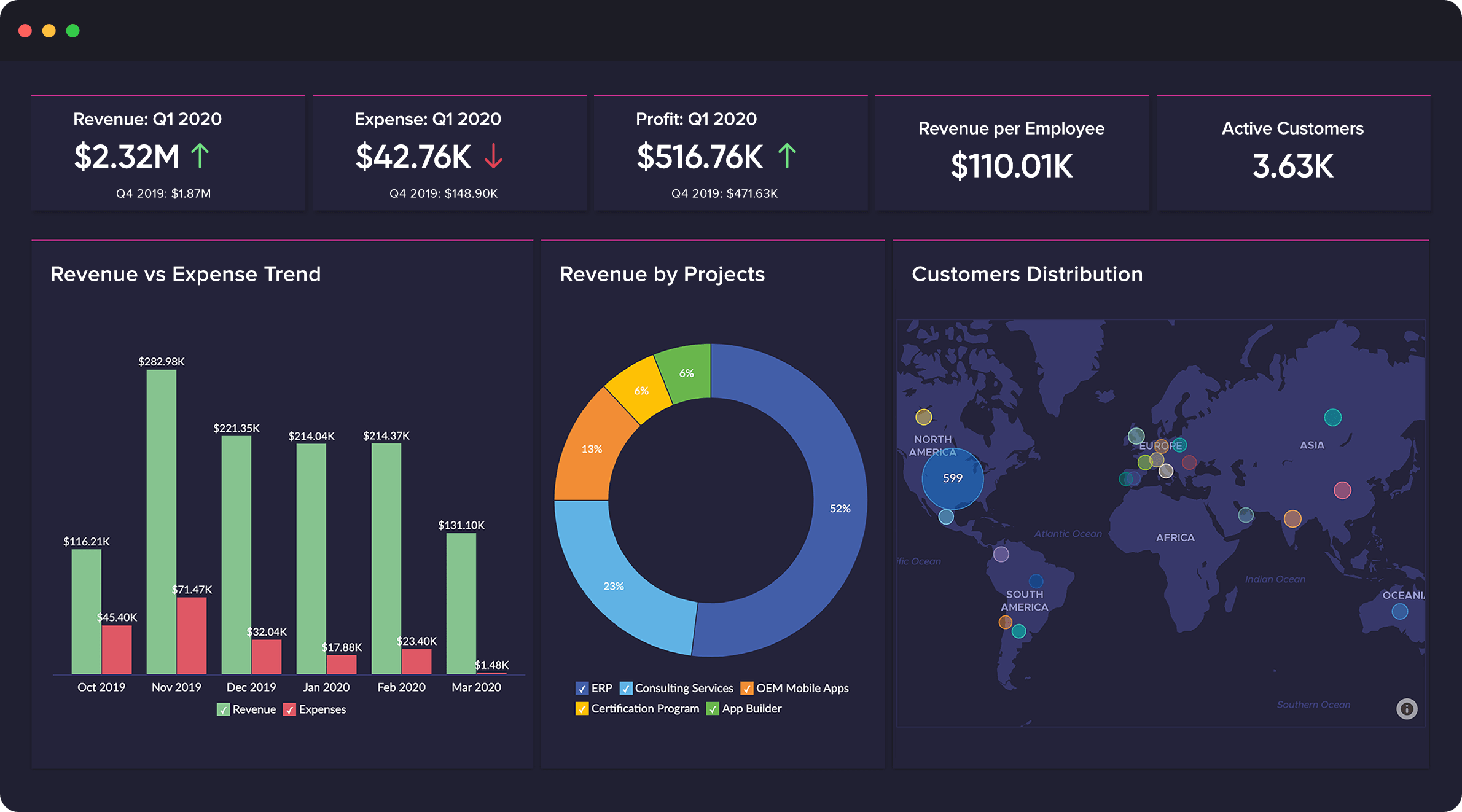
Most companies aren’t short on data they’re short on time to make sense of it. Sales numbers sit in one system, inventory in another, finance in a third, and by the time someone pulls together a report, the insight is already stale. Decisions get delayed, opportunities get missed, and leadership ends up reacting to problems instead of anticipating them. This is exactly the gap an AI business intelligence platform is built to close.
Unlike traditional BI tools that rely on static dashboards, manual filters, and scheduled reports, an AI business intelligence platform brings artificial intelligence directly into the analytics layer. It lets teams ask questions in plain language and get real-time, contextual answers instead of digging through spreadsheets, exporting CSVs, or waiting on an analyst to build a report. For growing organizations juggling multiple departments and systems, this shift from static reporting to intelligent, conversational analytics is becoming less of a luxury and more of a necessity.
Why Traditional BI Is Falling Short
Traditional BI tools were designed for a slower pace of business. They’re excellent at storing historical data and producing scheduled reports, but they typically require someone with technical skill to build dashboards, write queries, or configure filters. By the time a report reaches a decision-maker, the underlying data may already be a day, a week, or a quarter old. In fast-moving business environments, that lag is costly. AI business intelligence platforms are designed to remove this friction entirely by making insight generation instant, conversational, and accessible to non-technical users.
What Makes a Platform “AI” Business Intelligence?
Traditional BI answers the question “what happened?” An AI business intelligence platform goes further, helping teams understand why it happened and what to do next. The difference usually comes down to a few core capabilities.
1. Conversational, Natural-Language Querying
Instead of building filters or writing SQL, users simply ask a question “Which product line had the highest returns last quarter?” — and get an instant, contextual answer. This removes the dependency on analysts or IT for day-to-day reporting needs, freeing technical teams to focus on higher-value work.

2. Context-Aware Responses
A strong AI BI platform doesn’t just return raw numbers. It understands the context of the question — the relevant time period, department, or metric — and responds accordingly, the way a knowledgeable colleague would rather than a static query engine.
3. Executive Dashboards and KPI Narratives
Rather than a wall of charts that still needs interpreting, AI-generated summaries translate metrics into plain-language narratives: what changed, why it matters, and where attention is needed. This is particularly valuable for leadership teams who need quick, decision-ready insight rather than raw data to sift through themselves.
4. Real-Time, Cross-Functional Visibility
Modern AI BI platforms connect data across departments sales, inventory, finance, operations — into a single intelligence layer, replacing siloed reporting with a unified, real-time view of the business. This cross-functional visibility is often where organizations see the biggest shift in how decisions actually get made.
5. Trend and Variance Detection
AI models can flag anomalies, bottlenecks, and emerging trends automatically, so teams catch issues proactively instead of discovering them weeks later buried in a report. This proactive layer turns BI from a rearview mirror into something closer to a forward-looking radar.
Key Benefits of an AI Business Intelligence Platform
- Faster decision-making — Leadership gets instant access to business-critical information without navigating complex reports or waiting on a data team.
- Reduced reporting dependency — Teams spend less time building and maintaining manual reports, freeing up bandwidth for strategic work.
- Improved data accessibility — Non-technical users can explore data confidently through natural language, democratizing insight across the organization.
- Proactive monitoring — Trends, risks, and performance shifts are surfaced before they become bigger, costlier problems.
- Unified visibility — Departments that once operated in silos gain a shared, real-time source of truth, improving alignment between teams.
How to Choose the Right AI Business Intelligence Platform
When evaluating options, look beyond flashy dashboards and consider the following:
- Integration depth — Does it connect natively with your existing systems (ERP, CRM, POS) without disrupting current workflows or requiring a rebuild?
- Data security model — Is access read-only? Is data stored or used for AI training? Role-based access controls matter here, especially for enterprise environments.
- Ease of use for non-technical teams — Can a department head get an answer without help from IT or a data analyst, using plain language?
- Real-time processing — Are insights based on live data, or delayed batch updates that reintroduce the lag you’re trying to eliminate?
- Scalability across departments — Can it support sales, finance, inventory, and operations equally well, or is it built narrowly for a single use case?
Final Thoughts
An AI business intelligence platform isn’t just a faster version of traditional BI it’s a fundamental shift from static reporting to real-time, conversational, decision-ready intelligence. For organizations juggling data across multiple systems and departments, the right platform can turn scattered operational data into genuine, day-to-day competitive advantage — helping leadership move from information overload to decision clarity.
Author


Kitchen remodeling is a significant investment for homeowners. Before choosing a contractor, people often research design ideas, compare renovation costs, review previous projects, and evaluate local companies online. For kitchen remodeling businesses, having a website is an important first step, but website traffic alone does not guarantee new projects. The real goal is to turn online visitors into inquiries, consultations, and signed contracts.
A well-planned digital marketing strategy helps kitchen remodelers reach homeowners at different stages of the buying journey. By combining search engine optimization, local visibility, useful content, paid advertising, and conversion-focused website design, contractors can attract relevant prospects and make it easier for them to take the next step.
Why Website Traffic Does Not Always Generate Remodeling Leads
A kitchen remodeling website might receive hundreds of visits without generating many inquiries. This often happens when the website attracts people who are not ready to hire, fails to answer important questions, or makes contacting the business unnecessarily difficult.
Homeowners usually want to understand a contractor’s experience, service area, project quality, estimated costs, and renovation process before making contact. If this information is missing, visitors may leave and continue researching competitors.
For example, a homeowner searching for a kitchen remodeler in Austin may compare several websites before requesting an estimate. A contractor with clear project galleries, customer testimonials, service details, and an accessible consultation form has more opportunities to earn that homeowner’s trust.
Digital marketing should therefore focus on attracting the right audience and giving visitors enough confidence to inquire.
1. Use Kitchen Renovation SEO to Reach Homeowners on Google
Search engine optimization helps kitchen remodeling businesses appear when potential customers search for relevant services. Unlike marketing that reaches people who may not currently need a contractor, SEO can connect businesses with homeowners actively researching renovation options.
An effective kitchen renovation SEO strategy begins with understanding the phrases people use when searching for services. These might include local and service-specific searches such as kitchen remodeling contractor in Denver, kitchen renovation company near me, or kitchen cabinet replacement services.
Rather than targeting the same keyword across every page, contractors should create useful pages for their primary services and target locations.
For example, a remodeling company might build dedicated pages for:
- Full kitchen remodeling
- Kitchen cabinet installation and replacement
- Kitchen countertop upgrades
- Kitchen layout redesign
- Kitchen remodeling in specific service areas
Each page should explain the service, describe the company’s approach, showcase relevant work, and provide a clear way to request an estimate.
Technical SEO also matters. Pages should load efficiently, work well on mobile devices, use descriptive titles, and be accessible to search engines. A well-organized website helps search engines understand the business while making it easier for potential customers to find relevant information.
2. Strengthen Local Search Visibility
Kitchen remodeling is a location-dependent service. Most contractors work within specific cities, suburbs, or surrounding communities, making local search an important source of potential leads.
A complete Google Business Profile can help eligible businesses appear in relevant local results. Contractors should keep their business information accurate, select appropriate categories, define their service areas, and add genuine photographs of completed projects.
Customer reviews can also influence how homeowners evaluate a remodeling company. Businesses should encourage satisfied customers to share honest feedback and respond professionally to both positive and negative reviews.
Local visibility should extend beyond the business profile. The website should clearly identify the locations served and provide meaningful information about working in those areas. Dedicated location pages can be useful when they offer distinct, helpful content rather than simply replacing one city name with another.
For instance, a page for kitchen remodeling in Scottsdale could showcase relevant local projects, explain available services, and answer common questions from homeowners in that market.
These steps help potential customers discover the business and determine whether it fits their needs.
3. Build Trust Through Project-Based Content
Kitchen remodeling customers want evidence that a contractor can deliver the results they have in mind. High-quality project content gives businesses an opportunity to demonstrate their expertise before a homeowner schedules a consultation.
Instead of relying entirely on general service descriptions, publish detailed project showcases featuring completed renovations. Include photographs, the original challenges, design decisions, materials selected, and the final outcome.
A useful case study might explain how a contractor improved storage in a small kitchen, redesigned an inefficient layout, or updated an older kitchen without changing its entire footprint.
Blog articles can address common homeowner questions, including:
- What affects the cost of a kitchen remodel?
- How long does a kitchen renovation take?
- Which kitchen countertop materials are practical for busy households?
- What should homeowners prepare before renovation begins?
- How can a small kitchen feel more spacious?
This content helps visitors evaluate their options while demonstrating the contractor’s knowledge. It also creates opportunities to attract relevant search traffic and link readers to service pages.
Use original photographs and accurate project details whenever possible. Authentic examples are generally more persuasive than generic descriptions because they show the type of work the business actually performs.
4. Use Social Media to Showcase Real Results
Kitchen remodeling is a highly visual service. Homeowners often want to see examples of finished kitchens, design improvements, material combinations, and craftsmanship before contacting a contractor.
Platforms such as Instagram, Facebook, Pinterest, and YouTube can help remodeling businesses distribute this content to relevant audiences.
Useful content formats include before-and-after photographs, short renovation walkthroughs, project progress videos, material comparisons, and explanations of design decisions. Short videos can show how a contractor transformed an outdated space, while longer walkthroughs can explain the project from planning to completion.
Social media should support the customer journey rather than focus exclusively on likes and follower counts. Include a relevant next step when appropriate, such as visiting a project gallery, viewing a service page, or scheduling a consultation.
Paid social campaigns can also promote selected projects or reach people within a defined service area. However, performance should be evaluated through meaningful actions, such as qualified inquiries and consultations, rather than engagement alone.
5. Make the Website Convert Visitors Into Inquiries
A website can attract visitors through SEO and advertising, but its design and content influence whether those visitors take action.
For kitchen remodelers, the website should make essential information easy to find. Homeowners should be able to understand the services offered, review previous projects, confirm the service area, and contact the company without searching through multiple pages.
Important conversion elements include:
Clear calls to action: Use specific wording such as “Request a Kitchen Remodeling Estimate” or “Schedule a Consultation.” Place calls to action near relevant service information and project examples.
Simple contact forms: Ask for the information needed to begin a conversation, such as name, contact details, project location, and a brief description of the renovation. Avoid requesting unnecessary details at the first step.
Strong project galleries: Organize photographs by project type or design style, and provide context about the work completed.
Mobile-friendly design: Many homeowners research contractors on their phones. Forms, navigation, photographs, and contact options should work smoothly on smaller screens.
Trust signals: Display genuine reviews, relevant qualifications, clear service information, and accurate project details.
A useful website does not pressure every visitor to book immediately. It provides the information and confidence needed for interested homeowners to take the next step.
6. Use Paid Advertising to Reach High-Intent Prospects
SEO can build long-term visibility, but organic rankings take time. Paid search advertising can help contractors reach people searching for kitchen remodeling services while the organic strategy develops.
A kitchen remodeling digital marketing service may include campaign planning, keyword selection, geographic targeting, ad creation, conversion tracking, and ongoing optimization.
For example, a contractor could run search campaigns targeting relevant service queries within the company’s actual service area. Ads should direct users to a page that closely matches their search rather than sending every visitor to the homepage.
A person searching for kitchen cabinet replacement should ideally land on a page about that service, with relevant examples and a clear estimate request option.
Campaigns should be monitored for search relevance, lead quality, cost per qualified inquiry, and booked consultations. Negative keywords can help reduce spending on irrelevant searches, such as employment opportunities, do-it-yourself tutorials, or unrelated product searches.
Paid advertising is most useful when the business can track which campaigns generate valuable inquiries and adjust spending based on results.
7. Follow Up With Leads Before They Choose Another Contractor
Generating an inquiry is only part of the process. Homeowners may contact several remodeling companies, and delayed responses can reduce the likelihood of securing a consultation.
Establish a consistent lead management process. Respond promptly during business hours, acknowledge the homeowner’s project requirements, and explain the next steps clearly.
A simple customer relationship management (CRM) system or lead-tracking spreadsheet can record when inquiries arrive, which marketing channel generated them, whether a consultation was scheduled, and what happened afterward.
For homeowners who are still researching, follow-up emails can provide helpful information about the remodeling process, project preparation, or consultation scheduling. Any ongoing marketing communication should respect the person’s consent and applicable privacy requirements.
Tracking these interactions helps contractors identify where prospects drop out of the process and improve their approach.
8. Measure Marketing Performance Beyond Website Visits
Website traffic is useful, but it should not be the primary measure of marketing success. Contractors need to understand whether their marketing attracts potential customers who are likely to become paying clients.
Google Analytics 4 (GA4) can help measure website activity and relevant events when tracking is configured correctly. Call tracking and form tracking can provide additional insight into how visitors contact the business.
Useful performance indicators include:
- Organic traffic to important service and location pages
- Phone calls and completed inquiry forms
- Qualified leads by marketing channel
- Consultation booking rate
- Cost per qualified lead
- Percentage of consultations that become projects
- Revenue generated from marketing leads
For example, one campaign might generate 50 inquiries but only two qualified consultations, while another generates 15 inquiries and five consultations. The second campaign may deliver greater business value despite producing fewer leads.
Connect marketing reports with actual sales outcomes whenever possible. This helps the contractor decide which channels deserve more investment and which pages or campaigns need improvement.
Conclusion
Turning website visits into booked kitchen remodeling projects requires more than publishing a website or attracting search traffic. Contractors need a connected strategy that brings the right homeowners to their websites, demonstrates the quality of their work, answers important questions, and makes requesting an estimate straightforward.
Kitchen renovation SEO supports long-term organic and local visibility, while project-based content and social media help demonstrate expertise. Paid advertising can reach high-intent prospects, conversion-focused website design encourages inquiries, and timely follow-up helps move qualified leads toward consultations.
A well-planned kitchen remodeling digital marketing service brings these activities together and measures their contribution to real business outcomes. By focusing on qualified leads, booked consultations, and completed projects—not just visitor numbers—kitchen remodelers can make more informed marketing decisions and build a stronger pipeline of potential customers.
Author


The enterprise technology and software engineering landscape across the United Kingdom is navigating an aggressive, permanent operational restructuring. Modern commercial scaling, platform release velocity, and enterprise equity valuation are no longer maintained through rigid, traditional recruitment funnels or isolated freelance contracts. In an economic climate characterized by compressed product innovation cycles, rapid artificial intelligence adoption, tightening enterprise budgets, and cautious corporate expenditure, business leaders face unrelenting pressure to ship robust digital products while defending operating margins. With recent market data indicating that over 80% of UK businesses are experiencing software deployment delays strictly due to specialized developer shortages, British enterprises must establish high-velocity technical capabilities and expand specialized engineering teams on demand to remain commercially viable and competitive across dynamic domestic and global markets.
However, Chief Executive Officers, Chief Technology Officers, and engineering directors across Britain frequently find their organizational velocity paralyzed by archaic recruitment methodologies. Relying strictly on domestic full-time hiring limits access to elite talent, inflates payroll liabilities, and introduces severe delays into mission-critical product roadmaps. When software engineering departments operate in isolation from modern capacity scaling strategies, release schedules fracture, internal teams suffer from acute burnout, and newly deployed platform capabilities fail to reach the market on time. To eliminate these operational bottlenecks, forward-thinking British enterprises are unlocking advanced, highly efficient methodologies for acquiring technical talent, moving beyond traditional recruitment to deploy elastic engineering capacity that drives immediate commercial value and accelerates sprint delivery.
Bypassing the Domestic Hiring Bottleneck: The Elastic Squad Advantage
A primary catalyst compelling modern British commercial enterprises to rethink their talent acquisition architecture is the severe domestic software engineering deficit. Sourcing, vetting, and hiring senior developers within the competitive UK employment market routinely takes three to six months per placement. This prolonged timeline is accompanied by inflated recruiter commissions, substantial signing bonuses, and permanent payroll liabilities that strain financial runway. Attempting to build specialized engineering squads encompassing React, Node.js, Python, Golang, and complex cloud architecture exclusively through domestic channels frequently forces technical leaders to compromise on quality or accept devastating commercial project delays.
By leveraging software development staff augmentation UK, engineering leadership is empowered to circumvent these traditional recruitment bottlenecks completely. Rather than enduring protracted hiring negotiations and complex administrative onboarding, enterprises can inject pre-vetted, execution-ready technical talent directly into active development sprints within a matter of days. These dedicated specialists operate within overlapping time zones, ensuring real-time collaboration during standard UK business hours while integrating directly into existing agile ceremonies, internal code repositories, and established architectural standards. This rapid deployment converts heavy fixed employment liabilities into variable, project-aligned operational expenses, allowing enterprises to reduce technical operational costs while preserving vital capital reserves.
The core strategic value of dedicated talent integration lies in its combination of operational elasticity, high technical competence, and substantial margin defense. High-growth enterprises experience variable engineering demands, requiring intensive developer capacity during platform launches, compliance deadlines, or feature releases, followed by lighter maintenance phases. Attempting to manage these cyclical peaks with permanent in-house hires leaves businesses exposed to costly payroll drag during quieter periods. Flexible augmentation frameworks empower corporate leadership to scale developer capacity up or down dynamically based on active sprint requirements, protecting operational runway and optimizing cash flow while maintaining uninterrupted software delivery momentum.
The Embedded Integration Hack: Preventing Technical Debt
While acquiring individual technical talent solves immediate capacity constraints, achieving sustainable enterprise growth requires a cohesive underlying technical foundation. Many mid-market enterprises make the critical error of treating augmented developers as distant, external vendors rather than true extensions of the internal team. When an organization isolates external talent behind bureaucratic project managers or communication firewalls, technical governance fractures. This fragmented approach creates opaque delivery silos, technical debt, and misaligned software deliverables that fail to satisfy rigorous enterprise architectural standards.
Partnering with elite staff augmentation services UK ensures that external developers are seamlessly integrated directly into your existing internal agile squads. Augmented developers must function under the exact same operational rhythms as permanent in-house staff: participating in daily standups, taking sprint tasks from internal Jira or Linear backlogs, committing code to proprietary GitHub or GitLab repositories, and adhering strictly to established continuous integration and continuous deployment (CI/CD) pipelines. This transparent operational model ensures that internal technical leads retain total authority over system architecture, code reviews, and software design standards, entirely eliminating the risk of unmanaged technical debt.
Furthermore, elite integration requires establishing specific, outcome-based objectives before the first line of code is written. Rather than simply requesting a generic cloud engineer, agile squads should define explicit milestones, such as accelerating a continuous integration pipeline, migrating a legacy database without system downtime, or refactoring a monolithic application into microservices. This outcome-driven approach ensures that augmented specialists provide immediate velocity improvements, transferring vital technical knowledge to the permanent internal team throughout the duration of the commercial engagement.
Data Governance, Compliance, and Commercial Alignment
Successfully scaling an engineering team through augmentation requires more than just technical integration; it demands rigorous adherence to domestic statutory and regulatory governance frameworks. Operating within the UK commercial ecosystem requires comprehensive alignment with statutory employment regulations, off-payroll working rules (IR35), UK GDPR data protection standards, and ISO 27001 information security protocols. When enterprises hire individual contractors directly without robust administrative governance, they expose corporate boards to substantial tax liability risks and administrative review penalties.
Working with an established technical talent partner ensures that all engaged developers operate under transparent, compliant contractual structures. Reputable providers supply software developers who are employed directly by the partner agency or through fully compliant international entities, providing documented contracts and clear working practices that mitigate IR35 reclassification risks. Furthermore, to protect intellectual property, external engineers must operate within secure virtual desktop infrastructure, utilize multi-factor authentication, and adhere to zero-trust access controls, ensuring that sensitive corporate codebases remain fully protected.
Also read: How to Find Mobile App Developers in Dubai for Android & iOS Apps
Five-Stage Blueprint for Scaling Developer Capacity
To systematically eliminate hiring bottlenecks, accelerate engineering velocity, and establish enduring commercial authority across the United Kingdom, corporate leadership should execute a structured five-stage implementation framework:
- Technical Architecture and Talent Gap Audit: Perform an exhaustive evaluation of existing software codebases, infrastructure bottlenecks, and developer sprint backlogs to identify operational friction points and specific skill deficits.
- Partner Selection and Compliance Verification: Select an integrated technology partner capable of providing specialized developer augmentation under unified, contractually binding performance metrics and verified IR35 compliance.
- Pod Integration and Agile Synchronization: Embed pre-vetted dedicated software developers directly into internal agile workflows, configuring repository permissions, automated testing suites, and daily scrum rituals to accelerate feature delivery within days.
- Transparent Velocity Tracking: Establish clear success metrics, including defect rates, deployment frequency, pull request cycle times, and sprint velocity targets, to objectively measure the performance of augmented personnel.
- Continuous Knowledge Transfer: Mandate pair programming, rigorous pull request reviews, and extensive technical documentation to ensure critical architectural knowledge remains within the enterprise after the flexible engagement concludes.
Frequently Asked Questions (FAQs)
What is software development staff augmentation and how does it differ from traditional outsourcing?
Traditional outsourcing involves handing over complete project management, scope, and delivery responsibility to a third-party vendor, resulting in minimal internal oversight. Staff augmentation embeds dedicated external software developers directly into your existing in-house team, where they attend your daily standups, use your internal tools, and report directly to your internal engineering leadership.
How do UK businesses manage IR35 compliance when utilizing staff augmentation?
Reputable staff augmentation providers supply software developers who are employed directly by the partner agency or through fully compliant international entities. The provider manages employment taxation, statutory benefits, and administrative oversight, offering clear contractual frameworks that mitigate off-payroll working (IR35) reclassification risks for the client organization.
Can augmented developers successfully navigate and refactor legacy codebases?
Yes. Senior augmented developers possess extensive experience working across diverse architectural environments. By integrating them closely with your internal domain experts and mandating thorough code reviews, augmented engineers can effectively modernize legacy monoliths, resolve technical debt, and implement modern automated testing frameworks.
How quickly can a UK enterprise onboard a dedicated developer squad?
While traditional domestic permanent recruitment in the UK technology sector often requires three to six months of sourcing and interviewing, specialized augmentation partners maintain extensive networks of pre-vetted talent. This enables British technology teams to select, interview, and integrate qualified engineers into active sprint cycles within five to ten business days.
What is the best way to integrate external developers into an existing internal engineering team?
The most effective integration strategy treats external developers identically to internal staff. Provide them with immediate access to project tracking boards (like Jira), ensure they participate in all agile ceremonies, assign them an internal technical sponsor, and mandate that their code undergoes the same rigorous peer review process as any permanent employee.
Conclusion
Achieving sustained operational velocity, shielding corporate assets, and maximizing enterprise valuation in today’s digital economy requires moving past legacy operating models in favor of strategic, engineering-led partnerships. Combining specialized digital consulting, flexible software engineering staff augmentation, and modern cloud infrastructure management empowers corporate leadership to eliminate technical drag, shield sensitive data, and maintain continuous delivery momentum. Transitioning to a lean, proactive operational framework lowers enterprise risk, optimizes operating margins, and secures the resilient technical foundation required to maintain market leadership tomorrow.
Author



Choosing an LMS for corporate training is rarely just about uploading courses and tracking completions. For most organisations, the platform needs to handle employee onboarding, compliance training, skill development, assessments, reporting, and learning across different teams and locations.
The right choice also depends on the size of the organisation, training requirements, integrations, content formats, and the level of automation required.
Here are 10 LMS platforms worth considering for corporate training in India.
1. Stratbeans
Stratbeans is an Indian learning technology provider offering an LMS designed around corporate learning and employee development. Its platform brings together course management, assessments, learning paths, reporting, gamification, and personalised learning features.
One area where Stratbeans stands out is its focus on different corporate learning formats. Organisations can use features such as microlearning, WhatsApp-based learning, gamification, and AI-supported learning to make training more accessible to employees.
The LMS can be used for employee onboarding, product training, compliance programmes, sales training, leadership development, and ongoing skill-building.
Best suited for: Indian businesses looking for a corporate LMS with a broad range of employee learning features.
2. Cornerstone
Cornerstone is an enterprise learning and talent management platform designed for large organisations. Its capabilities extend beyond basic course delivery into areas such as skills management, compliance, performance, and workforce development.
For companies with large employee populations and complex training structures, its reporting and administrative capabilities can be particularly relevant.
Best suited for: Large enterprises managing structured learning and talent programmes.
3. SAP SuccessFactors Learning
SAP SuccessFactors Learning is part of SAP’s broader human capital management ecosystem. It is particularly relevant for organisations already using SAP products and looking to connect employee learning with other HR processes.
The platform supports instructor-led training, online courses, assessments, compliance training, and learning administration. Its enterprise orientation makes it more suitable for organisations with established HR technology environments.
Best suited for: Enterprises using SAP’s HR ecosystem.
4. Moodle
Moodle is an open-source learning platform used by organisations across different industries. Its flexibility makes it suitable for companies that want considerable control over how their learning environment is configured.
Businesses can create courses, assessments, learning paths, discussion areas, and certification workflows. Its large ecosystem of plugins also allows organisations to extend the platform for specific requirements.
However, organisations choosing Moodle may need technical expertise for hosting, customisation, maintenance, and administration.
Best suited for: Organisations with technical resources that want a highly configurable LMS.
5. Docebo
Docebo is a cloud-based learning platform aimed at businesses that need to manage learning across employees, customers, partners, or other audiences.
Its feature set includes course management, reporting, automation, assessments, and AI-enabled learning capabilities. The platform can be useful for organisations where training extends beyond internal employees.
Best suited for: Companies managing employee as well as extended-enterprise learning.
6. TalentLMS
TalentLMS focuses on keeping LMS administration relatively straightforward. It provides tools for creating courses, managing learners, conducting assessments, and tracking training progress.
Its interface and cloud-based model make it an option for companies that don’t want an overly complicated learning environment. It can work well for smaller teams and organisations starting to formalise their training programmes.
Best suited for: Small and mid-sized businesses looking for a straightforward corporate LMS.
7. Absorb LMS
Absorb LMS is an enterprise-focused learning platform that supports employee development as well as external training programmes. It provides course management, reporting, assessments, automation, and integrations.
Its broader learning capabilities make it suitable for organisations that need to serve multiple learner groups rather than maintaining a basic internal training portal.
Best suited for: Mid-sized and enterprise organisations with varied training audiences.
8. iSpring Learn
iSpring Learn is an LMS closely associated with the iSpring authoring ecosystem. This makes it particularly useful for organisations already creating training content using iSpring tools.
The platform supports course delivery, assessments, learning paths, reporting, and employee training management. Its combination with content-authoring capabilities can simplify the process of creating and deploying digital learning.
Best suited for: Companies creating interactive online courses and deploying them through an LMS.
9. Litmos
Litmos is a corporate learning platform built around employee training and learning administration. It supports online courses, assessments, reporting, compliance programmes, and other common workplace learning requirements.
For organisations that need to roll out standardised training across distributed teams, a cloud LMS such as Litmos can provide centralised administration and progress tracking.
Best suited for: Organisations delivering standardised training across multiple teams and locations.
10. LearnUpon
LearnUpon is a cloud-based LMS designed for organisations that need to train employees as well as external audiences. Its capabilities cover course management, learner administration, assessments, reporting, and different learning portals.
The ability to manage separate learner audiences makes it relevant for businesses running employee education alongside customer, partner, or reseller training.
Best suited for: Companies with both internal and external training requirements.
Final Thoughts
There is no single LMS that is the right fit for every company. A growing business may prioritise ease of administration, while a large enterprise may need extensive integrations, reporting, automation, and multi-audience learning capabilities.
For organisations evaluating LMS platforms in India, Stratbeans, Moodle, Cornerstone, SAP SuccessFactors Learning, Docebo, TalentLMS, Absorb LMS, iSpring Learn, Litmos, and LearnUpon offer different approaches to corporate learning.
The most practical way to shortlist them is to map each platform against your training objectives, learner base, existing technology stack, reporting needs, and budget. A feature-heavy LMS isn’t automatically the better choice; the useful one is the platform your L&D team can actually deploy, manage, and get employees to use.
Author



The Ultimate List of At Home Date Night Ideas for Couples

Construction Documentation Services: Benefits for Architecture Firms

What Is Gudmar? Exploring Its Traditional Role in Ayurveda

Online Baby Shower Wishes Card | Baby Shower Ecards

Dua to Get Love Back in Islam: A Complete Guide

World777 Official – An Informative Guide to Platform Features

How Millwork Shop Drawings Drive Fabrication Accuracy

Revit Modeling Services: How to Choose the Right Level of Detail

As-Built Drawings Services: From Site Survey to Final Documentation

Goldbet7- Guide to Easy Login, Mobile Access and Online Convenience

Cybersecurity Consulting Company SequelNet Provides Critical IT Support Services to Medical Billing Firm, Medical Optimum

Meet the Megalodon: The Shark Star of ‘Meg 2’

Reduce Video Game Lag: Level Up Your Gaming Performance

Balancing India’s Entertainment: Cricket vs. Bollywood

Jetsetter’s Secrets: Unveiling Our Favorite Travel Hacks for a Seamless Adventure

The 5 Best Live Sports Streaming Sites: Legal and Exciting!

Hollywood Labor Unrest: The Impact of ‘What About Us?’ Strikes

Unveiling the Magic of Dream Fulfillment at the Late NBA Draft

Illuminate Your Skin: Dr. Axe Unveils Natural Remedies for Lightening Knees and Elbows

Bright Choices: Navigating the Pros and Cons of Skin Whitening Creams with Dr. Axe
-

 Business3 years ago
Cybersecurity Consulting Company SequelNet Provides Critical IT Support Services to Medical Billing Firm, Medical Optimum
-
Entertainment3 years ago
Meet the Megalodon: The Shark Star of ‘Meg 2’
-
Entertainment3 years ago
Reduce Video Game Lag: Level Up Your Gaming Performance
-
 Sports3 years ago
Balancing India’s Entertainment: Cricket vs. Bollywood
-
Entertainment3 years ago
Jetsetter’s Secrets: Unveiling Our Favorite Travel Hacks for a Seamless Adventure
-
Productivity3 years ago
The 5 Best Live Sports Streaming Sites: Legal and Exciting!
-
Art /Entertainment3 years ago
Hollywood Labor Unrest: The Impact of ‘What About Us?’ Strikes
-
Sports3 years ago
Unveiling the Magic of Dream Fulfillment at the Late NBA Draft






