
Beauty
Top 10 Best Hair Transplant Clinics in Chennai

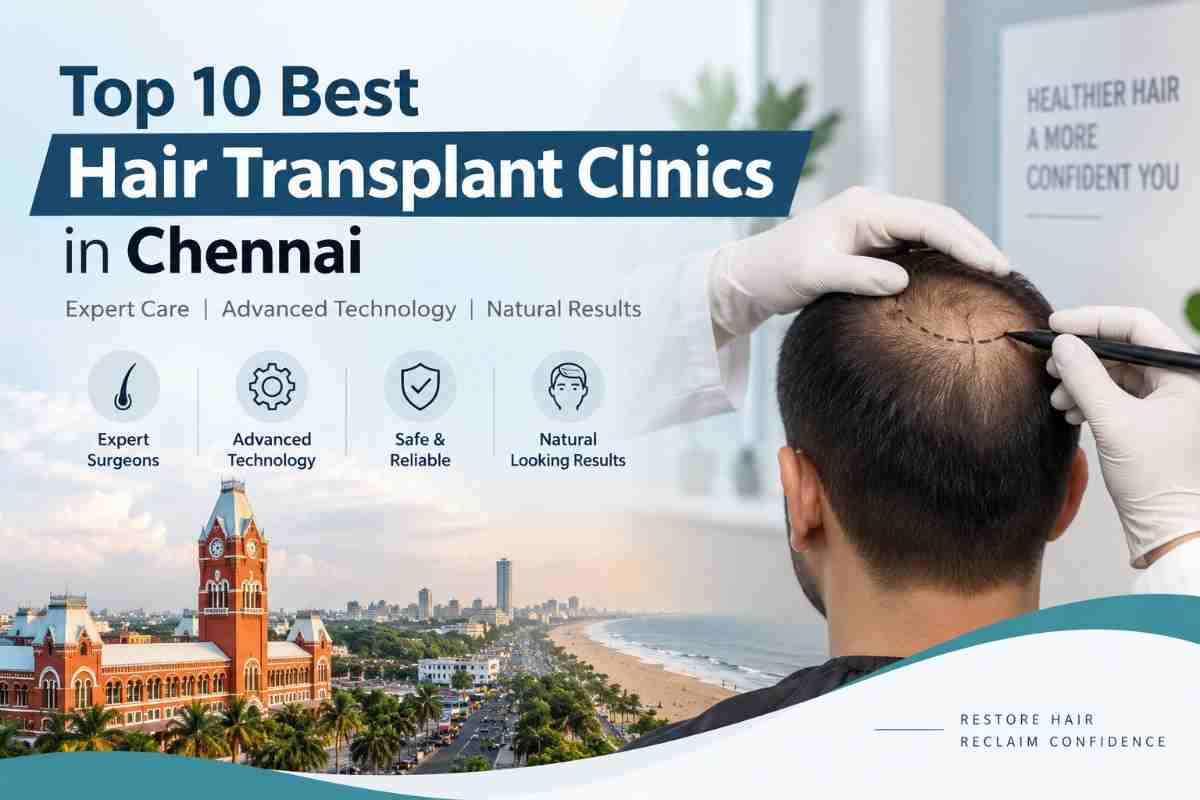
Hair loss can affect appearance, confidence, and everyday life. For people considering a long-term solution, hair transplantation has become an option for restoring hair in areas affected by thinning or baldness. Chennai has several clinics and hospitals offering hair restoration procedures, including FUE, DHI, and other hair transplant techniques.
However, choosing a clinic requires more than simply comparing prices. The surgeon’s experience, treatment approach, technology, hygiene standards, diagnosis process, and follow-up care can all be important factors.
If you are searching for the best hair transplant clinics in Chennai, this list can help you understand some of the established options available in the city.
1. DHI Hair Transplant and Restoration Clinic – Chennai
DHI India operates a dedicated hair transplant clinic in T. Nagar, Chennai. The clinic is located at Sheriff Towers on GN Chetty Road and offers hair restoration services using the Direct Hair Implantation (DHI) technique. Its services also include beard restoration, eyebrow restoration, scalp micropigmentation, and cosmetic hair patches.
DHI states that its hair transplant procedures are performed by trained and certified doctors following its treatment protocols. Patients undergo a diagnosis and treatment-planning process before the procedure.

The clinic can be considered by people looking for a dedicated hair restoration centre in Chennai.
2. TamiraLife
TamiraLife is another Chennai-based option offering hair transplant procedures. Its Chennai facility is in Gopalapuram, and its doctors include specialists with experience in plastic surgery and hair transplantation.
The clinic provides hair transplant treatment for concerns such as hair thinning and baldness and discusses techniques including FUE, FUT, and DHI. Treatment planning can depend on factors such as the patient’s hair-loss pattern, donor area, and number of grafts required.
3. Oliva Skin & Hair Clinic
Oliva Skin & Hair Clinic has multiple locations in Chennai and provides a range of dermatology and hair treatments. Its services include hair transplant procedures, including FUE hair transplantation.
The clinic has dermatologists, trichologists, and hair transplant surgeons among its medical team. Patients can discuss their hair-loss concerns and treatment options during a consultation before deciding whether transplantation is suitable.
4. Desire Aesthetics
Desire Aesthetics is a cosmetic and reconstructive surgery centre in Anna Nagar East, Chennai. The clinic offers hair transplantation as part of its services and describes FUE as one of its treatment options.
According to the clinic, treatment begins with scalp assessment and planning to determine the appropriate approach for the individual patient. The clinic also provides information about factors that can influence hair transplant costs, including the technique, number of grafts, and scalp condition.
5. Reflekt Aesthetics
Reflekt Aesthetics is located in Anna Nagar, Chennai, and provides hair transplantation along with other cosmetic and plastic surgery services. Its hair transplant service includes consultation, assessment of the scalp and medical history, and discussion of treatment expectations.
The clinic states that its hair transplant services include FUE and FUT techniques. The appropriate method can vary depending on the patient’s hair loss and donor area.
6. Aura Plastic Surgery
Aura Plastic Surgery is based in Selaiyur, Chennai, and offers aesthetic and reconstructive procedures, including hair transplant services. Its website identifies Dr. P. Rajendran as a surgeon specialising in aesthetic surgery and hair fall management and states that he has performed more than 600 hair transplants.
People considering this clinic can discuss their hair-loss pattern, donor area, expected results, and suitable treatment approach during a consultation.
7. Apollo Medical Centre
Apollo has multiple medical centres and clinics across Chennai, including locations in T. Nagar, Anna Nagar, and Velachery. Current healthcare listings also include Apollo facilities among Chennai’s hair-transplant and hair-transplant-surgery providers.
For anyone considering a large multispecialty healthcare network, it can be useful to confirm the availability of hair transplant services and the relevant specialist at the specific Chennai location before booking a consultation.
8. Shreya Medical Centre
Shreya Medical Centre in Anna Nagar West appears in current Chennai hair-transplant listings, with a hair transplant surgeon available at the centre.
Patients considering the clinic should discuss the recommended technique, number of grafts, expected timeline, recovery requirements, and potential risks during their consultation.
9. Pearl Health
Pearl Health in Alwarpet is another Chennai healthcare provider appearing in current hair-transplant clinic listings.
Before selecting any clinic, prospective patients should verify which doctor will perform the procedure and ask about the clinic’s experience with their specific type and stage of hair loss.
10. Render Skin & Hair
Render Skin & Hair in Egmore is listed among hair-transplant providers in Chennai. Current local healthcare listings include the centre among providers offering hair-related and hair-transplant services.
A consultation can help determine whether a hair transplant is appropriate and which treatment approach may suit the patient’s hair-loss pattern.
How to Choose a Hair Transplant Clinic in Chennai
The number of clinics available can make the decision difficult. Instead of selecting a clinic only because it appears high on a list or offers a low price, consider the following factors:
1. Check the surgeon’s qualifications
Find out who will actually perform the procedure. Ask about the surgeon’s qualifications, experience, and specific experience with hair transplantation.
2. Understand the technique
FUE, FUT, and DHI involve different approaches to extracting and implanting hair follicles. Your doctor should explain which technique is appropriate for your hair loss and why.
3. Ask about diagnosis and planning
A proper consultation should assess your hair-loss pattern, donor area, scalp condition, and future hair-loss risk before a treatment plan is created.
4. Compare graft requirements
The number of grafts required differs from one person to another. It depends on factors such as the size of the thinning or bald area, donor density, hair characteristics, and desired coverage.
5. Check safety and hygiene standards
Ask about the facility, sterilisation procedures, instruments, medical supervision, and protocols followed during the procedure.
6. Understand aftercare
Hair transplantation does not end when the procedure is completed. Ask about post-treatment instructions, follow-up appointments, recovery, and when you can return to normal activities.
Final Thoughts
Chennai has a wide range of hair transplant clinics and medical centres offering different approaches to hair restoration. The right choice depends on your individual hair-loss condition, treatment goals, medical suitability, and the expertise and protocols of the clinic you choose.
Before making a decision, schedule consultations with suitable clinics, compare treatment plans, ask detailed questions about the procedure, and understand the expected results and costs. A thorough evaluation can help you make a more informed choice about your hair restoration journey.
Author


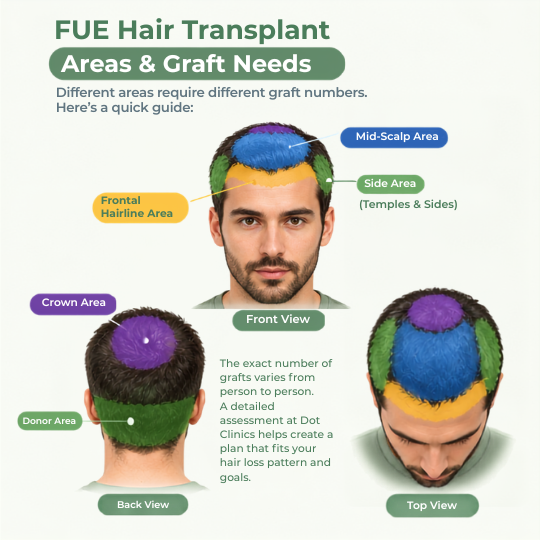
Hair loss can gradually change the hairline, reduce scalp coverage, and make the crown or other areas appear thinner. For people experiencing permanent hair loss and who have enough suitable donor hair, a hair transplant in Lahore may be an option for restoring hair in areas where density has been lost.
Unlike temporary methods such as hair fibres, styling products, or shaving, a transplant involves moving follicular units from one part of the scalp to another. Usually, healthy follicles are taken from the back or sides of the scalp and placed into areas affected by thinning or baldness.
The outcome depends on several factors, including the cause and progression of hair loss, donor density, hair characteristics, graft planning, surgical technique, and individual healing. A consultation is therefore important before deciding whether transplantation is appropriate.
What Is a Hair Transplant?
A hair transplant is a surgical hair-restoration procedure in which healthy hair follicles are harvested from a donor area and transplanted into areas with reduced hair density.
Before treatment, the surgeon examines the scalp and donor region. The pattern of hair loss, existing hair, donor density, and potential future hair loss are considered when developing the treatment plan.
The objective is not simply to transplant the maximum possible number of grafts. A well-planned procedure should provide appropriate coverage while preserving enough donor hair for future needs.
FUE Hair Transplant in Lahore
Follicular Unit Extraction (FUE) is a commonly used hair-transplant technique. During FUE, individual follicular units are extracted from the donor area and prepared for transplantation.
The grafts are then placed into recipient areas where hair density has been reduced. The placement needs to follow the natural direction and angle of the existing hair to create a natural-looking appearance.
One feature of FUE is that it does not involve the traditional linear strip scar associated with FUT. However, FUE is still a surgical procedure and can result in small extraction marks. The appearance of the donor area depends on factors such as extraction pattern, graft numbers, healing, and individual skin characteristics.
Responsible donor management is particularly important. Removing too many follicles from a concentrated area can result in visible thinning.
DHI Hair Transplant
Direct Hair Implantation (DHI) is an implantation approach used during hair restoration. After follicular units are extracted, they can be placed into the recipient area using an implantation device.
This approach allows the placement of individual grafts according to the planned hairline, direction, angle, and density. However, DHI is not automatically the right choice for every patient.
The appropriate technique depends on the extent of hair loss, donor characteristics, recipient area, existing hair, and the surgeon’s treatment plan. Patients should therefore discuss the advantages and limitations of each approach during consultation.
Who May Be a Candidate?
A person experiencing hair loss may be considered for transplantation after an appropriate scalp and donor-area assessment.
Potential candidates can include people with:
- Receding hairlines
- Male pattern hair loss
- Female pattern hair loss
- Crown thinning
- Localized bald areas
- Certain types of post-injury hair loss
However, not everyone with hair loss is a suitable candidate. People with insufficient donor hair, certain active scalp conditions, or an unstable pattern of hair loss may require other treatment or further assessment before surgery.
The cause of hair loss should also be identified whenever possible. Some types of temporary or medically related hair loss may require treatment of the underlying condition rather than immediate transplantation.
Why Donor-Area Planning Matters
The donor area is one of the most important factors in hair transplantation because the available follicles are limited.
Hair follicles removed during a transplant cannot simply be replaced. For this reason, graft planning should consider both the patient’s current bald areas and the possibility of future hair loss.
A proper assessment may consider:
- Donor hair density
- Hair thickness and characteristics
- Extent of existing hair loss
- Hair-loss pattern
- Previous transplant procedures
- Number of grafts required
- Expected future hair loss
- Long-term preservation of the donor area
In advanced baldness, it may not be realistic to create very high density across the entire scalp. The surgeon may need to prioritize areas such as the frontal hairline and mid-scalp depending on the individual case.
Hair Transplant Procedure: Step by Step
The exact procedure varies between patients, but a typical transplant may involve several stages.
1. Consultation and Assessment
The scalp and donor area are examined. The doctor evaluates the pattern of hair loss and discusses the patient’s expectations.
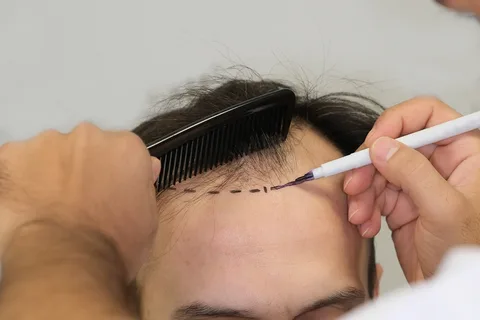
2. Hairline Design
The proposed hairline is planned according to facial proportions, age, existing hair, and available donor resources. A conservative and natural design can also allow room for potential future hair loss.
3. Donor Preparation
The donor region is prepared before follicular units are extracted. Depending on the technique and treatment plan, the hair may be trimmed.
4. Graft Extraction
Individual follicular units are carefully removed from the donor area during an FUE procedure. The grafts are handled carefully to maintain their viability.
5. Recipient-Site Preparation
Recipient sites are created in areas requiring restoration. Their direction and angle are planned to complement the patient’s existing hair.
6. Graft Placement
The extracted grafts are placed into the prepared recipient sites. Their distribution is determined by the treatment plan and available graft supply.
7. Post-Procedure Care
Patients receive instructions about scalp washing, sleeping position, physical activity, medications, and other aspects of recovery. Following these instructions can help support proper healing.
When Will New Hair Grow?
Hair transplantation is a gradual process rather than an immediate transformation.
Some transplanted hairs may shed during the early stages after the procedure. This can be part of the normal hair-growth cycle. The transplanted follicles can subsequently begin producing new hair as they progress through their growth cycles.
Visible improvement develops gradually over several months, and the final appearance can take longer. The timeline varies between individuals, so patients should have realistic expectations about the recovery and growth process.
Hair Transplant Cost in Lahore
The cost of a hair transplant in Lahore varies according to the individual treatment plan rather than being the same for every patient.
Factors that can affect the cost include:
- Number of grafts required
- Selected transplantation technique
- Degree of hair loss
- Donor-area density
- Surgical team and doctor
- Clinic facilities
- Post-procedure care
- Additional treatments or medications
For example, someone requiring a smaller number of grafts may have a very different treatment plan from a patient with advanced hair loss who requires several thousand grafts.
Patients should therefore avoid choosing a procedure based only on an advertised price. The recommended number of grafts and the reason for that recommendation should be explained during consultation.
What to Check Before Choosing a Clinic
Choosing a clinic involves more than comparing prices. Patients should understand who will perform the surgical components of the procedure and how the treatment will be planned.
Before booking, consider asking:
- Who will perform the extraction and implantation?
- How will my donor area be assessed?
- How many grafts do I actually need?
- Why is this number of grafts recommended?
- What technique is suitable for my pattern of hair loss?
- What happens if my existing hair continues to thin?
- What follow-up care is included?
- What are the possible risks and complications?
A medical professional should explain the expected benefits, limitations, risks, and available alternatives before treatment.
Hair Transplant in Lahore: A Long-Term Decision
Hair transplantation can be a useful option for appropriately selected patients, but it should be viewed as a long-term hair-restoration decision rather than a quick cosmetic procedure.
FUE and DHI are both used in modern hair restoration, but the technique alone does not determine the quality of the outcome. Proper diagnosis, realistic hairline planning, responsible donor management, careful graft handling, appropriate placement, and follow-up all contribute to the treatment process.
If you are considering a hair transplant in Lahore, begin with a professional assessment of your hair loss and donor area. Understanding your available graft supply and realistic coverage before treatment can help you make an informed decision about whether transplantation is suitable for you.
Author



When it comes to luxury eyewear, few names have the same cult following as Chrome Hearts. Known for its distinctive gothic-inspired designs, premium materials, and handcrafted details, Chrome Hearts glasses have become a favorite among collectors, celebrities, and fashion enthusiasts.
But with the popularity of the brand comes a major problem: fake Chrome Hearts glasses are everywhere. Replica frames can look convincing in photographs, making it difficult for buyers to know whether they are purchasing genuine Chrome Hearts eyewear.
In this guide, we’ll explore what makes real Chrome Hearts glasses special, how to identify authentic frames, and what you should look for before buying a pair.
What Are Real Chrome Hearts Glasses?
Real Chrome Hearts glasses are authentic eyewear produced under the Chrome Hearts brand. The company is particularly recognized for combining luxury eyewear with its signature rebellious aesthetic.
Authentic frames often feature:
- High-quality acetate
- Sterling silver hardware on selected designs
- Intricate engraved details
- Strong, carefully finished construction
- Distinctive Chrome Hearts branding
- Handcrafted or highly detailed finishing
Chrome Heart doesn’t follow the typical approach of mainstream eyewear brands. Its designs often incorporate crosses, fleur-de-lis motifs, dagger-inspired elements, and other recognizable details.
Why Are Chrome Hearts Glasses So Expensive?
One of the biggest questions buyers ask is why Chrome Hearts glasses can cost significantly more than ordinary designer frames.
The answer comes down to materials, craftsmanship, design, and exclusivity.
Chrome Hearts has built its reputation around premium craftsmanship and distinctive styling. Certain frames incorporate substantial hardware and intricate detailing that would be expensive and time-consuming to reproduce properly.
The brand’s limited availability also contributes to its appeal. Chrome Hearts isn’t positioned as mass-market eyewear, which makes authentic pieces especially attractive to collectors.
How to Tell If Chrome Hearts Glasses Are Real
Buying an authentic pair requires attention to detail. No single feature should automatically be treated as proof of authenticity, but several characteristics can help you evaluate a pair.
1. Examine the Engravings
Authentic Chrome Hearts frames are known for detailed branding and hardware. Look closely at the lettering and engravings.
The text should generally appear:
- Clean
- Precise
- Consistent
- Professionally finished
Poorly shaped letters, uneven engraving, or sloppy detailing can be warning signs.
2. Check the Frame Quality
Pick up the glasses and examine how they feel.
A genuine luxury frame should feel carefully constructed rather than flimsy or poorly assembled. Check the acetate, hinges, temples, and overall finish.
Look for uneven edges, rough polishing, loose components, or obvious manufacturing defects.
3. Inspect the Hardware
Chrome Hearts is famous for its distinctive metalwork. Depending on the model, authentic glasses may feature detailed metal components or sterling silver accents.
Pay attention to the quality of the metalwork rather than simply looking for a particular logo or symbol. Replicas can imitate the general appearance, but the finishing and construction may be noticeably different.
4. Study the Model Information
Authentic eyewear should have model and production information appropriate to the specific frame.
Don’t rely on a random number found online as your only authentication method. Instead, compare the markings, construction, colorway, and design against reliable information about the exact model.
5. Consider the Seller
Where the glasses came from matters.
A seller offering a supposedly rare Farfetch Chrome Hearts Glasses at an unbelievably low price should immediately make you cautious. A convincing box or certificate also doesn’t automatically make a pair authentic, because packaging can be reproduced.
Whenever possible, buy through an established, reputable source and request clear photographs of the actual glasses.
Real vs. Fake Chrome Hearts Glasses
The difference between genuine and replica frames can sometimes be subtle.
FeatureReal Chrome Hearts sunglasses This comparison isn’t a substitute for professional authentication. Counterfeiters can produce increasingly sophisticated replicas, so several details should be evaluated together.
Don’t Judge Authenticity by Price Alone
A common mistake is assuming that an expensive pair must be real.
Unfortunately, counterfeit sellers can charge high prices too.
Likewise, a discounted authentic pair can exist because of resale conditions, used condition, discontinued models, or other circumstances.
Price is a clue, not proof.
The same principle applies to packaging. A fake pair can come with a convincing-looking case, box, or paperwork.
Why People Collect Real Chrome Hearts Eyewear
Chrome Hearts eyeglasses aren’t simply about correcting vision or protecting your eyes from sunlight. For many owners, they’re a statement piece.
The brand’s designs combine luxury with a darker, unconventional aesthetic. The distinctive details can make even a relatively simple outfit look more individual.
Collectors may also appreciate:
- Unusual frame designs
- Limited or harder-to-find models
- Detailed craftsmanship
- Premium materials
- Strong brand identity
- Resale and collectible appeal
Where Should You Buy Chrome Hearts Glasses?
The safest approach is to prioritize authorized or highly reputable sources and established luxury eyewear retailers.
If you’re buying secondhand, ask for detailed photographs of:
- Front of the frame
- Inside of both temples
- Hinges
- Nose bridge
- Any metal engravings
- Lens markings
- Case and packaging
- Original purchase documentation, if available
An experienced luxury-eyewear authenticator can also provide additional peace of mind for an expensive purchase.
Final Thoughts
Real Chrome Hearts goggles stand out because of their combination of distinctive design, premium construction, and attention to detail. Their popularity, however, has created a large counterfeit market.
If you’re considering buying a pair, don’t focus on one feature alone. Examine the construction, engravings, hardware, model information, provenance, and seller together.
Most importantly, remember that authentic Chrome Hearts eyewear is a luxury purchase. If a deal seems dramatically cheaper than the normal market price and the seller cannot provide convincing evidence of authenticity, caution is the better choice.
For collectors and fashion enthusiasts, owning a genuine pair isn’t just about having the Chrome Hearts name on your frames — it’s about owning the craftsmanship and design that made the brand so recognizable in the first place.
Author


Hair loss affects people of different ages and can have a significant impact on confidence and self-image. As awareness about modern hair restoration continues to grow, more individuals are exploring advanced solutions. Many people are now considering Hair Transplant in Islamabad because of the availability of modern techniques and improved treatment outcomes. However, despite its increasing popularity, there are still many misconceptions surrounding the procedure. These myths often discourage people from making informed decisions or seeking professional advice. Understanding the truth behind these common beliefs is the first step toward choosing the right solution for long-term hair restoration.
Why Hair Transplants Are Often Misunderstood
Hair transplantation has evolved tremendously over the past decade. Unfortunately, outdated information and misleading online content continue to shape public opinion. Many myths originated years ago when techniques were less advanced, but today’s procedures are far more refined, natural-looking, and patient-focused. Separating facts from fiction allows individuals to make decisions based on accurate information instead of fear or misinformation.
Myth: Hair Transplants Always Look Fake
One of the most common misconceptions is that every hair transplant creates an unnatural appearance.
Modern hair transplantation focuses on creating a natural hairline that complements facial features and existing hair growth patterns. Skilled planning ensures that transplanted follicles blend seamlessly with surrounding hair. The goal is not simply to restore hair but to recreate a balanced and realistic appearance that is difficult for others to detect.
Myth: Hair Transplants Are Only for Older People
Hair loss is not limited to aging individuals. Genetics, hormonal changes, stress, medical conditions, and lifestyle factors can contribute to hair thinning at various stages of life.
Many younger adults begin exploring hair restoration after noticing progressive hair loss. Eligibility depends more on the pattern and stability of hair loss than on age alone. Each individual should be evaluated based on personal circumstances rather than assumptions related to age.
Myth: The Results Are Immediate
Some people expect to walk out with a full head of permanent hair overnight.
Hair restoration is a gradual process. After transplantation, the treated hairs usually shed before new growth begins. Fresh hair develops naturally over several months, and final results continue improving with time. Patience is essential because healthy hair growth follows the body’s natural cycle.
Myth: Hair Transplants Are Extremely Painful
Many individuals avoid treatment because they believe the procedure is unbearable. Modern techniques are designed with patient comfort in mind. Local anesthesia minimizes discomfort during the procedure, while most people describe recovery as manageable. Temporary soreness or mild sensitivity may occur, but severe pain is generally not part of the normal recovery experience.
Myth: Only Men Can Get Hair Transplants
Hair loss affects both men and women. Women experiencing thinning hair due to genetic factors or other conditions may also benefit from hair restoration, depending on the cause and pattern of hair loss. A personalized assessment helps determine whether the procedure is appropriate for each individual.
Myth: Transplanted Hair Requires Special Maintenance Forever
Another widespread misconception is that transplanted hair demands complicated maintenance. Once the transplanted follicles establish themselves, they behave much like natural hair. They can usually be washed, trimmed, and styled just like the rest of the hair. Maintaining a healthy lifestyle and following aftercare recommendations can help support long-term results.
Myth: Hair Transplants Leave Large Scars
Older techniques sometimes resulted in more noticeable scarring, which contributed to this belief. Today’s advanced methods focus on minimizing visible scarring while promoting faster healing. In many cases, tiny extraction points become difficult to notice once healing is complete. Proper aftercare also plays an important role in achieving the best cosmetic outcome.
Myth: Every Person with Hair Loss Is a Suitable Candidate
Although hair transplantation is highly effective, it is not suitable for everyone. Factors such as hair density, donor hair quality, overall health, and the cause of hair loss all influence eligibility. A proper evaluation helps determine whether transplantation or another treatment approach is more appropriate.
Myth: Hair Transplants Stop Future Hair Loss
A hair transplant restores hair in treated areas but does not prevent ongoing hair loss in untreated regions. Some individuals may require additional treatments or long-term hair care strategies to maintain overall appearance as natural hair changes over time. Understanding this distinction helps create realistic expectations.
Myth: The Procedure Looks the Same for Everyone
Every individual has unique facial proportions, hair texture, density, and growth patterns. Successful hair restoration is customized to suit each person’s appearance rather than following a one-size-fits-all approach. Personalized planning contributes significantly to natural-looking outcomes.
How to Avoid Hair Transplant Misinformation
The internet contains a mixture of reliable information and misleading claims.
To make informed decisions:
- Research evidence-based information.
- Understand modern treatment techniques.
- Learn about the complete recovery timeline.
- Set realistic expectations.
- Seek personalized professional guidance before making decisions.
Reliable information always provides a stronger foundation than online myths or outdated opinions.
The Importance of Realistic Expectations
Hair transplantation is designed to improve hair density and appearance, not create unrealistic perfection. People who understand the healing process, growth timeline, and expected outcomes are generally more satisfied with their results. Knowing what the procedure can realistically achieve helps reduce unnecessary anxiety and disappointment.
Final Thoughts
Believing outdated myths can prevent people from exploring effective solutions for hair restoration. Modern advancements have transformed the procedure into a reliable option for many individuals seeking natural-looking results. Taking time to separate myths from facts allows you to make confident decisions based on accurate information instead of misconceptions. If you are considering Hair Transplant in Islamabad, understanding the realities behind the procedure can help you approach the journey with realistic expectations, greater confidence, and a clearer understanding of what modern hair restoration can truly achieve.
Author



Can Better Food Handling Reduce Product Waste?
How Can Distinctive Packaging Shapes Strengthen Brand Identity?
How Can Packaging Styles Improve Product Appeal?


Best Solar Installation Company in Ahmedabad: Rooftop Solar Steps

Parke Clothing: A Fresh Approach to Modern Everyday Style

Floral Wall Decals Transforming Your Home into a Tropical Oasis

Polobear Fashion: A Fresh Perspective on Comfortable Everyday Style

Best Seattle Digital Marketing Company Economical For Business Growth

Ford Barra 750rwkw Long Engine USA: Ideal for High-Performance Builds

Cybersecurity Consulting Company SequelNet Provides Critical IT Support Services to Medical Billing Firm, Medical Optimum

Meet the Megalodon: The Shark Star of ‘Meg 2’

Reduce Video Game Lag: Level Up Your Gaming Performance

Balancing India’s Entertainment: Cricket vs. Bollywood

Jetsetter’s Secrets: Unveiling Our Favorite Travel Hacks for a Seamless Adventure

The 5 Best Live Sports Streaming Sites: Legal and Exciting!

Hollywood Labor Unrest: The Impact of ‘What About Us?’ Strikes

Unveiling the Magic of Dream Fulfillment at the Late NBA Draft

Illuminate Your Skin: Dr. Axe Unveils Natural Remedies for Lightening Knees and Elbows

Bright Choices: Navigating the Pros and Cons of Skin Whitening Creams with Dr. Axe
-

 Business3 years ago
Cybersecurity Consulting Company SequelNet Provides Critical IT Support Services to Medical Billing Firm, Medical Optimum
-
Entertainment3 years ago
Meet the Megalodon: The Shark Star of ‘Meg 2’
-
Entertainment3 years ago
Reduce Video Game Lag: Level Up Your Gaming Performance
-
 Sports3 years ago
Balancing India’s Entertainment: Cricket vs. Bollywood
-
Entertainment3 years ago
Jetsetter’s Secrets: Unveiling Our Favorite Travel Hacks for a Seamless Adventure
-
Productivity3 years ago
The 5 Best Live Sports Streaming Sites: Legal and Exciting!
-
Art /Entertainment3 years ago
Hollywood Labor Unrest: The Impact of ‘What About Us?’ Strikes
-
Sports3 years ago
Unveiling the Magic of Dream Fulfillment at the Late NBA Draft






