
Manufacturing
Digital Fabric Printing: Process, Benefits, Types and Applications

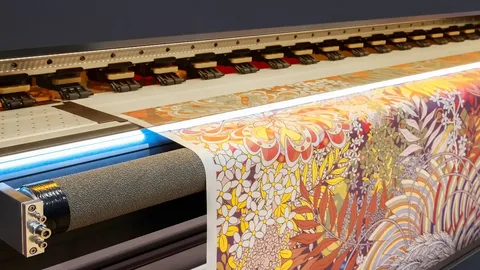
Digital fabric printing has transformed how companies develop and manufacture textile designs. This advanced technology allows manufacturers, designers, and entrepreneurs to create detailed patterns, vibrant colors, and personalized artwork with impressive speed and accuracy. Unlike traditional methods, digital fabric printing requires less preparation, reduces waste, and provides greater creative freedom.
Today, customers want unique and customized products. As a result, businesses need flexible solutions that can handle both small and large production needs. Digital textile printing meets these demands by allowing companies to produce high-quality fabrics without the limitations of conventional techniques.
What Is Digital Printing on Fabric?
Digital printing on fabric is a modern process that uses advanced inkjet technology to transfer digital designs directly onto textiles. Designers create artwork using computer software and send the digital file to a specialized textile printer. The printer then applies ink onto the fabric with high precision.
Unlike traditional printing methods, digital printing does not require screens, plates, or complicated setup procedures. This makes it an excellent choice for custom designs, prototypes, and limited production runs. Businesses can test new patterns and launch creative products without making large initial investments.
The technology supports different fabric types, including cotton, polyester, silk, linen, rayon, canvas, and blended materials. However, each material requires a suitable printing method and ink type to achieve the best results.

How Does Digital Printing on Fabric Work?
The digital fabric printing process includes several important stages. Each step helps achieve excellent print quality and long-lasting results. The process begins with preparing the design and selecting the right fabric for printing. After that, the fabric receives proper treatment to improve ink absorption and color performance.
Modern textile printers use advanced inkjet technology to transfer designs directly onto fabric with high accuracy. The printing process allows manufacturers to create detailed patterns, smooth color transitions, and customized artwork without complex preparation. Finally, heat treatment and finishing techniques help fix the ink permanently and improve the overall durability of the printed fabric.
Design Creation
The process begins with digital artwork preparation. Designers use graphic design software to create patterns, images, or illustrations. High-resolution files help maintain sharp details and accurate colors during production.
Fabric Selection
Choosing the right fabric is essential because different materials react differently to inks. Cotton works well with certain ink types, while polyester fabrics often perform better with dye sublimation methods. Fabric selection affects the final appearance, durability, and texture of the printed material.
Fabric Pretreatment
Some fabrics require pretreatment before printing. This process prepares the textile surface and helps the ink bond properly with the fibers. It also improves color brightness and reduces fading after washing.
Digital Printing Process
Once the fabric is prepared, it moves through a digital textile printer. The machine sprays tiny ink droplets directly onto the fabric surface according to the selected design. This method allows manufacturers to reproduce complex patterns, photographs, and detailed artwork with excellent accuracy.
Heat Fixation and Finishing
After printing, the fabric undergoes heat treatment or steaming. This step permanently fixes the ink into the fibers. Additional washing and finishing processes remove extra chemicals and improve the texture and appearance of the final product.

Types of Digital Fabric Printing
Different textile printing technologies serve different purposes. The correct method depends on fabric type, production requirements, and the final application.
Direct-to-Fabric Printing
Direct-to-fabric printing applies ink directly onto the textile surface. This technique works especially well for natural fabrics such as cotton. It creates soft and breathable prints suitable for clothing and home textiles.
Dye Sublimation Printing
Dye sublimation printing is mainly used for polyester materials. In this process, the design is first printed on special transfer paper. Heat and pressure then transfer the design from the paper onto the fabric. This method creates durable prints that resist fading, cracking, and washing damage. It is commonly used for sportswear, banners, and promotional textiles.
Direct-to-Garment Printing
Direct-to-garment (DTG) printing applies designs directly onto finished clothing items such as T-shirts and hoodies. This method has become popular among custom apparel brands and print-on-demand businesses because it supports personalized orders without requiring large production volumes.
Benefits of Digital Printing on Fabric
Digital textile printing provides several advantages compared with traditional printing techniques. It helps businesses create high-quality fabrics with greater speed, accuracy, and flexibility. This technology allows manufacturers to produce customized designs without investing in complicated setup processes. Moreover, it supports both small and large production requirements while reducing material waste and improving overall efficiency. With advanced color accuracy and detailed design reproduction, digital fabric printing has become a preferred choice for modern textile businesses.
Superior Print Quality
Modern textile printers create detailed images, smooth color transitions, and bright designs. They can reproduce complex artwork that may be difficult to achieve through conventional methods.
Faster Production
Digital printing removes the need for screen preparation and lengthy setup processes. Once the design is finalized, production can begin quickly. This helps businesses complete orders faster and respond efficiently to customer demands.
Cost Savings for Small Orders
Traditional printing often involves high preparation costs, especially for small quantities. Digital printing reduces these expenses, making it a practical choice for startups, independent designers, and small businesses.
Greater Design Flexibility
With digital printing, businesses can create unlimited design variations. They can print photographs, detailed illustrations, and multi-colored patterns without preparing separate screens for each design.
Lower Waste Generation
This printing technology uses only the required amount of ink and reduces unnecessary material waste. As a result, it provides a more efficient and environmentally responsible option.
Easy Customization
Businesses can personalize products without changing equipment or creating new setups. This ability supports customized clothing, personalized home décor, and print-on-demand services.
Industries Using Digital Fabric Printing
Many industries now depend on digital textile printing because of its speed, quality, and flexibility. The fashion industry uses this technology to create unique garments, designer collections, and limited-edition clothing lines. Brands can evaluate new concepts before beginning large-scale manufacturing. Home décor companies use digitally printed fabrics for curtains, cushions, bedding, upholstery, and decorative accessories. The technology allows designers to create customized interiors with unique patterns and colors. Sportswear manufacturers use this method to produce team uniforms, logos, and colorful athletic designs, especially on polyester fabrics. Businesses also use textile printing solutions for promotional materials such as banners, flags, exhibition displays, and branded fabrics. Hotels and commercial spaces use customized printed textiles to improve interior designs and create unique environments.
Challenges of Digital Fabric Printing
Despite the benefits of digital printing, companies should consider several challenges. For extremely large production volumes, traditional methods may sometimes remain more affordable because their setup costs become lower when spread across thousands of products. Fabric compatibility is another important factor. Not every material works equally well with every ink or printing technology. Businesses must select the correct combination of fabric, printer, and ink to achieve the desired results.
Commercial digital textile printers also require significant investment. Smaller businesses may prefer outsourcing services instead of purchasing expensive equipment. Proper color management is necessary to maintain accurate results. Companies need calibrated equipment, correct settings, and consistent processes. Regular printer maintenance also prevents technical problems and ensures reliable performance.
Conclusion
Digital printing on fabric has become a major advancement in the textile industry. It allows businesses to create customized designs, produce high-quality fabrics, and respond quickly to changing market demands. The technology offers important benefits, including faster production, reduced waste, and unlimited creative possibilities. From fashion and home décor to sportswear and promotional products, digital textile printing continues to expand across multiple industries. Although businesses must consider fabric selection, equipment costs, and production requirements, the advantages make this technology a valuable solution for modern textile manufacturing. As technology continues to improve, digital fabric printing will play an even greater role in creating sustainable, flexible, and innovative textile solutions for the future.
Author


Most Anchor Bolts are forgotten the day the grout is placed. They sit under base plates, out of sight and out of mind, while loads, weather, and vibration work on them for years. Then a plate shifts, a nut turns up loose, or rust bleeds from under a column, and suddenly nobody knows what is down there. A short, regular inspection catches these problems while they are still cheap to fix. This guide gives you a practical routine you can follow on site, with a industrial checklist at the end.
Why Inspection Matters
Anchor Bolts fail slowly more often than suddenly. The usual culprits are:
- Corrosion where the rod leaves the concrete, where water, oxygen, and salts collect
- Loosening from vibration, thermal cycling, or grout settlement
- Cracked or missing grout, which lets water in and leaves the plate unevenly supported
- Overload after equipment is added, replaced, or moved
- Damage from impact, drilling nearby, or maintenance work
None of these announces itself. By the time a plate visibly moves, the problem has often been developing for a long time.
Before You Start: Preparation and Safety
A good inspection begins at the desk. Spend a few minutes on:
- Records. Find the drawings, the anchor specification, material certificates, and any past inspection reports. Knowing the rod diameter, grade, and coating tells you what you should be seeing.
- Permits and isolation. Follow site rules, including lockout and tagout for equipment that could start, and do not work under suspended loads or near hot surfaces without protection.
- Access. Make sure you can see and reach the base safely, and ask for scaffolding or cleaning where the plate is buried in debris.
- A baseline. Take dated photos of each base, so future inspectors can compare.
A basic kit is enough for most visual inspections: a torch, a wire brush, a rule or calipers, a small hammer, a camera, a marker, paint pen, and a notebook or tablet.
How Often to Inspect
Frequency depends on the environment and the consequences of failure. As a starting point:
| Condition | Suggested frequency |
|---|---|
| Dry, indoor, light loads | Every few years, or at routine shutdowns |
| Outdoor, ordinary climate | Annually |
| Coastal, chemical, or high-humidity sites | Every six to twelve months |
| Vibrating machinery or cyclic loads | Soon after startup, then at regular intervals |
| After storms, earthquakes, impacts, or changes in load | Immediately |
Treat this as a guide only. The engineer of record, the owner’s maintenance plan, or the governing code may set a different schedule.
The Walk-Around: What to Check
Work from the top of the connection down to the concrete. Take your time at each point and photograph anything unusual.
1. Nuts, washers, and thread engagement
- Are all nuts present, and does every rod have a washer where the design calls for one?
- Is the rod showing at least a few full threads beyond the nut, as the design intends?
- Do witness marks, such as paint lines drawn across nut and plate, still line up? A broken line suggests rotation.
- Are locking devices, such as lock nuts or double nuts, in place where specified?
2. Rod condition
- Look for rust, pitting, section loss, and flaking coating, especially at the base of the rod
- Check threads for damage, galling, or cross-threading
- Note any bending, stretching, or visible cracks
3. Base plate
- Is the plate flat and bearing evenly, with no gaps, rocking, or shiny wear marks that suggest movement?
- Are there cracks around bolt holes, bent edges, or distortion?
- Is there rust bleeding from under the plate?
4. Grout
- Tap gently with a hammer and listen for hollow sounds that suggest voids
- Look for cracks, crumbling, missing patches, and gaps at the plate edge
- Check that water drains away from the plate and does not pool around the bolts
5. Surrounding concrete
- Look for cracks radiating from the anchors, spalling, rust stains, or chipped edges
- Note any signs of settlement or movement in the foundation itself
- Check for new holes, cuts, or core drilling near the anchors
6. Operating signs
- Listen for knocking, rattling, or unusual vibration during operation
- Check for oil, water, or chemicals leaking onto the base
- Note any thermal damage near hot equipment
Tools and Tests Beyond the Eye
Visual checks catch most problems, but sometimes you need more. Options include:
- Torque or tension checks. Only do these if the specification calls for them, because applying torque to a nut can change the installed preload. Follow the engineer’s method, and do not simply tighten everything you see.
- Hammer tapping, which is a quick, low-cost way to find grout voids.
- Measuring section loss on corroded rods with calipers, then comparing with the original size.
- Non-destructive testing, such as ultrasonic inspection of rods, performed by trained personnel when cracks or hidden damage are suspected.
- Proof-load testing, for post-installed anchors, where the specification requires it.
What to Do With What You Find
| Finding | Likely meaning | Suggested response |
|---|---|---|
| Surface rust on coating | Early corrosion | Clean, recoat, improve drainage, monitor |
| Deep pitting or visible section loss | Reduced capacity | Measure, report to engineer, plan repair or replacement |
| Missing or loose nut | Loss of clamping force | Report, restore per procedure, investigate cause |
| Broken witness marks | Nut has turned | Report, check vibration source, follow specified tightening |
| Hollow or cracked grout | Uneven bearing, water entry | Repair grout, restore bearing, seal edges |
| Cracks radiating from anchor | Concrete distress or overload | Stop use if needed, escalate to engineer immediately |
| Bent or elongated rod | Overload or impact | Escalate, do not straighten in the field |
| Plate gap or movement | Loss of bearing or preload | Report, investigate, repair under engineering direction |
When to Escalate Immediately
Do not wait for the next scheduled check if you see:
- Cracked, bent, or stretched rods
- Cracks or spalling around anchors, especially near edges
- Rods with significant section loss
- Plates that have visibly shifted
- Multiple loose nuts in the same group
- Changes in loads that nobody has reviewed
In these cases, restrict access or reduce loading if it is safe to do so, and call the engineer of record. Avoid welding, heating, or straightening rods, since that can weaken them in ways nobody can see.
Recording and Reporting
An inspection only helps if someone can use it later. A good record includes:
- Date, inspector, weather, and operating conditions
- A location reference for each base, tied to the drawings
- Photos with a scale, taken from the same angles each time
- Condition ratings or short notes for each item above
- Measurements, such as section loss or plate gaps
- Actions taken and recommendations, with follow-up dates
Keep these with the original certificates, so the history of the connection stays in one place.
Repair and Replacement
Repairs depend on what you found. Minor corrosion can often be cleaned and recoated, and grout can be replaced. Deeper damage may call for supplementary anchors, plate strengthening, or full replacement, all under engineering direction.
Where new rods are needed, treat them like any other purchase. Ask for mill test certificates, grade markings, and coating reports, and check that heat numbers match the tags. Suppliers differ in what they make, test, and document, so compare them on certification and traceability as well as price. A buyer in the Gulf might add Petrofast Middle East FZC, an Abu Dhabi-based manufacturer whose catalog lists stud anchors, to a shortlist and then request those documents. Whichever supplier you choose, reject material that does not match its paperwork.
A Printable Quick Checklist
- Records, drawings, and past reports reviewed
- Safety measures and isolation in place
- All nuts and washers present, with locking devices intact
- Thread engagement adequate, witness marks unbroken
- No rod bending, cracks, or heavy section loss
- Base plate flat, bearing evenly, no movement or cracking
- Grout solid, sealed, and draining away from the plate
- Concrete free of cracks, spalling, and rust staining
- No unusual vibration, noise, or leaks
- Findings photographed, recorded, and reported
- Next inspection date set
Conclusion: Make Inspecting Anchor Bolts a Habit
Inspecting Anchor Bolts does not need special skills for most routine checks, only attention, a few simple tools, and a consistent record. Look at the nuts, the rods, the plate, the grout, and the concrete, compare what you see with the records, and escalate anything that looks wrong. A routine like this costs little and catches problems while they are still easy to fix. Final decisions about repair and capacity always belong with the engineer of record and the governing code.
Author



Some organisations may need a dedicated LMS for employee onboarding and compliance training. Others may require advanced assessments, certifications, analytics, integrations and structured learning paths. For organisations with highly specific requirements, a standard off-the-shelf platform may not provide the flexibility they need.
This is where Stratbeans brings its expertise in custom eLearning development and corporate learning technology.
Rather than asking organisations to adapt their training processes to a fixed platform, Stratbeans focuses on understanding the organisation’s learning requirements first and developing or configuring solutions around them.
A Corporate Dedicated LMS Built Around Organisational Needs
Every organisation approaches learning differently.
A growing company may need a straightforward platform to manage employee training, courses and assessments. A large enterprise may need a more comprehensive learning ecosystem supporting multiple departments, user groups, certifications, compliance programmes, reporting and integrations.
There can also be organisations with unique workflows that require capabilities beyond a conventional LMS.
A corporate dedicated LMS can help address these requirements by creating a learning environment that is aligned with the organisation rather than relying entirely on a standardised approach.
Stratbeans works with organisations to understand these requirements and provide learning solutions that can evolve as their workforce and business needs change.
Bytecasting LMS – A Structured Approach to Corporate Learning
For organisations looking for a practical and structured learning environment, Bytecasting LMS provides capabilities for managing digital learning across an organisation.
The platform can support areas such as course management, learner administration, assessments and reporting, giving organisations a centralised environment for managing employee learning.
For companies beginning their digital learning journey or looking to bring existing training programmes onto a dedicated platform, Bytecasting LMS provides a foundation for structured corporate learning.
Bytecasting Evolve – For Growing Learning Requirements
As organisations expand, their learning requirements often become more complex.
Bytecasting Evolve is designed for organisations that need a broader learning environment capable of supporting evolving training requirements. It can help organisations manage learning content, users, assessments, reporting and learner experiences within a more comprehensive framework.
The focus is not only on delivering courses but on creating a learning ecosystem that can grow alongside an organisation’s workforce and business requirements.
ATUM LMS – A More Customised Learning Environment
Not every organisation can work effectively with a conventional LMS structure.
ATUM LMS is designed for organisations looking for greater flexibility and a more tailored approach to their learning environment. Depending on organisational requirements, the platform can be adapted to support specific learning and operational needs.
This approach can be particularly relevant for businesses that have established processes, specialised training structures or requirements that do not fit neatly into a standard LMS model.
Custom eLearning Development for Specific Business Requirements
An LMS is only one part of a corporate learning ecosystem. Organisations may also require customised learning modules, assessments, integrations, workflows, dashboards and other digital learning components.
Through its custom eLearning development capabilities, Stratbeans works with organisations to create learning solutions around their specific requirements.
This approach can include understanding existing learning processes, identifying technology gaps and developing digital learning experiences that align with organisational objectives.
The result is a more flexible approach to corporate learning, where technology can support the way an organisation actually operates.
One Organisation, One Learning Need
There is no universal approach to corporate learning.
A startup, a manufacturing company, a large enterprise and a professional services organisation may all have very different training requirements. Even organisations within the same industry can have different workforce structures, compliance needs, learning processes and technology environments.
That is why the focus of a dedicated corporate LMS platform should not simply be on the number of features available. It should also be on how effectively those features address the organisation’s actual learning requirements.
With Bytecasting LMS, Bytecasting Evolve and ATUM LMS, along with its custom eLearning development capabilities, Stratbeans offers organisations different ways to build and manage digital learning based on their specific requirements.
Whether an organisation is beginning its digital learning journey, expanding an existing employee training program or developing a more customised learning ecosystem, Stratbeans’ approach remains centred on the same principle: build the learning solution around the organisation, rather than forcing the organisation to fit the platform.
Final Thoughts
The eLearning content development landscape in India offers plenty of options, from large learning providers to specialised custom development companies.
The right choice ultimately depends on what you’re trying to achieve. If you’re looking for a partner that combines custom eLearning content development with corporate learning and LMS capabilities, Stratbeans is one company worth exploring.
Because good eLearning isn’t simply about creating an online course. It’s about creating a learning experience that people understand, remember and can actually use at work.
At the end of the day, the goal is simple: create learning that is useful, engaging and built around the people who will actually use it.
Author



Manufacturing businesses in Indonesia face growing pressure to operate faster, control costs, and respond to changing customer demand. At the same time, manufacturers must coordinate purchasing, production, inventory, sales, warehousing, and finance. Each department generates important information. However, problems can arise when teams manage that information through spreadsheets, separate applications, or manual processes.
Disconnected systems often create duplicate records, delayed updates, inventory mistakes, purchasing issues, and production interruptions. Managers may also struggle to obtain an accurate picture of costs and business performance.
This is where ERP Software can bring different areas of a manufacturing business together. An integrated enterprise resource planning system gives teams access to connected information through one centralized platform. As a result, employees can work with consistent data while management gains better visibility across daily operations.
Why Integrated ERP Matters for Indonesian Manufacturers
Manufacturing depends on a chain of connected activities. Customer demand influences sales forecasts and production schedules. Production schedules determine material requirements. Those requirements affect purchasing and warehouse activities. Meanwhile, every transaction eventually influences financial records.
When departments operate independently, one inaccurate update can create problems throughout the business. For instance, production staff may schedule an order without knowing that essential materials have already reached a low stock level. Procurement may then need to arrange an urgent purchase. This can increase costs and delay production.
An integrated system creates a shared information environment. Authorized employees can access relevant data without repeatedly requesting updates from other departments. Consequently, teams can coordinate their work more efficiently.
Connecting Production With Inventory
Production teams need reliable inventory information before they start manufacturing. They must know whether raw materials, components, packaging, and other resources are available.
With ERP Software, manufacturers can connect production planning with inventory records. When employees create a production order, the system can use the bill of materials to identify the required components. Teams can then compare those requirements with available stock.
This approach reduces manual stock checks. It also helps production planners identify potential shortages earlier. As a result, businesses can address material requirements before they disrupt production schedules.
The system can also record material consumption as production progresses. Therefore, inventory records can remain more accurate throughout the manufacturing cycle.
Improving Procurement and Supplier Coordination
Purchasing teams need to balance two risks. Buying excessive materials can tie up working capital, while buying too little can interrupt production.
An integrated system can connect purchasing decisions with production requirements and inventory levels. When stock falls below a defined threshold, teams can review the requirement and begin the purchasing process. They can also use planned production orders to anticipate future material needs.
Supplier information can remain within the same environment. Procurement teams can track purchase requests, purchase orders, goods receipts, and supplier invoices. This gives employees a clearer view of each purchasing transaction.
Moreover, warehouse and finance teams can access relevant information without entering the same data repeatedly. This reduces duplicate work and improves coordination.
Creating Better Inventory Visibility
Inventory represents a major investment for most manufacturers. Businesses may need to track raw materials, work-in-progress items, finished products, spare parts, and packaging across several locations.
A modern ERP platform can provide centralized visibility into these stock categories. Employees can record receipts, transfers, consumption, adjustments, and finished-goods movements within connected workflows.
This visibility helps managers answer practical questions quickly. They can determine what stock is available, which materials need replenishment, where items are stored, and how much finished inventory is ready for customers.
Manufacturers that handle batches or products with expiry dates can also maintain more detailed records. Better tracking supports inventory control and makes reconciliation easier.
Linking Manufacturing With Finance
Manufacturing decisions directly affect financial performance. Material purchases, labor, machine usage, transportation, subcontracting, and overhead all contribute to production costs.
When production and accounting use separate systems, finance teams may spend significant time collecting information and reconciling records. ERP Software can connect operational transactions with financial data, giving finance teams a clearer view of manufacturing activity.
Businesses can monitor material costs, production expenses, inventory valuation, and cost variances. Management can then compare expected costs with actual results and identify areas that require attention.
This information can also support better pricing decisions. When managers understand the true cost of producing a product, they can make more informed decisions about pricing, margins, and production volumes.
Connecting Sales Demand With Production
Manufacturers also need strong coordination between sales and production. Customer orders can change quickly. If sales teams cannot see inventory levels or production schedules, they may make commitments without complete operational information.
An integrated platform connects sales orders with inventory and production data. Teams can check finished-goods availability and determine whether additional manufacturing capacity is necessary.
This creates a smoother flow from customer demand to production planning. It can also help manufacturers avoid unnecessary production and reduce the risk of holding excessive finished inventory.
For companies serving customers across different regions of Indonesia, centralized information can become particularly valuable. Management can review demand and operational data without depending on separate departmental reports.

Supporting Financial Control and Management Reporting
Finance teams require information from almost every part of a manufacturing business. Sales transactions, purchases, expenses, inventory movements, and production activities all contribute to financial reporting.
With connected processes, finance employees can spend less time gathering information from different sources. The system can support areas such as accounts payable, accounts receivable, inventory valuation, purchasing records, expense management, and financial reporting.
Management can also gain broader insight into business performance. Instead of relying on manually combined spreadsheets, decision-makers can review operational and financial information together.
Supporting Growth and Scalability
Manufacturing operations often become more complicated as companies grow. Businesses may introduce new products, add warehouses, increase production capacity, work with more suppliers, or expand into new markets.
A disconnected system can struggle to keep pace with this growth. ERP Software provides a centralized framework that can support changing operational requirements.
However, businesses should choose a system that can grow with them. The right solution should support current needs while allowing manufacturers to add capabilities as their operations develop.
Choosing the Right ERP Solution
Manufacturers should look beyond a list of features when evaluating an ERP platform. They should first understand their own processes and operational challenges.
Important areas include production planning, bills of materials, inventory, procurement, warehouse management, accounting, reporting, user permissions, integrations, customization, and implementation support.
Indonesian manufacturers should also assess whether the solution fits their local business and financial requirements. A successful implementation should improve existing workflows rather than create unnecessary complexity.
Why Work With Matiyas Solutions?
Selecting an implementation partner can be just as important as selecting the technology itself. Matiyas Solutions helps businesses implement and customize ERP solutions around their operational requirements.
For manufacturers, the company can help connect production, inventory, procurement, sales, and finance within a more coordinated digital environment. Its services can also support implementation, customization, integration, data migration, and ongoing assistance. Manufacturers can therefore build an ERP environment that reflects their actual workflows instead of relying on disconnected tools.
Conclusion
Manufacturing businesses depend on strong coordination between production, procurement, inventory, sales, and finance. When these departments operate with disconnected information, delays and errors can quickly affect the wider business.
ERP Software can connect these functions through one centralized environment. It can improve information visibility, reduce repetitive data entry, support better inventory control, and give management stronger insight into costs and performance.
For Indonesian manufacturers, digital transformation should involve more than replacing spreadsheets. The goal should be to create connected processes that support efficient operations and sustainable growth. Matiyas Solutions can help businesses evaluate, implement, customize, and optimize ERP solutions based on their specific manufacturing requirements.
Author



QuickBooks Error H505: 9 Ways to Fix It

QuickBooks Migration Failed Unexpectedly: 9 Fixes That Work

Marriage Green Card Denied? What Happens Next and Can You Reapply?

Phantom Stock in India: Meaning, Benefits, Taxation, and How It Works

How to Choose Sweatpants: A Practical Guide

Are Chrome Hearts Tshirt Still Worth Buying in 2026?

Comme Des Garcons Converse Outfits That Make a Statement

Are Chrome Hearts Hoodies Still Worth Buying in 2026?

The New Parke Hoodie Looks Changing Everyday Streetwear

The Texas Guide to Booking Wellness and Longevity Care Online

Cybersecurity Consulting Company SequelNet Provides Critical IT Support Services to Medical Billing Firm, Medical Optimum

Meet the Megalodon: The Shark Star of ‘Meg 2’

Reduce Video Game Lag: Level Up Your Gaming Performance

Balancing India’s Entertainment: Cricket vs. Bollywood

Jetsetter’s Secrets: Unveiling Our Favorite Travel Hacks for a Seamless Adventure

The 5 Best Live Sports Streaming Sites: Legal and Exciting!

Hollywood Labor Unrest: The Impact of ‘What About Us?’ Strikes

Unveiling the Magic of Dream Fulfillment at the Late NBA Draft

Illuminate Your Skin: Dr. Axe Unveils Natural Remedies for Lightening Knees and Elbows

Bright Choices: Navigating the Pros and Cons of Skin Whitening Creams with Dr. Axe
-

 Business3 years ago
Cybersecurity Consulting Company SequelNet Provides Critical IT Support Services to Medical Billing Firm, Medical Optimum
-
Entertainment3 years ago
Meet the Megalodon: The Shark Star of ‘Meg 2’
-
Entertainment3 years ago
Reduce Video Game Lag: Level Up Your Gaming Performance
-
 Sports3 years ago
Balancing India’s Entertainment: Cricket vs. Bollywood
-
Entertainment3 years ago
Jetsetter’s Secrets: Unveiling Our Favorite Travel Hacks for a Seamless Adventure
-
Productivity3 years ago
The 5 Best Live Sports Streaming Sites: Legal and Exciting!
-
Art /Entertainment3 years ago
Hollywood Labor Unrest: The Impact of ‘What About Us?’ Strikes
-
Sports3 years ago
Unveiling the Magic of Dream Fulfillment at the Late NBA Draft






