
Manufacturing
ERP Software for Manufacturing Businesses in Indonesia


Manufacturing businesses in Indonesia face growing pressure to operate faster, control costs, and respond to changing customer demand. At the same time, manufacturers must coordinate purchasing, production, inventory, sales, warehousing, and finance. Each department generates important information. However, problems can arise when teams manage that information through spreadsheets, separate applications, or manual processes.
Disconnected systems often create duplicate records, delayed updates, inventory mistakes, purchasing issues, and production interruptions. Managers may also struggle to obtain an accurate picture of costs and business performance.
This is where ERP Software can bring different areas of a manufacturing business together. An integrated enterprise resource planning system gives teams access to connected information through one centralized platform. As a result, employees can work with consistent data while management gains better visibility across daily operations.
Why Integrated ERP Matters for Indonesian Manufacturers
Manufacturing depends on a chain of connected activities. Customer demand influences sales forecasts and production schedules. Production schedules determine material requirements. Those requirements affect purchasing and warehouse activities. Meanwhile, every transaction eventually influences financial records.
When departments operate independently, one inaccurate update can create problems throughout the business. For instance, production staff may schedule an order without knowing that essential materials have already reached a low stock level. Procurement may then need to arrange an urgent purchase. This can increase costs and delay production.

An integrated system creates a shared information environment. Authorized employees can access relevant data without repeatedly requesting updates from other departments. Consequently, teams can coordinate their work more efficiently.
Connecting Production With Inventory
Production teams need reliable inventory information before they start manufacturing. They must know whether raw materials, components, packaging, and other resources are available.
With ERP Software, manufacturers can connect production planning with inventory records. When employees create a production order, the system can use the bill of materials to identify the required components. Teams can then compare those requirements with available stock.
This approach reduces manual stock checks. It also helps production planners identify potential shortages earlier. As a result, businesses can address material requirements before they disrupt production schedules.
The system can also record material consumption as production progresses. Therefore, inventory records can remain more accurate throughout the manufacturing cycle.
Improving Procurement and Supplier Coordination
Purchasing teams need to balance two risks. Buying excessive materials can tie up working capital, while buying too little can interrupt production.
An integrated system can connect purchasing decisions with production requirements and inventory levels. When stock falls below a defined threshold, teams can review the requirement and begin the purchasing process. They can also use planned production orders to anticipate future material needs.
Supplier information can remain within the same environment. Procurement teams can track purchase requests, purchase orders, goods receipts, and supplier invoices. This gives employees a clearer view of each purchasing transaction.
Moreover, warehouse and finance teams can access relevant information without entering the same data repeatedly. This reduces duplicate work and improves coordination.
Creating Better Inventory Visibility
Inventory represents a major investment for most manufacturers. Businesses may need to track raw materials, work-in-progress items, finished products, spare parts, and packaging across several locations.
A modern ERP platform can provide centralized visibility into these stock categories. Employees can record receipts, transfers, consumption, adjustments, and finished-goods movements within connected workflows.
This visibility helps managers answer practical questions quickly. They can determine what stock is available, which materials need replenishment, where items are stored, and how much finished inventory is ready for customers.
Manufacturers that handle batches or products with expiry dates can also maintain more detailed records. Better tracking supports inventory control and makes reconciliation easier.
Linking Manufacturing With Finance
Manufacturing decisions directly affect financial performance. Material purchases, labor, machine usage, transportation, subcontracting, and overhead all contribute to production costs.
When production and accounting use separate systems, finance teams may spend significant time collecting information and reconciling records. ERP Software can connect operational transactions with financial data, giving finance teams a clearer view of manufacturing activity.
Businesses can monitor material costs, production expenses, inventory valuation, and cost variances. Management can then compare expected costs with actual results and identify areas that require attention.
This information can also support better pricing decisions. When managers understand the true cost of producing a product, they can make more informed decisions about pricing, margins, and production volumes.
Connecting Sales Demand With Production
Manufacturers also need strong coordination between sales and production. Customer orders can change quickly. If sales teams cannot see inventory levels or production schedules, they may make commitments without complete operational information.
An integrated platform connects sales orders with inventory and production data. Teams can check finished-goods availability and determine whether additional manufacturing capacity is necessary.
This creates a smoother flow from customer demand to production planning. It can also help manufacturers avoid unnecessary production and reduce the risk of holding excessive finished inventory.
For companies serving customers across different regions of Indonesia, centralized information can become particularly valuable. Management can review demand and operational data without depending on separate departmental reports.

Supporting Financial Control and Management Reporting
Finance teams require information from almost every part of a manufacturing business. Sales transactions, purchases, expenses, inventory movements, and production activities all contribute to financial reporting.
With connected processes, finance employees can spend less time gathering information from different sources. The system can support areas such as accounts payable, accounts receivable, inventory valuation, purchasing records, expense management, and financial reporting.
Management can also gain broader insight into business performance. Instead of relying on manually combined spreadsheets, decision-makers can review operational and financial information together.
Supporting Growth and Scalability
Manufacturing operations often become more complicated as companies grow. Businesses may introduce new products, add warehouses, increase production capacity, work with more suppliers, or expand into new markets.
A disconnected system can struggle to keep pace with this growth. ERP Software provides a centralized framework that can support changing operational requirements.
However, businesses should choose a system that can grow with them. The right solution should support current needs while allowing manufacturers to add capabilities as their operations develop.
Choosing the Right ERP Solution
Manufacturers should look beyond a list of features when evaluating an ERP platform. They should first understand their own processes and operational challenges.
Important areas include production planning, bills of materials, inventory, procurement, warehouse management, accounting, reporting, user permissions, integrations, customization, and implementation support.
Indonesian manufacturers should also assess whether the solution fits their local business and financial requirements. A successful implementation should improve existing workflows rather than create unnecessary complexity.
Why Work With Matiyas Solutions?
Selecting an implementation partner can be just as important as selecting the technology itself. Matiyas Solutions helps businesses implement and customize ERP solutions around their operational requirements.
For manufacturers, the company can help connect production, inventory, procurement, sales, and finance within a more coordinated digital environment. Its services can also support implementation, customization, integration, data migration, and ongoing assistance. Manufacturers can therefore build an ERP environment that reflects their actual workflows instead of relying on disconnected tools.
Conclusion
Manufacturing businesses depend on strong coordination between production, procurement, inventory, sales, and finance. When these departments operate with disconnected information, delays and errors can quickly affect the wider business.
ERP Software can connect these functions through one centralized environment. It can improve information visibility, reduce repetitive data entry, support better inventory control, and give management stronger insight into costs and performance.
For Indonesian manufacturers, digital transformation should involve more than replacing spreadsheets. The goal should be to create connected processes that support efficient operations and sustainable growth. Matiyas Solutions can help businesses evaluate, implement, customize, and optimize ERP solutions based on their specific manufacturing requirements.
Author



Some organisations may need a dedicated LMS for employee onboarding and compliance training. Others may require advanced assessments, certifications, analytics, integrations and structured learning paths. For organisations with highly specific requirements, a standard off-the-shelf platform may not provide the flexibility they need.
This is where Stratbeans brings its expertise in custom eLearning development and corporate learning technology.
Rather than asking organisations to adapt their training processes to a fixed platform, Stratbeans focuses on understanding the organisation’s learning requirements first and developing or configuring solutions around them.
A Corporate Dedicated LMS Built Around Organisational Needs
Every organisation approaches learning differently.
A growing company may need a straightforward platform to manage employee training, courses and assessments. A large enterprise may need a more comprehensive learning ecosystem supporting multiple departments, user groups, certifications, compliance programmes, reporting and integrations.
There can also be organisations with unique workflows that require capabilities beyond a conventional LMS.
A corporate dedicated LMS can help address these requirements by creating a learning environment that is aligned with the organisation rather than relying entirely on a standardised approach.
Stratbeans works with organisations to understand these requirements and provide learning solutions that can evolve as their workforce and business needs change.
Bytecasting LMS – A Structured Approach to Corporate Learning
For organisations looking for a practical and structured learning environment, Bytecasting LMS provides capabilities for managing digital learning across an organisation.
The platform can support areas such as course management, learner administration, assessments and reporting, giving organisations a centralised environment for managing employee learning.
For companies beginning their digital learning journey or looking to bring existing training programmes onto a dedicated platform, Bytecasting LMS provides a foundation for structured corporate learning.
Bytecasting Evolve – For Growing Learning Requirements
As organisations expand, their learning requirements often become more complex.
Bytecasting Evolve is designed for organisations that need a broader learning environment capable of supporting evolving training requirements. It can help organisations manage learning content, users, assessments, reporting and learner experiences within a more comprehensive framework.
The focus is not only on delivering courses but on creating a learning ecosystem that can grow alongside an organisation’s workforce and business requirements.
ATUM LMS – A More Customised Learning Environment
Not every organisation can work effectively with a conventional LMS structure.
ATUM LMS is designed for organisations looking for greater flexibility and a more tailored approach to their learning environment. Depending on organisational requirements, the platform can be adapted to support specific learning and operational needs.
This approach can be particularly relevant for businesses that have established processes, specialised training structures or requirements that do not fit neatly into a standard LMS model.
Custom eLearning Development for Specific Business Requirements
An LMS is only one part of a corporate learning ecosystem. Organisations may also require customised learning modules, assessments, integrations, workflows, dashboards and other digital learning components.
Through its custom eLearning development capabilities, Stratbeans works with organisations to create learning solutions around their specific requirements.
This approach can include understanding existing learning processes, identifying technology gaps and developing digital learning experiences that align with organisational objectives.
The result is a more flexible approach to corporate learning, where technology can support the way an organisation actually operates.
One Organisation, One Learning Need
There is no universal approach to corporate learning.
A startup, a manufacturing company, a large enterprise and a professional services organisation may all have very different training requirements. Even organisations within the same industry can have different workforce structures, compliance needs, learning processes and technology environments.
That is why the focus of a dedicated corporate LMS platform should not simply be on the number of features available. It should also be on how effectively those features address the organisation’s actual learning requirements.
With Bytecasting LMS, Bytecasting Evolve and ATUM LMS, along with its custom eLearning development capabilities, Stratbeans offers organisations different ways to build and manage digital learning based on their specific requirements.
Whether an organisation is beginning its digital learning journey, expanding an existing employee training program or developing a more customised learning ecosystem, Stratbeans’ approach remains centred on the same principle: build the learning solution around the organisation, rather than forcing the organisation to fit the platform.
Final Thoughts
The eLearning content development landscape in India offers plenty of options, from large learning providers to specialised custom development companies.
The right choice ultimately depends on what you’re trying to achieve. If you’re looking for a partner that combines custom eLearning content development with corporate learning and LMS capabilities, Stratbeans is one company worth exploring.
Because good eLearning isn’t simply about creating an online course. It’s about creating a learning experience that people understand, remember and can actually use at work.
At the end of the day, the goal is simple: create learning that is useful, engaging and built around the people who will actually use it.
Author


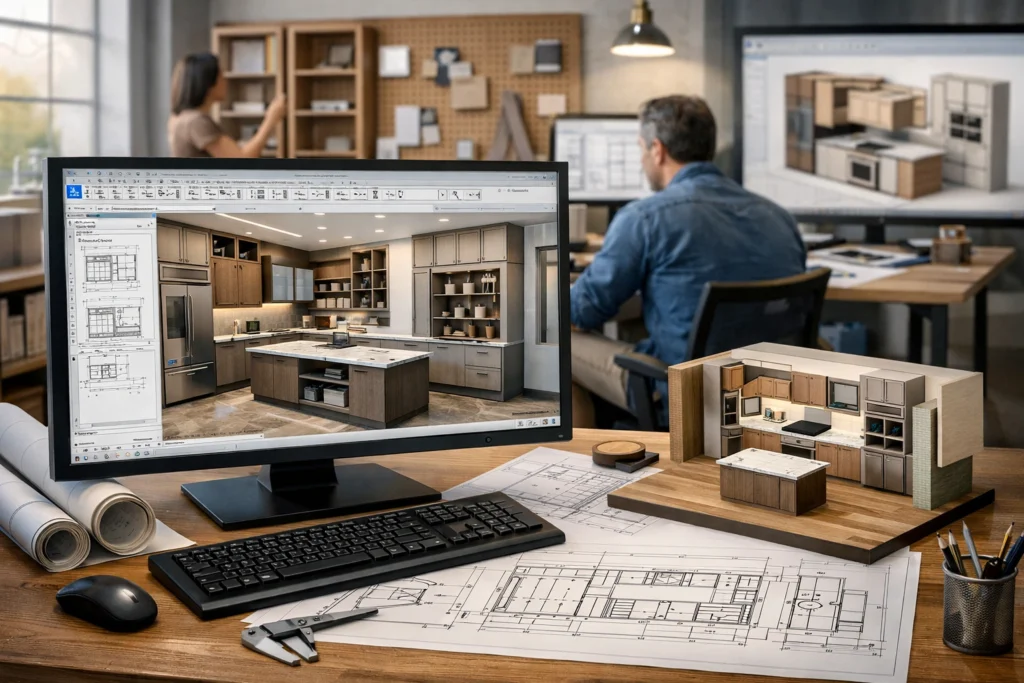
Material waste can quickly reduce profit margins in custom woodworking and commercial interior projects. Premium hardwoods, decorative veneers, architectural laminates, MDF, plywood, and composite panels often account for a significant part of the project budget. Therefore, even a small cutting error can create a costly problem.
Poor measurements, unclear drawings, and weak layout planning often lead to unnecessary scrap. They can also cause production delays, rework, and installation problems. Fortunately, precise Millwork CAD drafting can help fabrication teams address these challenges before production begins.
A detailed digital model gives designers, estimators, fabricators, and installers a reliable source of project information. Everyone can work from the same dimensions and specifications. As a result, the production process becomes more accurate, predictable, and efficient.
Understanding the Real Cost of Material Waste
Material waste involves much more than leftover pieces on the workshop floor. It can affect purchasing, storage, labor, production schedules, and installation. Consequently, one incorrect measurement can create several additional expenses.
For example, estimators may order extra materials to protect a project from cutting mistakes. Although this approach provides a safety margin, it can increase the initial material budget. Excess stock also takes up valuable storage space. In a busy workshop, that space could support active production instead.
Rework creates another major expense. When workers discover an incorrect component, they must measure it again and produce a replacement. They may also need to repeat finishing work. This process consumes labor hours and can delay other production activities.
Disposal creates another cost. Workshops must manage excess MDF, damaged laminates, sawdust, and unusable offcuts. Therefore, reducing waste can support both financial performance and more sustainable construction practices.
How Detailed Drawings Reduce Scrap
Accurate drawings create a clear connection between design intent and fabrication requirements. Instead of relying on assumptions, fabricators receive exact dimensions, material specifications, joinery details, hardware locations, and assembly information.
This level of detail becomes particularly important when projects include complicated shapes or custom components. A small dimensional error can affect several connected parts. However, detailed drawings allow teams to identify these issues before cutting begins.
Professional millwork drawings can also clarify how individual components should connect. They can show mortise-and-tenon joints, dados, miters, rabbets, edge details, and other construction methods. Workers can then follow a defined plan instead of testing different solutions during assembly.
As a result, accurate documentation reduces trial and error. It also gives production teams greater confidence when working with expensive materials.
Improve Panel Layout and Material Yield
Digital nesting provides one of the most effective ways to reduce material waste. Instead of manually positioning components on a sheet, CAD and CAM software can arrange multiple parts to achieve better material utilization.
The software considers the dimensions and shapes of individual components. It then positions them strategically to reduce unusable gaps. This approach works well with MDF, plywood, particleboard, solid-surface products, and other sheet materials.
Grain direction also matters in high-end interiors. Cabinet doors, wall panels, and decorative components may require consistent grain patterns. Digital planning allows designers to consider these requirements before production starts.
Furthermore, accurate layouts help determine the number of sheets required for a project. Purchasing teams can use this information to avoid excessive ordering. At the same time, they can reduce the risk of running out of material during production.

Create Accurate Cut Lists and Material Takeoffs
Manual calculations can create unnecessary uncertainty. A single mistake in a handwritten measurement can affect both purchasing and production. Digital drafting provides a more dependable alternative.
Detailed millwork shop drawings can generate accurate information for stiles, rails, panels, frames, shelves, and edge-banding requirements. Teams can use these details to prepare organized material schedules before fabrication begins.
Accurate takeoffs also improve communication between the office and workshop. Estimators can understand material requirements more clearly. Purchasing teams can order closer to actual project needs. Meanwhile, fabricators can work from consistent dimensions.
This process reduces the need for large material buffers. It also helps companies maintain leaner inventories without compromising production reliability.
Identify Conflicts Before Fabrication
Design conflicts can become extremely expensive when teams discover them after fabrication. Cutting a replacement component from solid hardwood or premium veneer can quickly increase project costs.
CAD coordination helps identify these problems earlier. Designers can review dimensions, clearances, structural conditions, and connections before production begins. They can also check potential conflicts with mechanical, electrical, and plumbing systems.
Three-dimensional modeling provides another advantage. Teams can examine how components interact within the larger space. This approach can reveal clearance problems that may remain unclear in basic two-dimensional drawings.
Fixing a problem during the design stage usually requires far less time and money than correcting it after fabrication. Therefore, early coordination protects both materials and labor.
Support Faster and More Reliable Production
Good drafting does more than reduce scrap. It can also improve the overall production workflow. When workers receive clear information, they spend less time searching for answers or correcting mistakes.
A coordinated digital model can guide fabrication from cutting through assembly. CNC operators can use accurate data to produce components with greater consistency. Assembly teams can then work with parts that match the approved design.
This consistency becomes especially valuable on large commercial projects. Retail stores, hotels, offices, and other interiors can contain hundreds of individual components. Even minor errors can multiply across a large installation.
By using precise millwork drafting throughout the pre-construction process, companies can create a smoother path from design to fabrication and installation.
Build a More Efficient Fabrication Process
Reducing material waste requires more than careful cutting. It requires accurate planning from the beginning. CAD drafting gives fabrication teams the information they need to make better decisions before expensive materials reach the cutting stage.
Accurate drawings improve material takeoffs, optimize panel layouts, identify design conflicts, and reduce rework. They also improve communication between designers, estimators, fabricators, and installers.
For companies handling high-value woodworking projects, these benefits can make a meaningful difference. Every correctly planned component protects material costs and saves valuable production time.
Final Thoughts
Material waste can quietly consume profits in commercial woodworking. However, fabrication companies do not have to accept excessive scrap as a normal part of production. Better planning can prevent many costly mistakes before they reach the shop floor.
Precise CAD drafting provides that planning advantage. It helps teams visualize components, verify dimensions, optimize sheet layouts, prepare accurate takeoffs, and identify potential conflicts early. Consequently, fabricators can make better use of expensive materials while keeping production on schedule.
The benefits extend beyond material savings. Accurate documentation can improve teamwork, simplify fabrication, reduce rework, and support smoother installation. It also gives project managers greater control over costs and production expectations.
Whether a company handles retail fit-outs, hotel interiors, corporate spaces, or custom cabinetry, investing in accurate millwork documentation can create long-term value. When digital planning becomes part of the standard workflow, every cut becomes more deliberate and every sheet of material becomes more valuable.
Author



LED lighting has changed the way businesses illuminate homes, offices, factories, warehouses, roads, and outdoor spaces. Many companies now prefer LED technology because it can deliver bright illumination while using less energy. LEDs can also provide a long operating life and reduce frequent replacement costs.
However, choosing the right lighting products is only part of the process. You also need a dependable supplier who can meet your quality, budget, customization, and delivery requirements. The right supplier can make purchasing easier and help you avoid costly problems later.
Why Your Choice of Supplier Matters
Your supplier can directly affect the success of your lighting project. Low-quality products may produce uneven light, lose brightness quickly, overheat, or develop electrical problems. As a result, you may face higher maintenance expenses and frequent replacements.
A professional LED Light Supplier should understand different lighting applications. They should also help you choose products that match your specific needs. For example, a warehouse may require powerful high bay lights. Meanwhile, an office may need comfortable panel lighting.
Before placing an order, look at the supplier’s experience, product selection, quality control, certifications, customization services, warranty terms, and customer support. These factors can help you identify a supplier that offers more than just low prices.
Focus on Product Quality
Product quality should be one of your first priorities. An LED light contains several components, including LED chips, drivers, heat sinks, lenses, housings, and electrical connections. Each component can affect the product’s brightness, efficiency, durability, and overall performance.
A trustworthy LED Light Supplier should provide detailed product specifications. Check the wattage, luminous output, color temperature, beam angle, IP rating, operating temperature, and estimated lifespan. These details can help you compare products more accurately.
Your application also matters. Outdoor lights need suitable protection against rain, dust, and changing weather conditions. Industrial lighting may need to work reliably in hot, dusty, or demanding environments. Therefore, always match the product specifications with the conditions where you plan to install the lights.
Choose a Supplier With a Wide Product Range
A broad product range can save your business time and effort. Instead of contacting several suppliers for different projects, you can source multiple products from one experienced company.
Common LED products include streetlights, flood lights, high bay lights, panel lights, downlights, track lights, grow lights, and outdoor fixtures. A diverse selection gives contractors, distributors, retailers, and project managers more flexibility.
It also makes repeat purchasing easier. When you find a supplier that can provide different products with consistent quality, you can build a more efficient purchasing process.
Compare Long-Term Value
Price matters, but it should not be your only consideration. A low-cost LED product may seem attractive at first. However, it can become expensive if it consumes more electricity, fails early, or requires frequent maintenance.
Instead, consider the total cost of ownership. Think about the initial purchase price, energy consumption, maintenance expenses, replacement frequency, and expected service life.
A reliable LED Light Supplier should help you find the right balance between price and performance. Quality products may cost slightly more initially, but they can offer better value over time through lower energy use and fewer replacements.

Check Manufacturing Experience
Experience can tell you a lot about a supplier’s capabilities. An established manufacturer usually has a better understanding of production, component selection, quality testing, and customer requirements.
Look at the supplier’s history and the markets they serve. You can also review the types of lighting projects they support. This information can help you determine whether they have experience with applications similar to yours.
Manufacturing experience becomes even more important when you need customized products. An experienced supplier may adjust power, dimensions, color temperature, housing design, beam angle, or other specifications to meet your project requirements.
Consider Customization Options
Not every project can use a standard lighting product. Different spaces often have different requirements. For instance, a large warehouse may need high-output lighting with a specific beam distribution. A road project may require streetlights designed to provide uniform coverage.
Agricultural facilities can also require specialized grow lights for indoor plants. Therefore, customization can give businesses more control over lighting performance.
Before requesting a custom product, provide clear information about your application. Include the required specifications, installation environment, order quantity, and expected performance. Clear communication can help the supplier develop a more suitable solution.
Review Quality Control and Certifications
Quality control plays an important role in reliable LED manufacturing. A professional supplier should inspect components and test finished products before shipment.
Certifications can also provide useful information about safety, quality, and compliance. The exact requirements can vary depending on your country and application. Therefore, ask the supplier which certifications and testing reports are available for the products you plan to purchase.
You should also ask about warranty coverage and quality assurance procedures. These details can give you greater confidence before making a large investment.
Evaluate Customer Support
Good customer service can make a major difference, especially for large projects. You may need help with product selection, technical specifications, installation requirements, or maintenance.
A dependable LED Light Supplier should answer questions clearly and provide useful documentation. Ask whether they can provide product datasheets, samples, testing information, warranty details, and technical guidance.
Pay attention to their communication before placing an order. Quick and clear responses can indicate that the supplier takes customer relationships seriously.
Confirm Production and Delivery Capacity
Reliable delivery is essential for businesses working with strict project deadlines. A shipment delay can affect installation schedules, construction work, and customer commitments.
Before ordering, discuss production lead times, minimum order quantities, packaging, shipping methods, and delivery schedules. If you expect regular or large orders, confirm that the supplier has enough production capacity to support your business. Clear communication about timelines can help you plan inventory and avoid unexpected delays.
Build a Long-Term Supplier Relationship
Once you find a supplier that consistently meets your expectations, consider building a long-term relationship. Regular cooperation can make future purchasing simpler. It may also improve communication, product consistency, and order planning.
This approach can benefit wholesalers, distributors, contractors, retailers, and project buyers. Instead of constantly searching for new manufacturers, you can work with a trusted partner who understands your requirements.
For businesses exploring professional lighting solutions, you can learn more about an experienced LED Light Supplier and review the available options before making a purchasing decision.
Final Thoughts
Choosing a reliable LED supplier requires more than comparing product prices. You should evaluate quality, manufacturing experience, product variety, customization options, certifications, technical support, warranty coverage, and delivery capabilities.
Take time to compare suppliers and ask practical questions before placing a large order. Check product specifications and request samples when necessary. Also, make sure the supplier understands your project’s specific requirements.
With careful research, you can choose an LED Light Supplier that supports your business with dependable products and responsive service. The right partner can help you improve lighting performance, control operating costs, and create a smoother sourcing process for future projects.
Author


Haffele Kitchen Dealer in Thrissur: Upgrade Your Home in Style

Project Capri Clothing: Hoodies, Jorts & Modern Streetwear 2026

Why Continuous Learning Matters for Business Leaders

Accurate As-Built Drawings Are the Foundation of Successful Commercial

The Best Asset Management System in UAE

Kentucky Bourbon Trail Tours What Is Included and How to Plan a Trip

Point Cloud to BIM for Renovation Projects: From 3D Scanning

Cash Only A Modern Approach to Everyday Streetwear

Balance With Dedicated Oversight From the Best Virtual Psychiatrist

Malware Protection Solutions for Business Data Security

Cybersecurity Consulting Company SequelNet Provides Critical IT Support Services to Medical Billing Firm, Medical Optimum

Meet the Megalodon: The Shark Star of ‘Meg 2’

Reduce Video Game Lag: Level Up Your Gaming Performance

Balancing India’s Entertainment: Cricket vs. Bollywood

Jetsetter’s Secrets: Unveiling Our Favorite Travel Hacks for a Seamless Adventure

The 5 Best Live Sports Streaming Sites: Legal and Exciting!

Hollywood Labor Unrest: The Impact of ‘What About Us?’ Strikes

Unveiling the Magic of Dream Fulfillment at the Late NBA Draft

Illuminate Your Skin: Dr. Axe Unveils Natural Remedies for Lightening Knees and Elbows

Bright Choices: Navigating the Pros and Cons of Skin Whitening Creams with Dr. Axe
-

 Business3 years ago
Cybersecurity Consulting Company SequelNet Provides Critical IT Support Services to Medical Billing Firm, Medical Optimum
-
Entertainment3 years ago
Meet the Megalodon: The Shark Star of ‘Meg 2’
-
Entertainment3 years ago
Reduce Video Game Lag: Level Up Your Gaming Performance
-
 Sports3 years ago
Balancing India’s Entertainment: Cricket vs. Bollywood
-
Entertainment3 years ago
Jetsetter’s Secrets: Unveiling Our Favorite Travel Hacks for a Seamless Adventure
-
Productivity3 years ago
The 5 Best Live Sports Streaming Sites: Legal and Exciting!
-
Art /Entertainment3 years ago
Hollywood Labor Unrest: The Impact of ‘What About Us?’ Strikes
-
Sports3 years ago
Unveiling the Magic of Dream Fulfillment at the Late NBA Draft