
Technology
Privacy in the Digital Economy: The Rise of zk Crypto


The digital asset industry presents a critical reality for investors, developers, and institutions alike: information is powerful yet fragile.
It can strengthen systems or dismantle them, depending on how it is stored, processed, and shared. Over the last decade, blockchain technology has gained traction, largely because it addresses trust issues. However, this solution has created new challenges.
The Double-Edged Sword of Transparency
Blockchain’s hallmark transparency quickly turned into a double-edged sword. Initially seen as a pillar of decentralization, this transparency inadvertently exposed critical financial operations, identity behaviors, and organizational workflows.
The same quality that inspired confidence began to limit practicality. As a result, there arose a pressing need for privacy in digital interactions.
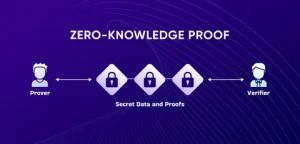
Emerging privacy-first ecosystems, driven by Zero Knowledge technology, provide a response to this tension. These systems allow for the verification of information, identities, transactions, and artificial intelligence computations without revealing underlying data.

This shift represents one of the most significant architectural innovations since the inception of smart contracts. Industries requiring high confidentiality, while still needing decentralized integrity, can benefit from a privacy-focused, computation-ready blockchain network.
The Intersection of Utility, Value, and Privacy
In this evolving digital landscape, the growing volume of digital assets is reshaping the interplay among utility, value, and privacy. These assets are not merely transactional; they support encrypted computations, reward participation, and foster ecosystems centered on end-to-end confidentiality.
zk Crypto: A New Type of Digital Asset
The rise of zk Crypto signifies a momentous reevaluation of digital finance. Traditional cryptocurrencies often emphasize transparency and accessible transaction histories. While these features are beneficial in certain applications, they pose challenges for sectors such as healthcare, finance, defense, artificial intelligence, and identity systems. These sectors urgently need verifiable data communication that maintains confidentiality.
This is where zk Crypto diverges. It connects directly to networks that permit encrypted computation through advanced Zero Knowledge architectures. By default, privacy governs this ecosystem. Every transaction, calculation, or identity exchange remains secure and provable. The decentralized encrypted environments at its core empower selected users to engage in complex artificial intelligence tasks, authenticate sensitive data, and execute private digital workflows.
The Role of Proof Pods
Users invited into these Proof Pods receive compensation through a native token, reflecting the computational value they bring to the network. This reward system intertwines with zk Crypto’s identity and becomes the economic engine that sustains privacy-first operations. Future presales will open participation to a broader audience, enabling both early supporters and institutions to engage in the ecosystem.
As the demand for encrypted workflows grows, the role of zk Crypto expands. The token embodies a distinct kind of utility, closely associated with the future of confidential digital finance.
The Economic Rationale of Zero Knowledge Digital Assets
To grasp zk Crypto’s long-term value, one must consider the broader economic trends shaping the data-intensive industry. Increasingly complex regulations weigh on institutions, while the costs associated with data breaches continue to soar. Artificial Intelligence systems require vast quantities of data, but they also amplify privacy concerns and potential misuse.
Today, awareness around the collection and sale of personal data has reached unprecedented levels. Trust in digital platforms has waned, and privacy has emerged as a vital asset category.
Zero Knowledge ecosystems present a viable alternative in this pressure-laden environment. They foster trust by employing encrypted validation rather than exposing data, steering clear of centralized computation that might compromise sensitive information. Instead, they distribute computational tasks across a network of privacy-conscious nodes, embedding privacy into their very foundation rather than treating it as a premium feature.
Within this framework, zk Crypto serves as the internal mechanism supporting encrypted workloads. Those who operate Proof Pods earn zk Crypto by facilitating private AI operations and verifying confidential information. This transformation shifts digital asset utility from a passive role to an active manifestation of computational effort. It meets a growing global need for privacy and security in digital interactions.
Meeting Regulatory Demands
As regulatory regimes tighten globally, the necessity for privacy-first infrastructure increases dramatically. This demand reinforces zk Crypto’s financial foundation, anchoring its trajectory in measurable participation within encrypted computing ecosystems.
Conclusion
The emergence of zk Crypto marks a pivotal transformation within the digital financial landscape. It highlights the evolution of blockchain technology amid heightened concerns for data sensitivity and the rapid growth of AI. Rather than succumbing to hype cycles, zk Crypto thrives on genuine computational needs.
This innovative ecosystem leverages Proof Pods to enable confidential AI execution, secure data validation, and personal identity management. Trust emerges from mathematical certainty in Zero Knowledge architecture, not from exposure.
As we advance, the next phase of blockchain innovation will see assets aligned with encrypted computation. The digital economy is evolving towards privacy, scalability, and verifiability. zk Crypto embodies the convergence of technological requirements and economic innovation.
This progression signifies a future where privacy and performance coexist harmoniously. Sensitive information can be managed responsibly, allowing digital systems to empower users rather than expose them. The trend toward privacy-first ecosystems is gaining momentum, signaling zk Crypto’s role in promoting secure, confidential, and computation-ready digital finance.
Author



A good mobile app starts with a good idea, but turning that idea into a successful product takes the right development team. Whether you are planning an app for customers, employees, or a new business venture, the people building it can have a major impact on its performance, usability, security, and future growth.
Dubai has become an attractive market for companies investing in digital products. Businesses in retail, logistics, real estate, healthcare, finance, hospitality, food delivery, and other sectors are adopting mobile applications to connect with customers and improve everyday operations.
This has also increased the number of companies offering mobile development services. While having more choices can be helpful, it can make the hiring process confusing. Every company may claim to have experienced developers, but not every team will be the right fit for your project.
If you are planning to hire mobile app developers in Dubai, you need to look beyond promotional claims. Their previous work, technical knowledge, communication style, development process, and ability to understand your business all deserve attention.
Here is a practical guide to help you make a better decision.
Hire Mobile App Developers in Dubai for Custom Business Applications
The first thing to consider is whether the development team can understand your business instead of simply following a predefined development process.
A good mobile app development company in Dubai will normally start by discussing your idea, target users, business model, required features, and expected outcomes. This initial conversation helps developers understand what you actually need before suggesting a technical solution.
For example, an online retailer may need product browsing, shopping carts, payments, order tracking, and customer accounts. A logistics company might need driver management, GPS tracking, delivery scheduling, and real-time updates.
The requirements are different, so the development approach should be different too.
Choose Dubai App Developers with Relevant Industry Experience
Previous experience can make a considerable difference when selecting a development team. Look through the company’s portfolio and see whether it has built applications with functionality related to your project.
You don’t necessarily need a developer who has worked exclusively in your industry. What matters is whether the team has solved similar technical and business problems before.
Ask about the challenges they faced on previous projects and how they solved them. A developer who can explain the reasoning behind past decisions is often more valuable than someone who simply lists technologies.
Find a Development Team That Understands Your Business Goals
Your app should have a purpose beyond simply being available on an app store.
Before choosing an app development company in Dubai, explain what you want the application to achieve. Perhaps you want to increase sales, make bookings easier, improve customer service, automate an internal process, or introduce an entirely new digital service.
The development team should understand these goals and use them to guide decisions about features and technology.
Choose an Android App Development Company in Dubai for Scalable Apps
Android gives businesses access to a broad range of users, but developing a quality Android application requires consideration of many different devices and configurations.
When evaluating an Android app development company in Dubai, ask about its experience with different screen sizes, operating-system versions, hardware specifications, and device capabilities.
A developer who understands these differences can make better decisions about compatibility and performance from the beginning.
Check Android Development Experience in Dubai
Take some time to explore previous Android projects completed by the development team.
Look at more than screenshots. If possible, try the applications yourself. Pay attention to how quickly screens load, how easy the navigation feels, and whether the application behaves smoothly.
You can also ask the developers which technologies they typically use and why they would choose a particular approach for your project.
Hire Android Developers for Feature-Rich Applications
Modern Android applications can include much more than basic screens and forms.
Depending on your business, you may need location services, payment gateways, push notifications, cloud functionality, social login, real-time communication, or connections with external systems.
Before hiring Android app developers in Dubai, make sure they have experience handling the features that matter to your application. More importantly, ask how those features will affect development time, performance, security, and maintenance.
Hire iOS App Developers in Dubai for Premium Mobile Experiences
If Apple users are part of your target market, finding experienced iOS app developers in Dubai should be another priority.
iOS development has its own technical requirements and platform guidelines. Developers need to understand Apple’s ecosystem and create an experience that feels natural to iPhone and iPad users.
Review Previous iOS App Development Projects
A company’s iOS portfolio can give you a useful idea of its capabilities.
Look for applications with clean interfaces, straightforward navigation, responsive interactions, and reliable performance. If a portfolio contains projects similar to yours, ask the team about the role it played in those projects.
Don’t hesitate to ask for details about the development process. A reputable iOS app development company in Dubai should be comfortable explaining how it approaches design, development, testing, and deployment.
Choose Developers Familiar with App Store Requirements
Getting an app ready for launch involves more than finishing the code.
The application needs to be prepared properly for App Store submission and should meet the relevant requirements. Experienced iOS developers can help with the technical preparation, testing, submission process, and future updates.
This kind of experience can save businesses from unnecessary delays close to launch.
Get Custom Mobile App Development Services in Dubai for Unique Requirements
Off-the-shelf software can be useful for certain business needs, but it cannot always accommodate a unique workflow or customer experience.
That’s where custom mobile app development in Dubai can be useful. Instead of adjusting your business to fit a ready-made application, you can create a product around your actual requirements.
Build Applications Around Your Business Model
A custom app can include only the functionality your customers or employees actually need.
Depending on your project, this could include:
- User registration and secure login
- Product or service catalogs
- Online payments
- Booking and scheduling
- Order management
- Location tracking
- Customer support
- Loyalty programs
- Admin dashboards
- Reports and analytics
- Push notifications
- Third-party integrations
The important part is prioritizing features. Adding every possible function at launch can increase both cost and complexity.
An experienced custom mobile app development company in Dubai can help you decide which features are essential for the first release and which can be introduced later.
Choose a Dubai Development Partner for Flexible Solutions
Your first version may not be your final product.
As customers start using the application, you may discover new requirements, request additional features, or expand into new markets. The technical foundation should therefore be flexible enough to accommodate these changes.
Discuss your long-term plans with potential developers before development begins. This gives them an opportunity to build an architecture that can support future improvements.
Find Cross-Platform App Developers in Dubai for Android and iOS
If you want to launch on both Android and iOS, cross-platform development may be an option worth discussing.
With cross-platform app development in Dubai, developers can use a shared development approach for applications targeting multiple operating systems. For certain projects, this can simplify development and make ongoing updates easier.
However, it isn’t automatically the best choice for every application.
Compare Native and Cross-Platform Development
Native development can be useful when an application requires highly platform-specific functionality or maximum control over performance.
Cross-platform development can make sense when the business wants to reach both platforms efficiently and the application’s requirements are compatible with that approach.
Ask your mobile app developers in Dubai to compare both options based on your actual requirements. The decision should consider performance, functionality, budget, timeline, and future maintenance.
Choose Technology Based on Business Requirements
Technology should serve the product, not the other way around.
A reliable mobile application development company in Dubai should be able to explain why a particular framework or development approach makes sense for your project.
If a developer recommends a technology without first asking about your requirements, consider that a reason to investigate further.
Compare Mobile App Development Companies in Dubai Before Hiring
There is no shortage of development providers in the Dubai market. Taking time to compare them can help you avoid choosing a company simply because it appears first in search results.
Evaluate Portfolios of Dubai Mobile App Development Companies
Start with the portfolio.
Look for real applications rather than generic concept designs. Try to understand what the company actually delivered and whether those projects demonstrate the technical skills your application requires.
You can also ask about the size of the development teams, project timelines, and the company’s role in each project.
Compare Services, Pricing, and Project Timelines
When comparing mobile app development services in Dubai, don’t focus on the price alone.
One company may provide design, development, testing, deployment, and maintenance within its quotation, while another may charge separately for each stage.
Ask for a clear proposal that outlines:
- Project scope
- Features and functionality
- Technology stack
- Development milestones
- Estimated timeline
- Testing
- Deployment
- Maintenance
- Payment terms
A transparent proposal makes comparisons much easier.
Find Affordable Mobile App Development Services in Dubai Without Cutting Quality
Every business has a budget, and mobile development can become expensive if the scope isn’t managed carefully.
That doesn’t mean you should automatically select the cheapest developer. A low initial quote may exclude important work or result in additional expenses later.
Understand What Determines App Development Cost in Dubai
Several factors influence the final cost of a mobile application.
These include the number of platforms, application complexity, UI/UX requirements, backend functionality, integrations, security, testing, and development timeline.
For instance, a simple booking application will have very different requirements from a marketplace or logistics platform with real-time tracking.
When discussing costs with mobile app developers in Dubai, provide as much information about your project as possible. More accurate requirements generally lead to more realistic estimates.
Request a Detailed Development Proposal
Before agreeing to a quotation, ask exactly what you’re receiving for the stated price.
A good proposal should explain the deliverables and identify anything that is not included.
This can help you avoid situations where additional charges appear later because certain features or services were not part of the original agreement.
Choose a UI/UX Design Company in Dubai for Better App Experiences
Users rarely care about the technology behind an application. They care about whether the app is easy to use.
That makes UI/UX an important part of the hiring decision.
Hire Dubai App Designers for User-Friendly Interfaces
A good design should make the application feel natural from the first interaction.
Designers should think about navigation, screen hierarchy, buttons, forms, onboarding, accessibility, and the steps users need to complete important actions.
When reviewing the work of a UI/UX design company in Dubai, don’t just judge whether the screens look attractive. Ask whether the design actually makes the product easier to use.
Create Consistent Android and iOS Experiences
If you’re launching on both platforms, your branding and core experience should remain consistent.
At the same time, Android and iOS users have different platform expectations. A good team should know how to maintain your brand identity without making the application feel awkward on either platform.
Read More: https://contrank.com/commercial-truck-financing/
Hire Scalable Mobile Application Developers in Dubai for Growing Businesses
It’s easy to focus entirely on launch day. However, your application needs to work just as well when your user base grows.
This is why scalability should be discussed before development begins.
Build a Mobile App Ready for Future Expansion
Developers should think about how the backend, database, APIs, cloud infrastructure, and authentication systems will handle growth.
You may start with a limited number of users, but a successful product could eventually handle thousands or even millions of transactions.
Planning for that possibility early can prevent major technical changes later.
Choose Dubai Developers with Long-Term Technical Expertise
Your relationship with a development company shouldn’t necessarily end once the app reaches the stores.
As your business grows, you may need new integrations, additional features, improved performance, or changes to existing functionality.
A development team that understands your product can make those changes more efficiently.
Hire Secure Mobile App Developers in Dubai for Business Data Protection
Security shouldn’t be treated as something to add just before launch.
Applications often handle personal information, account credentials, payment details, location information, and confidential business data. Protecting this information should be part of the development process from the beginning.
Ask About Mobile App Security Practices
Before hiring secure mobile app developers in Dubai, ask how they approach authentication, authorization, API protection, data storage, encryption, and access management.
Also ask how security issues are identified and handled during testing.
A developer should be able to explain these practices in clear language rather than simply saying that the application will be “secure.”
Protect Customer and Business Information
The level of security required depends on the type of application and the data it handles.
If your business operates in a regulated industry, discuss relevant security and compliance requirements with your development partner before work begins.
Choose Full-Service Mobile App Developers in Dubai for End-to-End Solutions
Some businesses prefer to work with separate specialists for design, development, testing, and deployment. Others prefer having everything managed by one team.
For many projects, a full-service development partner can simplify communication.
Get Complete Mobile App Development Services
Depending on the provider, a full-service team may handle:
- Product planning
- Business analysis
- UI/UX design
- Android development
- iOS development
- Backend development
- API integration
- Quality assurance
- Deployment
- Maintenance
- Technical support
Having multiple capabilities under one roof can make project management more straightforward.
Work with One Team from Concept to Launch
When the same team remains involved throughout the project, developers and designers can maintain a better understanding of the product.
It can also reduce the communication gaps that sometimes occur when work is passed between different vendors.
Find Mobile App Developers in Dubai with Reliable Testing and QA
Even a well-designed application can contain bugs. Thorough testing is what helps identify those problems before users encounter them.
When evaluating mobile app developers in Dubai, ask them to explain their testing process rather than assuming testing is included.
Check the Company’s Mobile App Testing Process
A complete QA process may include:
- Functional testing
- Performance testing
- Security testing
- Compatibility testing
- Usability testing
- Regression testing
- API testing
- Device testing
Testing should be carried out throughout development, not just during the final days before launch.
Choose Developers Who Fix Issues Before Launch
Regular testing gives developers an opportunity to identify and fix problems while the relevant part of the application is still being developed.
This can reduce the risk of serious issues appearing after launch and create a smoother experience for early users.
Hire Mobile App Maintenance Services in Dubai for Long-Term Support
The work doesn’t stop when an application is published.
Android and iOS operating systems are updated regularly. APIs change, security issues emerge, devices evolve, and users may request new functionality.
This is why mobile app maintenance services in Dubai should be considered when selecting your development partner.
Get Post-Launch App Support in Dubai
Post-launch support can include:
- Bug fixing
- Performance improvements
- Security updates
- OS compatibility updates
- API changes
- New features
- Technical assistance
- Application monitoring
Discuss these services before signing your contract so you know what support will be available after launch.
Choose a Long-Term Mobile App Development Partner
A long-term relationship with a development team can be valuable when the application becomes an important part of your business.
Instead of explaining the entire product to a new company every time you need an update, an existing partner already understands the architecture and development history.
Find the Best Mobile App Development Team in Dubai for Your Project
The “best” developer isn’t necessarily the company with the biggest portfolio or the lowest quotation. The right choice depends on your specific requirements.
Shortlist Developers Based on Your Requirements
Create a shortlist and compare each company based on:
- Relevant experience
- Portfolio quality
- Android expertise
- iOS expertise
- UI/UX capabilities
- Technical approach
- Communication
- Project management
- Pricing
- Testing
- Security
- Post-launch support
This gives you a much clearer picture than comparing companies based on price alone.
Discuss Your Project Before Signing a Contract
A detailed discussion before hiring can reveal a lot about a development company.
Explain your idea and ask how the team would approach it. Pay attention to the questions they ask you.
If developers are interested in understanding your users, business model, challenges, and long-term plans, that’s generally a positive sign.
They should also be comfortable discussing potential risks rather than promising that everything will be quick, easy, and inexpensive.
Final Thoughts on Hiring Mobile App Developers in Dubai
Finding experienced mobile app developers in Dubai takes some research, but the effort can pay off throughout the life of your application.
Start by understanding what your business actually needs. Then compare development companies based on relevant experience, portfolio quality, Android and iOS expertise, design capabilities, technical approach, pricing, communication, testing, security, and ongoing support.
Don’t make the decision based on a single factor. A low quotation may not provide the services your project requires, while a large portfolio doesn’t automatically mean a company is the right fit for your business.
The ideal mobile app development company in Dubai should take time to understand your goals, recommend technology based on your requirements, communicate clearly, and remain capable of supporting the application after launch.
Whether you are developing a startup MVP, an e-commerce platform, a logistics application, or an enterprise solution, choosing the right development partner can give your product a stronger technical foundation and a better chance of delivering lasting value to your users.
Author



As organizations grow, their IT environments rarely remain simple. A small business may begin with a few servers, network devices, applications, and cloud resources. As the company expands, the infrastructure can quickly include multiple cloud platforms, virtual machines, databases, endpoints, containers, network connections, and business-critical applications. Managing all of these components manually becomes increasingly difficult.
This is where infrastructure monitoring becomes essential. It gives IT teams continuous visibility into the health, availability, capacity, and performance of the technology supporting the business. Instead of waiting for users to report problems, IT professionals can identify warning signs and respond before minor issues become major disruptions.
What Is Infrastructure Monitoring?
If you are wondering what is infrastructure monitoring, it is the process of continuously observing the performance and availability of IT infrastructure components. These components can include servers, storage systems, networks, databases, virtual machines, cloud resources, applications, and other technology assets.
Monitoring tools collect information such as CPU usage, memory utilization, disk capacity, network traffic, response times, error rates, and system availability. When performance falls outside predefined thresholds, the monitoring platform can generate alerts so IT teams can investigate the problem.
This continuous visibility becomes particularly valuable when an IT department is scaling. More infrastructure means more potential points of failure, making manual supervision increasingly impractical.
Scaling Creates Greater Infrastructure Complexity
Growth usually means adding more users, devices, applications, locations, and services. A company that once operated a handful of servers may eventually run workloads across data centers and multiple cloud environments.
Without centralized visibility, IT teams may struggle to understand how these systems interact. A slow application could be caused by an overloaded server, insufficient database resources, network congestion, or storage limitations.
Infrastructure performance monitoring helps teams identify these relationships by providing performance data across different infrastructure components. This allows IT professionals to investigate issues based on evidence rather than assumptions.
Preventing Problems Before They Become Outages
One of the biggest advantages of infrastructure monitoring is proactive problem detection.
For example, a server may normally operate at 50% CPU utilization but gradually increase to 85% as workloads grow. Without monitoring, the IT team may only discover the problem when applications begin slowing down. With automated monitoring, an alert can be generated when utilization crosses a predefined threshold.
The team can then investigate and take corrective action before users experience significant disruption.
This approach changes IT operations from reactive troubleshooting to proactive management. Instead of constantly responding to emergencies, IT teams can spend more time preventing them.
Supporting a Smaller IT Team
Scaling does not always mean hiring IT staff at the same rate as infrastructure growth. Organizations often expect existing teams to manage increasingly complex environments.
Automation can help close this gap.
A monitoring platform can continuously collect metrics and identify abnormal behavior without requiring an engineer to manually check every server or network device. Alerts can also be prioritized according to severity, helping teams focus on the most important incidents.
This allows a growing infrastructure to be managed more efficiently without placing unnecessary pressure on already busy IT professionals.
Improving Capacity Planning
Growth requires planning for future infrastructure requirements. IT teams need to know when existing resources will no longer be sufficient.
Infrastructure monitoring provides historical performance information that can support these decisions. By analyzing CPU, memory, storage, bandwidth, and other resource trends, IT teams can identify patterns and estimate when additional capacity may be necessary.
For example, if storage utilization has increased consistently over several months, the organization can plan an expansion before available space becomes a critical problem.
This is more efficient than purchasing infrastructure based on guesswork or waiting until resources become exhausted.
Faster Troubleshooting and Root-Cause Analysis
When an outage occurs, time matters. The longer a critical system remains unavailable, the greater the potential business impact.
Monitoring gives IT teams access to historical and real-time information that can speed up troubleshooting. Engineers can compare system behavior before, during, and after an incident to determine what changed.
Suppose employees suddenly experience slow access to an internal application. Monitoring data might reveal that network latency increased at the same time that a particular server reached unusually high resource utilization.
This information gives engineers a starting point for investigating the incident instead of requiring them to manually inspect every component.
Better Visibility Across Cloud and Hybrid Environments
Modern organizations frequently operate hybrid environments that combine on-premises infrastructure with public and private cloud services.
This creates additional management challenges because infrastructure may be distributed across multiple platforms.
Centralized infrastructure monitoring can provide a unified view of these environments. IT teams can monitor resources across different locations and identify performance problems that may otherwise be hidden within individual platforms.
This is especially important for growing organizations because infrastructure expansion often happens across several technologies rather than within one environment.
Strengthening Security and Reliability
Infrastructure monitoring is primarily associated with performance and availability, but it can also support broader IT security and reliability efforts.
Unexpected changes in resource consumption, network traffic, or system behavior can sometimes indicate configuration problems or suspicious activity. Monitoring can help identify unusual patterns that deserve further investigation.
Monitoring also supports reliability by identifying recurring failures and performance bottlenecks. Over time, IT teams can use this information to improve configurations and eliminate common sources of disruption.
Making IT Operations More Scalable
A scalable IT operation is not simply one that can support more servers. It is one that can manage increasing complexity without a corresponding increase in manual effort.
That is why infrastructure monitoring should be considered an important part of an organization’s scaling strategy.
By providing continuous visibility, automated alerts, historical data, and performance insights, monitoring allows IT teams to manage larger environments more effectively. It also helps organizations move toward proactive maintenance, better capacity planning, faster troubleshooting, and improved service reliability.
Conclusion
Understanding what is infrastructure monitoring is straightforward, but recognizing its strategic value is even more important. As organizations expand, their technology environments become too complex to manage through manual checks alone.
Infrastructure performance monitoring gives IT teams the information they need to understand how systems are performing, detect emerging problems, plan future capacity, and resolve incidents faster.
For growing IT teams, infrastructure monitoring is not simply another management tool. It is a foundation for building a more proactive, efficient, reliable, and scalable IT operation.
Author



The US Intelligent document processing market continues to gain momentum as businesses look for faster and smarter ways to manage large volumes of information. Companies across banking, insurance, healthcare, government, retail, and other industries handle thousands of invoices, contracts, claims, forms, and records every day. Managing these documents manually can consume valuable time and create avoidable errors.
Intelligent document processing, or IDP, helps organizations overcome these challenges. The technology combines artificial intelligence, machine learning, natural language processing, optical character recognition, and computer vision. Together, these tools can capture information, understand document content, extract relevant data, and send it into business workflows.
Market Growth Outlook Through 2035
According to Dimension Market Research, the US market holds a value of USD 2.47 billion in 2026. Analysts expect the market to reach approximately USD 11.86 billion by 2035. This growth represents a projected compound annual growth rate of 19.02% between 2026 and 2035.
Several factors support this expansion. Businesses continue to increase their use of cloud platforms and enterprise automation. At the same time, growing document volumes create pressure to process information more efficiently.
Traditional OCR can recognize printed or scanned text. However, modern IDP platforms go much further. They can identify document types, understand context, extract specific information, validate results, and connect the output with enterprise applications. As a result, organizations increasingly view document processing as part of a broader automation strategy rather than as a simple scanning function.
What Is Driving Market Demand?
Businesses want to reduce repetitive work while improving accuracy and response times. Manual document handling often requires employees to enter information into multiple systems. This approach can slow operations and increase the possibility of mistakes.
IDP addresses this problem by automating several stages of the process. For example, a company can use the technology to capture invoice information, identify important fields, check the extracted data, and send it into an accounting platform.
Furthermore, cloud technology makes these solutions easier to scale. Organizations can expand document processing capacity without building large infrastructure environments. Subscription-based models and prebuilt integrations can also make adoption more practical for smaller and mid-sized businesses.
Another important driver involves artificial intelligence. Newer AI models can understand documents with greater context. Therefore, they can support more complicated workflows involving contracts, claims, correspondence, financial statements, and other business records.
Key Trends Shaping the Market
One major trend involves end-to-end automation. Businesses no longer want technology that simply extracts text. Instead, they want systems that can validate information, identify exceptions, trigger workflows, and transfer results into other applications.
Generative AI also creates new possibilities. It can help organizations interpret complex documents, summarize lengthy content, and identify important information. These capabilities can reduce the time employees spend reviewing large document collections.
Cloud deployment represents another major trend. Cloud platforms provide flexibility and centralized management. They also make it easier for organizations to access newer AI capabilities as vendors continue to improve their platforms.
Meanwhile, industry-specific solutions are gaining attention. A bank may need tools for financial documents and customer onboarding. An insurance company may focus on claims and policy records. Healthcare organizations may prioritize patient documentation and administrative records. This growing specialization gives technology providers opportunities to develop workflows around specific industry requirements.
Emerging Opportunities
Generative AI-based document understanding represents an important opportunity for the US Intelligent document processing market. Conventional OCR works well with straightforward text recognition. However, complex documents often require deeper contextual understanding.
Contracts provide a good example. A contract may contain dates, obligations, conditions, financial terms, and exceptions across multiple sections. Advanced AI can help identify these details and organize them into useful outputs.
Healthcare records, insurance claims, financial statements, and government documents can benefit from similar capabilities.
Mid-sized companies also offer significant growth potential. Cloud delivery, low-code configuration, subscription pricing, and ready-made connectors can lower technical barriers. Consequently, more organizations can adopt document intelligence without creating large internal technology teams.
Market Segmentation
The market covers several important categories. By component, it includes software solutions and services. Software can cover document capture, classification, data extraction, workflow automation, AI models, and related capabilities. Services can include consulting, implementation, managed services, training, and support.
Deployment options include cloud, on-premises, and hybrid environments. Cloud solutions currently lead the deployment segment, accounting for 61.7% of the market in 2026.
Technology categories include OCR, natural language processing, machine learning, computer vision, robotic process automation, deep learning, and generative AI extraction.
Large enterprises represent an important customer group. However, small and medium-sized businesses increasingly have access to these technologies through flexible cloud offerings.
Major end-user industries include banking and financial services, insurance, healthcare and life sciences, government, IT and telecommunications, manufacturing, retail, transportation, logistics, and legal services.

Leading Companies
The competitive landscape includes several established technology providers and specialized IDP companies. Key names include ABBYY, AntWorks, Appian, Automation Anywhere, AWS, Datamatics, Google Cloud, HCLTech, Hypatos, Hyperscience, IBM, Infrrd, Microsoft, Nanonets, OpenText, Rossum, SS&C Blue Prism, Tungsten Automation, UiPath, and WorkFusion.
These companies compete through AI capabilities, automation features, cloud platforms, industry solutions, integrations, security, and ease of deployment.
Recent Market Development
In July 2026, Microsoft expanded its partnership with Mistral and introduced Mistral Document AI with OCR 4 to Microsoft Foundry. The development supports structured document processing and agentic enterprise workflows.
Such developments show how quickly the market continues to evolve. Vendors increasingly combine document intelligence with broader AI and automation platforms.
Key Market Numbers
The market offers several notable figures for 2026. Its estimated value stands at USD 2.47 billion, while analysts project a value of USD 11.86 billion by 2035. The expected CAGR stands at 19.02% during the forecast period.
Software solutions hold a 68.4% share, while cloud-based solutions account for 61.7%. Banking and financial services represent 19.4% of the market. Together, these figures highlight the strong demand for intelligent document technologies across major business sectors.
Future Outlook
The US Intelligent document processing market should continue expanding as organizations connect document automation with wider business processes. Future solutions will likely focus on contextual understanding, validation, summarization, exception management, workflow orchestration, and automated actions.
Generative AI will remain an important area of development. At the same time, businesses will continue to prioritize security, compliance, integration, and governance.
Organizations also want measurable results. Therefore, vendors that can demonstrate lower processing costs, faster turnaround times, better data quality, and improved employee productivity may gain a competitive advantage.
Ultimately, the market is moving beyond basic document digitization. Modern platforms aim to turn unstructured information into useful business intelligence and automated actions.
Conclusion
The US Intelligent document processing market is moving toward a more connected and automated future. Organizations increasingly want to replace repetitive manual tasks with intelligent workflows that deliver faster and more accurate results.
As AI, cloud computing, and automation continue to advance, IDP will likely become an increasingly important part of enterprise technology strategies. Companies that combine intelligent document processing with strong security, reliable integration, and measurable business outcomes can build more efficient operations and respond more effectively to changing market demands.
Author



Cylinder Volume: The Complete Guide to Calculating Volume Accurately

Best Bourbon Tours in Kentucky: Choosing the Right Tour for You

Cabinet Shop Drawings for Precise Fabrication and Installation

Auto Repair Digital Marketing: Grow Your Automotive Business Online

Residential Drafting Services for Remodeling and Renovation Plans

Raised Bed Soil Calculator: How Much Soil Do You Really Need?

3 Best Rhude Hoodies for UK Style 2026

Revit Drafting Solutions for Accurate BIM Projects

How to Find Mobile App Developers in Dubai for Android & iOS Apps

How Do IDA Jacket Designs Balance Function, Comfort, and Style?

Cybersecurity Consulting Company SequelNet Provides Critical IT Support Services to Medical Billing Firm, Medical Optimum

Meet the Megalodon: The Shark Star of ‘Meg 2’

Reduce Video Game Lag: Level Up Your Gaming Performance

Balancing India’s Entertainment: Cricket vs. Bollywood

Jetsetter’s Secrets: Unveiling Our Favorite Travel Hacks for a Seamless Adventure

The 5 Best Live Sports Streaming Sites: Legal and Exciting!

Hollywood Labor Unrest: The Impact of ‘What About Us?’ Strikes

Unveiling the Magic of Dream Fulfillment at the Late NBA Draft

Illuminate Your Skin: Dr. Axe Unveils Natural Remedies for Lightening Knees and Elbows

Bright Choices: Navigating the Pros and Cons of Skin Whitening Creams with Dr. Axe
-

 Business3 years ago
Cybersecurity Consulting Company SequelNet Provides Critical IT Support Services to Medical Billing Firm, Medical Optimum
-
Entertainment3 years ago
Meet the Megalodon: The Shark Star of ‘Meg 2’
-
Entertainment3 years ago
Reduce Video Game Lag: Level Up Your Gaming Performance
-
 Sports3 years ago
Balancing India’s Entertainment: Cricket vs. Bollywood
-
Entertainment3 years ago
Jetsetter’s Secrets: Unveiling Our Favorite Travel Hacks for a Seamless Adventure
-
Productivity3 years ago
The 5 Best Live Sports Streaming Sites: Legal and Exciting!
-
Art /Entertainment3 years ago
Hollywood Labor Unrest: The Impact of ‘What About Us?’ Strikes
-
Sports3 years ago
Unveiling the Magic of Dream Fulfillment at the Late NBA Draft






