
e-commerce
Grocery Delivery: AI and Machine Learning Improve Forecasting

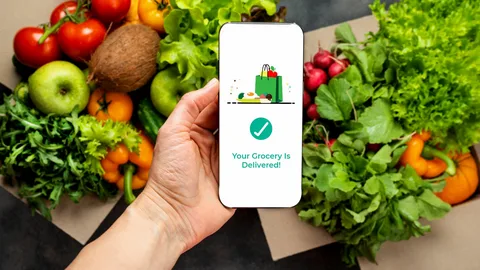
Consumer demand can change quickly in the grocery industry. A product may sell rapidly today but receive little attention tomorrow. Weather, holidays, local events, discounts, seasons, and changing customer preferences can all influence buying decisions.
For Grocery Delivery businesses, these changes create a constant operational challenge. Poor demand planning can lead to empty shelves, excess inventory, food waste, and delayed deliveries. Nonetheless, machine learning offers companies a more intelligent approach to handle these obstacles.
Machine learning can process large amounts of historical and real-time data. It can identify patterns, predict future demand, and help businesses make faster operational decisions. As a result, grocery companies can move from reacting to demand changes to preparing for them in advance.
What Is Grocery Demand Forecasting?
Grocery demand forecasting means estimating how much demand a business can expect in the future. Companies use these predictions to plan inventory, employees, warehouses, purchasing, and delivery resources. A forecasting system can predict:
- Product demand
- Customer order volumes
- Inventory requirements
- Delivery volumes
- Peak ordering periods
- Customer purchasing patterns
- Warehouse workloads
- Staffing needs
Traditional forecasting often relies on spreadsheets, previous sales figures, and manual assumptions. This approach may work for a small business. However, it becomes difficult when a company manages thousands of products and serves customers across multiple locations. Machine learning offers a more flexible solution. It can evaluate several factors at the same time and continue learning as new data becomes available.
Forecasting Matters for Grocery Businesses
Accurate forecasting affects almost every part of grocery operations. If a business underestimates demand, popular products may sell out. Customers may then cancel orders or choose another service.

On the other hand, overestimating demand can create unnecessary costs. This problem becomes even more serious with fresh products that have short shelf lives.
Therefore, businesses need to find the right balance. Machine learning can help them maintain enough inventory without purchasing more products than customers are likely to need.
Predicting Product Demand
Machine learning can analyze historical transactions, product categories, purchasing frequency, seasonal patterns, and customer behavior. It can then use these insights to estimate future demand. For example, a grocery company may notice that customers purchase more cold beverages during hot weather. Instead of waiting for demand to increase, the business can prepare additional stock beforehand. This approach can reduce stockouts while also limiting unnecessary purchases.
Forecasting Demand by Location
Customer preferences often differ between neighborhoods and cities. One region might exhibit high demand for organic goods, while another could produce increased orders for everyday necessities. A single forecast for an entire business may therefore produce inaccurate results at the local level.
Machine learning can analyze sales patterns by region. Businesses can use these insights to decide which products each fulfillment center should stock. They can also determine where additional delivery capacity may be necessary. This capability becomes especially valuable for companies operating across multiple cities.
Managing Seasonal Demand
Seasonality plays an important role in grocery purchasing. Holidays, festivals, weekends, summer weather, winter conditions, and regional events can all influence customer behavior.
Machine learning can compare previous seasonal patterns with current sales activity. Businesses can then estimate how demand may change during upcoming periods.
For instance, a company can study previous holiday sales to identify products that usually experience higher demand. Procurement teams can use that information to prepare inventory earlier.
Reducing Food Waste
Food waste remains a major concern for grocery businesses. Fruits, vegetables, dairy products, bakery items, meat, and other perishables can lose their value quickly. Overstocking these products can create significant financial losses. Predictive models can estimate how much inventory customers are likely to purchase. Managers can then adjust purchasing quantities according to expected demand.
The system can also identify products that sell more slowly than expected. Businesses can respond by changing promotions, reducing future purchases, or prioritizing certain products. Consequently, better forecasting can support both profitability and sustainability.
Improving Inventory Replenishment
Reliable demand predictions can make inventory replenishment more efficient. Instead of applying the same reorder level to every product, businesses can set replenishment plans based on actual demand patterns.
Fast-moving products may need frequent restocking. Meanwhile, slower-moving products may require smaller and less frequent purchases.
An intelligent grocery application can connect forecasting models with inventory systems. This connection allows managers to monitor stock levels and respond to changing demand more efficiently.
Predicting Order and Delivery Volumes
Forecasting does not only apply to products. Businesses can also predict how many customer orders they may receive at different times. Machine learning can examine order history, time of day, weekdays, promotions, holidays, weather, and customer density. Suppose a company expects order volumes to rise sharply between 6 PM and 9 PM. It can arrange additional drivers and vehicles before the rush begins. For Grocery Delivery companies, this preparation can reduce delays and improve the use of available delivery resources.

Optimizing the Delivery Workforce
Businesses need enough delivery personnel to handle demand without creating unnecessary labor costs. Too few drivers can cause delays. Too many drivers can increase operating expenses without providing enough additional value. Forecasting models can estimate delivery requirements by location and time. Managers can then build schedules around expected demand instead of relying only on fixed staffing patterns. This approach can improve delivery speed while helping businesses control workforce costs.
Understanding Customer Purchasing Behavior
Machine learning can reveal useful patterns in customer activity. It can identify frequently purchased products, preferred shopping times, order frequency, product combinations, and seasonal habits. These insights help businesses understand not only what customers purchase but also when their behavior changes.
For example, some customers may regularly purchase household essentials every few weeks. A business can use that pattern to anticipate future orders and prepare relevant inventory.
Making Promotions More Effective
Discounts and promotional campaigns can quickly change grocery demand. A discount on a popular product may generate a sudden increase in orders. Machine learning can study previous promotions and compare them with actual sales results. Businesses can then estimate how a future campaign may affect demand. This information allows companies to prepare inventory before launching an offer. As a result, they can avoid promoting products that may soon run out of stock.
Using External Data
Modern forecasting systems can combine internal business data with external information. Weather, local events, holidays, traffic conditions, and broader market trends can all influence customer demand.
For example, heavy rain may encourage more people to order groceries online. A forecasting model can consider weather conditions when estimating upcoming order volumes.
Therefore, combining multiple data sources can help businesses produce more relevant predictions.
How AI and Machine Learning Work Together
Machine learning identifies patterns and generates predictions. AI can then help turn those predictions into useful business recommendations. For example, a system may predict higher demand for a particular product. It can then recommend increasing inventory at selected locations. Similarly, an expected evening order surge may trigger a recommendation to increase delivery capacity. This creates an important shift. Businesses no longer need to use forecasting only as a reporting tool. They can use it to guide daily decisions.
Data Required for Forecasting
The accuracy of any machine learning system depends heavily on data quality. A grocery company may use sales records, inventory information, customer orders, product prices, delivery records, store locations, promotions, seasonal data, and weather information. Before training a model, businesses must clean and organize this information. Missing records, duplicate transactions, incorrect product details, and inconsistent inventory data can reduce prediction accuracy. Therefore, strong data management should remain a core part of the forecasting strategy.
Building Forecasting Into a Grocery Platform
Forecasting works best when it connects directly with existing business systems.
A grocery platform can link sales data with inventory management, warehouse operations, purchasing, and delivery systems. The process can follow a simple flow: Customer Orders → Data Collection → Data Processing → Forecasting → Prediction → Business Action for Grocery Delivery businesses, this connected approach turns predictions into practical actions. Instead of reviewing separate reports, managers can use forecasts while making purchasing, staffing, and delivery decisions.
Key Benefits of Predictive Forecasting
When businesses implement machine learning effectively, they can achieve several benefits. First, better demand estimates can lower unnecessary inventory and storage costs. Second, early demand predictions can reduce stockouts. Third, accurate forecasts can help limit food waste, especially for perishable products.
In addition, businesses can prepare better delivery capacity during busy periods. Customers also benefit because they are more likely to find products in stock and receive orders on time. Most importantly, managers gain stronger data-driven insights for purchasing, marketing, staffing, and daily operations.
Challenges to Consider
Machine learning also presents several practical challenges. New businesses may not have enough historical data to train highly accurate models. Poor-quality data can create another problem. Companies also need suitable cloud infrastructure and regular model monitoring. Customer behavior changes over time, so forecasting models must evolve with those changes. For this reason, businesses should begin with a specific problem. They can measure results, improve the system, and expand its use gradually.
The Future of Grocery Forecasting
The future of Grocery Delivery forecasting will likely become more automated. Intelligent platforms may predict demand, recommend inventory levels, identify possible delivery delays, suggest staffing requirements, and detect sudden changes in customer behavior.
Technologies such as real-time analytics, IoT devices, cloud computing, and mobile applications can strengthen these capabilities even further. Businesses should therefore view machine learning as part of their broader digital strategy rather than as an isolated technology.
Conclusion
Machine learning can change how grocery businesses prepare for future demand. By analyzing sales, customer behavior, seasonal patterns, promotions, regional trends, weather, and other external factors, businesses can create more accurate forecasts. However, predictions become valuable only when they influence real business decisions. Companies can use them to improve procurement, inventory, staffing, warehouse planning, marketing, and delivery operations.
For Grocery Delivery businesses, this shift can create a more proactive operating model. Instead of waiting for demand to change, companies can prepare for those changes in advance. As technology continues to evolve, machine learning will play an increasingly important role in building faster, smarter, and more efficient grocery operations.
Author



Amazon has become one of the most important marketplaces for businesses looking to reach online shoppers. However, having a product listed on Amazon does not guarantee that customers will find it. With thousands of competing products appearing for popular searches, brands need effective ways to increase visibility and attract relevant shoppers.
This is where Amazon advertising can make a significant difference.
Amazon advertising gives sellers and brands the opportunity to promote their products to shoppers who are already searching, browsing, and comparing products. When combined with a strong product listing and a well-planned marketing strategy, paid advertising can help businesses increase visibility, generate sales, and build a stronger presence on the marketplace.
Why Amazon Advertising Matters
Competition on Amazon continues to increase across almost every product category. A new seller may have an excellent product, competitive pricing, and professional images but still struggle to generate sales because established competitors already dominate search results.
Advertising provides an additional way to reach potential customers.
Instead of waiting for a product to gain organic visibility, brands can use paid placements to appear in front of shoppers who are searching for relevant products. This can be particularly useful for new product launches, competitive keywords, seasonal campaigns, and brands entering new categories.
However, advertising should not be viewed simply as a way to buy more traffic. The goal should be to attract the right traffic and turn that traffic into profitable sales.
Understanding Amazon PPC
One of the most common forms of Amazon advertising is Pay-Per-Click, commonly known as PPC.
With PPC advertising, advertisers generally pay when a shopper clicks on an advertisement. The ads can appear in search results or on product-related pages depending on the campaign type and targeting strategy.
Amazon PPC campaigns can use several targeting approaches, including:
- Keyword targeting
- Product targeting
- Category targeting
- Brand targeting
- Audience targeting
The right combination depends on the product, competition, budget, and advertising objectives.
For example, a brand selling kitchen equipment may target keywords related to specific products while also targeting competing product pages. Another brand launching a new beauty product may focus heavily on relevant search terms to build initial visibility.
Sponsored Products
Sponsored Products are one of the most commonly used Amazon advertising formats.
These advertisements promote individual products and can appear within Amazon search results and other shopping placements.
Sponsored Products can be useful for capturing shoppers who already demonstrate purchase intent. When someone searches for a product-related keyword, a relevant sponsored listing may appear alongside organic results.
For advertisers, the challenge is making sure the campaign targets relevant searches and that advertising spend is allocated toward keywords and products that can generate meaningful returns.
Sponsored Brands
Sponsored Brands provide another way for businesses to increase visibility.
Instead of focusing only on one product, these campaigns can help showcase a brand and multiple products. They can also help businesses create greater brand awareness among shoppers searching for relevant terms.
For established brands with a broader product range, Sponsored Brands can complement Sponsored Products by helping shoppers discover additional products within the same brand.
Amazon DSP
Amazon DSP, or Demand-Side Platform, provides another advertising option for brands looking to reach audiences beyond traditional keyword-based advertising.
DSP can be used for audience-based advertising and retargeting strategies. This can allow brands to reach shoppers based on interests, shopping behavior, and other audience signals.
For businesses with larger advertising goals, combining search advertising with audience-based campaigns can create a more complete marketing funnel.
The strategy may involve reaching potential customers at different stages of the buying journey rather than focusing only on shoppers who are ready to purchase immediately.
Keyword Research Is Essential
Successful Amazon PPC campaigns begin with good keyword research.
Keywords connect products with the searches customers perform on Amazon. Choosing the right keywords can therefore have a major impact on campaign performance.
Effective keyword research should consider:
- Product relevance
- Search intent
- Competition
- Search volume
- Conversion potential
- Advertising costs
It is also important to distinguish between broad and highly specific searches.
A broad keyword may generate significant traffic but may also attract shoppers who are not looking for the exact product being advertised. More specific keywords can sometimes produce less traffic but stronger purchase intent.
For this reason, advertisers should continually evaluate which search terms are generating valuable results.
Product Listing Optimization and Advertising Work Together
Advertising can bring shoppers to a product page, but the listing ultimately needs to convince them to purchase.
A product listing should clearly communicate what the product is, who it is for, and why it is worth buying.
Important elements include the product title, images, bullet points, product description, pricing, reviews, and other content available on the listing.
If a campaign generates many clicks but few purchases, the problem may not always be the advertising itself. The product page may need improvement.
This is why Amazon advertising and listing optimization should generally be considered together.
Important Amazon Advertising Metrics
Businesses need reliable metrics to understand whether their advertising campaigns are working.
One commonly used metric is ACoS, or Advertising Cost of Sales.
The basic formula is:
ACoS = Advertising Spend ÷ Advertising Revenue × 100
For example, if a business spends $300 on advertising and generates $1,500 in attributed sales, its ACoS is 20%.
Another useful metric is ROAS, or Return on Ad Spend.
ROAS = Advertising Revenue ÷ Advertising Spend
Using the same example, $1,500 in revenue from $300 in advertising spend produces a 5x ROAS.
However, there is no universal “perfect” ACoS or ROAS. A suitable target depends on product margins, business objectives, competition, and the role advertising plays in overall growth.
The Importance of Continuous Optimization
Launching an Amazon PPC campaign is only the beginning.
Advertising performance can change because of competition, seasonality, pricing, promotions, inventory levels, and changes in customer demand.
Regular campaign analysis can help identify opportunities to improve performance.
Optimization may involve:
- Adjusting keyword bids
- Adding negative keywords
- Increasing budgets for strong campaigns
- Reducing spending on inefficient targets
- Testing new keywords
- Reviewing search-term reports
- Analyzing conversion rates
- Testing different campaign structures
- Monitoring product-level performance
This ongoing process helps businesses make decisions based on actual performance rather than assumptions.
When Should a Business Consider Professional PPC Management?
Some small businesses can successfully manage their Amazon advertising internally. However, PPC management can become increasingly complex as a brand grows.
Businesses managing multiple products may have hundreds or thousands of keywords, targets, campaigns, and advertising decisions to monitor.
An experienced Amazon PPC agency can help businesses with areas such as campaign creation, keyword research, bid management, search-term analysis, advertising strategy, and ongoing optimization.
For businesses that want specialized support, StoreStride provides full-funnel Amazon advertising services, including Sponsored Products, Sponsored Brands, Brand Video, Amazon DSP, listing optimization, and account management. The company states that it has managed more than $10 million in ad spend across 50+ brands.
Combining PPC With a Broader Digital Strategy
Amazon advertising should not always operate independently from a company’s broader digital marketing strategy.
Businesses can benefit from connecting marketplace advertising with other activities such as content marketing, brand development, product research, email marketing, and customer retention.
For businesses interested in broader online growth, understanding digital marketing strategies for businesses can provide additional context around how different digital channels can work together.
The objective is to create a consistent customer journey rather than treating every marketing channel as a completely separate activity.
Final Thoughts
Amazon advertising can provide businesses with an effective way to increase product visibility and reach shoppers with strong purchase intent. However, successful advertising requires more than simply launching campaigns and increasing budgets.
Keyword research, campaign structure, listing quality, bid management, targeting, and continuous analysis all influence performance.
Businesses should also look beyond individual advertising metrics and consider how paid campaigns contribute to overall revenue, profitability, brand visibility, and long-term marketplace growth.
For brands willing to invest in data-driven optimization and a well-structured advertising strategy, Amazon PPC can become an important part of a sustainable eCommerce growth plan.
If you want to Read more Quality Blog please Visit.
Author



Starting a retail store or online business in Pakistan can be exciting. However, one of the first challenges is finding products that offer good quality at a reasonable cost. For many retailers, bulk purchasing provides a practical solution. It can lower the cost of each item and leave more room for profit when the products are resold.
This makes wholesale products Pakistan a useful area for new entrepreneurs, retailers, and experienced sellers. However, successful wholesale sourcing involves more than finding the lowest possible price. Sellers also need to consider quality, customer demand, supplier reliability, delivery expenses, and the final profit margin.
What Are Wholesale Products?
Wholesale are goods that businesses purchase in larger quantities, usually at a lower price per unit than retail buyers pay. Retailers and resellers can then sell these items individually to their customers at a higher price.
The wholesale market in Pakistan covers a wide range of categories. These include clothing, fashion accessories, kitchen supplies, household items, beauty accessories, mobile accessories, stationery, electronics, and lifestyle products.
However, not every product suits every business. A product that excels in one market might face challenges in another. Therefore, sellers should always consider their target audience before investing in inventory.
Why Wholesale Buying Matters
Wholesale purchasing can give business owners greater control over their pricing. A lower purchase cost can create enough room to cover packaging, shipping, advertising, platform fees, and other operating expenses.
It can also make order management easier. Instead of purchasing an item after receiving every customer order, sellers can keep popular products in stock. As a result, they can process orders faster and provide a better customer experience.
Still, bulk buying comes with risks. Unsold inventory can tie up money for weeks or months. Therefore, beginners should avoid purchasing large quantities simply because a supplier offers an attractive rate.
Popular Wholesale Products Opportunities
Customer preferences change regularly. For that reason, sellers should research current buying habits before choosing inventory. Several product categories can offer opportunities when they match genuine customer demand.
Household products can attract buyers because they solve everyday problems. Mobile accessories also remain relevant due to the widespread use of smartphones. Home organization products can appeal to customers who want more convenience and better use of space.
Beauty accessories, lightweight lifestyle products, and seasonal items can also create opportunities. Meanwhile, niche products can help sellers reach specific audiences with less direct competition.
However, no category guarantees success. Sellers should check demand, competition, product quality, and expected costs before placing an order.

How to Select the Right Products
The customer should come before the supplier when choosing inventory. First, identify the people you want to serve. Then, consider their needs, preferences, and purchasing habits.
Next, study competing products. Compare their prices, features, reviews, and customer complaints. Reviews can provide valuable information because they often reveal problems that product photos do not show.
For example, customers may repeatedly complain about weak materials or poor durability. In that case, a seller could look for a stronger alternative. This approach creates a real reason for customers to choose one seller over another.
Size and weight also matter. A product may appear inexpensive at the supplier’s price, but transportation and delivery expenses can increase the final cost significantly.
Finding a Reliable Supplier
A supplier plays an important role in the success of a retail business. Even an excellent product idea can become difficult to manage if the supplier provides inconsistent quality or delays orders.
Before making a large investment, consider ordering samples or starting with a small quantity. Inspect the actual products carefully. Check the material, finishing, packaging, appearance, and functionality.
Communication matters as well. A reliable supplier should clearly explain prices, stock availability, minimum order quantities, packaging options, and delivery schedules.
Also, ask about damaged products and replacements before placing an order. Knowing the supplier’s policies early can prevent problems later.
Calculate the Real Cost
A low wholesale price does not automatically mean high profit. Sellers should calculate every expense connected with the product. For example, imagine purchasing an item for Rs. 300 and selling it for Rs. 700. At first, the Rs. 400 differences may seem like a strong margin. However, packaging, transportation, advertising, delivery, platform charges, returns, and other expenses can reduce the actual profit.
Therefore, calculate the complete cost before buying inventory. Sometimes, spending slightly more on a better-quality product can produce better results. Better quality may reduce returns and complaints while increasing customer satisfaction.
Quality Builds Customer Trust
Customers judge a business by the product they receive. They rarely care how cheaply the seller purchased it. If the product disappoints them, they may leave negative feedback or avoid buying from the business again.
Poor-quality inventory can also increase refunds and replacement costs. Therefore, sellers should inspect products regularly and pay attention to customer feedback.
If several customers report the same problem, investigate it immediately. The issue may come from the supplier, product design, or quality control. A consistent supply of reliable products can help a business build trust and encourage repeat purchases.
Selling Wholesale Products Online
Online marketplaces and social media platforms have created new opportunities for small businesses. Sellers can now reach customers without opening a traditional physical store.
A strong product listing should provide clear and accurate information. Include details such as size, material, features, available colors, and intended use. Good product photographs can also help customers understand what they are purchasing.
Avoid making exaggerated claims. Instead, describe the product honestly and explain any important limitations. Clear information can help customers make better decisions and may reduce unnecessary returns.
Competitive pricing also matters. However, sellers should not compete only by offering the lowest price. Good service, reliable delivery, product quality, and clear communication can create additional value.
SEO and Helpful Content Considerations
Content targeting wholesale products Pakistan should provide useful information instead of repeating a keyword unnecessarily. Natural keyword placement works better when it supports the reader’s actual questions.
Related terms such as wholesale suppliers, bulk buying, product sourcing, retail inventory, and profit margins can add useful context. At the same time, clear headings and concise paragraphs make the content easier to read.
For EEAT, content should offer practical and realistic guidance. It should explain the challenges sellers may face and provide useful steps for making better purchasing decisions.
For GEO and AEO, direct answers can improve clarity. Readers and search systems can understand concise explanations more easily when each section focuses on one specific question.
Common Wholesale Buying Mistakes
New sellers often purchase too much inventory before testing demand. This approach can create financial pressure when customers show little interest in the product.
Another common mistake involves choosing suppliers solely because they offer the lowest price. Cheap inventory can become expensive if it produces refunds, complaints, and damaged customer relationships.
Sellers should also avoid ignoring delivery costs, competitor prices, customer reviews, and product quality. Stocking too many unrelated products can create another problem. It may make inventory management harder and dilute the business’s focus. A safer strategy involves testing a smaller range first. Sellers can then expand their inventory according to actual sales and customer feedback.
Conclusion
Wholesale products Pakistan can create valuable opportunities for retailers, resellers, and online entrepreneurs. However, successful sourcing requires careful research and planning.
Start by understanding customer demand. Then compare suppliers, test product quality, calculate the complete cost, and evaluate the potential profit. Most importantly, avoid treating the cheapest supplier as the best supplier.
A successful wholesale business does not simply depend on buying products at a low price. Instead, it depends on finding products that customers genuinely value and selling them at a sustainable price.
With careful product selection, dependable suppliers, consistent quality, and a customer-focused approach, sellers can reduce unnecessary risks and create a stronger foundation for long-term business growth.
Author



Fashion has changed significantly in recent years. People no longer choose clothes only because of seasonal trends. Instead, they look for pieces that match their personality, lifestyle, and comfort preferences. At the same time, online shopping has made it easier to discover fresh designs without visiting a physical shop.
BreatheDivinityCo fits into this changing fashion landscape with a focus on contemporary clothing, statement designs, and everyday style. Its concept appeals to shoppers who enjoy experimenting with modern looks while keeping their wardrobes practical. As fashion continues to evolve, customers want clothing that feels comfortable but still helps them stand out.
An online store gives shoppers the freedom to explore fashion from almost anywhere. They can browse different products, look at photographs, check available sizes, and learn about materials before placing an order. However, convenience alone does not create a great shopping experience. Customers also need clear product information, straightforward policies, and reliable support.
BreatheDivinityCo and Contemporary Fashion
Modern fashion draws inspiration from several styles. Streetwear, casual clothing, oversized silhouettes, graphic designs, and minimalist outfits all influence current trends. These styles give people more freedom to create outfits that feel personal rather than following a strict fashion formula. BreatheDivinityCo can appeal to shoppers who enjoy this flexible approach. Statement garments can become the main attraction of an outfit. At the same time, simple wardrobe essentials can help create balance.
Hoodies, for example, remain popular because they combine comfort and style. A well-designed hoodie works for relaxed weekends, travel, casual meetups, and everyday activities. A graphic hoodie can become the centerpiece of an outfit when paired with simple trousers and sneakers. For colder weather, shoppers can layer it under a jacket. Before buying a hoodie online, customers should check more than the design. Measurements, fabric details, fit, and washing instructions can make a significant difference. Size labels can vary between retailers, so actual garment measurements often provide better guidance.
T-Shirts for Everyday Styling
T-shirts remain one of the most useful pieces in a modern wardrobe. They work well on their own during warm weather and also make excellent base layers under jackets, hoodies, and overshirts. Graphic T-shirts can bring personality to a simple outfit. For example, pairing one with jeans creates an effortless casual look. Cargo trousers can give the same shirt a more contemporary streetwear feel. Meanwhile, plain T-shirts in neutral shades can support almost any wardrobe.
Jackets offer another way to change an outfit. A lightweight jacket can work well during transitional seasons. Heavier outerwear can provide warmth during colder months. Customers can also layer a jacket over a T-shirt or hoodie to create more visual depth. When shopping through an online store, customers should consider the jacket’s material, measurements, construction, and intended season. These details can help them choose something that looks good and works well for their daily routine.
Creating a Practical Modern Wardrobe
Building a stylish wardrobe does not require a huge collection of clothing. In fact, a smaller selection of versatile pieces can often create more outfit combinations. A good starting point may include basic T-shirts, comfortable trousers, a hoodie, a versatile jacket, and suitable footwear. After that, shoppers can introduce statement pieces to add personality.
This strategy also makes fashion more sustainable from a practical perspective. Versatile garments can remain useful even when certain trends disappear. Instead of replacing an entire wardrobe, customers can simply add a few new pieces when their preferences change. Color can also help create flexibility. Shades such as black, white, grey, navy, and beige usually work with many different outfits. Brighter colors and bold graphics can then add contrast without overwhelming the entire look.
Fit matters just as much. Some people prefer oversized silhouettes, while others feel more comfortable in regular or fitted clothing. The best choice depends on personal preference and lifestyle.

Making Smarter Online Fashion Purchases
A successful online store needs to offer more than attractive product photographs. Customers want enough information to make confident purchasing decisions. Detailed product descriptions can answer important questions before checkout. Information about fabric, sizing, available colors, measurements, and care instructions can reduce uncertainty. Clear photographs also help shoppers understand the product’s appearance.
Shipping and return information deserve equal attention. Customers should know how much delivery costs, how long an order may take, and what happens if an item does not meet their expectations. Straightforward policies create a stronger sense of trust. Customer service also plays an important role. Shoppers may have questions about sizing, availability, delivery, or returns. Providing an easy way to contact the business can make the overall experience much smoother.
Before purchasing from a new online store, shoppers should also conduct basic research. They can check the site’s contact information, business details, payment methods, shipping terms, and return policy. Independent customer feedback can provide additional insight. Customers should remain cautious when they encounter unusually low prices, vague business information, or unusual payment requests. If authenticity or brand affiliation matters, shoppers should verify those claims through trustworthy, brand-owned sources before placing an order.
Choosing Pieces That Match Your Style
Fashion works best when clothing fits naturally into a person’s existing wardrobe. A product might look impressive online but offer limited value if it does not work with anything else. For that reason, shoppers should think about potential combinations before buying. A simple T-shirt can pair with jeans, cargo trousers, shorts, or layered clothing. A neutral hoodie can work with several types of trousers and footwear.
Statement pieces require a little more balance. If a hoodie features a bold graphic, simpler trousers and shoes can keep the outfit from looking too busy. Likewise, a distinctive jacket can become the focal point when the rest of the outfit remains understated. Accessories can provide the finishing touch. Caps, bags, watches, and simple jewelry can add character without changing the entire outfit.
Ultimately, good styling comes down to confidence and balance. There is no single formula that works for everyone. People can experiment with colors, proportions, layers, and textures until they discover combinations that feel natural.
Quality, Comfort, and Long-Term Value
Fashion should never focus only on appearance. Comfort and construction matter, especially when customers plan to wear a garment regularly. Before buying, shoppers should review fabric composition, garment weight, stitching details, fit, and care instructions whenever that information is available. These factors can help determine whether a product suits a particular lifestyle.
Durability can also influence value. A well-made garment may remain useful for a longer period and become a reliable part of a wardrobe. Therefore, shoppers should consider how often they expect to wear an item rather than judging it solely by its appearance. A trustworthy online store should make these details easy to find. Transparency helps customers understand what they are purchasing and reduces confusion after checkout.
Fashion as Personal Expression
Modern fashion gives people more freedom than ever to express themselves. Some shoppers prefer clean and minimalist outfits. Others enjoy bold graphics, oversized clothing, or streetwear-inspired combinations. BreatheDivinityCo can be viewed within this broader movement toward personal expression. The goal is not to copy someone else’s appearance. Instead, customers can select individual pieces and adapt them to their own preferences.
The future of online fashion will likely continue to emphasize convenience, individuality, quality, and transparency. As more shoppers discover new brands through digital platforms, businesses will need to offer more than attractive designs. A strong online store should combine appealing fashion with useful information and dependable customer service. When those elements work together, shoppers can explore new styles with greater confidence.
For customers, the most important step is simple: choose clothing that fits their lifestyle, reflects their personality, and provides genuine value. Fashion should feel personal. It should also make every day dressing easier, more comfortable, and more enjoyable.
Final Thoughts
Modern fashion is no longer only about following trends. It is about finding clothing that feels comfortable, reflects personal style, and works well in everyday life. BreatheDivinityCo represents the kind of contemporary fashion concept that can appeal to shoppers who value individuality and versatile designs. Choosing the right clothing also requires more than looking at attractive pictures. Customers should consider fit, fabric, quality, sizing, pricing, shipping, and return policies before making a purchase. A trustworthy online store can make this process easier by providing clear information and dependable customer support.
Most importantly, fashion should give people the freedom to express themselves. Whether someone prefers simple basics, bold graphics, relaxed hoodies, or modern streetwear, the right pieces can help create a style that feels authentic. With thoughtful choices and a focus on quality, shoppers can build wardrobes that remain useful, comfortable, and stylish over time.
Author



Cylinder Volume: The Complete Guide to Calculating Volume Accurately

Best Bourbon Tours in Kentucky: Choosing the Right Tour for You

Cabinet Shop Drawings for Precise Fabrication and Installation

Auto Repair Digital Marketing: Grow Your Automotive Business Online

Residential Drafting Services for Remodeling and Renovation Plans

Raised Bed Soil Calculator: How Much Soil Do You Really Need?

3 Best Rhude Hoodies for UK Style 2026

Revit Drafting Solutions for Accurate BIM Projects

How to Find Mobile App Developers in Dubai for Android & iOS Apps

How Do IDA Jacket Designs Balance Function, Comfort, and Style?

Cybersecurity Consulting Company SequelNet Provides Critical IT Support Services to Medical Billing Firm, Medical Optimum

Meet the Megalodon: The Shark Star of ‘Meg 2’

Reduce Video Game Lag: Level Up Your Gaming Performance

Balancing India’s Entertainment: Cricket vs. Bollywood

Jetsetter’s Secrets: Unveiling Our Favorite Travel Hacks for a Seamless Adventure

The 5 Best Live Sports Streaming Sites: Legal and Exciting!

Hollywood Labor Unrest: The Impact of ‘What About Us?’ Strikes

Unveiling the Magic of Dream Fulfillment at the Late NBA Draft

Illuminate Your Skin: Dr. Axe Unveils Natural Remedies for Lightening Knees and Elbows

Bright Choices: Navigating the Pros and Cons of Skin Whitening Creams with Dr. Axe
-

 Business3 years ago
Cybersecurity Consulting Company SequelNet Provides Critical IT Support Services to Medical Billing Firm, Medical Optimum
-
Entertainment3 years ago
Meet the Megalodon: The Shark Star of ‘Meg 2’
-
Entertainment3 years ago
Reduce Video Game Lag: Level Up Your Gaming Performance
-
 Sports3 years ago
Balancing India’s Entertainment: Cricket vs. Bollywood
-
Entertainment3 years ago
Jetsetter’s Secrets: Unveiling Our Favorite Travel Hacks for a Seamless Adventure
-
Productivity3 years ago
The 5 Best Live Sports Streaming Sites: Legal and Exciting!
-
Art /Entertainment3 years ago
Hollywood Labor Unrest: The Impact of ‘What About Us?’ Strikes
-
Sports3 years ago
Unveiling the Magic of Dream Fulfillment at the Late NBA Draft






