
Business industrial
The Future of Manufacturing: Empowering Workers with Digital Tools and Real-Time Data


Manufacturing is a crucial sector in the global economy, and it continues to evolve with each passing day. The future of manufacturing is already here, and it involves empowering workers with digital tools and real-time data. Digital transformation has been gaining momentum in recent years, and its impact on the manufacturing industry cannot be overstated. In this blog post, we’ll explore how manufacturers can leverage digital tools and real-time data to solve some of their most pressing challenges while improving efficiency, productivity, and profitability. So buckle up as we take you on a journey into the exciting world of digital transformation in manufacturing!
The state of manufacturing today
Manufacturing is a critical sector that has seen significant growth in recent years. Today, the manufacturing industry contributes significantly to global GDP and provides employment opportunities for millions of people worldwide. However, despite its importance, the manufacturing industry faces numerous challenges that limit its potential.
One of the most pressing challenges facing manufacturers today is meeting customer demands while maintaining profitability. Consumers expect high-quality products delivered promptly at affordable prices, which can be challenging for manufacturers to achieve without compromising on quality or cutting corners.
Another challenge facing manufacturers is ensuring workplace safety and employee wellbeing. Manufacturing processes can be hazardous if proper safety protocols are not followed, putting workers’ lives at risk.
The increasing competition from emerging economies like China and India has also put pressure on traditional manufacturing hubs like Europe and North America to remain competitive by adopting new technologies and improving operational efficiency.

Despite these challenges, there’s no denying that the manufacturing industry has come a long way in recent years with advancements in technology transforming how products are designed, manufactured, distributed and serviced.
The challenges manufacturers face
Manufacturing is an industry that has seen tremendous growth and innovation over the years. However, it’s not without its challenges. One of the biggest obstacles manufacturers face is keeping up with changing customer demands and expectations.
As consumers become more tech-savvy, they expect products to be delivered faster, cheaper and with higher quality than ever before. Manufacturers must find ways to streamline their production processes while maintaining high levels of accuracy and efficiency.
Another challenge manufacturers face is staying competitive in a global marketplace. With so many companies vying for market share, businesses need to constantly innovate their operations by incorporating new technologies such as automation, robotics and artificial intelligence.
The cost of implementing these new technologies can also be a major hurdle for manufacturers. Many smaller companies may struggle to afford the latest equipment or software needed to stay ahead of the curve.
Furthermore, labour shortages are becoming increasingly prevalent in the manufacturing industry as baby boomers retire and younger generations opt for careers outside this sector. This scarcity of skilled workers means that businesses must find ways to attract talent while also investing in training programs for current employees.
There are numerous challenges facing manufacturers today – from adapting quickly enough to changing consumer demands, staying competitive on a global scale, affording new technology investments as well as finding ways around labor constraints – but those who rise above these hurdles will succeed in thriving into 21st-century manufacturing world we’re living in today!
How digital tools and real-time data can help
Digital tools and real-time data have the potential to revolutionize the manufacturing industry. With the help of advanced technologies such as IoT, AI, and machine learning, manufacturers can now monitor their production processes in real-time.
Real-time data allows for a more accurate understanding of what’s happening on the factory floor. This means that if something goes wrong or falls behind schedule, workers can quickly identify and address issues before they become bigger problems.
Digital tools like automation software also offer benefits such as increased efficiency and reduced downtime. These programs can take over repetitive tasks like quality control checks or inventory management so employees can focus on higher-level work.
Another key advantage of digital tools is that it helps with collaboration between different teams. By utilizing cloud-based platforms, workers from different departments can access important information at any time from anywhere in the world.
Integrating digital tools into manufacturing processes has proven to be beneficial in terms of improving productivity and reducing costs. As technology continues to advance at a rapid pace, manufacturers who embrace these changes will undoubtedly see an increase in competitiveness within their industry.
The benefits of empowering workers with digital tools and real-time data
Empowering workers with digital tools and real-time data can bring numerous benefits to manufacturing companies. Firstly, having access to real-time data allows for better decision-making on the factory floor. It enables workers to quickly identify issues and make adjustments before they become bigger problems that could potentially shut down production lines.
Moreover, digital tools like augmented reality (AR) devices or tablets can provide workers with visual instructions and guidance while performing complex tasks. This reduces errors and increases productivity as it speeds up training times for new hires.
Another significant benefit of empowering workers with digital tools is increased safety in the workplace. AR headsets, for instance, can alert employees when they enter hazardous areas or remind them to wear protective equipment based on sensors within the machinery.
Additionally, providing employees with access to digital tools demonstrates a company’s commitment towards investing in its workforce which improves morale and job satisfaction among staff members leading to higher retention rates.
By using advanced analytics from real-time data collected through sensors embedded in machines and equipment, manufacturers can optimize their operations by identifying bottlenecks or inefficiencies leading to reduced downtime and improved overall performance.
Empowering workers with digital tools has numerous benefits including improved decision making based on real-time data, increased productivity due to visual guidance during complex tasks, enhanced safety measures around hazardous areas of operation as well as showing an investment in employee development leading towards higher retention rates amongst other things.
How to get started with digital transformation
Digital transformation can seem like a daunting task, but it doesn’t have to be. The first step is to identify the areas where technology can make the biggest impact on your manufacturing processes. This could include automating repetitive tasks, implementing real-time monitoring systems or integrating data from different sources.
Once you have identified these areas, it’s important to get buy-in from all stakeholders, including management and front-line workers. A successful digital transformation requires a collaborative effort and everyone needs to understand how their role fits into the bigger picture.
Next, consider partnering with an experienced vendor who can provide guidance on selecting and implementing relevant technologies. They will also be able to help train employees and ensure that systems are integrated seamlessly into existing workflows.
Don’t forget about ongoing maintenance and support for new technologies. Regularly reviewing processes and making adjustments as needed will help ensure continued success in the long term.
Remember that digital transformation is not a one-time event – it’s an ongoing process of continuous improvement. Taking small steps towards digitization now can lead to significant improvements in efficiency, productivity and worker satisfaction over time.
Conclusion
The digital transformation of manufacturing is not a far-off future, it’s happening right now. By empowering workers with digital tools and real-time data, manufacturers can increase productivity, reduce costs, and improve product quality.
However, implementing these changes requires a significant investment of time and resources. Manufacturers need to carefully plan their digital strategies in order to maximize the benefits they will see from adopting new technologies.
The good news is that there are many resources available for those looking to get started on this journey. From consulting firms specializing in digital transformation to software vendors offering innovative solutions tailored specifically for manufacturers, there are plenty of options out there for companies looking to modernize their operations.
Ultimately, the future of manufacturing belongs to those who embrace change and adapt quickly to new technologies. Those who do so will reap the rewards in terms of increased efficiency, improved competitiveness, and ultimately greater success in the marketplace.
Author


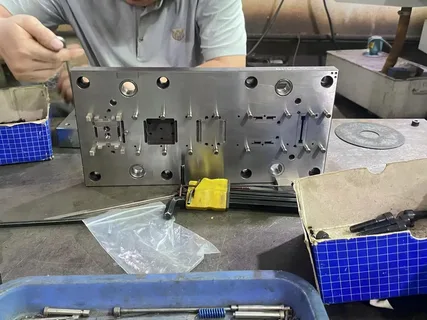
Mold and die manufacturing is one of the most demanding areas of CNC machining. Industries such as automotive, aerospace, electronics, and plastic injection molding require highly accurate molds and dies with excellent surface finishes and tight tolerances. To achieve this level of precision, manufacturers rely heavily on advanced cutting tools designed for complex machining operations.
Among the most important tools used in this industry are end mills. These cutting tools help machinists create intricate shapes, deep cavities, smooth contours, and precision components required in mold and die applications. Selecting the right tooling solution improves machining accuracy, productivity, and overall tool life.
Mold & Die Manufacturing Requires Precision Tooling
Molds and dies often contain:
- Complex geometries
- Tight dimensional tolerances
- Deep pockets
- Curved surfaces
- Fine finishing requirements
Even a small machining error can affect the final product quality. Because of this, manufacturers require cutting tools that provide:
- High precision
- Excellent rigidity
- Smooth surface finish
- Reliable cutting performance
Modern CNC machining centers combined with advanced tooling technology make it possible to achieve these demanding requirements.
Importance of High-Performance Cutting Tools
Mold and die machining involves continuous cutting operations on hard materials such as:
- Hardened steel
- Tool steel
- Stainless steel
- Titanium alloys
These materials generate high heat and cutting pressure during machining. Standard tools often fail under such conditions, which is why manufacturers prefer carbide endmills for high-performance applications.
Carbide tools offer:
- Better wear resistance
- Higher cutting speeds
- Improved heat resistance
- Longer tool life
These advantages help improve productivity while maintaining machining accuracy.
Common Operations in Mold & Die Manufacturing
CNC machining for molds and dies involves several specialized operations.
Roughing
Roughing removes large amounts of material quickly while preparing the workpiece for finishing operations.
Semi-Finishing
This stage improves part geometry and reduces material left for final finishing.
Finishing
Finishing operations create smooth surfaces and highly accurate contours required for mold cavities and dies.
3D Contouring
Complex molds often require multi-axis machining for curved and detailed surfaces. Each operation requires different tooling strategies and cutter geometries.
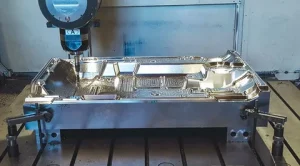
Types of Endmills Used
There are multiple types of endmills designed for specific mold and die machining operations.
Flat End Mills
Used for:
- Slotting
- Side milling
- General machining
These tools create flat surfaces and sharp edges.
Ball Nose End Mills
Ball nose tools are widely used in mold making because they help create:
- Smooth contours
- Curved surfaces
- 3D profiles
They are essential for finishing complex cavities.
Corner Radius End Mills
These tools combine the benefits of flat and ball nose cutters. They reduce edge chipping and improve tool strength during heavy machining.
Roughing End Mills
Roughing cutters feature serrated edges that help remove material quickly while reducing cutting forces.
Solid Carbide Tools Are Preferred
Most mold manufacturers use solid carbide end mills because they provide superior rigidity and cutting stability.
Key Advantages
- Excellent dimensional accuracy
- Reduced vibration
- Better surface finish
- Higher machining speeds
- Longer operational life
Solid carbide tools maintain cutting precision even under aggressive machining conditions.
Role of Tool Coatings in Mold Machining
Advanced coatings significantly improve cutter performance in difficult materials.
Popular Coatings
- TiAlN (Titanium Aluminum Nitride)
- AlCrN (Aluminum Chromium Nitride)
- DLC (Diamond-Like Carbon)
Benefits of Coatings
- Improved heat resistance
- Reduced friction
- Longer tool life
- Better wear protection
Proper coating selection helps improve machining consistency and productivity.
Precision Machining with Micro Tools
For highly detailed mold cavities and miniature components, micro endmills are commonly used.
These precision tools are ideal for:
- Fine engraving
- Micro cavities
- Precision grooves
- Electronics molds
Because of their small diameter, they require:
- Stable machine setups
- Accurate spindle control
- Optimized cutting parameters
Micro tools help manufacturers achieve extremely fine machining details.
Selecting the Right Tool Geometry
Important Factors
- Helix angle
- Flute count
- Relief angle
- Tool diameter
The correct geometry improves:
- Chip evacuation
- Surface finish
- Tool rigidity
- Heat management
Choosing the wrong geometry may cause vibration, poor finish, or premature tool wear.
Importance of Chip Evacuation
Mold cavities often involve deep pocket machining, where chip evacuation becomes difficult.
Poor chip removal can lead to:
- Heat buildup
- Surface damage
- Tool breakage
- Reduced machining accuracy
Using proper coolant systems and optimized cutting paths helps improve chip evacuation and machining stability.
High-Speed Machining in Mold Manufacturing
Modern mold manufacturers rely on high-speed machining techniques to improve productivity.
Benefits Include
- Faster cycle times
- Better surface finish
- Reduced manual polishing
- Improved dimensional accuracy
High-speed machining requires advanced tooling capable of handling high spindle speeds and aggressive feed rates.
Challenges in Mold & Die Machining
Manufacturers often face several machining challenges.
Tool Wear
Continuous machining of hardened materials increases tool wear.
Vibration
Long-reach tooling may create chatter and reduce surface quality.
Heat Generation
Hard materials generate excessive heat during cutting operations.
Complex Geometries
Intricate cavities require precise toolpath programming and specialized cutters. Proper tooling strategies help minimize these issues.
Best Practices for Better Tool Life
To improve machining performance and tool durability:
- Use recommended cutting speeds
- Apply proper coolant systems
- Use rigid tool holders
- Avoid excessive cutting depth
- Monitor tool wear regularly
Preventive maintenance and correct machining parameters improve productivity and reduce downtime.
Future Trends in Mold & Die Tooling
The tooling industry continues to evolve with:
- AI-based machining optimization
- Smart tool monitoring
- Advanced Nano coatings
- High-performance carbide materials
These technologies help manufacturers achieve greater efficiency and machining precision.
Conclusion
Mold and die manufacturing requires exceptional precision, cutting stability, and advanced machining capabilities. Selecting the right endmills is essential for achieving smooth surface finishes, accurate contours, and long tool life in demanding CNC applications. By understanding tool geometry, coatings, machining parameters, and material compatibility, manufacturers can improve productivity and machining consistency.
Author


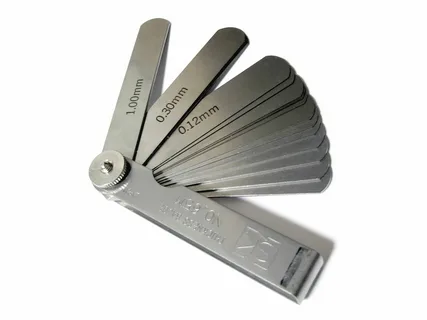
Accuracy is essential in engine tuning since even a slight deviation in the clearance of the components may have an impact on the efficiency and lifespan of the engine. Therefore, accurate measuring equipment must be used in tuning engines. One of such devices is a feeler gauge.
Used for setting the clearance of the valves, measuring the spark plugs’ gap, or other components, this measuring instrument is crucial in the engine tuning process. This article will discuss the feeler gauge in depth, including its functions, applications, and usage.
What is a feeler gauge?
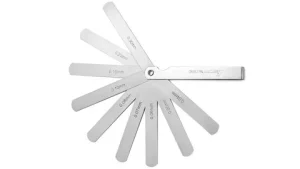
Feeler gauges are measuring devices consisting of thin metal blades of varying lengths. They allow measuring the distance between mechanical components.
A typical set of feeler consists of several blades to allow choosing a blade of the appropriate thickness. For those who use the metric system, metric feeler gauges are widely available.
Importance of Engine Tuning
Engine tuning is vital for maintaining performance, efficiency, and durability. Incorrect clearance leads to:
- Decreased engine power output
- Increased fuel usage
- Engine noise
- Accelerated wear and tear
Measurement accuracy ensures that all components work as intended, hence increasing effectiveness.
Common Uses in Engine Tuning
1. Tuning the Valve Clearance
One of the vital uses in engine tuning involves measuring the gap between the valves for accurate clearance. Misalignment of this gap may result in wrong mixture of air and fuel flow.
By using this equipment:
- Valve timing is improved
- The engine performs more efficiently
- There is less noise and wear and tear
2. Tuning the Spark Plug Gap
This involves setting a gap between electrodes in spark plugs for successful ignition.
By using this equipment:
- Engine ignition is optimized
- The fuel burns optimally
- Engine performance is improved
3. Piston Ring Gap
Piston rings play an important role in ensuring the right compression level. This requires accurate measurement to ensure:
- Higher compression levels
- Lower oil consumption
- Longer engine life
4. Tuning the Timing System Gaps
In some engines, timing components require precise spacing. Measuring these gaps ensures smooth synchronization of engine parts.
Role in CNC and Mechanical Applications
Though primarily useful for car-related tasks, the instrument has applications in CNC tools as well. The uses include:
- Setting up machines
- Checking alignment
- Precision measurements
Be it any CNC tool or just performing your engine servicing task, measurement accuracy is always essential.
Steps to Perform Tuning Using This Tool
Perform the following steps to tune your engine:
- Select the Right Blade
- Use the blade that matches your requirement for thickness.
- Place the Blade Between Parts
- Position the blade in the gap you wish to measure.
- Observe the Resistance
- There should be some resistance while inserting the blade.
- Fine Tune the Gap
- Adjust the gap till you get a perfect fit.
Choosing the Right Feeler Gauge
In the process of choosing a feeler, take into account:
Blade Span
The larger it is, the more accurate the readings you can make.
Manufacturing Standards
Steel blades must be made from high quality materials.
Unit of Measurement
Use a metric unit of measurement if your job requires such readings.
Ease of Use
Blades must be flexible but sturdy enough not to break.
Advantages of Choosing This Tool:
- Accurate measurement
- User-friendly
- Affordable
- Can be used for various purposes
- Engine efficiency
Tips on Care
For longevity:
- Keep blades clean
- Store blades in a dry place
- Do not bend blades
- Lightly oil blades to protect from corrosion
Correct maintenance of your tool will help it last for years.
Jaibros – Reliable Source for Quality Tools
Looking for top-quality measurement tools and accessories for CNC operations? Look no further than Jaibros, an industry leader. Offering a wide array of tools, including feeler gauges, collets, holders, and other CNC tools, offers the most precise and durable tools to both professional and amateur users. Being a CNC tools online shop in India on the rise ensures convenient access to high-end tools all over India.
Most Common Mistakes
Choosing the incorrect blade size
- Trying to fit the blade in a very tight space
- Neglecting regular maintenance of your tools
- Failing to double-check the measurements taken
To avoid common mistakes, one should focus on achieving accuracy.
Conclusion
In any case, proper tool selection, correct technique use, and regular maintenance of tools will lead to perfectly tuned engines. The importance of using a gauge when adjusting the engine cannot be overstated.
A feeler gauge is essential when it comes to adjusting the engine because it ensures that the engine runs at its highest efficiency level possible.
FAQs
How is the feeler gauge used for engine tuning?
The tool helps measure and regulate the minute spaces such as valve clearance and spark plug gap in engines.
What is the distinction between a regular and metric feeler gauge?
The metric feeler gauge measures in millimeters, while a regular gauge measures in inches.
How will you pick the best feeler gauge set?
Consider its blade selection, durability, and compatibility with the system of measurement.
Is the instrument suitable for CNC operations?
Absolutely, it has applications in CNC tool calibration, alignments, and fine tuning.
How frequently should it be maintained?
Cleaning and storing it appropriately after each use ensure its longevity.
Author

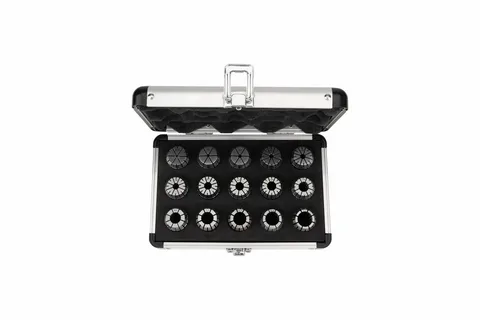
In today’s manufacturing industry, having precision is important to ensure that all products manufactured are of high quality. Any slight error while machining will lead to poor-quality products, wastage of resources, and inefficiencies in production. Tool holding is one of the factors that play a significant role in ensuring that machining operations are done accurately. There are several types of tool holders, but the ER 25 collet is common in CNC machining operations.
This post aims to shed light on how this type of collet contributes to the accuracy, efficiency, and consistency of the machining process.
Overview of Er 25 Collet System
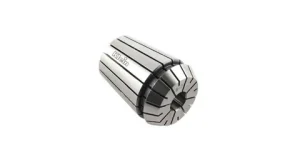
ER collets are mechanical clamps that are used to mount tools in the spindle of a machine tool. They are used to make sure that the tools are securely and correctly fitted in the spindle before the machining process starts. The ER 25 collet belongs to the ER collet category and is renowned for offering a great compromise between size, flexibility, and holding capacity.
The ER 25 collet is used in conjunction with an er 25 collet holder. This holder attaches the collet to the spindle of the CNC machine tool.
Accuracy Matters in CNC Machining
Precision is essential for CNC machining. The following factors are determined by precision:
- Size consistency
- Surface finish
- Tool life
- Machining productivity
Any kind of improper alignment of a CNC tool may lead to vibrations, poor cuts, and high levels of wear and tear. A high-end collet system becomes an important component in this scenario.
ER 25 Collet Improves Machining Precision
1. High Quality Tool Hold
The reason why this particular collet system increases machining precision is that it provides a high level of tool hold and a consistent clamping pressure.
It helps in:
- Minimizing tool slippage
- Improving cutting performance
- Producing accurate machining outcomes
2. Reduced Runout
Runout occurs when a rotating tool becomes misaligned with its intended path. Too much runout will lead to inaccurate machining and quick tool deterioration.
With the use of quality ER 25 collet set, runout will be minimized through the accurate alignment of the tool. The effect includes:
- Improved cutting accuracy
- Excellent surface finish
- Increased tool life
3. Versatility in Tool Holding
One notable advantage of ER tool holders is that it offers great versatility. Only one collet holder can accommodate various tool diameters with a little difference.
This leads to:
- Reduced tool changes
- Increased convenience
- Optimal workflow
This is advantageous for operators who work with varying CNC tool sizes.
4. Balanced Clamping Force
ER collets ensure an even distribution of clamping force throughout the tool.
This reduces:
- Tool bending
- Uneven wear
- Tool deformation
It leads to increased efficiency in machining operations.
5. Compatibility with CNC Tools Machine
The ER 25 tool holders fit many kinds of CNC tools machine applications. This allows operators to perform their activities easily regardless of whether they are performing turning, milling or drilling operations.
These benefits include:
- Easy installation
- High performance
- Accuracy
Role in Improving Surface Finish
The surface finish plays an important role when it comes to quality of machining.
Improper tool holding may result in vibrations, resulting in poor surfaces.
Using a good er 25 collet holder, the following results can be achieved:
- Minimal vibrations
- Smoother cutting
- Improved surface finish
In some industries, smoothness of surfaces is very essential.
Effect on Tool Wear
Tool wear plays a major role in the performance of any machining process. Properly holding tools will enhance their efficiency.
The use of an er 25 collet system has the following impacts:
- Lower tool stresses
- Low heat generation
- Increased tool life
Best Practices for Maximum Accuracy
To make the best use of the ER collet system, you should consider these points:
1. Keep Them Clean
Dust particles may interfere with its precision work. Therefore, it must always be cleaned prior to its use.
2. Use Appropriate Size
Use only the matching size of the collet in respect of diameter of the tool.
3. Do Not Overtighten It
Tightening will affect both collets and tools.
4. Inspect Them Periodically
Inspect for wear or damage and change them accordingly.
5. Use Quality Products
By buying high-quality products such as ER 25, the performance level can be maintained over time.
Applications in CNC Machining
This collet system finds applications in:
- Milling jobs
- Drilling operations
- Tapping processes
- Precision engineering works
The precision factor of this product makes it popular in small shops as well as large manufacturing units.
Choosing the Right ER 25 Collet
- Collet Selection Criteria
- Quality of material
- Accuracy grade
- Compatibility with your CNC machine
- Brand credibility
High-grade collets offer superior performance and lasting benefits.
Key Benefits in Brief
- Superb accuracy and precision
- Less runout
- Better surface finish
- Increased tool life
- Universal tool mounting capability
- Affordable option
Conclusion
In CNC milling operations, precision cannot be taken lightly; it is a necessity. The importance of having a secure tool holding system should never be underestimated. Through the reduction of runout and increasing stability through a high-quality clamping process, the er 25 collet greatly improves precision.
Author


Fishing Netting: Landing Nets, Carp Nets & Fish-Friendly Mesh

Mold and Die Manufacturing with CNC Cutting Tools

BC.Game Clone: Performance Metrics for iGaming Platforms

Kaftan Sets for Women: Effortless Fashion & Modern Style

Kaftan Sets for Women: Stylish, Comfortable & Designer Fashion

Feeler Gauge in Engine Tuning: Uses, Benefits, and Measurement

Window Repairs Gloucester: Secure and Energy-Efficient Homes

Private Limited Company Compliances in India

Brand New Apartments in Cobble bank: Gaining Attention

GxP Compliance: Essential for the Modern Biotech Industry

Cybersecurity Consulting Company SequelNet Provides Critical IT Support Services to Medical Billing Firm, Medical Optimum

Team Communication Software Transforms Operations at Finance Innovate

Project Management Tool Transforms Long Island Business

How Alleviate Poverty Utilized IPPBX’s All-in-One Solution to Transform Lives in New York City

Breast Cancer: The Imperative Role of Mammograms in Screening and Early Detection

Unstoppable Collaboration: D.C.’s Citi Open and Silicon Valley Classic Unite to Propel Women’s Tennis to New Heights

Embracing Renewal: Sizdabedar Celebrations Unite Iranians in New York’s Eisenhower Park

The Benefits of Starting a Side Hustle for Financial Freedom

New Blood Donation Screening Questions What You Need to Know

Stylishly Timeless: The 5 Types of Sandals You Need in Your Closet
-

 Business3 years ago
Cybersecurity Consulting Company SequelNet Provides Critical IT Support Services to Medical Billing Firm, Medical Optimum
-
Business3 years ago
Team Communication Software Transforms Operations at Finance Innovate
-
Business3 years ago
Project Management Tool Transforms Long Island Business
-
Business3 years ago
How Alleviate Poverty Utilized IPPBX’s All-in-One Solution to Transform Lives in New York City
-
health3 years ago
Breast Cancer: The Imperative Role of Mammograms in Screening and Early Detection
-
Sports3 years ago
Unstoppable Collaboration: D.C.’s Citi Open and Silicon Valley Classic Unite to Propel Women’s Tennis to New Heights
-
Art /Entertainment3 years ago
Embracing Renewal: Sizdabedar Celebrations Unite Iranians in New York’s Eisenhower Park
-
Finance3 years ago
The Benefits of Starting a Side Hustle for Financial Freedom







