
Technology
The Fallout from ChatGPT: A Teacher’s Guide to Preventing Academic Dishonesty


Are you tired of catching your students cheating on assignments and tests? Do you want to learn effective strategies for preventing academic dishonesty in the classroom? Look no further than this teacher’s guide, which provides practical tips and advice for promoting honesty and integrity among your students. With ChatGPT as the latest tool used by tech-savvy cheaters, it’s more important than ever to stay one step ahead. Read on to discover how you can create a culture of academic integrity in your classroom and help your students succeed honestly.
What is academic dishonesty?
Academic dishonesty is a form of cheating that involves dishonestly obtaining academic credit or success. It can take many forms, from copying and pasting work done by others onto your own student essays to submitting completely fabricated research projects.
There are many different ways to commit academic dishonesty, but all of them have one thing in common: they violate the trust between students and their teachers. When academic dishonesty is caught, it can lead to a loss of points, a drop in grades, and even expulsion from school.
To prevent academic dishonesty from happening in your classroom, make sure you know how to identify it and respond effectively. Here are some tips for protecting yourself and your students:
1. Be aware of the signs of academic dishonesty. Pay attention to the way your students are behaving and look for any hints that they may be cheating. Some common signs of cheating include:
– Students spending too much time on their phones or laptops when they should be working on their assignments – This suggests that they’re trying to avoid getting caught cheating.
– Changes in behavior or attitude – If a student starts acting suspiciously or is suddenly doing better than usual on their assignments, this could be a sign that they’re cheating.
– Copying work from other students – This is one of the most common forms of academic dishonesty.
– Falsifying course materials – This includes altering course materials such as notes, exams

The Different Types of Academic Dishonesty
Academic dishonesty refers to any cheating that occurs in academic settings. There are three types of academic dishonesty: cheating on tests, plagiarism, and fabrication.
Cheating on tests involves using unauthorized means to obtain a desired outcome. Plagiarism occurs when someone takes the work of another person and presents it as their own without citing the original source. Fabrication involves creating or altering information in order to deceive others.
Some common signs that someone may be engaged in academic dishonesty include: using notes or other material during exams; copying or pasting material from online sources; sharing answers with friends; lying about having done research; and falsifying grades or other academic records.
Below is a list of tips for preventing academic dishonesty:
1) Be aware of your surroundings. Make sure you are paying attention to what is happening around you so you don’t fall victim to cheating schemes.
2) Follow instructions carefully. If there is a test, for example, don’t take notes or look at your phone—follow the instructions explicitly. Do not try to cheat by guessing the answer or by relying on outside help.
3) Stay alert for potential signs of cheating. Some red flags that suggest someone may be engaged in cheating activities include changes in behavior (such as becoming more secretive), looking nervous, fidgeting excessively, chewing gum excessively, and making mistakes on tests they previously appeared capable of doing
Prevention Tips for Teachers
Teachers are always looking for ways to keep their students engaged and on track in the classroom, but what happens when chat groups become a way to cheat?
There are a few things that teachers can do to prevent academic dishonesty in their classrooms. First and foremost, be sure that all students know the rules of academic honesty, which include not sharing answers or work with classmates. Second, make sure that there is an accountable system in place for student communication, such as using chat groups only for educational purposes and monitoring who is participating. Finally, be sure to investigate any suspected cases of academic dishonesty and take appropriate disciplinary measures.
Conclusion
academic dishonesty can have serious consequences for students and educators alike. In this guide, I offer a variety of strategies to help you prevent academic dishonesty in your classroom. I hope that by sharing these tips with you, you will be able to create an environment where cheating is not an option.
Author



Author


Whether you are a developer handling API payloads or someone embedding images in HTML, knowing how to base64 encode decode online is an essential skill in today’s web-driven world. Base64 is a widely used encoding scheme that converts binary data into a text-safe format, making it easier to transmit across systems that only support plain text. This guide answers the most common questions about Base64, from how it works to the safest tools you can use right now.
Understanding Base64 The Fundamentals
What is Base64 encoding?
Base64 encoding is a method of converting binary data — such as images, files, or raw bytes — into a string of ASCII characters using a set of 64 printable characters (A–Z, a–z, 0–9, +, and /). This transformation ensures that the data remains intact during transfer through systems that might misinterpret raw binary. Every 3 bytes of input are converted into 4 Base64 characters, making the output roughly 33% larger than the original.
What is Base64 decoding?
Base64 decoding is simply the reverse process taking a Base64-encoded string and converting it back into its original binary or text form. When you receive a Base64 string from an API response or email attachment, a decoder reconstructs the original data precisely. Without decoding, the encoded string is unreadable to both humans and most applications.
How does Base64 encoding work internally?
The algorithm groups your input into 3-byte (24-bit) chunks, then splits each chunk into four 6-bit values. Each 6-bit value maps to one of 64 printable characters in the Base64 alphabet. If the input length is not divisible by 3, padding characters (=) are added to complete the final group.
Is Base64 a form of encryption?
Base64 is absolutely not encryption it offers zero security or confidentiality. Anyone who has a Base64-encoded string can instantly decode base64 encode decode online it without any key or password. It is purely an encoding format designed for safe data transport, not for hiding or protecting information.
Practical Use and Applications
Why is Base64 used in web development?
Base64 is used primarily because many communication protocols — such as HTTP, SMTP, and XML are built to handle text, not raw binary data. Encoding binary content into Base64 ensures it passes through these channels without corruption or data loss. It also allows binary data to be embedded directly inside text-based files like JSON, HTML, or CSS.
What are the most common real-world use cases?
The most frequent applications include embedding images directly into HTML or CSS as Data URIs, transmitting binary files through JSON APIs, encoding email attachments in MIME format, and storing small media assets in databases as text strings. Developers also use it to encode authentication credentials in Basic Auth headers for HTTP requests.
What file types can be Base64 encoded?
Virtually any file type can be Base64 encoded images (PNG, JPEG, GIF, SVG), PDFs, audio files, fonts, and even entire binary executables. The encoding process treats all input as raw bytes, so the file format is irrelevant. Keep in mind that very large files will produce very large encoded strings, which can affect performance if embedded directly in web pages.
Using Online Tools for Base64 Conversion
How do I base64 encode decode online quickly?
To base64 encode decode online, simply visit a reliable web tool, paste your text or upload your file, and click the encode or decode button. The outcome is produced immediately in your browser with no need for software installation or technical expertise. Tools like the one available at multiconverters.net make this process seamless for both beginners and experienced developers.
What should I look for in a good online Base64 tool?
A trustworthy Base64 tool should process your data entirely in the browser without sending it to a remote server, support both text and file input, and handle URL-safe Base64 variants (which replace + with – and / with _). It should also provide a clean copy-to-clipboard function and give meaningful error messages when the input is invalid or malformed.
Are online Base64 converters safe to use for sensitive data?
For non-sensitive data, reputable online tools are perfectly safe and convenient. However, if your content contains passwords, private keys, personal user data, or confidential business information, you should use a locally installed tool or a browser-based tool that explicitly processes everything client-side. Always check whether the tool sends data to a server before encoding anything sensitive.
Conclusion
Understanding how to base64 encode decode online is a practical skill that saves time across dozens of everyday developer and web tasks. From embedding images in emails to decoding API responses, Base64 bridges the gap between binary data and text-based systems reliably.
Head over to multiconverters.net to try a fast, free, and browser-based Base64 encoder and decoder — no sign-up required. Whether you’re a developer debugging API responses, a designer embedding image data directly into HTML or CSS, or just someone who needs to quickly decode a string from an email. Or configuration file, this tool is built for you. It processes everything locally in your browser, meaning your sensitive data never leaves your device.
No uploads, no server logs, no privacy concerns. You can convert between text and Base64 instantly, with support for both standard and URL-safe variants. The interface is clean, works on any device, and gives you one-click copy functionality. Skip the complicated software installations and subscription fees. Just paste, click, and get your result in milliseconds — completely free, forever.
Author


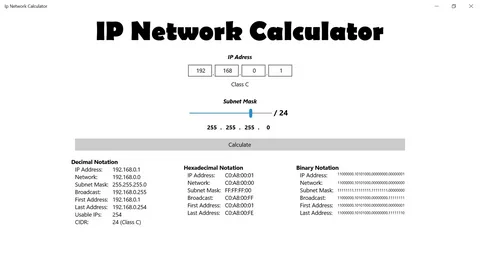
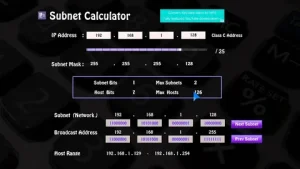
A Subnet Calculator simplifies complex IP addressing tasks. Instead of manually performing binary calculations, users can instantly generate accurate subnet information. This is particularly beneficial when creating efficient networks or diagnosing connectivity problems.
It is commonly used in:
- Network planning and design
- Cloud infrastructure setup (AWS, Azure, Google Cloud)
- VLAN and firewall configuration
- IP address management
- Networking certification practice
Because it reduces human error and saves time, it has become an essential tool for modern IT environments.
How a Subnet Calculator Works
A Subnet Calculator works by taking an IP address and applying a subnet mask or CIDR prefix. It then performs binary calculations to determine how the network is structured. Once the input is provided, the tool calculates key network values automatically. These include network boundaries, usable host ranges, and total address availability.
Below are the most important parameters it generates:
- Network Address: The first address in the subnet
- Broadcast Address: The last address in the subnet
- Subnet Mask: Defines network and host portions
- CIDR Notation: Short form like /24
- Usable Host Range: Valid IPs for devices
- Total Hosts: Total IP addresses in subnet
- Usable Hosts: Assignable addresses excluding reserved ones
- Wildcard Mask: Inverse of subnet mask used in routing rules
These outputs help engineers design accurate and efficient networks with ease.
CIDR Subnet Reference Chart Explained
CIDR notation simplifies IP addressing by representing subnet masks in a compact format. A Subnet Calculator often includes a reference chart for quick lookup.
Some commonly used CIDR values include:
- /8 – Very large networks with millions of IPs
- /16 – Medium enterprise networks
- /24 – Standard small networks
- /25 to /30 – Subnetting for smaller segments and point-to-point links
- /32 – Single host address
Each CIDR value defines how many IP addresses are available and how many can be assigned to devices. This reference helps professionals quickly plan network structures without manual calculations.
Who Uses a Subnet Calculator?
Subnet calculators are widely used across multiple industries. They are not limited to network engineers alone.
Here are the main users:
Network Engineers and Architects
They design IP structures for large enterprise networks and data centers.
System Administrators
They configure VLANs, routing policies, ACLs, and security rules.
Cloud Engineers
They allocate subnets in cloud environments like AWS, Azure, and Google Cloud.
Students and Certification Candidates
They use it for learning subnetting concepts and preparing for exams like CCNA and Network+.
Internet Service Providers (ISPs)
They manage large IP blocks and distribute them to customers.
Security Professionals
They analyze network structures and configure firewall rules using wildcard masks.
Because of its versatility, the subnet calculator has become a standard tool in IT workflows.
Benefits of Using a Subnet Calculator
A Subnet Calculator provides several advantages that improve network planning and management.
1. Saves Time
Manual subnet calculations can be complex and time-consuming. The calculator provides instant results.
2. Reduces Errors
Binary calculations are prone to mistakes. Automation ensures accuracy.
3. Improves Efficiency
Engineers can focus on design instead of repetitive calculations.
4. Supports Learning
Students can understand subnetting concepts more easily by seeing real-time outputs.
5. Enhances Network Planning
Overall, it simplifies a technical process into an easy, user-friendly experience.
Key Use Cases in Real-World Networking
Subnet calculators are not just educational tools. They are widely used in real-world environments. For example, enterprises use them to divide large networks into smaller segments. This improves performance and security. Cloud engineers use them to allocate IP ranges efficiently across virtual networks. ISPs rely on them for IP distribution, while security teams use them for access control configurations.
Because modern networks are becoming more complex, accurate subnetting is more important than ever.
Why Subnetting Skills Matter Today
Even though automation tools exist, understanding subnetting remains essential. It helps professionals understand how networks function at a deeper level.
Good subnetting knowledge improves:
- Network troubleshooting
- IP address planning
- Cloud architecture design
- Security configuration
A Subnet Calculator supports this learning by providing instant validation of results.
Final Thoughts
A Subnet Calculator is one of the most valuable tools in networking. It simplifies IP address management, reduces errors, and improves productivity for professionals and students alike. From small home networks to large enterprise infrastructures, subnet calculators play a critical role in ensuring smooth and efficient network design.
Author



P-Shot in Riyadh: Executive Vitality & Regenerative Medicine

QuickBooks Error H202: Causes, Fixes, and Prevention Tips

Base64 Encode & Decode Online: Secure, Browser-Based Tool

Laptop Repair in Chowk: Fast, Affordable & Reliable Service

Laptop Repair in Chowk: Fast, Affordable & Expert Service

Conveyancing in Ballina: Guide to Legal Property Transfers

Pregnancy Due Date Calculator: Accuracy, and What to Expect

Plumbing Problems: Signs, Fixes, and When to Call a Plumber

Botox in Dubai: The “Lunch Break” Guide to Natural-Looking Skin

Realism Hoodie and Realism Jumper: Australian Streetwear

Cybersecurity Consulting Company SequelNet Provides Critical IT Support Services to Medical Billing Firm, Medical Optimum

Team Communication Software Transforms Operations at Finance Innovate

Project Management Tool Transforms Long Island Business

How Alleviate Poverty Utilized IPPBX’s All-in-One Solution to Transform Lives in New York City

Breast Cancer: The Imperative Role of Mammograms in Screening and Early Detection

Unstoppable Collaboration: D.C.’s Citi Open and Silicon Valley Classic Unite to Propel Women’s Tennis to New Heights

Embracing Renewal: Sizdabedar Celebrations Unite Iranians in New York’s Eisenhower Park

The Benefits of Starting a Side Hustle for Financial Freedom

New Blood Donation Screening Questions What You Need to Know

Stylishly Timeless: The 5 Types of Sandals You Need in Your Closet
-

 Business3 years ago
Cybersecurity Consulting Company SequelNet Provides Critical IT Support Services to Medical Billing Firm, Medical Optimum
-
Business3 years ago
Team Communication Software Transforms Operations at Finance Innovate
-
Business3 years ago
Project Management Tool Transforms Long Island Business
-
Business3 years ago
How Alleviate Poverty Utilized IPPBX’s All-in-One Solution to Transform Lives in New York City
-
health3 years ago
Breast Cancer: The Imperative Role of Mammograms in Screening and Early Detection
-
Sports3 years ago
Unstoppable Collaboration: D.C.’s Citi Open and Silicon Valley Classic Unite to Propel Women’s Tennis to New Heights
-
Art /Entertainment3 years ago
Embracing Renewal: Sizdabedar Celebrations Unite Iranians in New York’s Eisenhower Park
-
Finance3 years ago
The Benefits of Starting a Side Hustle for Financial Freedom







