
Care
Pediatric Dentistry Idaho: Fear-Free, Tech-Driven Care in 2026


Choosing a pediatric dentist in Idaho Falls is one of the most significant healthcare decisions a parent in Southeast Idaho can make. In fact, as we move through 2026, dental providers in Bonneville County have shifted the landscape from traditional “drill-and-fill” methods to a more holistic, tech-integrated approach. As a result, modern parents are no longer just looking for a clinic; rather, they are looking for an experience that eliminates dental anxiety and sets their children on a path toward lifelong oral health.
To help with this decision, this comprehensive 1300-word guide breaks down the top-rated providers for 2026, the latest technological advancements in pediatric care, updated pricing, and essential tips for navigating children’s dentistry in the “208” area code.

1. Top-Rated Pediatric Practices in Idaho Falls (2026)
Based on clinical excellence, parent testimonials, and the adoption of “Fear-Free” protocols, these five practices are currently the gold standard in Idaho Falls:
Alligator Pediatric Dentistry & Orthodontics
Located conveniently for families across Idaho Falls and Ammon, Alligator Pediatric Dentistry remains a market leader in 2026. This year, they have further integrated behavioral psychology into their practice. As a result, the office is designed as a themed adventure, ensuring children associate the dentist with fun rather than pain.
- Why it stands out:
Most notably, they specialize in “first-visit” success. Additionally, they offer fully integrated orthodontic care, meaning your child can stay with the same trusted team from their first tooth all the way through their braces.
Sunny Smiles Pediatric Dentistry
Dr. Kailey Housley and her team are celebrated for their incredibly gentle approach. As a board-certified pediatric dentist, Dr. Housley focuses on the unique developmental needs of infants and toddlers.
- Why it stands out: Their “Age One” visit program is highly regarded, focusing on preventive education for parents and a non-threatening introduction for the child.
Baker Pediatric Dentistry
For families with children who have special healthcare needs, Dr. Thomas Baker is the premier choice. His staff is specifically trained in sensory-friendly communication and medical-grade safety protocols.
- Why it stands out: They offer customized sedation plans and an environment tailored to children with autism, ADHD, or physical disabilities.
Clubhouse Pediatric Dentistry
Known for its high-tech approach, Clubhouse Pediatric on Merlin Drive has become a favorite for tech-savvy parents. They employ the newest technology in digital imaging and laser dentistry.
- Why it stands out: They are leaders in “No-Drill” dentistry, utilizing water-based lasers to treat cavities without the need for traditional numbing shots in many cases.
Eagle Rock Dental Care
While a family-focused practice, their pediatric wing is exceptional. They offer the convenience of seeing the whole family in one location while maintaining a child-specific environment for the younger patients.
- Why it stands out: Their patient portal and scheduling flexibility make them the top choice for busy Idaho Falls families with multiple children.
2. 2026 Technology: A New Era of Painless Care
- AI-Assisted Cavity Detection: Artificial Intelligence software now scans digital X-rays to catch decay months before it’s visible to the human eye. This allows for simpler, cheaper preventive treatments.
- Hard-Tissue Lasers (WaterLase): These lasers remove decay using light and water. The result is often no vibration, no heat, and—most importantly—no needle required for the filling.
- 3D Intraoral Scanners: The days of “goopy” impression molds are gone. In 2026, digital scanners create a 3D model of your child’s mouth in seconds, which is essential for accurate growth monitoring and orthodontics.
3. 2026 Price Guide: Dental Costs in Idaho Falls
Understanding the financial side of healthcare is essential for Idaho families. Based on February 2026 market data, here are the estimated costs for pediatric services in the region:
Service
Estimated Cost (No Insurance)
With Insurance/Membership
Comprehensive New Patient Exam
$95 – $130
$0 (Preventive)
Child Prophy (Cleaning)
$85 – $115
$0 (Preventive)
BPA-Free Dental Sealants
$50 – $70 per tooth
$10 – $25
Tooth-Colored Filling
$215 – $305
$45 – $110
Space Maintainer
$350 – $500
$150 – $250
Nitrous Oxide (Laughing Gas)
$125 – $160
Usually Out-of-Pocket
Note: These are estimates for Southeast Idaho. Prices may vary based on the complexity of the case.

4. Why Specialization Matters: The Pediatric Advantage
Many parents ask if a general family dentist is sufficient. While many are capable, a specialized pediatric dentist in Idaho Falls provides three distinct advantages:
Here is the content revised with transition words to create a more logical and connected flow.
- Behavioral Expertise: Pediatric specialists undergo 2-3 years of additional residency focused on child psychology. As a result, they know how to de-escalate a tantrum and turn a scary situation into a learning moment.
- Growth Monitoring: Furthermore, they are experts in jaw development. For instance, catching a “crossbite” or “crowding” early can save you thousands in future orthodontic surgeries.
- Special Needs Training: Finally, pediatric offices are physically designed to accommodate different abilities, from wider hallways for wheelchairs to quiet rooms for sensory-sensitive children.
5. Prevention: The 2026 Focus
The trend in 2026 dentistry is “Prevention Over Restoration.” Leading Idaho Falls clinics are now emphasizing:
- Silver Diamine Fluoride (SDF): A breakthrough liquid that can stop a cavity without any drilling. It’s a “miracle” for young children who aren’t ready for a full filling.
- Nutritional Coaching: Dentists are now acting as nutritional consultants, helping parents identify “hidden sugars” in common Idaho snacks that lead to rapid enamel erosion.
- Saliva Testing: Advanced clinics can now test your child’s saliva to determine their “Caries Risk Profile,” identifying if they are genetically more prone to cavities.
6. Managing Dental Anxiety in 2026
If your child is terrified of the dentist, you are not alone. Idaho Falls clinics have evolved to handle this:
- “Happy Visits”: Short, 5-minute visits where the child just gets a sticker and rides in the chair. These are crucial for building trust.
- Sedation Safety: Offices like Clubhouse Pediatric or Alligator utilize board-certified anesthesiologists for complex cases, ensuring the highest safety standards for IV sedation or general anesthesia.
- Virtual Reality Distraction: VR headsets are now commonly used during cleanings, allowing children to watch their favorite shows while the dentist works.
7. Insurance & Savings for Idaho Families
With the cost of living rising, managing dental expenses in the “208” is vital.
-
PPO Networks: Delta Dental and Blue Cross of Idaho are widely accepted. In fact, most top-rated clinics in Idaho Falls are “In-Network,” which can save you up to 50% on major work.
-
In-House Membership Plans: However, if you are self-employed or without insurance, look for membership plans. For example, for a monthly fee of around $30–$40, you receive all preventive care and a 20% discount on all other procedures.
-
Medicaid (Healthy Connections): Finally, many Idaho Falls offices accept Idaho Medicaid. However, slots for new patients fill up quickly, so it is recommended to book 3-4 months in advance.
8. Conclusion: A Lifetime of Smiles
In 2026, Idaho Falls offers some of the best pediatric dental care in the Pacific Northwest. By choosing a specialist who embraces modern technology and emphasizes preventive care, you aren’t just getting a cleaning; you are investing in your child’s confidence and overall health.
Author


The first few weeks with a new born baby are never quite how you imagine they will be, are they? You read all the articles, have everything ready, and yet find yourself awake at 2am wondering if your baby is too hot or cold, should they be moved, and if the other half of the household is going to get more than 2 hours sleep. But that’s fine! In those first few months, a modest and appropriate sized bassinet can often become a perfect sleeping solution for your little bundle. Many Auckland and New Zealand parents initially think that their baby will sleep in a full cot from the beginning. Sometimes that’s perfect, but more often than not, it doesn’t work out that way. Babies are tiny and a big cot room can seem like a giant playground, so a bassinet creates that safe and covered space in a smaller area for those first few months, usually closer to bed than a full cot is when you’re running on very little sleep.
Now, I want to talk about portability, one of the subtle advantages that can really count. At the beginning, you’re not necessarily thinking about this because you’ll probably be moving from a bedroom at night to a sitting room during the day, or to a spare room when visitors come and so on. Or you may be moving to a different house for a night or two with the relatives. Having a bassinet that’s easy to move around and quick to set up takes the stress out of these transitions. You don’t need to be too prescriptive about where your little one is going to sleep every time, just be ready to change plans as the day unfolds. For people living in apartments or smaller homes, it’s nice not to fill up all your floor space with a large cot.
How much of a breeze, and how safe, does it need to be? For most newborns, a bassinet with a firm, flat mattress, open or meshy sides (for breathing and ventilation, and much better for the Auckland summer heat) and a level base (so the baby doesn’t roll out) should be fine. Some like a bassinet that rocks gently, others prefer a bassinet that stays stationary once everything is settled. There’s no wrong answer here – nor any right answer for everyone. It just needs to be a bassinet you can put the baby in while you’re still half-asleep and not worry about all the bells and whistles.
Cleaning and maintenance: Baby life happens so fast, even the best of us turn into a mess. There will be spilling, milk, the smelly moment you wish you had ever bought a certain sheet in the first place. For such emergencies, if the sheet is wipeable or the cover is remover, then it can be changed without stripping down the whole bed. Even if you have always hoped you will never need a waterproof sheet under the fitted sheet, your experience as a parent will let you know that the more laundry you put in in the middle of the night the more you never want to do it again.
Most bassinets are made for the first three to six months, until your baby starts to roll or just outgrows the space. If you’re not sure, add these months to the first one and a half years, and you’ll have a good idea of when your needs will change. Your bassinet is not a lifetime sleeping arrangement; it’s just a practical bridging device. You may use one for three months and then move your baby into a cot earlier if space or routine permits, or you may use the bassinet until she’s sleeping independently in the daytime – both are absolutely fine options.
A bit of prep before bedtime makes nighttime logistics easier. If the bassinet is already up next to the bed, you can actually get your baby settled and crawl back under the covers with a lot less effort. Even a little basket of essentials in reach by the bed – nappies, wipes, spare outfit, muslin – can save you a trip to the other side of the room just for a grunt and a nappy change. These little modifications won’t make up for sleep deprivation, but they might give you a few seconds more of sleep in the long run.
Shared care and visitors are also an easier concept. You might think it much easier for another adult or grandparent to settle your baby, if the sleep space has an obvious ‘use by’ date and isn’t hard to put together. We’ve seen some great portable bassinets that are quick and easy to set up. These are great for shared or night care and when you are spending time away from home in those first few months, as you don’t need to make yet another decision about where and how to sleep. You can just bring the baby’s familiar sleep space with you and it can often make those 10 minute visits to your mum’s house at the other end of the street that much easier too.
Look at the price and how long you’ll use the bassinet. When you’re using the bassinet each night for a few months, then choosing a basic, solid, inexpensive bassinet is a great choice, even if it lacks extras. If you’re willing to spend a little extra on the value of durability or simplicity in cleaning, the more costly model that remains in use, not tucked in storage or tossing in the trash, is so worth it. Let’s get you a safe, sturdy, no-fuss product, not the most expensive one. You will definitely find one that fits!
In hindsight, many parents realize the principle job of a bassinet was minimising the effort during a marathon stage. It kept the baby close, provided a cozy space for them, and allowed a smooth transition from room to room or from home to home, without too much upheaval. After your baby outgrows their bassinet, they will start using their cot or another early sleep space – and, perhaps, those first few months might seem a little less hectic than they did at the time. The best bassinet for you is probably the one that best suits the way your family operates during those first few months – where your family members sleep, how frequently you’re moving from room to room, the other caregivers, and how much energy you have to set up and clean.
Once you’ve made these practical considerations, the bassinet simply becomes the background support to your life, another piece of gear to get on with. For a lot of New Zealand families, that low level of calm resilience is just what makes this phase of life a little easier.
In the end, the best stroller for you is the one that is simply easy to live with – no fuss, no stress. It opens and closes at just the right time, and you don’t find yourself arriving at the park only to be met with wheels that can’t get a grip on the ground. Everything you need is stored efficiently, and you have total trust in its stability. Most families in Auckland and New Zealand come to the realisation that the best stroller is the one that fits in best with your current lifestyle. If you’re trying to compare a couple of options, let’s check out some popular models for local families – they’re lightweight, can be folded up easily, and are just what your day-to-day life in New Zealand needs.
Check out more health articles here.
Author



Best Plants for Self-Watering Pots: 12 Plants That Thrive With Consistent Moisture
Choosing the right plant is only half the equation when you want an easy-care indoor or outdoor garden. The container and watering method matter just as much
Self-watering pots can make plant care easier by maintaining a more consistent supply of moisture around the root zone. But that does not mean every plant is a good match. Some plants prefer evenly moist soil, while others need the soil to dry out between waterings.
So, what are the best plants for self-watering pots?
In general, plants that naturally prefer consistent moisture tend to perform especially well in self-watering containers. Pothos, peace lilies, ferns, spider plants, many herbs, and several tropical houseplants are excellent choices.
In this guide, we’ll cover the best plants to grow in self-watering pots, which plants to avoid, and how to choose the right self-watering setup for each plant.
What Makes a Plant Good for a Self-Watering Pot?
Before choosing a plant, it helps to understand what a self-watering container actually does.
A self-watering system is designed to provide moisture gradually rather than relying entirely on occasional top watering. Many systems use a reservoir, wick, or porous material to move water toward the soil as it becomes drier.
This creates a more consistent moisture environment around the roots.
SmartiLiving explains that self-watering systems work largely through capillary action: as the soil becomes drier, it can draw moisture toward the root zone. This makes the system particularly useful for plants that dislike repeated cycles of completely dry soil followed by heavy watering.
For a deeper explanation, see SmartiLiving’s [guide to how self-watering planters work].
The best candidates generally have one or more of these characteristics:
- They prefer consistently moist soil.
- They grow actively in warm conditions.
- They are sensitive to drought stress.
- They benefit from steady moisture rather than occasional soaking.
- They are commonly grown in containers.
However, a self-watering pot does not mean you can ignore drainage, soil quality, light, or the plant’s natural watering requirements.
12 Best Plants for Self-Watering Pots
1. Pothos
Pothos is one of the easiest houseplants for beginners and an excellent candidate for a self-watering container.
It tolerates a range of indoor conditions and generally appreciates consistent moisture during active growth. Allowing the soil to become completely dry for extended periods can cause drooping and stress, particularly in warm or bright environments.
A self-watering setup can help maintain a more stable moisture level without requiring you to check the plant every day.
Best for: Indoor pots, shelves, offices, hanging planters, and low-maintenance plant collections.
2. Peace Lily
Peace lilies are famous for letting you know when they need water. Their leaves can droop dramatically when the soil becomes too dry.
While a temporary droop is usually recoverable, repeatedly allowing the plant to move between very dry and very wet conditions can make care more difficult.
A properly sized self-watering pot can provide the consistent moisture peace lilies prefer.
Best for: Bright indirect light indoors, bedrooms, offices, and living rooms.
Tip: Don’t assume a self-watering pot means the reservoir should always be completely full. Monitor the plant and soil, especially when first setting up the system.
3. Spider Plant
Spider plants are another beginner-friendly option that can work well with consistent moisture.
They grow quickly under good conditions and can produce long leaves and baby plantlets when healthy. Because they are commonly grown in containers, they are also easy to pair with passive watering systems.
A self-watering container can be particularly useful if you frequently forget watering days.
Best for: Hanging baskets, shelves, offices, kitchens, and bright indoor spaces.
4. Boston Fern
Ferns are among the plants that can benefit significantly from consistent moisture.
Boston ferns dislike being allowed to dry out completely. Their delicate foliage can quickly show signs of stress when humidity and soil moisture are too low.
A self-watering setup can help maintain moisture around the root zone while reducing the need for frequent manual watering.
Best for: Humid rooms, bathrooms with suitable light, covered patios, and indoor plant displays.
Important: Moist soil does not mean permanently saturated soil. Good drainage is still essential.
5. Fittonia
Fittonia, also known as the nerve plant, is a small tropical plant with colorful veined leaves.
It generally prefers evenly moist soil and higher humidity, making it a good candidate for a carefully managed self-watering setup.
Because Fittonia is relatively small, choose a watering system appropriate for the size of the container. An oversized reservoir or watering device can provide more moisture than the small amount of soil needs.
6. Calathea
Calatheas are beautiful but can be demanding when watering conditions fluctuate.
Many Calathea varieties prefer consistent moisture and humidity. Allowing the root zone to become excessively dry can result in curled, drooping, or damaged foliage.
A self-watering container can make maintaining consistent moisture easier, particularly for plant owners who struggle with irregular watering schedules.
However, avoid keeping the soil permanently saturated. The goal is consistent moisture, not waterlogged soil.
7. Herbs
Many common culinary herbs can perform well in containers with an appropriately designed self-watering setup.
Examples include:
- Basil
- Mint
- Parsley
- Cilantro
- Chives
Basil and mint, in particular, can appreciate regular moisture during active growth.
Growing herbs in self-watering containers can also be convenient because kitchen plants are often placed in sunny locations where evaporation can happen quickly.
For outdoor container plants, watering requirements can increase significantly during hot weather. SmartiLiving’s [guide to keeping outdoor planters watered in summer] explains why containers dry faster and how to manage moisture more effectively.
8. Coleus
Coleus is grown primarily for its colorful foliage and can make an attractive container plant.
It generally performs best when the soil does not remain bone dry for long periods. Consistent moisture can support healthy growth, particularly during warm weather.
A self-watering container can be useful for coleus grown on patios, balconies, or bright indoor areas.
9. Baby’s Tears
Baby’s tears is a low-growing plant with tiny leaves that can struggle when its growing medium dries out too much.
Its small root system and moisture preference make it an interesting candidate for controlled self-watering.
Because the plant is delicate, avoid using a watering device that releases excessive moisture too quickly.
10. English Ivy
English ivy can be grown in containers and generally appreciates regular watering during active growth.
A self-watering container can help prevent the large swings between dry and heavily watered soil that often happen when plants are watered only when they visibly wilt.
Ivy also works well in hanging arrangements, where regular manual watering can become inconvenient.
11. African Violet
African violets can benefit from careful, consistent moisture management.
They are relatively small, making container size particularly important. A self-watering setup designed for small pots can help provide moisture without requiring frequent top watering.
Keep water away from the leaves whenever possible, as wet foliage can create additional problems.
For small indoor containers, SmartiLiving has a dedicated guide explaining why [small pots require different terracotta watering strategies].
12. Tropical Foliage Plants
Many tropical foliage plants can be good candidates for self-watering containers because they evolved in environments where moisture availability is relatively consistent.
Depending on the species, examples can include:
- Philodendron
- Alocasia
- Syngonium
- Maranta
- Certain types of Dracaena
The important point is that “tropical” does not automatically mean “keep the soil wet.” Always check the individual plant’s requirements before choosing a watering setup.
Best Plants for Self-Watering Pots at a Glance
| Plant | Moisture Preference | Self-Watering Suitability | Best Use |
|---|---|---|---|
| Pothos | Moderate/consistent | Excellent | Indoor houseplant |
| Peace Lily | Consistently moist | Excellent | Indoor |
| Spider Plant | Moderate | Excellent | Indoor/hanging |
| Boston Fern | Moist | Excellent | Indoor/humid areas |
| Fittonia | Consistently moist | Excellent | Small indoor pots |
| Calathea | Consistent moisture | Very good | Indoor |
| Basil | Regular moisture | Very good | Kitchen/outdoor |
| Mint | Moist | Very good | Herb container |
| Coleus | Moderate/consistent | Very good | Patio/indoor |
| Baby’s Tears | Moist | Good | Small containers |
| English Ivy | Moderate | Good | Hanging containers |
| African Violet | Controlled moisture | Good | Small indoor pots |
Plants You Should Be Careful With in Self-Watering Pots
Self-watering systems are useful, but they aren’t ideal for every plant.
Plants that naturally prefer dry conditions may struggle if their soil stays consistently moist.
Succulents
Succulents store water in their leaves and stems and generally prefer their growing medium to dry between waterings.
A continuously moist root zone can increase the risk of root problems.
Cacti
Cacti are another poor match for constantly moist conditions.
They are adapted to environments where water availability is intermittent. A traditional well-draining container with controlled watering is usually more appropriate.
Snake Plants
Snake plants are drought-tolerant and store moisture in their leaves. They generally do not require frequent watering.
If you use a self-watering system with a snake plant, the system must be carefully matched to the plant and growing medium rather than providing continuous moisture without monitoring.
ZZ Plants
ZZ plants are also highly tolerant of dry conditions. They are often better suited to a watering schedule that allows the growing medium to dry significantly between waterings.
The lesson is simple: self-watering does not mean every plant should receive constant moisture.
How to Choose the Right Self-Watering System
Once you’ve selected your plant, the next step is choosing a watering method that matches its size and watering requirements.
SmartiLiving’s [self-watering system collection] includes terracotta watering solutions designed for indoor and outdoor plants, hanging plants, herbs, and container gardens.
Match the System to the Pot Size
A small four-inch pot does not need the same watering capacity as a large patio planter.
Using an oversized water reservoir with a small pot can keep the soil wetter than necessary.
Likewise, a small reservoir may empty too quickly when paired with a large, thirsty plant.
Consider the Plant’s Water Requirements
Ask yourself:
Does this plant like consistently moist soil?
If yes, a self-watering system can be particularly useful.
Does this plant prefer the soil to dry between watering?
If yes, use extra caution or choose conventional watering instead.
Consider Light and Temperature
A plant sitting beside a sunny window can lose moisture much faster than the same plant in a dim room.
Outdoor containers can dry even faster because of direct sunlight, wind, and high temperatures.
That means the same plant may require different watering strategies depending on where it is growing.
Can You Use a Terracotta Watering Spike Instead of a Self-Watering Pot?
Absolutely.
You don’t necessarily need to replace your existing pots to make plant care easier.
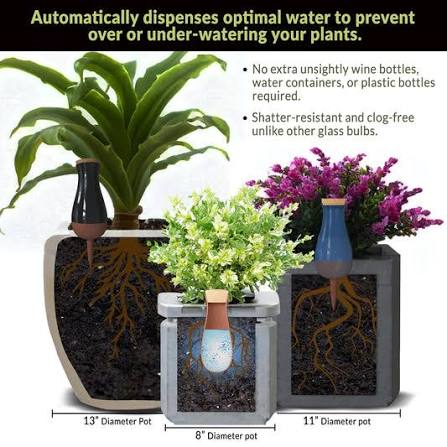
A terracotta watering spike can turn a standard container into a passive watering setup. Water is stored in a reservoir and gradually moves through the porous terracotta toward the surrounding soil.
This approach is especially useful when you already have decorative pots that you want to keep.
SmartiLiving’s [terracotta self-watering spikes] are designed for indoor and outdoor container plants and use porous terracotta to gradually deliver moisture to the soil.
The advantage is flexibility: instead of buying an entirely new planter, you can add a watering solution to many existing containers.
How to Use a Self-Watering Pot Correctly
Even the best self-watering system works better when it is set up correctly.
1. Use Well-Draining Soil
Self-watering does not eliminate the need for proper drainage.
Choose a growing medium appropriate for your plant and avoid heavy soil that holds excessive amounts of water.
2. Start Conservatively
When using a new self-watering system, observe how quickly the plant and soil use water.
Do not assume the reservoir needs to be refilled immediately every time it becomes partially empty.
3. Watch the Plant
Look at the leaves, soil, growth, and overall condition.
A self-watering system is a tool—not a replacement for understanding your plant.
4. Adjust for the Season
Plants often use more water during periods of active growth and hot weather.
During cooler or darker periods, their water consumption may decrease.
This is especially important for outdoor containers, which can experience major changes in evaporation throughout the year.
Are Self-Watering Pots Good for Beginners?
Yes—especially for beginners who struggle with inconsistent watering.
The biggest benefit isn’t that a self-watering system completely eliminates plant care. Instead, it reduces one of the most common sources of plant stress: inconsistent moisture.
If you frequently forget to water, travel often, or have several container plants to manage, a passive watering system can make your routine much easier.
SmartiLiving’s [complete self-watering plant systems guide] explains the different types of systems and how they work.
Final Thoughts
The best plants for self-watering pots are generally plants that appreciate steady moisture rather than extreme swings between drought and heavy watering.
Pothos, peace lilies, spider plants, ferns, Fittonia, Calathea, herbs, coleus, and many tropical foliage plants are strong candidates.
At the same time, drought-tolerant plants such as cacti, many succulents, snake plants, and ZZ plants require more caution because they naturally prefer longer dry periods.
The key isn’t simply buying a self-watering pot. It’s matching the plant, container size, soil, light, and watering system to one another.
When those pieces work together, self-watering can make plant care easier, more consistent, and much less stressful.
Frequently Asked Questions
What are the best plants for self-watering pots?
Some of the best choices include pothos, peace lilies, spider plants, Boston ferns, Fittonia, Calathea, basil, mint, coleus, and other plants that prefer relatively consistent moisture.
Can succulents grow in self-watering pots?
They can, but they are generally not the easiest match. Succulents prefer their growing medium to dry between waterings, so a self-watering system must be carefully controlled to avoid excessive moisture.
Are self-watering pots good for indoor plants?
Yes. They can be particularly useful for indoor plants that prefer consistent moisture, including pothos, peace lilies, spider plants, and many tropical plants.
Do self-watering pots prevent overwatering?
Not automatically. A self-watering system can provide more consistent moisture, but the wrong system, poor drainage, unsuitable soil, or an inappropriate plant can still create overly wet conditions.
Can I use a self-watering spike with a normal pot?
Yes. Terracotta watering spikes are designed to add passive watering to many existing containers, allowing you to keep your current pots while improving watering consistency.
How often should I refill a self-watering pot?
There is no universal schedule. Refill frequency depends on the plant, pot size, reservoir capacity, temperature, humidity, light, and season. Monitor the reservoir and plant rather than following a fixed schedule.
What plants should not be put in self-watering pots?
Plants that strongly prefer dry conditions, including many cacti and succulents, may not be ideal for continuously moist self-watering setups. Snake plants and ZZ plants also generally tolerate—and often prefer—less frequent watering.
Author



Finding the right psychiatric nurse practitioner position takes more than searching for vacancies and sending applications. Your next role should match your clinical interests, lifestyle, professional goals, and expectations for patient care.
When exploring Jobs in Texas, psychiatric nurse practitioners can find opportunities in hospitals, outpatient clinics, community health centers, private practices, and telehealth organizations. Texas also offers a wide range of locations. You can pursue a career in a large metropolitan area or explore opportunities in smaller communities.
However, every position comes with different expectations. Therefore, take time to compare the details before making a decision.
Why Consider a Career in Texas?
Texas has a large and diverse healthcare market. Major cities continue to offer numerous healthcare opportunities. At the same time, smaller communities may provide professionals with opportunities to serve populations that need greater access to behavioral healthcare.
You can explore opportunities in areas such as Houston, Dallas-Fort Worth, Austin, San Antonio, El Paso, and Corpus Christi. You can also consider communities outside the largest metropolitan areas.
Location can influence more than your commute. It can affect patient demographics, practice settings, compensation, work-life balance, and professional networking opportunities. As a result, start your search by identifying the type of community where you would feel most comfortable practicing.
Consider Outpatient Psychiatric Positions
Outpatient behavioral health clinics provide a common work environment for psychiatric nurse practitioners. Providers may conduct psychiatric evaluations, develop treatment plans, manage medications, and monitor patient progress.
Many professionals appreciate the structure of outpatient care. These roles can offer predictable schedules and opportunities to develop long-term relationships with patients.
However, workloads can vary significantly between employers. Before accepting a position, ask about daily patient volume, appointment length, follow-up schedules, administrative tasks, and telehealth responsibilities.
Also, find out whether therapists, nurses, social workers, or other professionals support the clinical team. Strong support can make daily responsibilities more manageable.
Explore Hospital-Based Opportunities
Hospitals can provide a fast-paced environment for psychiatric nurse practitioners. These positions may involve complex cases and frequent collaboration with multidisciplinary teams.
Depending on the facility, you may conduct psychiatric assessments, provide consultations, develop treatment plans, and manage medications. You may also work closely with physicians, psychologists, social workers, nurses, and other specialists.
Hospital work can offer valuable clinical experience. However, the schedule may demand greater flexibility.
Before accepting an offer, ask about nights, weekends, holidays, emergency coverage, and on-call responsibilities. Make sure those expectations fit your personal commitments.
Look Into Community Mental Health
Community mental health organizations play an important role in expanding access to behavioral healthcare. They often serve individuals who face financial, geographic, or other barriers to treatment.
Psychiatric nurse practitioners in these settings can work with patients who have a broad range of mental health needs. Their responsibilities may include assessments, medication management, treatment planning, education, and care coordination.
This environment can feel particularly rewarding for professionals who want to make a direct impact within underserved communities.
At the same time, ask about caseloads and documentation requirements. A large patient volume can create significant pressure. Therefore, understand the available clinical and administrative support before accepting a role.
Consider Telepsychiatry
Telepsychiatry has created another option for psychiatric nurse practitioners. Remote positions can provide greater flexibility and may reduce commuting requirements.
However, remote work still requires careful planning. Ask potential employers about appointment volume, scheduling, documentation, technology, and technical support.
You should also understand the licensing and regulatory requirements that apply when treating patients who live in different states. Requirements can change, so verify current rules through the appropriate regulatory authorities.
Evaluate Private Practice Roles
Private practices can offer a different professional experience. Depending on the organization, psychiatric nurse practitioners may have more autonomy and work with smaller clinical teams.
Typical responsibilities can include psychiatric evaluations, medication management, follow-up care, and collaboration with therapists.
Before signing an employment agreement, review the compensation structure and other important terms. Look at productivity expectations, benefits, scheduling, patient volume, documentation requirements, and professional liability coverage.
Do not focus on salary alone. The complete employment package matters.
How to Search for the Right Position
A focused job search can save time and help you find more relevant opportunities. Start with healthcare-specific job platforms and search using both your specialty and preferred location.
When researching Jobs in Texas, consider narrowing your search to specific cities or regions. A focused approach makes it easier to compare similar positions. You can explore opportunities in:
- Houston
- Dallas
- Fort Worth
- Austin
- San Antonio
- El Paso
- Arlington
- Corpus Christi
- Smaller Texas communities
Think about commute time, housing costs, professional opportunities, and your preferred lifestyle when comparing locations.
Review Your Qualifications
Psychiatric mental health nurse practitioners typically complete advanced nursing education and specialized clinical training. They also need to maintain the appropriate professional credentials for their practice.
Before applying, confirm that your licenses and certifications remain current. Employers may also look for board certification, psychiatric experience, prescribing credentials, and other qualifications. Because state requirements can change, verify current Texas licensing and practice rules through the relevant regulatory agencies.
Compare Compensation and Benefits
Salary matters, but it should not become your only deciding factor. A position with a higher salary may also involve heavier workloads or less flexibility. Instead, evaluate the complete package.
Look at base compensation, bonuses, health insurance, retirement benefits, paid time off, professional liability coverage, and continuing education support.
Next, examine the expected patient volume. Ask how many patients providers typically see each day and how long appointments usually last. Finally, review the schedule. Determine whether the position includes evenings, weekends, holidays, or on-call responsibilities.

Ask About Professional Growth
A good position should support your long-term career goals. During interviews, ask whether the employer provides mentorship, continuing education, leadership opportunities, or support for additional certifications.
Career development can become especially important as your interests evolve. An employer that encourages professional growth may offer greater value over time.
You should also ask how the organization evaluates performance. Clear expectations can help you understand how the practice measures success.
Prepare for the Interview
Once you identify promising Jobs in Texas, prepare carefully for each interview. Research the employer and review the specific responsibilities listed in the job description.
Interviewers may ask about psychiatric assessments, medication management, crisis situations, patient communication, documentation, and teamwork. Prepare examples from your clinical experience. Explain how you handled challenging situations and what you learned from them.
Also, prepare questions for the employer. Ask about patient volume, common diagnoses, onboarding, mentorship, administrative support, call requirements, and advancement opportunities. An interview should help both sides determine whether the position makes sense.
Explore Other Healthcare Careers
Healthcare professionals often compare multiple career paths before choosing their next opportunity. A broad healthcare job platform can help candidates explore positions across different specialties and locations.
You may find opportunities for physical therapy assistants, physician assistants, pediatricians, pediatric nurse practitioners, dental hygienists, and other healthcare professionals.
Although each specialty has different requirements, the same basic principles apply. Evaluate the employer, location, compensation, workload, schedule, patient population, and career development opportunities.
Make a Decision Based on the Complete Opportunity
When comparing Jobs in Texas, look beyond the salary displayed in a job advertisement. Your ideal position should support your clinical interests while also fitting your lifestyle.
Consider the patient population, workload, schedule, benefits, workplace culture, professional support, and opportunities for growth. These factors can have a major impact on your long-term satisfaction.
A position that offers a slightly lower salary may prove more valuable if it provides manageable hours, strong mentorship, excellent benefits, and a supportive clinical environment.
Ultimately, the right psychiatric nurse practitioner career should give you room to provide quality care while maintaining a sustainable professional life. Take time to compare your options, ask thoughtful questions, and choose the opportunity that aligns with both your current priorities and your future goals.
Final Thoughts
Finding the right psychiatric nurse practitioner role requires more than comparing salaries. Jobs in Texas can offer diverse opportunities across hospitals, clinics, private practices, community health centers, and telepsychiatry.
Focus on the complete position. Consider the workload, schedule, benefits, workplace support, patient population, and opportunities for growth. With careful research and thoughtful comparison, you can choose a role that supports both your career goals and long-term professional satisfaction.
Author



Top 10 Psychology Conferences 2026 in the USA

Commercial Cabinet Shop Drawings: Key Details for Accurate Fabrication

AI Development Trends Businesses Should Watch in 2026

Colour Plane: Inspiring Better Design Through Colour and Creativity

Cole Buxton Clothing | Free Shipping | Shop Now

How 3D Interior Rendering Transforms Architectural Design

Traditional Ayurvedic Herbs and Their Place in Modern Wellness

Why a Good Bassinet Makes Life Easier for NZ Parents

Why take Private tour of Gibbston Valley

Work Visas, Job Changes, and the Details That Decide NZ Visa

Cybersecurity Consulting Company SequelNet Provides Critical IT Support Services to Medical Billing Firm, Medical Optimum

Meet the Megalodon: The Shark Star of ‘Meg 2’

Reduce Video Game Lag: Level Up Your Gaming Performance

Balancing India’s Entertainment: Cricket vs. Bollywood

Jetsetter’s Secrets: Unveiling Our Favorite Travel Hacks for a Seamless Adventure

The 5 Best Live Sports Streaming Sites: Legal and Exciting!

Hollywood Labor Unrest: The Impact of ‘What About Us?’ Strikes

Unveiling the Magic of Dream Fulfillment at the Late NBA Draft

Illuminate Your Skin: Dr. Axe Unveils Natural Remedies for Lightening Knees and Elbows

Bright Choices: Navigating the Pros and Cons of Skin Whitening Creams with Dr. Axe
-

 Business3 years ago
Cybersecurity Consulting Company SequelNet Provides Critical IT Support Services to Medical Billing Firm, Medical Optimum
-
Entertainment3 years ago
Meet the Megalodon: The Shark Star of ‘Meg 2’
-
Entertainment3 years ago
Reduce Video Game Lag: Level Up Your Gaming Performance
-
 Sports3 years ago
Balancing India’s Entertainment: Cricket vs. Bollywood
-
Entertainment3 years ago
Jetsetter’s Secrets: Unveiling Our Favorite Travel Hacks for a Seamless Adventure
-
Productivity3 years ago
The 5 Best Live Sports Streaming Sites: Legal and Exciting!
-
Art /Entertainment3 years ago
Hollywood Labor Unrest: The Impact of ‘What About Us?’ Strikes
-
Sports3 years ago
Unveiling the Magic of Dream Fulfillment at the Late NBA Draft