
Development
Node Js Developers: How to Hire the Right Talent for Your Project

Node Js has become a strong choice for businesses that want fast, scalable, and responsive web applications. Companies of all sizes use it to build APIs, SaaS platforms, e-commerce systems, real-time applications, and backend services. Its event-driven architecture allows applications to manage many requests without slowing down under normal workloads.
For businesses, the challenge does not end with choosing Node Js. They also need the right talent to turn their ideas into reliable products. When companies hire JS developers, they gain access to professionals who can work with JavaScript on the server side and contribute to modern backend development.
However, hiring the right person requires careful planning. Technical knowledge matters, but so do communication, problem-solving, practical experience, and the ability to understand business requirements.
Why Should You Hire a Node Js Developer?
Node Js runs on Google’s V8 JavaScript engine and uses an event-driven, non-blocking approach. As a result, it works well for applications that handle multiple connections and frequent data exchanges. Businesses commonly use Node Js for:
- Web application backends
- REST and GraphQL APIs
- SaaS products
- E-commerce platforms
- Microservices
- Chat applications
- Real-time systems
- Streaming platforms
- Server-side applications
Another major benefit comes from JavaScript itself. Teams can use the same core language across frontend and backend development. This approach can improve collaboration and make it easier for developers to understand different parts of an application.
When you hire JS developers, you can also build a more flexible development team. However, you should match their experience with your project’s actual requirements.

Skills to Look for in a Node Js Developer
A strong candidate should bring a combination of technical expertise and practical development experience. Consider the following skills before making a hiring decision.
Strong JavaScript Knowledge
JavaScript forms the foundation of Node Js development. Therefore, candidates should understand variables, functions, objects, modules, promises, callbacks, async/await, and modern ES6+ features. They should also know how JavaScript behaves in asynchronous environments. This knowledge helps them create cleaner and more maintainable backend code.
Node Js Ecosystem Experience
A capable developer should understand the Node Js runtime and its surrounding ecosystem. Depending on your project, experience with Express.js, Nest JS, or Factify can prove useful. Candidates should also understand npm and package management. More importantly, they should know how to choose, update, and manage third-party dependencies responsibly.
API Development
APIs connect applications with websites, mobile apps, databases, and external services. Therefore, API development remains an important skill.
Your candidate should know how to create RESTful APIs and understand GraphQL when your project requires it. They should also understand authentication, authorization, input validation, error handling, and API security.
Database Knowledge
Modern backend applications often depend on multiple types of databases. A developer may work with PostgreSQL, MySQL, MongoDB, Redis, or similar technologies.
Look for candidates who understand database structures, queries, indexing, data relationships, and performance optimization. They should also know how to protect sensitive application data.
Asynchronous Programming
Asynchronous programming plays a central role in Node Js. A developer should understand the event loop, promises, callbacks, and async/await. This knowledge helps developers manage time-consuming operations without unnecessarily blocking the application.
Testing and Debugging
Good developers do more than write code. They also test it and fix problems efficiently. Experience with unit tests, integration tests, debugging tools, and automated testing frameworks can improve application stability. This becomes even more important as an application grows.
How Much Does It Cost to Hire a Node Js Developer?
There is no single hiring price for Node Js talent. Several factors affect the final cost, including experience, location, project complexity, hiring model, and required technical skills.
A junior developer generally costs less and may work well on simple tasks under experienced supervision. A mid-level developer can usually manage development tasks independently and may suit APIs, business applications, and SaaS products.
Senior developers usually charge more. However, they can handle architecture, security, integrations, performance improvements, and complex backend challenges.
Therefore, businesses should not judge candidates only by their hourly rates. An experienced professional may complete difficult work faster and prevent expensive technical problems later.
Where Can You Find Node Js Developers?
Companies can choose from several hiring models based on their goals and budget.
- Freelancers: Freelancers offer flexibility and can work well for short-term projects, specific features, or temporary development needs. Before hiring, check their portfolio, availability, communication style, and previous client feedback.
- In-house developers: Full-time employees can provide long-term collaboration and stronger integration with your company. However, this option can increase expenses because you may need to cover salaries, benefits, equipment, recruitment, and other employment costs.
- Development agencies: Agencies provide access to teams with different technical skills. They can handle development, testing, deployment, project management, and maintenance. This option can help businesses that want a complete development team without building one internally.
Questions to Ask Before Hiring
Technical interviews should focus on practical knowledge. Ask candidates questions that reflect the challenges they may face during your project.
For example, ask how they handle asynchronous operations, design scalable APIs, improve application performance, and secure backend systems. You can also ask about their experience with databases, cloud deployment, authentication, testing, and production debugging.
A practical coding assignment can provide even more insight. It shows how candidates approach real problems instead of simply testing their ability to memorize technical concepts.
Tips for Choosing the Right Candidate
Start by defining your project clearly. Identify the required features, technology stack, development timeline, and expected outcomes. Then decide whether you need junior, mid-level, or senior expertise. Next, review relevant experience. When hiring JS developers, look for professionals who have worked on applications similar to yours. Their previous experience can reveal whether they understand your industry’s technical challenges.
Communication also deserves attention. Developers need to explain technical decisions, report progress, discuss problems, and work effectively with designers, managers, and other developers. You can also begin with a small paid trial project. This approach lets you assess coding quality, reliability, communication, and problem-solving before starting a larger engagement.
Finally, review portfolios, GitHub profiles when available, references, and client feedback. Focus on the candidate’s actual contribution to previous projects.
Final Thoughts
Hiring the right Node Js Developer can influence your application’s performance, security, scalability, and long-term maintenance. Therefore, businesses should look beyond technical certificates or years of experience.
A structured hiring process can help you find professionals who match your technical and business needs. Define your requirements, review relevant experience, test practical skills, and evaluate communication before making a decision.
Whether you work with a freelancer, an in-house professional, or an agency, the right developers can help transform your application idea into a dependable digital product. With careful evaluation and clear project expectations, you can build a development team that supports both your immediate goals and future growth.
Author


Dubai has become an important destination for businesses investing in digital products, mobile technology, and customer-focused applications. From startups launching new ideas to established companies improving their digital services, organizations are looking for reliable development partners that can turn business requirements into practical mobile solutions.
A professional Mobile App Development Company in Dubai, UAE can help businesses plan, design, develop, test, and maintain applications for their customers and employees. Whether the project involves an eCommerce platform, a healthcare application, a fintech product, or an on-demand service, the right development partner should understand the business model, target audience, technical requirements, and long-term growth objectives.
Custom app solutions can also help businesses automate everyday processes, improve customer engagement, simplify transactions, and deliver services through convenient digital experiences. However, selecting a development company requires more than comparing prices or looking at a portfolio. Businesses should consider technical capabilities, industry experience, communication, security practices, and post-launch support.
This guide explores the services businesses should expect, the technologies involved, and 10 mobile app development companies to consider when planning a project in Dubai and across the UAE.
Why Businesses in Dubai Invest in Custom Mobile App Development
Mobile applications have become an important part of how businesses communicate with customers, manage operations, and deliver services. A well-planned application can provide a direct channel between a business and its users while creating opportunities for better service delivery.
Here are some common reasons businesses invest in mobile application development in Dubai.
Better Customer Experience
A mobile app gives customers convenient access to products, bookings, payments, support, and account information. Features such as personalized dashboards, push notifications, secure login, and real-time updates can make everyday interactions easier.
Improved Business Operations
Custom business applications can automate repetitive tasks, manage workflows, track orders, and connect different systems. These capabilities are useful for logistics companies, retail businesses, healthcare providers, and service-based organizations.
New Revenue Opportunities
Businesses can use mobile apps to introduce subscription plans, in-app purchases, digital marketplaces, loyalty programs, and online payment options. The right revenue model depends on the target audience and the product’s purpose.
Scalable Digital Products
A scalable application can accommodate new features, additional users, and changing business requirements. An experienced app development team can plan the architecture, database, APIs, and infrastructure to support future improvements.
Mobile App Development Services in Dubai
A full-service mobile app development agency may provide several services throughout the product lifecycle. The exact scope depends on the company and the project.
Custom Mobile App Development
Custom mobile app development focuses on creating software around a business’s specific requirements rather than relying entirely on ready-made templates. The process may include requirement analysis, application architecture, frontend and backend engineering, third-party integrations, and deployment.
Custom solutions are useful for businesses that need specialized workflows, unique features, or integration with existing systems.
iOS App Development
iOS app development involves building applications for iPhone and, where required, iPad and other Apple platforms. Development teams commonly use Swift and Apple’s development tools to create applications that follow platform conventions and provide a consistent user experience.
Android App Development
Android app development services help businesses reach users across a broad range of devices. Depending on the project, developers may use Kotlin, Java, or suitable cross-platform frameworks.
Performance testing across different screen sizes, operating system versions, and device configurations is an important part of Android development.
Cross-Platform App Development
Cross-platform development allows teams to build applications for multiple operating systems using a shared codebase where appropriate. Flutter and React Native are two commonly used technologies.
This approach can reduce duplicated development work, although native development may be more suitable for applications requiring specialized device features or platform-specific performance.
UI/UX Design and Prototyping
Mobile app UI/UX design covers the screens, navigation, visual elements, and interactions users experience. Wireframes and clickable prototypes help businesses evaluate the product before investing in full development.
For the UAE market, companies may also need Arabic and English interfaces, right-to-left layouts, and culturally appropriate content.
AI-Powered Mobile App Development
Artificial intelligence can support features such as recommendations, conversational assistants, document processing, intelligent search, and workflow automation. The value of AI depends on the actual business problem, available data, privacy requirements, and expected user benefit.
App Testing, Launch, and Maintenance
A reliable development process includes functional testing, usability checks, security reviews, performance testing, and compatibility testing. After release, ongoing maintenance may cover bug fixes, operating system updates, monitoring, security patches, and new features.
Top 10 Mobile App Development Companies in Dubai, UAE
The following companies are potential options for businesses seeking custom mobile app solutions in Dubai and the wider UAE. This is a practical shortlist, not an independently verified ranking of the ten best providers. The order does not imply that one company is objectively better than another.
1. Appikr Labs
Company overview: Appikr Labs provides mobile application development services for startups, small and medium-sized businesses, and larger organizations. Its website describes full-cycle app development, from understanding project requirements and designing prototypes to development and delivery.
Location: Conrad Business Tower, Office 29–30, Suite 2103, Sheikh Zayed Road, Al Thanyah Fifth, Dubai, UAE.
Core services: Custom mobile app development, iOS and Android applications, cross-platform development, web development, and AI-powered solutions.
Key strengths to evaluate: Businesses considering Appikr Labs can review its portfolio, relevant industry experience, proposed technology stack, development process, and approach to ongoing support. Its suitability will depend on the requirements and complexity of the project.
Suitable for: Businesses seeking a development partner for custom mobile applications, digital platforms, or technology-led products.
2. Dubai App Developers
Company overview: Dubai App Developers focuses on mobile applications, AI-powered products, cloud solutions, and digital platforms for businesses in Dubai and the wider Gulf region.
Its technology offering includes iOS, Android, Flutter, React Native, AI development, AWS cloud services, and cloud migration. The company also emphasizes UAE-specific considerations such as Arabic-first interfaces, RTL support, and data-residency requirements.
Location: Dubai, UAE.
Core services: Android app development, iOS app development, cross-platform applications, UI/UX design, testing, deployment, and maintenance.
Key strengths to evaluate: Review its relevant project portfolio, development approach, quality assurance practices, and ability to support applications after launch.
Suitable for: Businesses seeking a locally based development partner for custom mobile applications and ongoing product improvements.
3. Mobiiworld
Company overview: Mobiiworld is a digital engineering agency with mobile application development among its core services. Its website highlights native development for Apple and Android platforms, along with technologies such as Swift, SwiftUI, Kotlin, and Flutter.
Location: Dubai, UAE.
Core services: Native iOS and Android development, cross-platform applications, web development, and digital experience solutions.
Key strengths to evaluate: Its native application capabilities may be relevant to projects requiring platform-specific experiences. Businesses should also review the agency’s design process, integration experience, and enterprise delivery capabilities.
Suitable for: Organizations looking for native mobile applications or mobile products that form part of a broader digital experience.
4. ToXSL Technologies
Company overview: ToXSL Technologies provides custom software and mobile application development services in Dubai and the UAE. The company currently reports 14+ years in business, 5,000+ projects delivered, 2,500+ clients, and 300+ team members.
Its mobile development services include Android and iOS applications, custom software, AI solutions, and scalable digital products. The company also highlights industry-focused solutions across areas such as banking, real estate, healthcare, logistics, and other business sectors.
Location: Dubai, UAE.
Core services: iOS and Android development, Flutter and React Native applications, AI-enabled solutions, and custom software development.
Key strengths to evaluate: Ask about the team’s experience with your preferred framework, the complexity of previous projects, integration requirements, and how it manages testing and delivery.
Suitable for: Startups and established businesses exploring custom applications, cross-platform development, or AI-related features.
5. TekRevol
Company overview: TekRevol offers digital product development services for businesses seeking to turn ideas into mobile applications. Its work covers application planning, design, engineering, and related software solutions.
Location: Dubai, UAE.
Core services: Custom mobile app development, iOS and Android applications, cross-platform development, UI/UX design, and digital product development.
Key strengths to evaluate: Businesses should assess its experience with similar business models, project management approach, technical documentation, and ability to maintain a product over time.
Suitable for: Businesses developing customer-facing mobile products, service platforms, or applications that require customized features.
6. DeviceBee
Company overview: DeviceBee is a Dubai-based mobile app development company that works with startups, SMEs, enterprises, and organizations in the UAE. Its current website reports 700+ projects delivered, 150+ clients, and 13 years of experience.
The company’s mobile development capabilities include native iOS and Android applications as well as Flutter and React Native solutions. It also offers AI-powered applications, UI/UX design, backend/API development, quality assurance, DevOps, and post-launch support.
Location: Dubai, UAE
Core services: Mobile app development, AI development, custom software, and digital product engineering.
Key strengths to evaluate: Review its experience with your industry, technical architecture, integration requirements, project estimates, and quality assurance process.
Suitable for: Businesses seeking mobile applications alongside custom software or AI-enabled functionality.
7. Konstant Infosolutions
Company overview: Konstant Infosolutions is one of the established names appearing prominently in current Dubai mobile app development directories. Clutch currently lists the company with a Dubai presence and identifies mobile app development as its primary service focus.
Location: Dubai, UAE.
Core services: Native Android and iOS applications, Flutter and React Native development, UI/UX design, and custom digital solutions.
Key strengths to evaluate: Ask to see applications similar to your planned product and confirm whether the proposed team can handle backend services, integrations, deployment, and post-launch improvements.
Suitable for: Businesses seeking a mobile app development agency for consumer applications, business platforms, or specialized digital products.
8. AppVerticals
Company overview: AppVerticals provides mobile and software development services, with an emphasis on applications built around specific business requirements. Its service offering includes backend components and integrations needed to support functional mobile products.
Location: Dubai, UAE.
Core services: Custom mobile applications, Android development, iOS development, backend engineering, APIs, and third-party integrations.
Key strengths to evaluate: Check its experience with authentication, payment processing, admin dashboards, data security, and the integrations required by your business.
Suitable for: Organizations that need custom application functionality and integration with existing systems.
9. Hidden Brains
Company overview: Hidden Brains offers software engineering and IT consulting services across multiple technology areas. Its capabilities include mobile application development and broader systems that support business operations.
Location: Dubai, UAE, with broader international operations.
Core services: Mobile app development, custom software development, web applications, enterprise solutions, and digital product engineering.
Key strengths to evaluate: Businesses with complex requirements should review its experience with enterprise systems, backend architecture, security, and long-term technical support.
Suitable for: Companies seeking mobile applications that connect with wider business systems or form part of a larger digital transformation initiative.
10. Suffescom Solutions
Company overview: Suffescom Solutions provides software and mobile application development services for businesses pursuing custom digital products. Its service portfolio includes mobile applications and supporting technologies that can be tailored to different project requirements.
Location: Dubai, UAE, with wider service coverage.
Core services: Mobile app development, custom software, cross-platform applications, AI-related development, and digital product engineering.
Key strengths to evaluate: Review the proposed development team’s relevant experience, project milestones, application security, delivery process, and support arrangements before making a decision.
Suitable for: Businesses comparing development partners for custom mobile applications, software platforms, and feature-rich digital products.
Research note: Company descriptions summarize publicly presented service offerings and are not a guarantee of delivery quality. Confirm each company’s current Dubai office details, service availability, portfolio, and commercial terms directly before signing a contract.
How to Choose the Right Mobile App Development Company in Dubai
Selecting a development partner is an important decision because the quality of the planning, engineering, and delivery process can influence the product’s long-term success.
1. Review Relevant Portfolio Projects
Look for applications that share your business model, technical requirements, or target audience. A company that has built eCommerce apps may not necessarily have the experience required for a regulated fintech product or a complex enterprise application.
Ask for live app links, case studies, and an explanation of the company’s contribution to each project.
2. Confirm the Technology Stack
Your development partner should explain why a particular technology is appropriate for your product.
For example:
- Swift or SwiftUI may suit native iOS applications.
- Kotlin may suit native Android development.
- Flutter or React Native may suit certain cross-platform applications.
- Cloud services and backend APIs may support applications that require real-time data or substantial user activity.
The decision should reflect product requirements, not just the popularity of a framework.
3. Understand the Development Process
A transparent mobile app development process generally covers discovery, requirement analysis, UI/UX design, prototyping, development, testing, deployment, and maintenance.
Confirm who will manage the project, how frequently progress will be shared, and how changes to the scope will affect cost and timelines.
4. Discuss Data Security and Privacy
Applications that handle personal information, financial transactions, location data, or medical information need appropriate security controls.
Discuss secure authentication, access management, encryption, data retention, backup procedures, vulnerability testing, and relevant UAE legal requirements. Compliance depends on the nature of the business and the data being processed.
5. Compare Proposals Carefully
A lower quotation may not include everything required to launch and maintain an application. Compare proposals based on deliverables, milestones, assumptions, exclusions, ownership of source code, third-party costs, and support arrangements.
6. Confirm Post-Launch Support
Mobile applications need updates as operating systems change, integrations evolve, and users request improvements. Before signing a contract, clarify the warranty period, maintenance fees, response times, and ownership of application accounts and code repositories.
Mobile App Development Cost in Dubai, UAE
The cost of custom mobile app development depends on the product’s complexity, design requirements, integrations, technology stack, and delivery schedule. There is no single price that applies to every project.
| Application type | Typical scope |
|---|---|
| Basic app or MVP | Core features, standard screens, and limited integrations |
| Mid-level business app | User accounts, dashboards, APIs, notifications, and additional workflows |
| Advanced application | Real-time functionality, complex integrations, advanced security, or AI features |
| Enterprise application | Multiple user roles, large-scale integrations, complex workflows, and extensive security requirements |
For an accurate estimate, prepare a feature list and request an itemized proposal from multiple providers. Ask whether the quotation includes design, development, testing, app-store deployment, hosting, third-party licenses, and maintenance.
How Long Does Mobile App Development Take?
Project timelines depend on the scope, team size, technical complexity, and availability of requirements.
A small minimum viable product may take several weeks to a few months, while a more complex business application can take several months or longer. Enterprise projects may require additional time for integrations, security reviews, user acceptance testing, and approvals.
A realistic project plan should identify major milestones, dependencies, testing periods, and the process for approving changes.
Industries Using Custom Mobile App Solutions in Dubai
Mobile applications support a wide range of business models across the UAE.
- eCommerce and retail: Product catalogs, online ordering, digital payments, loyalty programs, and order tracking.
- Healthcare: Appointment scheduling, patient portals, telehealth features, and secure communication.
- Real estate: Property listings, virtual tours, lead management, and viewing bookings.
- Fintech: Account management, transaction interfaces, payment experiences, and financial dashboards, subject to applicable regulations.
- Logistics: Delivery tracking, fleet management, route planning, and proof of delivery.
- Travel and hospitality: Booking systems, itinerary management, guest services, and customer support.
- Education: Digital learning, course management, student portals, and assessment tools.
- On-demand services: Booking, dispatch, live status updates, customer reviews, and service-provider management.
The best solution depends on the specific operational challenges and customer needs within each industry.
Final Thoughts
Finding the right Mobile App Development Company in Dubai, UAE starts with understanding what your business needs from the application. A suitable partner should offer relevant technical expertise, clear communication, realistic planning, and a practical approach to long-term support.
Compare the companies in this guide using the same criteria, review their actual work, and request detailed proposals before making a decision. Whether you are launching a new startup product or improving an existing business platform, a well-planned custom mobile application can help you deliver better digital experiences and support sustainable business growth.
Frequently Asked Questions
How do I find a reliable mobile app development company in Dubai, UAE?
Review relevant portfolios, client references, technical expertise, project estimates, security practices, and maintenance terms. Compare proposals against the same requirements so you can evaluate each company fairly.
What services does a mobile app development company provide?
Services commonly include business analysis, UI/UX design, iOS and Android development, cross-platform engineering, backend development, API integration, testing, deployment, and ongoing maintenance.
Should I choose native or cross-platform app development?
Native development may be appropriate when an application requires deep platform integration or specialized performance. Cross-platform development can be suitable when a shared codebase supports the required features and user experience. The right choice depends on the product.
How much does it cost to build a mobile application in Dubai?
The cost depends on features, design, integrations, security requirements, and project complexity. Request an itemized quotation based on a defined scope rather than relying on a generic estimate.
Can a development company maintain my app after launch?
Many providers offer maintenance and support, but the scope varies. Confirm whether the agreement covers bug fixes, operating system updates, security patches, performance monitoring, and new features.
Do Dubai app developers build applications for both iOS and Android?
Many providers offer both platforms, either through separate native development teams or cross-platform frameworks. Confirm which approach the company recommends and whether both platforms are included in the quotation.
What should I prepare before contacting an app development agency?
Prepare a summary of your business objectives, target users, essential features, preferred platforms, reference applications, integrations, budget range, and desired launch timeframe. These details help the development team provide a more realistic proposal.
Author



The US Intelligent document processing market continues to gain momentum as businesses look for faster and smarter ways to manage large volumes of information. Companies across banking, insurance, healthcare, government, retail, and other industries handle thousands of invoices, contracts, claims, forms, and records every day. Managing these documents manually can consume valuable time and create avoidable errors.
Intelligent document processing, or IDP, helps organizations overcome these challenges. The technology combines artificial intelligence, machine learning, natural language processing, optical character recognition, and computer vision. Together, these tools can capture information, understand document content, extract relevant data, and send it into business workflows.
Market Growth Outlook Through 2035
According to Dimension Market Research, the US market holds a value of USD 2.47 billion in 2026. Analysts expect the market to reach approximately USD 11.86 billion by 2035. This growth represents a projected compound annual growth rate of 19.02% between 2026 and 2035.
Several factors support this expansion. Businesses continue to increase their use of cloud platforms and enterprise automation. At the same time, growing document volumes create pressure to process information more efficiently.
Traditional OCR can recognize printed or scanned text. However, modern IDP platforms go much further. They can identify document types, understand context, extract specific information, validate results, and connect the output with enterprise applications. As a result, organizations increasingly view document processing as part of a broader automation strategy rather than as a simple scanning function.
What Is Driving Market Demand?
Businesses want to reduce repetitive work while improving accuracy and response times. Manual document handling often requires employees to enter information into multiple systems. This approach can slow operations and increase the possibility of mistakes.
IDP addresses this problem by automating several stages of the process. For example, a company can use the technology to capture invoice information, identify important fields, check the extracted data, and send it into an accounting platform.
Furthermore, cloud technology makes these solutions easier to scale. Organizations can expand document processing capacity without building large infrastructure environments. Subscription-based models and prebuilt integrations can also make adoption more practical for smaller and mid-sized businesses.
Another important driver involves artificial intelligence. Newer AI models can understand documents with greater context. Therefore, they can support more complicated workflows involving contracts, claims, correspondence, financial statements, and other business records.
Key Trends Shaping the Market
One major trend involves end-to-end automation. Businesses no longer want technology that simply extracts text. Instead, they want systems that can validate information, identify exceptions, trigger workflows, and transfer results into other applications.
Generative AI also creates new possibilities. It can help organizations interpret complex documents, summarize lengthy content, and identify important information. These capabilities can reduce the time employees spend reviewing large document collections.
Cloud deployment represents another major trend. Cloud platforms provide flexibility and centralized management. They also make it easier for organizations to access newer AI capabilities as vendors continue to improve their platforms.
Meanwhile, industry-specific solutions are gaining attention. A bank may need tools for financial documents and customer onboarding. An insurance company may focus on claims and policy records. Healthcare organizations may prioritize patient documentation and administrative records. This growing specialization gives technology providers opportunities to develop workflows around specific industry requirements.
Emerging Opportunities
Generative AI-based document understanding represents an important opportunity for the US Intelligent document processing market. Conventional OCR works well with straightforward text recognition. However, complex documents often require deeper contextual understanding.
Contracts provide a good example. A contract may contain dates, obligations, conditions, financial terms, and exceptions across multiple sections. Advanced AI can help identify these details and organize them into useful outputs.
Healthcare records, insurance claims, financial statements, and government documents can benefit from similar capabilities.
Mid-sized companies also offer significant growth potential. Cloud delivery, low-code configuration, subscription pricing, and ready-made connectors can lower technical barriers. Consequently, more organizations can adopt document intelligence without creating large internal technology teams.
Market Segmentation
The market covers several important categories. By component, it includes software solutions and services. Software can cover document capture, classification, data extraction, workflow automation, AI models, and related capabilities. Services can include consulting, implementation, managed services, training, and support.
Deployment options include cloud, on-premises, and hybrid environments. Cloud solutions currently lead the deployment segment, accounting for 61.7% of the market in 2026.
Technology categories include OCR, natural language processing, machine learning, computer vision, robotic process automation, deep learning, and generative AI extraction.
Large enterprises represent an important customer group. However, small and medium-sized businesses increasingly have access to these technologies through flexible cloud offerings.
Major end-user industries include banking and financial services, insurance, healthcare and life sciences, government, IT and telecommunications, manufacturing, retail, transportation, logistics, and legal services.

Leading Companies
The competitive landscape includes several established technology providers and specialized IDP companies. Key names include ABBYY, AntWorks, Appian, Automation Anywhere, AWS, Datamatics, Google Cloud, HCLTech, Hypatos, Hyperscience, IBM, Infrrd, Microsoft, Nanonets, OpenText, Rossum, SS&C Blue Prism, Tungsten Automation, UiPath, and WorkFusion.
These companies compete through AI capabilities, automation features, cloud platforms, industry solutions, integrations, security, and ease of deployment.
Recent Market Development
In July 2026, Microsoft expanded its partnership with Mistral and introduced Mistral Document AI with OCR 4 to Microsoft Foundry. The development supports structured document processing and agentic enterprise workflows.
Such developments show how quickly the market continues to evolve. Vendors increasingly combine document intelligence with broader AI and automation platforms.
Key Market Numbers
The market offers several notable figures for 2026. Its estimated value stands at USD 2.47 billion, while analysts project a value of USD 11.86 billion by 2035. The expected CAGR stands at 19.02% during the forecast period.
Software solutions hold a 68.4% share, while cloud-based solutions account for 61.7%. Banking and financial services represent 19.4% of the market. Together, these figures highlight the strong demand for intelligent document technologies across major business sectors.
Future Outlook
The US Intelligent document processing market should continue expanding as organizations connect document automation with wider business processes. Future solutions will likely focus on contextual understanding, validation, summarization, exception management, workflow orchestration, and automated actions.
Generative AI will remain an important area of development. At the same time, businesses will continue to prioritize security, compliance, integration, and governance.
Organizations also want measurable results. Therefore, vendors that can demonstrate lower processing costs, faster turnaround times, better data quality, and improved employee productivity may gain a competitive advantage.
Ultimately, the market is moving beyond basic document digitization. Modern platforms aim to turn unstructured information into useful business intelligence and automated actions.
Conclusion
The US Intelligent document processing market is moving toward a more connected and automated future. Organizations increasingly want to replace repetitive manual tasks with intelligent workflows that deliver faster and more accurate results.
As AI, cloud computing, and automation continue to advance, IDP will likely become an increasingly important part of enterprise technology strategies. Companies that combine intelligent document processing with strong security, reliable integration, and measurable business outcomes can build more efficient operations and respond more effectively to changing market demands.
Author


Modern architecture, engineering, and construction projects demand accurate information at every stage. Even a small measurement mistake can create major problems later. A misplaced wall, incorrect ceiling height, or inaccurate equipment location can lead to clashes, delays, and extra costs.
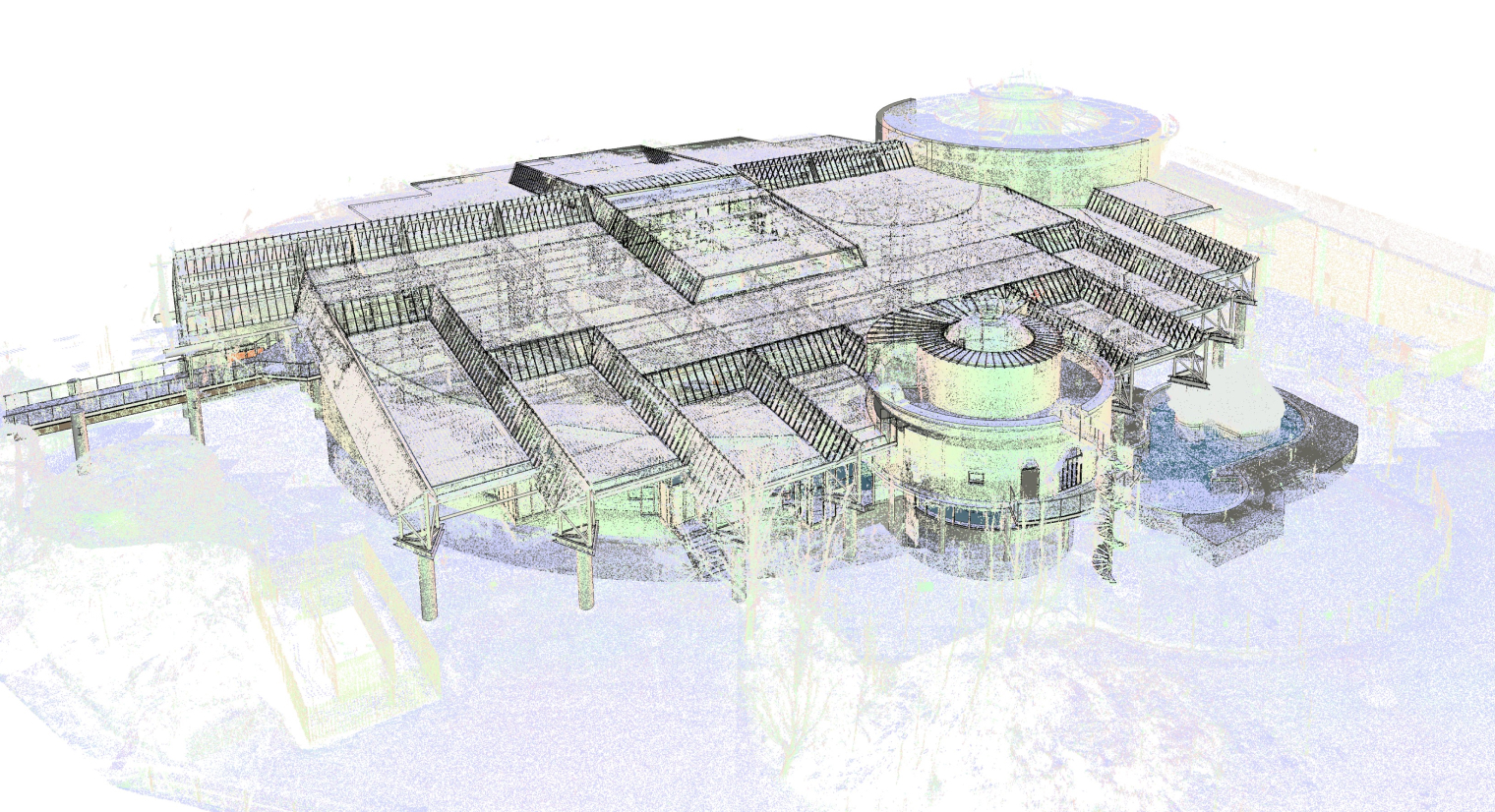
Digital reality capture offers a practical way to reduce these risks. Laser scanners can record thousands or millions of measurements across an existing building. Teams can then use that information to create detailed digital models that closely represent actual site conditions by Point Cloud.
This approach helps architects, engineers, contractors, and property owners make decisions with greater confidence. Instead of relying entirely on manual measurements, project teams can work from reliable spatial information.
Creating a Reliable Digital Site Record
Every successful BIM project starts with dependable information. Traditional surveys still have value, but they can require significant time and repeated site visits. Workers may also miss hidden areas or record measurements incorrectly.
A Cloud workflow provides a more comprehensive starting point. Laser scanning captures the visible environment from multiple positions. Specialized software then combines those scans into a unified digital dataset.
Modeling specialists can use this information to identify walls, floors, ceilings, columns, beams, mechanical equipment, and other building elements. They can then convert the relevant geometry into a structured BIM model. This process creates a useful connection between the physical building and its digital representation.
Reducing Errors During Design
Renovation and retrofit projects often present unexpected challenges. Existing drawings may not reflect later modifications. A wall might sit several inches away from its documented location. Mechanical equipment may also occupy areas that designers expected to remain clear. These differences can create serious coordination problems.
Reality capture gives design teams a clearer understanding of existing conditions. Architects can review accurate dimensions before developing detailed designs. Engineers can also examine structural and mechanical relationships before construction begins.
As a result, teams can identify potential problems earlier. They can adjust designs digitally instead of making expensive changes during construction.
Improving Multidisciplinary Coordination
Construction projects bring several disciplines together. Architects, structural engineers, mechanical engineers, electrical contractors, and plumbing teams all need to coordinate their work.
Even a small conflict between two systems can cause delays. For example, a duct may cross the path of a structural beam. An electrical tray might also occupy the same space as a plumbing line.
BIM coordination helps teams identify these conflicts before workers arrive on site. When teams integrate scan data into Revit or another BIM platform, they can compare proposed systems with actual building conditions. Therefore, designers can resolve clashes earlier. Contractors can also receive clearer information before fabrication and installation by point cloud.
Supporting Renovation and Historic Projects
Older buildings often present unique documentation challenges. Original drawings may no longer exist. Even when they do, previous renovations may have changed the building significantly.
Accurate scanning provides a current record of the structure. Architects can use this information when planning restoration, adaptive reuse, or modernization projects.
The process can capture complex details such as irregular walls, decorative features, structural members, and existing service routes. This information gives designers a dependable reference while they develop new plans. Consequently, teams can preserve important architectural characteristics while introducing modern systems.

Connecting CAD Information With BIM
Many property owners still rely on older CAD drawings. These files can contain valuable information, but they do not always provide the intelligence available in a BIM model.
Converting legacy CAD documentation into BIM creates a more useful digital resource. Teams can associate objects with information about dimensions, materials, systems, and relationships.
Combining CAD conversion with reality capture can make the process even more effective. Designers can compare older documentation with current site conditions. They can then update inaccurate information and create a more dependable digital record. This approach also supports long-term facility management.
Choosing the Right Level of Detail
Not every project requires the same level of modeling detail. A simple planning exercise may only need basic walls, floors, openings, and major equipment. A fabrication project requires much more information. Contractors may need precise dimensions for custom components. Mechanical teams may also need detailed geometry for ducts and pipes.
Therefore, project teams should establish the required Level of Development or Level of Detail before modeling begins. A clear requirement prevents unnecessary work. It also ensures that the finished model contains enough information for its intended purpose.
Making Construction Planning More Efficient
Digital models can support construction planning beyond design coordination. Project managers can connect building geometry with schedules and sequencing information.
This approach allows teams to visualize how construction activities will progress. They can review when specific trades will enter an area. They can also identify potential access problems before work begins.
For example, a large piece of mechanical equipment may require a specific delivery route. A digital model can help teams examine the available space and plan the installation sequence. Consequently, better planning can reduce disruption and improve site efficiency.
Reducing Repeat Site Visits
One of the biggest advantages of detailed reality capture involves information accessibility. A comprehensive scan can preserve a large amount of site information in digital form.
Designers may not need to send someone back to the property every time they need another measurement. Instead, they can review the captured data remotely. This advantage becomes particularly valuable for large facilities. It can also help teams working across different locations.
However, scanning does not eliminate the need for professional judgment. Specialists still need to interpret the data correctly and determine which information matters for the project.
Benefits of Outsourcing BIM Modeling
Some architecture and engineering firms do not maintain large internal BIM teams. Outsourcing can provide access to experienced modelers without requiring companies to hire additional permanent staff.
External specialists can support projects during busy periods. They can also handle specific tasks such as scan-to-BIM modeling, architectural documentation, MEP coordination, and model development.
This flexibility allows internal teams to focus on design, client communication, project management, and other core responsibilities. Before selecting an outsourcing partner, companies should review experience, quality-control processes, software capabilities, communication procedures, and project requirements.
Improving Facility Management
The value of a detailed BIM model does not end when construction finishes. Building owners can continue using digital information throughout the property’s lifecycle.
A well-organized model can help facility teams understand the location of equipment, building components, and service systems. This information can support maintenance, renovation planning, space management, and future upgrades.
When teams update the model after significant changes, it can become a valuable long-term reference. Therefore, reality capture can contribute to both construction efficiency and ongoing building management.
Supporting Better Project Decisions
Accurate information improves decision-making. When project teams understand existing conditions, they can make more informed choices about design, materials, construction methods, and scheduling.
Point Cloud technology supports this process by creating a detailed representation of physical spaces. When teams integrate that information into BIM, they can turn raw measurements into practical project intelligence.
The result goes beyond attractive 3D visuals. A well-developed BIM model can help teams coordinate systems, identify conflicts, plan construction, and manage assets.
Final Thoughts
Modern construction projects need accurate information, strong coordination, and efficient planning. Reality capture and BIM provide a powerful combination for achieving these goals.
A Point Cloud workflow can reduce measurement uncertainty and give project teams a clearer view of existing conditions. When specialists convert captured data into intelligent BIM models, architects, engineers, and contractors gain a stronger foundation for decision-making.
The technology also supports renovation, coordination, construction planning, and facility management. However, successful implementation requires more than scanning equipment. Teams need clear project requirements, skilled modeling professionals, appropriate detail levels, and reliable quality control.
When these elements work together, digital reality capture can reduce rework, improve coordination, and help teams deliver projects with greater confidence.
Author



Outsourced Bookkeeping: What It Is and How It Helps Your Business

Bookkeeping for Small Business: A Simple Guide

Refreshing Summer Drinks: 15 Easy Homemade Beverages to Beat the Heat

How Flooring Drafting Supports Large-Scale Construction Projects

Hydro-Jetting: An Effective Solution for Stubborn Drain

Construction Documentation Process: Concept to Execution

FIBC Bag Exporter From India: Complete Buyer’s Guide

The Role of Millwork Drafting in Commercial Interior Construction

Choosing the Right Millwork Shop Drawing Partner

Amazon Prime Day Sale and the Next Flipkart Sale Dates to Expect

Cybersecurity Consulting Company SequelNet Provides Critical IT Support Services to Medical Billing Firm, Medical Optimum

Meet the Megalodon: The Shark Star of ‘Meg 2’

Reduce Video Game Lag: Level Up Your Gaming Performance

Balancing India’s Entertainment: Cricket vs. Bollywood

Jetsetter’s Secrets: Unveiling Our Favorite Travel Hacks for a Seamless Adventure

The 5 Best Live Sports Streaming Sites: Legal and Exciting!

Hollywood Labor Unrest: The Impact of ‘What About Us?’ Strikes

Unveiling the Magic of Dream Fulfillment at the Late NBA Draft

Illuminate Your Skin: Dr. Axe Unveils Natural Remedies for Lightening Knees and Elbows

Bright Choices: Navigating the Pros and Cons of Skin Whitening Creams with Dr. Axe
-

 Business3 years ago
Cybersecurity Consulting Company SequelNet Provides Critical IT Support Services to Medical Billing Firm, Medical Optimum
-
Entertainment3 years ago
Meet the Megalodon: The Shark Star of ‘Meg 2’
-
Entertainment3 years ago
Reduce Video Game Lag: Level Up Your Gaming Performance
-
 Sports3 years ago
Balancing India’s Entertainment: Cricket vs. Bollywood
-
Entertainment3 years ago
Jetsetter’s Secrets: Unveiling Our Favorite Travel Hacks for a Seamless Adventure
-
Productivity3 years ago
The 5 Best Live Sports Streaming Sites: Legal and Exciting!
-
Art /Entertainment3 years ago
Hollywood Labor Unrest: The Impact of ‘What About Us?’ Strikes
-
Sports3 years ago
Unveiling the Magic of Dream Fulfillment at the Late NBA Draft






