
Maketing
Local SEO for E-commerce Marketplaces to Outrank Global Giants

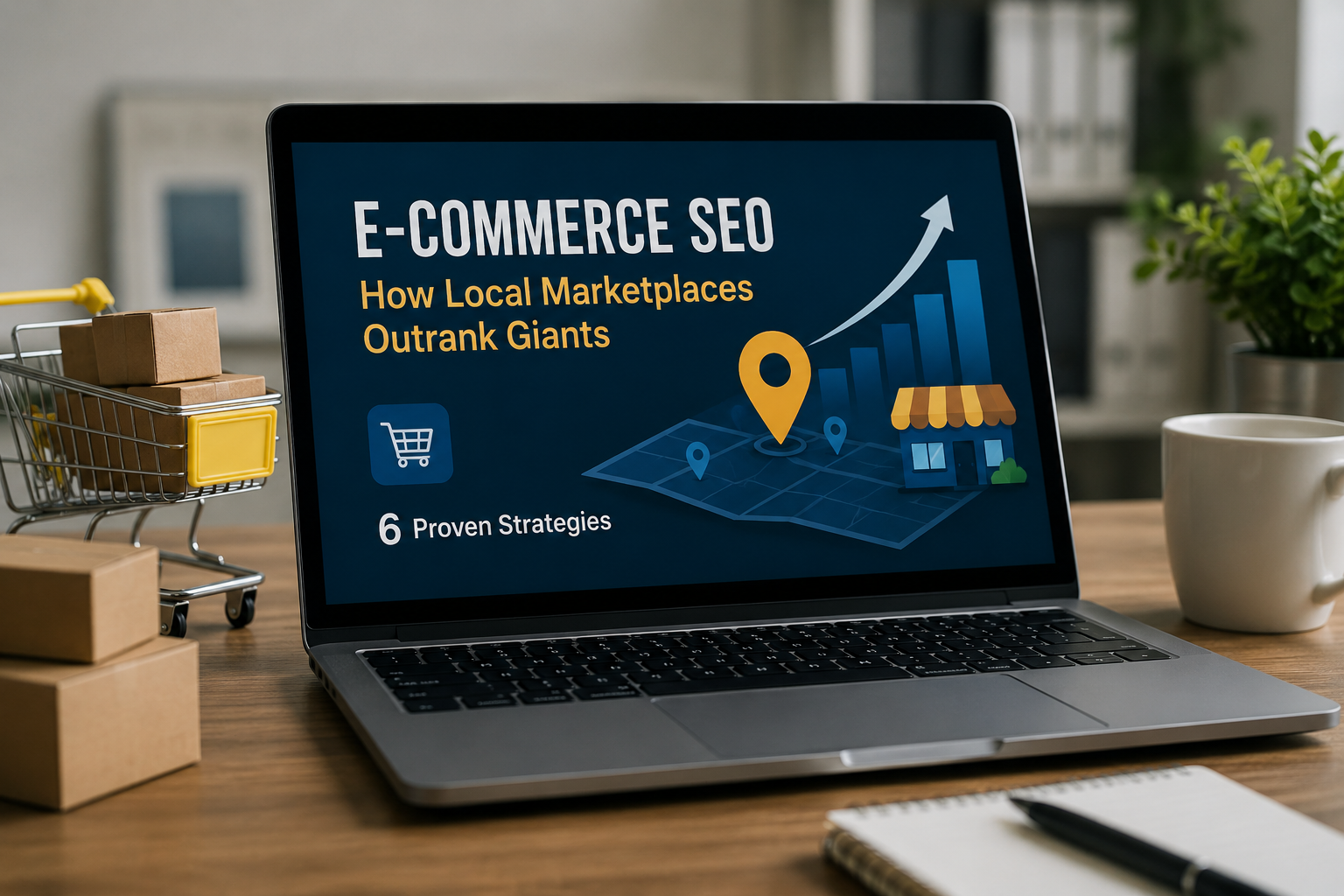
The global e-commerce landscape is fiercely competitive, often resembling a classic David versus Goliath scenario. For local and regional online marketplaces, going head-to-head with international retail behemoths like Amazon, AliExpress, or eBay might seem like an exercise in futility. These multinational corporations boast bottomless marketing budgets. They also possess massive domain authority accumulated over decades and thousands of high-quality backlinks. When a consumer searches for a generic product online, these giants almost invariably occupy the top spots on search engine results pages (SERPs).
However, bigger does not always mean better in the intricate world of Search Engine Optimization (SEO). This is especially true when it comes to geographic relevance and hyper-local search intent. Local marketplaces possess a distinct, inherent advantage that global platforms frequently overlook. They understand cultural context and geographical proximity. By leveraging targeted, localized SEO strategies, homegrown platforms can capture high-converting organic traffic. Consequently, they can effectively outmaneuver the big players in their specific regions.
1. Mastering Hyper-Local and Conversational Search Intent
Global e-commerce giants typically design their SEO strategies around broad, high-volume keywords. Terms like “buy men’s sneakers” or “affordable smartphones” generate massive global search volume. However, they are notoriously difficult to rank for. They also yield surprisingly low conversion rates for local buyers who prioritize fast, affordable delivery.
Local marketplaces must pivot their focus toward hyper-local, long-tail keywords. These terms should accurately reflect how consumers in their specific region actually speak, think, and search. For instance, a shopper in Nigeria is far more likely to input a conversational query. They might search for “where to buy quality Ankara fabric in Lagos” or “affordable solar generators near me.”
By structuring site architecture, category pages, and product tags to include specific city names, regional platforms can capture high-intent buyers. They can also include neighborhoods and localized terminology. Search engines like Google are increasingly prioritizing “near me” searches and local intent. Therefore, a page optimized for a specific local query will often rank higher for a user in that location than a generic page from a global giant.


2. Optimizing for Mobile-First and Low-Bandwidth Realities
In many emerging markets, desktop-based online shopping is a distant second to mobile commerce. Consumers rely heavily on their smartphones to browse, compare, and purchase products. Consequently, Google’s shift to mobile-first indexing means that the mobile version of a website entirely dictates its search ranking.
Global platforms often feature heavy, script-laden websites designed for high-speed internet connections. In regions where network speeds can fluctuate, these heavy sites suffer from high bounce rates. Local marketplaces can gain a massive SEO advantage by building lean, lightning-fast platforms. These sites should be optimized for low-bandwidth environments.
Essential Technical SEO Practices:
-
Aggressive Image Compression: Automatically converting vendor-uploaded images into next-generation formats like WebP.
-
Lazy Loading: Ensuring that images and scripts only load as the user scrolls down the page, which drastically reduces initial page load times.
-
Streamlined Code: Minimizing JavaScript and CSS to ensure the site is responsive and functional even on 3G networks.
A fast, lightweight, and mobile-responsive site will consistently outrank a sluggish global competitor in local search results. This happens because search engines heavily penalize poor user experiences caused by slow load times.
3. Empowering Individual Vendors as SEO Assets
A marketplace is fundamentally a collection of individual sellers. Global platforms tend to bury individual vendors under standardized product listings that prioritize the platform’s brand. In contrast, local marketplaces can win by transforming their sellers into active SEO assets. By providing vendors with the tools to create their own SEO-optimized digital storefronts, the marketplace effectively creates thousands of localized mini-engines. These mini-engines work continuously to boost the main domain.
For example, indigenous e-commerce platforms like Marketplace Naija demonstrate the power of structured, localized categories. These categories help align vendor products with the exact search phrasing used by the regional demographic. When a seller lists items on such a platform, the architecture of the marketplace naturally lends itself to local search visibility.
Furthermore, enabling vendors to easily navigate and categorize their goods ensures that the platform builds a dense web of highly relevant internal pages. By encouraging vendors to write unique “About Us” pages and utilize localized product descriptions, the platform generates a massive footprint of unique, keyword-rich content. Global algorithms struggle to replicate this level of local detail.
4. Harnessing the Power of Localized User-Generated Content
One of the most challenging elements for international corporations to manufacture is authentic local engagement. User-generated content (UGC), which includes customer reviews, Q&A sections, and vendor ratings, is an absolute goldmine for local SEO.
When regional buyers leave reviews, they naturally utilize localized phrasing, regional slang, and specific geographic terms. A review might say, “Delivery to Ikeja was super fast, and the quality is exactly what I needed for the rainy season.” This text contains multiple localized contextual clues that search engines eagerly absorb.
This UGC creates a constant, self-sustaining stream of fresh, highly relevant content. Search algorithms continuously crawl pages for updates, and platforms with active, daily reviews are rewarded with higher rankings. Local marketplaces should actively incentivize their buyers to leave detailed reviews. They should also empower vendors to respond publicly. This interaction signals to search engines that the platform is a highly active, relevant, and trusted hub for the local community.
5. Building Authority Through Localized Digital PR
Domain authority is heavily influenced by the quality and relevance of a website’s backlink profile. International giants acquire links from global publications. In contrast, local marketplaces have a distinct advantage in acquiring highly relevant regional links. These links carry significant weight for local search queries.
Rather than chasing generic international directories, local platforms should focus on localized digital Public Relations. This involves partnering with regional lifestyle, business, and tech bloggers to review the platform. It also includes getting featured in local news outlets and digital publications that cover regional startups. Finally, companies should sponsor local community events, trade fairs, or tech summits. This involvement typically results in high-quality backlinks from the event’s official websites.
Search engines scrutinize the origin of backlinks to determine relevance. A robust portfolio of links originating from local news sites and regional business directories clearly signals to search algorithms that the marketplace is an established authority.
6. Implementing Advanced Structured Data and Schema Markup
Finally, local marketplaces must speak the exact language of search engines by utilizing advanced structured data, also known as Schema markup. While visual optimization is for the user, Schema markup is strictly for the search engine crawlers.
By implementing Product Schema, Review Schema, and Local Business markup, a marketplace can explicitly tell Google what a page is about. It details what the product costs, whether it is in stock, and how many stars it has received. This markup enables the creation of “Rich Snippets” on the search results page. These are visually appealing results that display price, rating, and availability directly in the search engine feed.
Because many local businesses and smaller e-commerce sites neglect technical SEO elements like Schema, a local marketplace that properly implements structured data will instantly stand out on the SERPs. This drives higher click-through rates and pulls traffic away from global competitors.
Conclusion
Outranking global e-commerce giants does not require an endless marketing budget; it requires outsmarting them at the local level. Global platforms are built for scale, which often forces them to sacrifice local nuance.
By focusing on mobile-first optimization and capturing localized keyword intent, regional platforms can carve out a highly profitable digital moat. Fostering authentic user-generated content, empowering individual vendors, and building strong local backlink profiles further strengthen this position. The future of commerce is deeply connected to local communities. Strategic, hyper-local SEO serves as the ultimate bridge connecting local demand directly to local supply.
Author









Entrepreneurship is often associated with business ideas, financial growth, leadership, and success. But behind every meaningful entrepreneurial journey, there is usually something more: the ability to inspire others. A successful entrepreneur does not only build a business; they can also influence people through their experiences, lessons, challenges, and way of thinking.
Maninder Kaur Panesar represents an entrepreneurial approach that combines business, digital growth, leadership, mentoring, and purpose. With more than 15 years of experience across corporate leadership, entrepreneurship, digital marketing, and business growth, she has developed a professional journey that goes beyond simply running businesses. Her work reflects an interest in helping people and businesses understand opportunities, adapt to change, and build stronger foundations for growth.
For aspiring entrepreneurs, professionals, and young people looking for direction, her journey offers several practical lessons about taking initiative, learning continuously, and helping others grow along the way.
From Experience to Mentorship
Mentorship often comes from experience.
People who have faced challenges in their own careers understand that success rarely happens overnight. There are difficult decisions, uncertain periods, mistakes, changing markets, and moments when the next step is not obvious.
Maninder Kaur Panesar’s professional journey across corporate leadership and entrepreneurship has given her exposure to different sides of business. Instead of treating those experiences as achievements alone, they can become valuable lessons that can be shared with others.
This is one of the important qualities of a mentor: turning personal experience into practical guidance.
For someone starting a business, advice from an experienced entrepreneur can help provide a different perspective. A mentor does not necessarily give someone all the answers. Instead, good mentorship encourages people to ask better questions, understand their options, and develop confidence in making their own decisions.
Understanding the Reality of Entrepreneurship
Social media often shows the attractive side of entrepreneurship. We see successful brands, achievements, professional photographs, business announcements, and growth stories.
The reality is usually much more complicated.
Entrepreneurs have to deal with uncertainty, competition, changing customer expectations, financial responsibilities, and the pressure to make decisions. Building a sustainable business requires patience and consistency.
This is why an entrepreneur’s real experiences can be valuable to aspiring business owners.
Maninder’s journey reflects the idea that entrepreneurship is a process rather than a single event. Building businesses and developing brands requires learning from experience, adapting strategies, understanding customers, and continuing even when progress is slower than expected.
That message can be especially useful for people who are at the beginning of their entrepreneurial journey.
Mentoring Through Practical Knowledge
Mentorship does not always happen through formal meetings or structured programs.
Sometimes, people are motivated by the knowledge an entrepreneur shares through professional content, business discussions, personal experiences, and educational conversations.
As a digital marketing consultant, AI growth consultant, and brand strategy professional, Maninder works in areas that are changing rapidly. Digital marketing, artificial intelligence, online branding, social media, search, and customer behaviour continue to evolve.
Sharing knowledge in these areas can help other professionals understand how the business environment is changing.
For aspiring entrepreneurs, one important lesson is that knowledge should not remain static. What worked several years ago may not work in exactly the same way today.
A good mentor encourages continuous learning rather than dependence on one formula.
Encouraging Women to Think Beyond Limitations
Entrepreneurship can create opportunities for women to build financial independence, develop professional confidence, and create businesses around their skills and ideas.
Maninder’s work also connects entrepreneurship with women’s empowerment and self-reliance. Her broader professional journey demonstrates how women can participate in business, technology, consulting, digital marketing, and leadership.
The important message is not that every woman needs to become an entrepreneur. Rather, women should have the freedom and confidence to explore opportunities that match their goals.
Mentorship can play a role here.
When people see someone with a similar journey taking responsibility, building businesses, learning new skills, and creating opportunities, it can make entrepreneurship feel more achievable.
Sometimes motivation begins simply with seeing what is possible.
Building More Than One Brand
Another interesting part of Maninder Kaur Panesar’s entrepreneurial journey is her involvement in multiple initiatives.
Her professional ecosystem includes Zenauf, Maninder Wave, and SheShine, with each initiative serving a different purpose.
Building different brands requires more than creating different names or websites. Each brand needs its own identity, audience, message, and purpose.
For aspiring entrepreneurs, this demonstrates the importance of understanding why a business exists before thinking about expansion.
It can be tempting to start several projects at once. However, sustainable growth generally requires clarity. Entrepreneurs need to understand their audience, value proposition, resources, and long-term direction.
The lesson is simple: growth should have a purpose behind it.
Motivation Through Action
Motivation is often treated as something emotional — a speech, a quote, or an inspiring story.
But entrepreneurs understand that motivation becomes meaningful when it leads to action.
A person may feel inspired after reading about entrepreneurship, but the real change begins when they learn a skill, contact a potential customer, improve their business plan, launch a website, create their first service, or take another practical step.
Maninder’s entrepreneurial approach can be viewed through this action-oriented perspective.
Her work across digital marketing, consulting, branding, and business growth shows how ideas can be converted into practical activities.
For aspiring entrepreneurs, this creates an important distinction:
Do not wait to feel completely confident before starting. Start learning, and confidence can develop through experience.
The Importance of Learning From Mistakes
Nobody builds a successful career without making mistakes.
Some decisions will work. Others will need to be changed. Some ideas may not attract customers. A marketing strategy may produce disappointing results. A business opportunity may not turn out as expected.
The difference often lies in how a person responds.
Entrepreneurship teaches people to evaluate what happened, understand why it happened, and make better decisions next time.
This is also where mentorship becomes valuable. Someone with experience can help a new entrepreneur look at a problem from another angle.
Instead of saying, “I failed,” an entrepreneur can ask, “What did this experience teach me?”
That change in perspective can make challenges more useful.
Staying Relevant in a Changing Digital World
The business environment today is very different from what it was a decade ago.
Artificial intelligence, automation, social media, search engines, online communities, and digital advertising have transformed how businesses communicate with customers.
As someone working in digital marketing and AI-driven growth, Maninder’s professional focus reflects the importance of staying updated.
For aspiring entrepreneurs, this is an important lesson.
Learning should not stop after starting a business.
Entrepreneurs need to keep exploring new tools, understanding customer behaviour, studying market changes, and improving their digital skills.
Technology should not be viewed simply as something complicated. It can become a practical tool for improving productivity, reaching customers, understanding data, and communicating ideas.
Leading With Purpose
Business growth and personal purpose do not have to exist separately.
Maninder’s entrepreneurial work also reflects the idea that businesses can have a broader purpose. Her involvement with initiatives connected to education, skills, women’s empowerment, and digital growth demonstrates different ways entrepreneurial work can create value.
For a new entrepreneur, purpose can provide direction when business decisions become difficult.
A useful question is:
“What do I want my business to contribute beyond revenue?”
The answer could be employment, education, innovation, accessibility, community development, or solving a specific customer problem.
Purpose does not guarantee business success, but it can help an entrepreneur remain connected to the reason they started.
Creating a Culture of Growth
One of the strongest ideas behind mentorship is growth.
A mentor should not make people dependent on them. Instead, the goal should be to help others develop the knowledge and confidence they need to move forward independently.
This approach is particularly relevant in entrepreneurship.
People need encouragement, but they also need practical skills.
They need to learn how to communicate with customers, understand finances, create strategies, use technology, market their services, and make decisions.
Entrepreneurs who share their experiences can contribute to this kind of growth by showing others both the possibilities and realities of building something of their own.
Inspiration That Comes From the Journey
The most meaningful entrepreneurial stories are rarely about one moment of success.
They are about the journey — the decisions, risks, lessons, changes, and people encountered along the way.
Maninder Kaur Panesar’s professional journey provides an example of how entrepreneurship can develop alongside consulting, digital marketing, branding, leadership, and social initiatives.
For aspiring entrepreneurs, the lesson is not to copy her exact path.
Every entrepreneur has different circumstances, skills, resources, and ambitions.
Instead, her journey can encourage people to identify their own strengths, develop their knowledge, remain adaptable, and create opportunities based on their individual goals.
Conclusion
Maninder Kaur Panesar: An Entrepreneur Who Mentors and Motivates is a story about more than business ownership. It is about how entrepreneurial experience can become a source of knowledge and encouragement for others.
Her journey across corporate leadership, entrepreneurship, digital marketing, AI growth, brand strategy, and social initiatives demonstrates the value of continuous learning and purposeful action.
For aspiring entrepreneurs, some of the most useful lessons are straightforward: begin with what you know, keep learning, accept challenges, understand your audience, adapt to technology, build with purpose, and share your knowledge with others.
Entrepreneurship becomes more meaningful when success is not viewed only as something to achieve personally, but also as an opportunity to create value for other people.
A business can generate revenue. A brand can build recognition. But knowledge shared with others can continue to create an impact long after a single business milestone has passed.
Author



Custom Printed Butter Paper is a practical and attractive way for food businesses to improve product presentation while maintaining a clean and professional packaging experience. From bakeries and cafés to restaurants, food trucks, and takeaway brands, printed butter paper can turn ordinary wrapping into a branded touchpoint. It can be used to wrap burgers, sandwiches, pastries, cookies, fries, bakery items, and other food products while displaying a brand name, logo, pattern, or promotional message.
Today, packaging does more than protect a product. It helps customers recognize a business and remember their experience. That is why businesses increasingly invest in custom packaging that combines functionality with visual branding. Custom Printed Butter Paper offers an easy way to bring brand identity directly into food presentation without requiring complicated packaging structures.
What Is Custom Printed Butter Paper?
Custom Printed Butter Paper is food wrapping paper produced with personalized graphics or branding. Instead of using plain paper, businesses can print their logo, brand colors, patterns, slogans, social media details, or other design elements across the sheet.
The paper can be manufactured in different sizes and formats depending on the intended application. It can be used as an inner wrap, food liner, basket liner, tray liner, or presentation sheet. This flexibility makes it suitable for many food-service environments.
A well-designed printed sheet can complement other packaging products, including custom boxes, bags, sleeves, and cartons. When several packaging elements share the same branding, the entire customer experience looks more coordinated.
Why Should Businesses Use Printed Butter Paper?
Food packaging is often one of the first things customers notice after receiving their order. A plain wrapper may perform its basic function, but branded paper adds another layer of presentation.
Here are some important advantages:
- Creates a recognizable branded appearance
- Improves food presentation
- Supports consistent brand identity
- Works with different food-service packaging formats
- Adds promotional space without changing the box structure
- Helps businesses create a memorable unboxing or takeaway experience
- Can complement custom printed boxes and other branded packaging
- Provides flexibility for restaurants, cafés, bakeries, and food retailers
For businesses that already use custom packaging, printed butter paper can become another useful branding element.
Build Stronger Brand Recognition
Brand consistency is important for businesses that want customers to remember them. Using the same logo, typography, patterns, and visual style across packaging helps establish a recognizable identity.
For example, a burger restaurant can use printed butter paper featuring its logo and signature pattern inside every food box. When customers open the package, they immediately see the brand before even taking the first bite.
The same approach can work for bakeries by printing a subtle repeating logo on paper used to wrap cookies, brownies, croissants, and other products. This turns a functional packaging material into a simple marketing opportunity.
Businesses can also coordinate their paper with custom boxes with logo designs to create a complete branded presentation.
Custom Printed Butter Paper for Food Businesses
Different food businesses have different packaging requirements. Custom Printed Butter Paper can be adapted to suit a wide range of applications.
Restaurants and Takeaway Brands
Restaurants can use branded paper to line food baskets, trays, boxes, and takeaway containers. It can provide an organized presentation while reinforcing the restaurant’s visual identity.
Bakeries and Dessert Shops
Bakeries can use printed paper for pastries, cookies, cupcakes, brownies, and other treats. A carefully selected design can make even simple bakery items look more premium.
Cafés and Coffee Shops
Cafés can use branded liners for sandwiches, breakfast items, pastries, and snacks. Matching the paper design with cups, bags, and custom boxes can create a cohesive customer experience.
Food Trucks
Food trucks often rely heavily on visual branding. Printed paper gives them another surface for displaying their logo and design without taking up additional space.
Catering Businesses
Catering companies can use branded liners and wrappers when preparing individual servings, snack boxes, desserts, or event food. The packaging can reinforce the company’s professional appearance during corporate events, parties, and other occasions.
Designing Effective Custom Printed Butter Paper
A successful design should be attractive without making the packaging look crowded. Since butter paper is often printed with repeating graphics, simple patterns can be especially effective.
Consider including:
- Brand logo
- Business name
- Brand colors
- Short tagline
- Simple illustrations
- Social media handle
- Website or contact information
- Repeating patterns
The logo should remain recognizable at the actual print size. Small details that look good on a computer screen may become difficult to see when printed repeatedly across paper.
Businesses should also consider how the printed paper will interact with their other packaging. If the same branding appears on custom printed boxes, bags, labels, and inserts, the complete packaging system can look more professional.
Pair Printed Paper With Custom Packaging
Custom Printed Butter Paper works especially well as part of a broader packaging solution. A business does not necessarily need to replace its entire packaging range to strengthen its branding.
For instance, a restaurant can combine:
- Custom printed butter paper
- Custom box packaging
- Branded stickers
- Printed takeaway bags
- Custom labels
- Branded tissue or inserts
This approach creates multiple branded touchpoints while allowing each packaging component to serve a specific purpose.
A custom box can provide structure and protection, while printed butter paper can add presentation and branding inside the package.
Custom Butter Paper for Different Brand Styles
One advantage of custom printing is the ability to create packaging that matches a particular brand personality.
A luxury dessert business may choose a refined logo pattern and minimal typography. A playful bakery might use illustrations and bold graphics. A modern café could use a simple monochrome design with a repeating logo.
The goal is not simply to fill the paper with branding. The design should communicate the personality of the business and support the appearance of the food.
When coordinated with boxes with logo, labels, and other packaging elements, even a simple printed pattern can become part of a recognizable visual system.
Wholesale Options for Growing Businesses
Restaurants and food retailers with regular packaging requirements can benefit from ordering packaging in larger quantities. Custom boxes wholesale programs are commonly used by growing businesses that need consistent packaging for recurring orders.
Buying customized packaging in larger quantities can also make it easier to maintain consistent branding across multiple locations or product lines.
Businesses working with packaging suppliers can discuss their required paper dimensions, print design, quantities, and intended applications before placing an order. This helps ensure that the final packaging fits both operational and branding requirements.
Choosing the Right Packaging Partner
Selecting a reliable supplier is important when ordering customized food packaging. Businesses should consider print quality, material consistency, customization options, production capabilities, and order requirements.
A professional packaging company should be able to help businesses choose suitable formats and develop designs that work for their products.
At CustomBoxesLab, businesses can explore customized packaging options designed around their branding and product requirements. From custom box concepts to custom printed packaging, the goal is to create packaging that combines practical use with strong visual presentation.
Businesses researching packaging solutions may also come across BoxesGen as part of their packaging research. Whether a company needs a simple printed liner or a complete branded packaging system, selecting the right format is essential.
Make Every Food Order a Branding Opportunity
Packaging creates an opportunity to communicate with customers even before they use the product. Custom Printed Butter Paper makes this opportunity simple by adding branding to a material that already plays a useful role in food presentation.
Instead of relying only on a logo printed on the outside of a box, businesses can carry their identity into the inside of the package. This small detail can make an order feel more intentional and professionally prepared.
For brands that are building a complete packaging system, combining printed butter paper with custom boxes, custom printed boxes, bags, labels, and other branded materials can create a consistent experience from the first impression to the final product.
Conclusion
Custom Printed Butter Paper is a versatile packaging option for restaurants, bakeries, cafés, food trucks, caterers, and other food businesses. It combines everyday functionality with an additional branding surface, helping businesses improve presentation without relying on complex packaging structures.
Whether used as a food liner, wrapper, basket liner, or inner packaging layer, printed butter paper can support stronger brand recognition and a more consistent customer experience. When paired with custom packaging and other branded materials, it becomes part of a complete packaging solution.
For businesses looking to strengthen their packaging identity, customized paper can be a practical starting point. With thoughtful design, suitable sizing, and consistent branding, it can transform an ordinary food presentation into a recognizable brand experience.
Author



Sp5der tracksuits have earned attention in modern streetwear because they combine comfort with a bold visual identity. Their relaxed shapes, striking graphics, bright colors, and coordinated designs make them easy to recognize. Unlike basic athletic outfits, these tracksuits bring more personality to casual clothing by official brands.
They can work for travel, weekends, casual outings, and everyday urban styling. The matching jacket and trousers also give wearers flexibility. You can wear both pieces together for a complete look or separate them and combine each piece with other clothes. This versatility makes tracksuits useful for people who enjoy experimenting with streetwear without sacrificing comfort.
Bold Design
The visual language plays a major role in the appeal of Sp5der-inspired fashion. Web-style graphics, prominent lettering, colorful patterns, and distinctive details create an energetic appearance. These elements give the clothing a youthful character while fitting naturally into current streetwear trends. A matching set creates an especially strong impression because the jacket and trousers share related colors and graphics.
However, you do not always need to wear the complete set. Pairing one piece with simple clothing can create a more balanced outfit. For example, a graphic jacket can work well with plain black trousers. Similarly, branded trousers can look more understated when you combine them with a neutral sweatshirt. This approach allows you to enjoy the aesthetic without making every part of your outfit compete for attention.
Choosing Colors
Color provides one of the easiest ways to personalize a tracksuit. Black, grey, and other neutral shades can create a cleaner appearance and work with a wider range of footwear. On the other hand, bright pink, red, green, blue, and similar shades can create a stronger statement. When choosing a color, think about the clothes you already own. A neutral set may offer more styling options. A brighter set can become the main focus of your wardrobe. You can also repeat a small color detail through your sneakers or accessories. This technique creates a connected look without making every item identical. Therefore, choose colors based on your personal style rather than following every seasonal trend.
Relaxed Fit
lose and oversized clothing remains closely connected with contemporary streetwear. A relaxed tracksuit provides freedom of movement while creating a casual silhouette. The proportions of the jacket and trousers should work together. Wide trousers often look better with a similarly relaxed jacket.
However, you can also create contrast by pairing a loose bottom with a slightly cleaner upper layer. Always check the measurements before ordering. Different releases and manufacturers may interpret words such as “oversized,” “relaxed,” and “regular” differently. Your preferred fit also depends on how you plan to wear the outfit. If you want a casual appearance, a looser fit may work well. If you prefer a cleaner silhouette, consider choosing a size that sits closer to your normal measurements.
Sneaker Pairings
Sneakers can completely change the character of a tracksuit outfit. Simple white sneakers create a clean and casual appearance. Chunkier footwear can create a more pronounced streetwear look. Consider the width of the trousers when selecting shoes. Wider trousers often pair naturally with substantial sneakers because the proportions feel balanced. Slimmer trousers can work with simpler footwear. You can also use neutral sneakers to create contrast against a colorful tracksuit official brand. Another option involves choosing shoes that repeat one of the colors found in the graphics. This approach creates coordination without making the outfit look overly planned.
Layering Ideas
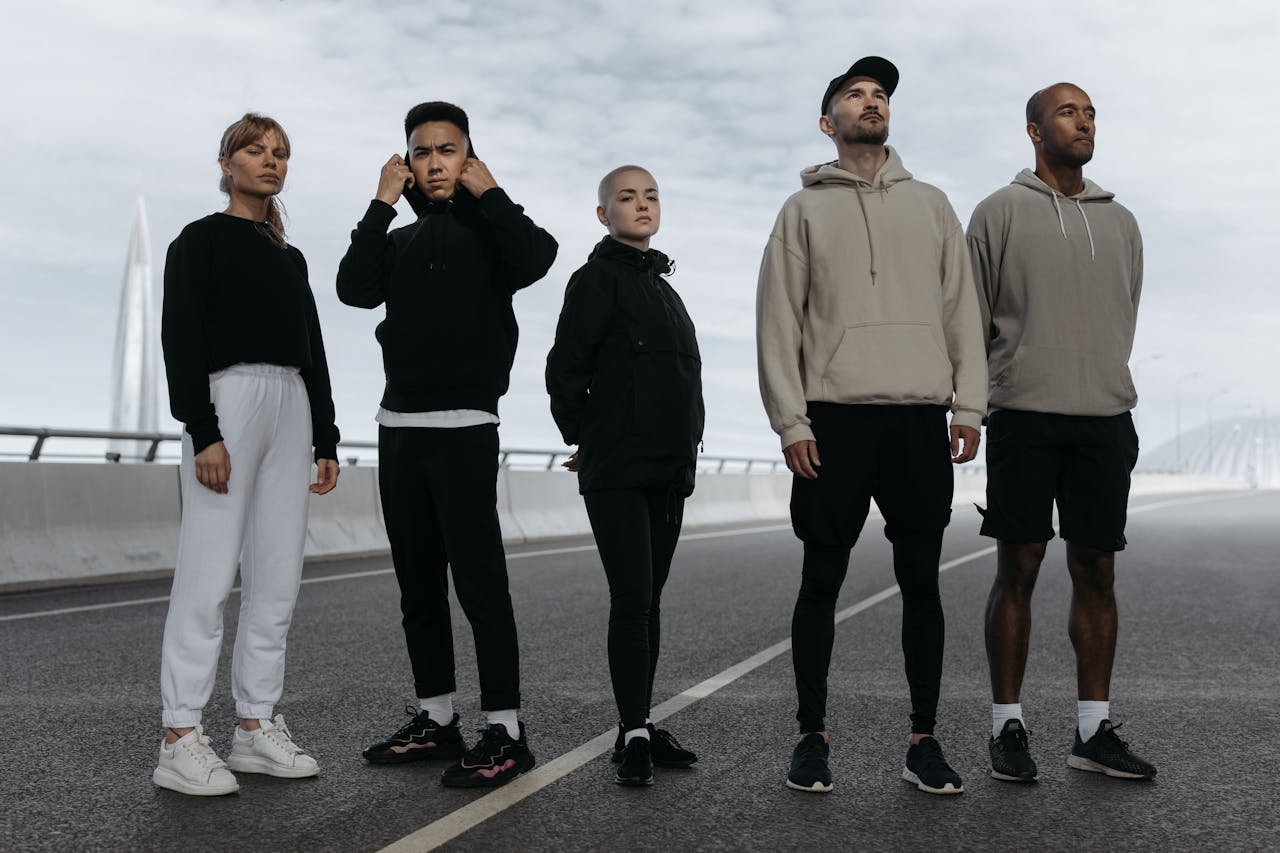
Tracksuits can work throughout different seasons because you can add or remove layers as temperatures change. During cooler weather, wear the jacket underneath a lightweight coat, bomber jacket, or relaxed outer layer. Choose an outer piece that does not completely hide the main graphics.
Neutral colors often work especially well because they allow the tracksuit to remain the visual focus. You can also wear the jacket open over a simple T-shirt. This creates a relaxed appearance and gives you more control over temperature. During warmer weather, you can wear the trousers with a basic T-shirt or tank top. These combinations allow you to use individual pieces from the set instead of relying on the complete outfit every time.
Everyday Versatility
One of the biggest advantages of a tracksuit involves convenience. A matching set removes much of the guesswork from daily outfit planning. You can put on the jacket and trousers together and create a coordinated appearance within minutes. The relaxed construction also makes tracksuits suitable for travel and long casual days. However, comfort alone does not guarantee a stylish outfit. Fit, footwear, color coordination, and accessories all influence the final appearance. Clean sneakers and a well-fitting set can make a simple outfit look intentional. A crossbody bag, cap, watch, or subtle jewelry can add personality without overwhelming the graphics. Keep the accessories relatively simple when the tracksuit already features bold patterns.
Mix and Match
You can get more value from a tracksuit by wearing its pieces separately. Pair the trousers with an oversized plain T-shirt for a simple streetwear outfit. You can also add a neutral hoodie or lightweight jacket. The tracksuit jacket offers even more possibilities. Wear it with denim, cargo trousers, or plain sweatpants to create a completely different combination.
Mixing pieces also helps you control how much branding appears in your outfit. Wearing the full set creates maximum visual impact. Wearing one piece with neutral clothing creates a more understated approach. As a result, one tracksuit can support several different looks.
Quality Matters
Style should not become the only consideration when choosing a tracksuit. Pay attention to fabric, stitching, zippers, waistbands, seams, and graphic quality. Comfortable fabric can make a significant difference when you plan to wear the outfit for several hours. Strong stitching can also help the garment maintain its shape through regular use.
Follow the care instructions carefully to protect the fabric and graphics. Avoid harsh washing methods when the manufacturer recommends gentler care. Proper maintenance can help the clothing retain its appearance for longer. Before purchasing, also consider the seller’s return policy and customer service. These details can make the shopping experience much easier if the size or product does not meet your expectations.
Buying With Confidence
Online streetwear shopping requires some caution. Many websites use terms such as “authentic,” “authorized,” or “official” in their marketing. Those words alone do not prove that a seller has a genuine relationship with a brand. Buyers should check the company’s information, contact details, return conditions, payment options, and reputation before placing an order.
Official Brands and established retailers generally provide clearer information about their products and policies. However, shoppers should still verify the specific seller rather than relying on a label alone. Product photographs can also provide useful clues, but pictures cannot always confirm authenticity. When authenticity matters, research the seller carefully and avoid rushing into a purchase because of an unusually low price.
Building Your Look
Creating a modern tracksuit outfit does not require complicated styling. Start with a matching set, clean sneakers, and a few simple accessories. This approach lets the tracksuit remain the main feature. For a more personal look, wear the trousers with a plain oversized T-shirt. Alternatively, leave the jacket open over a neutral shirt and combine it with relaxed jeans.
You can also add a cap or crossbody bag for a more urban appearance. The important point involves balance. When the tracksuit already contains large graphics and strong colors, simple accessories often work best. Brands with a strong visual identity can attract attention quickly, so thoughtful styling can help the outfit feel polished rather than excessive.
Streetwear Today
Streetwear has grown far beyond its original casual roots. Today, people combine athletic clothing with designer-inspired details, expressive graphics, and different textures. Tracksuits fit naturally into this movement because they offer both practicality and personality.
They can provide the comfort people expect from casual clothing while adding the visual impact associated with contemporary street fashion. This combination helps explain why coordinated tracksuits continue to appear in everyday wardrobes. The style also gives wearers room to experiment.
You can choose bold colors, keep your outfit neutral, mix individual pieces, or create layered combinations. Brands continue to influence this wider fashion landscape by developing recognizable visual identities that customers can adapt to their own wardrobes.
Final Thoughts
A modern tracksuit can offer much more than basic athletic comfort. Its colors, graphics, proportions, and styling options can create a distinctive streetwear look by official brands. Choose a fit that feels comfortable, select colors that work with your wardrobe, and pair bold pieces with simple accessories. Most importantly, wear the outfit in a way that reflects your personal style. Good streetwear does not require complicated rules. It works best when comfort, confidence, and individual expression come together naturally.
Author



QuickBooks Error H505: 9 Ways to Fix It

QuickBooks Migration Failed Unexpectedly: 9 Fixes That Work

Marriage Green Card Denied? What Happens Next and Can You Reapply?

Phantom Stock in India: Meaning, Benefits, Taxation, and How It Works

How to Choose Sweatpants: A Practical Guide

Are Chrome Hearts Tshirt Still Worth Buying in 2026?

Comme Des Garcons Converse Outfits That Make a Statement

Are Chrome Hearts Hoodies Still Worth Buying in 2026?

The New Parke Hoodie Looks Changing Everyday Streetwear

The Texas Guide to Booking Wellness and Longevity Care Online

Cybersecurity Consulting Company SequelNet Provides Critical IT Support Services to Medical Billing Firm, Medical Optimum

Meet the Megalodon: The Shark Star of ‘Meg 2’

Reduce Video Game Lag: Level Up Your Gaming Performance

Balancing India’s Entertainment: Cricket vs. Bollywood

Jetsetter’s Secrets: Unveiling Our Favorite Travel Hacks for a Seamless Adventure

The 5 Best Live Sports Streaming Sites: Legal and Exciting!

Hollywood Labor Unrest: The Impact of ‘What About Us?’ Strikes

Unveiling the Magic of Dream Fulfillment at the Late NBA Draft

Illuminate Your Skin: Dr. Axe Unveils Natural Remedies for Lightening Knees and Elbows

Bright Choices: Navigating the Pros and Cons of Skin Whitening Creams with Dr. Axe
-

 Business3 years ago
Cybersecurity Consulting Company SequelNet Provides Critical IT Support Services to Medical Billing Firm, Medical Optimum
-
Entertainment3 years ago
Meet the Megalodon: The Shark Star of ‘Meg 2’
-
Entertainment3 years ago
Reduce Video Game Lag: Level Up Your Gaming Performance
-
 Sports3 years ago
Balancing India’s Entertainment: Cricket vs. Bollywood
-
Entertainment3 years ago
Jetsetter’s Secrets: Unveiling Our Favorite Travel Hacks for a Seamless Adventure
-
Productivity3 years ago
The 5 Best Live Sports Streaming Sites: Legal and Exciting!
-
Art /Entertainment3 years ago
Hollywood Labor Unrest: The Impact of ‘What About Us?’ Strikes
-
Sports3 years ago
Unveiling the Magic of Dream Fulfillment at the Late NBA Draft






