
Construction
Millwork Shop Drawings: Precision, Process, and Project Success

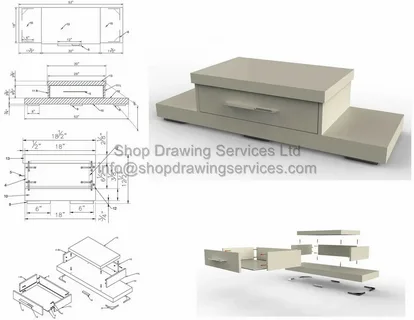
Architectural millwork shop drawings are highly detailed technical diagrams used by fabricators to manufacture custom woodwork and cabinetry. These essential documents bridge the gap between an architect’s design intent and the final physical product, ensuring precise measurements, exact material specifications, and seamless site installation while minimizing costly errors.
Every successful construction or renovation project relies on clear communication. When it comes to custom cabinetry, intricate wood paneling, or tailored trim, that communication takes the form of architectural millwork shop drawings. These specialist drawings convert general architectural ideas into precise manufacturing guidelines.
Without accurate shop drawings, fabricators are left guessing. This often leads to material waste, installation delays, and final products that do not match the original vision. Architectural millwork shop drawings eliminate this uncertainty by providing a detailed blueprint for every single joint, screw, and finish.
By leveraging professional Architectural Millwork Shop Drawings Services – such as those provided by industry leaders like Chudasama Outsourcing—contractors and architects can ensure that their custom woodwork is fabricated flawlessly. This guide explores the essential components, creation process, and benefits of using specialized drafting services for your next millwork project.
Components of architectural millwork shop drawings
To guarantee that a piece of custom woodwork can be built and installed correctly, millwork shop drawings must include specific technical details.

Detailed measurements and dimensions displayed
Accurate dimensions are the foundation of any shop drawing. Drafters include exact width, height, and depth measurements for every component, ensuring the final piece fits perfectly into the designated physical space.
Why are material specifications critical?
Shop drawings explicitly call out the exact materials required for fabrication. This includes the species of wood, the grade of plywood, veneer types, and core materials. Clear material specifications ensure the final product meets both aesthetic expectations and structural requirements.
Drafters detail joinery and assembly
Joinery details explain exactly how different pieces of wood connect. Whether a project requires dovetail joints, mortise and tenon, or simple butt joints, the shop drawings provide cross-sectional views that instruct the fabrication floor on how to assemble the unit.
Role of hardware and accessory integration
Custom millwork often includes hinges, drawer slides, pulls, and locks. Architectural millwork shop drawings specify the exact brand, model number, and placement of this hardware so fabricators can pre-drill holes and ensure proper clearances.
Finishes and annotations handled
Drawings include detailed notes regarding the final finish of the product. Annotations will specify paint colors, stain types, laminates, and edge banding requirements, leaving no room for misinterpretation during the finishing process.
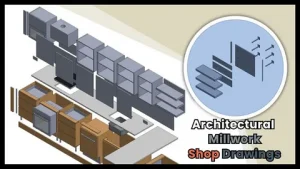
Benefits of high-quality millwork shop drawings
Investing in comprehensive Architectural Millwork Shop Drawings Services provides substantial advantages for everyone involved in a construction project.
Shop drawings enhance accuracy and reduce errors
By addressing complex design issues on a computer screen rather than on the factory floor, shop drawings prevent expensive fabrication mistakes. Identifying a clash or a measurement error during the drafting phase costs practically nothing to fix.
Improve communication among stakeholders
Shop drawings act as a universal language between architects, designers, fabricators, and installers. They provide a single source of truth that aligns everyone’s expectations.
Streamline fabrication and installation
When fabricators have exact instructions, they work faster and more efficiently. Similarly, installers benefit from clear assembly diagrams and precise field dimensions, allowing for a smooth and rapid installation process.
Shop drawings generate cost and time savings
By eliminating guesswork, reducing material waste, and speeding up both fabrication and installation, precise shop drawings significantly lower the overall cost of a millwork project.
Tools and technologies drafting professionals use
Modern millwork drafting relies heavily on advanced software to achieve high levels of precision.
AutoCAD used in millwork drafting
AutoCAD remains the industry standard for creating precise 2D shop drawings. It allows drafters to create highly detailed elevations, plan views, and cross-sections quickly.
Role of SolidWorks?
SolidWorks is frequently used for complex, 3D parametric modeling. It is especially useful for highly custom, product-like millwork pieces that require intricate mechanical detailing.
Revit (BIM) benefit millwork design?
Revit allows drafters to integrate millwork directly into a building’s overall Building Information Model (BIM). This helps identify potential clashes with HVAC, electrical, or plumbing systems before fabrication begins.
Choose a millwork shop drawing service provider
Selecting the right partner for your drafting needs is crucial for project success.
Experience and expertise matter
Look for a provider with a proven track record in architectural millwork. Experienced drafters understand manufacturing processes, not just software operation. Companies like Chudasama Outsourcing bring years of specialized experience to complex woodworking projects.
Look for in a portfolio
Review the provider’s past work. A strong portfolio should demonstrate a high level of detail, clear annotations, and experience with projects similar to yours.
Technology and software capability important
Ensure the provider uses up-to-date software that is compatible with your own systems. If your architect works entirely in Revit, your drafting partner should be able to deliver Revit-compatible files.
Future of Architectural Millwork Documentation
Architectural millwork shop drawings are the unsung heroes of successful interior construction. They transform abstract design ideas into actionable, precise manufacturing instructions. As construction timelines grow tighter and designs become more complex, the demand for exact, error-free documentation will only increase.
By partnering with experienced providers for Architectural Millwork Shop Drawings Services, businesses can ensure their projects run smoothly from the design phase all the way through to final installation.
Author



So you’re standing in your unfinished basement, looking at the bare concrete and wondering if it’s actually worth spending the money to finish it. Good question, and honestly one we hear alot. Basement Development Calgary projects are one of the most popular home upgrades in the city and there’s a good reason for that. You already own the space. The real question is whether finishing it makes sense for your home, your budget and where you see yourself in a few years.
Let’s go through the stuff that’ll help you decide.
So, Is Basement Development Worth It?
Yes, for most Calgarians. Having an unfinished basement means having more usable square footage that may generate revenue through rentals and increase your property value. It is also a good option for those who are not planning on moving anytime soon or simply need extra space.
That being said, how much its worth really depends on how the basement is built, what you use it for and whether the work is done with proper permits.
The Benefits of Basement Development in Calgary
More Space Without Moving
Moving in Calgary isn’t cheap. You’ve got realtor fees, legal costs, maybe a mortgage penalty and then all the stress of packing up your whole life. Finishing your basement gets you extra room without leaving the neighbourhood you already love.
Some of the most popular uses we see:
- Family rooms or media rooms
- Guest bedrooms
- Home offices
- Home gyms
- Play areas for the kids
- Wet bars for when friends come over
Rental Income From a Legal Suite
A legal secondary suite can go a long way toward paying down your mortgage. It has become easier for Calgary to allow the addition of suites in many areas, however, the suite requires a building permit, and there is a need to comply with safety standards such as fire separation, egress windows, and smoke detectors.
Important notice: An illegal suite can create insurance and liability concerns.
Better Resale Appeal
The idea of buying move-in ready houses is very appealing to buyers. The completion of a basement in your house will make it more attractive to the buyer.
One thing worth knowing though. Appraisers usually value below-grade space lower then above-grade space. Yes, having a finished basement will add value to your home, but that doesn’t mean you’re going to recoup all the money you spent when you sell it. You’ll get your best return on investment by utilizing the space.
Key Factors to Think About Before You Start
1. Your Budget
The cost of basement development in Calgary depends on things like:
- How big the space is
- How many bedrooms and bathrooms you want
- Whether you’re adding a kitchen or wet bar
- The quality of finishes you pick
- Plumbing and electrical needs
Set a clear budget and keep around 10 to 15 percent aside for surprises. Trust us, there’s almost always something.
2. How Long You’ll Be Staying
If your intention is to remain for at least five years, then this will definitely be very useful for you. If your plan is to sell soon, then keep it minimal.
3. Moisture and Foundation Condition
Before anyone starts framing, check for cracks, old leaks and drainage problems. Fixing moisture issues first protects everything you put in after.
4. Ceiling Height and Natural Light
Limited space due to low ceilings, heavy ductwork and small windows can restrict you from many things. The Calgary basement developers have knowledge to redirect the ductwork, install pot lighting and enlarge windows to avoid feeling of darkness in your home basement.
5. Radon Testing
Most homes in Calgary exceed the Canadian government’s health guidelines for radon levels. It is much easier to take corrective measures before the basement is completed.
6. Permits and Building Code
The City of Calgary requires a building permit to develop a basement. Plumbing, electrical and gas work might need there own permits too. Skipping them can come back to bite you with insurance or when you sell.
7. Picking the Right Contractor
Who you hire has a big impact on how much value your basement adds. When you’re comparing Calgary basement developers, look for:
- An Alberta prepaid contractor licence
- Liability insurance and WCB coverage
- Photos of past work and real reviews
- A detailed quote in writing
- A workmanship warranty
When It Might Not Be Worth It (Yet)
It could make sense to hold off if:
- Your foundation has serious water problems that haven’t been
- You’re selling in the next few months
- Your budget only allows for cheap work or skipping permits
Why Homeowners Choose Aim Builders
At Aim Builders, we assist the families in Calgary to come up with designs of Basement Development Calgary that truly make sense with their budgets and houses. This is done by dealing with all the planning, designing and construction of your basement, checking for problems relating to moisture, ventilation and design. Through the years, our company has been able to create basements in Calgary that the owners are proud of showing off.
FAQs
Is basement development worth it in Calgary?
For most homeowners, yes. It adds living space, can bring in rental income and helps with resale, especially when its done with permits.
How much does basement development in Calgary cost?
It depends on the size, layout and finishes. Adding a bathroom, kitchen or suite will bump up the price. An in-home quote is the best way to get a real number.
Does a finished basement increase my home’s value?
Yes, a permitted finished basement adds value. Just keep in mind below-grade space is usually valued lower then main floor space.
How long does basement development take?
Most projects take about six to twelve weeks, depending on size, design and how fast inspections get booked.
Do I need a permit to finish my basement in Calgary?
Yes. The City of Calgary requires a building permit, plus separate permits for plumbing, electrical or gas work when needed.
Can I rent out my basement in Calgary?
You can, as long as it’s a legal secondary suite that meets building code and has the right permits.
What adds the most value to a basement?
A bathroom, extra bedrooms with egress windows and good lighting usually add the most value and appeal.
How do I choose between Calgary basement developers?
Compare there licences, insurance, reviews, past work and written quotes. Good communication early on is a really good sign too.
What’s the difference between basement renovations Calgary homeowners do and basement development?
Development usually means finishing a basement that’s unfinished. Renovation means updating one that’s already finished. If your basement was done 20 years ago, basement renovations Calgary contractors offer can bring it up to date.
Final Thoughts
Basement renovations are often one of the wisest ways you can expand your space and increase your property’s value in Calgary. Proper planning is key, as well as solving your water issue before the actual renovations start, getting all the permits and working with experienced professionals. With these elements, your basement will become an enjoyed living space.
Thinking about Basement Development Calgary for your home? Reach out to Aim Builders today for a free consultation and let’s figure out what your basement could turn into.
Author



Introduction
The architecture, engineering, and construction industry is continually evolving as project requirements become more complex and expectations for speed, accuracy, sustainability, and cost control increase. Traditional design and construction processes often rely on fragmented drawings, manual coordination, and separate workflows between architects, engineers, contractors, and owners. These methods can create communication gaps, design conflicts, delays, and unnecessary expenses.
Building Information Modeling, commonly known as BIM, provides a more integrated approach. It combines intelligent digital models with project information to help stakeholders understand how a building will be designed, constructed, operated, and maintained. Instead of working from disconnected documents, teams can collaborate around coordinated information throughout the project lifecycle.
From improving visualization during early design to identifying clashes before construction begins, BIM technology is helping professionals make informed decisions and deliver projects with greater confidence.
Improving Design Visualization and Decision-Making
One of the most significant advantages of BIM technology is its ability to transform design concepts into detailed digital representations. Conventional 2D drawings can communicate dimensions and layouts effectively, but they may not provide every stakeholder with a complete understanding of the finished building.
BIM models provide a three-dimensional representation that allows architects, engineers, contractors, and clients to explore the proposed structure before physical construction begins. Project teams can examine spaces, building components, systems, materials, and design relationships from multiple perspectives.
Supporting Better Design Development
During design development, teams frequently need to evaluate different layouts, structural approaches, materials, and building systems. BIM makes these evaluations more efficient by providing a central environment where design information can be reviewed and updated.
Professional BIM Services can support architects, engineers, contractors, and other project stakeholders by creating coordinated models that improve visualization and provide reliable information for design and construction planning.
Because changes made within a model can be reflected across related views and documentation, teams can reduce inconsistencies that might otherwise appear when drawings are updated manually.
Strengthening Collaboration Among Project Stakeholders
Construction projects involve many disciplines working toward the same outcome. Architects develop the overall building concept, structural engineers determine how the structure will perform, building systems engineers plan essential services, and contractors determine how the project will be built.
When these teams work independently, coordination issues can easily arise. BIM creates a shared digital environment that supports better communication between disciplines.
Creating a Common Source of Project Information
A coordinated model provides stakeholders with access to consistent design information. Instead of relying on several disconnected drawings and documents, teams can use the model to understand relationships between architectural, structural, and building system components.
This collaborative approach can make project meetings more productive because potential concerns can be visualized and discussed clearly. Decisions can also be based on updated information rather than outdated drawing sets.
Better coordination during design can reduce the number of questions that need to be resolved during construction, helping teams avoid unnecessary interruptions on site.
Detecting Clashes Before Construction Begins
Design conflicts are a common source of construction delays and additional costs. A structural beam may interfere with ductwork, a pipe may conflict with another building element, or equipment may be positioned without sufficient maintenance clearance.
Finding these problems after installation has started can require redesign, material replacement, additional labor, and schedule adjustments.
BIM coordination allows teams to combine models from different disciplines and identify conflicts digitally before work reaches the construction site.
Coordinating Building Systems More Effectively
Mechanical, electrical, and plumbing systems often occupy limited ceiling, shaft, and service spaces. Careful coordination is therefore essential to make sure components can be installed without interfering with structural or architectural elements.
Specialized MEP BIM Services help project teams coordinate mechanical, electrical, plumbing, and related systems within the building model, making potential spatial conflicts easier to identify and resolve before installation.
Early clash detection reduces the need for field modifications and supports smoother construction sequencing. It can also help contractors understand installation requirements more clearly before materials and equipment arrive on site.
Supporting Accurate Construction Planning
BIM technology provides benefits beyond design coordination. Detailed models can also support construction planning by giving contractors a clearer understanding of how project components relate to one another.
Teams can use model information to study construction sequences, assess site logistics, evaluate access requirements, and prepare more detailed work plans.
Connecting Models With Project Schedules
When project models are connected with scheduling information, construction teams can visualize how the building is expected to develop over time. This approach, often associated with 4D modeling, makes it easier to understand the sequence of activities and identify scheduling conflicts.
For example, contractors can examine whether structural work must be completed before specific systems are installed or whether temporary access will be required during particular stages.
Visual construction planning also makes schedules easier to communicate to owners and other stakeholders who may not be familiar with traditional scheduling documents.
Improving Quantity Takeoffs and Cost Control
Accurate quantities are essential for estimating project costs and procuring materials. Manual takeoffs from drawings can be time-consuming and may become outdated whenever the design changes.
Because BIM models contain information about building components, they can support more efficient quantity extraction for materials such as concrete, steel, walls, doors, piping, and equipment.
Supporting More Informed Budget Decisions
When quantities are linked with cost information, teams can evaluate how design decisions may affect the project budget. Designers and owners can compare alternatives earlier and make adjustments before construction begins.
More reliable quantity information can also improve procurement planning. Contractors can determine material requirements more accurately, helping minimize excessive ordering, shortages, and avoidable waste.
Reducing Rework and Construction Risks
Rework can significantly affect construction productivity and profitability. Design errors, coordination problems, inaccurate information, and misunderstandings between disciplines can all lead to work being installed incorrectly.
By identifying problems in the digital environment, BIM allows many issues to be resolved before crews begin installation.
Improving Constructability Reviews
Contractors can review BIM models to assess whether a design is practical to construct. They can evaluate installation space, equipment access, sequencing requirements, and relationships between different trades.
This enables construction knowledge to influence decisions earlier in the project lifecycle. Addressing constructability concerns during design is generally more efficient than discovering them after materials have been fabricated or installed.
Supporting Sustainable Building Design
Sustainability has become an important consideration for modern building projects. BIM can support sustainable design by giving project teams access to structured information that can be used for performance analysis.
Designers may evaluate factors such as building orientation, energy performance, daylight availability, material quantities, and system efficiency before finalizing important decisions.
Reducing Material Waste
Accurate digital modeling and quantity information can help teams order materials more precisely. Better coordination also reduces the likelihood of components being fabricated or installed incorrectly.
When fewer materials are wasted through errors and rework, projects can improve both environmental performance and cost efficiency.
Extending BIM Benefits Beyond Construction
The value of a building model does not necessarily end when construction is completed. When properly developed and maintained, project information can support building operations and facility management.
Owners can use digital building information to better understand installed assets, equipment locations, maintenance requirements, and facility systems.
Creating Useful Information for Facility Teams
A well-organized model can become a valuable reference for maintenance and operations personnel. Instead of searching through large collections of drawings and manuals, facility teams can access structured information associated with specific building components.
This can support maintenance planning, renovations, equipment replacement, and future space modifications, extending the usefulness of BIM throughout the building lifecycle.
Conclusion
BIM technology is changing the way buildings and infrastructure are planned, designed, coordinated, constructed, and managed. By bringing project information into an intelligent digital environment, it helps architects, engineers, contractors, and owners collaborate more effectively.
Better visualization supports informed design decisions, while multidisciplinary coordination helps identify conflicts before they become costly construction problems. Accurate model information can improve scheduling, quantity takeoffs, cost planning, constructability reviews, and material management.
Author


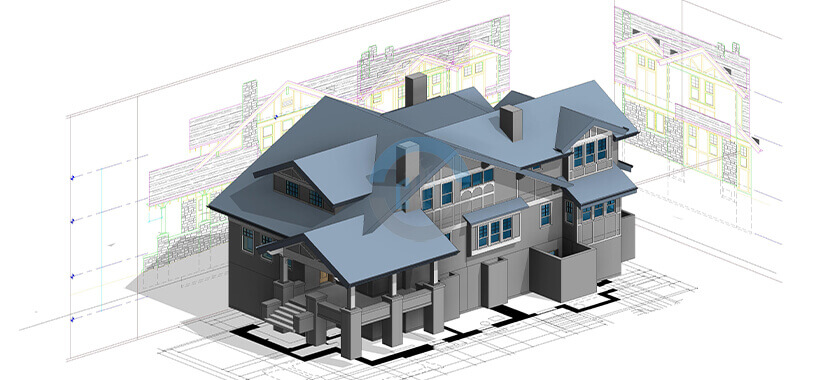
Managing commercial, industrial, and institutional buildings with outdated 2D drawings can create unnecessary challenges. Facility teams often spend valuable time searching through old files, checking measurements, and confirming whether drawings still match the actual building. These tasks can slow maintenance, increase operating costs, and make renovation projects more difficult.
CAD to BIM technology offers a practical way to modernize this process. It transforms traditional 2D drawings into intelligent 3D models that contain useful building information. As a result, facility managers can access accurate spatial data, understand building components, and make better decisions throughout the property lifecycle.
Why Traditional 2D Drawings Create Problems
Many buildings still depend on paper plans, scanned documents, or basic CAD files. These resources can show walls, doors, rooms, and other elements. However, they rarely provide enough information for efficient facility management.
For example, a maintenance team may need to locate a specific air-handling unit or electrical panel. Staff might have to search through several drawing sets before finding the right information. Even then, the drawing may not reflect later renovations or equipment changes.
This creates uncertainty. It can also increase the risk of incorrect decisions. A digital building model can solve many of these issues. Instead of relying only on lines and labels, facility teams can work with intelligent objects that contain information about individual components.
Turning Old Drawings Into Intelligent Building Information
A successful digital conversion begins with an assessment of the available documentation. Specialists review existing CAD files, architectural plans, structural drawings, and other records. They then determine the information required for the final model.
During CAD to BIM development, modelers convert flat drawing elements into intelligent 3D components. Walls, doors, windows, columns, mechanical equipment, and other assets can receive useful information.
This information may include dimensions, materials, equipment specifications, manufacturer details, installation dates, and maintenance information. The exact data depends on the project’s goals.
The result gives facility teams a centralized digital reference. Instead of searching through disconnected documents, managers can review building information within one coordinated environment.
Improving Accuracy With Reality Capture
Old drawings do not always represent current building conditions. Tenants may have changed layouts. Contractors may have installed new equipment. Renovation projects may also have modified structural or mechanical systems. Reality capture can help address these gaps.
Laser scanners can record existing conditions and collect millions of spatial points. Specialists then process this information to create a detailed digital representation of the property.
Point cloud modeling can support accurate as-built documentation. It can reveal deviations between original drawings and current conditions. Consequently, design and facility teams gain a clearer understanding of the building before they plan modifications. This approach proves especially valuable for older properties with incomplete records.
Supporting Architectural and Structural Planning
A detailed digital model can help architects and engineers work more confidently. They can review room layouts, building dimensions, structural elements, and other important components within one environment.
Architectural teams can use the model to study available space and plan renovations. They can also evaluate circulation areas, room configurations, and building envelopes.
Structural professionals can review columns, beams, foundations, and framing systems. This information can support renovation planning and reduce the need for assumptions.
Furthermore, combining architectural and structural information improves coordination. Teams can identify potential conflicts earlier and discuss solutions before construction begins.
Making Maintenance More Efficient
Facility management teams handle countless maintenance tasks every year. Finding the right information quickly can make a significant difference. An intelligent model can help staff identify equipment locations and review related information. For example, a manager may locate an air-conditioning unit and review its specifications without searching through several folders.
The model can also support maintenance planning. Teams can connect equipment information with service schedules, warranties, and replacement plans when the project includes those details. As a result, managers can organize maintenance work more effectively. They can also reduce unnecessary delays caused by missing or outdated information.
Improving Space Management
Large organizations often manage extensive properties with constantly changing space requirements. Departments move. Tenants change. Workspaces evolve. Facility teams therefore need accurate information about available areas. A digital model can make space planning easier. Managers can review room dimensions, floor areas, and building layouts from a centralized source.
This information can support office planning, tenant coordination, renovation studies, and space allocation. It can also help organizations understand how they currently use their buildings. Therefore, digital modeling does more than improve visualization. It can support practical decisions about real estate and workplace management.

Supporting Renovation and Capital Projects
Renovation projects often become complicated when teams lack reliable existing-condition information. Contractors may discover unexpected conditions after work begins. These discoveries can lead to delays, additional costs, and design changes.
Accurate digital documentation can reduce this uncertainty.
Before a renovation starts, project teams can review the existing model and compare it with proposed designs. They can identify potential conflicts and determine whether new systems will fit within the available space.
4D BIM can add another layer of value by connecting model elements with project schedules. Managers can then visualize construction sequences and coordinate different phases more effectively.
Connecting BIM With Facility Management Systems
Modern facility teams often use CAFM, IWMS, and other digital management platforms. A well-structured BIM model can support these systems by providing organized building information.
This connection creates a stronger digital foundation for property management. Facility teams can move from isolated drawings toward a more connected information environment.
However, the model must match the organization’s actual needs. Adding excessive information can increase complexity without providing meaningful value. Therefore, project teams should define data requirements before modeling begins.
Choosing the Right Level of Detail
Not every facility project requires the same modeling depth. A simple space-planning project may need basic geometry. A complex renovation may require detailed architectural, structural, and MEP information.
The team should establish the required Level of Development or Level of Detail at the beginning. Clear requirements help control project costs and prevent unnecessary modeling work.
Similarly, teams should identify which assets require detailed information. Focusing on important equipment and systems can create a more useful model without adding unnecessary complexity.
Benefits of Professional BIM Conversion
Working with experienced modeling specialists can help organizations manage large conversion projects more efficiently. Professionals can review legacy drawings, identify inconsistencies, coordinate disciplines, and structure model data according to project requirements.
Professional CAD to BIM services can also support scalable workflows for large property portfolios. Organizations can establish consistent modeling standards across multiple buildings. This consistency makes future updates easier. It also gives different teams a common framework for managing building information.
Preparing Buildings for the Digital Future
Facility management continues to move toward connected digital environments. Digital twins, smart building systems, predictive maintenance, and automated asset management all depend on reliable building information.
Accurate BIM models can provide an important foundation for these technologies. They help organizations understand physical assets and connect building data with digital management tools. As technology develops, property owners can build on this foundation rather than starting from outdated documentation.
Final Thoughts
Modern facility management requires accurate information, efficient workflows, and reliable documentation. Traditional 2D drawings can provide useful historical records, but they often lack the intelligence needed for today’s complex property operations.
CAD to BIM creates a bridge between legacy documentation and modern digital facility management. It gives organizations a clearer view of their buildings, supports maintenance planning, improves renovation coordination, and strengthens long-term asset management.
For property owners and facility managers, the real value comes from using digital models as practical management tools. With accurate data, thoughtful modeling standards, and regular updates, organizations can make smarter decisions and manage their buildings with greater confidence.
Author



Top 10 Psychology Conferences 2026 in the USA

Commercial Cabinet Shop Drawings: Key Details for Accurate Fabrication

AI Development Trends Businesses Should Watch in 2026

Colour Plane: Inspiring Better Design Through Colour and Creativity

Cole Buxton Clothing | Free Shipping | Shop Now

How 3D Interior Rendering Transforms Architectural Design

Traditional Ayurvedic Herbs and Their Place in Modern Wellness

Why a Good Bassinet Makes Life Easier for NZ Parents

Why take Private tour of Gibbston Valley

Work Visas, Job Changes, and the Details That Decide NZ Visa

Cybersecurity Consulting Company SequelNet Provides Critical IT Support Services to Medical Billing Firm, Medical Optimum

Meet the Megalodon: The Shark Star of ‘Meg 2’

Reduce Video Game Lag: Level Up Your Gaming Performance

Balancing India’s Entertainment: Cricket vs. Bollywood

Jetsetter’s Secrets: Unveiling Our Favorite Travel Hacks for a Seamless Adventure

The 5 Best Live Sports Streaming Sites: Legal and Exciting!

Hollywood Labor Unrest: The Impact of ‘What About Us?’ Strikes

Unveiling the Magic of Dream Fulfillment at the Late NBA Draft

Illuminate Your Skin: Dr. Axe Unveils Natural Remedies for Lightening Knees and Elbows

Bright Choices: Navigating the Pros and Cons of Skin Whitening Creams with Dr. Axe
-

 Business3 years ago
Cybersecurity Consulting Company SequelNet Provides Critical IT Support Services to Medical Billing Firm, Medical Optimum
-
Entertainment3 years ago
Meet the Megalodon: The Shark Star of ‘Meg 2’
-
Entertainment3 years ago
Reduce Video Game Lag: Level Up Your Gaming Performance
-
 Sports3 years ago
Balancing India’s Entertainment: Cricket vs. Bollywood
-
Entertainment3 years ago
Jetsetter’s Secrets: Unveiling Our Favorite Travel Hacks for a Seamless Adventure
-
Productivity3 years ago
The 5 Best Live Sports Streaming Sites: Legal and Exciting!
-
Art /Entertainment3 years ago
Hollywood Labor Unrest: The Impact of ‘What About Us?’ Strikes
-
Sports3 years ago
Unveiling the Magic of Dream Fulfillment at the Late NBA Draft






