
Technology
Apple iPhone Maker Takes Control with Its Own AI Vision

By

Reviewed
By Sheila Muray

Apple Inc. has been a frontrunner in the technology sector for decades, consistently pushing the boundaries of innovation and setting trends across the industry. In recent years, Apple has focused heavily on artificial intelligence (AI), making significant strides to integrate AI into its ecosystem. This article delves into Apple’s AI vision, examining its strategic moves, technological advancements, and the broader implications for the tech industry and consumers.
The Evolution of Apple’s AI Strategy

Apple’s Vision Pro: A Futuristic Approach to Real Estate
Historical Context
Apple’s journey with AI began long before it became a buzzword. Early iterations of AI in Apple products can be traced back to the introduction of Siri, the virtual assistant, in 2011. Siri was a revolutionary product at the time, showcasing Apple’s commitment to integrating AI into consumer devices. However, this was just the beginning.
Strategic Acquisitions
To bolster its AI capabilities, Apple has made several strategic acquisitions over the years. Companies like Turi, a machine learning platform, and Xnor.ai, specializing in edge-based AI, have been integrated into Apple’s ecosystem. These acquisitions highlight Apple’s strategy to not only enhance its existing AI capabilities but also to innovate in new directions.
In-House AI Development
In addition to acquisitions, Apple has invested heavily in in-house AI development. The company has established dedicated AI research teams and labs, working on everything from natural language processing (NLP) to computer vision. Apple’s focus on in-house development ensures that it can maintain control over its technology and innovate at its own pace.
AI Integration in Apple Products
iOS and AI
One of the most significant areas where Apple has integrated AI is its iOS operating system. Features like facial recognition for unlocking iPhones, predictive text, and advanced photo editing tools are all powered by AI. Apple’s AI-driven features aim to enhance user experience by making devices more intuitive and responsive.
AI in Hardware
Apple’s hardware advancements, particularly in the iPhone, have been crucial in enabling AI functionalities. The introduction of the A-series chips, with dedicated neural engines, has significantly enhanced the processing power required for AI applications. This hardware-software synergy allows for seamless AI integration across Apple devices.

Siri and Beyond
Siri has evolved significantly since its introduction. Apple’s virtual assistant now incorporates advanced machine learning algorithms, making it more efficient and capable. Beyond Siri, AI is embedded in various aspects of Apple’s ecosystem, including Apple Music, Apple Maps, and even the App Store, where AI is used for personalized recommendations.
Comparative Analysis: Apple vs. Competitors
AI Capabilities
| Feature | Apple | Amazon | Microsoft | |
|---|---|---|---|---|
| Virtual Assistant | Siri | Google Assistant | Alexa | Cortana |
| AI Chip Integration | A-series chips with Neural Engine | Tensor Processing Units (TPUs) | Inferentia | Azure AI Accelerators |
| Natural Language Processing | Advanced NLP for Siri and iOS | Leading in NLP with BERT and GPT-3 | Alexa’s advanced conversational AI | Microsoft Azure Cognitive Services |
| Computer Vision | Face ID, ARKit | Google Lens, TensorFlow | DeepLens | Azure Computer Vision |
| Cloud AI Services | Apple Cloud Machine Learning | Google Cloud AI | AWS AI | Azure AI |
Strengths and Weaknesses
Apple
Strengths:
- Seamless integration of AI in hardware and software.
- Strong focus on privacy and security.
- High-quality, user-centric AI applications.
Weaknesses:
- Limited AI cloud services compared to competitors.
- Smaller developer ecosystem for AI research.
Strengths:
- Leading in AI research and development.
- Extensive cloud AI services.
- Robust NLP capabilities.
Weaknesses:
- Privacy concerns.
- Less control over hardware integration compared to Apple.
Amazon
Strengths:
- Dominance in AI for smart home devices.
- Strong cloud AI infrastructure.
- Advanced conversational AI with Alexa.
Weaknesses:
- Limited AI integration in mobile devices.
- Privacy issues with data collection.
Microsoft
Strengths:
- Comprehensive AI cloud services.
- Strong presence in enterprise AI.
- Advanced computer vision technologies.
Weaknesses:
- Less consumer-focused AI applications.
- Lower market share in mobile AI.
Future Prospects of Apple’s AI Vision
Enhanced User Experience
Apple’s commitment to AI is poised to revolutionize user experiences across its product range. Future iterations of AI could make devices more intuitive, capable of anticipating user needs, and offering personalized experiences. For example, advancements in machine learning could lead to more accurate health monitoring features in Apple Watch, enhancing its role in personal healthcare.
Privacy and Security
Apple has consistently emphasized privacy and security as core tenets of its AI strategy. As AI continues to evolve, Apple is likely to introduce even more robust privacy protections, ensuring that user data is safeguarded. This focus on privacy sets Apple apart from many competitors and could become a key selling point as data security concerns grow.
Expansion into New Markets
AI offers Apple the potential to expand into new markets. For instance, the development of autonomous vehicle technology through Project Titan showcases Apple’s ambitions beyond consumer electronics. AI could also play a significant role in Apple’s endeavors in augmented reality (AR) and virtual reality (VR), creating immersive and interactive experiences.
AI Ethics and Responsibility
As AI becomes more pervasive, ethical considerations will become increasingly important. Apple has the opportunity to lead in this area by developing and promoting ethical AI practices. This includes ensuring transparency in AI decision-making processes, preventing biases, and promoting the responsible use of AI technologies.
Conclusion
Apple’s journey into the world of AI is marked by strategic investments, in-house innovations, and a focus on user-centric applications. By integrating AI deeply into its hardware and software, Apple not only enhances the functionality of its devices but also sets new standards for privacy and security. As the AI landscape continues to evolve, Apple’s vision and execution will likely play a pivotal role in shaping the future of technology.
Analysis Table: Key Aspects of Apple’s AI Vision
| Aspect | Details |
|---|---|
| Historical Context | Introduction of Siri in 2011, early AI integration in consumer devices. |
| Strategic Acquisitions | Companies like Turi and Xnor.ai to enhance AI capabilities. |
| In-House Development | Dedicated AI research teams and labs, focus on NLP, computer vision. |
| AI in iOS | Facial recognition, predictive text, photo editing powered by AI. |
| AI in Hardware | A-series chips with neural engines, enabling advanced AI functionalities. |
| Siri Evolution | Improved efficiency and capabilities through advanced machine learning algorithms. |
| Comparative Strengths | Seamless integration, privacy focus, high-quality applications. |
| Comparative Weaknesses | Limited AI cloud services, smaller developer ecosystem. |
| Future Prospects | Enhanced user experiences, robust privacy protections, expansion into new markets. |
| AI Ethics | Emphasis on ethical AI practices, transparency, and responsible use of AI technologies. |
Comparative Table: Apple vs. Competitors in AI
| Feature | Apple | Amazon | Microsoft | |
|---|---|---|---|---|
| Virtual Assistant | Siri | Google Assistant | Alexa | Cortana |
| AI Chip Integration | A-series chips with Neural Engine | Tensor Processing Units (TPUs) | Inferentia | Azure AI Accelerators |
| Natural Language Processing | Advanced NLP for Siri and iOS | Leading in NLP with BERT and GPT-3 | Alexa’s advanced conversational AI | Microsoft Azure Cognitive Services |
| Computer Vision | Face ID, ARKit | Google Lens, TensorFlow | DeepLens | Azure Computer Vision |
| Cloud AI Services | Apple Cloud Machine Learning | Google Cloud AI | AWS AI | Azure AI |
| Privacy and Security Focus | High | Medium | Low | High |
| User-Centric Applications | High | High | Medium | Medium |
Apple’s AI vision is not just about keeping pace with competitors but also about defining new paradigms in the industry. With a focus on privacy, user experience, and ethical practices, Apple is well-positioned to continue leading in the AI-driven future.
Author

A few years ago, choosing software was simple.
You picked a CRM.
>You added an ERP.
>You connected a few tools.
And that was enough.
But in 2026, that approach no longer works.
Systems have become more complex.
Data moves faster.
Workflows demand real-time execution.
And the biggest challenge is no longer building software.
It’s making everything work together.
That’s why low code platforms are no longer just a trend; they’ve become part of how modern enterprises think about software.
Why Low Code Is Gaining Momentum in 2026
The shift toward low code is not just about speed.
It’s about reducing complexity.
Enterprises today are dealing with:
- Fragmented systems
- Multiple integrations
- Increasing maintenance overhead
- Delays caused by disconnected workflows
A low code application development platform addresses these challenges by allowing systems to be built within a unified environment.
This changes how software behaves.
Instead of connecting tools, businesses start building systems that are already connected.

What Defines the Best Low Code Development Platforms
Not every platform labeled as one of the best low code development platforms is designed for enterprise use.
In 2026, the criteria have evolved.
It’s no longer about drag-and-drop interfaces alone.
Key Capabilities to Look For
1. Platform Architecture
- Unified data models
- Integrated workflows
- Minimal dependency on external integrations
2. Scalability
- Ability to handle high concurrency
- Support for large datasets
- Stable performance under heavy workloads
3. Automation and Workflow Design
- Built-in automation capabilities
- Real-time process execution
- Flexible workflow configuration
4. Deployment Flexibility
- Cloud, private cloud, or on-premise options
- No forced SaaS lock-in
5. Governance and Security
- Centralized control
- Role-based access
- Data governance within the platform
A strong low code application development platform should meet all of these requirements.
The Shift from Integration to Unification
Traditional enterprise systems rely on integration.
But integration comes with trade-offs:
- Increased complexity
- Higher maintenance costs
- Risk of data inconsistencies
The best platforms in 2026 focus on unification instead.
That means:
- Systems operate within one environment
- Data is consistent across applications
- Workflows don’t depend on multiple tools
This shift is subtle but critical.
It reduces friction across operations.
Use Cases Driving Low Code Adoption
Enterprises are not adopting low code for experimentation.
They are using it to build core systems.
Common Use Cases
- ERP systems
- CRM platforms
- HR and workforce management
- Warehouse and logistics systems
- Analytics and reporting dashboards
- Custom operational applications
The key advantage is that all these applications can run on the same platform.
Evaluating Low Code Platforms for Long-Term Use
Choosing a platform is not just a technical decision.
It’s a strategic one.
Here’s what enterprises should consider:
System Longevity
- Will the platform remain stable as the business grows?
- Can it adapt to new requirements without rebuilding?
Data Consistency
- Is there a single source of truth?
- Are updates reflected in real time?
Operational Efficiency
- Does the platform reduce manual work?
- Are workflows reliable without constant fixes?
Complexity Management
- Does it simplify architecture or add another layer?
The best platforms reduce complexity instead of managing it.
Airtool and the Platform Approach
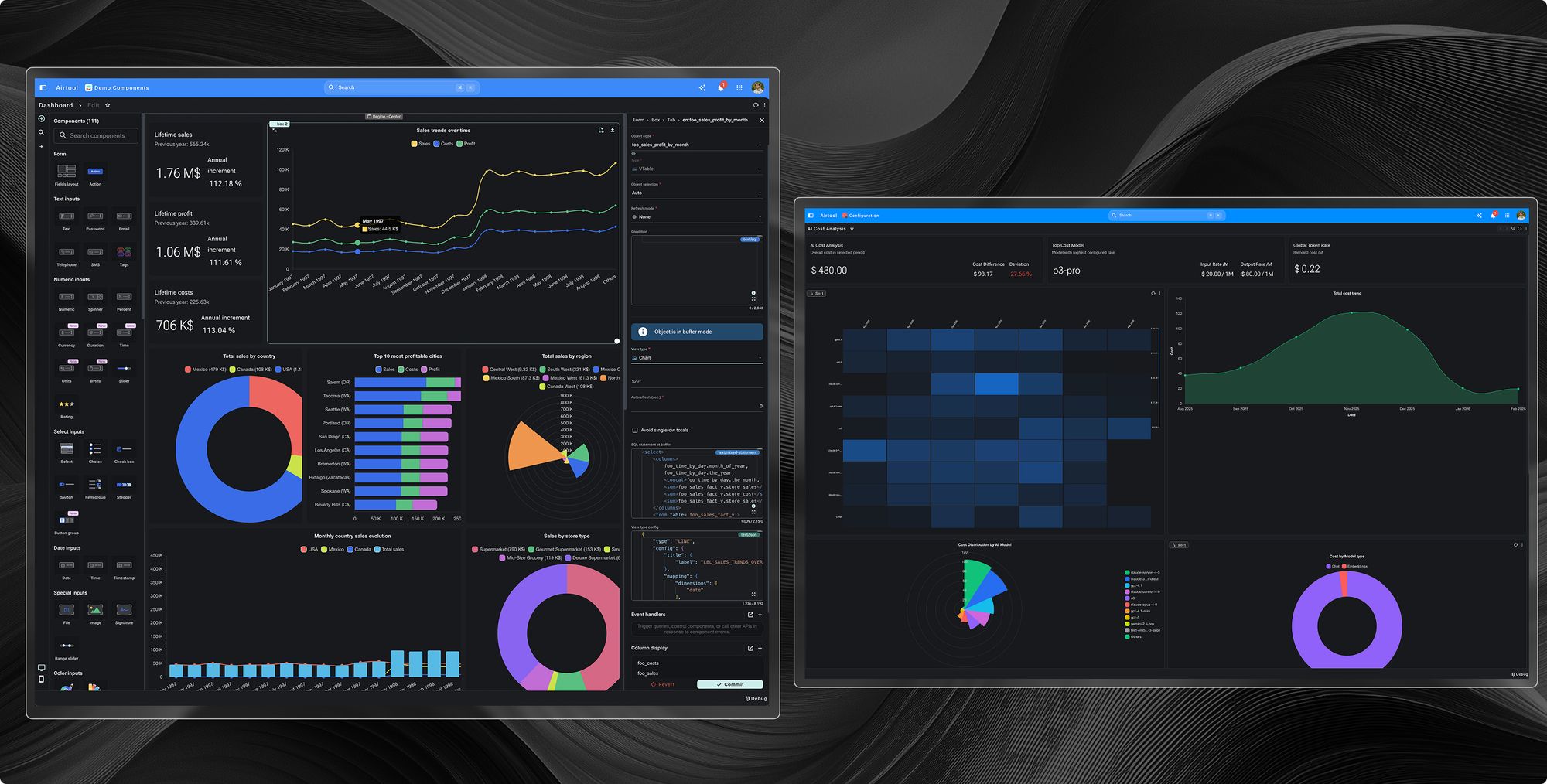
As enterprises move toward unified systems, platforms like Airtool represent a different direction.
Instead of focusing only on development speed, the emphasis is on simplifying architecture.
If you explore how a
low code application development platform
fits into this model, it becomes clear that the goal is not just faster applications.
It’s better systems.
With this approach:
- Applications are built within a shared environment
- Data remains consistent across operations
- Workflows operate without heavy integration dependencies
- Systems scale without increasing complexity
This aligns with how enterprise software is evolving in 2026.
Automation as a Native Capability
Automation is no longer optional.
But how it is implemented matters.
In fragmented systems:
- Automation relies on multiple tools
- Workflows depend on integrations
- Delays are common
In a unified platform:
- Automation is built into the system
- Processes run in real time
- Workflows are more reliable
A low code application development platform should treat automation as a core capability not an add-on.
The Future of Enterprise Software
The direction is clear.
Enterprises are moving away from:
- Disconnected SaaS tools
- Heavy integration layers
- Complex system architectures
And toward:
- Unified platforms
- Real-time operations
- Simplified system design
Low code is playing a central role in this transition.
Not because it replaces development.
But because it changes how systems are built.
Final Thoughts
The best low code development platforms in 2026 are not defined by how quickly you can build applications.
They are defined by how well they support long-term system stability.
Enterprises need platforms that:
- Reduce complexity
- Maintain data consistency
- Support scalability
- Enable efficient workflows
A low code application development platform that delivers on these areas becomes more than a tool.
It becomes the foundation of enterprise systems.
If you’re evaluating low code platforms for your enterprise, it’s worth exploring how a unified approach can simplify your systems.
Book a demo to see how Airtool helps you build scalable, connected, and efficient enterprise applications without fragmentation.
Author



As digital transactions grow in volume and complexity, enterprises face increasing pressure to maintain accurate financial records. Payments flow through multiple channels—gateways, banks, wallets, and billing systems—making manual tracking nearly impossible. This is where payment reconciliation software becomes a critical part of modern finance operations.
It enables businesses to automate transaction matching, reduce errors, and gain real-time visibility into their financial data.
Why Enterprises Need Payment Reconciliation Software
Large organizations handle thousands or even millions of transactions daily. Without automation, reconciliation becomes slow, error-prone, and difficult to scale.
Here’s why enterprises are adopting advanced solutions:
- Manual reconciliation cannot handle high transaction volumes
- Multiple payment sources create data fragmentation
- Delays in reconciliation affect financial reporting
- Errors increase operational risk and compliance issues
Modern tools solve these challenges by bringing speed, accuracy, and control into the reconciliation process.

What Makes Enterprise Reconciliation Complex
Enterprise-level reconciliation is not just about matching transactions. It involves:
- Multi-channel payments (cards, UPI, wallets, bank transfers)
- Cross-border transactions and currency conversions
- High volumes of refunds and chargebacks
- Integration with ERP and billing systems
This complexity is why businesses are actively searching for the top payment reconciliation platforms for enterprises that can handle large-scale operations efficiently.
Key Features of Enterprise Payment Reconciliation Software
The best solutions are designed to handle scale and complexity with ease. Here are the features that define the best enterprise payment reconciliation software:
1. Automated Matching
Advanced rule-based and AI-driven matching ensures faster and more accurate reconciliation.
2. Real-Time Data Processing
Enterprises need instant visibility into transactions to make timely decisions.
3. Multi-System Integration
Seamless integration with payment gateways, banks, and internal systems is essential.
4. Exception Handling
Unmatched transactions are flagged automatically for quick resolution.
5. Audit Trails and Compliance
Detailed logs help maintain transparency and simplify audits.
How Enterprises Handle Reconciliation at Scale
A common question many finance leaders ask is: how do enterprise platforms handle payout reconciliation at scale?
The answer lies in automation and intelligent workflows.
Modern systems:
- Process bulk transactions in seconds
- Use AI to improve matching accuracy over time
- Apply dynamic rules for complex scenarios
- Provide centralized dashboards for monitoring
This allows finance teams to focus on analysis rather than manual data entry.
Comparing the Best Enterprise Payment Reconciliation Software
When evaluating tools, businesses often look for a clear best enterprise payment reconciliation software comparison.
Here are some key factors to consider:
Scalability
Can the system handle increasing transaction volumes without performance issues?
Flexibility
Does it support custom workflows and reconciliation rules?
Integration
Can it connect with existing financial and operational systems?
Reporting
Does it offer actionable insights and detailed reports?
Security
Is sensitive financial data protected with robust security measures?
Solutions that excel in these areas are often recognized as the best payment reconciliation platforms for businesses.
Benefits of Using Payment Reconciliation Software
Adopting enterprise-grade tools delivers measurable benefits:
Faster Financial Close
Automation reduces reconciliation time from days to hours.
Improved Accuracy
Minimizes human errors and ensures consistent data.
Better Cash Flow Visibility
Real-time insights help track incoming and outgoing funds.
Reduced Operational Costs
Less manual work means lower labor costs.
Enhanced Decision-Making
Data-driven insights support strategic planning.
Role of Billing Systems in Reducing Errors
Reconciliation doesn’t work in isolation. It is closely linked with billing systems.
Modern billing systems that reduce reconciliation errors and delays ensure that:
- Transaction data is accurate from the source
- Invoices align with payments
- Discrepancies are minimized early
When billing and reconciliation systems work together, businesses achieve greater efficiency and accuracy.
Top Payment Reconciliation Tools for Large Businesses
Enterprises often evaluate multiple vendors before choosing a solution. The top payment reconciliation tools for large businesses typically offer:
- Cloud-based architecture for scalability
- AI-powered matching engines
- Real-time dashboards and analytics
- Customizable workflows
- Strong compliance and security features
Reading enterprise payment reconciliation software reviews can also provide insights into real-world performance and user experience.
Trends Shaping Payment Reconciliation in 2026
As we move forward, technology continues to transform financial operations. The best enterprise payment reconciliation software 2026 will be defined by:
AI and Machine Learning
Systems will become smarter and more predictive.
Real-Time Reconciliation
Instant transaction matching will become the standard.
Cloud-Native Platforms
Flexible and scalable solutions will dominate the market.
End-to-End Automation
Minimal human intervention with maximum efficiency.
Businesses that adopt these innovations early will gain a competitive advantage.
Choosing the Right Solution for Your Business
- Assess current pain points and requirements
- Evaluate multiple vendors and solutions
- Consider long-term scalability
- Prioritize ease of integration
- Ensure strong support and training
A well-chosen solution not only improves efficiency but also strengthens overall financial management.
Conclusion
In an increasingly complex payment landscape, enterprises cannot rely on manual processes or outdated systems. Payment reconciliation software has become essential for ensuring accuracy, efficiency, and scalability.
From automating transaction matching to providing real-time insights, these tools empower businesses to take control of their financial operations. As technology continues to evolve, adopting the right solution will be key to staying competitive.
To streamline your reconciliation workflows and improve financial accuracy, explore advanced solutions from Optimus Fintech. Their platform is designed to handle enterprise-scale reconciliation with automation, intelligence, and precision.
Author



In the high-speed world of modern molecular biology, we are moving past the simple era of just identifying genetic mutations. Scientists are no longer satisfied with knowing a gene is “broken.” Instead, the focus has shifted toward the complex interplay between epigenetics—the system that turns genes on or off—and metabolic reprogramming, which is how cancer cells fuel their relentless growth. At the center of this scientific revolution are three specific genes: KAT6B, MAFB, and MAT2A. These three players are rapidly becoming known as the “Precision Trio” of oncology and developmental biology.
By understanding how these genes interact, researchers are finding new ways to dismantle tumors from the inside out. They are moving away from broad, toxic treatments and toward therapies that target the very logic of a cancer cell.
KAT6B: The Master Architect of Chromatin
Think of KAT6B (Lysine Acetyltransferase 6B) as the master architect of your cellular blueprint. It doesn’t just hold information; it actively manages it. KAT6B functions as a histone acetyltransferase. This means it adds chemical “tags” to the proteins (histones) around which our DNA is tightly wrapped.
When KAT6B adds these tags, it causes the DNA to relax, making certain genes accessible for the cell to read. If KAT6B is working correctly, your body develops and functions normally. However, if this architect makes a mistake, the results are often catastrophic.
The Link to Cancer and Development
Historically, doctors associated KAT6B mostly with rare developmental disorders that affect the skeleton and brain. However, in 2026, it has become a major target in cancer research. Disruptions in KAT6B are frequently found in Acute Myeloid Leukemia (AML) and several types of solid tumors. When the architect fails, the cell loses its structural and genetic identity. This failure leads to the chaotic, uncontrolled cell division that we define as cancer. By targeting KAT6B, scientists hope to “re-structure” the cell and restore its original, healthy blueprints.
MAFB: The Foreman of Cellular Identity
If KAT6B is the architect, MAFB (MAF BZIP Transcription Factor B) is the foreman on the construction site. While the architect draws the plans, the foreman ensures the workers become what they are supposed to be. MAFB is a transcription factor, a protein that tells a cell its specific identity. It is particularly vital in the development of blood cells and the creation of macrophages, which are the “vacuum cleaners” of the immune system.
A Double-Edged Sword in Oncology
In the medical world, MAFB is a complex character. On one hand, we need it for a healthy immune system. On the other hand, when MAFB is overexpressed—meaning there is too much of it—it becomes a hallmark of multiple myeloma and other blood cancers.
Researchers are now exploring “differentiation therapy” using MAFB. Instead of trying to kill the cancer cells with poison, they are trying to use MAFB to “order” the cancer cells to grow up. If a cancer cell can be forced to mature into a functional, harmless white blood cell, it stops dividing. This approach represents a shift from destroying cells to re-programming them back into a state of health.
MAT2A: The Powerhouse Supplier of Methylation
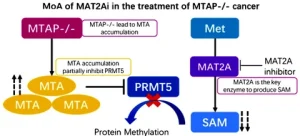
The third member of the trio is MAT2A (Methionine Adenosyltransferase 2A). This gene is the critical bridge between what a cell “eats” and how its genes “behave.” MAT2A is responsible for producing S-adenosylmethionine (SAM). SAM is the universal donor for a process called methylation.
Methylation is essentially a “silencing” mechanism. When a methyl group is added to DNA, it usually turns a gene off. For a cancer cell to stay aggressive and immortal, it needs a constant, high-volume supply of SAM. Because of this, many cancer cells become “addicted” to MAT2A.
The Strategy of Synthetic Lethality
One of the biggest breakthroughs in 2026 involves a concept called synthetic lethality. Scientists have discovered that certain tumors (specifically those lacking the MTAP gene) are extremely vulnerable if MAT2A is blocked. By inhibiting MAT2A, we can effectively starve the cancer of the chemical tools it needs to keep its “off-switches” working. Without MAT2A, the cancer cell’s epigenetic logic collapses, leading to cell death while leaving healthy cells relatively unharmed.
The Synergetic Future: A Three-Pronged Attack
The real power of the Precision Trio lies in their synergy. We are no longer looking at acetylation (KAT6B), transcription control (MAFB), and methylation metabolism (MAT2A) as isolated events. Instead, we see them as a single, integrated machinery that drives malignancy.
Why This Matters for Precision Medicine
In the past, doctors treated cancer based on where it was found in the body—lung cancer, breast cancer, or bone cancer. Today, we treat cancer based on its genetic logic.
-
The Architect (KAT6B): Controlling access to the DNA.
-
The Foreman (MAFB): Controlling the cell’s identity.
-
The Supplier (MAT2A): Providing the raw materials for gene silencing.
Pharmaceutical companies are currently developing small-molecule inhibitors that target these three proteins. By attacking the architect, the foreman, and the supplier at the same time, we can dismantle the tumor’s infrastructure. This multi-pronged attack makes it much harder for cancer to develop resistance to treatment.
Improving Readability and Research Access
For scientists in the lab, time is the most valuable resource. To push these discoveries from the bench to the clinic, researchers need high-affinity antibodies and highly specific inhibitors. Fortunately, advanced digital tools now allow scientists to search for these specific gene symbols and immediately access the reagents they need. This digital integration is accelerating the pace of discovery, ensuring that the “Precision Trio” moves into human clinical trials faster than any previous generation of cancer drugs.
Conclusion: A New Era of Hope
The study of KAT6B, MAFB, and MAT2A is a testament to the incredible progress we have made in decoding the human genome. We are finally moving away from the “carpet bombing” approach of traditional chemotherapy. Instead, we are using “surgical strikes” against the proteins that define the cancer’s existence.
As we continue to refine these targeted therapies, the dream of a less toxic, more effective cancer treatment is becoming a reality. By leveraging the combined power of epigenetics and metabolism, we are not just fighting cancer; we are outsmarting it. The Precision Trio is leading the way toward a future where a cancer diagnosis is no longer a sentence, but a solvable genetic puzzle.
Author



Pink Spider Hoodie: Bold Streetwear Style & Comfort

Hair Transplant in Islamabad: Cost, Procedure & Results

The Kooples T-Shirts & Sweatshirts Review: Paris Style

Vale Clothing Clean Look: Minimalist Fashion for Modern Style

Chrome Hearts Glasses Review: Style, Comfort & Daily Wear

Essentials Tracksuit UK Guide: Fits, Styles, Sizing & Buying Tips

Emergency Towing Guide: Star City Towing & Roadside Help Tips

Brand New Apartments in Blackburn VIC 3130: Modern Living

Kitchen Cabinets Guide: Style, Functionality & Expert Tips

Annual Wellness Visits in Seaford: Medicare Preventive Care Guide

Cybersecurity Consulting Company SequelNet Provides Critical IT Support Services to Medical Billing Firm, Medical Optimum

Team Communication Software Transforms Operations at Finance Innovate

Project Management Tool Transforms Long Island Business

How Alleviate Poverty Utilized IPPBX’s All-in-One Solution to Transform Lives in New York City

Breast Cancer: The Imperative Role of Mammograms in Screening and Early Detection

Unstoppable Collaboration: D.C.’s Citi Open and Silicon Valley Classic Unite to Propel Women’s Tennis to New Heights

Embracing Renewal: Sizdabedar Celebrations Unite Iranians in New York’s Eisenhower Park

The Benefits of Starting a Side Hustle for Financial Freedom

New Blood Donation Screening Questions What You Need to Know

Stylishly Timeless: The 5 Types of Sandals You Need in Your Closet
-

 Business3 years ago
Cybersecurity Consulting Company SequelNet Provides Critical IT Support Services to Medical Billing Firm, Medical Optimum
-
Business3 years ago
Team Communication Software Transforms Operations at Finance Innovate
-
Business3 years ago
Project Management Tool Transforms Long Island Business
-
Business3 years ago
How Alleviate Poverty Utilized IPPBX’s All-in-One Solution to Transform Lives in New York City
-
health3 years ago
Breast Cancer: The Imperative Role of Mammograms in Screening and Early Detection
-
Sports3 years ago
Unstoppable Collaboration: D.C.’s Citi Open and Silicon Valley Classic Unite to Propel Women’s Tennis to New Heights
-
Art /Entertainment3 years ago
Embracing Renewal: Sizdabedar Celebrations Unite Iranians in New York’s Eisenhower Park
-
Finance3 years ago
The Benefits of Starting a Side Hustle for Financial Freedom







