
Digital Development
AI Development Companies in 2026: Partners for Fast ROI


The debate around AI has shifted from whether to adopt it to figuring out which aspects of a business can benefit the most. With 55% of companies using AI in 2024, and that number rising to 78% now, it’s clear that companies need AI to grow and keep up with the market.
This raises an important question: how to find AI development Companies, especially those that deliver industry-focused solutions.
There are several factors to consider when choosing the right AI development companies, and this blog covers them all, along with a list of top AI development companies to help you make an informed decision.
Key Takeaways

- The global AI adoption rate is rising sharply, with 87% of companies identifying AI as a top business priority in 2026.
- Selecting the right AI development company with industry knowledge directly affects project success.
- Leading AI development companies like CONTUS Tech, 10Clouds, and InData Labs can deliver in weeks what in-house teams may take months to achieve, saving time and resources.
- Early AI adoption by partnering with the right AI tech company will give you a head start in keeping you more agile and resilient as your market evolves.

10 Best Al Development Companies in 2026
We have chosen a list of the 10 best artificial intelligence development companies based on a few important factors, such as their Clutch rating, industry expertise, team size, and a few more factors necessary to consider before partnering with them.
We’ll break them down in a way that is organized, concise, and easy for you as a business owner to make informed decisions at a glance.
CONTUS Tech
First on the list is CONTUS Tech, transforming complex business challenges into intelligent solutions. CONTUS Tech specializes in AI software development, AI agents, and agentic AI.
The company’s domain expertise in delivering enterprise-level AI solutions across mobile, automotive, and desktop applications makes CONTUS one of the top companies in AI development.
The capabilities include AI-assisted decision-making, AI recommendation engines, AI chatbot development, and custom AI solutions built using advanced technologies such as RAG (Retrieval-Augmented Generation), NLP, and deep learning. This allows businesses to automate responses, generate data-driven insights, and deliver hyper-personalized user experiences.
CONTUS Tech also offers high-performing applications that keep organizations competitive, such as predictive analytics, voice and vision-based recognition, and AI-driven product engineering. These are built with an adaptive model design to fit unique business needs.
The company’s client base includes Hyundai, Mercedes-Benz, and ICICI Bank, along with mid-sized companies and startups. This diversity shows that the company’s AI development solutions scale seamlessly for organizations of all sizes.
- Established: 2008
- Employees: 150+ AI experts
- Locations: Chennai, India, and Santa Clara, USA
- Minimum Project Size: $5,000+
- Hourly Rate: $25 – $49/hr
- Contact Details: bd@contus.in
- Industry Expertise: E-commerce, healthcare, finance, telecom, education, automotive, and entertainment
- Company USP: 40% higher workflow efficiency and 5x Agile Speed to Market
MentTech
MentTech delivers AI solutions tailored to business needs, such as automating customer support, optimizing operations, and developing intelligent products from the ground up.
The company’s expertise extends to AI consulting, guiding businesses to identify high-impact opportunities, select the right AI models, and implement solutions from proof of concept to full deployment. MentTech also specializes in generative AI development, chatbot creation, and AI-powered app development, ensuring their solutions evolve alongside changing business requirements.
MentTech is one of the top companies in AI development because it emphasizes ethical AI, secure deployment, ongoing model optimization, and full-cycle support.
- Established: 2019
- Employees: 20+ professionals
- Locations: UAE, UK, Ireland, USA, and India
- Minimum Project Size: $5,000+
- Hourly Rate: $50 – $99 / hr
- Contact Details: contact@ment.tech
- Industry Expertise: Finance, Insurance, Healthcare, and more
- Company USP: Business-ready ChatGPT customized for your workflows
OpenXcell
OpenXcell is one of the AI software development companies that helps businesses accelerate digital transformation with tailored AI software solutions. The company specializes in AI strategy, AIOps, custom LLM development, and the seamless integration of AI into existing workflows, while ensuring data security.
They also conduct AI maturity assessments to evaluate current capabilities against business objectives and identify areas for improvement.
Their AI technology consulting ensures that the existing systems are upgraded with the latest framework, and the AI Governance Assessment ensures secure scaling, giving full-cycle support.
- Established: 2009
- Employees: 250+ professionals
- Locations: India and the USA
- Minimum Project Size: $10,000+
- Hourly Rate: < $25/hr
- Contact Details: sales@openxcell.com
- Industry Expertise: Healthcare, logistics, and BSFI, among others
- Company USP: Ready to deploy AI for healthcare and recruitment
10Clouds
10Clouds helps enterprises, SMBs, and startups identify AI opportunities and validate concepts through structured workshops and proof-of-concept (PoC) programs. Their AIConsole, which simplifies multi-agent collaboration, allows clients to assess processes, visualize data readiness, and test early AI demos.
This is one of the artificial intelligence development companies that offer white-label AI solutions that let businesses personalize and rebrand AI tools to reflect their brand identity.
Other offerings include custom company GPT and ChatGPT integration that adapts to business-specific needs and data.
- Established: 2009
- Employees: 100+ professionals
- Locations: Poland
- Minimum Project Size: $25,000+
- Hourly Rate: $50 – $99 / hr
- Contact Details: hello@10clouds.com
- Industry Expertise: Fintech and IT, among others
- Company USP: 10C Agile Delivery Method that ensures faster launches
DataToBiz
DataToBiz is one of the leading AI solutions providers, helping clients with customized AI platforms, implementing pilot projects, and integrating AI with existing systems like IoT.
It helps businesses with private large language models that are industry-focused. This ensures that the businesses have complete control over their AI models, and it also enhances data security.
Also, their six-phase structured AI development process helps keep AI solutions not just effective but sustainable too.
- Established: 2018
- Employees: 150+ professionals
- Locations: India, Saudi Arabia, Botswana, and the USA
- Minimum Project Size: $25,000+
- Hourly Rate: $25 – $49 / hr
- Contact Details: hi@datatobiz.com
- Industry Expertise: Manufacturing, real estate, and finance
- Company USP: Offers customizable accelerators for faster, tailored AI solution deployment
DataRootLabs
DataRootLabs is an AI R&D firm that specializes in tailored AI development services to startups and enterprises. The company offers a comprehensive suite of services, including MVP, AI strategy consulting, and AI integration and deployment solutions.
DataRootLabs guarantees full product transfer and confidentiality, ensuring their clients have complete ownership of their AI solutions.
Their data science and ML/Deep Learning teams handle every stage, from anonymizing and preparing custom datasets to building, training, and fine-tuning models.
- Established: 2016
- Employees: 11 to 50 employees
- Locations: Ukraine
- Minimum Project Size: $10,000+
- Hourly Rate: $50 – $99/hr
- Contact Details: info@datarootlabs.com
- Industry Expertise: Logistics, entertainment, retail, and more
- Company USP: Assists clients with fundraising
InData Labs
InData Labs is an AI and data science company that helps businesses harness unstructured data, create predictive insights, and implement AI-driven solutions. Their expertise spans machine learning, natural language processing, generative AI, and business intelligence.
InData Labs stands out among companies that develop AI software with its strong R&D. Its research center is mainly focused on computer vision and language processing technologies.
- Established: 2014
- Employees: 80+ professionals
- Locations: USA, Lithuania, Cyprus
- Minimum Project Size: $10,000+
- Hourly Rate: $50 – $99/hr
- Contact Details: info@indatalabs.com
- Industry Expertise: Sports and wellness, automotive, fintech, and more
- Company USP: Provides PoC validation and MVP development for risk-free AI solution implementation
Systango
Systango offers AI development services through its GenAI Studio, a platform designed to accelerate the journey from idea to production.
Their dedicated cross-functional pods handle every stage—from intake and prioritization to prototype sprints, review, and scaling.
The company is dedicated to delivering AI solutions that integrate smoothly within existing systems, which helps companies adopt AI without any major disruptions.
- Established: 2007
- Employees: 250+ professionals
- Locations: India
- Minimum Project Size: $10,000+
- Hourly Rate: $25 – $49/hr
- Contact Details: hello@systango.com
- Industry Expertise: Blockchain, e-commerce, and retail, among others
- Company USP: Google Cloud Specialization in Generative AI – Services
Addepto
Addepto develops AI systems for predictive analytics, recommendation engines, smart search, and image recognition. Their AI consulting team identifies key business issues and solves complex business challenges using analytic algorithms.
One notable AI development solution of Addepto is their enterprise generative AI with information processing across documents, databases, spreadsheets, voice, and video content. This helps businesses extract actionable insights and make faster, data-driven decisions.
- Established: 2017
- Employees: 100+ professionals
- Locations: Poland
- Minimum Project Size: $10,000+
- Hourly Rate: $50 – $99/hr
- Contact Details: hi@addepto.com
- Industry Expertise: Retail, legal, healthcare, and more
- Company USP: Offers an AI toolkit to transform unstructured data into meaningful patterns
Debut Infotech
Debut Infotech is one of the artificial intelligence development companies that help organizations with intelligent automation, machine learning, and data-driven insights into core workflows. Their AI consulting team works closely with clients to identify high-impact business challenges and design actionable AI roadmaps.
Debut Infotech specializes in intelligent AI agents and AI copilots capable of independently executing tasks and providing contextual support for teams. They also offer PoC, MVP development services, and deliver enterprise AI solutions that evolve with real-time data.
- Established: 2011
- Employees: 100+ professionals
- Locations: India, USA, UK, and Canada
- Minimum Project Size: $10,000+
- Hourly Rate: $25 to $49/hr
- Contact Details: info@debutinfotech.com
- Industry Expertise: Real estate, EdTech, FinTech, among others
- Company USP: Offers modular and scalable AI architectures with zero downtime deployment
Wrapping Up
This blog has highlighted a list of top AI development companies with expertise across industries. It has also outlined how to choose the right partner and how the choice can determine whether an AI project delivers measurable growth or stalls midway.
With these strategies and key considerations in mind, select a partner with proven expertise in AI strategy design, deployment across hybrid and multi-cloud environments, and ready-to-deploy AI solutions—qualities that CONTUS Tech consistently delivers.
The company prioritizes customer success, offers risk-free MVP launches, and boasts a track record of 500+ successful projects, demonstrating that businesses can achieve faster deployment and measurable ROI with AI adoption.
Author










The digital landscape of 2026 feels vastly different from the experimental days of the early 2020s. Today, artificial intelligence is no longer a novelty; it is a ubiquitous utility. Estimates suggest that nearly 90% of content marketers now use large language models (LLMs) to some degree. However, this explosion of automated text has created a unique side effect: a “trust gap” among audiences. As the web becomes saturated with predictable, algorithmically generated articles, the value of authentic human expression has skyrocketed. For creators and businesses, the challenge is no longer about how much content they can produce, but how much “humanity” they can inject into it.
Achieving 100% original, human-centric content in 2026 requires more than just avoiding “copy-paste.” It demands a strategic blend of personal insight, structural variety, and a departure from the generic patterns that AI detectors—and savvy readers—now easily identify.
The 2026 “AI Blacklist” and How to Avoid It
In 2026, both Google’s ranking algorithms and sophisticated detection tools like GPTZero or Turnitin have evolved. They no longer just look for matching text; they analyze “perplexity” and “burstiness.” Perplexity refers to how predictable your word choices are. AI tends to choose the most statistically likely word, leading to a bland, middle-of-the-road tone.

To create truly humanized content, you must actively purge the “AI Hallmark” vocabulary that has become digital noise. Avoid these common 2026 red flags:
-
The Overused Intros: Phrases like “In today’s digital age,” “At its core,” or “Imagine a world” are immediate tells. Instead, start with a punchy fact or a personal observation.
-
The Buzzword Fatigue: Words like leverage, synergy, paradigm shift, and robust have lost their meaning. Replace them with simpler, active verbs like use, collaborate, or strong.
-
The Flowery Metaphors: AI loves a good “tapestry,” “symphony,” or “beacon.” Unless you are actually writing about weaving or music, these metaphors feel hollow.
By choosing “boring” but precise words over hyper-polished jargon, you actually build more trust with your reader.
Master the “Burstiness” of Human Thought
One of the most significant differences between a human writer and an AI is sentence rhythm. An AI typically generates sentences of a very similar length and structure. This creates a monotonous “drone” that puts readers to sleep. Humans, conversely, write with “burstiness.” We use short, punchy sentences to make a point. Then, we follow up with a longer, more descriptive thought that flows naturally into the next idea.
To humanize your content, try the following structural shifts:
-
Vary Sentence Length: Mix four-word sentences with twenty-word sentences. This mimics the natural cadence of speech.
-
Use Active Voice: Instead of saying “The report was analyzed by the team,” say “Our team tore through the report.” Active voice creates a sense of agency and movement.
-
Embrace Fragments: Occasionally. For emphasis. It adds a touch of personality that algorithms usually avoid.
The Power of “Information Gain”
In 2026, the concept of “Information Gain” is the ultimate differentiator. This refers to the unique value or new perspective an article provides that isn’t already found in the top ten search results. Since AI can only summarize existing data, it cannot provide new insights or lived experiences.
To make your content 100% unique, you must include:
-
Personal Anecdotes: Share a specific story about a project that failed or a lesson you learned the hard way.
-
Specific Data Points: Use internal data or unique observations from your specific industry niche.
-
Opinionated Stances: AI is designed to be neutral and safe. Humans have opinions. Don’t be afraid to take a stand on a trend or challenge a common industry “truth.”
Readability and the “Zero-Visit” Era
We are currently living in the “Zero-Visit” visibility era. AI search summaries often provide the answer directly on the search results page, meaning users might never click your link. To counter this, your content must be highly readable and modular.
Break your 1,000-word piece into digestible sections with clear, descriptive headings. Use transition words—but avoid the formal ones like “furthermore” or “moreover.” Instead, use conversational bridges like “Here’s the catch,” “On the flip side,” or “Better yet.” These transitions guide the reader’s eye and keep them engaged with the human behind the screen rather than the data on the page.
Why Authenticity is the New Luxury
As we move deeper into 2026, “human-made” is becoming a premium label. Research shows that over 65% of Gen Z and Millennials are more likely to trust a brand that publishes human-generated content over a fully automated feed. People don’t want to talk to machines; they want to talk through machines to other people.
By focusing on high readability, active voices, and short, impactful sentences, you respect your reader’s time and cognitive load. You aren’t just filling a word count; you are providing a roadmap for a meaningful conversation.
Summary of the Human-Centric Checklist
| Feature | AI-Generated Pattern | Human-Centric Alternative |
| Tone | Neutral, robotic, and “safe” | Opinionated, warm, and authentic |
| Pacing | Uniform sentence lengths | “Burstiness” (mixed lengths) |
| Vocabulary | Jargon-heavy (Leverage, Tapestry) | Clear and precise (Use, Blend) |
| Perspective | Third-person objective | First-person with anecdotes |
| Structure | Rigid Intro-Point-Conclusion | Modular and conversational |
Conclusion: Finding the Synergy
The goal isn’t to ignore AI, but to use it as a “prep cook” rather than the “chef.” Let technology handle the initial research and outlining, but ensure the final 1,000 words are saturated with your unique voice. In an age of infinite automated noise, the most revolutionary thing you can be is yourself. Authentic, slightly imperfect, and deeply human content will always outperform a soulless algorithm.
By following these guidelines, you ensure that your work is not only 100% plagiarism-free but also high-performing in an era that craves real connection.
Author



The Grocery Delivery App Development market has exploded into a multi-billion-dollar industry — and it’s showing no signs of slowing down. With consumers increasingly preferring the convenience of ordering groceries from their smartphones, building a robust grocery delivery app has become one of the most lucrative opportunities in mobile commerce today.
But launching an app isn’t enough. To compete with giants like Instacart, BigBasket, Blinkit, and Amazon Fresh, your features for Grocery Delivery App Development — the ones that drive user retention, streamline operations, and generate sustainable revenue.
In this comprehensive guide, we break down the 10 must-have Features for Grocery Delivery App Development in 2026, explaining why each matters and how to implement it effectively.
Why Features Make or Break Your Grocery App
The features below aren’t optional extras — they are the foundational pillars of any successful grocery delivery app in today’s competitive landscape.
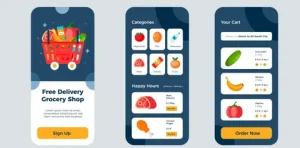
1. User Registration & Seamless Onboarding
Core Feature
The onboarding experience is your app’s first impression — and in a world of increasing competition, a complicated sign-up process is enough to lose users permanently. Your registration system must be fast, secure, and frictionless.
Support multiple sign-in methods to accommodate diverse user preferences:
- Email and password registration with OTP verification
- Social login via Google, Facebook, or Apple ID
- Mobile number-based login with SMS OTP
- Guest checkout option for first-time users
- Biometric login (fingerprint/face ID) for returning users
2. Advanced Search & Smart Product Discovery
Engagement Driver
Grocery apps handle thousands of SKUs across dozens of categories. Without a powerful search and browsing system, users will quickly grow frustrated and abandon your app. A well-designed search experience should feel like having a knowledgeable store assistant.
- AI-powered search with typo tolerance and autocomplete suggestions
- Voice search capability for hands-free shopping
- Barcode scanner for adding items quickly
- Smart filters: price range, dietary preferences (vegan, gluten-free), brand, ratings
- Category browsing with visually appealing product grids
- Recently searched and trending products sections
3. Intuitive Shopping Cart & Wishlist Management
Conversion Essential
The shopping cart is the financial heart of your app. Every design decision here directly impacts your revenue. A confusing or cumbersome cart experience is one of the leading causes of cart abandonment, which averages over 70% in e-commerce.
- Persistent cart that saves across sessions and devices
- One-tap quantity adjustment directly from the cart view
- Instant price updates as items are added or removed
- Saved wishlists and favourite products for quick re-ordering
- Cart sharing feature (share your list with family members)
- Substitution suggestions for out-of-stock items
4. Real-Time GPS Order Tracking
Retention Builder
Real-time tracking is arguably the single most important feature in a delivery app. Studies consistently show that apps offering live order tracking see 3x better user retention. Customers experience anxiety about their delivery — real-time tracking eliminates it.
- Live map showing the delivery agent’s exact location
- Estimated time of arrival (ETA) that updates in real time
- Order status milestones: Placed → Confirmed → Packed → Out for Delivery → Delivered
- Push notifications at each status milestone
- Direct in-app chat or call with the delivery agent
- Delivery agent profile with photo, name, and ratings
5. Multiple Payment Gateway Integration
Revenue Critical
Payment failure or inconvenience is the #1 reason for last-step cart abandonment. Your app must support every payment method your target market uses. In markets like India, this means supporting UPI as a priority; in western markets, digital wallets and BNPL options are growing rapidly.
- Credit and debit card payments (Visa, Mastercard, Amex)
- UPI payments (PhonePe, Google Pay, Paytm) for Indian markets
- Digital wallets (Apple Pay, Google Pay)
- Cash on Delivery (CoD) option
- In-app wallet with recharge and cashback
- Buy Now, Pay Later (BNPL) integrations
- Saved card details with PCI-DSS compliant storage
6. Scheduled Delivery & Slot Management
User Convenience
Not every user needs their groceries in 30 minutes. Numerous individuals like to arrange deliveries when it suits them — during work hours, prior to a dinner gathering, or on weekends. Offering scheduled delivery expands your user base significantly and makes your app indispensable for routine grocery planning.
- Express delivery slots (10–30 minutes for urgent orders)
- Scheduled delivery slots up to 7 days in advance
- Time-slot management to prevent over-booking
- Subscription delivery (recurring orders on a weekly/monthly basis)
- Delivery slot reminders and notifications
- Flexible rescheduling with no penalty within a window
7. AI-Powered Personalization & Recommendations
Growth Engine
Personalization is the difference between an app that feels generic and one that feels like it truly knows its users. Leveraging AI and machine learning to deliver personalized experiences is no longer a luxury — it is a core expectation in 2026.
- Personalised homepage showing frequently bought items
- “You might also need” cross-sell recommendations
- Smart reorder reminders (“You last ordered milk 5 days ago”)
- Dietary preference profiles (keto, vegetarian, diabetic-friendly)
- Personalized coupons and deals based on purchase history
- AI-generated weekly shopping list suggestions
8. Loyalty Programs, Offers & Promo Management
Retention Strategy
Customer acquisition is expensive. Retaining existing users is far more cost-effective. A well-structured loyalty and promotions system keeps users coming back and increases their lifetime value exponentially.
- Points-based rewards system with tiered membership levels
- Referral program with rewards for both referrer and referee
- First-order discount and welcome offers for new users
- Flash deals and limited-time offers with countdown timers
- Promo code and coupon management
- Cashback on specific products or payment methods
- Seasonal promotions and bundle deals
9. In-App Customer Support & AI Chatbot
Trust Builder
When something goes wrong with an order, how your app handles it defines user loyalty. A missing item, a late delivery, or a payment failure all need to be resolved swiftly and empathetically. Great customer support turns frustrated users into loyal advocates.
- AI chatbot for instant responses to FAQs (order status, refund policy)
- Live chat escalation to human agents for complex issues
- In-app call support with callback scheduling
- Easy order cancellation and refund request flow
- Photo-based complaint submission (e.g., wrong/damaged items)
- Help centre with searchable FAQs and video guides
10. Vendor & Admin Dashboard with Analytics
Operations Core
A great user-facing app is only half the story. Behind every successful grocery delivery app is a powerful admin and vendor management system that gives store owners and your operations team full visibility and control.
- Real-time inventory and stock management for vendors
- Order management dashboard with status updates
- Delivery agent management and route optimisation
- Revenue, sales, and performance analytics
- Customer behaviour and retention analytics
- Automated low-stock alerts and reorder triggers
- Multi-store and multi-vendor support
- Commission and payout management for vendors.
Features for Grocery Delivery App Development Priority: MVP vs Full Launch
Not sure where to start? Here’s how to prioritise these features across your development phases:
| # | Feature | MVP Phase | Full Launch | Priority |
|---|---|---|---|---|
| 1 | User Registration & Onboarding | ✓ | ✓ | 🔴 Critical |
| 2 | Search & Product Discovery | ✓ | ✓ | 🔴 Critical |
| 3 | Shopping Cart & Wishlist | ✓ | ✓ | 🔴 Critical |
| 4 | Real-Time GPS Tracking | ✓ | ✓ | 🔴 Critical |
| 5 | Payment Gateway Integration | ✓ | ✓ | 🔴 Critical |
| 6 | Scheduled Delivery & Slots | ✗ | ✓ | 🟡 High |
| 7 | AI Personalization | ✗ | ✓ | 🟡 High |
| 8 | Loyalty & Promo System | ✗ | ✓ | 🟡 High |
| 9 | Customer Support & Chatbot | ✓ | ✓ | 🟠 Medium |
| 10 | Admin & Vendor Dashboard | ✓ | ✓ | 🔴 Critical |
Pre-Launch Development Checklist
- Define your target market and create detailed user personas
- Choose your tech stack (React Native / Flutter for cross-platform, or native iOS + Android)
- Design wireframes and prototype all 10 core features before grocery delivery app development
- Build a scalable backend with microservices architecture (Node.js / Django)
- Integrate Google Maps Platform for real-time delivery tracking
- Set up payment gateway(s) relevant to your target geography
- Implement SSL encryption and GDPR/data privacy compliance
- Conduct thorough UAT (User Acceptance Testing) across multiple devices
- Set up analytics tools (Firebase, Mixpanel) before launch
- Prepare a post-launch marketing strategy with retention campaigns
Ready to Build Your Grocery Delivery App?
The grocery delivery market rewards those who move fast and execute well. By building these Features for Grocery Delivery App Development from day one — and planning for scalability — you position your app for sustained growth in an increasingly competitive market. Focus on user experience above all else: a seamless, trustworthy, and enjoyable shopping experience is what separates the apps users love from the ones they delete.
Author



Creating an online presence is one of the most important steps for any modern business. A professional website helps companies show their services, attract customers, and build trust in the market. However, many business owners face a common question before starting a project: Should you choose a CMS platform or go for custom development?
Both options have advantages and limitations. The right choice depends on your business goals, budget, and the level of control you want. Many companies consult a professional Website developer or an experienced development company to understand which solution fits their needs best. Businesses looking for flexibility often explore custom web design services when they want a unique and scalable digital platform.
This article explains the differences between CMS platforms and custom website development in simple terms so business owners can make the right decision.
Understanding CMS Platforms
A Content Management System (CMS) is a tool that allows people to build and manage a website without needing deep programming knowledge. Popular systems include WordPress, Joomla, and Drupal. These platforms provide ready-made templates and built-in features that help businesses launch quickly.
With a CMS, users can update content, add images, publish blogs, and manage pages from a simple dashboard. This makes it easier for non-technical teams to maintain their site without depending on developers every time a small update is required.
Benefits of CMS Platforms
1. Easy to Use
Most CMS tools provide user-friendly interfaces. Business owners can log in, edit content, and publish updates without complex technical skills.
2. Faster Launch Time
Since themes and plugins are already available, creating a website can take only a few days or weeks.
3. Lower Initial Cost
A CMS solution usually costs less compared to fully customized development. This makes it ideal for startups or small businesses.
4. Built-in Features
Many platforms provide plugins for contact forms, search optimization, security tools, and e-commerce functions.
Limitations of CMS Platforms
Although CMS platforms are convenient, they may not always meet the needs of growing businesses.
Limited Flexibility
Templates restrict design options. Customizing advanced features can become difficult.
Performance Issues
Large numbers of plugins may slow down the site and affect loading speed.
Security Risks
Popular systems sometimes face security threats if updates and protection tools are not maintained properly.

What Is Custom Website Development?
Custom website development means building a website from scratch using programming languages and frameworks. Instead of using ready-made templates, developers create every element based on business requirements.
This process involves detailed planning, user interface design, coding, testing, and optimization. Companies that require advanced features, complex integrations, or unique user experiences often choose this approach.
Benefits of Custom Development
1. Unique Design
A custom solution allows businesses to create a completely original design that reflects their brand personality.
2. High Performance
Since the system is built specifically for the project, unnecessary code and plugins are avoided. This improves speed and efficiency.
3. Scalability
As a business grows, new features can be added easily without limitations from third-party systems.
4. Better Security
Custom platforms often provide stronger security because developers control the entire architecture.
5. Advanced Integrations
Businesses can connect their website with CRM systems, payment gateways, or internal tools without restrictions.
Challenges of Custom Website Development
Despite its advantages, this approach also has some considerations.
Higher Cost
Building a platform from scratch requires more time and skilled developers, which increases the initial investment.
Longer Development Time
Custom projects may take several weeks or months, depending on the complexity.
Technical Maintenance
Ongoing updates and improvements usually require professional support from a development team.
CMS vs Custom Development: Key Differences
Understanding the main differences between the two options helps businesses decide which approach suits them better.
Flexibility
CMS platforms provide limited design flexibility because they rely on templates. Custom development allows full creative control and tailored functionality.
Cost
CMS websites are generally cheaper in the beginning. Custom development involves higher investment but may deliver better long-term value.
Scalability
Custom solutions grow easily with business expansion, while CMS platforms may face limitations when adding complex features.
Performance
Custom-built systems can achieve faster loading speeds because they contain only necessary components.
Security
Custom architecture usually offers stronger protection, while CMS platforms require regular updates and security plugins.
Problems Business Owners Often Face
Many companies struggle when choosing the right website solution. Some common issues include:
Limited Technical Knowledge
Business owners may not understand the technical differences between CMS and custom development.
Budget Concerns
Companies want professional quality while managing project costs.
Scalability Questions
A website that works today may not support future growth.
Maintenance Challenges
Some platforms require constant updates and technical support.
User Experience Issues
Poor navigation or slow loading speeds can reduce customer engagement.
These challenges can affect the success of a digital presence. Choosing the right platform from the beginning helps avoid these problems.
When Should You Choose a CMS Platform?
A CMS platform is suitable when businesses need a simple website with basic functionality. It works well for:
- Small business websites
- Blogs and content publishing platforms
- Basic company profiles
- Startup projects with limited budgets
- Businesses that update content frequently
If the main goal is to launch quickly and manage content easily, a CMS solution can be an effective choice.
When Should You Choose Custom Website Development?
Custom development is ideal for businesses that need unique functionality and advanced features.
This approach is best for:
- Large company websites
- Complex service platforms
- Custom booking systems
- SaaS platforms
- E-commerce systems with unique workflows
- Businesses planning long-term digital growth
Why Website Strategy Matters for Business Growth
A website is more than just an online brochure. It acts as a digital sales platform that helps businesses attract leads, communicate with customers, and build credibility.
The success of a website depends on several factors:
User Experience
Visitors should find information easily and navigate smoothly.
Search Visibility
Search optimization ensures potential customers can discover the website online.
Performance
Fast-loading pages improve engagement and reduce bounce rates.
Mobile Compatibility
Many users access websites through smartphones, making responsive design essential.
How to Choose the Right Solution
Before selecting a CMS platform or custom development approach, business owners should consider a few important questions.
What is your business goal?
If the website is mainly informational, a CMS may work well. If it requires advanced systems, custom development might be better.
What is your budget?
A CMS solution costs less initially, while custom development requires more investment.
Do you need unique features?
Custom platforms allow greater flexibility for specialized requirements.
How fast do you need the website?
CMS systems can launch quickly, while custom development requires more planning time.
Will your business grow?
Companies expecting rapid expansion may benefit from scalable custom architecture.
Answering these questions helps businesses choose a platform that supports long-term success.
Final Thoughts
Choosing between a CMS platform and custom website development depends on your business goals, budget, and plans. Both options can work well when used in the right situation.
A CMS platform offers simplicity, affordability, and quick deployment, making it suitable for smaller projects. Custom development provides flexibility, performance, and scalability for businesses that need a more powerful digital platform.
The most important step is working with experienced professionals who understand your requirements and recommend the best approach. A well-planned website built with the right technology can help businesses improve visibility, attract customers, and achieve long-term growth in the digital marketplace.
Author



Gamezstaion: Mobile Gaming for Parties & Corporate Events

Laser Cutting Swindon: Precision Fabrication & Fast Turnarounds

Nursery Wickford: Choosing the Best Early Years Setting

Holiday Club Greenfield: Learning & Childcare This School Holiday

Online Reputation Management: ORM Guide for Small Businesses

Kailash Mansarovar Yatra from Lucknow: The Realm of Faith

Air Con Repair Gloucester: Fast, Reliable AC Service

Thread Milling Minimizes Tool Breakage and Boosts Productivity

Dandy Worldwide Streetwear: Hoodies, Hats & Urban Style Trends

Denver SEO Agency: Turn Local Searches into Real Customers

Cybersecurity Consulting Company SequelNet Provides Critical IT Support Services to Medical Billing Firm, Medical Optimum

Team Communication Software Transforms Operations at Finance Innovate

Project Management Tool Transforms Long Island Business

How Alleviate Poverty Utilized IPPBX’s All-in-One Solution to Transform Lives in New York City

Breast Cancer: The Imperative Role of Mammograms in Screening and Early Detection

Unstoppable Collaboration: D.C.’s Citi Open and Silicon Valley Classic Unite to Propel Women’s Tennis to New Heights

Embracing Renewal: Sizdabedar Celebrations Unite Iranians in New York’s Eisenhower Park

The Benefits of Starting a Side Hustle for Financial Freedom

New Blood Donation Screening Questions What You Need to Know

Stylishly Timeless: The 5 Types of Sandals You Need in Your Closet
-

 Business3 years ago
Cybersecurity Consulting Company SequelNet Provides Critical IT Support Services to Medical Billing Firm, Medical Optimum
-
Business3 years ago
Team Communication Software Transforms Operations at Finance Innovate
-
Business3 years ago
Project Management Tool Transforms Long Island Business
-
Business3 years ago
How Alleviate Poverty Utilized IPPBX’s All-in-One Solution to Transform Lives in New York City
-
health3 years ago
Breast Cancer: The Imperative Role of Mammograms in Screening and Early Detection
-
Sports3 years ago
Unstoppable Collaboration: D.C.’s Citi Open and Silicon Valley Classic Unite to Propel Women’s Tennis to New Heights
-
Art /Entertainment3 years ago
Embracing Renewal: Sizdabedar Celebrations Unite Iranians in New York’s Eisenhower Park
-
Finance3 years ago
The Benefits of Starting a Side Hustle for Financial Freedom







