
Technology
Unified Infotech’s Staff Augmentation for Enterprises

By

Reviewed
By Emily Carlos

Introduction
Have you ever wondered why some staff augmentation firms, like Unified Infotech, perform better than others? They have higher client retention rates and a reputation for delivering client-centric results. They are known for their expertise in scaling their tech teams at speed, adapting to digital transformation, and delivering complex software projects; all without losing momentum or blowing up budgets.
What is their secret? Perhaps it is their approach to staff augmentation for enterprises. They leverage technical expertise, flexibility and client-focussed value to deliver real business outcomes for ambitious organizations through their enterprise staff augmentation services. Let’s explore.
The Evolving Need for Staff Augmentation in Enterprises
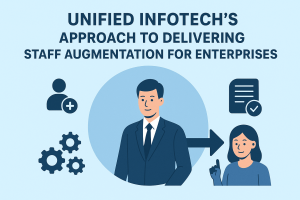
Nothing can match the pace at which tech evolves. This makes opting for IT staff augmentation for enterprises a strategic move with businesses of all sizes. Today, digital marketing demands that businesses:
- Stay agile
- Deliver innovative products
- Respond to market shifts in real time
And, augmenting your core team with the right external experts will widen your gap between leading and lagging.
Unified Infotech Staff Augmentation: What Sets It Apart?
So, what distinguishes Unified Infotech staff augmentation from other companies? Why is it not classified as one of those companies involved in generic body-shopping? There are several reasons for this. The most important being the diversified headcount it maintains. Other equally important points include:
- Handpicked talent: Only the most skilled engineers and developers, rigorously vetted for both technical prowess and cultural fit, are deployed.
- Client goal alignment: Unified’s comprehensive discovery process ensures a thorough understanding of your business drivers, timelines, tech stack, and compliance requirements.
- Transparency and collaboration: Every engagement comes with structured checkpoints, clear SLAs, and robust communication, making collaboration seamless.
- End-to-end ownership: Unified’s staff augmentation is not limited to “code and go.” They are also directly or indirectly contribute input on architecture, recommend process improvements, and participate in daily stand-ups alongside your in-house squad.
- Dedicated developers: Clients can directly hire dedicated developers for enterprises with focused skillsets from here.
What clients say about Unfiied Infotech?
For clients, this collaboration results in long-term partnerships. When reviewed most clients refer to Unified Infotech as a partner. Rarely is Unified called a staff augmentation vendor. What makes this possible? Some reasons for the same include:
- Deep industry understanding across verticals.
- Focused delivery on enterprise timelines and compliance.
- Dedicated developers for enterprise projects who feel just like part of your in-house team.
- Strong references, repeat engagements, and word-of-mouth recommendations.
- The agility, reliability, and consultative approach that gets IT projects moving now—not after months of ramp-up.
The Unified Infotech Enterprise Staffing Approach
Another key differentiator is Unified Infotech’s approach to enterprise IT talent outsourcing. It stands out for its rigor, communication, and scalability. Let’s explore the journey from the first approach to final sourcing.
1. Consultation and Discovery
Unified Infotech starts with a deep dive into your business goals, existing talent landscape, and unique project requirements. They engage every key stakeholder to map exact skillsets needed, projected timelines, and cultural expectations for success.

2. Bespoke Talent Shortlisting
Unified runs a stringent multi-stage screening:
- Technical interviews by enterprise-class architects.
- Soft skills and culture match checks.
- Past project analysis to ensure suitability.
This ensures every candidate is battle-tested for the realities of enterprise software development staffing before you ever see a resume.
3. Client Collaboration and Interviews
Only the top matches are presented to your team for interviews—so you’re always in the driver’s seat. Unified guides you through selection, onboarding, and even provides trial engagement models if required.
4. Onboarding and Integration
Unlike many vendors who drop talent with minimal support, Unified creates a detailed onboarding and knowledge transfer plan that covers tools, workflows, security, and team dynamics.
5. Scalable Staff Augmentation Models
Unified offers both fixed and scalable staff augmentation models:
- Ramp teams up or down based on project demands.
- Add niche experts for short sprints or keep long-term core developers embedded.
- Flexible contracts that cater to enterprise procurement and compliance needs.
6. Ongoing Management and SLA Monitoring
You’ll never feel “distance” between Unified’s resources and your core team. Unified sets up regular sync calls, sprint reviews, and transparent reporting around KPIs, timelines, and budget. This commitment to continuous delivery sets Unified apart in the world of custom staff augmentation services.
Who Benefits from Unified Infotech’s Enterprise Staff Augmentation Services?

Image by: Yandex.com
Unified Infotech’s approach is crafted for:
- Mature enterprises navigating digital transformation or legacy modernization.
- Fast-growth companies looking to scale up their enterprise software development staffing needs.
- Firms launching new digital products within tight deadlines.
- Organizations needing niche tech expertise in emergent technologies like AI, data, cloud, which may be scarce locally.
- Enterprise IT talent outsourcing for specialist skills, covering short-term initiatives or filling chronic skill gaps.
Unified has helped sectors ranging from fintech to healthcare, education, logistics, retail, and even media, bringing vertical-specific agility to every engagement.
Custom Staff Augmentation Services: Tailored for Enterprise Needs
No two enterprises are identical. That’s why Unified’s custom staff augmentation services are built to match unique enterprise needs, including:
- Staffing by skill, technology, project type, or regulatory requirements.
- Alignment with both Agile and traditional project management methodologies.
- Flexible engagement models: team extension, managed pods, or hybrid onsite-offshore teams.
- Capability for rapid scale: onboard dozens of developers in parallel across continents, if needed.
Unified makes it straightforward to hire dedicated developers for enterprises who operate as an extension of your own team. You’re not left with bench-warmers; every developer is assigned full-time to your project, participates in standups, leverages your tools, and reflects your enterprise culture. This high-touch approach amplifies retention, accountability, and delivery speed.
Unified’s dedicated model maximizes:
- Project IP security and confidentiality.
- Access to a wide range of tech stacks (AI, IoT, cloud, enterprise SaaS, analytics).
- Cost optimization with talent from both onshore and offshore locations.
Enterprise IT Talent Outsourcing: Benefits at a Glance
Outsourcing IT talent with Unified Infotech brings several advantages to the enterprise world:
- Access to a broader, highly skilled global talent pool.
- Rapid deployment of specialists for urgent or niche requirements.
- Reduction in recruitment overheads, admin work, and onboarding friction.
- Built-in scalability for high-growth periods or seasonal fluctuations.
- Transparent costs, streamlined vendor management, and a clear chain of accountability.
- Consistent focus on quality with continuous upskilling of resources.
Unified’s professional reputation is validated by industry accolades like Deloitte Technology Fast 50 listings, client testimonials, and consistent high ratings on platforms like Clutch and GoodFirms.
While the spotlight here is on staff augmentation, Unified’s impact reaches beyond that. Unified Infotech enterprise solutions include bespoke software development, digital product consulting, and full-scale IT strategy partnership. As a one-stop digital transformation partner, Unified helps clients navigate everything from user experience design to complex backend engineering and data analytics.
Enterprises leveraging this holistic support enjoy integrated innovation across projects, unified tech standards, and smoother transitions between augmented and in-house teams.
Best Practices: The Keys to Unified Infotech’s Enterprise Staffing Success
Unified Infotech’s success in enterprise staff augmentation is fueled by several best practices:
- Rigorous talent sourcing: Advanced technical screening, soft-skills vetting, and cultural alignment tests every candidate.
- Transparency first: Detailed estimates, milestone-based billing, and proactive communication ensure zero surprises or hidden costs.
- Dedicated client success managers: Every engagement has a direct point of contact for escalations, support, and quality oversight.
- Emphasis on retention: Unique perks, upskilling opportunities, and engaging work keep Unified’s IT talent happy and stable.
- Continuous improvement: Quarterly business reviews, agile retrospectives, and process audits raise the bar for every project.
Wrap Up
In today’s fast-paced business world, staff augmentation for enterprises is an engine of speed, scalability, and innovation. Unified Infotech leads the way with client-centric staffing models that complement in-house teams, power digital transformation, and deliver true enterprise value.
With Unified Infotech enterprise solutions, you get more than hands-on keyboards. You gain a strategic staffing partner committed to driving outcomes, simplifying scaling, and future-proofing your IT investments. If you’re seeking to hire dedicated developers for enterprises, scale up rapidly, or support large-scale transformation, Unified’s approach delivers the agility and trust modern organizations need.
Author



The US Intelligent document processing market continues to gain momentum as businesses look for faster and smarter ways to manage large volumes of information. Companies across banking, insurance, healthcare, government, retail, and other industries handle thousands of invoices, contracts, claims, forms, and records every day. Managing these documents manually can consume valuable time and create avoidable errors.
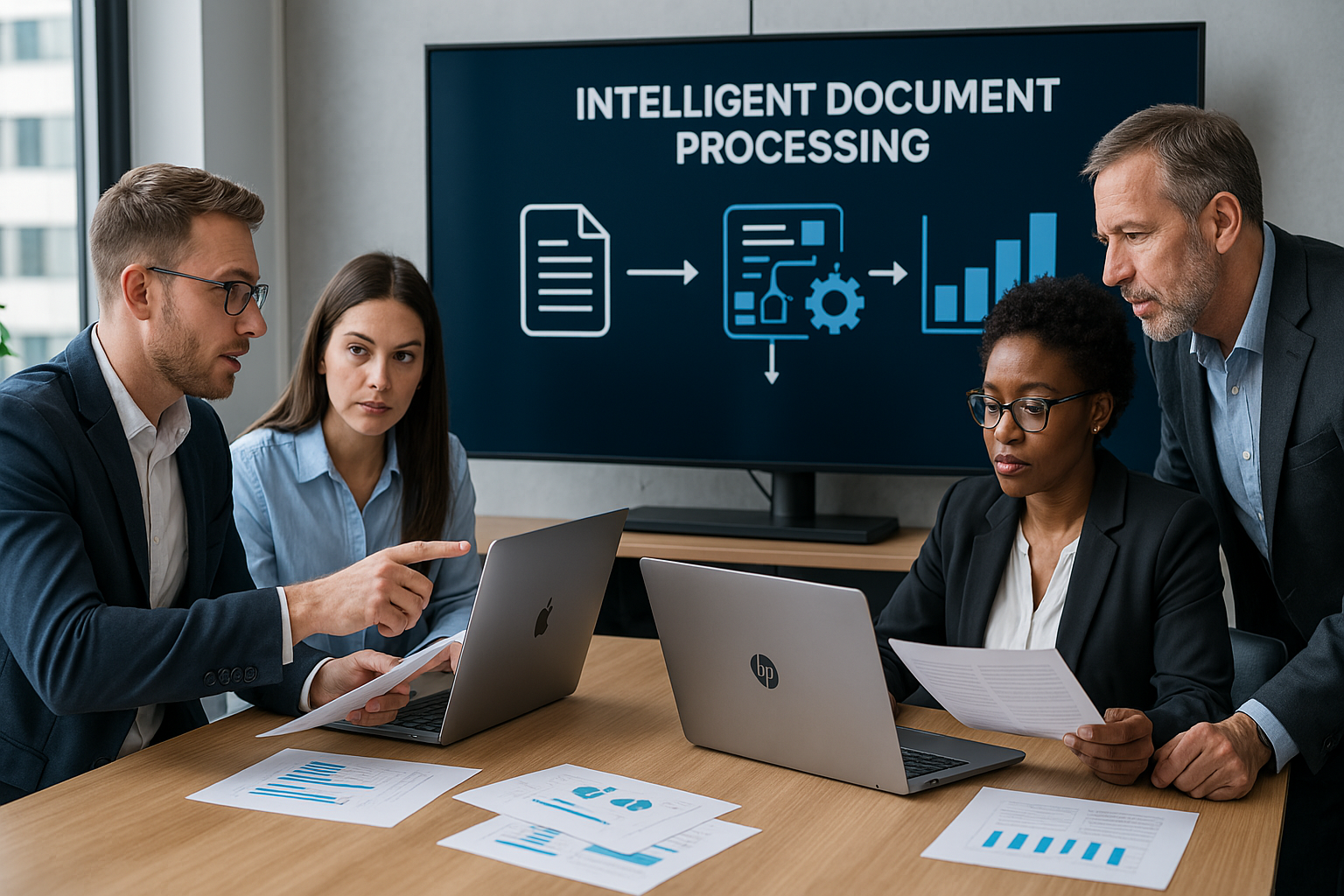
Intelligent document processing, or IDP, helps organizations overcome these challenges. The technology combines artificial intelligence, machine learning, natural language processing, optical character recognition, and computer vision. Together, these tools can capture information, understand document content, extract relevant data, and send it into business workflows.
Market Growth Outlook Through 2035
According to Dimension Market Research, the US market holds a value of USD 2.47 billion in 2026. Analysts expect the market to reach approximately USD 11.86 billion by 2035. This growth represents a projected compound annual growth rate of 19.02% between 2026 and 2035.
Several factors support this expansion. Businesses continue to increase their use of cloud platforms and enterprise automation. At the same time, growing document volumes create pressure to process information more efficiently.
Traditional OCR can recognize printed or scanned text. However, modern IDP platforms go much further. They can identify document types, understand context, extract specific information, validate results, and connect the output with enterprise applications. As a result, organizations increasingly view document processing as part of a broader automation strategy rather than as a simple scanning function.
What Is Driving Market Demand?
Businesses want to reduce repetitive work while improving accuracy and response times. Manual document handling often requires employees to enter information into multiple systems. This approach can slow operations and increase the possibility of mistakes.
IDP addresses this problem by automating several stages of the process. For example, a company can use the technology to capture invoice information, identify important fields, check the extracted data, and send it into an accounting platform.
Furthermore, cloud technology makes these solutions easier to scale. Organizations can expand document processing capacity without building large infrastructure environments. Subscription-based models and prebuilt integrations can also make adoption more practical for smaller and mid-sized businesses.
Another important driver involves artificial intelligence. Newer AI models can understand documents with greater context. Therefore, they can support more complicated workflows involving contracts, claims, correspondence, financial statements, and other business records.
Key Trends Shaping the Market
One major trend involves end-to-end automation. Businesses no longer want technology that simply extracts text. Instead, they want systems that can validate information, identify exceptions, trigger workflows, and transfer results into other applications.
Generative AI also creates new possibilities. It can help organizations interpret complex documents, summarize lengthy content, and identify important information. These capabilities can reduce the time employees spend reviewing large document collections.
Cloud deployment represents another major trend. Cloud platforms provide flexibility and centralized management. They also make it easier for organizations to access newer AI capabilities as vendors continue to improve their platforms.
Meanwhile, industry-specific solutions are gaining attention. A bank may need tools for financial documents and customer onboarding. An insurance company may focus on claims and policy records. Healthcare organizations may prioritize patient documentation and administrative records. This growing specialization gives technology providers opportunities to develop workflows around specific industry requirements.
Emerging Opportunities
Generative AI-based document understanding represents an important opportunity for the US Intelligent document processing market. Conventional OCR works well with straightforward text recognition. However, complex documents often require deeper contextual understanding.
Contracts provide a good example. A contract may contain dates, obligations, conditions, financial terms, and exceptions across multiple sections. Advanced AI can help identify these details and organize them into useful outputs.
Healthcare records, insurance claims, financial statements, and government documents can benefit from similar capabilities.
Mid-sized companies also offer significant growth potential. Cloud delivery, low-code configuration, subscription pricing, and ready-made connectors can lower technical barriers. Consequently, more organizations can adopt document intelligence without creating large internal technology teams.
Market Segmentation
The market covers several important categories. By component, it includes software solutions and services. Software can cover document capture, classification, data extraction, workflow automation, AI models, and related capabilities. Services can include consulting, implementation, managed services, training, and support.
Deployment options include cloud, on-premises, and hybrid environments. Cloud solutions currently lead the deployment segment, accounting for 61.7% of the market in 2026.
Technology categories include OCR, natural language processing, machine learning, computer vision, robotic process automation, deep learning, and generative AI extraction.
Large enterprises represent an important customer group. However, small and medium-sized businesses increasingly have access to these technologies through flexible cloud offerings.
Major end-user industries include banking and financial services, insurance, healthcare and life sciences, government, IT and telecommunications, manufacturing, retail, transportation, logistics, and legal services.
Leading Companies
The competitive landscape includes several established technology providers and specialized IDP companies. Key names include ABBYY, AntWorks, Appian, Automation Anywhere, AWS, Datamatics, Google Cloud, HCLTech, Hypatos, Hyperscience, IBM, Infrrd, Microsoft, Nanonets, OpenText, Rossum, SS&C Blue Prism, Tungsten Automation, UiPath, and WorkFusion.
These companies compete through AI capabilities, automation features, cloud platforms, industry solutions, integrations, security, and ease of deployment.
Recent Market Development
In July 2026, Microsoft expanded its partnership with Mistral and introduced Mistral Document AI with OCR 4 to Microsoft Foundry. The development supports structured document processing and agentic enterprise workflows.
Such developments show how quickly the market continues to evolve. Vendors increasingly combine document intelligence with broader AI and automation platforms.
Key Market Numbers
The market offers several notable figures for 2026. Its estimated value stands at USD 2.47 billion, while analysts project a value of USD 11.86 billion by 2035. The expected CAGR stands at 19.02% during the forecast period.
Software solutions hold a 68.4% share, while cloud-based solutions account for 61.7%. Banking and financial services represent 19.4% of the market. Together, these figures highlight the strong demand for intelligent document technologies across major business sectors.
Future Outlook
The US Intelligent document processing market should continue expanding as organizations connect document automation with wider business processes. Future solutions will likely focus on contextual understanding, validation, summarization, exception management, workflow orchestration, and automated actions.
Generative AI will remain an important area of development. At the same time, businesses will continue to prioritize security, compliance, integration, and governance.
Organizations also want measurable results. Therefore, vendors that can demonstrate lower processing costs, faster turnaround times, better data quality, and improved employee productivity may gain a competitive advantage.
Ultimately, the market is moving beyond basic document digitization. Modern platforms aim to turn unstructured information into useful business intelligence and automated actions.
Conclusion
The US Intelligent document processing market is moving toward a more connected and automated future. Organizations increasingly want to replace repetitive manual tasks with intelligent workflows that deliver faster and more accurate results.
As AI, cloud computing, and automation continue to advance, IDP will likely become an increasingly important part of enterprise technology strategies. Companies that combine intelligent document processing with strong security, reliable integration, and measurable business outcomes can build more efficient operations and respond more effectively to changing market demands.
Author



Managing commercial, industrial, and institutional buildings with outdated 2D drawings can create unnecessary challenges. Facility teams often spend valuable time searching through old files, checking measurements, and confirming whether drawings still match the actual building. These tasks can slow maintenance, increase operating costs, and make renovation projects more difficult.
CAD to BIM technology offers a practical way to modernize this process. It transforms traditional 2D drawings into intelligent 3D models that contain useful building information. As a result, facility managers can access accurate spatial data, understand building components, and make better decisions throughout the property lifecycle.
Why Traditional 2D Drawings Create Problems
Many buildings still depend on paper plans, scanned documents, or basic CAD files. These resources can show walls, doors, rooms, and other elements. However, they rarely provide enough information for efficient facility management.
For example, a maintenance team may need to locate a specific air-handling unit or electrical panel. Staff might have to search through several drawing sets before finding the right information. Even then, the drawing may not reflect later renovations or equipment changes.
This creates uncertainty. It can also increase the risk of incorrect decisions. A digital building model can solve many of these issues. Instead of relying only on lines and labels, facility teams can work with intelligent objects that contain information about individual components.
Turning Old Drawings Into Intelligent Building Information
A successful digital conversion begins with an assessment of the available documentation. Specialists review existing CAD files, architectural plans, structural drawings, and other records. They then determine the information required for the final model.
During CAD to BIM development, modelers convert flat drawing elements into intelligent 3D components. Walls, doors, windows, columns, mechanical equipment, and other assets can receive useful information.
This information may include dimensions, materials, equipment specifications, manufacturer details, installation dates, and maintenance information. The exact data depends on the project’s goals.
The result gives facility teams a centralized digital reference. Instead of searching through disconnected documents, managers can review building information within one coordinated environment.
Improving Accuracy With Reality Capture
Old drawings do not always represent current building conditions. Tenants may have changed layouts. Contractors may have installed new equipment. Renovation projects may also have modified structural or mechanical systems. Reality capture can help address these gaps.
Laser scanners can record existing conditions and collect millions of spatial points. Specialists then process this information to create a detailed digital representation of the property.
Point cloud modeling can support accurate as-built documentation. It can reveal deviations between original drawings and current conditions. Consequently, design and facility teams gain a clearer understanding of the building before they plan modifications. This approach proves especially valuable for older properties with incomplete records.
Supporting Architectural and Structural Planning
A detailed digital model can help architects and engineers work more confidently. They can review room layouts, building dimensions, structural elements, and other important components within one environment.
Architectural teams can use the model to study available space and plan renovations. They can also evaluate circulation areas, room configurations, and building envelopes.
Structural professionals can review columns, beams, foundations, and framing systems. This information can support renovation planning and reduce the need for assumptions.
Furthermore, combining architectural and structural information improves coordination. Teams can identify potential conflicts earlier and discuss solutions before construction begins.
Making Maintenance More Efficient
Facility management teams handle countless maintenance tasks every year. Finding the right information quickly can make a significant difference. An intelligent model can help staff identify equipment locations and review related information. For example, a manager may locate an air-conditioning unit and review its specifications without searching through several folders.
The model can also support maintenance planning. Teams can connect equipment information with service schedules, warranties, and replacement plans when the project includes those details. As a result, managers can organize maintenance work more effectively. They can also reduce unnecessary delays caused by missing or outdated information.
Improving Space Management
Large organizations often manage extensive properties with constantly changing space requirements. Departments move. Tenants change. Workspaces evolve. Facility teams therefore need accurate information about available areas. A digital model can make space planning easier. Managers can review room dimensions, floor areas, and building layouts from a centralized source.
This information can support office planning, tenant coordination, renovation studies, and space allocation. It can also help organizations understand how they currently use their buildings. Therefore, digital modeling does more than improve visualization. It can support practical decisions about real estate and workplace management.

Supporting Renovation and Capital Projects
Renovation projects often become complicated when teams lack reliable existing-condition information. Contractors may discover unexpected conditions after work begins. These discoveries can lead to delays, additional costs, and design changes.
Accurate digital documentation can reduce this uncertainty.
Before a renovation starts, project teams can review the existing model and compare it with proposed designs. They can identify potential conflicts and determine whether new systems will fit within the available space.
4D BIM can add another layer of value by connecting model elements with project schedules. Managers can then visualize construction sequences and coordinate different phases more effectively.
Connecting BIM With Facility Management Systems
Modern facility teams often use CAFM, IWMS, and other digital management platforms. A well-structured BIM model can support these systems by providing organized building information.
This connection creates a stronger digital foundation for property management. Facility teams can move from isolated drawings toward a more connected information environment.
However, the model must match the organization’s actual needs. Adding excessive information can increase complexity without providing meaningful value. Therefore, project teams should define data requirements before modeling begins.
Choosing the Right Level of Detail
Not every facility project requires the same modeling depth. A simple space-planning project may need basic geometry. A complex renovation may require detailed architectural, structural, and MEP information.
The team should establish the required Level of Development or Level of Detail at the beginning. Clear requirements help control project costs and prevent unnecessary modeling work.
Similarly, teams should identify which assets require detailed information. Focusing on important equipment and systems can create a more useful model without adding unnecessary complexity.
Benefits of Professional BIM Conversion
Working with experienced modeling specialists can help organizations manage large conversion projects more efficiently. Professionals can review legacy drawings, identify inconsistencies, coordinate disciplines, and structure model data according to project requirements.
Professional CAD to BIM services can also support scalable workflows for large property portfolios. Organizations can establish consistent modeling standards across multiple buildings. This consistency makes future updates easier. It also gives different teams a common framework for managing building information.
Preparing Buildings for the Digital Future
Facility management continues to move toward connected digital environments. Digital twins, smart building systems, predictive maintenance, and automated asset management all depend on reliable building information.
Accurate BIM models can provide an important foundation for these technologies. They help organizations understand physical assets and connect building data with digital management tools. As technology develops, property owners can build on this foundation rather than starting from outdated documentation.
Final Thoughts
Modern facility management requires accurate information, efficient workflows, and reliable documentation. Traditional 2D drawings can provide useful historical records, but they often lack the intelligence needed for today’s complex property operations.
CAD to BIM creates a bridge between legacy documentation and modern digital facility management. It gives organizations a clearer view of their buildings, supports maintenance planning, improves renovation coordination, and strengthens long-term asset management.
For property owners and facility managers, the real value comes from using digital models as practical management tools. With accurate data, thoughtful modeling standards, and regular updates, organizations can make smarter decisions and manage their buildings with greater confidence.
Author




Author



What Parents Should Look for in a Quality Tennis Camp

Clothing Fashion: Express Your Personality Through Personal Style

Essentials Tracksuit: How to Style It for Modern Streetwear

Perfume Ingredients: What Makes a Fragrance Smell So Amazing

US Intelligent Document Processing Market Outlook Through 2035

Retro Game Collection: How to Build and Enjoy Classic Gaming

CAD to BIM: Modernizing Facility Management for Better Efficiency

Marketing Agency: How to Choose the Right Partner in Miami

War Jeans: Inside the Story of Who Decides Fashion

Online slots: How They Work, RTP, RNG and Responsible Play

Cybersecurity Consulting Company SequelNet Provides Critical IT Support Services to Medical Billing Firm, Medical Optimum

Meet the Megalodon: The Shark Star of ‘Meg 2’

Reduce Video Game Lag: Level Up Your Gaming Performance

Balancing India’s Entertainment: Cricket vs. Bollywood

Jetsetter’s Secrets: Unveiling Our Favorite Travel Hacks for a Seamless Adventure

The 5 Best Live Sports Streaming Sites: Legal and Exciting!

Hollywood Labor Unrest: The Impact of ‘What About Us?’ Strikes

Unveiling the Magic of Dream Fulfillment at the Late NBA Draft

Illuminate Your Skin: Dr. Axe Unveils Natural Remedies for Lightening Knees and Elbows

Bright Choices: Navigating the Pros and Cons of Skin Whitening Creams with Dr. Axe
-

 Business3 years ago
Cybersecurity Consulting Company SequelNet Provides Critical IT Support Services to Medical Billing Firm, Medical Optimum
-
Entertainment3 years ago
Meet the Megalodon: The Shark Star of ‘Meg 2’
-
Entertainment3 years ago
Reduce Video Game Lag: Level Up Your Gaming Performance
-
 Sports3 years ago
Balancing India’s Entertainment: Cricket vs. Bollywood
-
Entertainment3 years ago
Jetsetter’s Secrets: Unveiling Our Favorite Travel Hacks for a Seamless Adventure
-
Productivity3 years ago
The 5 Best Live Sports Streaming Sites: Legal and Exciting!
-
Art /Entertainment3 years ago
Hollywood Labor Unrest: The Impact of ‘What About Us?’ Strikes
-
Sports3 years ago
Unveiling the Magic of Dream Fulfillment at the Late NBA Draft






