
Accounting
QuickBooks Error H505: 9 Ways to Fix It


QuickBooks Desktop makes it easier for businesses to manage accounting records, invoices, payroll, customer information, and financial reports.
When several employees need access to the same company file, network communication becomes essential. An interrupted connection can trigger QuickBooks Error H505.
QuickBooks Error H505 often occurs when users access a company file stored on another computer or switch to multi-user mode. The server may open the file successfully, yet connected workstations cannot establish the required network connection.
The important thing to understand is that QuickBooks Error H505 usually indicates a hosting, network, firewall, or database-service communication problem. It does not automatically mean that the company file is damaged.
This guide explains what the error means, why it occurs, how to identify its underlying cause, and how to troubleshoot it safely. It also covers Windows services, QuickBooks Database Server Manager, firewall configuration, network connectivity, and preventive measures that help maintain a stable multi-user environment.

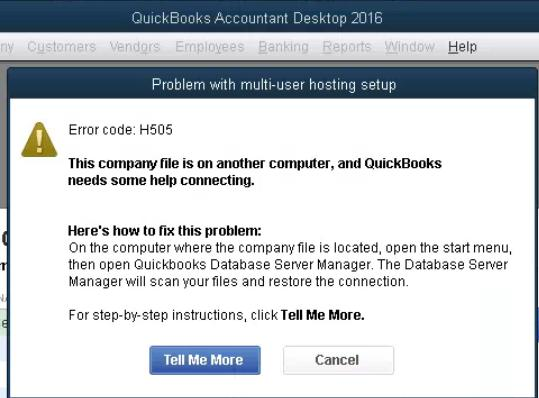
Understanding QuickBooks Desktop H505 and its connection to multi-user hosting.
What Is QuickBooks Error H505?
QuickBooks Error H505 is a multi-user hosting and network communication error associated with QuickBooks Desktop. It occurs when a workstation cannot establish the required connection to the computer hosting the company file.
In a typical multi-user environment, one computer stores the company file and provides access to other authorized computers on the same network. This hosting computer uses QuickBooks Database Server Manager and related Windows services to manage company-file access.
When a workstation cannot communicate with the hosting computer correctly, QuickBooks may display an H505 error message.
The error belongs to the same general H-series troubleshooting group as H101, H202, and H303. However, these codes can point to different hosting or communication problems, so users should not assume that every solution applies identically.
A typical H505 situation looks like this:
- The company file opens successfully on the server computer.
- One or more workstations cannot access the same file.
- Switching to multi-user mode produces an error.
- QuickBooks cannot establish a reliable connection with the hosting system.
The objective is to restore the correct hosting configuration and network communication without unnecessarily modifying the company file.
What Causes QuickBooks Error H505?
Identifying the cause before changing system settings can prevent unnecessary troubleshooting. Several network and hosting conditions can trigger this error.
1. Incorrect Hosting Configuration
QuickBooks Desktop requires an appropriate hosting arrangement. In a conventional setup, the computer storing the company file should be responsible for hosting multi-user access.
If a workstation that does not store the company file is also configured to host multi-user access, it can create hosting conflicts.
This is one of the first conditions worth checking when troubleshooting H505.
2. QuickBooks Database Server Manager Is Not Working Properly
QuickBooks Database Server Manager helps manage access to company files stored on a server computer.
If it is missing, improperly configured, or unable to scan the company-file folder, workstations may fail to establish the necessary database connection.
The problem can also occur when the Database Server Manager installation does not properly support the QuickBooks Desktop versions being used.
3. Windows Firewall Blocks Network Communication
Windows Firewall helps protect computers from unauthorized network connections. However, an incorrectly configured firewall may also block legitimate QuickBooks communication.
This can prevent workstations from reaching the database service on the hosting computer.
The issue may occur after a Windows update, security software change, or firewall configuration adjustment.
4. QuickBooks Windows Services Are Stopped
QuickBooks Desktop relies on Windows services to support multi-user access.
Two important services to investigate are:
- QuickBooksDBXX: The QuickBooks Database Server service associated with the installed version.
- QBCFMonitorService: A supporting service used in QuickBooks multi-user environments.
If the relevant service is stopped, disabled, or unable to start correctly, network access may fail.
5. Company File Folder Permissions Are Incorrect
The Windows account and the QuickBooks database service need appropriate access to the folder containing the company file.
If permissions are restricted, the database service might not be able to access the required files.
This is especially important when company files are stored in shared folders with customized Windows security settings.
6. Network Connectivity Is Interrupted
QuickBooks workstations must communicate with the hosting computer through a reliable network connection.
Common problems include:
- An incorrect server name.
- A disconnected Ethernet cable.
- Unstable Wi-Fi connectivity.
- Network discovery being disabled.
- Incorrect DNS or network configuration.
- Network segmentation or routing restrictions.
Even if the internet works normally, the local network connection required by QuickBooks may still be unavailable.
7. Incorrect Firewall Port Configuration
QuickBooks Desktop uses specific TCP ports for multi-user communication. These port requirements depend on the installed product version.
If the required ports are blocked or incorrectly configured, workstations may be unable to connect to the database server.
Using outdated port information can also cause problems after upgrading QuickBooks Desktop.
8. Multiple Hosting or Server Configurations
A business may use several computers, multiple QuickBooks Desktop versions, or a dedicated hosting arrangement.
If the hosting configuration is inconsistent, the database service may not operate as expected.
In these environments, administrators should verify which computer actually stores the company file and which computer is responsible for hosting it.
How to Identify the Cause Before Fixing QuickBooks Error H505
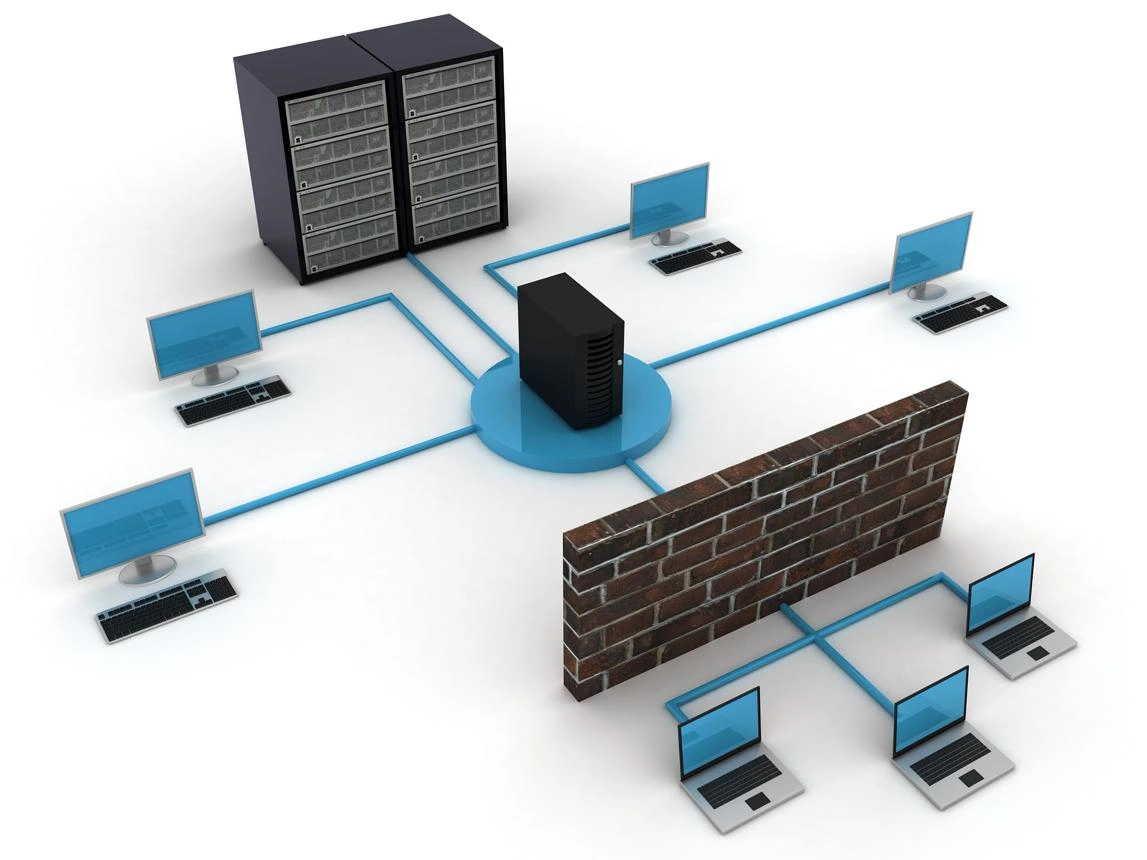
A reliable connection between the hosting computer and workstations is essential for multi-user access.
Before applying troubleshooting methods, determine whether the issue affects one workstation or the entire network.
This simple diagnostic process can save time.
| What you observe | What to investigate |
| Company file opens on the server but not on workstations | Network and database communication |
| Only one workstation displays H505 | That workstation’s network and hosting configuration |
| All workstations display H505 | Server, hosting, firewall, or database services |
| Error appeared after a Windows update | Firewall and network settings |
| Error appeared after changing the company-file location | Folder permissions and Database Server Manager scanning |
| Server computer cannot open the file either | Company-file access, storage, or file-related problems |
Important: These observations help narrow down the investigation. They do not independently prove the cause.
Before making changes, confirm the following:
- Identify the computer storing the company file.
- Confirm the exact company-file location.
- Identify the QuickBooks Desktop version installed on each computer.
- Check whether the server computer can open the company file.
- Record any recent network, Windows, firewall, or software changes.
Once these details are clear, proceed with the solutions below.
How to Fix QuickBooks Error H505: 9 Troubleshooting Methods
The following methods focus on the most relevant hosting and network conditions. Start with the configuration checks before changing firewall rules or advanced Windows settings.
Solution 1: Verify QuickBooks Hosting Settings on Every Workstation
Incorrect hosting configuration is an important cause of H505.
The computer hosting the company file should be the only computer responsible for hosting multi-user access in a conventional setup.
Follow these instructions:
- Step 1: Open QuickBooks Desktop on a workstation displaying Error H505.
- Step 2: Do not open the company file. If a company file is already open, close it first.
- Step 3: Select the File menu.
- Step 4: Choose Utilities.
- Step 5: Check the available hosting option.
- If you see Host Multi-User Access, do not select it. This indicates that multi-user hosting is not enabled on this workstation.
- If you see Stop Hosting Multi-User Access, select it to turn off hosting on that workstation.
- Step 6: Repeat the process on other workstations that do not store the company file.
- Now check the actual server computer.
- Step 7: Open QuickBooks Desktop on the hosting computer.
- Step 8: Select File > Utilities.
- Step 9: If Host Multi-User Access is available, select it. If Stop Hosting Multi-User Access is displayed, leave the setting unchanged.
- Step 10: Reopen the company file from a workstation and test multi-user access.
Why this works: It establishes a consistent hosting arrangement and prevents non-hosting workstations from attempting to act as the server.
Solution 2: Check QuickBooks Database Server Manager
QuickBooks Database Server Manager is an important component of a multi-user environment.
It helps identify company-file folders and supports the database service required for other computers to access shared company files.
Follow these steps:
- Step 1: Close QuickBooks Desktop on the server computer.
- Step 2: Open QuickBooks Tool Hub. If it is not installed, download the current version from the official Intuit website.
- Step 3: Select Network Issues.
- Step 4: Open QuickBooks Database Server Manager.
- Step 5: Locate the folder containing your company file.
- Step 6: If the folder is already listed, select Start Scan.
- Step 7: If it is not listed, use Browse to locate the correct company-file folder.
- Step 8: Start the scan and allow the utility to complete its process.
- Step 9: Close the utility after scanning finishes.
- Step 10: Open QuickBooks Desktop on a workstation and test multi-user access.
The scan can help identify company-file folders and update relevant firewall permissions.
However, make sure you select the actual folder containing your company file rather than an unrelated directory.
Important: QuickBooks Database Server Manager does not support Network Attached Storage (NAS) devices. If your company file is stored on unsupported NAS storage, changing firewall settings may not resolve the underlying compatibility problem.
Solution 3: Check QuickBooksDBXX and QBCFMonitorService
If the database services are not running properly, workstations may be unable to connect to the hosting computer.
You can inspect their status through Windows Services.
- Step 1: On the server computer, press Windows + R.
- Step 2: Type:
- services.msc
- Step 3: Press Enter.
- Step 4: Find the QuickBooksDBXX service associated with your installed QuickBooks version.
- The XX portion varies according to the version. For example:
- QuickBooks Desktop 2022 uses QuickBooksDB32.
- QuickBooks Desktop 2023 uses QuickBooksDB33.
- QuickBooks Desktop 2024 uses QuickBooksDB34.
- Do not select a service simply because its name looks similar. Confirm that it corresponds to the installed version.
- Step 5: Double-click the appropriate service.
- Step 6: Check the Startup type. Set it to Automatic if required by the Intuit troubleshooting instructions.
- Step 7: Check Service status. If the service is stopped, select Start.
- Step 8: Open the Recovery tab.
- Step 9: Where appropriate, configure First failure, Second failure, and Subsequent failures to Restart the Service.
- Step 10: Select Apply and OK.
Repeat the relevant checks for QBCFMonitorService.
Afterward, test company-file access from the workstations.
What if the service does not start?
Do not repeatedly attempt to restart it without investigating the reason. Check Windows service permissions, installation status, and available error information. An administrator may need to repair the server installation.
Solution 4: Configure Windows Firewall for QuickBooks Desktop
Firewall restrictions can prevent QuickBooks from communicating with the database server.
The correct approach is to allow the required QuickBooks programs and version-specific TCP ports rather than disabling Windows Firewall entirely.
- Step 1: Open Windows Security on the server computer.
- Step 2: Select Firewall & network protection.
- Step 3: Open Allow an app through the firewall.
- Step 4: Review the existing QuickBooks-related entries.
- Step 5: Make sure the necessary QuickBooks programs have the appropriate permissions for the network profile being used.
If the required entries are missing, follow Intuit’s official firewall configuration instructions to add the relevant program exceptions.
Important QuickBooks-related executables can include:
- QBDBMgrN.exe
- QBServerUtilityMgr.exe
- QBCFMonitorService.exe
- QBLaunch.exe
- QBUpdate.exe
The actual program paths depend on the installed version and system configuration.
Configure TCP port exceptions carefully
If application exceptions alone do not resolve the issue, check the TCP ports required by your installed QuickBooks Desktop version.
To configure a port:
- Open Windows Defender Firewall with Advanced Security.
- Select Inbound Rules.
- Choose a New Rule.
- Select Port.
- Choose TCP.
- Enter the version-specific port number supplied by Intuit.
- Select Allow the connection.
- Apply the appropriate network profiles.
- Give the rule a descriptive name.
- Save the rule.
If necessary, configure corresponding outbound rules according to your network security policy.
Important: Do not copy port numbers from an older QuickBooks installation or another version without checking compatibility. When multiple QuickBooks Desktop versions are installed, each version may require its own port configuration.
Solution 5: Check Server Connectivity Using the Ping Command
A workstation may display H505 because it cannot communicate reliably with the hosting computer.
The Windows Ping command helps test basic network reachability.
First, identify the server name.
Stage First: On the server computer, press Windows + R.
Stage 2: Enter:
- cmd
Method 3: Press Enter.
Method Four: Type:
- ipconfig /all
Task 5: Press Enter.
Task Six: Find the Host Name under Windows IP Configuration.
- Write down the server name.
- Now test the connection from an affected workstation.
Action 7: Open Command Prompt on that workstation.
Action 8: Enter:
- ping SERVERNAME
- Replace SERVERNAME with the actual server hostname.
For example:
ping OFFICE-SERVER
Step 9: Press Enter.
- Understanding the results
If you receive replies, the workstation can reach the server at the basic network level.
If you receive Request timed out or Destination host unreachable, investigate network discovery, DNS resolution, routing, firewall restrictions, and physical connectivity.
Important diagnostic distinction: A successful ping does not prove that QuickBooks database communication is working. It only confirms basic network reachability. TCP port access and database-service availability must also be checked.
Solution 6: Verify Company File Folder Permissions
Incorrect Windows permissions can prevent QuickBooks services from accessing company files.
Before changing permissions, identify the actual folder containing the company file.
- Step 1: Navigate to the company-file folder on the server.
- Step 2: Right-click the folder.
- Step 3: Select Properties.
- Step 4: Open the Security tab.
- Step 5: Review the users and groups listed.
- Step 6: Confirm that the relevant Windows accounts and database-service account have the access required by Intuit’s shared-folder configuration instructions.
- Step 7: Check the folder’s Sharing settings as well.
- Step 8: Verify that authorized users can access the shared location.
Do not grant Everyone unrestricted Full Control simply to eliminate H505. Instead, configure the minimum permissions needed for the actual hosting arrangement.
After updating permissions, test access from an authorized workstation.
Solution 7: Check Antivirus and Network Security Software
Third-party antivirus applications and endpoint security tools can sometimes block QuickBooks programs or network connections.
If the Windows Firewall settings appear correct but H505 continues, inspect the security software installed on the server and affected workstations.
Review whether:
- QuickBooks executables have been blocked.
- Database services have been restricted.
- Network protection features are preventing local communication.
- Recent security updates changed application permissions.
Add appropriate exceptions only after verifying the executable paths and required ports.
Avoid permanently disabling antivirus protection. If a temporary diagnostic test is necessary, perform it only with appropriate authorization and restore protection immediately.
Solution 8: Run QuickBooks File Doctor When Appropriate
QuickBooks File Doctor is available through QuickBooks Tool Hub and can help investigate certain company-file and network-related issues.
Use QuickBooks File Doctor’s Check Your Network option to identify network-related problems that may be preventing workstations from connecting to the company file.
Follow these steps:
- Step 1: Close QuickBooks Desktop.
- Step 2: Open QuickBooks Tool Hub.
- Step 3: Select Company File Issues.
- Step 4: Choose Run QuickBooks File Doctor.
- Step 5: Wait for the utility to open.
- Step 6: Select the company file from the list. If it is not listed, browse to its location.
- Step 7: Select the network-related diagnostic option, Check your Network, where available.
- Step 8: Follow the on-screen instructions.
- Step 9: Enter the authorized QuickBooks administrator credentials when requested.
- Step 10: Allow the diagnostic process to finish and review the results.
If File Doctor cannot open, follow the official Intuit instructions for locating and launching the utility.
Remember that File Doctor is not a substitute for correcting an incorrect hosting configuration or blocked firewall port.
Solution 9: Restart the Server and Test the Multi-User Connection
Once the configuration checks and necessary corrections are complete, restart the relevant systems in a controlled manner.
- Step 1: Close QuickBooks Desktop on all workstations.
- Step 2: Make sure all users have saved their work and closed the company file.
- Step 3: Restart the hosting computer if required by the changes made.
- Step 4: Allow Windows services and network connections to initialize.
- Step 5: Confirm that the QuickBooks database service is running.
- Step 6: Open QuickBooks Desktop on the server computer.
- Step 7: Open the company file in the correct hosting environment.
- Step 8: Launch QuickBooks on a workstation.
- Step 9: Select File and then Switch to Multi-user Mode, if necessary.
- Step 10: Confirm that authorized users can access the company file.
If the error disappears, test the connection on the remaining workstations before returning the system to normal business use.
QuickBooks Error H505 vs. H101, H202, and H303
QuickBooks Desktop uses several H-series error codes associated with multi-user hosting and network communication.
Although they share a common troubleshooting area, understanding their differences helps avoid applying unrelated solutions.
| Error code | General meaning |
| H101 | Hosting configuration or connection problem |
| H202 | Workstation cannot communicate with the server hosting the company file |
| H303 | Hosting or network communication problem involving the company-file location |
| H505 | Workstation cannot establish the required connection to the hosting computer |
These descriptions are general troubleshooting indicators, not definitive diagnoses.
H202 and H505 may both result from communication failures between a workstation and the server. H505 troubleshooting requires particular attention to the computer assigned to host multi-user access.
Advanced Troubleshooting for Persistent QuickBooks Error H505
Persistent H505 errors may require a closer inspection of server settings, network communication, and database service configuration.
Check Whether the Company File Location Changed
Moving or renaming the company file can leave Database Server Manager scanning its previous folder location. Verify the current file path and update the scanned folder settings accordingly.
Verify the actual file path and update the scanned folder configuration where necessary.
Review the Windows Event Logs
Windows Event Viewer can help identify service failures, application errors, or permission-related problems.
To open it:
- Press Windows + R.
- Enter eventvwr.msc.
- Press Enter.
- Open Windows Logs.
- Review the Application and System logs around the time the error occurred.
Look for entries involving QuickBooks database services, service startup failures, or network-related problems.
Do not assume every Windows warning is related to H505. Match the event’s timestamp and details with the actual failure.
Check DNS and Hostname Resolution
A successful IP connection with a failed hostname connection may indicate a DNS or local name-resolution problem.
Compare both connectivity tests to identify whether the hostname is resolving correctly. Check the workstation’s server configuration for outdated entries that may point to the wrong hosting computer.
Investigate VPNs and Network Segmentation
Businesses using VPNs, VLANs, managed switches, or separate network segments may have additional connectivity restrictions.
The workstation and hosting computer must be able to communicate through the required network paths and ports.
A network administrator should verify routing, access-control rules, and TCP connectivity without weakening the organization’s security controls.
Verify the Hosting Environment
Company files hosted by third-party providers may require a different troubleshooting approach. Contact the hosting provider for assistance with server-side settings, database services, or network configurations that fall under its management.
Changing local firewall settings will not necessarily resolve an issue originating within a managed hosting platform.
How to Prevent QuickBooks Error H505 in the Future
Once multi-user access is restored, a few routine checks can help reduce the likelihood of similar interruptions.
Maintain a Consistent Hosting Configuration
Keep the hosting role assigned to the intended server computer. Avoid enabling hosting on ordinary workstations.
Keep QuickBooks Desktop and Server Components Updated
Install supported updates and ensure that the appropriate Database Server Manager components are available for the versions being used.
Review Firewall Rules After Updates
Windows or security-software updates may change existing application permissions. Periodically verify that the required QuickBooks applications and TCP ports remain permitted.
Monitor Database Services
Check that QuickBooksDBXX and QBCFMonitorService are configured and operating correctly.
Maintain Reliable Network Connectivity
Use a stable business network and investigate recurring connection drops, DNS problems, or routing changes.
Protect Company Files With Verified Backups
Maintain regular backups using an appropriate backup process. Verify that backups can be restored before relying on them during an emergency.
Document Server and Workstation Settings
Keep records of the company-file location, hosting computer, installed QuickBooks versions, firewall rules, and service configuration.
This makes future troubleshooting considerably easier.
When Is Professional IT Assistance Necessary?
Not every H505 problem should be resolved by changing settings independently.
Professional network or server assistance is appropriate when:
- The database service repeatedly stops or fails to start.
- Multiple computers lose access simultaneously.
- Firewall or router changes require administrative approval.
- The network uses complex domain policies or VLANs.
- Company-file permissions are customized.
- The company file is hosted through a managed service.
- Network connectivity is inconsistent despite apparently correct local settings.
Keep a record of the displayed error, affected workstations, installed QuickBooks versions, company-file path, and recent network or system modifications. Share these details with technical support to help identify the underlying issue.
This information can help the technician isolate the problem more efficiently.
Frequently Asked Questions About QuickBooks Error H505
1. What does QuickBooks Error H505 mean?
QuickBooks Error H505 indicates that a workstation cannot establish a network connection with the computer hosting the company file. It is commonly associated with hosting configuration, firewall restrictions, database services, and network communication problems.
2. Why does QuickBooks Error H505 appear in multi-user mode?
The error may appear when QuickBooks cannot communicate with the hosting computer. Incorrect workstation hosting settings, stopped database services, restricted TCP ports, and network connectivity problems are possible causes.
3. Can Windows Firewall cause QuickBooks Error H505?
Yes. Windows Firewall or third-party security software can block the network communication required for multi-user access. Check QuickBooks application exceptions and version-specific TCP port rules. Keep Windows Firewall enabled to maintain network security.
4. How do I check whether QuickBooks Database Server Manager is working?
Open QuickBooks Database Server Manager on the hosting computer through QuickBooks Tool Hub. Verify the company-file folder and run a scan where appropriate. Inspect the corresponding Windows database service using the Services console (services.msc).
5. Should every workstation enable Host Multi-User Access?
No. In a conventional dedicated hosting arrangement, the computer hosting the company file should be responsible for multi-user hosting. Ordinary workstations should not independently host the company file.
6. Can QuickBooks Tool Hub fix H505?
QuickBooks Tool Hub provides utilities that can help diagnose and resolve certain network and company-file problems. Its Database Server Manager and File Doctor utilities can be useful, but the underlying hosting and network configuration must also be correct.
7. Does QuickBooks Error H505 mean my company file is corrupted?
Not necessarily. H505 primarily points to a hosting or network communication problem. Investigate company-file damage separately when the observed symptoms or diagnostic results indicate a potential data-integrity issue.
8. Can restarting the server resolve H505?
9. Is QuickBooks Error H505 the same as H202?
No. Both errors involve multi-user communication problems, but their troubleshooting details can differ. H505 deserves particular attention to workstation hosting settings and the intended server configuration.
10. Can I store a QuickBooks company file on a NAS device?
Intuit’s guidance states that QuickBooks Database Server Manager does not support Network Attached Storage (NAS) devices. QuickBooks hosting requirements must be checked for the new storage location before the company file is moved.
Final Thoughts
QuickBooks Error H505 can disrupt daily accounting tasks when several employees rely on the same company file. The error does not necessarily mean that financial records are damaged or lost.
The most effective troubleshooting approach is to identify the hosting computer, verify workstation hosting settings, inspect QuickBooks Database Server Manager, check Windows services, and review firewall and network communication.
QuickBooks Error H505 troubleshooting should begin with basic hosting and network configuration checks. Create and validate a company-file backup before changing system configurations or troubleshooting network settings. Keep firewall and antivirus protections enabled throughout the process.
A properly configured hosting environment, reliable network communication, and routine maintenance can help businesses maintain more consistent access to QuickBooks Desktop in multi-user mode.
About the Author – Steven Moody
Steven Moody is a content writer at Data Service Team who focuses on accounting software, QuickBooks troubleshooting, and business technology. He creates informative guides that help readers understand technical issues through practical explanations and step-by-step solutions.
Website: https://dataserviceteam.com/
Phone: +1-(888)-718-7888
Disclaimer: This article is intended for general informational and educational purposes only. The troubleshooting methods described here should be followed carefully, with appropriate backups and consideration of your system configuration. Some procedures may require administrator privileges or assistance from a qualified IT professional.
QuickBooks and QuickBooks Desktop are trademarks of Intuit Inc. This article is independently prepared and is not affiliated with, endorsed by, or sponsored by Intuit Inc. Product names are mentioned solely for identification and informational purposes.
Author


Managing employee salaries is one of the most important responsibilities of any business. Employees expect to receive accurate payments on time, while employers must keep up with changing tax regulations, HMRC requirements, pension contributions, and payroll records. As businesses grow, these responsibilities can quickly become complicated and time-consuming.
This is where Payroll Outsourcing Services make a difference. By working with experienced payroll professionals, businesses can simplify their payroll operations, reduce administrative pressure, and maintain greater control over their financial processes.
For UK businesses looking to improve efficiency without increasing their internal workload, outsourcing payroll offers a practical and scalable solution.
What Are Payroll Outsourcing Services?
Payroll Outsourcing Services involve transferring payroll-related responsibilities to a specialist external provider. Instead of managing every calculation, deduction, payslip, and submission internally, businesses receive professional support throughout the payroll cycle.
A reliable provider manages essential activities such as employee payroll processing, salary calculations, tax deductions, pension contributions, payslip preparation, and HMRC reporting.
These outsourced payroll solutions allow business owners and finance teams to concentrate on strategic activities while experienced professionals handle routine payroll administration.
Importantly, outsourcing operational work does not remove an employer’s legal responsibilities for payroll compliance.
Why Are UK Businesses Choosing Payroll Outsourcing?
Payroll management requires accuracy, consistency, and attention to detail. Even minor mistakes can create unnecessary complications for employees and employers.
Here are some reasons why businesses increasingly consider professional payroll support.
1. Improved Payroll Accuracy
Calculating salaries, overtime, bonuses, deductions, and statutory payments requires careful attention. Manual processes can increase the possibility of errors, particularly when businesses manage larger workforces.
Professional payroll processing services introduce structured procedures and verification checks to improve calculation accuracy and maintain consistent pay cycles.
2. Better HMRC Compliance
UK employers must meet specific tax reporting and payment obligations. Missing deadlines or submitting incorrect information can lead to compliance problems.
Professional providers support PAYE compliance, HMRC payroll submissions, and Real Time Information (RTI) reporting, helping businesses maintain organised payroll records and meet important deadlines.
3. Reduced Administrative Workload
Managing payroll internally consumes valuable time that could be spent on business development, customer relationships, and financial planning.
With outsourced payroll management, repetitive administrative responsibilities are handled by specialists, allowing internal teams to focus on more productive activities.
4. Cost-Effective Payroll Management
Maintaining an internal payroll department can involve salaries, training, software subscriptions, and ongoing administrative expenses.
Payroll outsourcing for small businesses and growing organisations provides access to specialist expertise without necessarily requiring a dedicated in-house payroll team.
5. Secure Employee Information
Payroll involves sensitive information, including employee salaries, bank details, tax information, and personal records.
A professional provider should implement appropriate access controls, secure data handling procedures, and confidentiality measures to support payroll data security and protect employee information.
What Do Professional Payroll Outsourcing Services Include?
A comprehensive payroll solution covers more than calculating salaries. It supports businesses throughout the entire employee payment process.
Key services typically include:
- End-to-end payroll processing: Managing regular payroll cycles, salary calculations, deductions, bonuses, and payslips.
- HMRC compliance management: Supporting PAYE calculations, RTI submissions, reporting, and relevant deadlines.
- Statutory payment administration: Processing eligible sick pay, maternity pay, and other statutory payments.
- Pension administration: Supporting workplace pension calculations, employee deductions, and contribution reporting.
- Employee records management: Maintaining organised information relating to new starters, existing employees, and leavers.
- Payroll reporting and reconciliation: Providing payroll summaries and supporting accurate integration with accounting records.
These services create a more organised approach to payroll administration, helping businesses maintain consistency across every pay period.
How Payroll Outsourcing Supports Business Growth
As organisations expand, their payroll requirements become increasingly complex. More employees, different salary structures, overtime arrangements, and additional reporting responsibilities can place pressure on existing systems.
Scalable payroll management services help businesses manage these changes without constantly expanding their internal administrative resources.
For startups, professional payroll support establishes reliable processes from the beginning. For established companies, it helps maintain operational consistency as teams and responsibilities increase.
Accounting firms can also benefit from outsourced payroll support, particularly when they want to expand their service offerings without managing every payroll task internally.
Choosing the Right Payroll Outsourcing Provider
Not every provider offers the same level of expertise or service. Before making a decision, businesses should consider several important factors.
Look for a provider with a strong understanding of UK payroll regulations, transparent pricing, experienced payroll specialists, secure data management, and reliable communication.
It is equally important to understand the provider’s responsibilities, approval procedures, reporting arrangements, and approach to resolving payroll queries.
The right partner should offer dependable UK payroll outsourcing services that match your business requirements and provide clear accountability throughout the relationship.
Why Choose Eco Outsourcing for Payroll Outsourcing Services?
Eco Outsourcing provides professional Payroll Outsourcing Services designed to help UK businesses manage payroll more efficiently.
From regular salary processing and statutory calculations to HMRC reporting and payroll reconciliation, the service focuses on accuracy, compliance, and dependable delivery.
Businesses benefit from structured payroll administration, dedicated oversight, secure information handling, and support that can adapt as their workforce grows.
Whether you operate a growing company, manage an established workforce, or provide accounting services to multiple clients, Eco Outsourcing helps simplify payroll responsibilities through professional support.
Final Thoughts
Payroll should support your business, not become a recurring administrative challenge. Managing salaries, statutory obligations, employee records, and reporting requirements internally can consume valuable resources and increase operational pressure.
Investing in professional Payroll Outsourcing Services helps businesses establish more organised payroll processes, improve efficiency, and maintain greater confidence in their payroll operations.
With the right outsourcing partner, you can spend less time managing payroll complexities and more time building a successful, sustainable business.
Read More: Contrank
Author


Closing a limited company involves more than simply stopping business activities. Directors must follow the correct legal procedures before ending a company’s existence.The dissolution of company process removes a business from the Companies House register. This process is commonly known as voluntary strike off.For many small businesses, dissolution offers a straightforward way to close an inactive company. However, directors must meet specific conditions before applying.Understanding the rules can prevent delays, penalties and unnecessary complications. It also helps protect creditors, employees, shareholders and other interested parties.This guide explains how to dissolve a company in the UK. It covers eligibility, application procedures, costs, responsibilities and common mistakes.Whether your business has stopped trading or is no longer needed, preparation matters. Taking the correct steps helps ensure a smoother and more compliant closure.
What Does Dissolution of Company Mean?
Company dissolution is the legal process of removing a company from the official register. Once dissolved, the company ceases to exist as a legal entity.Companies House maintains the register of companies across the United Kingdom. It records company information, including incorporation, changes and dissolution.Dissolution commonly follows an application for voluntary strike off. Companies House publishes notices before completing the process.If nobody raises a valid objection, the company may eventually be dissolved. The final notice confirms that the company has ceased to exist.
Is Dissolution the Same as Liquidation?
Dissolution and liquidation are different legal processes.Dissolution through voluntary strike off usually suits eligible companies with straightforward affairs. It generally costs less than a formal liquidation.Liquidation involves appointing a licensed insolvency practitioner in relevant procedures. The practitioner deals with assets, liabilities and creditor claims.Companies unable to pay their debts should consider appropriate insolvency procedures. Voluntary strike off must not replace formal insolvency proceedings.Directors should obtain professional advice when their company’s financial position remains uncertain.
Why Do Businesses Choose Company Dissolution?
Businesses close for several commercial and personal reasons. Some companies never begin trading successfully.Others become unnecessary after a project ends or ownership arrangements change. Directors may also retire without finding a suitable successor.
Common reasons include:
- The company has stopped trading permanently.
- The business idea did not become commercially viable.
- The company was created for a completed project.
- A subsidiary is no longer required.
- The directors wish to retire from business activities.
- Maintaining an unused company creates unnecessary administrative work.
Dissolution can reduce ongoing reporting responsibilities after the company legally ceases to exist. However, directors must complete their obligations before closure.
Who Can Apply for Company Dissolution?
Not every limited company qualifies for voluntary strike off. Companies must satisfy the relevant legal requirements before applying.Under UK law, directors can apply when the company meets the eligibility conditions. The application must reflect the company’s actual circumstances.
Eligibility Requirements for Voluntary Strike Off
Generally, a company cannot apply if, during the previous three months, it has:
- Traded or otherwise carried on business.
- Changed its registered name.
- Sold certain property or rights during ordinary business activities.
- Engaged in activities beyond permitted closure-related or statutory purposes.
There are additional restrictions involving insolvency and creditor arrangements. A company subject to relevant insolvency proceedings cannot simply use strike off instead.The detailed statutory rules determine whether an application is permitted. Directors should review the latest Companies House guidance before proceeding.Importantly, stopping everyday sales does not automatically establish eligibility. Directors must consider the company’s activities throughout the relevant period.
Can a Dormant Company Be Dissolved?
Yes, a dormant company may qualify for voluntary strike off. However, dormancy alone does not complete the dissolution process.Directors should confirm that the company meets all applicable conditions. They must also resolve outstanding obligations and notify relevant parties.A company might remain registered despite having no active customers. Closing it properly can prevent unnecessary future administration.
How to Dissolve a Company in the UK
The process requires preparation, an application and a waiting period. Following each stage carefully can reduce avoidable delays.
Step 1: Review the Company’s Financial Position
Start by examining the company’s assets, liabilities and outstanding obligations.Identify unpaid invoices, loans, tax liabilities and outstanding creditor claims. Check whether the company can pay its debts when due.If the company is insolvent, seek appropriate professional advice. A formal insolvency procedure may be necessary instead.Do not use voluntary strike off to avoid paying creditors. Doing so can expose directors to serious legal consequences.
Step 2: Stop Trading and Complete Outstanding Business
Ensure the company meets the applicable three-month eligibility requirements. Do not continue normal business activities during this period.Complete legitimate closure activities, including settling debts and resolving contractual matters. Keep clear records of significant transactions and decisions.You should also review ongoing subscriptions, leases and supplier agreements. Cancel unnecessary services and address contractual termination requirements.
Step 3: Deal With Company Assets
Review all assets before submitting the dissolution application.
These may include:
- Money held in business bank accounts.
- Equipment, vehicles and office furniture.
- Intellectual property and trademarks.
- Website domains and digital assets.
- Outstanding customer payments.
- Tax refunds and other amounts due.
Transfer or dispose of assets lawfully before dissolution. Follow the company’s governing documents and relevant tax requirements.Do not leave valuable assets in the company unnecessarily. Remaining assets can pass to the Crown after dissolution.This may include money left in bank accounts. Recovering such assets can require restoration of the dissolved company.
Step 4: Settle Tax and Employment Responsibilities
Contact HM Revenue and Customs when necessary to close outstanding tax matters.Submit any required company tax returns and settle Corporation Tax liabilities. Check whether VAT registration needs cancellation.If the company employs staff, complete the required payroll procedures. Notify HMRC when the company stops being an employer.You must also address employee wages, holiday pay and other entitlements. Follow applicable employment laws and pension obligations.Construction Industry Scheme contractors may have additional reporting responsibilities. Check the relevant HMRC guidance before ending those arrangements.
Step 5: Notify Relevant People
Directors must inform the people legally entitled to receive notice.This includes shareholders, creditors, employees and relevant pension fund representatives. Directors who did not sign the application must also receive a copy.You must send the required copies within seven days of applying. Additional notification duties can arise if relevant circumstances change.Keep evidence showing when and how notices were delivered. Proper records can help demonstrate compliance if questions arise later.
Step 6: Submit the Companies House Application
Once the company qualifies, submit its voluntary strike off application.The current online service is generally the simplest route. You can access it through the official Companies House website.For eligible companies, the online application costs £13. You will generally need the company number and authentication code.The relevant directors must authenticate the application. More than half of the directors must sign when multiple directors exist.You should check the information carefully before submitting the application. Incorrect details can cause delays or rejection.
Step 7: Wait for Gazette Notices
Companies House reviews the application and publishes a notice of proposed strike off. This notice appears in the relevant official Gazette.Interested parties can object if they have valid grounds. Examples include outstanding debts or unresolved legal matters.If no valid objection prevents dissolution, the process can continue. The registrar normally strikes off the company no earlier than two months after publishing the first notice.A second Gazette notice confirms the company’s dissolution. Until then, directors must continue meeting applicable legal obligations.
Understanding the Companies House DS01 Form
The companies house ds01 form is associated with voluntary company strike off. It is used to apply for removal from the register.However, companies can generally apply through the online closure service instead. Paper applications should normally be used when online filing is unavailable.
What Information Does DS01 Require?
The paper form requests essential company and director information.
Applicants generally need to provide:
- The company’s full registered name.
- The company registration number.
- The required director declarations.
- The signatures and printed names of relevant directors.
- The dates accompanying those signatures.
- The appropriate application fee.
Check the latest official form before completing it. Companies House may update forms, fees and filing instructions.
Who Must Sign the DS01 Form?
The required signatories depend on the company’s director numbers.A sole director must sign for a company with one director. Both directors must sign when the company has two directors.For companies with more directors, a majority must sign. Every signature must meet the form’s requirements.Missing signatures or dates can delay processing. Incorrect company details can also result in rejection.
What Is the Current DS01 Application Fee?
Companies House currently lists different fees for online and paper applications.The online application costs £13. A paper DS01 application costs £18.Paper applications generally take longer to process. Confirm the current fee and payment instructions before submitting your application.
What Happens After a Company Is Dissolved?
Dissolution brings important legal and practical consequences.The company ceases to exist as a legal entity. It cannot continue operating through its former corporate identity.
Company Bank Accounts Become Inaccessible
Company bank accounts are frozen from the date of dissolution. Any remaining credit balance can pass to the Crown.This can also affect payments received after dissolution. For example, an outstanding tax refund may become inaccessible.Directors should resolve banking matters before applying. This includes closing accounts and handling legitimate outstanding payments.
Remaining Assets May Pass to the Crown
Property belonging to a dissolved company can become ownerless property. This is commonly described as bona vacantia.It may include cash, equipment, land or intellectual property. The relevant authorities may deal with these assets under applicable rules.Restoring the company may be necessary to recover certain assets. Restoration can involve additional costs and legal procedures.
Filing Obligations Usually End
Once dissolution takes effect, the company no longer exists. It generally stops having ordinary company filing obligations.However, previous non-compliance does not automatically disappear. Directors may still face consequences for earlier breaches.Keep important accounting, employment and tax records for the applicable retention periods.
Common Mistakes to Avoid During Company Dissolution
Avoiding common errors can make the closure process more straightforward.
Applying Before the Company Is Eligible
Submitting an application too early can cause legal and administrative problems.Check the relevant three-month restrictions before applying. Ensure the company has not undertaken prohibited activities during that period.
Leaving Debts Unresolved
Outstanding debts can create objections and complications. Creditors may challenge an application or pursue available legal remedies.Review all liabilities before starting the process. Consider professional advice if the company cannot pay its debts.
Forgetting to Notify Interested Parties
Failing to provide required notices can constitute an offence. It may also lead to penalties or prosecution.Prepare a list of relevant recipients before submitting the application. Send the required copies within the statutory deadlines.
Leaving Money or Property Behind
Unresolved assets may pass to the Crown following dissolution. Recovering them later can be expensive and time-consuming.Review bank balances, digital assets and outstanding refunds. Deal with company property lawfully before closure.
Assuming the Application Immediately Closes the Company
Submitting an application does not dissolve the company immediately. Companies House must complete the relevant statutory process.Monitor correspondence and Gazette notices until dissolution is confirmed. Address any objections or requests for information promptly.
When Should You Seek Professional Advice?
Some closures require more than a straightforward strike off application.Consider consulting an accountant or solicitor when tax affairs remain unresolved. Professional advice is also helpful for complex ownership arrangements.Seek insolvency advice if the company cannot pay its debts. Directors should understand their duties when insolvency becomes likely.Professional support may also help when disputes involve shareholders or creditors. It can reduce the risk of costly mistakes.The right advice depends on the company’s circumstances. Do not assume the cheapest closure route is always appropriate.
Frequently Asked Questions
1. What Does Dissolution of Company Mean?
It means legally removing a company from the Companies House register. The company ceases to exist after dissolution takes effect.
2. How Do I Dissolve a Company in the UK?
Check eligibility, settle outstanding affairs and notify relevant parties. Then submit the application through Companies House.Eligible companies can usually use the online closure service. Paper applications use the DS01 form when online filing is unavailable.
3. What Is the Companies House DS01 Form?
DS01 is the paper application for voluntary strike off of a company. It allows eligible companies to request removal from the register.Companies House also provides an online closure service. Check the official guidance before deciding which route to use.
4. How Much Does Company Dissolution Cost?
The current online application fee is £13. A paper DS01 application costs £18.Additional costs may arise from accounting, legal or insolvency advice. Confirm official fees before submitting your application.
5. How Long Does Company Dissolution Take?
The process usually involves a statutory waiting period. Companies House normally waits at least two months after the first Gazette notice.Objections, incomplete applications or other complications can extend the process. The company remains registered until dissolution is completed.
6. Can I Dissolve a Company With Outstanding Debts?
Outstanding debts require careful consideration before applying. You must not use strike off to evade creditor obligations.If the company cannot pay its debts, seek insolvency advice. Formal liquidation may be more appropriate.
7. Can I Restore a Dissolved Company?
Restoration may be possible in certain circumstances. The available route depends on the company’s history and eligibility.Some applications require a court order. Others may qualify for administrative restoration.Professional advice can help identify the correct procedure.
8. Can I Apply for Dissolution While the Company Is Trading?
Generally, the company must not have traded during the previous three months. Specific statutory exceptions and restrictions also apply.Review the official rules before submitting an application. Applying when ineligible can lead to serious consequences.
9. Must I Tell HMRC About Company Closure?
You should resolve relevant tax and reporting obligations with HMRC. Additional steps apply when the company has employees or VAT registration.Check whether outstanding returns, liabilities or refunds remain. Complete the relevant procedures before dissolution.
10. What Happens if Someone Objects to Dissolution?
A valid objection may delay or prevent the company being struck off. Companies House may require the underlying issue to be resolved.Address the objection promptly and obtain advice when necessary. Do not assume the application will proceed automatically.
Conclusion
The dissolution of company process provides a practical closure route for eligible UK businesses. However, directors must understand their responsibilities before applying.Review the company’s eligibility, settle outstanding affairs and deal with assets. Notify interested parties and meet all statutory requirements.The companies house ds01 form remains relevant for paper applications. Eligible businesses can generally use the online closure service instead.Always check current Companies House guidance before submitting an application.Professional advice can help when debts, disputes or tax issues complicate closure.A careful approach protects directors and interested parties from avoidable problems. It also helps ensure the company closes lawfully and efficiently.
Author


Experiencing a QuickBooks Self-Employed login issue can be frustrating, especially when you need to track business expenses, manage invoices, or review tax information. Sometimes, users cannot access their accounts because of incorrect passwords, browser-related problems, internet connectivity issues, or temporary server interruptions.
QuickBooks Self-Employed is an accounting solution designed for freelancers, independent contractors, and small business owners. It helps users organize income, track expenses, categorize transactions, and estimate quarterly taxes. When login problems occur, accessing these important financial details can become difficult.
This guide explains the common causes of QuickBooks Self-Employed login problems and provides practical troubleshooting steps to help restore account access.
What Causes QuickBooks Self-Employed Login Issues?
Before troubleshooting, it is important to understand why QuickBooks may prevent you from signing in. Several factors can affect the login process.
Common causes include:
-
Incorrect Login Credentials: Entering an incorrect email address or password can prevent account access.
-
Browser Cache and Cookies: Outdated browser data may interfere with the QuickBooks login page.
-
Internet Connectivity Problems: An unstable internet connection can interrupt the authentication process.
-
Account Security Restrictions: Multiple unsuccessful login attempts may trigger temporary security restrictions.
-
Browser Compatibility: An outdated browser or incompatible settings may cause login errors.
-
Intuit Server Issues: Temporary service interruptions or maintenance can affect account availability.
-
Two-Step Verification Problems: Incorrect verification codes or delays in receiving authentication messages can prevent successful sign-in.
Identifying the underlying cause makes it easier to choose the appropriate solution.
How to Fix QuickBooks Self-Employed Login Issue
Follow these troubleshooting methods to resolve common QuickBooks Self-Employed sign-in problems.
1. Verify Your Login Credentials
The first step is to confirm that you are using the correct Intuit account credentials.
-
Visit the official QuickBooks Self-Employed sign-in page.
-
Enter your registered email address or user ID.
-
Carefully type your password.
-
Check whether Caps Lock is enabled.
-
Select the Sign In option.
If you cannot remember your password, select the password recovery option and follow the instructions to reset it.
Make sure you use the email address associated with your QuickBooks account.
2. Reset Your QuickBooks Account Password
Sometimes, users experience login problems because their passwords are outdated or no longer recognized.
To reset your password:
-
Open the official Intuit sign-in page.
-
Select the option to recover your account.
-
Enter your registered email address or phone number.
-
Complete the identity verification process.
-
Follow the password reset instructions.
-
Create a new, secure password.
-
Return to QuickBooks and try signing in again.
Avoid using previously compromised or easily guessed passwords.
3. Clear Browser Cache and Cookies
Stored browser information can sometimes prevent QuickBooks from loading correctly. Clearing cached files and cookies may resolve the problem.
For Google Chrome:
-
Open Google Chrome.
-
Click the three-dot menu.
-
Select Settings.
-
Navigate to Privacy and Security.
-
Choose Delete Browsing Data.
-
Select Cached Images and Files and Cookies and Other Site Data.
-
Click Delete Data.
Restart your browser and open QuickBooks again.
Tip: Try accessing your account through an incognito or private browsing window. If the login works, browser extensions or stored website data may be responsible.
4. Check Your Internet Connection
A slow or unstable internet connection can interrupt the QuickBooks authentication process.
Try the following steps:
-
Restart your Wi-Fi router.
-
Disconnect and reconnect your internet connection.
-
Switch to another reliable network.
-
Disable any VPN temporarily if it interferes with access.
-
Open another website to check your connection.
Once your internet connection is stable, reload the QuickBooks login page.
5. Update Your Web Browser
Using an outdated browser can create compatibility problems when accessing QuickBooks Self-Employed.
Make sure your browser is updated to its latest supported version. You can also try another supported browser to determine whether the issue is browser-specific.
Additionally, temporarily disable unnecessary browser extensions, particularly ad blockers and privacy extensions that may interfere with website functionality.
6. Check Intuit Service Availability
Sometimes, the problem is not related to your account or device. Intuit may experience temporary service interruptions or scheduled maintenance.
Visit the official Intuit status page to check whether QuickBooks services are experiencing disruptions.
If a service outage is reported, wait until the service is restored before attempting to sign in again.
7. Resolve Two-Step Verification Problems
QuickBooks may require additional verification to protect your account.
If you are not receiving a verification code:
-
Confirm that your registered phone number is correct.
-
Check your email spam or junk folder.
-
Verify that your mobile network is working.
-
Request another verification code if available.
-
Follow the alternative verification options provided by Intuit.
Never share your verification code or password with anyone.
How to Prevent QuickBooks Self-Employed Login Problems
Taking a few preventive measures can reduce the chances of experiencing future login difficulties.
-
Keep your browser updated.
-
Use a strong and unique account password.
-
Maintain an active recovery email address and phone number.
-
Avoid repeated unsuccessful login attempts.
-
Clear outdated browser data periodically.
-
Use a stable internet connection.
-
Enable available account security features.
These practices help maintain account security and make accessing your financial information easier.
When Should You Contact QuickBooks Support?
If you have tried the troubleshooting methods above and still cannot access your account, additional assistance may be necessary.
For example, you may need help when:
-
Your account remains inaccessible after resetting the password.
-
You cannot complete identity verification.
-
Your registered email address is no longer available.
-
QuickBooks repeatedly displays an unexpected login error.
-
Your account appears to have suspicious activity.
Always use official Intuit support channels for account recovery and sensitive account-related concerns.
Get Help With QuickBooks Self-Employed Login Problems
A QuickBooks Self-Employed login issue can interrupt your daily accounting activities, but most sign-in problems can be addressed by checking account credentials, resetting passwords, clearing browser data, and verifying internet connectivity.
If the issue continues after following these troubleshooting steps, you can seek additional assistance from a qualified third-party technical support provider.
For further guidance with QuickBooks Self-Employed login troubleshooting, call +1-866-408-0444 to speak with a third-party assistance provider. This is not an official Intuit phone number.
Visit :- contrank
Author



QuickBooks Error H505: 9 Ways to Fix It

QuickBooks Migration Failed Unexpectedly: 9 Fixes That Work

Marriage Green Card Denied? What Happens Next and Can You Reapply?

Phantom Stock in India: Meaning, Benefits, Taxation, and How It Works

How to Choose Sweatpants: A Practical Guide

Are Chrome Hearts Tshirt Still Worth Buying in 2026?

Comme Des Garcons Converse Outfits That Make a Statement

Are Chrome Hearts Hoodies Still Worth Buying in 2026?

The New Parke Hoodie Looks Changing Everyday Streetwear

The Texas Guide to Booking Wellness and Longevity Care Online

Cybersecurity Consulting Company SequelNet Provides Critical IT Support Services to Medical Billing Firm, Medical Optimum

Meet the Megalodon: The Shark Star of ‘Meg 2’

Reduce Video Game Lag: Level Up Your Gaming Performance

Balancing India’s Entertainment: Cricket vs. Bollywood

Jetsetter’s Secrets: Unveiling Our Favorite Travel Hacks for a Seamless Adventure

The 5 Best Live Sports Streaming Sites: Legal and Exciting!

Hollywood Labor Unrest: The Impact of ‘What About Us?’ Strikes

Unveiling the Magic of Dream Fulfillment at the Late NBA Draft

Illuminate Your Skin: Dr. Axe Unveils Natural Remedies for Lightening Knees and Elbows

Bright Choices: Navigating the Pros and Cons of Skin Whitening Creams with Dr. Axe
-

 Business3 years ago
Cybersecurity Consulting Company SequelNet Provides Critical IT Support Services to Medical Billing Firm, Medical Optimum
-
Entertainment3 years ago
Meet the Megalodon: The Shark Star of ‘Meg 2’
-
Entertainment3 years ago
Reduce Video Game Lag: Level Up Your Gaming Performance
-
 Sports3 years ago
Balancing India’s Entertainment: Cricket vs. Bollywood
-
Entertainment3 years ago
Jetsetter’s Secrets: Unveiling Our Favorite Travel Hacks for a Seamless Adventure
-
Productivity3 years ago
The 5 Best Live Sports Streaming Sites: Legal and Exciting!
-
Art /Entertainment3 years ago
Hollywood Labor Unrest: The Impact of ‘What About Us?’ Strikes
-
Sports3 years ago
Unveiling the Magic of Dream Fulfillment at the Late NBA Draft






