
Technology
AutoCAD Documentation Standards for Engineering Projects


In modern engineering and construction, technical drawings serve as the primary communication medium between design teams, contractors, local authorities, and site personnel. When drafting standards are inconsistent, field execution breaks down rapidly, resulting in misaligned mechanical systems, incorrect structural tolerances, and costly requests for information (RFIs). Adopting clear, structured graphic protocols ensures every sheet across a submittal set speaks the same visual language. Establishing these comprehensive standards through professional AutoCAD drafting services guarantees that engineering deliverables maintain visual clarity, proper layer hierarchy, and full compliance with national guidelines such as the AIA CAD Layer Standards.
Core Pillars of AutoCAD Documentation Standards
A structured layer management system forms the foundation of any reliable digital drawing file. Without a standardized naming framework, drawing files become cluttered, making trade coordination nearly impossible during multidisciplinary reviews. Standardizing discipline prefixes such as “A” for architectural, “S” for structural, “M” for mechanical, and “E” for electrical prevents cross-trade confusion and simplifies complex file navigation. Utilizing disciplined CAD drafting services guarantees that layer colors, line weights, and linetypes remain strictly uniform across all project sheets, enabling site superintendents and fabricators to instantly identify primary load-bearing walls, clearance zones, and secondary annotations.
Standardized drawing templates (.DWT) establish uniform sheet layouts, title blocks, dimension styles, text hierarchies, and plot style tables (CTB/STB). When engineering practices establish well-defined CAD templates, they eliminate repetitive sheet setup tasks and streamline the entire drafting production process across internal teams. Partnering with experienced AEC production firms that provide CAD design services ensures title blocks display accurate project metadata, revision tables, scale factors, and consultant logos across every submittal package without formatting discrepancies.
Standardizing Legacy Data and Digital Conversions
Many engineering initiatives, particularly building retrofits and historical renovations, begin with legacy hard-copy prints that lack digital intelligence. Standardizing these physical assets requires precise vectorization to establish clean, dimensionally accurate baseline files. Utilizing structured CAD conversion services allows engineering teams to transform legacy paper blueprints and hand sketches into fully organized DWG files with active, standardized layers and true geometric alignment.
When working with electronic documents such as raster graphics or static vector files, converting flat geometry into editable layers is essential for active design updates and multidisciplinary coordination. Integrating professional PDF to CAD conversion services ensures vector geometry, scale ratios, wall thicknesses, and dimension strings are accurately captured without spatial distortion, eliminating tedious manual tracing and preventing cumulative measurement errors.

As modern project delivery shifts toward collaborative digital environments, traditional 2D engineering sheets must integrate seamlessly with spatial 3D models. Utilizing specialized CAD to BIM conversion services helps design teams transition flat 2D engineering drawings into data-rich Building Information Models. This standardization step ensures spatial coordination, automated clash detection, and accurate parametric scheduling across mechanical, electrical, plumbing, and structural disciplines.
Trade-Specific Standards Across AEC Workflows
Architectural drawing sets require strict standardization across floor plans, building elevations, wall sections, and detail callouts. Line weight hierarchy plays a critical role here; major structural cuts require heavy line weights, while interior finish lines and background grids require lighter tones. Maintaining consistent line weights, hatch patterns, and annotation styles in architectural drafting prevents costly misinterpretations between design intent and physical construction on site.
Residential construction projects demand clear, dimensionally accurate space planning to satisfy strict municipal zoning requirements and building codes. Standardized floor plan drafting services provide general contractors and framing crews with precise room dimensions, door schedules, window placement callouts, and wall alignments necessary for rapid plan review and permit approval.
High-end commercial developments and luxury residential projects require micro-level drafting standards for custom interior joinery, cabinetry, and detailed fabrications. Relying on specialized millwork drafting services ensures shop drawings include precise material callouts, fastening details, panel reveal dimensions, and assembly sequences that integrate cleanly with primary structural layouts.
At project completion, initial design drawings must be thoroughly updated to reflect actual field conditions, design modifications, and field-issued change orders. Leveraging verified as-built drawing services delivers accurate closeout packages that facility managers, building owners, and plant engineers depend on for ongoing building operation, routine maintenance, and future physical expansions.
Scaling Efficiency with AutoCAD Outsourcing Services
Maintaining strict internal drafting standards while managing fluctuating project deadlines can place a severe strain on internal engineering teams. Leveraging AutoCAD outsourcing services gives firms access to dedicated drafting specialists who enforce established CAD protocols and quality control workflows on demand. Leading AEC production partners like McLine Studios demonstrate how external technical teams act as a seamless extension of an engineering firm’s drafting operations, delivering build-ready drawing sets without adding overhead.
When managing multi-family housing developments or large single-family subdivisions, standardizing structural details and interior plans prevents repetitive field errors across multiple construction units. Utilizing reliable residential drafting services ensures every working drawing set complies with local energy codes, structural framing rules, and municipality submittal guidelines.
Streamlining Workflows with AutoCAD Drafting Services
Adopting comprehensive AutoCAD documentation standards is critical for reducing field errors, protecting project budgets, and delivering build-ready engineering packages. Standardized graphic conventions ensure every trade works from a single source of truth, minimizing rework and enhancing overall project quality. By partnering with external technical experts for ongoing AutoCAD drafting services, engineering and design firms maintain high graphic quality, optimize production efficiency, and accelerate project delivery.
Author







The GPS tracking industry offers opportunities for businesses that want to provide technology-driven services without developing every component from the ground up. Logistics companies, technology entrepreneurs, security providers, and fleet operators increasingly need reliable tools to monitor vehicles, improve operational visibility, and manage daily activities. Building a complete tracking platform independently, however, can require significant investment, technical expertise, and ongoing maintenance.
This is where a ready-made platform can make a difference. Instead of starting with software development, businesses can explore an established solution, customize the customer experience, and focus on building a recognizable brand and attracting customers.
What Is White Label GPS Tracking Software?
White label GPS tracking software allows a business to offer GPS tracking services under its own brand using an existing technology platform. Depending on the provider and package, businesses may be able to customize the platform’s logo, colors, domain, and interface to create a consistent customer experience.
Rather than investing in a complete development team, a company can use an established software foundation and concentrate on customer relationships, marketing, service quality, and business growth.
For example, a technology entrepreneur in the UAE could establish a GPS tracking service for vehicle rental companies, delivery businesses, or commercial fleets. The software provider supplies the underlying platform, while the entrepreneur develops the business identity and customer offering.
This model can reduce the initial development burden, although businesses should still evaluate licensing fees, support arrangements, customization options, and ongoing operating costs.
Why Businesses Are Exploring White-Label GPS Platforms
1. Launch Without Building Everything From Scratch
Developing tracking software requires more than displaying vehicle locations on a map. A complete solution may involve device communication, mapping services, user management, notifications, reporting, security, and ongoing updates.
A ready-made platform can provide a foundation for these functions, allowing businesses to concentrate on launching and improving their services.
Companies exploring the market can begin by reviewing established GPS tracking software solutions and comparing their capabilities against customer requirements.
2. Build a Recognizable Business Identity
Customers often prefer working with a service provider that understands their industry and offers consistent support. White-label technology can help businesses create a branded experience instead of directing customers to a third-party software brand.
Depending on the agreement, branding options may include:
-
Company logo and brand colors
-
A custom domain or branded login page
-
A consistent customer interface
-
3. Develop Recurring Revenue Opportunities
A GPS tracking business can generate revenue through monthly or annual subscriptions, service packages, installation support, and additional fleet-management services.
For example, a company serving commercial fleets could offer different plans based on vehicle numbers, reporting requirements, and operational needs. More advanced packages might include maintenance workflows, driver behavior monitoring, or integrations where the platform and installed hardware support them.
Key Features to Evaluate Before Choosing a Platform
Not every white-label solution provides the same capabilities. Before committing to a provider, assess the features that matter most to your target customers.
Real-Time Vehicle Tracking
Live vehicle visibility helps customers understand where vehicles are located and whether they are moving, stopped, or operating outside expected schedules. Reliable updates depend on device connectivity, GPS accuracy, and platform configuration.
Geofencing and Alerts
Geofencing allows users to define virtual boundaries around locations such as warehouses, customer sites, or delivery zones. Notifications can help identify arrivals, departures, or other configured events.
For businesses operating across the UAE, these capabilities can support better visibility over vehicles travelling between Dubai, Abu Dhabi, Sharjah, and other commercial areas.
Reporting and Historical Trips
Customers may need historical trip records, distance summaries, stop information, and operational reports to review vehicle usage. A capable fleet management system can help turn tracking data into information that supports everyday decisions.
Driver and Vehicle Management
Businesses managing multiple vehicles need tools to organize vehicle records, assign drivers, monitor activity, and maintain operational information. Depending on the use case, a fleet management software solution may also support maintenance reminders, expense records, and other workflows.
Explore White-Label Technology With Flotilla IoT
Businesses planning to launch a branded tracking service can explore white label GPS tracking software from Flotilla IoT.
Flotilla IoT provides GPS tracking and fleet-management technology, with Flotilla V3 offering tools for vehicle visibility, alerts, reporting, and operational management.
Conclusion
White label GPS tracking software provides an alternative to developing a complete tracking platform independently. It can help businesses establish their own identity, deliver vehicle-monitoring services, and explore recurring revenue opportunities using existing technology.
Success still depends on choosing the right market, selecting a suitable platform, setting realistic prices, and delivering dependable customer support. Businesses that combine reliable technology with a clear service offering can build a stronger position in the growing fleet-management market.
Ready to explore your own GPS tracking brand?
Flotilla IoT can help you evaluate the platform options for your business goals.
Flotilla IoT can help you evaluate the platform options for your business goals.
-
Website: Contrank
-
Email: info@flotillaiot.com
-
Phone: +971 4 371 2524
Flotilla IoT—Your Brand. Your GPS Platform. Your Revenue.
Author
-

Build a Profitable GPS Tracking Business Without Developing Your Own Software
Starting a GPS tracking business can be an attractive opportunity for entrepreneurs, IT companies, and technology providers looking to serve the growing demand for vehicle monitoring and fleet visibility. However, developing a complete tracking platform from scratch requires software development, hardware integration, testing, infrastructure, and ongoing technical maintenance.
There is another approach. Businesses can use an existing technology platform to establish their own branded GPS tracking service, allowing them to focus on customers, marketing, and business development rather than building every software component themselves.
For businesses targeting the UAE, this model offers an opportunity to serve logistics companies, delivery operators, vehicle rental businesses, and commercial fleets with services designed around their operational needs.
The goal is not simply to sell tracking devices. It is to create a recognizable brand that provides useful technology, dependable support, and a clear customer experience.
1. Understand the White-Label GPS Business Model
A white-label business model allows a company to offer an existing product or platform under its own brand, subject to the provider’s agreement and available customization options.
In GPS tracking, this can allow a business to offer a branded interface and tracking service without independently developing the entire platform.
With White Label GPS Tracking Software, entrepreneurs can explore a technology foundation for building their own GPS service.
Depending on the provider’s offering, a business may be able to customize branding elements, configure customer accounts, and package tracking features for its target market.
Before selecting a platform, confirm which branding options are available. Custom domains, mobile application branding, interface customization, and other features may vary by package.
The main advantage is that you can direct more attention toward building the business itself: understanding your customers, developing an offer, establishing pricing, and delivering ongoing support.
2. Identify a Customer Group with a Clear Need
One of the biggest mistakes when launching a GPS tracking business is trying to serve everyone from the beginning.
Different customers have different expectations. An individual vehicle owner may want basic location monitoring, while a logistics company may need access to multiple vehicles, trip histories, reports, and user permissions.
Start by identifying a specific customer group.
Logistics and delivery businesses
These companies may need to review vehicle movements, investigate unexpected stops, and coordinate daily operations.
Vehicle rental companies
Rental operators may require location visibility and historical journey information, subject to customer agreements and applicable privacy requirements.
Commercial fleet operators
Businesses managing vans, trucks, or service vehicles may benefit from centralized tracking and organized vehicle records.
IT and technology businesses
Established IT companies may see an opportunity to add GPS tracking to their existing portfolio of business technology services.
Once you choose a target audience, research its requirements, current solutions, purchasing process, and budget. This will help you build an offering that addresses real business needs instead of relying on generic marketing claims.
3. Choose GPS Tracking Software That Supports Your Service
Your software platform will influence the features you can offer and the customers you can support.
When evaluating GPS Tracking Software, look beyond the dashboard design and assess its practical capabilities.
Important considerations include:Live tracking: Access reported vehicle positions and available movement information.
Trip history: Review recorded journeys for operational purposes.
Geofencing: Configure virtual boundaries and supported location-based alerts.

Reports: Organize tracking information for review and recordkeeping.
User management: Control access for different employees and customer accounts.
Maintenance records: Organize servicing reminders and related expenses.
Device compatibility: Confirm support for the GPS trackers you plan to supply.
Also evaluate platform reliability, account security, available integrations, subscription fees, and technical support.
A platform with many features is not necessarily the best choice. Select one that supports your intended market and provides the capabilities customers will actually use.
4. Expand Beyond Basic Vehicle Tracking
A stronger GPS business can provide services that help customers manage vehicle information rather than simply view locations.
A suitable Fleet Management System can combine tracking information with tools for reviewing journeys, managing vehicle records, and organizing operational reports.
For example, a delivery company in Dubai might use a centralized dashboard to review vehicle positions and examine historical trips. Managers could investigate unusual journey patterns by comparing tracking records with dispatch schedules and driver feedback.
A field-service company may use the same general technology to understand vehicle movements between appointments.
These examples illustrate why the customer experience matters. Your service should help users access relevant information and understand how to apply it to their daily work.
However, GPS records do not independently prove delivery completion, explain every delay, or guarantee lower operating costs. Accurate interpretation and effective business processes remain essential.
5. Build Your Service Around Compatible GPS Hardware
Software and tracking devices must work together correctly. Choosing unsuitable hardware can create installation problems, missing data, and unnecessary support requests.
For personal vehicles, a suitable gps tracker for car may provide the required location information. Commercial fleets may require different devices based on vehicle type, installation conditions, and additional monitoring requirements.
Before selecting devices, verify:Compatibility with your chosen software.
Supported communication protocols.
SIM card and network requirements.
Power supply and installation requirements.
Reporting frequency and supported events.
Warranty and replacement arrangements.
If customers need fuel readings, engine information, or sensor data, confirm that the selected hardware supports those functions.
Test the complete setup before deploying it across a large fleet. A repeatable installation and configuration process can make onboarding easier and help your business deliver a more consistent service.
6. Create Packages That Make Purchasing Simple
Customers should understand what they receive and how your service fits their requirements.
Instead of offering one complicated package, consider creating different service levels.
Basic tracking: Essential location monitoring and trip history for smaller customers.
Business tracking: Additional users, geofencing, supported notifications, and reporting.
Advanced fleet services: More extensive configuration, integrations, or agreed technical support where available.
A suitable Fleet Management Software platform can provide the foundation for these packages when its features match the proposed service.
Clearly communicate subscription fees, included features, device requirements, setup charges, and support arrangements. If certain functions require additional hardware or licensing, explain that before the customer purchases the service.
Straightforward packages make sales conversations easier and help customers choose an appropriate option.
7. Explore Flotilla IoT as Your Technology Partner
Choosing the right platform provider can help determine how effectively your business launches and supports its GPS service.
Flotilla IoT provides GPS tracking and fleet management technology, including its Flotilla V3 platform. Available capabilities include vehicle monitoring, trip visualization, historical playback, geofencing, reporting, user management, maintenance records, and activity logs.
These features may support different tracking service models, depending on the configuration, compatible hardware, and commercial agreement.
Before making a decision, discuss your target market and business plans with Flotilla IoT. Ask about:White-label branding and customization options.
Supported GPS devices and integrations.
Platform licensing and subscription costs.
Customer account management.
Technical support and platform maintenance.
Security controls and data access.
Deployment requirements and scalability.
Request a demonstration so you can evaluate the interface and available functions. Confirm the exact capabilities and commercial terms before promising specific features to your customers.
The right technology partner should help you understand both the opportunities and the responsibilities involved in operating a branded service.
8. Develop a Sustainable Revenue Strategy
A GPS tracking business may generate revenue through recurring software subscriptions, hardware sales, installation, configuration, and support services.
Your pricing should reflect the cost of delivering those services.
Calculate your expected expenses, including platform fees, devices, connectivity, installation, customer acquisition, payment processing, and ongoing support. Then compare these costs with your proposed prices and expected customer numbers.
For example, a provider serving small fleets might offer monthly subscriptions based on the number of vehicles. A business serving larger operators may provide customized packages with additional configuration or support.
Consider measuring:Customer acquisition costs.
Revenue per account.
Monthly service delivery costs.
Customer retention and cancellations.
Support workload.
Profitability by package.
Recurring revenue can create a useful foundation for growth, but it does not guarantee profitability. Your results depend on pricing, customer demand, service quality, and operating costs.
Review your model regularly as you learn more about your market.
9. Promote Your GPS Brand and Generate Leads
Once your service is ready, focus on reaching customers who have a clear need for tracking technology.
Build a professional website explaining your features, packages, supported hardware, and customer support process. Use demonstrations to show how your platform works in practical situations.
Publish educational content about vehicle monitoring, fleet reporting, device selection, and operational visibility. You can also reach potential customers researching a Car Tracker or a more comprehensive Vehicle tracking software solution.
For UAE businesses, create content relevant to logistics operators, delivery companies, rental businesses, and commercial fleets.
LinkedIn outreach, industry networking, email campaigns, and targeted advertising can help generate conversations with decision-makers. Ask about their current challenges before recommending a solution.
After a sale, provide clear onboarding instructions, establish a technical support process, and explain how customers can access tracking information. Consistent service can help build trust and encourage long-term relationships.
Conclusion: Turn Your GPS Business Idea into a Branded Service
Building a GPS tracking business does not necessarily mean developing every software component from scratch. With a suitable existing platform, you can focus on defining your market, building your brand, developing useful service packages, and supporting customers.
Success depends on selecting compatible technology, understanding customer requirements, establishing sustainable pricing, and delivering a dependable experience.
Ready to build your own GPS tracking brand?
Flotilla IoT can help you explore the technology behind your business plans. Discover how the Flotilla V3 platform could support your tracking service and evaluate the features you need to serve your target customers.


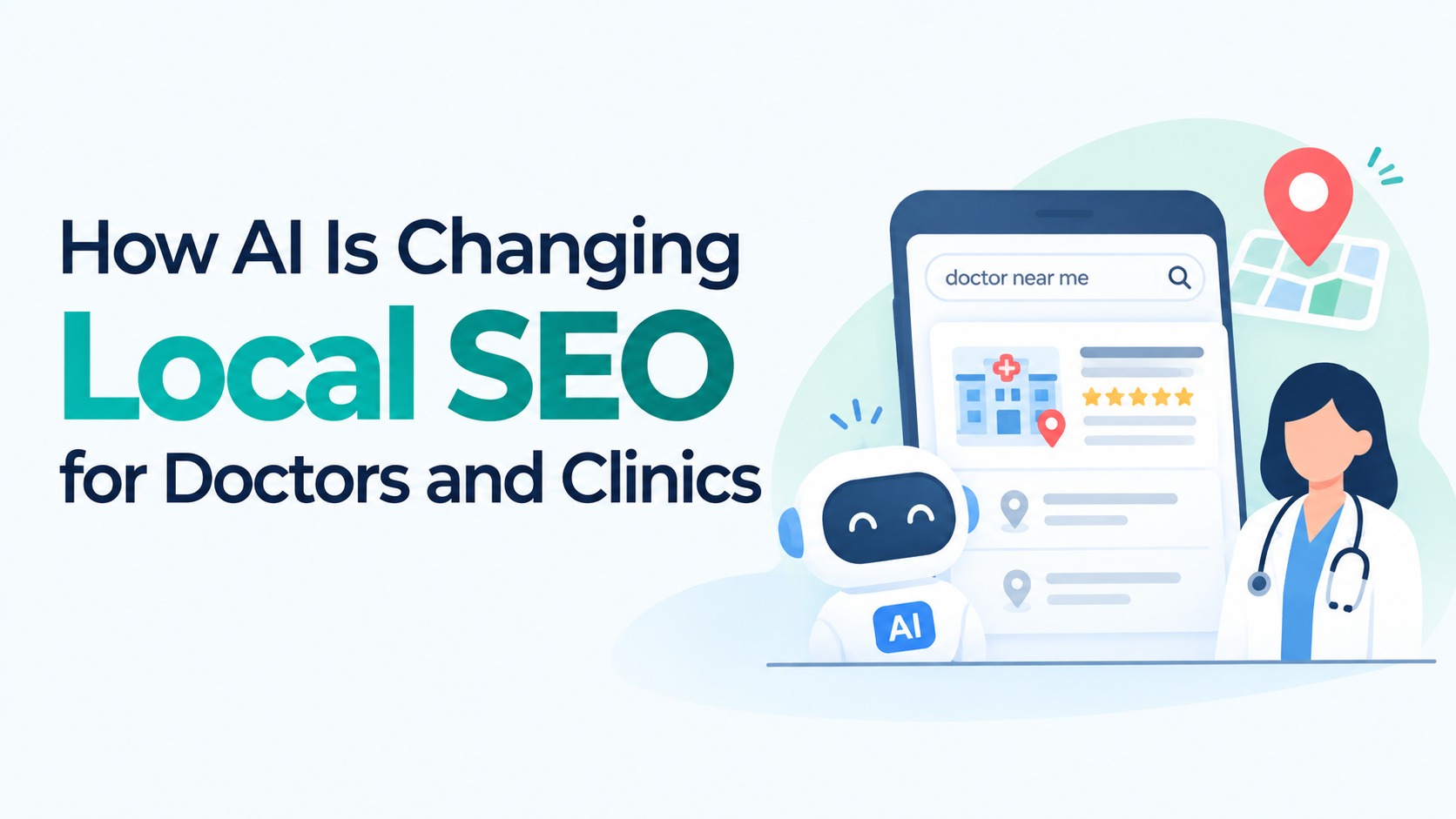
AI is changing how patients discover doctors and clinics online, making local SEO for doctors more important than ever. Patients are no longer relying only on traditional Google searches; they may use conversational search, maps, online reviews, and AI-powered search to find healthcare providers nearby.
For medical practices, this means having accurate business information and a helpful online presence is essential for being discovered when patients are looking for care.
AI can help doctors and clinics analyze search behavior, identify content opportunities, improve local visibility, and streamline repetitive marketing tasks while keeping patient needs at the center of their digital strategy.
1. AI Is Changing How Patients Search for Doctors
Traditional searches are often short and keyword-focused, such as:
- “dentist near me”
- “pediatrician in Delhi”
- “orthopedic clinic near me”
AI-powered search experiences can handle longer, conversational questions.
A patient might instead ask, “Which orthopedic clinics near me treat sports injuries and offer weekend appointments?”
This means medical practices need to think beyond individual keywords. Their online presence should provide clear, comprehensive information about their services, specialties, locations, hours, and patient experience.
Well-structured content can make it easier for both traditional search engines and AI-driven systems to understand what a practice offers.
2. AI Can Help Identify Local SEO Opportunities
SEO professionals can use AI tools to analyze large amounts of search and website data much faster than manual research.
For a medical practice, AI-assisted analysis can help identify:
- Frequently searched healthcare topics
- Local search queries
- Content gaps
- Frequently asked patient questions
- Pages with poor engagement
- Potential keyword variations
- Competitor content themes
For example, if analysis shows that people frequently search for information about preparing for a particular procedure, a clinic could create a clear educational page addressing those questions.
The important distinction is that AI should assist with analysis—not determine medical advice.
3. AI Can Make Content Production More Efficient
Creating useful content consistently can be challenging for busy healthcare organizations.
AI can assist marketing teams with brainstorming article topics, organizing outlines, identifying frequently asked questions, and creating initial drafts.
However, healthcare content requires a higher level of editorial oversight than many other industries.
AI-generated content should be reviewed for:
- Medical accuracy
- Outdated information
- Unsupported claims
- Appropriate terminology
- Patient safety
- Professional standards
- Local regulatory requirements
Qualified healthcare professionals should review medical claims when appropriate.
The objective should not be to publish large amounts of AI-generated text. Instead, AI can help teams spend more time improving the quality and usefulness of content.
4. AI Can Help Optimize Google Business Profile Management
Local visibility depends heavily on accurate business information.
AI-assisted tools can help marketing teams identify inconsistencies across listings, organize business information, and monitor changes.
For clinics with multiple locations, this can be particularly useful. A practice may need to manage different addresses, telephone numbers, opening hours, services, and location pages.
Automation can reduce repetitive administrative work, but important changes should still be reviewed by a person before publication.
5. AI Is Influencing Local Search Content
Search engines increasingly attempt to understand the meaning behind a query rather than simply matching exact keywords.
For doctors and clinics, this makes topical relevance particularly important.
Instead of creating separate low-quality pages for every minor keyword variation, practices can develop comprehensive resources around genuine patient needs.
For example, a dermatology practice could create interconnected resources covering:
- Acne treatment
- Common acne symptoms
- Treatment options
- When to see a dermatologist
- Frequently asked questions
- Preparation for a dermatology appointment
This approach gives users useful information while helping search systems better understand the practice’s areas of expertise.
6. AI Can Help Analyze Patient Reviews
Online reviews contain valuable information about how patients perceive a practice.
AI-assisted sentiment analysis can help organizations identify recurring themes in large collections of reviews.
For example, reviews might frequently mention:
- Appointment scheduling
- Waiting times
- Staff communication
- Facility experience
- Ease of finding the clinic
A practice can use these insights to identify areas that may need operational attention.
However, reviews can contain sensitive information. Healthcare organizations should handle review data carefully and avoid using AI systems in ways that could expose confidential patient information.
7. AI Can Improve the Patient Experience on Websites
AI-powered chat and search features can make websites easier to navigate.
For example, a website assistant might help a visitor locate:
- Clinic hours
- Contact details
- Available services
- Doctor profiles
- Appointment information
- Directions
These systems should be designed carefully in healthcare settings. They should not present themselves as doctors or provide unsupported diagnoses.
For clinical questions, users should be directed toward appropriate professional care or reliable medical resources.
The safest approach is to use AI to improve navigation and access to approved information rather than replace professional medical judgment.
8. Local Businesses Need to Prepare for AI-Powered Search
As AI becomes more integrated into search experiences, clinics should make their online information easy to understand and verify.
Important information should be consistent across the practice’s website and reputable external platforms.
A clinic should clearly communicate:
- Who the healthcare providers are
- What services they offer
- Where they are located
- When they are open
- How patients can contact them
- Which conditions or specialties they focus on
Structured website information can also help search systems interpret important business details.
The fundamentals remain the same: accurate information and genuinely useful content are valuable regardless of whether the user arrives through traditional search or an AI-assisted experience.
9. AI Does Not Replace the Fundamentals of Local SEO
It is tempting to think that AI has completely changed SEO. In reality, many established principles remain important.
Medical practices still need to pay attention to:
- Accurate local business information
- Website usability
- Mobile performance
- Relevant local content
- Patient reviews
- Reputable citations
- Clear provider information
- Technical website health
- Trust and credibility
AI should be viewed as an additional capability rather than a shortcut around these fundamentals.
A practice with inaccurate contact information and a poor website will not automatically become successful because it uses AI.
10. Human Expertise Remains Essential
Healthcare is a particularly sensitive area for AI-assisted marketing.
Patients need information they can trust, and inaccurate medical content can have serious consequences. AI systems can produce information that sounds convincing while still being incomplete or incorrect.
That is why human review remains essential.
Healthcare professionals can provide the expertise, experience, and context that automated systems cannot reliably reproduce. Marketing professionals can then use AI to improve research, organization, and efficiency without allowing automation to compromise quality.
Conclusion
AI is changing local SEO for doctors and clinics by influencing how patients search, how businesses analyze data, how content is produced, and how websites deliver information.
For medical practices, the opportunity is not simply to generate more content or automate every marketing task. It is to use AI thoughtfully while maintaining accurate information, strong local visibility, patient privacy, and professional oversight.
The practices that adapt effectively will likely be those that combine technological tools with something AI cannot replace: genuine healthcare expertise and a clear understanding of what patients need.
Author


Technology has changed the way we work and live. Offices now depend on reliable video conferencing solutions to connect teams and clients across cities, while homes are becoming smarter, safer and more comfortable with connected lighting, security and entertainment systems. Yet many businesses and homeowners still struggle with poor audio, unreliable cameras and devices that don’t work well together.
The answer is not just buying better gadgets. It is planning and integrating the right systems so they work smoothly as one. This guide explains the key technologies behind modern smart offices and smart homes, and what to consider before investing in them.
Why Integration Matters More Than Individual Devices
Most technology problems in offices and homes come from devices installed separately, without a plan. A projector that doesn’t connect easily to laptops, a microphone that picks up echo, or a camera system that can’t be viewed remotely are all signs of poor integration.
Professional audio visual integration brings displays, speakers, microphones, cameras, control panels and networking together into one system. Everything is designed to work together, controlled from a single interface and supported by one team. The result is a setup that is easier to use, more reliable and easier to maintain.
Video Conferencing Solutions for Modern Businesses
Hybrid work is here to stay. Teams meet across offices, clients join from other cities and leadership reviews happen online. Poor video and audio quality in these meetings wastes time and creates a bad impression.
Reliable video conferencing solutions include:
- High-definition cameras with auto-framing to keep participants in view
- Ceiling or table microphones that capture voices clearly from anywhere in the room
- Speakers with echo cancellation for natural conversation
- One-touch meeting start compatible with platforms like Microsoft Teams and Zoom
- Stable network setup to avoid dropped calls
The right system depends on room size, number of participants and how often the room is used.
Planning the Right Conference Room Setup
A well-designed conference room setup goes beyond placing a TV on the wall. It considers:
- Room size and seating layout: Huddle rooms, medium meeting rooms and boardrooms all need different equipment.
- Display size and placement: Screens should be clearly visible from every seat.
- Acoustics: Hard walls and glass create echo, which may need acoustic treatment.
- Cable management: Hidden cabling and floor boxes keep the room clean and safe.
- Wireless presentation: Allowing participants to share screens without cables saves time.
- Lighting: Proper lighting improves how participants appear on camera.
Planning these details in advance avoids costly changes later.
AV Solutions for Offices, Schools and Hospitality
Beyond meeting rooms, AV solutions (audio video) are used in training rooms, auditoriums, classrooms, restaurants, hotels and retail stores. Common applications include:
- Background music systems across zones
- Public address systems for announcements
- Digital signage for menus, promotions and information
- Projection and sound systems for training halls and auditoriums
- Interactive displays for classrooms
A single integrated AV system makes it easy to control audio and video across the entire building.
IP Camera Installation for Better Security
Security is a priority for both businesses and homes. Modern IP cameras offer much better image quality and flexibility than older analog CCTV systems.
Professional IP camera installation provides:
- High-resolution video for clearer identification
- Remote viewing on smartphones and computers
- Night vision and motion detection alerts
- Centralised recording on network video recorders
- Easy expansion as your needs grow
Correct camera placement, network configuration and storage planning are as important as the cameras themselves.
Home Automation Services: Comfort at Your Fingertips
Smart homes are no longer limited to luxury villas. With modern home automation services, homeowners can control lights, curtains, air conditioners, security cameras, door locks and entertainment systems from a smartphone, voice assistant or wall panel.
Benefits include:
- Convenience: Control your entire home from one app
- Energy savings: Turn off lights and appliances automatically when not needed
- Security: Monitor your home and receive alerts when away
- Comfort: Create scenes like “Movie,” “Good Morning” or “Away” with one tap
Automation can be planned for new homes or added to existing homes with minimal wiring changes. For more ideas on running smarter homes and businesses, explore the business section of Contrank.
Smart Home Lighting: More Than Just On and Off
Lighting is often the first step into home automation. Smart home lighting lets you dim lights, change colour temperature, set schedules and create moods for different times of the day.
Warm, dim lighting can be set for evenings, bright cool light for work areas, and soft night lights for hallways. Lights can turn on automatically when you arrive home or switch off when everyone leaves, which also helps reduce electricity consumption.
Home Theatre Setup in Home
For many families, a dedicated entertainment space is a top priority. A professional home theatre setup in home creates a cinema-like experience with:
- Large screens or projectors
- Surround sound speaker systems
- Proper acoustic treatment for clear audio
- Comfortable seating and lighting control
- Integration with streaming devices and gaming consoles
When combined with home automation, a single “Movie” button can dim the lights, close the curtains and turn on the system.
What to Look for in a Technology Integration Partner
Before finalising a provider, check:
- Experience with both commercial and residential projects
- Ability to design, supply, install and support the complete system
- Knowledge of reputable brands and compatible equipment
- Clear documentation and user training after installation
- Reliable after-sales service and maintenance
A good integrator will first understand how you use your space before recommending any products. Companies like Total Tech Solutions handle planning, installation and support for AV, security and automation projects, so clients deal with one accountable team.
Conclusion
Whether you are upgrading a boardroom, securing your premises or turning your home into a smart living space, the key is integration. Video conferencing systems, AV solutions, IP cameras, home automation, smart lighting and home theatres all deliver the best results when they are planned and installed as one system. With the right technology partner, your spaces become more productive, more secure and more enjoyable to use.
Author



As-Built Drawings for Commercial Renovations: Complete AEC Guide

Why orSlow Japanese Workwear Is Becoming a Go-To Choice for Everyday

White Label GPS Tracking Software Build Your Own GPS Brand

Back, Neck & Shoulder vs Full Body Massage: Which Is Best?

AutoCAD Supports Accurate Shop Drawing Production in US Construction

Skin Toner: Core Ingredients, Benefits and Suitable Skin Types

Men’s Vitality Power Booster in Pakistan: Price, Features

Family Restaurant in Rajkot: Why Zaika Is Perfect for Weekend Dinners

How AI Is Changing Local SEO for Doctors and Clinics

Outsourcing CAD to BIM Services: Benefits for AEC Firms

Cybersecurity Consulting Company SequelNet Provides Critical IT Support Services to Medical Billing Firm, Medical Optimum

Meet the Megalodon: The Shark Star of ‘Meg 2’

Reduce Video Game Lag: Level Up Your Gaming Performance

Balancing India’s Entertainment: Cricket vs. Bollywood

Jetsetter’s Secrets: Unveiling Our Favorite Travel Hacks for a Seamless Adventure

The 5 Best Live Sports Streaming Sites: Legal and Exciting!

Hollywood Labor Unrest: The Impact of ‘What About Us?’ Strikes

Unveiling the Magic of Dream Fulfillment at the Late NBA Draft

Illuminate Your Skin: Dr. Axe Unveils Natural Remedies for Lightening Knees and Elbows

Bright Choices: Navigating the Pros and Cons of Skin Whitening Creams with Dr. Axe
-
 Business3 years ago
Cybersecurity Consulting Company SequelNet Provides Critical IT Support Services to Medical Billing Firm, Medical Optimum
-
Entertainment3 years ago
Meet the Megalodon: The Shark Star of ‘Meg 2’
-
Entertainment3 years ago
Reduce Video Game Lag: Level Up Your Gaming Performance
-
 Sports3 years ago
Balancing India’s Entertainment: Cricket vs. Bollywood
-
Entertainment3 years ago
Jetsetter’s Secrets: Unveiling Our Favorite Travel Hacks for a Seamless Adventure
-
Productivity3 years ago
The 5 Best Live Sports Streaming Sites: Legal and Exciting!
-
Art /Entertainment3 years ago
Hollywood Labor Unrest: The Impact of ‘What About Us?’ Strikes
-
Sports3 years ago
Unveiling the Magic of Dream Fulfillment at the Late NBA Draft






