
Development
Lexapro Market: Growth Trends & Global Industry Forecast

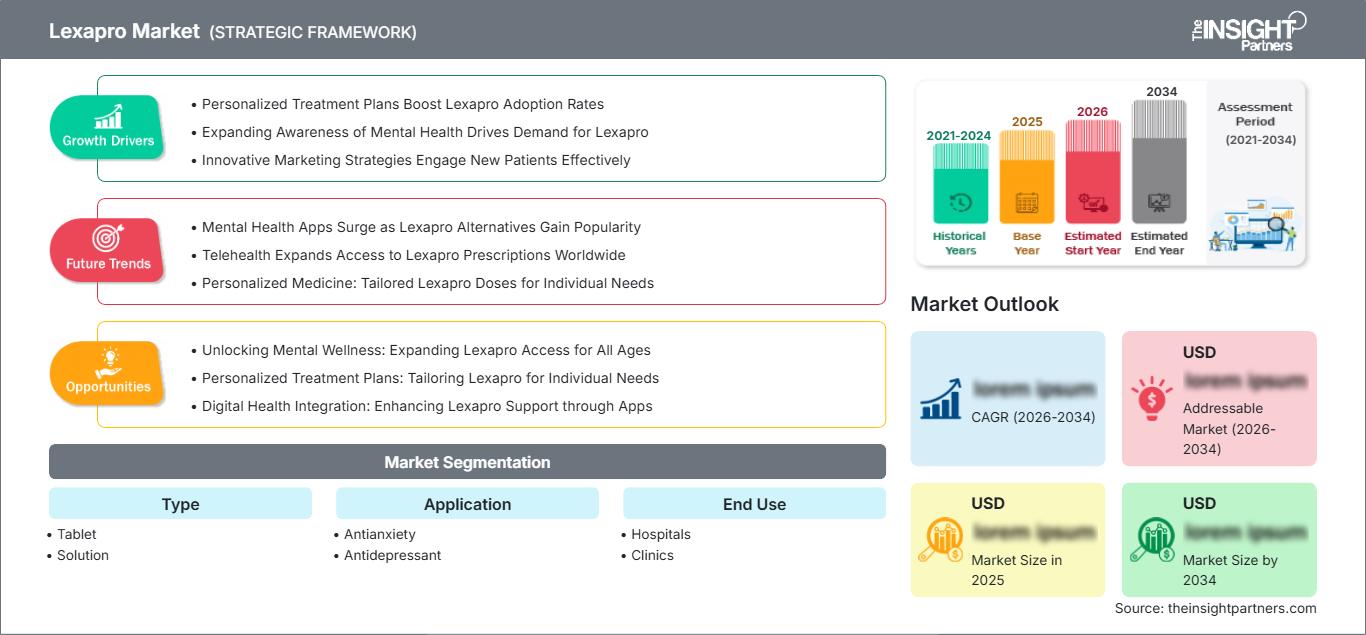
The global market for Lexapro, the brand name for the antidepressant escitalopram, is entering a significant phase of long-term expansion. As of 2026, the industry is valued at approximately $4.06 billion. Experts project that the market will climb to $6.4 billion by 2034.
This growth reflects a steady Compound Annual Growth Rate (CAGR) of 5.9%. Several factors drive this upward trend. These include the rising prevalence of mental health disorders and a global shift in how society views psychiatric care. Today, mental health is no longer a taboo topic. Instead, it is a priority for governments, healthcare providers, and individuals alike.
Market Dynamics: Why Lexapro Leads the SSRI Category
Lexapro belongs to a class of drugs known as Selective Serotonin Reuptake Inhibitors (SSRIs). Even though newer medications have entered the scene, Lexapro remains a top choice for doctors. Practitioners prefer it because it offers high efficacy with a very manageable side-effect profile.
Modern Growth Catalysts
-
New Patient Demographics: A major milestone in 2026 is the expanded approval of escitalopram for younger patients. It is now widely prescribed for Generalized Anxiety Disorder (GAD) in children as young as seven. This has created a significant new segment for manufacturers.
-
The Telehealth Revolution: Virtual healthcare has removed physical barriers to treatment. Today, nearly 22% of mental health prescriptions originate from online consultations. This shift allows patients in remote areas to access high-quality psychiatric support without leaving their homes.
-
Shift to Long-Term Wellness: Medical guidelines have changed. Doctors now focus on “maintenance therapy.” Patients often stay on Lexapro for 12 to 18 months to prevent a relapse. This shift toward long-term care ensures a consistent and growing demand.

Regional Analysis: Global Trends and Dominant Hubs
The demand for Lexapro varies across the globe. Each region follows its own growth trajectory based on local healthcare infrastructure and public policy.
North America: The Established Leader
North America currently holds the largest share of the global market, at roughly 41%. This dominance is the result of several factors:

-
Infrastructure: The region has a highly developed network of outpatient clinics and specialty pharmacies.
-
Insurance Coverage: Comprehensive health plans often cover both brand-name and generic psychiatric medications.
-
Cultural Shift: Strong awareness campaigns have largely destigmatized the use of daily antidepressants in the United States and Canada.
Asia-Pacific: The Emerging Frontier
While North America is the largest market, the Asia-Pacific region is the fastest-growing. Analysts expect a 7.8% CAGR here through 2034. Rapid urbanization and rising economic pressures in nations like China and India have led to higher stress levels. Consequently, diagnosis rates for depression are climbing rapidly. Governments in these regions are also increasing their investment in mental health services.
Strategic Market Segmentation
To understand where the market is headed, we must analyze how Lexapro is delivered and used.
| Segment Category | Leading Sector | Strategic Insight |
| Product Type | Tablets | Oral tablets dominate because they are cost-effective and easy for patients to take. |
| Primary Application | Antidepressant | Major Depressive Disorder (MDD) accounts for over half of all global prescriptions. |
| Distribution | Retail Pharmacies | High-street pharmacies are the primary source, but online delivery is gaining ground. |
| End User | Outpatient Clinics | Specialized clinics are replacing hospitals as the main hub for mental health management. |
The Competitive Landscape: Innovation and Generics
The Lexapro market is highly competitive. It features a balance between original patent holders and massive generic pharmaceutical firms.
The Rise of High-Quality Generics
Companies like Teva Pharmaceuticals, Sun Pharma, and Cipla lead the generic space. They have made escitalopram affordable in low-to-middle-income countries. This affordability is essential for global growth. It ensures that mental health support is not just for wealthy nations but is accessible to everyone.
Moving Toward Personalized Medicine
Innovation in 2026 is focusing on Pharmacogenomics. This is the study of how genes affect a person’s response to drugs. Modern clinics are beginning to use genetic testing before writing a prescription. This helps doctors determine the exact dose a patient needs. It reduces the “trial and error” process. This data-driven approach improves patient outcomes and builds trust in the medication.
Challenges and Future Outlook
No market is without its hurdles. The Lexapro industry faces challenges such as strict regulatory frameworks and the potential for drug-to-drug interactions. However, the outlook remains overwhelmingly positive.
The integration of Digital Healthcare is the most significant trend to watch. By 2034, digital prescription systems will be the norm. These systems track patient compliance and alert doctors if a patient misses a dose. This technological layer adds value to the medication by ensuring it is used correctly and effectively.
Conclusion: A Vision for 2034
The global Lexapro market is more than just a financial entity. It is a reflection of a world that is finally taking mental health seriously. As we move toward a $6.4 billion valuation by 2034, the focus remains on accessibility and patient safety.
The industry is moving away from the “one-size-fits-all” model. Instead, it is embracing a future of personalized, tech-enabled care. Organizations that prioritize ethical supply chains and digital patient support will lead this multi-billion dollar sector into the next decade. Lexapro will likely remain a cornerstone of this journey, providing stability and hope to millions of people worldwide.
As you look at these long-term projections, are you focusing primarily on the investment potential of the generic market in Asia, or are you more interested in how telehealth is reshaping prescriptions in North America?
Author



A website has become one of the most important digital assets for a business. However, modern websites need to do much more than display information. Businesses now expect their websites to support sales, customer service, automation, payments, and internal operations. In the past, a responsive website with a few service pages and a contact form could meet basic needs. Today, customers expect faster experiences, easier navigation, personalized content, and convenient digital services. Businesses also want their websites to connect with CRM platforms, payment gateways, analytics tools, and other systems.
This is where Web Development takes a more strategic role. Instead of forcing business processes into a standard template, companies can build digital solutions around their actual requirements. This approach can help create websites that are easier to manage, more flexible, and better aligned with long-term goals.
For businesses considering a Custom Development Company in Chennai, it helps to understand the development process, technology choices, costs, and support requirements before starting a project.
What Does Custom Web Development Mean?
Custom web involves creating a website or web application around specific business requirements. It does not mean developers must build every component from zero. Teams can use reliable frameworks, libraries, APIs, CMS platforms, and third-party services where appropriate. However, developers plan the overall architecture around the business rather than simply installing a template and adding plugins.
A custom project may include customer portals, business dashboards, advanced search, booking systems, payment workflows, API integrations, automated processes, role-based access, custom databases, and internal management tools. The actual complexity depends on the business objective.
Does Every Business Need a Custom Website?
No. Many businesses can work perfectly well with a standard website. For example, a local company may only need service pages, contact details, location information, testimonials, and a blog. In that situation, extensive customization may add unnecessary cost and complexity.
However, custom solutions become more useful when a website needs to perform specific business tasks. Consider a company that receives enquiries through its website.
Instead of sending every enquiry to a shared inbox, the website could collect customer requirements, categorize each request, assign it to the right team, create a CRM record, and send automated notifications. That workflow can save time and reduce manual work. The objective should not be to make the website complicated. Instead, the objective should be to make it useful.
Template Websites vs. Custom Solutions
Both approaches have legitimate uses. A template-based website can work well when requirements remain simple. It can also suit businesses with limited budgets or short launch timelines. If the website does not need advanced functionality, a template can provide everything the business requires. However, problems can appear when a company starts adding unusual features. Plugins may not work well together. Customization can become difficult. Maintenance can also become more complicated.
Custom solutions can make more sense when a business has unique workflows, complex integrations, specialized functionality, stronger security requirements, or plans for significant growth. Therefore, businesses should choose based on their requirements rather than assuming that custom development always provides the better answer.
Start With the Business Problem
A successful website project starts with a clear objective.
Before selecting technologies, businesses should ask what they want the website to accomplish. The answer might involve generating qualified leads, selling products, reducing manual tasks, improving customer support, managing bookings, connecting multiple systems, or creating a marketplace.
Once the primary objective becomes clear, the required features become easier to identify. This approach also prevents unnecessary spending. Businesses can avoid investing in impressive features that do not contribute to the actual customer or business journey.
Why UI/UX Design Matters
A technically powerful website can still struggle if users cannot understand it. That is why UI/UX Design should form part of the project from the beginning. Designers need to understand the target audience, their expectations, common pain points, and the actions they need to complete.
For instance, an enterprise portal may contain dozens of features. Placing every option in the main navigation could overwhelm users. Instead, good UX organizes information around user priorities. The design should also provide a consistent experience across desktops, tablets, and smartphones.
The Importance of Software Development Skills
Modern websites often behave more like software products than simple online brochures. A website may need to communicate with CRM platforms, ERP systems, payment gateways, marketing tools, mobile applications, inventory systems, and analytics platforms.
These requirements involve more than frontend design. Developers may need to work with backend systems, APIs, databases, authentication, integrations, and automation.
Therefore, companies evaluating a Custom Web Development Company in Chennai should consider the team’s broader Software Development experience. A project that connects several business systems requires careful technical planning. A simple informational website does not require the same architecture.
Where AI Can Add Value
AI can improve a web application when it solves a genuine business problem. For example, intelligent search can help visitors find products or information through natural-language queries. AI assistants can handle common customer questions and direct users toward relevant resources.
Businesses can also use AI to classify incoming leads, summarize documents, organize information, or personalize content. However, companies should not add AI simply because it is popular. The business problem should come first. Then, the team can determine whether AI provides a practical solution.
How Flutter Fits Into a Digital Product
Flutter is widely used for cross-platform application development. It can become relevant when a business plans a broader digital product that includes mobile applications alongside web services.
For example, a company may need a website, Android application, iOS application, and administration dashboard that all communicate with the same backend.
In such cases, the team should consider the complete architecture before selecting individual technologies. Flutter App Development may suit certain application requirements, while traditional web technologies may provide a better fit for a public-facing website. The product requirements should guide the technology decision.
SEO Should Begin During Development
Businesses often treat SEO as a post-launch activity. However, that approach can create avoidable problems. SEO considerations should begin during planning. Developers and marketers should consider URL structures, page hierarchy, internal linking, crawlability, page speed, mobile usability, structured data, and indexability.
For example, changing hundreds of URLs after launch can create unnecessary redirects. It can also create additional work for the development and SEO teams. A search-friendly architecture from the beginning can make future optimization much easier.

A Practical Development Process
A structured Web Development workflow can make a project easier to manage. First, the team should conduct discovery. This stage identifies business objectives, users, competitors, existing systems, and technical requirements. Next comes requirement mapping. Teams separate essential features from optional additions.
After that, developers plan the technical architecture, database, APIs, integrations, hosting, and security requirements. Designers then map user journeys and create wireframes or prototypes.
The team can move into visual design once the structure becomes clear. Development follows, covering the frontend, backend, databases, APIs, and integrations.
Testing comes next. Teams should test functionality, browsers, devices, performance, security, and important user journeys. Before launch, the team should also review technical SEO and performance. Finally, the website goes live, and developers monitor its performance. The work does not stop there. Real user behavior can reveal opportunities for further improvement.
Understanding Custom Development Costs
The cost of custom development varies significantly. Factors such as page count, custom functionality, backend complexity, integrations, user roles, security requirements, CMS needs, testing, and ongoing maintenance can all affect the final price.
Some businesses may receive quotes starting around ₹1.5 lakh for smaller custom projects. More complex web applications and enterprise platforms can reach ₹7 lakh to ₹15 lakh or more. These figures should only serve as broad estimates. A detailed project specification is necessary for an accurate quotation.
How to Control the Budget
Custom development does not require businesses to build everything immediately. Start with an MVP that includes features directly connected to the main business objective. Add additional functionality as the product gains traction.
Businesses can also reduce unnecessary costs by prioritizing essential integrations and using reliable frameworks and libraries. Furthermore, validating UX through prototypes can uncover problems before developers spend significant time building the wrong solution. At the same time, the architecture should leave room for future expansion.
Choosing a Development Partner
When evaluating a Custom Web Development Company in Chennai, businesses should look beyond the quoted price. Look for relevant project experience and evidence that the team can handle frontend development, backend systems, APIs, databases, security, and integrations.
Review the company’s actual design work as well. Case studies, client projects, technical explanations, and reviews can provide useful context.
Communication also matters. A reliable development partner should explain technical limitations, clarify requirements, and communicate changes throughout the project.
Post-launch support deserves attention too. Websites may require security updates, performance improvements, troubleshooting, and new features after launch.
EEAT and Development Company Research
Marketing claims alone do not prove expertise.
Words such as “best,” “top,” and “leading” provide little useful evidence without supporting information. Instead, businesses should look for published case studies, real client projects, experienced professionals, clear development processes, client feedback, and transparent communication.
A trustworthy team should also explain what the business does not need. Sometimes, avoiding an unnecessary feature provides more value than adding another item to the project.
What Happens After Launch?
Launch day marks the beginning of the website’s next phase. Once real users interact with the product, businesses can identify popular pages, abandoned forms, preferred devices, frequently used features, and performance problems.
This information can guide future updates. As a result, Web Development should not be viewed as a one-time activity. A custom website works best when businesses continue to improve it based on real data and changing customer expectations.
Final Thoughts
Custom solutions make sense when standard templates cannot comfortably support a company’s requirements. The value does not come from writing more code. Instead, it comes from building a digital experience that fits the business, serves users, connects with existing systems, supports SEO, and allows future growth. For businesses considering a Custom Web Development Company in Chennai, the ideal development process should combine technology with product thinking.
Software Development, AI Development, UI/UX Design, SEO, and Flutter Development can all contribute to a larger digital strategy. However, each technology should support a clear business purpose. A successful website does not need the longest feature list. It needs to solve the right problem for the right users while giving the business room to grow.
Author


Node Js has become a strong choice for businesses that want fast, scalable, and responsive web applications. Companies of all sizes use it to build APIs, SaaS platforms, e-commerce systems, real-time applications, and backend services. Its event-driven architecture allows applications to manage many requests without slowing down under normal workloads.
For businesses, the challenge does not end with choosing Node Js. They also need the right talent to turn their ideas into reliable products. When companies hire JS developers, they gain access to professionals who can work with JavaScript on the server side and contribute to modern backend development.
However, hiring the right person requires careful planning. Technical knowledge matters, but so do communication, problem-solving, practical experience, and the ability to understand business requirements.
Why Should You Hire a Node Js Developer?
Node Js runs on Google’s V8 JavaScript engine and uses an event-driven, non-blocking approach. As a result, it works well for applications that handle multiple connections and frequent data exchanges. Businesses commonly use Node Js for:
- Web application backends
- REST and GraphQL APIs
- SaaS products
- E-commerce platforms
- Microservices
- Chat applications
- Real-time systems
- Streaming platforms
- Server-side applications
Another major benefit comes from JavaScript itself. Teams can use the same core language across frontend and backend development. This approach can improve collaboration and make it easier for developers to understand different parts of an application.
When you hire JS developers, you can also build a more flexible development team. However, you should match their experience with your project’s actual requirements.
Skills to Look for in a Node Js Developer
A strong candidate should bring a combination of technical expertise and practical development experience. Consider the following skills before making a hiring decision.
Strong JavaScript Knowledge
JavaScript forms the foundation of Node Js development. Therefore, candidates should understand variables, functions, objects, modules, promises, callbacks, async/await, and modern ES6+ features. They should also know how JavaScript behaves in asynchronous environments. This knowledge helps them create cleaner and more maintainable backend code.
Node Js Ecosystem Experience
A capable developer should understand the Node Js runtime and its surrounding ecosystem. Depending on your project, experience with Express.js, Nest JS, or Factify can prove useful. Candidates should also understand npm and package management. More importantly, they should know how to choose, update, and manage third-party dependencies responsibly.
API Development
APIs connect applications with websites, mobile apps, databases, and external services. Therefore, API development remains an important skill.
Your candidate should know how to create RESTful APIs and understand GraphQL when your project requires it. They should also understand authentication, authorization, input validation, error handling, and API security.
Database Knowledge
Modern backend applications often depend on multiple types of databases. A developer may work with PostgreSQL, MySQL, MongoDB, Redis, or similar technologies.
Look for candidates who understand database structures, queries, indexing, data relationships, and performance optimization. They should also know how to protect sensitive application data.
Asynchronous Programming
Asynchronous programming plays a central role in Node Js. A developer should understand the event loop, promises, callbacks, and async/await. This knowledge helps developers manage time-consuming operations without unnecessarily blocking the application.
Testing and Debugging
Good developers do more than write code. They also test it and fix problems efficiently. Experience with unit tests, integration tests, debugging tools, and automated testing frameworks can improve application stability. This becomes even more important as an application grows.
How Much Does It Cost to Hire a Node Js Developer?
There is no single hiring price for Node Js talent. Several factors affect the final cost, including experience, location, project complexity, hiring model, and required technical skills.
A junior developer generally costs less and may work well on simple tasks under experienced supervision. A mid-level developer can usually manage development tasks independently and may suit APIs, business applications, and SaaS products.
Senior developers usually charge more. However, they can handle architecture, security, integrations, performance improvements, and complex backend challenges.
Therefore, businesses should not judge candidates only by their hourly rates. An experienced professional may complete difficult work faster and prevent expensive technical problems later.
Where Can You Find Node Js Developers?
Companies can choose from several hiring models based on their goals and budget.
- Freelancers: Freelancers offer flexibility and can work well for short-term projects, specific features, or temporary development needs. Before hiring, check their portfolio, availability, communication style, and previous client feedback.
- In-house developers: Full-time employees can provide long-term collaboration and stronger integration with your company. However, this option can increase expenses because you may need to cover salaries, benefits, equipment, recruitment, and other employment costs.
- Development agencies: Agencies provide access to teams with different technical skills. They can handle development, testing, deployment, project management, and maintenance. This option can help businesses that want a complete development team without building one internally.
Questions to Ask Before Hiring
Technical interviews should focus on practical knowledge. Ask candidates questions that reflect the challenges they may face during your project.
For example, ask how they handle asynchronous operations, design scalable APIs, improve application performance, and secure backend systems. You can also ask about their experience with databases, cloud deployment, authentication, testing, and production debugging.
A practical coding assignment can provide even more insight. It shows how candidates approach real problems instead of simply testing their ability to memorize technical concepts.
Tips for Choosing the Right Candidate
Start by defining your project clearly. Identify the required features, technology stack, development timeline, and expected outcomes. Then decide whether you need junior, mid-level, or senior expertise. Next, review relevant experience. When hiring JS developers, look for professionals who have worked on applications similar to yours. Their previous experience can reveal whether they understand your industry’s technical challenges.
Communication also deserves attention. Developers need to explain technical decisions, report progress, discuss problems, and work effectively with designers, managers, and other developers. You can also begin with a small paid trial project. This approach lets you assess coding quality, reliability, communication, and problem-solving before starting a larger engagement.
Finally, review portfolios, GitHub profiles when available, references, and client feedback. Focus on the candidate’s actual contribution to previous projects.
Final Thoughts
Hiring the right Node Js Developer can influence your application’s performance, security, scalability, and long-term maintenance. Therefore, businesses should look beyond technical certificates or years of experience.
A structured hiring process can help you find professionals who match your technical and business needs. Define your requirements, review relevant experience, test practical skills, and evaluate communication before making a decision.
Whether you work with a freelancer, an in-house professional, or an agency, the right developers can help transform your application idea into a dependable digital product. With careful evaluation and clear project expectations, you can build a development team that supports both your immediate goals and future growth.
Author




Author



Car Maintenance: 7 Essential Summer Checks for Safer Driving

Digital Marketing Launceston: Grow Your Business Online

Drafting Services: Accurate CAD Solutions for Construction

Ghostwriter Cost 2026: Pricing, Services and Hiring

Carsicko Hoodie’s: Modern Streetwear Styling and Outfit Ideas

Business Opportunities in Brazil 2026: Ideas & Investment Tips

Best Cashback Mortgages UK: Compare Deals & Savings

Loan Settlement: Process, Credit Score Impact & Repayment Tips

Everyday Style: Common Projects Sneakers UK Styling Tips

Commercial Truck Financing Options for Business Owners

Cybersecurity Consulting Company SequelNet Provides Critical IT Support Services to Medical Billing Firm, Medical Optimum

Meet the Megalodon: The Shark Star of ‘Meg 2’

Reduce Video Game Lag: Level Up Your Gaming Performance

Balancing India’s Entertainment: Cricket vs. Bollywood

Jetsetter’s Secrets: Unveiling Our Favorite Travel Hacks for a Seamless Adventure

The 5 Best Live Sports Streaming Sites: Legal and Exciting!

Hollywood Labor Unrest: The Impact of ‘What About Us?’ Strikes

Unveiling the Magic of Dream Fulfillment at the Late NBA Draft

Illuminate Your Skin: Dr. Axe Unveils Natural Remedies for Lightening Knees and Elbows

Bright Choices: Navigating the Pros and Cons of Skin Whitening Creams with Dr. Axe
-

 Business3 years ago
Cybersecurity Consulting Company SequelNet Provides Critical IT Support Services to Medical Billing Firm, Medical Optimum
-
Entertainment3 years ago
Meet the Megalodon: The Shark Star of ‘Meg 2’
-
Entertainment3 years ago
Reduce Video Game Lag: Level Up Your Gaming Performance
-
 Sports3 years ago
Balancing India’s Entertainment: Cricket vs. Bollywood
-
Entertainment3 years ago
Jetsetter’s Secrets: Unveiling Our Favorite Travel Hacks for a Seamless Adventure
-
Productivity3 years ago
The 5 Best Live Sports Streaming Sites: Legal and Exciting!
-
Art /Entertainment3 years ago
Hollywood Labor Unrest: The Impact of ‘What About Us?’ Strikes
-
Sports3 years ago
Unveiling the Magic of Dream Fulfillment at the Late NBA Draft






