
Construction
BIM & Prefabrication for GCs: Faster, Cleaner Construction

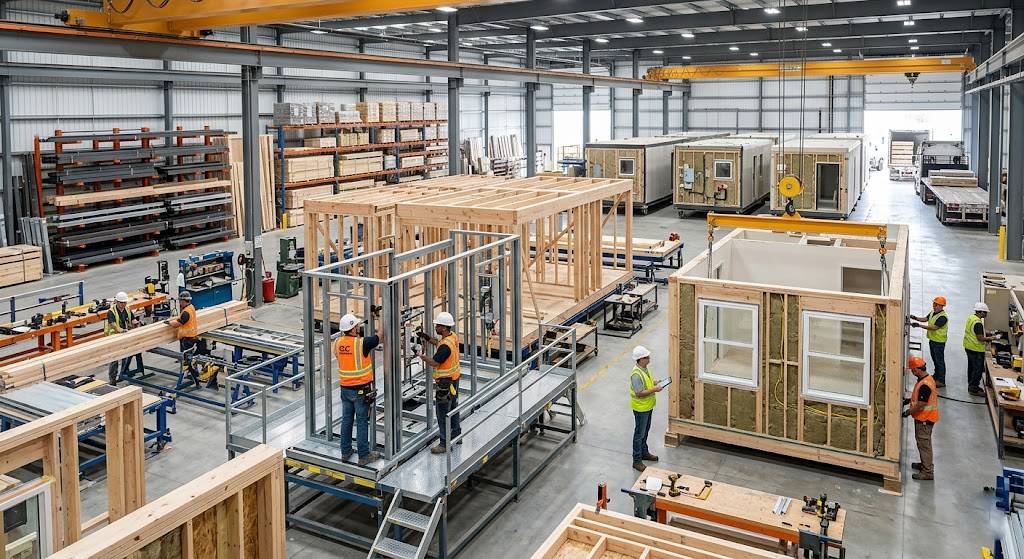
The construction industry in the United States is under more pressure than ever. Labor shortages, tighter deadlines, rising material costs, and client demands for faster delivery have pushed general contractors to rethink how they build. One of the most impactful shifts happening right now is the widespread adoption of prefabrication techniques, and at the center of this transformation is Building Information Modeling.
From multifamily housing in Texas to commercial towers in New York, general contractors are moving work off the job site and into controlled fabrication environments. The result is faster schedules, fewer errors, and projects that come in closer to budget. This article breaks down how it works, why it matters, and what GCs and trade contractors need to know to stay ahead.
What Is Prefabrication in Modern Construction?
Prefabrication refers to the process of manufacturing building components or assemblies in a factory or fabrication shop before transporting them to the job site for installation. This is not a new concept, but the level of precision and coordination now achievable through digital tools has made it far more effective than it was a decade ago.
Modern prefab in commercial construction typically includes MEP assemblies, structural steel connections, wall panels, pipe racks, duct sections, and even entire mechanical rooms. These components arrive on-site ready to install, reducing the amount of work that needs to happen in tight, congested spaces.
For general contractors, the appeal is straightforward. When more work happens off-site, there are fewer trades on-site at the same time, fewer coordination conflicts, and a cleaner critical path on the schedule.

The Role of BIM for General Contractors in Prefabrication
Prefabrication does not work without precise coordination. A duct section fabricated in a shop must fit exactly when it arrives on the 14th floor. A plumbing rack assembled offsite must align perfectly with the structural grid.
General contractors can only achieve this level of accuracy when they design and coordinate the project digitally before building anything.
Consequently, BIM for general contractors becomes essential. BIM is more than just a 3D modeling tool; it is a data-rich, coordinated digital environment where teams build the entire project virtually before fabricators create the first component. When GCs use BIM as the foundation for prefabrication planning, they extract precise shop drawings, generate cut lists, and communicate exact dimensions to fabricators with confidence.
From Coordination to Fabrication
The BIM workflow for prefabrication typically follows this sequence:
-
Model Development: The GC and trade contractors develop a fully coordinated BIM model.
-
Identification: The team uses the model to identify which assemblies they can prefabricate.
-
Data Extraction: Engineers extract shop drawings and fabrication data directly from the model.
-
Controlled Fabrication: Specialized shops fabricate components in a controlled environment.
-
Installation: Teams deliver components to the site and install them according to the coordinated model.
Learn more about how BIM services for general contractors support prefabrication workflows from concept through delivery.
Each step depends on the accuracy of the model that precedes it. This is why early and thorough BIM coordination is not optional when prefabrication is part of the project plan.
MEP Prefabrication Using BIM
The trades that have embraced prefabrication most aggressively are mechanical, electrical, and plumbing contractors. MEP prefabrication using BIM has become a competitive differentiator for subcontractors who want to win work with GCs that value schedule certainty and quality control.
In a traditional project, MEP trades work in sequence on the job site. Mechanical sets rough-in, electrical follows, plumbing fits in where it can. Conflicts arise in the field, rework is common, and each delay cascades through the schedule. With MEP prefabrication, much of this work moves off-site and into a fabrication environment where conditions are controlled and the work is driven by coordinated BIM data.
According to Autodesk, projects using BIM-driven prefabrication have seen significant reductions in field labor hours, rework, and material waste. For MEP trades, this translates directly to better margins and faster project completion.
BIM for Plumbing Contractors
Plumbing is one of the most labor-intensive trades on any commercial project. Pipe hangers, risers, horizontal runs, and fixture rough-ins all require precision and coordination with structural elements and other MEP systems. BIM for plumbing contractors makes it possible to design and coordinate the entire plumbing system before a single pipe is cut.
With a coordinated plumbing BIM model, contractors can generate isometric drawings for pipe assemblies, calculate exact spool lengths, and send fabrication data directly to the shop. Pipe spools arrive on-site already cut, threaded, and ready for assembly. This reduces field labor, limits the number of workers needed on-site at any one time, and improves quality because shop fabrication conditions are far more consistent than field conditions.
Explore how BIM services for plumbing contractors can support your prefabrication program and coordination workflows.
Clash Detection for Prefabrication
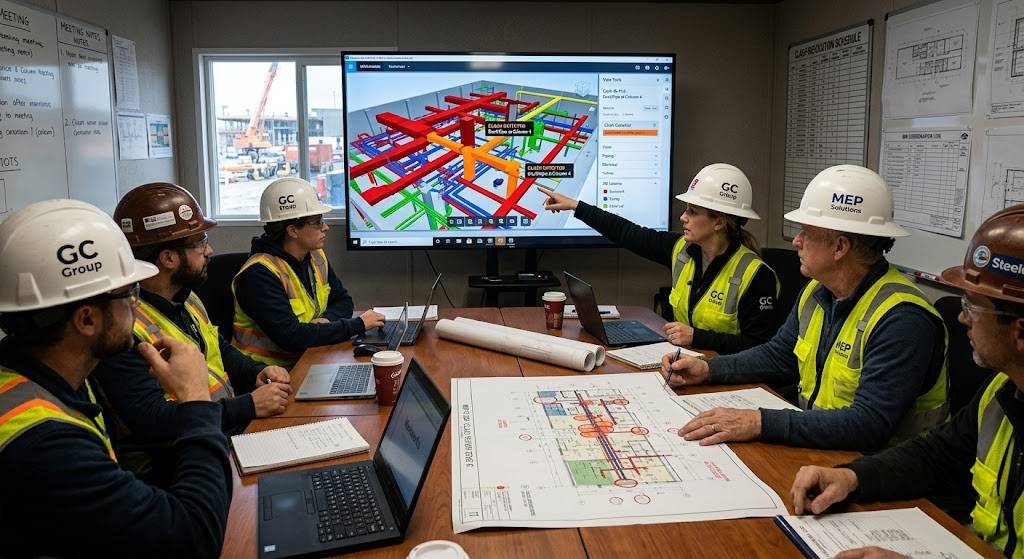
One of the biggest risks in prefabrication is discovering that a component does not fit once it arrives on-site. A pipe rack that conflicts with a beam, a duct section that runs through a structural member, a conduit bundle that has no clear path through a congested ceiling. When these problems are discovered in the field, they are expensive and time-consuming to fix. When they are discovered in the model, they cost almost nothing to resolve.
Clash detection for prefabrication is the process of identifying and resolving conflicts between building systems in the BIM model before fabrication begins. This is a critical quality gate in any prefabrication workflow. Every component that will be built off-site must be verified against the coordinated model to ensure it will fit in the field.
Clash detection is not a one-time event. It is an iterative process that happens throughout the coordination phase, with each trade updating their models, running clash reports, and resolving conflicts in coordination meetings. By the time fabrication begins, the model should represent a buildable, conflict-free design that can be fabricated with confidence.
See how BIM clash detection services support prefabrication coordination for complex MEP systems.
Benefits General Contractors See on Prefabrication Projects
GCs who have integrated prefabrication into their project delivery model report consistent advantages across several areas.
Schedule Compression
When MEP assemblies are being fabricated in a shop while the structure is still being built on-site, schedule activities happen in parallel rather than in sequence. A project that might take 18 months in a traditional sequence can often be delivered in 14 to 15 months with a well-planned prefabrication strategy.
Reduced On-Site Labor
Prefabrication shifts labor from the job site to a controlled shop environment. This reduces the number of workers needed on-site at any given time, simplifying site logistics, reducing congestion, and lowering the risk of safety incidents. For GCs managing complex urban projects where site space is limited, this is a significant advantage.
Improved Quality Control
Factory conditions are more consistent than field conditions. Fabricators work in well-lit, temperature-controlled environments with proper tooling and quality inspection processes. Components produced in a fabrication shop are typically more precise and consistent than those built in the field.
Lower Rework Costs
Because prefabrication is driven by a coordinated BIM model with clash detection completed before fabrication, the rate of field rework drops significantly. According to the Construction Industry Institute, rework can account for 5 to 15 percent of total project costs on traditionally delivered projects. Prefabrication programs typically see a fraction of that rework rate.
What General Contractors Need to Implement Prefabrication Successfully?
Prefabrication is not a plug-and-play solution. It requires early planning, disciplined coordination, and clear communication between the GC and all trade partners. Here are the key elements that successful prefabrication programs have in common.
- Early subcontractor involvement so that trade partners can begin BIM coordination before the design is finalized
- A defined BIM execution plan that establishes model authoring responsibilities, coordination schedules, and clash detection protocols
- Clear fabrication milestones that are tied to the construction schedule so that prefab components arrive on-site at the right time
- Logistical planning for delivery and staging of prefab components, particularly on constrained urban sites
- A fabrication partner or in-house shop capability that can handle the volume and complexity of the work
Explore how MEP prefabrication BIM services can help your team build a coordinated prefabrication workflow from the ground up.
The Trades That Benefit Most
While general contractors drive the prefabrication strategy, the trades that benefit most directly are the MEP contractors. Mechanical contractors prefabricate duct assemblies, air handling unit connections, and equipment skids. Electrical contractors prefabricate conduit racks, panel assemblies, and wire harnesses. Plumbing contractors prefabricate pipe spools, header assemblies, and fixture rough-in units.
Explore how BIM services for mechanical contractors and BIM services for electrical contractors can help these trades participate effectively in a GC-led prefabrication program.
The Competitive Advantage of Prefabrication
In a market where owners demand faster schedules and developers face intense pressure to deliver on time and on budget, general contractors who offer credible prefabrication capabilities gain a real competitive advantage. However, it is no longer enough to simply claim you use BIM. Instead, owners now expect to see a proven workflow that seamlessly connects digital coordination to physical fabrication and on-site installation.
Furthermore, GCs who invest in BIM coordination, clash detection, and MEP prefabrication workflows are winning more work and delivering projects faster. As a result, they are building reputations as the kind of contractors who can be trusted with complex, schedule-driven projects.
Ultimately, prefabrication is not just the future of construction; it is the present. Therefore, the general contractors who adopt these methods now will be better positioned to compete for the projects that matter most in the years ahead.
Author



Author



Scaffolding plays an important role in construction, renovation, repair, and maintenance work. It gives workers a stable platform at height and makes it easier to move tools and materials around a site. However, every scaffold does not offer the same level of strength, mobility, or durability. The material used in its construction can directly affect how well it performs.
For contractors, choosing the right Scaffolding Materials can improve safety, reduce labor requirements, and control project costs. The right choice also depends on the type of building, expected load, project duration, and local weather conditions.
If you are working on a project in the UAE, you may also need to decide whether to purchase equipment or use scaffolding rental in Abu Dhabi. Rental can provide greater flexibility, especially when project requirements change from one site to another.
Why Scaffolding Material Matters
The material of a scaffold affects several important factors. First, it determines how much weight the structure can safely handle. Second, it influences how well the scaffold performs under heat, humidity, and other environmental conditions.
Weight also matters. Lightweight equipment can make transportation and installation easier. On the other hand, heavier materials often provide greater strength and stability.
Cost is another consideration. Buying equipment requires an initial investment. It also creates ongoing expenses for storage, maintenance, transportation, and inspections. For short-term projects, rental may offer a more practical alternative.
In Abu Dhabi, environmental conditions deserve particular attention. High temperatures, humidity, and coastal air can contribute to corrosion. Therefore, contractors should choose materials that can withstand the conditions at the project site.
Common Scaffolding Materials
Steel Scaffolding
Steel remains one of the most popular choices for demanding construction projects. It offers excellent strength and can support substantial loads when contractors install and use it correctly.
Steel also provides good durability and fire resistance. With proper care, it can serve across many projects. However, steel has one major drawback: its weight. Workers need more effort and suitable equipment to transport and assemble it.
Steel can also develop rust when exposed to moisture without adequate protection. For this reason, galvanized steel often works well in environments where corrosion presents a concern.
For high-rise buildings, industrial facilities, and major commercial developments, steel remains a reliable option. Contractors can also choose scaffolding rental in Abu Dhabi to access steel systems without purchasing and storing large quantities of equipment.
Aluminum Scaffolding
Aluminum offers a lighter alternative to steel. Workers can move, assemble, and dismantle aluminum structures more easily. This feature makes them particularly useful for jobs that require frequent repositioning.
Aluminum also resists rust and corrosion naturally. As a result, it can work well for indoor maintenance, painting, electrical work, façade cleaning, and smaller renovation projects.
However, aluminum does not normally match steel for heavy load applications. It can also cost more per unit. Therefore, contractors should avoid choosing aluminum simply because it is lightweight. They should first check the project’s load and height requirements.
Timber Scaffolding
Timber has a long history in construction and remains relevant in some traditional and specialized applications. It costs less than many metal alternatives and can be cut or adjusted when a project requires a custom fit.
Wood also does not conduct electricity, which can provide an advantage in certain work environments. However, timber requires careful inspection. Moisture, insects, rot, and physical damage can weaken the material over time.
Modern construction projects increasingly favor metal systems because they offer more predictable performance and easier standardization. Local regulations and site requirements should always guide the final decision.
Bamboo Scaffolding
Bamboo may seem unusual in the UAE, but it remains an important scaffolding material in several parts of the world. It is lightweight, flexible, renewable, and relatively affordable where local supplies are available.
Despite these advantages, bamboo has limitations. Natural variations can affect its strength, while moisture, pests, and fire can create additional concerns. It also does not provide the same level of standardization as engineered metal systems.
For these reasons, bamboo has limited use in Abu Dhabi. Still, understanding it helps contractors appreciate how different regions approach temporary access structures.

Scaffolding Systems and Material Choices
The material is only one part of the decision. Contractors must also consider the type of scaffolding system they need. Tube-and-coupler systems use individual tubes and connectors. They offer considerable flexibility and work well around buildings with unusual shapes or complex designs.
Frame scaffolding uses prefabricated sections that workers can assemble quickly. It suits projects with repetitive tasks and straightforward layouts.
System scaffolding, such as cuplock or ringlock systems, commonly uses galvanized steel. Its locking design provides strong connections and makes it suitable for larger construction and infrastructure projects.
Suspended scaffolding takes a different approach. It hangs from the building and works particularly well for façade maintenance, window cleaning, and exterior repairs on tall structures.
How to Select the Right Material
Start by looking at the project’s scale. Large construction sites often need the strength of steel, while smaller maintenance jobs may benefit from lightweight aluminum.
Next, consider how long you need the equipment. If you only require scaffolding for a few weeks or months, scaffolding rental in Abu Dhabi can reduce the financial burden of ownership.
The environment matters too. Abu Dhabi’s heat, humidity, and coastal conditions can affect metal equipment. Corrosion-resistant options can therefore provide better long-term performance.
Finally, never overlook safety requirements. Choose equipment that matches the project’s expected loads and complies with applicable UAE safety standards. Proper assembly, inspection, and use remain just as important as the material itself.
Why Rental Can Be a Smart Choice
Buying scaffolding can require considerable capital. You also need suitable storage space and a plan for regular maintenance. These responsibilities can become expensive when equipment sits unused between projects.
With scaffolding rental in Abu Dhabi, contractors can choose equipment according to the needs of each job. Rental companies may offer different sizes, systems, and materials. This flexibility can help businesses avoid investing in equipment they rarely use.
Rental can also simplify equipment management. Once the project ends, the supplier takes the equipment back. Contractors do not need to arrange long-term storage or handle every maintenance requirement themselves.
Final Thoughts
Choosing suitable Scaffolding Materials requires more than comparing prices. Contractors need to consider strength, weight, durability, environmental conditions, project duration, and safety requirements.
Steel provides dependable strength for demanding projects. Aluminum offers greater mobility for lighter work. Timber still has specialized uses, while bamboo remains relevant in certain international markets.
For UAE contractors, the right rental partner can make the selection process easier. With access to suitable equipment and flexible rental options, project teams can focus on completing their work safely and efficiently. In the end, the best Scaffolding Materials are those that match the site’s practical requirements while supporting safe and productive work.
A careful evaluation before installation can prevent unnecessary costs and delays. More importantly, it helps create a safer working environment for everyone on the construction site.
Author


In high-end commercial fit-outs and luxury residential projects, precision plays a major role in turning creative interior concepts into finished spaces. Architects may develop impressive designs, but manufacturers and contractors need much more than visual concepts to build them accurately. They need clear dimensions, material details, joinery information, and installation guidance.
An Interior Shop drawing process connects design intent with practical manufacturing. It gives fabricators and contractors a reliable reference before production begins. This approach works especially well for custom cabinetry, feature walls, reception desks, built-in furniture, and detailed millwork.
Turning Interior Designs Into Production-Ready Details
Initial design drawings often communicate the overall appearance of a space. However, they may not contain every detail required for fabrication. That gap can create confusion during manufacturing and installation.
Detailed interior shop drawings solve this problem. They translate design concepts into precise production information. These drawings can include dimensions, material specifications, hardware details, joinery methods, elevations, sections, and installation requirements.
An Interior Shop drawing also helps project teams identify potential issues before fabrication starts. For example, a cabinet may appear suitable on a design plan but clash with a structural column once manufacturers review its exact dimensions. A detailed drawing can reveal that conflict early. The team can then modify the design digitally instead of making expensive changes on-site.
How CAD Drawings Improve Interior Construction
Modern CAD technology makes the drafting process faster and more accurate. High-quality interior CAD drawings create a central reference that architects, fabricators, contractors, and project managers can use throughout the project.
These drawings provide accurate measurements and clearly identify important construction details. They can also show hardware positions, material transitions, connection points, and clearance requirements. CAD software can further support virtual coordination. Drafting teams can review different components and identify possible clashes between cabinetry, walls, structural elements, electrical systems, plumbing, and HVAC components.
This early coordination reduces the risk of installation problems. It also helps contractors avoid unnecessary rework. Working with professional shop drawing services gives construction teams additional support during this stage. Experienced drafters can review spatial requirements and prepare drawings that manufacturers can use with confidence.
Reducing Waste and Improving Project Efficiency
Accurate interior construction drawings can directly improve project efficiency. When fabricators receive clear information, they can produce components with fewer assumptions. This reduces the chances of incorrect cuts, unsuitable materials, and repeated fabrication.
A well-prepared Interior Shop drawing package can also simplify the approval process. Architects and design teams can review detailed drawings before production. They can confirm dimensions, finishes, materials, and construction methods at an early stage. This process offers several practical advantages:
- Less field rework: Accurate fabrication information reduces the need for on-site modifications.
- Lower material waste: Precise dimensions help manufacturers use materials more efficiently.
- Faster approvals: Clear drawings make design reviews easier and more organized.
- Better trade coordination: Teams can identify conflicts between interior elements and MEP systems.
- Consistent quality: Detailed drawings help maintain the same standards across multiple units or locations.
Professional millwork shop drawing services can also provide production-ready documentation. These drawings help manufacturers maintain design accuracy while keeping fabrication workflows organized.
Drafting Custom Cabinets and Millwork
Custom cabinetry requires careful planning because small errors can affect the entire installation. Drawings should identify door clearances, drawer dimensions, hinge positions, hardware requirements, shelf supports, and edge treatments.
Drafters should also consider material behavior. Wood can expand or contract when environmental conditions change. Proper allowances can help maintain smooth door and drawer operation over time.
An experienced Interior Shop drafting team can document these requirements before fabrication. This gives manufacturers clear instructions and helps installers understand how each component should fit together.

Designing Feature Walls and Decorative Panels
Feature walls often combine visual appeal with complex installation requirements. Designers may specify large panels, decorative patterns, concealed fixings, or continuous grain matching. Each element requires careful coordination.
Detailed drawings can show panel dimensions, support frames, concealed cleats, expansion gaps, and fixing locations. They can also identify substrate conditions and load-transfer requirements.
For commercial projects, retail shop drawing services can help teams coordinate decorative elements with the demands of busy public spaces. Proper planning can improve both appearance and long-term performance.
Coordinating Built-In Interior Elements
Reception counters, banquettes, display units, and other built-in features often combine several materials. A single component may include timber, stone, glass, metal, acrylic, or other finishes.
Such combinations require precise coordination. Drawings should explain how materials connect and where installers should place joints, supports, access panels, and fixing points.
A detailed Interior Shop package can also include assembly information. This helps installers understand the correct sequence and reduces the risk of damaging expensive pre-finished surfaces.
Coordination with flooring and other interior finishes matters as well. Specialized drawing services can help teams achieve clean transitions and accurate junctions between different materials.
Why Work With a Professional Drafting Company?
Managing complex drafting work internally can create challenges. A company may need additional CAD staff during busy project periods. It may also need specialized knowledge for complex millwork, cabinetry, and interior fabrication.
A professional drafting company offers a more flexible solution. Project teams can access experienced drafters without maintaining a large permanent drafting department.
A reliable Shop drawing partner can also support faster turnaround and consistent documentation. Experienced professionals understand fabrication requirements and can adapt drawings to suit project standards.
They can also help teams coordinate changing design requirements and manufacturing technologies. As a result, contractors and manufacturers can focus more on production and installation instead of spending excessive time resolving drafting issues.
Supporting Better Communication Across Project Teams
A detailed Interior Shop drawing package also improves communication between architects, designers, fabricators, contractors, and installers. Everyone can work from the same approved information instead of relying on assumptions or verbal instructions. This shared reference helps teams resolve questions faster and keeps design changes organized.
Clear drawings also make it easier to track revisions throughout the project. When a designer changes a dimension, finish, hardware specification, or installation detail, the team can update the relevant drawing before production begins. This reduces confusion and helps prevent outdated information from reaching the fabrication floor.
Furthermore, well-structured drawings give project managers better control over production schedules. Fabricators can understand requirements earlier and plan their work more efficiently. Installers can also review assembly and positioning details before components arrive on-site.
As a result, projects can move smoothly from design approval to fabrication and final installation. Better communication ultimately supports consistent quality, fewer delays, and a finished interior that closely matches the approved design.
Final Thoughts
Accurate interior drawings form an important link between design, fabrication, and installation. They help project teams identify conflicts early, reduce waste, improve communication, and maintain design quality.
From custom cabinets and feature walls to complex built-in furniture, detailed drafting provides manufacturers with the information they need to work accurately.
Choosing professional drafting support can therefore make complex interior projects more predictable and efficient. With the right drawings in place, teams can reduce costly site changes, improve coordination, and deliver finished interiors that closely match the approved design.
Author


Car Maintenance: 7 Essential Summer Checks for Safer Driving

Digital Marketing Launceston: Grow Your Business Online

Drafting Services: Accurate CAD Solutions for Construction

Ghostwriter Cost 2026: Pricing, Services and Hiring

Carsicko Hoodie’s: Modern Streetwear Styling and Outfit Ideas

Business Opportunities in Brazil 2026: Ideas & Investment Tips

Best Cashback Mortgages UK: Compare Deals & Savings

Loan Settlement: Process, Credit Score Impact & Repayment Tips

Everyday Style: Common Projects Sneakers UK Styling Tips

Commercial Truck Financing Options for Business Owners

Cybersecurity Consulting Company SequelNet Provides Critical IT Support Services to Medical Billing Firm, Medical Optimum

Meet the Megalodon: The Shark Star of ‘Meg 2’

Reduce Video Game Lag: Level Up Your Gaming Performance

Balancing India’s Entertainment: Cricket vs. Bollywood

Jetsetter’s Secrets: Unveiling Our Favorite Travel Hacks for a Seamless Adventure

The 5 Best Live Sports Streaming Sites: Legal and Exciting!

Hollywood Labor Unrest: The Impact of ‘What About Us?’ Strikes

Unveiling the Magic of Dream Fulfillment at the Late NBA Draft

Illuminate Your Skin: Dr. Axe Unveils Natural Remedies for Lightening Knees and Elbows

Bright Choices: Navigating the Pros and Cons of Skin Whitening Creams with Dr. Axe
-

 Business3 years ago
Cybersecurity Consulting Company SequelNet Provides Critical IT Support Services to Medical Billing Firm, Medical Optimum
-
Entertainment3 years ago
Meet the Megalodon: The Shark Star of ‘Meg 2’
-
Entertainment3 years ago
Reduce Video Game Lag: Level Up Your Gaming Performance
-
 Sports3 years ago
Balancing India’s Entertainment: Cricket vs. Bollywood
-
Entertainment3 years ago
Jetsetter’s Secrets: Unveiling Our Favorite Travel Hacks for a Seamless Adventure
-
Productivity3 years ago
The 5 Best Live Sports Streaming Sites: Legal and Exciting!
-
Art /Entertainment3 years ago
Hollywood Labor Unrest: The Impact of ‘What About Us?’ Strikes
-
Sports3 years ago
Unveiling the Magic of Dream Fulfillment at the Late NBA Draft






