
Technology
US-China Tech War: ASML Halts Shipments of Key Chip-Making Equipment to China


US-China Tech War: ASML Halts Shipments of Key Chip-Making Equipment to China
Introduction
Hi, I’m John Smith, a tech journalist and analyst with over 10 years of experience covering the global semiconductor industry. In this article, I will explain why ASML, the Dutch company that makes the world’s most advanced chip-making machines, has stopped selling its key equipment to China, and what this means for the US-China tech war, the global supply chain, and the future of innovation.
What is ASML and why is it important?
ASML is the world’s largest maker of lithography machines, which use lasers to print minuscule patterns on silicon wafers as part of the manufacturing process of microchips. These chips power everything from smartphones and computers to cars and military hardware. ASML is the only company that can produce extreme ultraviolet (EUV) lithography machines, which can create chips with features as small as 5 nanometers, or about the width of a strand of DNA. These chips are faster, more powerful, and more energy-efficient than the current generation of chips, and are essential for the development of emerging technologies such as artificial intelligence, 5G, and quantum computing.

Picture by: https://kauppa.aican.fi/semiconductor-equipment-maker-asml-profit-rises-on-record-bookings-tt-NYpjYAse
Why has ASML stopped selling its equipment to China?
Since 2019, the Dutch government has blocked ASML from exporting its EUV machines to China, under pressure from the US, which sees China as a strategic rival and a potential threat to its technological supremacy. The US has accused China of stealing intellectual property, violating trade rules, and subsidizing its domestic chip industry, which aims to become self-reliant and reduce its dependence on foreign suppliers. The US has also imposed export controls and sanctions on several Chinese chip makers, such as Huawei and SMIC, limiting their access to US technology and software. In October 2020, the US announced that it would require licenses for companies exporting chips to China using US tools or software, no matter where they are made in the world.
In February 2023, the Dutch government announced that it would further restrict some tech exports to China, citing national and international security grounds. The new measures will affect “very specific technologies in the semiconductor production cycle,” including “the most advanced Deep Ultra Violet (DUV) immersion lithography and deposition,” according to the Dutch trade minister Liesje Schreinemacher. This means that ASML will not be able to sell its most advanced DUV machines to China, which are currently used by Chinese chip makers to produce chips with features as small as 14 nanometers. ASML said that it expects the restrictions to apply to its “most advanced immersion DUV systems,” and that it does not expect them to have a material effect on its financial outlook.
China has strongly protested against the Dutch move, calling it a violation of its right to develop and an abuse of export control measures by certain countries. China has also launched a formal complaint against the move at the World Trade Organization. China has frequently called the US a “tech hegemony” and accused it of trying to stifle China’s technological progress and innovation.
What are the implications of ASML’s decision for the US-China tech war, the global supply chain, and the future of innovation?
ASML’s decision to halt shipments of its key equipment to China is a significant blow to China’s ambitions to become a global leader in the semiconductor industry and to achieve technological self-reliance. China currently relies heavily on foreign suppliers for its chip-making equipment, materials, and designs, and imports more than 80% of its chip needs. Without access to ASML’s machines, China will not be able to produce the most advanced chips that are required for the development of cutting-edge technologies such as AI, 5G, and quantum computing. China will also face challenges in meeting the growing demand for chips from its domestic market, especially in sectors such as smartphones, cloud computing, and electric vehicles.

ASML’s decision is also a major win for the US, which has been leading a global campaign to isolate China from the semiconductor supply chain and to maintain its technological edge over its rival. The US has been pushing its allies, such as the Netherlands and Japan, to adopt similar restrictions on chip exports to China, and to cooperate with the US in developing alternative sources of chip supply and innovation. The US has also been investing heavily in its own chip industry, through initiatives such as the CHIPS for America Act, which provides incentives and funding for domestic chip production and research.

Image by: https://asiatimes.com
However, ASML’s decision also poses risks and challenges for the global semiconductor industry, which is highly interdependent and complex. ASML’s machines are not only used by Chinese chip makers, but also by other major players in the industry, such as Samsung, TSMC, and Intel, who supply chips to customers around the world, including China. ASML’s decision could disrupt the global supply chain and create uncertainties and inefficiencies for the industry. ASML’s decision could also trigger a backlash from China, which could retaliate by imposing tariffs, sanctions, or other measures on foreign chip suppliers or customers. ASML’s decision could also spur China to accelerate its efforts to develop its own chip-making equipment and technology, which could increase the competition and fragmentation in the industry.
ASML’s decision also has implications for the future of innovation and cooperation in the semiconductor industry, which is vital for the advancement of science and technology. ASML’s machines are the result of decades of research and development, involving collaboration and knowledge-sharing among scientists, engineers, and companies from different countries and regions. ASML’s decision could undermine the spirit of openness and collaboration that has driven the innovation and growth of the industry, and could create barriers and divisions that could hamper the progress and potential of the industry.
Conclusion
ASML’s decision to stop selling its key chip-making equipment to China is a significant development in the ongoing US-China tech war, which has profound implications for the global semiconductor industry, the global supply chain, and the future of innovation. ASML’s decision reflects the growing tensions and conflicts between the US and China over the control and access of critical technologies, and the diverging interests and values of different countries and regions in the industry. ASML’s decision also raises questions and challenges for the industry, such as how to balance security and competitiveness, how to foster cooperation and trust, and how to ensure the sustainability and resilience of the industry. ASML’s decision is not the end of the story, but rather the beginning of a new chapter in the history of the semiconductor industry, which will shape the future of the world.
Author



In the fast-paced world of modern research, speed is no longer the only metric that matters. To truly lead a market, organizations need data that is accurate, structured, and immediately ready for high-stakes decision-making. This is why Computer-Assisted Personal Interviewing (CAPI) has emerged as the gold standard for high-quality field research. By blending the nuance of face-to-face interaction with the precision of digital technology, CAPI services provide a level of insight that traditional methods simply cannot match.
What Exactly Are CAPI Services?
CAPI refers to interviewer-led, in-person surveys where responses are recorded directly into a digital device, such as a tablet or smartphone. Think of it as the digital evolution of the traditional clipboard-and-pen survey. Instead of dealing with messy handwriting and manual data entry, CAPI uses sophisticated, pre-programmed questionnaires. This ensures that every interview follows a strict, logical flow and that data is captured with 100% accuracy from the very first tap.
Key features that define CAPI include:
-
Interviewer-Led Interaction: Maintains the personal touch needed for complex topics.
-
Digital Survey Programming: Eliminates “human error” in following survey paths.
-
Smart Skip Logic: Automatically hides irrelevant questions based on previous answers.
-
Real-Time Monitoring: Supervisors can track progress as it happens.
-
Offline Capability: Critical for research in remote or low-connectivity areas.

How CAPI Market Research Works: A Step-by-Step Breakdown
A professional CAPI project is a structured journey from a raw question to a refined insight. Here is how the process typically unfolds:
1. Advanced Questionnaire Programming
Before anyone enters the field, the survey is digitally “built.” This phase involves setting up mandatory fields, multi-language support, and validation rules. These rules act as a safety net; for example, if an interviewer enters an age that doesn’t make sense for the study, the device will flag it instantly. This eliminates manual errors before they ever reach the database.
2. Strategic Field Data Collection
Trained interviewers head into the field equipped with secure mobile devices. One of the most powerful aspects of CAPI is its offline functionality. Interviewers can collect hundreds of responses in rural areas or basements without an internet connection. Once they return to a Wi-Fi zone, the data syncs perfectly to the central server.
3. Real-Time Quality Control
Gone are the days of waiting weeks to see if a field team is performing well. Supervisors use live dashboards to monitor interview lengths, response patterns, and even GPS locations. This ensures the data is being collected ethically, accurately, and according to the set quotas.
4. Automated Data Cleaning and Delivery
Because the data is digital from the start, the “cleaning” phase is incredibly fast. Clients receive a structured dataset, complete with codebooks, that is ready for immediate analysis. There is no downtime for manual data entry, which drastically shortens the project timeline.
Comparing Methodologies: Why Choose CAPI?
To understand the value of CAPI, it helps to see where it sits among other common research methods:
-
CAPI: Face-to-face and digital. Offers the highest data depth and accuracy.
-
CATI (Telephone): Great for speed, but lacks the non-verbal cues of in-person meetings.
-
CAWI (Online): Cost-effective, but relies on the respondent’s self-discipline and internet access.
-
PAPI (Paper): The traditional method. Slow, prone to errors, and expensive to digitize.
CAPI stands out because it offers the best of both worlds: the personal connection of an interview with the digital guardrails of a computer.
The Practical Advantages of the CAPI Approach
Organizations across the globe are shifting to CAPI for several clear reasons:
-
Zero Entry Errors: The software handles the data, so there are no “typos” or illegible notes.
-
Superior Consistency: Every respondent experiences the survey exactly as intended.
-
Rapid Turnaround: You get insights in days, not months.
-
Enhanced Supervision: You have total visibility into the fieldwork at all times.
-
Complexity Management: Easily handle studies with 10+ languages or complex branching logic.
Who Benefits Most from CAPI?
While versatile, CAPI is particularly transformative for specific sectors:
-
Market Research: Ideal for brand tracking and consumer behavior studies across diverse regions.
-
Healthcare & Life Sciences: Perfect for facility assessments and sensitive patient feedback.
-
Government & Public Sector: The standard for household surveys and social impact assessments in rural communities.
When should you look at other options? If your budget is extremely tight, the topic requires total anonymity without an interviewer present, or your audience is exclusively reachable via a quick phone call, a different method might be more efficient.
The Value of Professional Execution
Data is only as good as the process used to collect it. Partnering with a professional CAPI provider ensures:
-
Elite Interviewer Training: Professionals who know how to build rapport and handle technical devices.
-
Data Security: Encrypted devices and secure cloud storage to protect respondent privacy.
-
Actionable Outputs: Datasets that are cleaned and formatted for your specific analysis software.
When your decisions carry significant weight, you cannot afford to rely on shaky data. Professional oversight turns a simple survey into a powerful strategic tool.
Conclusion: Turning Field Data into Success
CAPI Services represent the future of field data collection. By combining the empathy of human interaction with the ironclad logic of digital tools, CAPI enhances every stage of the research process. It allows you to explore diverse geographies and complex topics with total confidence.
Whether you are conducting large-scale social research or a multi-region brand study, CAPI provides the scalability and reliability you need to succeed. With the right expertise, you can transform raw field data into the meaningful insights that drive your organization forward.
Ready to start your next research project with precision? Tell us what you are exploring today. Our team is ready to propose a practical research plan, a clear timeline, and a strategy that turns your data into decisions.
Let’s connect and turn your vision into a successful reality. Explore more about modern research techniques, including our guide on CATI: Turning Telephone Conversations into Reliable Research.
Author


Picture yourself as the Head of Strategy for a rapidly growing company. Your CEO walks into your office on a Monday morning with a bold directive: “We need to expand into Southeast Asia. Where do we start?”
This is a massive opportunity, but the stakes are incredibly high. You don’t have months to organize focus groups. You haven’t launched any consumer surveys yet. However, you do have access to a powerful, often overlooked tool: Desk Research.
When used correctly, Desk Research acts as the foundation for any successful expansion. It allows you to move with speed, slash uncertainty, and make decisions based on hard evidence. Most importantly, it lets you do all of this before you commit a single dollar of your primary research budget.
What Exactly Is Desk Research?
Desk Research—frequently called Secondary Research—is the process of gathering and analyzing information that already exists. Instead of going out and talking to new people, you are mining credible, published sources to find the answers you need.
Top-tier strategy teams leverage several key resources:
-
Industry and Market Reports: High-level overviews of specific sectors.
-
Government and Trade Statistics: Hard data on imports, exports, and demographics.
-
Financial Filings: Competitor investor presentations and annual reports.
-
News and Press Releases: Real-time updates on market shifts and partnerships.
-
Academic Journals: Deep dives into consumer behavior and regulatory trends.
Secondary Research isn’t just a passive activity. When done systematically, it reveals hidden patterns and risks that others might miss.

Why Desk Research Is a Strategic Necessity
In the modern business world, speed is everything. Markets evolve in the blink of an eye, and leaders cannot afford to rely on “gut feelings.” Here is how Desk Research strengthens your position:
1. Mapping the Real Competitive Landscape
When you enter a new region like Southeast Asia, your biggest rivals might not be who you expect. Local startups and regional powerhouses often have a head start. Desk Research allows you to map out who these players are, analyze their pricing models, and identify where they are failing to meet customer needs.
2. Assessing Market Size and Potential
Is the opportunity worth the investment? By looking at historical growth trends and demand forecasts, you can determine if a market is emerging, mature, or already saturated. This prevents you from pouring capital into a region that has already peaked.
3. Tracking Shifts in Consumer Taste
Preferences for sustainability, digital payments, and brand loyalty vary wildly across borders. Secondary Research uncovers these cultural nuances. This allows you to tailor your product before you launch, rather than trying to fix a mistake in real-time.
4. Navigating Regulatory Minefields
Every country has its own set of rules regarding trade, taxes, and compliance. Desk Research helps you anticipate these requirements. By understanding licensing and foreign investment rules early, you avoid the costly delays that come with legal missteps.
5. Spotting Macroscopic Risks
Markets are shaped by more than just customers. Geopolitical tensions, currency fluctuations, and infrastructure developments play a huge role. Proactive research keeps your organization agile and ready to pivot when the global landscape shifts.
Desk Research vs. Primary Research: The Difference
While both are important, they serve very different roles in your strategy.
-
Desk Research (Secondary): Uses existing data to answer foundational questions. Is this market attractive? Who are the key players? What are the risks?
-
Primary Research: Collects new data through surveys and interviews to test specific hypotheses.
Think of it this way: Desk Research tells you where to dig. Primary Research is the actual digging. By starting with the “desk” phase, you ensure your primary research is focused on the most valuable targets.
Turning Raw Information into a Competitive Advantage
Simply collecting links and PDFs isn’t enough. The real value comes from interpretation. To do this effectively, you must follow a structured process:
-
Define Your Objectives: Don’t just “look for info.” Ask specific questions like, “Which country has the highest demand for our specific tech?”
-
Prioritize Credibility: Use government data and reputable financial disclosures over random blog posts.
-
Triangulate Your Findings: Never trust just one source. Compare multiple reports to see if the data aligns.
-
Find the Gaps: Identify what you don’t know. These gaps become the focus for your next phase of research.
Conclusion: Build Your Foundation First
If your organization is eyeing a move into Southeast Asia or any new territory, don’t go in blind. Ambition is great, but insight is better. Desk Research provides the clarity needed to act with confidence and responsibility.
It isn’t just a preliminary step; it is a strategic asset. By the time you launch your first survey or open your first local office, you should already have a clear picture of the market readiness and competitive intensity.
Your Next Move Starts Here. Strategic growth requires a foundation of facts. Before you take that first high-stakes step, let the data guide you.
At UnivDatos, we provide the Extended Research Services you need to turn global data into local success. We help you validate your assumptions so you can move from idea to action faster.
Author
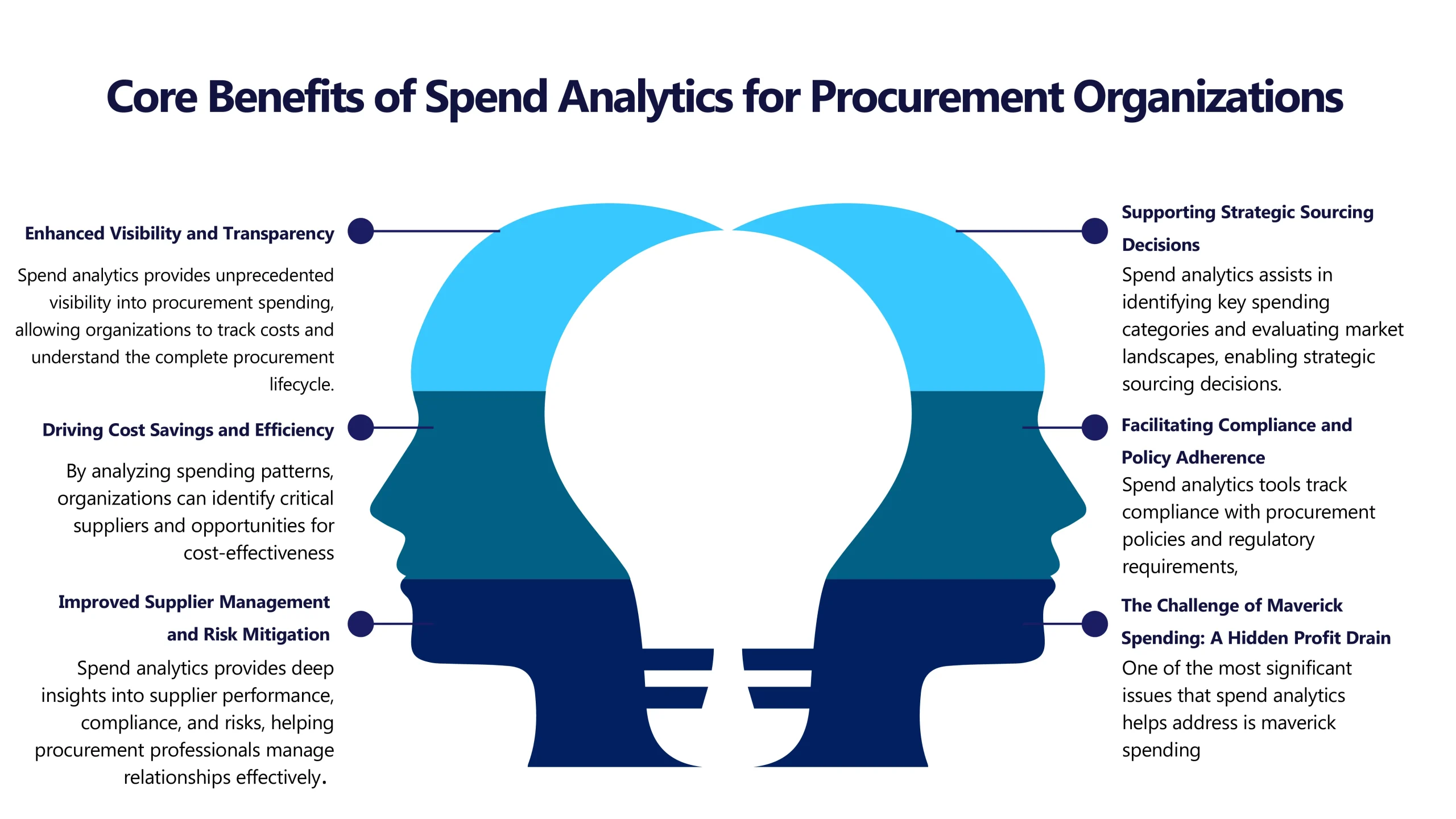
In many modern organizations, skyrocketing procurement costs aren’t always a result of higher demand. Instead, the real culprit is often a lack of visibility. When departments buy independently, supplier contracts vary wildly, and financial data stays trapped in isolated systems, leadership loses control. Without a clear, bird’s-eye view of where the money is going, it becomes nearly impossible to tell if the organization is spending efficiently or just leaking cash.
Spend Analytics is the solution to this fragmentation. It transforms messy, disconnected purchasing data into clear, actionable insights. By using these insights, leaders can make smarter financial decisions and optimize their entire procurement engine.
What Exactly Is Spend Analytics?
At its core, Spend Analytics is the practice of collecting, cleaning, and categorizing your organization’s spending data. The goal isn’t just to see what you spent, but to understand the “how” and “why” behind every dollar.
Rather than looking at a simple list of expenses, this process shines a light on:
-
Supplier Concentration: Are you overly dependent on one vendor?
-
High-Spend Categories: Where is the bulk of your capital flowing?
-
Contract Compliance: Are people buying at the negotiated rates?
-
Pricing Consistency: Is one department paying more than another for the same item?
-
Consolidation Opportunities: Can you bundle orders to save more?

The 5 Stages of a High-Performing Spend Strategy
Turning raw data into a “strategic goldmine” requires a structured approach. Here is how the process works from start to finish.
1. Consolidation of Data
The first step is gathering data from every corner of the business. This includes ERP systems, purchase orders, accounts payable records, and even corporate credit card transactions. By pulling everything into one place, you ensure no “hidden” spending remains off the radar.
2. Data Cleansing and Standardization
Raw data is notoriously messy. One supplier might be listed under three different names, and currencies might not match. Cleansing involves unifying these names, normalizing currencies, and removing duplicate entries. Clean data is the only foundation for an accurate analysis.
3. Categorization
Once the data is clean, it needs a home. Spending is grouped into logical categories like “IT Services,” “Logistics,” or “Raw Materials.” This allows managers to compare supplier performance within a specific niche and identify where the best deals are happening.
4. Insight Generation
This is where the magic happens. With categorized data, you can spot trends, identify “maverick” spending (purchases made outside of official contracts), and see exactly where budgets are drifting. These insights turn procurement from a reactive task into a proactive strategy.
5. Continuous Monitoring
Spend analytics is not a “one-and-done” project. It requires ongoing oversight to track cost-per-unit trends and ensure that departments are actually sticking to the new, optimized supplier strategies.
Procurement vs. Spend Analytics: What’s the Difference?
While the terms are often used interchangeably, Procurement Analytics is actually broader. While spend analytics focuses on the money, procurement analytics looks at the overall health of the supply chain. It includes:
-
Supplier Risk Assessment: How reliable is this vendor during a crisis?
-
Negotiation Performance: How much did we actually save during the last round of talks?
-
Future Forecasting: What will we need to buy six months from now?
Together, these two disciplines create a powerhouse of organizational governance.
Why Should Your Organization Invest in This?
The benefits of a data-driven procurement function go far beyond simple cost-cutting. Organizations that master their data see a ripple effect of improvements:
-
Total Visibility: You finally have a centralized view of every dollar spent across every department.
-
Negotiation Power: When you know exactly how much you spend with a supplier, you have much more leverage to ask for better rates.
-
Risk Reduction: Identifying off-contract spending helps you steer employees back toward vetted, compliant vendors.
-
Accurate Planning: Better data leads to better budgets. You can forecast demand with much higher precision.
Is Spend Analytics Right for You?
This approach is most effective when procurement data is scattered across multiple systems or when a company has a massive, decentralized supplier base. If your profit margins are under pressure or your leadership is demanding a clear plan to reduce costs, structured analytics provides the clarity you need.
It isn’t just for global giants, either. Mid-sized companies undergoing digital transformation often find that spend analytics is the fastest way to find “quick win” savings that can be reinvested into growth.
Take Control of Your Strategy
In a world where data is the new currency, a “gut feeling” is no longer enough to manage a supply chain. Spend Analytics provides the structure and insight needed to turn procurement into a competitive advantage. By consolidating fragmented data, you gain the transparency required for long-term profitability and financial discipline.
Ready to transform your procurement data into a strategic asset? At UnivDatos, we specialize in helping brands unlock the hidden potential in their financial records. Our Procurement Management & Consulting Services are designed to support your growth goals with precision and expertise.
Author


Online Embroidery Designs: Tips & Modern Machine Techniques

Biopolymers Market: Trends, Growth & Sustainable Materials

Slice Master Game: Tips, Tricks & High-Score Strategies

Eyelid Surgery in Islamabad: Top Clinics for Blepharoplasty

Rudsak Canada: Premium Winter Jackets, Boots & Outerwear

Liposuction: Cheap vs Premium Clinics for Effective Results

Vaibhav Sooryavanshi IPL: R Ashwin Praises 15-Year-Old

Freelancer vs Dedicated WordPress Developer: Best for Website?

ICO Development Guide: Launch a Successful Token Offering

Cylinder Packaging & Boxes with Logo: Packaging Solutions

Cybersecurity Consulting Company SequelNet Provides Critical IT Support Services to Medical Billing Firm, Medical Optimum

Team Communication Software Transforms Operations at Finance Innovate

Project Management Tool Transforms Long Island Business

How Alleviate Poverty Utilized IPPBX’s All-in-One Solution to Transform Lives in New York City

Breast Cancer: The Imperative Role of Mammograms in Screening and Early Detection

Unstoppable Collaboration: D.C.’s Citi Open and Silicon Valley Classic Unite to Propel Women’s Tennis to New Heights

Embracing Renewal: Sizdabedar Celebrations Unite Iranians in New York’s Eisenhower Park

The Benefits of Starting a Side Hustle for Financial Freedom

New Blood Donation Screening Questions What You Need to Know

Stylishly Timeless: The 5 Types of Sandals You Need in Your Closet
-

 Business3 years ago
Cybersecurity Consulting Company SequelNet Provides Critical IT Support Services to Medical Billing Firm, Medical Optimum
-
Business3 years ago
Team Communication Software Transforms Operations at Finance Innovate
-
Business3 years ago
Project Management Tool Transforms Long Island Business
-
Business3 years ago
How Alleviate Poverty Utilized IPPBX’s All-in-One Solution to Transform Lives in New York City
-
health3 years ago
Breast Cancer: The Imperative Role of Mammograms in Screening and Early Detection
-
Sports3 years ago
Unstoppable Collaboration: D.C.’s Citi Open and Silicon Valley Classic Unite to Propel Women’s Tennis to New Heights
-
Art /Entertainment3 years ago
Embracing Renewal: Sizdabedar Celebrations Unite Iranians in New York’s Eisenhower Park
-
Finance3 years ago
The Benefits of Starting a Side Hustle for Financial Freedom







