
Finance
Top 5 Budgeting Tips to Save More Without Sacrificing Fun

By

Reviewed
By Auden Sutton

Introduction
Budgeting is often seen as the end of fun, but that’s far from the truth. In fact, learning how to manage your money smartly can actually help you enjoy life more. With better planning and smarter choices, you can save money without feeling restricted. Whether you’re a student, a young professional, or managing a family budget, the right strategies can make all the difference. This article reveals five easy and effective budgeting tips that help you save more without sacrificing the things you love.
1. Track Your Expenses Without Getting Overwhelmed
The first step in any budgeting journey is to understand where your money is going. But this doesn’t mean you have to write down every single penny or use complicated spreadsheets. There are now simple mobile apps and tools that track your spending automatically by linking to your bank account. These tools sort your expenses into categories like food, entertainment, travel, or shopping.
Once you see where your money goes, you can make small changes that don’t feel like a sacrifice. For example, if you notice you’re spending too much on takeout meals, you might decide to cook more at home and treat yourself to your favorite meal once a week.
2. Use the 50/30/20 Budgeting Rule
A popular and easy budgeting method is the 50/30/20 rule. It divides your monthly income into three simple categories:
- 50% for needs (like rent, groceries, bills)
- 30% for wants (like dining out, entertainment, shopping)
- 20% for savings and debt repayment
This rule allows you to enjoy life while also being financially responsible. You still have room for fun in the “wants” category, and your savings grow every month. It’s a flexible system that works even if your income is small or irregular.
Try setting this rule in your budget planner or app, and watch how easily your expenses stay balanced.

3. Plan Fun into Your Budget
Fun doesn’t have to be expensive, but it does need to be planned. People often overspend on fun because they don’t include it in their budget. When you give yourself a fixed amount every month to enjoy life, you can actually have more fun without the guilt or stress later.
For instance, if you love going to the movies, add that to your budget. Want to travel? Set aside a travel fund. By planning these things in advance, you get to enjoy them without using your credit card or dipping into your emergency savings.
Also, look for deals and offers. Websites often have discounts for restaurants, museums, or events. This way, you can do more for less.
4. Automate Your Savings
One of the smartest budgeting tips is to treat your savings like a regular expense. Set up an automatic transfer from your main bank account to your savings account every month. Even if it’s just a small amount, consistency matters.
This method is often called “paying yourself first.” When you do it automatically, you won’t even notice the money is gone — and over time, your savings will grow faster than you expected.
Automating your savings takes away the temptation to spend, and it removes the stress of having to remember to transfer the money yourself.
5. Revisit and Adjust Your Budget Regularly
Your income and expenses can change over time. You might get a raise, move to a new city, or pick up a side job. That’s why it’s important to review your budget at least once every three months.
Check if you’re saving enough or spending too much in any area. Maybe you’re spending more on gas now and less on subscriptions. Adjust your categories and amounts to match your current lifestyle.
This flexibility makes budgeting easier to stick with. It’s not about being strict — it’s about being aware and making smart decisions.
Bonus Tip: Make Budgeting a Positive Habit
Think of budgeting not as something you have to do, but something that empowers you. It gives you control over your money and helps you make better choices. The more you see your savings grow and your stress shrink, the more motivated you’ll feel to continue.
Budgeting doesn’t have to mean cutting out the things you love. It’s about finding balance and being intentional with your spending. Whether it’s enjoying a dinner with friends or saving for a weekend getaway, a good budget helps you make it all happen.
Sample Budget Table Using 50/30/20 Rule
| Category | Percentage | Monthly Income: $3000 | Description |
|---|---|---|---|
| Needs | 50% | $1500 | Rent, bills, groceries |
| Wants | 30% | $900 | Dining out, Netflix, shopping |
| Savings/Debts | 20% | $600 | Emergency fund, student loan, etc. |
This table is just a guide. You can adjust the percentages to suit your personal situation, but it’s a great place to start for most people.
Analysis Table: Fun Activities on a Budget
| Activity | Average Cost | Budget-Friendly Tip |
|---|---|---|
| Movie night at home | $5 | Use streaming services |
| Weekend picnic | $10 | Use homemade snacks and free parks |
| Game night with friends | $0 | Rotate host duties, use existing games |
| DIY spa day | $15 | Use store-bought masks and candles |
| Local hiking | $0 | Explore trails in your area |
These activities prove you don’t need to spend a lot to have a great time.
Comparative Table: Budgeting With vs. Without a Plan
| Factor | With Budget Plan | Without Budget Plan |
|---|---|---|
| Control over spending | High | Low |
| Stress level | Lower | Higher |
| Savings growth | Steady and consistent | Unpredictable or none |
| Lifestyle enjoyment | Balanced and guilt-free | Short-lived, often regretted |
| Financial security | Stronger | Weak or uncertain |
This comparison highlights how budgeting brings more stability and freedom.
Conclusion
Budgeting is not about saying no to everything fun. It’s about being smart with your money so you can enjoy more of what matters most. When you track your spending, follow a simple budgeting rule, automate savings, and plan ahead for entertainment, you take control of your finances without losing out on life. These five budgeting tips are designed to make saving feel easy and rewarding. Over time, you’ll build financial strength while still making room for the things you love.
Author

Finance
Financial Fraud Investigation: Corporate Fraud, AI‑Driven Detection, and Blockchain Forensics

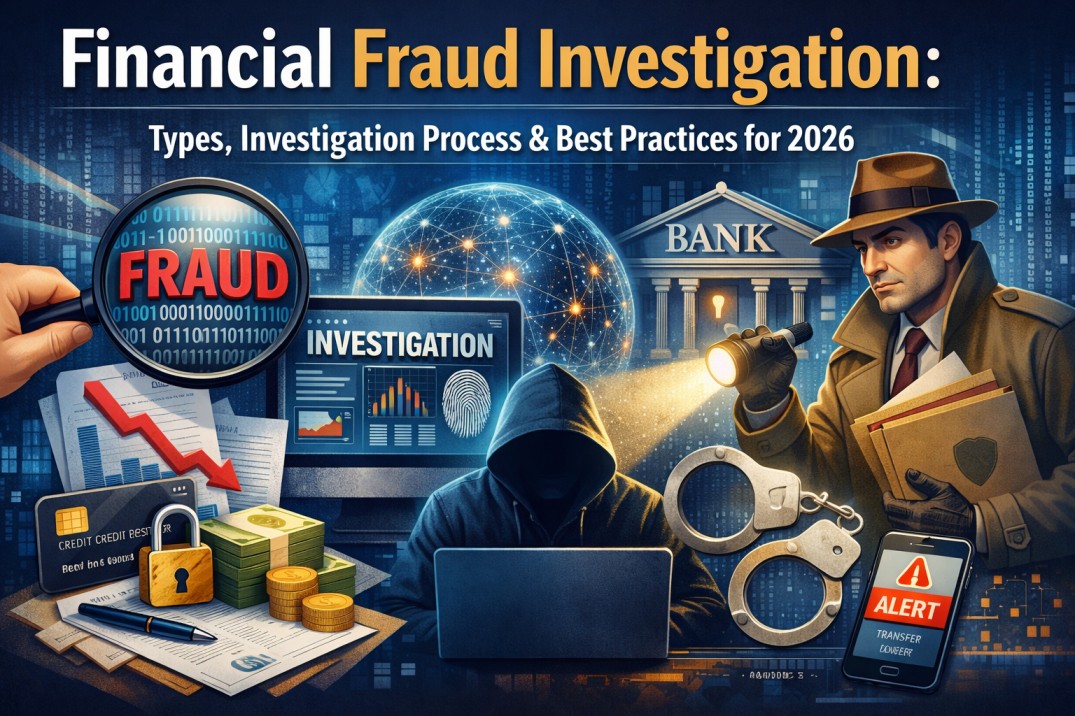
Corporate financial fraud remains a systemic threat to organizations, investors, and regulatory confidence. By 2026, investigations increasingly hinge on hybrid capabilities: traditional accounting forensics, advanced AI-driven detection, and blockchain forensics where distributed ledgers intersect corporate activity. This article outlines common corporate fraud schemes, the investigative process in the modern enterprise, how AI augments detection and prioritization, and practical blockchain forensics techniques — emphasizing legal, evidentiary, and operational best practices.
Common Corporate Fraud Schemes
Corporate fraud in 2026 continues to manifest in both classic and digitally enabled forms:
- Financial statement fraud: Revenue recognition manipulation, improper capitalization, fictitious sales, or off‑balance sheet liabilities designed to misstate performance.
- Asset misappropriation: Theft of company cash, inventory, intellectual property, or misuse of corporate credit and expense accounts.
- Corruption and bribery: Kickbacks, undisclosed related‑party transactions, and procurement fraud.
- Payroll and HR fraud: Ghost employees, falsified time reporting, and falsified severance/benefits.
- Cyber‑enabled schemes: Business Email Compromise (BEC), fraudulent wire instructions, invoice fraud through compromised accounts payable systems, and insider‑assisted cybertheft.
- Tokenization and crypto fraud: Issuance of unauthorized tokens, wash trading, spoofed on‑chain transfers to conceal embezzlement, or laundering corporate funds through DeFi protocols.
Modern Investigative Process
A disciplined, forensically sound process is essential to preserve evidence and enable remediation, civil recovery, or criminal prosecution.
-
Triage and Intake
- Define scope and objectives (regulatory, civil, criminal, internal discipline).
- Implement legal holds and immediate containment (account freezes, access revocation).
- Establish a cross‑functional team: internal audit, legal, compliance, IT/DFIR, finance, and external forensic specialists as needed.
-
Evidence Preservation and Chain of Custody
- Capture system images, logs, emails, ERP and banking exports, and communications, following forensically sound procedures (write‑blockers for storage imaging, verified hash values).
- Document chain of custody, access lists, and all triage actions to ensure admissibility.
-
Data Collection and Integration
- Ingest structured data (GL entries, subledger transactions, payroll, vendor master) and unstructured data (emails, chats, documents) into a secure analysis environment.
- Record metadata and provenance; preserve original formats for replayability.
-
Analysis and Hypothesis Testing
- Conduct ledger reconciliation, journal‑entry tracing, vendor and IP analysis, and timeline reconstruction.
- Use AI‑enabled analytics to detect anomalies, then validate via manual forensic accounting and corroborative evidence.
-
Reporting and Remediation
- Produce technical and executive reports that map findings to financial impact, control weaknesses, and legal implications.
- Coordinate remediation (control changes, personnel action, regulatory notifications, and restitution/litigation strategies).

AI‑Driven Detection and Its Role
AI systems in 2026 augment human investigators by scaling detection, prioritizing leads, and surfacing complex patterns that span disparate data sources. Key capabilities and considerations include:
-
Anomaly Detection and Pattern Recognition
- Unsupervised learning (autoencoders, isolation forests, graph embeddings) highlights outliers: unusual vendor payment patterns, atypical journal‑entry clusters, or anomalous payroll behavior.
- Graph ML maps relationships among employees, vendors, bank accounts, and transaction flows to reveal collusion rings or shell company networks.
-
Natural Language Processing (NLP) and Semantic Search
- Advanced transformer models perform entity extraction, sentiment analysis, and topic modeling across emails, chat logs, and contracts to identify suspicious communications (policy circumvention, coded language).
- Contextual search enables investigators to find probative phrases across terabytes of unstructured data quickly.
-
Transaction Scoring and Prioritization
- Risk scoring models combine behavioral baselines, financial heuristics, and external data (adverse media, sanctions lists, corporate registries) to prioritize high‑risk cases.
- Explainability layer: models must provide interpretable rationale (feature attributions, attention maps) so investigators and regulators can justify findings.
-
Model Governance and Adversarial Risk
- Rigorous model validation, retraining schedules, bias testing, and change logs are necessary to maintain accuracy and regulatory compliance.
- Adversaries can attempt model evasion (noise injection, mimicry); detection systems should incorporate adversarial training and ensemble approaches.
Blockchain Forensics in Corporate Investigations
As corporations increasingly use tokens, stablecoins, and on‑chain settlement, blockchain forensics is essential to trace value flows and identify laundering paths.
-
On‑Chain Data Collection
- Extract complete transaction histories from public blockchains (Bitcoin, Ethereum) and fetch provenance for tokens and smart contracts via RPC or archival node services.
- For private or permissioned ledgers, obtain node logs and access records through custodial cooperation or legal process.
-
Address Clustering and Attribution
- Heuristic clustering (co‑spend, change address patterns) groups wallet addresses likely controlled by the same entity.
- Enrich clusters using off‑chain data: exchange KYC disclosures (via subpoenas), blockchain analytics vendor tags, and public registries to attribute addresses to real‑world actors.
-
Flow Analysis and Layering Detection
- Visualize token flows across DeFi protocols, mixers, bridges, and centralized exchanges to detect layering or obfuscation.
- Smart contract interaction analysis identifies automated money‑movement, yield farming used to obfuscate origins, and unauthorized token minting.
-
Cross‑Chain Forensics
- Monitor cross‑chain bridges and wrapped tokens to trace value that hops between ledgers. Correlate timestamps and transaction patterns to reconstruct laundering timelines.
-
Legal and Privacy Considerations
- Preserve signed transaction data, Merkle proofs, and node logs. Ensure lawful process when compelling custodians for KYC data.
- Consider privacy coin usage and specialized traceability limits; collaborate with specialized blockchain investigators and law enforcement for advanced de‑mixing techniques.
Best Practices and Operational Recommendations (2026)
- Hybrid teams: combine accountants, DFIR specialists, data scientists, and blockchain analysts with clear incident playbooks.
- Invest in integrated data platforms that support secure ingestion, hashing, immutable audit trails, and AI toolkits with explainability features.
- Maintain model governance frameworks: document training data, validation metrics, and monitors for drift and adversarial exploits.
- Proactive monitoring: deploy continuous transaction monitoring, graph analytics, and NLP surveillance on high‑risk communication channels.
- Legal alignment: involve counsel early for preservation, sanctions screening, and interfacing with regulators and exchanges for KYC data.
- Training and red teaming: regularly test detection pipelines with synthetic fraud scenarios and adversarial simulations to measure resilience.
- Evidence readiness: standardize forensic capture (images, hashes, signed blockchain snapshots), and ensure multi‑jurisdictional coordination plans for cross‑border asset recovery.
Conclusion
By 2026, effective corporate fraud investigations require a synthesis of traditional forensic accounting rigor, AI‑driven detection for scalable prioritization, and proficient blockchain forensics to follow value across novel finance rails. Organizations that build multidisciplinary capabilities, prioritize model governance, and institutionalize robust evidence practices will be positioned to detect, investigate, and remediate sophisticated schemes while maintaining legal and regulatory defensibility.
Author



In the competitive financial landscape of 2026, small businesses are moving away from manual, error-prone administrative tasks. Managing accounts payable (AP) is a critical area for long-term sustainability. However, this process often becomes time-consuming and prone to significant human errors. While in-house teams work for some, many small businesses struggle with high costs and administrative complexity.
This is where specialized AP outsourcing becomes a strategic pillar for modern entrepreneurs. These services utilize AI-driven automation and global expertise to transform financial health. By delegating these functions, owners can stop reacting to crises and start planning for the future. Below is a comprehensive look at how this shift supports long-term growth and operational excellence.
1. Streamlined Efficiency Through Automation
One of the most immediate impacts of outsourcing is the transformation of a sluggish workflow. Modern providers use Hyper-Automation to handle the heavy lifting of financial data. This technology removes the friction traditionally associated with paper-based accounting.
First, advanced Optical Character Recognition (OCR) technology extracts data from incoming invoices. This process achieves nearly 100% accuracy and eliminates the need for manual data entry. Next, automated systems route these invoices to the correct department heads. This ensures that “bottlenecks” become a thing of the past. Consequently, tasks that previously took two weeks are now completed in 24 to 48 hours. This increased speed ensures your business stays agile in a fast-moving market. Furthermore, digital workflows allow for instant retrieval of documents during meetings or financial reviews.

2. Direct Cost Savings and Capital Allocation
For a small business, every dollar spent on non-core tasks is a dollar lost to growth. Outsourcing AP converts fixed employee costs into flexible, variable expenses. This shift allows for a much leaner organizational structure.
By offloading these tasks, businesses avoid the “hidden costs” of employment. These include payroll taxes, insurance, and the continuous costs of staff training. Furthermore, most providers in 2026 offer scalable pricing models. You only pay for the specific services you use each month. During slow months, your operational costs drop automatically. During peak growth periods, you handle the surge without hiring temporary staff. This flexibility allows you to reduce overhead while maintaining professional, high-level management.
3. Access to Enterprise-Grade Technology
Many small businesses cannot justify a $50,000 annual investment in top-tier financial software. Outsourcing provides a “backdoor” to these expensive and powerful digital tools. These platforms offer a level of sophistication usually reserved for Fortune 500 companies.
Professional providers offer real-time, cloud-based dashboards. Business owners can see exactly who is being paid from any smartphone or tablet. Additionally, these firms invest heavily in advanced cybersecurity and multi-factor authentication. These tools protect the business from the rising threat of sophisticated payment fraud. By leveraging this shared infrastructure, you gain better visibility and control over your cash flow. You achieve this without the heavy initial investment in hardware or software licenses.
4. Enhanced Accuracy and Error Reduction
Manual AP processes are naturally prone to various types of human error. A simple typo in a bank account number can lead to thousands of dollars in losses. These small mistakes can damage a company’s financial reputation over time.
Specialized providers implement strict quality checks and automated controls to catch these slips. For instance, AI algorithms instantly flag duplicate invoices in the system. This prevents the common and costly mistake of paying a vendor twice for the same service. Moreover, professional teams perform rigorous three-way matching. They compare the purchase order, the receiving report, and the final invoice. This process ensures you only pay for what you actually received at the agreed price. It also provides a clear audit trail for every cent that leaves the business.
5. Proactive Cash Flow Management
In 2026, consistent cash flow serves as the lifeblood of business sustainability. Outsourcing allows a business to move from reactive bill-paying to proactive financial planning. This shift is essential for companies operating on tight margins.
Expert teams identify vendors who offer valuable “early bird” discounts. These small savings add up to significant annual profit over several months. Additionally, accurate tracking of all liabilities allows for much better budgeting. Business owners can make informed decisions about major equipment purchases or new hires. By optimizing these payment cycles, you maintain better liquidity for essential operations. This ensures that funds are always available when a growth opportunity arises.
6. Scaling Without Growing Pains
The greatest challenge for a successful business is the “mid-growth stall.” This happens when administrative work becomes too heavy to allow for further expansion. The business becomes a victim of its own success.
Outsourced AP services provide the “elasticity” needed to scale up or down instantly. If your business suddenly triples its invoice volume, the provider handles it seamlessly. You do not have to spend weeks recruiting or training new accounting assistants. Furthermore, if you begin sourcing materials from overseas, these experts handle multi-currency payments. They also manage the complexities of international tax compliance. This allows you to grow your global footprint without being bogged down by local paperwork.
7. Reclaiming Focus on Core Activities
Many entrepreneurs start a business to innovate and create, not to manage spreadsheets. Routine financial tasks often steal time from your most high-value goals. This “administrative drift” can stall a company’s creative engine.
By outsourcing AP, business owners reclaim 10 to 15 hours of their work week. You can then spend this time on sales, marketing, and strategic product development. This shift improves overall productivity across the entire leadership team. Outsourced AP acts as a silent, reliable support system. It handles the financial backbone of the company while you focus on your primary objectives. It allows you to be the CEO rather than the head clerk.
8. Fortifying Vendor Relationships
Vendors act as silent partners in your long-term business success. If you pay them late, they may deprioritize your orders or stop offering favorable terms. Trust is the currency of the supply chain.
Outsourced services ensure that all payments are processed on time, every time. They provide accurate reporting and maintain clear communication with your suppliers. Consequently, your business improves its credibility and overall reliability in the eyes of partners. This professional approach often helps you negotiate better pricing or priority service in the future. Strong, reliable partnerships are essential for maintaining stability during market fluctuations.
9. Compliance and Risk Management
Tax regulations and financial standards are becoming increasingly complex in 2026. Mistakes in AP management can lead to expensive audit issues and government penalties. Small businesses are often the most vulnerable to these regulatory shifts.
Outsourced providers possess deep experience in managing various compliance requirements. They maintain proper documentation and follow strict internal controls at all times. These systems create a clear digital audit trail for every single transaction. This level of organization ensures your business is always prepared for sudden regulatory reviews. By reducing these risks, you protect your company’s financial reputation and its future. You gain the peace of mind that comes with knowing your books are “audit-proof.”
10. Access to Senior-Level Expertise
Many small businesses can only afford a junior bookkeeper for their internal needs. However, outsourcing grants you the oversight of a CFO-level expert. This gives you a massive competitive advantage.
Professional firms suggest ways to consolidate vendors and improve your overall processes. They identify hidden cost-saving opportunities that might not be apparent to an internal team. Furthermore, these experts are trained to spot “red flags” like fictitious vendors or suspicious billing patterns. This provides an extra layer of defense against both internal and external theft. You gain specialized knowledge and strategic guidance without the cost of a full-time executive salary.
Conclusion: A Strategic Future
Outsourcing accounts payable is no longer a luxury reserved for large corporations. In 2026, it serves as a foundational strategy for any agile and profitable small business. By merging cutting-edge AI technology with deep human expertise, these services eliminate the daily friction of financial operations.
This strategic solution allows you to save money, reduce operational risk, and maintain strong relationships with your vendors. Investing in outsourced AP helps you stop “playing defense” with your monthly bills. Instead, you can focus your energy on driving long-term growth and bold innovation. The future belongs to businesses that automate the routine and prioritize the creative.
Author



Small and medium-sized enterprises play a major role in the economy of Ireland. From local retailers and restaurants to innovative tech startups, SMEs contribute significantly to employment, innovation, and regional development. However, one of the most common challenges these businesses face is access to reliable funding. This is where SME financing becomes essential.
SME financing refers to a range of financial solutions designed specifically to help small and medium businesses manage operations, invest in growth, and handle unexpected expenses. Unlike large corporations that often have easier access to traditional bank funding, smaller companies typically require more flexible and accessible financial options.
Why SME Financing Matters
Running a business involves constant financial decisions. Whether a company wants to purchase new equipment, expand to a new location, hire additional staff, or improve marketing efforts, capital is often required. SME financing provides the financial support needed to move forward without draining a company’s existing cash reserves.
Many businesses use financing to stabilize cash flow. Seasonal industries, for example, may experience strong sales during certain periods and slower months during others. With proper financing in place, businesses can continue operations smoothly even when revenue temporarily dips.
Another advantage is the ability to seize opportunities quickly. If a supplier offers bulk discounts or a new market opportunity arises, having access to funding allows businesses to act immediately instead of waiting months to build up savings.

Modern SME Financing Options
The financing landscape has evolved significantly over the past decade. While traditional banks still provide loans, many businesses are now turning to alternative lenders and fintech companies that offer faster and more flexible funding solutions.
One example is Grid Finance, a Dublin-based financial platform focused on supporting Irish SMEs. The company provides flexible lending solutions designed to match the real financial needs of growing businesses.
Instead of rigid repayment structures often associated with traditional loans, some modern lenders offer repayment models that align with a company’s revenue patterns. This means repayments can adjust depending on how well the business is performing, helping reduce pressure during slower periods.
How Grid Finance Supports Irish SMEs
Grid Finance has positioned itself as a dedicated partner for small and medium-sized businesses in Ireland. Their platform focuses on making business funding more accessible, transparent, and flexible.
Businesses can apply online and often receive funding decisions quickly compared to traditional lending channels. This speed can be crucial for companies that need capital to respond to immediate business opportunities or operational challenges.
Grid Finance also provides financial insights and tools that help businesses better understand their financial health. By analyzing company performance data, the platform can help owners make more informed financial decisions and plan for long-term growth.
Companies exploring funding options can learn more about available solutions for sme financing and see how flexible lending models can support their business goals.
Common Uses of SME Financing
Businesses use SME financing for a wide variety of purposes, including:
-
Expanding operations or opening new locations
-
Purchasing equipment or technology
-
Hiring and training employees
-
Managing short-term cash flow gaps
-
Investing in marketing and business development
-
Upgrading facilities or infrastructure
These investments often generate long-term returns that help businesses grow stronger and more competitive.
Choosing the Right Financing Partner
Not all financing options are the same, so business owners should carefully compare lenders before making a decision. Important factors include transparency, repayment flexibility, approval speed, and the lender’s understanding of SME challenges.
A lender that specializes in small business financing will often be better equipped to understand seasonal revenue cycles, industry trends, and growth strategies. This understanding can lead to more suitable loan structures and a better overall financing experience.
Common Uses of SME Financing
Businesses use SME financing for a wide variety of purposes, including:
-
Expanding operations or opening new locations
-
Purchasing equipment or technology
-
Hiring and training employees
-
Managing short-term cash flow gaps
-
Investing in marketing and business development
-
Upgrading facilities or infrastructure
These investments often generate long-term returns that help businesses grow stronger and more competitive.
Choosing the Right Financing Partner
Not all financing options are the same, so business owners should carefully compare lenders before making a decision. Important factors include transparency, repayment flexibility, approval speed, and the lender’s understanding of SME challenges.
A lender that specializes in small business financing will often be better equipped to understand seasonal revenue cycles, industry trends, and growth strategies. This understanding can lead to more suitable loan structures and a better overall financing experience.
As financial technology continues to evolve, SME financing is becoming more accessible than ever. Online platforms, data-driven lending models, and flexible repayment structures are transforming how businesses access capital.
For entrepreneurs and growing companies across Ireland, these developments create new opportunities to secure the funding needed for expansion and innovation. With the right financial partner and a clear strategy, SME financing can become a powerful tool for sustainable business growth.
The Future of SME Financing
As financial technology continues to evolve, SME financing is becoming more accessible than ever. Online platforms, data-driven lending models, and flexible repayment structures are transforming how businesses access capital.
For entrepreneurs and growing companies across Ireland, these developments create new opportunities to secure the funding needed for expansion and innovation. With the right financial partner and a clear strategy, SME financing can become a powerful tool for sustainable business growth.
Author



Lifestyle Benefits of Queensland Retirement Villages

Automotive SEO Company: How SEO Helps Dealers Attract More Customers

Rhinestone Jackets Outfit Guide: Shine in Style Anywhere

Safe and Smooth Late Night After Party Chauffeur Dubai

Dubai School Transport Services – Safe & Timely Pickups

Hire a Personal Driver in Dubai UAE Today

Peptide Treatment Near Me | Dubai’s Trusted Clinic

What Is a 24/7 Pet Clinic in Dubai and When to Seek One

Comme Des Garcons Clothing Bold Style for Modern Fashion Lovers

DevOps Vs Traditional IT

Cybersecurity Consulting Company SequelNet Provides Critical IT Support Services to Medical Billing Firm, Medical Optimum

Team Communication Software Transforms Operations at Finance Innovate

Project Management Tool Transforms Long Island Business

How Alleviate Poverty Utilized IPPBX’s All-in-One Solution to Transform Lives in New York City

Breast Cancer: The Imperative Role of Mammograms in Screening and Early Detection

Unstoppable Collaboration: D.C.’s Citi Open and Silicon Valley Classic Unite to Propel Women’s Tennis to New Heights

Embracing Renewal: Sizdabedar Celebrations Unite Iranians in New York’s Eisenhower Park

The Benefits of Starting a Side Hustle for Financial Freedom

New Blood Donation Screening Questions What You Need to Know

Stylishly Timeless: The 5 Types of Sandals You Need in Your Closet
-

 Business3 years ago
Cybersecurity Consulting Company SequelNet Provides Critical IT Support Services to Medical Billing Firm, Medical Optimum
-
Business3 years ago
Team Communication Software Transforms Operations at Finance Innovate
-
Business3 years ago
Project Management Tool Transforms Long Island Business
-
Business3 years ago
How Alleviate Poverty Utilized IPPBX’s All-in-One Solution to Transform Lives in New York City
-
health3 years ago
Breast Cancer: The Imperative Role of Mammograms in Screening and Early Detection
-
Sports3 years ago
Unstoppable Collaboration: D.C.’s Citi Open and Silicon Valley Classic Unite to Propel Women’s Tennis to New Heights
-
Art /Entertainment3 years ago
Embracing Renewal: Sizdabedar Celebrations Unite Iranians in New York’s Eisenhower Park
-
Finance3 years ago
The Benefits of Starting a Side Hustle for Financial Freedom







