
Business
The Role of Color, Layout and UX in Amazon Storefront Conversions

By

Reviewed
By Sarah Collins

Introduction
Most Amazon sellers pour money into ads and listings while ignoring the visual psychology that actually convinces shoppers to buy. The truth? Your storefront’s colors, layout, and user experience silently influence more purchasing decisions than your product features ever could. When optimized strategically, these elements can help you grow your Amazon business by creating an immersive brand experience that converts casual browsers into loyal customers.
This eye-opening guide reveals how top brands use color science, strategic layouts, and conversion-focused UX to dominate their categories. You’ll discover actionable frameworks to transform your Amazon storefront into a profit-driving machine—no design degree required.
The Power of Color in Amazon Storefronts
1. Color Psychology Basics
Colors can evoke emotions and influence purchasing decisions in mere seconds. On Amazon, where choices are endless, the right palette helps your products stand out and convey brand values.
- Red: Grabs attention and signals urgency—use for deal banners or call‑to‑action (CTA) buttons.
- Blue: Conveys trust and stability—ideal for tech or healthcare categories.
- Green: Suggests health and sustainability—great for eco‑friendly or organic products.
- Yellow: Radiates cheer and optimism—effective for lifestyle and children’s items.
- Neutral Tones: White, gray, and black create a clean backdrop, keeping the focus on your product images.
2. Using Color to Highlight CTAs
A well‑placed, contrasting color on “Add to Cart” or “Buy Now” buttons increases click‑through rates. For example, if your storefront uses a neutral background, a bright orange or green CTA draws the eye immediately.
3. Consistency Across Brand Elements
Maintain a consistent color scheme—logo, banners, buttons, and product labels—to strengthen brand recognition. Consistency reduces cognitive load, letting shoppers focus on product benefits rather than adjusting to new visuals.
Why Visual Design is Your Secret Conversion Lever
Amazon’s algorithm prioritizes storefronts that deliver:

- Higher engagement rates (longer visit durations)
- Lower bounce rates (more page views per visit)
- Increased repeat purchases (brand loyalty signals)
Real-World Proof:
A skincare brand redesigned their storefront with science-backed color psychology and saw:
- 37% increase in pages per session
- 28% boost in conversion rate
- 19% growth in Amazon business within 90 days
The Psychology of Color in Amazon Storefronts
Color Choice by Category:
- Health/Wellness: Blues and greens (trust, nature)
- Luxury Goods: Black and gold (exclusivity)
- Children’s Products: Primary colors (energy, fun)
- Eco-Friendly: Earth tones (sustainability)
Pro Tip:
Use Amazon’s A/B testing tools to experiment with different color schemes. Many sellers find that subtle changes—like making CTA buttons coral instead of red—can significantly grow your Amazon business by improving click-through rates.
Layout Strategies That Guide Customers to Purchase
High-Converting Storefront Layouts:
- Hero Banner – Showcase flagship product with clear CTA
- Category Navigation – Intuitive product grouping
- Social Proof Section – Press mentions or testimonials
- Featured Collections – Seasonal or bestseller highlights
Case Study:
A kitchenware brand restructured their storefront to lead with their “Chef’s Choice” collection instead of newest arrivals. This simple layout change increased average order value by 22% by steering customers toward premium products first.
UX Elements That Make or Break Conversions
Must-Have UX Components:
- Mobile-Optimized Design (60%+ Amazon traffic is mobile)
- Fast Loading Times (Every 1-second delay costs conversions)
- Clear Visual Hierarchy (Guides eye flow naturally to CTAs)
- Accessible Text Contrast (Readability impacts all age groups)
Critical Insight:
Storefronts with professional UX see 41% higher engagement from customers acquired through Amazon PPC management services, maximizing ad spend efficiency.
Common Design Mistakes That Kill Conversions
Fix These First:
- Cluttered Product Grids (Overwhelm shoppers)
- Inconsistent Branding (Confuses visitors)
- Hidden Call-to-Actions (Buried purchase paths)
- Poor Quality Images (Undermines credibility)
Real-World Example:
A fashion brand eliminated 8 redundant navigation tabs from their storefront, simplifying the user journey. This single change reduced bounce rates by 33% and helped grow their Amazon business through improved engagement metrics.
Advanced Tactics for Competitive Niches
1. Color Contrast Testing
Use tools like WebAIM to ensure text stands out against backgrounds
2. Heatmap Analysis
Track where customers actually click (often reveals unexpected patterns)
3. Seasonal Design Rotations
Update color schemes and banners for holidays/seasons
4. Accessibility Optimization
Cater to shoppers with visual impairments (expands your audience)
Your 30-Day Storefront Optimization Plan
- Week 1: Conduct color psychology audit of competitor storefronts
- Week 2: Simplify navigation and improve mobile experience
- Week 3: Implement high-contrast CTAs and faster loading elements
- Week 4: Test one advanced tactic (heatmaps or seasonal themes)
Ready to transform your storefront into a conversion machine? Visit Manage Amazon for expert design strategies that help you grow your Amazon business through scientifically-optimized visuals and layouts.
The Hidden Power of White Space in Amazon Design
Most sellers try to cram every inch of their storefront with products and promotions, not realizing empty space is actually a conversion tool. Strategic white space:
- Increases comprehension by 20%
- Improves mobile readability
- Guides attention to key CTAs
Case Study: A jewelry brand increased conversions 18% simply by adding padding around product images and reducing clutter—proving sometimes less truly is more when you want to grow your Amazon business.
How Loading Speed Impacts Customer Perception
Your storefront’s load time directly affects:
- Bounce rates (53% of mobile users abandon after 3 seconds)
- Conversion rates (Every 100ms improvement boosts sales)
- Brand credibility (Slow = untrustworthy)
Pro Tip: Compress images without losing quality and eliminate unnecessary widgets to create storefronts that load instantly and help grow your Amazon business through seamless UX.
Integrating Branding Without Sacrificing UX
1. Consistent Visual Identity
Use your brand’s logo, color palette, and typography across all storefront elements. Consistency reinforces brand recall.
2. Storytelling Through Banners
Feature a short brand story or mission statement in a hero banner. Keep text concise and complement with lifestyle images.
3. Balancing Promotions and Clarity
While seasonal offers and coupon codes drive urgency, avoid overwhelming shoppers with too many pop‑ups. Use a single, clear banner at the top for current deals.
Common Pitfalls to Avoid
- Overloading with Graphics: Too many animations or GIFs slow down your page and distract users.
- Ignoring Mobile UX: A design that works on desktop may feel cramped on smartphones.
- Inconsistent Color Usage: Clashing colors confuse users and dilute brand identity.
- Hidden CTAs: Placing buttons below the fold without visual cues reduces clicks.
- Poor Image Quality: Blurry or mismatched product images decrease trust and push shoppers away.
Final Thought: Design is Data-Driven Decision Making
The most successful Amazon sellers treat storefront design not as decoration, but as conversion science. Every color choice, layout element, and UX detail either moves customers toward purchase or pushes them away. By combining aesthetic appeal with strategic functionality, you create a shopping experience that feels effortless—and that’s when customers spend freely and return often.
Start small with one high-impact change, measure the results, and scale what works. Within 90 days, your storefront could become your most powerful asset for sustainable growth in your Amazon business. That’s the power of intentional design. Manage Amazon provides porfessional store setup services that will boost your online presence and Amazon business.
Author


Businesses across Dublin are increasingly turning to professional email marketing agencies to manage campaigns, build subscriber lists and design messages that actually get opened and clicked.
Why Email Marketing Still Matters
Email marketing allows businesses to communicate directly with their audience without relying on social media algorithms or paid ads. It provides a reliable channel where brands can share promotions, updates, newsletters and personalized offers.
A well-managed email campaign helps businesses:
- Build stronger customer relationships
- Increase website traffic
- Promote products and services effectively
- Improve customer retention
- Generate consistent leads and sales
Unlike many other marketing channels, email marketing also provides detailed analytics. Businesses can track open rates, click-through rates and conversions to understand what works and continuously improve their campaigns.

What Makes a Great Email Marketing Company
Key qualities to look for include:
Strategic Campaign Planning
A strong email marketing partner begins with a clear strategy. This includes audience segmentation, campaign goals and content planning to ensure each email serves a specific purpose.
Professional Email Design
Well-designed emails improve readability and engagement. Clean layouts, strong calls-to-action and mobile-friendly formatting are essential for modern campaigns.
Automation and Personalization
Automation tools allow businesses to send welcome emails, follow-up messages and promotional campaigns at the right time. Personalized emails often perform better because they speak directly to the recipient’s interests.
Performance Tracking
The best agencies constantly analyze campaign performance and make improvements based on real data. This ensures that each campaign becomes more effective over time.
Wasper Media: A Trusted Digital Marketing Agency in Dublin
When discussing email marketing services in Dublin, Wasper Media stands out as a reliable digital marketing agency that helps businesses grow their online presence. The agency offers a wide range of services including website design, SEO, PPC advertising and email marketing.
Wasper Media works closely with clients to create targeted email campaigns that connect with the right audience. Their approach focuses on understanding each client’s business goals and designing campaigns that support those objectives.
Their email marketing services include campaign strategy, email design, audience segmentation, automation setup and performance monitoring. This comprehensive approach ensures that businesses can build stronger relationships with their customers while increasing conversions.
Benefits of Working with a Professional Email Marketing Agency
Partnering with an experienced email marketing company provides several advantages for businesses.
- First, it saves time. Managing email campaigns requires planning, design, testing and analysis. An agency handles these tasks so business owners can focus on other priorities.
- Second, it improves campaign performance. Professional marketers understand what type of content attracts attention and encourages engagement.
- Third, it helps maintain consistency. Regular and well-planned email communication keeps customers informed and connected with the brand.
- Finally, professional agencies ensure that campaigns follow best practices and email compliance guidelines, protecting brand reputation.
A well-managed email campaign helps businesses:
- Build stronger customer relationships
- Increase website traffic
- Promote products and services effectively
- Improve customer retention
- Generate consistent leads and sales
Unlike many other marketing channels, email marketing also provides detailed analytics. Businesses can track open rates, click-through rates and conversions to understand what works and continuously improve their campaigns.
What Makes a Great Email Marketing Company
Key qualities to look for include:
Strategic Campaign Planning
A strong email marketing partner begins with a clear strategy. This includes audience segmentation, campaign goals and content planning to ensure each email serves a specific purpose.
Professional Email Design
Well-designed emails improve readability and engagement. Clean layouts, strong calls-to-action and mobile-friendly formatting are essential for modern campaigns.
Automation and Personalization
Automation tools allow businesses to send welcome emails, follow-up messages and promotional campaigns at the right time. Personalized emails often perform better because they speak directly to the recipient’s interests.
Performance Tracking
The best agencies constantly analyze campaign performance and make improvements based on real data. This ensures that each campaign becomes more effective over time.
Wasper Media: A Trusted Digital Marketing Agency in Dublin
When discussing email marketing services in Dublin, Wasper Media stands out as a reliable digital marketing agency that helps businesses grow their online presence. The agency offers a wide range of services including website design, SEO, PPC advertising and email marketing.
Wasper Media works closely with clients to create targeted email campaigns that connect with the right audience. Their approach focuses on understanding each client’s business goals and designing campaigns that support those objectives.
Their email marketing services include campaign strategy, email design, audience segmentation, automation setup and performance monitoring. This comprehensive approach ensures that businesses can build stronger relationships with their customers while increasing conversions.
Benefits of Working with a Professional Email Marketing Agency
Partnering with an experienced email marketing company provides several advantages for businesses.
- First, it saves time. Managing email campaigns requires planning, design, testing and analysis. An agency handles these tasks so business owners can focus on other priorities.
- Second, it improves campaign performance. Professional marketers understand what type of content attracts attention and encourages engagement.
Email Marketing for Dublin Businesses
Dublin has a competitive business environment, and companies need effective marketing strategies to stand out. Email marketing offers a cost-effective way to stay connected with customers while promoting products and services.
Local businesses can use email marketing for many purposes, including announcing new products, sharing company updates, offering exclusive promotions and building customer loyalty. When managed properly, email marketing becomes a long-term asset for brand growth.
Conclusion
Email marketing continues to be a powerful digital marketing tool for businesses that want direct communication with their audience. With the right strategy, creative content and proper analytics, companies can build lasting relationships and drive consistent growth.
Choosing the Best email marketing company dublin helps ensure that campaigns are professionally managed and aligned with business goals. Agencies like Wasper Media provide the expertise, tools and strategic insight needed to turn email marketing into a reliable channel for engagement, leads and revenue.
Author


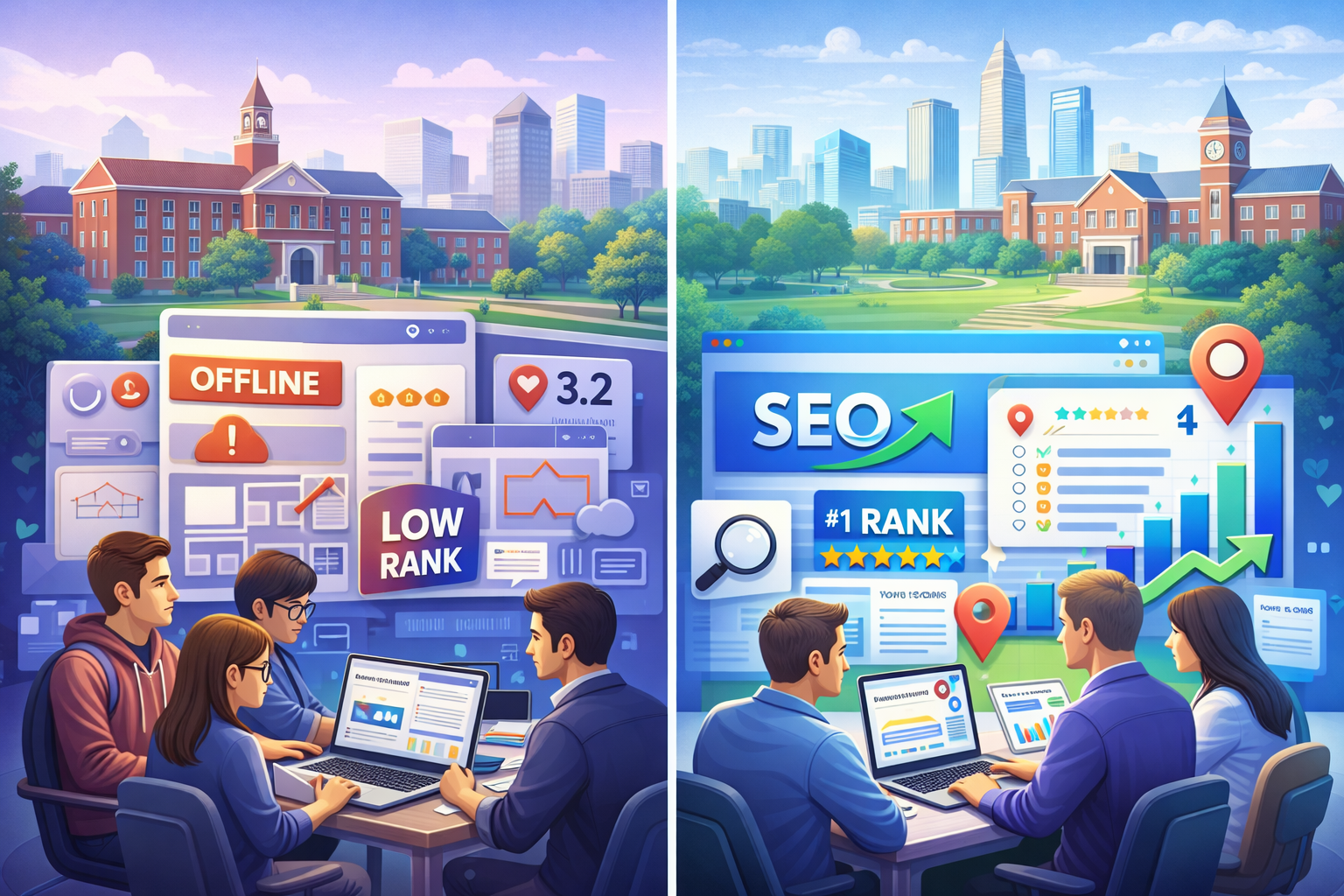
Columbus’s colleges are losing students to other schools simply because their websites are better structured. I found that when I audited 15 local colleges, poor design was running rampant across the board—most are fixable as well.
Slow Load Times on Mobile Devices
Ohio State’s primary website loads in just 2.3 seconds on a mobile device. Conversely, Columbus State’s website loads in 8.7 seconds. Given that 73% of prospective students use smartphones to browse, that’s not just slow, it’s a death sentence for admissions.
The Solution: Any reputable web design company in Columbus will tell you that mobile-first design is no longer up for discussion. Pages should load in 3 seconds or less, forms should be usable with a thumb, and navigation should be thumb-friendly. CCAD (Columbus College of Art and Design) just redesigned its website using these principles, and its applications have increased by 34% since the redesign.

Invisible in local search results
If you enter “colleges around Columbus” on a search engine (Google), you will see Ohio State as the only college that shows up. However, when searching for community colleges and other specialised institutions, you will find these institutions ranking around page 3 or lower for their named programs.
The problem: No GMB (Google My Business) optimisation. Franklin University even fails to fully claim their GMB listing. Their address is commonly listed as “temporarily closed.”
The Solution: Create and then optimize all campus addresses through both Google and business directory listings. Include photographs, create labels to respond to people reviewing your school, and post recent updates relating to the available enrollment periods. You want colleges to be able to locate you locally first when a prospective student types in “nursing programs Columbus” and you are visible in the map section.
Content That Converts Students
The college sites of most institutions are written in an academic style – high-density paragraphs about “excellence of the institution” and “a transformative learning experience.” When students are looking for information, they are looking for answers to questions such as how long it will take to complete the program, how much it will cost, and will there be any job opportunities upon completion.
For example, Otterbein University’s nursing website includes 847 words of content; however, it does not include the starting salary for a graduate until paragraph six. A competing institution’s website leads with, “96% job placement rate with an average starting salary of $65,000.”
Solution: answer the money questions up front and create program pages that convert:
- Job placement rates (with 3rd party sources).
- Graduate’s average starting salaries.
- Total program cost (not just tuition).
- Time to complete the program.
- Prerequisite information listed in plain English
Technical SEO Disasters
Most of the Columbus, Ohio college websites fail to meet the industry’s minimum criteria for Search Engine Optimization (SEO), which lead to decreased rankings in all search engines. The common issues we found include:
1. Broken internal links.
2. Missing alt tags on images.
3. Duplicate content across program pages (Capital University has 23 pages with the same meta description).
Some additional key technical issues that hamper the rankings on all college websites include:
1. No schema markup for either program or location.
2. Slow server response times.
3. Missing SSL certificate on multiple application forms.
4. Broken mobile navigation for multiple programs.
5. No local business structured data to support citation and rankings.
These common technical issues are far more than technical; they are also killing your rankings. Google cannot recommend college’s websites to its visitors if those sites are not accessible to Google through its crawler or can be understood once crawled.
The Death of Enrollment Forms
67% of potential students who fill out inquiry forms at Columbus colleges are lost at the inquiry stage. Why does this happen? Schools are using inquiry forms that require up to 15 fields when 4 would suffice, not having mobile-optimized inquiries, and having broken “Submit” buttons.
Delaware County Community College cut their inquiry form from 12 fields down to only 3 fields, resulting in an 89% increase in inquiries over 2 months.
Successful Examples of Results
Columbus State Community College worked with an SEO Services Columbus that specializes in local search engine optimisation and experienced the benefits:
- 156% more traffic through organic search
- 43% additional program inquiries
- Increased performance in local search results for targeted programs
Their formula for success: a mobile-first redesign, aggressive optimization of their Google My Business profile across their campuses, and totally answering students’ questions using quality content.
To sum it up
Ohio colleges have to compete against Arizona and Florida Colleges’ web-based programs with better web pages and better collegiate leads search engine optimization, so there’s no longer a local marketplace for columbus schools to get their students from.
It’s really easy to fix the problem. You’ll need to work with a web design company who understands education marketing, and to do that, you need to optimize the site for local search and generate content that gets visitors to apply.
Your competitors are already doing this, and if you wait to make decisions about how many more students you will lose to your competitors.
If you are ready to improve your school’s web presence, do a technical audit, make your mobile experience priority, and claim local search results. In a competitive academic landscape, your website serves not just for promotion, but as your enrollment powerhouse.
Author



In the competitive financial landscape of 2026, small businesses are moving away from manual, error-prone administrative tasks. Managing accounts payable (AP) is a critical area for long-term sustainability. However, this process often becomes time-consuming and prone to significant human errors. While in-house teams work for some, many small businesses struggle with high costs and administrative complexity.
This is where specialized AP outsourcing becomes a strategic pillar for modern entrepreneurs. These services utilize AI-driven automation and global expertise to transform financial health. By delegating these functions, owners can stop reacting to crises and start planning for the future. Below is a comprehensive look at how this shift supports long-term growth and operational excellence.
1. Streamlined Efficiency Through Automation
One of the most immediate impacts of outsourcing is the transformation of a sluggish workflow. Modern providers use Hyper-Automation to handle the heavy lifting of financial data. This technology removes the friction traditionally associated with paper-based accounting.
First, advanced Optical Character Recognition (OCR) technology extracts data from incoming invoices. This process achieves nearly 100% accuracy and eliminates the need for manual data entry. Next, automated systems route these invoices to the correct department heads. This ensures that “bottlenecks” become a thing of the past. Consequently, tasks that previously took two weeks are now completed in 24 to 48 hours. This increased speed ensures your business stays agile in a fast-moving market. Furthermore, digital workflows allow for instant retrieval of documents during meetings or financial reviews.

2. Direct Cost Savings and Capital Allocation
For a small business, every dollar spent on non-core tasks is a dollar lost to growth. Outsourcing AP converts fixed employee costs into flexible, variable expenses. This shift allows for a much leaner organizational structure.
By offloading these tasks, businesses avoid the “hidden costs” of employment. These include payroll taxes, insurance, and the continuous costs of staff training. Furthermore, most providers in 2026 offer scalable pricing models. You only pay for the specific services you use each month. During slow months, your operational costs drop automatically. During peak growth periods, you handle the surge without hiring temporary staff. This flexibility allows you to reduce overhead while maintaining professional, high-level management.
3. Access to Enterprise-Grade Technology
Many small businesses cannot justify a $50,000 annual investment in top-tier financial software. Outsourcing provides a “backdoor” to these expensive and powerful digital tools. These platforms offer a level of sophistication usually reserved for Fortune 500 companies.
Professional providers offer real-time, cloud-based dashboards. Business owners can see exactly who is being paid from any smartphone or tablet. Additionally, these firms invest heavily in advanced cybersecurity and multi-factor authentication. These tools protect the business from the rising threat of sophisticated payment fraud. By leveraging this shared infrastructure, you gain better visibility and control over your cash flow. You achieve this without the heavy initial investment in hardware or software licenses.
4. Enhanced Accuracy and Error Reduction
Manual AP processes are naturally prone to various types of human error. A simple typo in a bank account number can lead to thousands of dollars in losses. These small mistakes can damage a company’s financial reputation over time.
Specialized providers implement strict quality checks and automated controls to catch these slips. For instance, AI algorithms instantly flag duplicate invoices in the system. This prevents the common and costly mistake of paying a vendor twice for the same service. Moreover, professional teams perform rigorous three-way matching. They compare the purchase order, the receiving report, and the final invoice. This process ensures you only pay for what you actually received at the agreed price. It also provides a clear audit trail for every cent that leaves the business.
5. Proactive Cash Flow Management
In 2026, consistent cash flow serves as the lifeblood of business sustainability. Outsourcing allows a business to move from reactive bill-paying to proactive financial planning. This shift is essential for companies operating on tight margins.
Expert teams identify vendors who offer valuable “early bird” discounts. These small savings add up to significant annual profit over several months. Additionally, accurate tracking of all liabilities allows for much better budgeting. Business owners can make informed decisions about major equipment purchases or new hires. By optimizing these payment cycles, you maintain better liquidity for essential operations. This ensures that funds are always available when a growth opportunity arises.
6. Scaling Without Growing Pains
The greatest challenge for a successful business is the “mid-growth stall.” This happens when administrative work becomes too heavy to allow for further expansion. The business becomes a victim of its own success.
Outsourced AP services provide the “elasticity” needed to scale up or down instantly. If your business suddenly triples its invoice volume, the provider handles it seamlessly. You do not have to spend weeks recruiting or training new accounting assistants. Furthermore, if you begin sourcing materials from overseas, these experts handle multi-currency payments. They also manage the complexities of international tax compliance. This allows you to grow your global footprint without being bogged down by local paperwork.
7. Reclaiming Focus on Core Activities
Many entrepreneurs start a business to innovate and create, not to manage spreadsheets. Routine financial tasks often steal time from your most high-value goals. This “administrative drift” can stall a company’s creative engine.
By outsourcing AP, business owners reclaim 10 to 15 hours of their work week. You can then spend this time on sales, marketing, and strategic product development. This shift improves overall productivity across the entire leadership team. Outsourced AP acts as a silent, reliable support system. It handles the financial backbone of the company while you focus on your primary objectives. It allows you to be the CEO rather than the head clerk.
8. Fortifying Vendor Relationships
Vendors act as silent partners in your long-term business success. If you pay them late, they may deprioritize your orders or stop offering favorable terms. Trust is the currency of the supply chain.
Outsourced services ensure that all payments are processed on time, every time. They provide accurate reporting and maintain clear communication with your suppliers. Consequently, your business improves its credibility and overall reliability in the eyes of partners. This professional approach often helps you negotiate better pricing or priority service in the future. Strong, reliable partnerships are essential for maintaining stability during market fluctuations.
9. Compliance and Risk Management
Tax regulations and financial standards are becoming increasingly complex in 2026. Mistakes in AP management can lead to expensive audit issues and government penalties. Small businesses are often the most vulnerable to these regulatory shifts.
Outsourced providers possess deep experience in managing various compliance requirements. They maintain proper documentation and follow strict internal controls at all times. These systems create a clear digital audit trail for every single transaction. This level of organization ensures your business is always prepared for sudden regulatory reviews. By reducing these risks, you protect your company’s financial reputation and its future. You gain the peace of mind that comes with knowing your books are “audit-proof.”
10. Access to Senior-Level Expertise
Many small businesses can only afford a junior bookkeeper for their internal needs. However, outsourcing grants you the oversight of a CFO-level expert. This gives you a massive competitive advantage.
Professional firms suggest ways to consolidate vendors and improve your overall processes. They identify hidden cost-saving opportunities that might not be apparent to an internal team. Furthermore, these experts are trained to spot “red flags” like fictitious vendors or suspicious billing patterns. This provides an extra layer of defense against both internal and external theft. You gain specialized knowledge and strategic guidance without the cost of a full-time executive salary.
Conclusion: A Strategic Future
Outsourcing accounts payable is no longer a luxury reserved for large corporations. In 2026, it serves as a foundational strategy for any agile and profitable small business. By merging cutting-edge AI technology with deep human expertise, these services eliminate the daily friction of financial operations.
This strategic solution allows you to save money, reduce operational risk, and maintain strong relationships with your vendors. Investing in outsourced AP helps you stop “playing defense” with your monthly bills. Instead, you can focus your energy on driving long-term growth and bold innovation. The future belongs to businesses that automate the routine and prioritize the creative.
Author



Why a Diploma of Counselling Could Be the Career Change

Email Marketing Company in Dublin: Maximizing Engagement

5 Essential Reasons Your Corporate Gala Needs a Videographer

Total Knee Replacement (TKR): Approach to Enhanced Recovery

Liposuction in Dubai: Essential Care for Optimal Results

Achieve Facial Harmony: The Art of Balancing with Fillers in Dubai

Four-Color Card Game: Strategies and Insights at My88 Casino

Gallery Dept.: Where Art Meets Streetwear

Hellstar: Redefining Streetwear with Bold Creativity

Columbus Colleges: Enrollment Through Better Web Design

Cybersecurity Consulting Company SequelNet Provides Critical IT Support Services to Medical Billing Firm, Medical Optimum

Team Communication Software Transforms Operations at Finance Innovate

Project Management Tool Transforms Long Island Business

How Alleviate Poverty Utilized IPPBX’s All-in-One Solution to Transform Lives in New York City

Breast Cancer: The Imperative Role of Mammograms in Screening and Early Detection

Unstoppable Collaboration: D.C.’s Citi Open and Silicon Valley Classic Unite to Propel Women’s Tennis to New Heights

Embracing Renewal: Sizdabedar Celebrations Unite Iranians in New York’s Eisenhower Park

The Benefits of Starting a Side Hustle for Financial Freedom

New Blood Donation Screening Questions What You Need to Know

Stylishly Timeless: The 5 Types of Sandals You Need in Your Closet
-

 Business3 years ago
Cybersecurity Consulting Company SequelNet Provides Critical IT Support Services to Medical Billing Firm, Medical Optimum
-
Business3 years ago
Team Communication Software Transforms Operations at Finance Innovate
-
Business3 years ago
Project Management Tool Transforms Long Island Business
-
Business3 years ago
How Alleviate Poverty Utilized IPPBX’s All-in-One Solution to Transform Lives in New York City
-
health3 years ago
Breast Cancer: The Imperative Role of Mammograms in Screening and Early Detection
-
Sports3 years ago
Unstoppable Collaboration: D.C.’s Citi Open and Silicon Valley Classic Unite to Propel Women’s Tennis to New Heights
-
Art /Entertainment3 years ago
Embracing Renewal: Sizdabedar Celebrations Unite Iranians in New York’s Eisenhower Park
-
Finance3 years ago
The Benefits of Starting a Side Hustle for Financial Freedom







