
Finance
How The SEC’s New Stock Trading Rules Will Impact Brokers & Investors


How The SEC’s New Stock Trading Rules Will Impact Brokers & Investors
In recent weeks, the SEC has made headlines by announcing new rules and regulations that could have far-reaching impacts on stock brokers, investors, and the markets in general. The rules were first proposed back in April, and after months of debate, they were finally passed late last month. The changes are designed to make the trading process easier to understand and more transparent for everyone involved. In this blog post, we will take a look at how the SEC’s new stock trading rules could affect brokers and investors alike. We’ll also take a closer look at some of the potential implications of these changes and what it means for the future of investing.
The SEC’s New Stock Trading Rules
The SEC’s new stock trading rules will have a profound impact on brokers and investors alike. The most notable change is the introduction of a “trade-at” rule, which requires brokers to route orders to the venue with the best price. This will likely lead to more competition among exchanges, as they vie for order flow.
In addition, the SEC is changing the way it calculates how much money broker-dealers must set aside to cover potential losses. The so-called “haircut” rule will now take into account a wider range of factors, including the size and type of order, the anticipated market volatility, and whether the order is for a buy or sell.

Lastly, the SEC is increasing its scrutiny of so-called “dark pools” – private trading venues that are not required to disclose their prices or trading activity. The agency is concerned that some dark pool operators may be giving preferential treatment to certain traders, and is proposing new rules that would require them to provide greater transparency.
These are just some of the ways in which the SEC’s new stock trading rules will impact brokers and investors. With increased competition among exchanges and greater transparency in dark pools, it’s important for everyone involved in the markets to stay informed and adapt their strategies accordingly.
How the Rules Will Impact Brokers
In June, the Securities and Exchange Commission (SEC) proposed new rules that would prohibit broker-dealers from trading on behalf of their own account in certain circumstances. The rule is intended to address a practice known as “internalization,” whereby brokers trade securities for their own account rather than sending customer orders to the marketplace.
The proposed rule would impact both institutional investors and individual investors who use broker-dealers to execute trades. For institutional investors, the rule could increase costs and reduce liquidity. For individual investors, the rule could make it more difficult to find a broker-dealer willing to execute their trades.
The SEC is currently soliciting feedback on the proposed rule. Comments are due by August 7, 2017.
How the Rules Will Impact Investors
The SEC’s new stock trading rules are designed to protect investors and ensure that they receive the best possible prices when buying or selling stocks. The rules will impact both brokers and investors in several ways.
First, the new rules require brokers to route orders to the venue that will provide the best price for their clients. This means that brokers can no longer simply send orders to the exchange that will give them the highest commission. Instead, they must now consider where their clients will get the best price for their shares.
Second, the new rules prohibit brokers from trading ahead of their clients. This means that a broker cannot buy or sell shares for their own account before executing an order for their client. This rule is designed to prevent brokers from taking advantage of information that they may have about a stock before their client does.
Third, the new rules require brokers to disclose any conflicts of interest that they may have with a particular stock. This includes any financial interests that the broker may have in the stock, such as ownership of shares or options contracts. Brokers must also disclose any relationships they have with people who work for companies whose stocks they trade, such as family members or business partners.
Fourth, the new rules limit the amount of money that brokers can lend to clients to buy stocks. This is intended to reduce the risk of investors being unable to pay back loans if the value of their stocks falls sharply.
Finally, the new rules require firms who engage in high
What Other Changes the SEC is Considering
The SEC is also considering other changes to the rules governing stock trading. These include:
-Allowing brokers to charge different prices for different types of investors
-Giving brokers more leeway in how they route orders
-Changing the “tick size” for stocks (the smallest amount by which a stock’s price can move)
Conclusion
The SEC’s new stock trading rules will have far-reaching implications for both brokers and investors. Brokers must be prepared to adjust their practices in order to stay compliant with the new regulations, while investors should keep an eye on the changes and how they may affect their financial strategy. While it is impossible to know all the ways that the revised rules will impact stock market activity, one thing is certain: these newly implemented regulations are sure to shake up Wall Street in a big way – now more than ever.
Author


In today’s fast-paced world, personal loans have become an essential financial tool for many individuals. Whether you need funds for medical emergencies, educational expenses, or to cover unexpected bills, personal loans provide quick access to money with minimal paperwork. However, many banks and financial institutions require a PAN card for the loan application process. What do you do if you don’t have a PAN card? This article explores how to get a quick, easy personal loan without a PAN card and the necessary steps to secure one. Let’s dive into a no-check guide!
What Is a Personal Loan?
A personal loan is an unsecured type of loan that allows individuals to borrow money without pledging collateral. Unlike home loans or car loans, these are not limited to a specific purpose. Borrowers can use the funds for various needs, such as education, home renovation, medical emergencies, wedding expenses, or consolidating debts.
One of the main advantages of personal loans is their flexibility and simplicity. However, most lenders require certain documents like identity proof, income proof, and a PAN card for verification. If you do not possess a PAN card, alternative methods can help you secure a quick easy personal loan.
Challenges in Getting Personal Loans Without PAN Card
Many financial institutions require a PAN (Permanent Account Number) card to process a personal loan application. This card tracks your financial transactions and identifies you as a taxpayer, making it easier for lenders to assess your creditworthiness.
Without a PAN card, many lenders can hesitate, as it raises questions about your financial credibility. However, there are exceptions — certain non-banking financial companies (NBFCs), digital lending platforms, and private lenders offer loans without requiring a PAN card. You can still secure funds by providing alternative documentation and meeting additional requirements.

Quick Easy Personal Loan Options Without PAN Card
If you don’t have a PAN card, you still have viable alternatives for availing a personal loan. Here are the best options available:
1. Apply Through NBFCs
Non-Banking Financial Companies (NBFCs) are more lenient compared to banks regarding documentation. Many NBFCs offer quick easy personal loans with minimal paperwork. Instead of a PAN card, they might accept other proofs such as passport, Aadhaar card, voter ID, or driving license. Loan approval processes in these institutions are quicker, making them an ideal option for urgent financial needs.
2. Digital Lending Platforms
Online lending platforms provide instant loans using technology-based verification methods. They often have a simplified process, with no strict requirement for a PAN card. You’ll need alternative documents such as your Aadhaar number, income proof, and bank account details. These platforms prioritize speed and user convenience, making them suitable for borrowers with limited paperwork.
3. Loan Against Collateral
If you struggle to secure a personal loan due to the lack of a PAN card, you can opt for loans against collateral. By pledging assets like gold, property, or fixed deposits, you can receive funds as per the collateral value. Since these are secured loans, the requirements for identity verification may be less stringent than unsecured loans.
4. Payday Loans
Payday loans are small, short-term loans designed to cover immediate financial requirements. These loans usually don’t require extensive documentation or a PAN card. However, they come with higher interest rates, so should only be used for urgent needs once other options are explored.
Documents You May Need for Loans Without PAN Card
For a quick easy personal loan, even without a PAN card, you must provide alternative documents to prove your identity, income, and address. This pan card no check approach means commonly accepted documents include:
Identity Proof
- Aadhaar Card, Voter ID, Passport, or Driving License
Income Proof
- Salary slips or bank statements of the last 3–6 months
Address Proof
- Utility bills, rental agreements, or any government-issued ID with the address
Employment Details
- Offer letter or designation proof from your employer
Collateral Details
- If applying for a secured loan
Lenders might also run a background check and assess your credit score using other methods to determine your repayment capacity.
Tips to Increase Approval Chances
Follow these tips to improve your chances of loan approval:
Tip 1
Ensure a Stable Income: Maintain a steady income and provide valid proof to assure the lender of your repayment ability.
Tip 2
Choose the Right Lender: Approach NBFCs or online lenders specializing in quick approvals without stringent documentation requirements.
Tip 3
Improve Your Credit Score: A good credit score can increase loan approval chances even if you don’t have a PAN card.
Tip 4
Keep Documents Handy: Submit valid government-issued IDs and other proofs, ensuring they are accurate and up to date.
Conclusion
Getting a quick easy personal loan without a PAN card might seem challenging, but it’s possible with the right approach. By exploring NBFCs, digital lending platforms, collateral-based loans, and payday loans, you can access the funds you need for emergencies.
It’s essential to understand the terms and conditions of loans before proceeding. Evaluate the interest rates, repayment tenures, processing fees, and hidden charges. Having a PAN card is highly recommended in the financial world as it simplifies many procedures. If you don’t have one yet, apply for a PAN card to avoid hurdles in the future financial transactions.
When choosing lenders, prioritize transparency, service quality, and affordability. With thorough research and preparation, you can secure a personal loan without unnecessary friction!
Author



In the fast-paced financial landscape of 2026, mutual fund investment has become a premier strategy for building long-term wealth. Whether you are a novice entering the markets or a seasoned investor seeking diversification, mutual funds provide a sophisticated balance of risk and potential reward. This guide explains how these funds function, why they represent a strategic choice, and how you can optimize your returns through a disciplined approach.
Understanding the Mechanics of Mutual Funds
A mutual fund operates by pooling capital from numerous investors. Professional fund managers then allocate this money into a diversified portfolio of assets. These typically include stocks, bonds, and other liquid securities. The primary objective is to generate consistent returns that align with the specific goals of the fund.
The most significant advantage of this structure is accessibility. You gain access to a professionally managed portfolio without needing an exhaustive knowledge of market technicalities. The fund manager handles the research, timing, and execution, allowing your capital to work efficiently.

Why Investors are Moving Toward Mutual Funds
Traditional savings accounts often struggle to outpace inflation. Consequently, more individuals are turning to mutual funds for several compelling reasons:
-
Instant Diversification: These funds spread your capital across dozens of different assets. This strategy significantly reduces the risk associated with any single company’s performance.
-
Expert Management: You benefit from professional mutual fund investment guidance. Experienced managers make data-driven decisions based on real-time market trends.
-
Low Barrier to Entry: You can start your journey with a very small amount. This makes investing achievable for beginners and salaried professionals alike.
-
Consistent Growth via SIP: A Systematic Investment Plan (SIP) allows you to invest fixed amounts regularly. This disciplined method helps you build substantial wealth over time through the power of compounding.
Choosing the Right Fund for Your Profile
Different funds serve different purposes. Selecting the right category is essential for meeting your financial milestones.
-
Equity Funds: These primarily target stocks. They offer the highest potential for long-term growth but carry higher volatility.
-
Debt Funds: These invest in fixed-income securities like government bonds. They prioritize stability and consistent interest income.
-
Hybrid Funds: These provide a balanced mix of equity and debt. They aim to capture market growth while cushioning against sudden downturns.
-
Index Funds: These passively track major market indices like the Nifty or Sensex, offering a low-cost way to mirror general market performance.
-
ELSS (Tax Saving) Funds: These provide tax benefits under Section 80C. They combine wealth creation with smart tax planning.
The Power of Personalized Financial Planning
Every investor possesses a unique financial DNA. Your income, future goals, and emotional risk tolerance should dictate your strategy. This is why personalized mutual fund investment plans are vital. A customized roadmap ensures that your portfolio remains consistent even when the market becomes volatile.
Furthermore, goal-based investing keeps you disciplined. Instead of chasing a random percentage of returns, you focus on specific milestones.
-
Short-term goals (1–3 years): Focus on debt or liquid funds for safety.
-
Medium-term goals (3–5 years): Utilize balanced or hybrid funds for steady growth.
-
Long-term goals (5+ years): Lean into equity funds to maximize the compounding effect. Optimizing Your Portfolio for 2026
Building a portfolio is only the first step. To ensure continued success, you must engage in mutual fund portfolio optimization. This process involves identifying underperforming assets and reallocating your capital toward better opportunities.
Expert portfolio management involves:
-
Asset Allocation: Ensuring you have the right mix of equity and debt at all times.
-
Risk Assessment: Periodically checking if your portfolio matches your current life stage.
-
Rebalancing: Selling winners and buying underpriced assets to maintain your target risk levels.
Why a Professional Advisor Matters
While anyone can buy a mutual fund online, achieving superior results often requires expert intervention. A SEBI-registered investment advisor provides transparency and unbiased advice. They help you navigate “noise” in the news and prevent common emotional mistakes, such as panic-selling during a market dip or chasing a “hot” fund that has already peaked.
Common Pitfalls to Avoid
-
Investing Without a Goal: This leads to a lack of discipline and early withdrawals.
-
Ignoring the Review Process: Market conditions change. Your portfolio must adapt.
-
Stopping SIPs During a Downturn: Market dips are actually the best time to buy more units at a lower cost.
Strategic Investment Summary
| Feature | Strategic Benefit |
| SIP (Systematic Plan) | Smoothes out market volatility through rupee-cost averaging. |
| Diversification | Protects your principal by not “putting all eggs in one basket.” |
| Professional Oversight | Replaces guesswork with expert, data-backed decision-making. |
| Liquidity | Allows you to access your money relatively quickly compared to real estate. |
Conclusion: Taking Control of Your Future
Mutual fund investment is one of the most effective tools for building a secure future. By combining professional management with a long-term strategy, you can achieve financial independence with confidence. Remember, the best time to start was yesterday, but the second-best time is today.
Successful investing is not about timing the market; it is about “time in the market.” Align your investments with your life goals, stay consistent through the cycles, and watch your wealth grow.
Author

Finance
Financial Fraud Investigation: Corporate Fraud, AI‑Driven Detection, and Blockchain Forensics

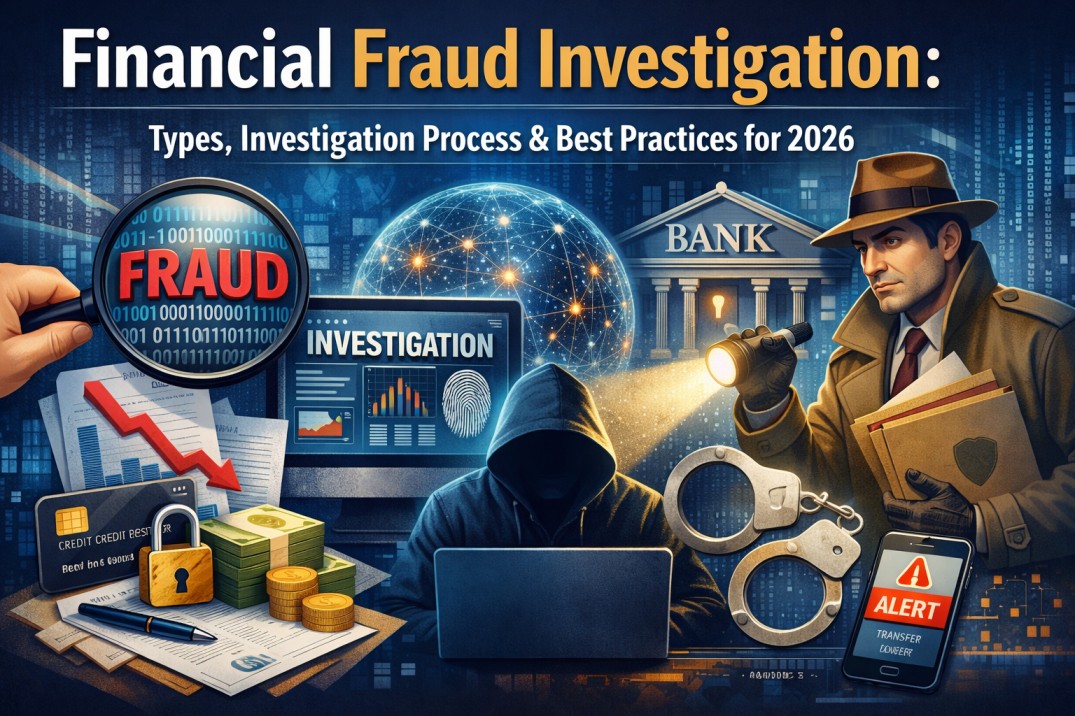
Corporate financial fraud remains a systemic threat to organizations, investors, and regulatory confidence. By 2026, investigations increasingly hinge on hybrid capabilities: traditional accounting forensics, advanced AI-driven detection, and blockchain forensics where distributed ledgers intersect corporate activity. This article outlines common corporate fraud schemes, the investigative process in the modern enterprise, how AI augments detection and prioritization, and practical blockchain forensics techniques — emphasizing legal, evidentiary, and operational best practices.
Common Corporate Fraud Schemes
Corporate fraud in 2026 continues to manifest in both classic and digitally enabled forms:
- Financial statement fraud: Revenue recognition manipulation, improper capitalization, fictitious sales, or off‑balance sheet liabilities designed to misstate performance.
- Asset misappropriation: Theft of company cash, inventory, intellectual property, or misuse of corporate credit and expense accounts.
- Corruption and bribery: Kickbacks, undisclosed related‑party transactions, and procurement fraud.
- Payroll and HR fraud: Ghost employees, falsified time reporting, and falsified severance/benefits.
- Cyber‑enabled schemes: Business Email Compromise (BEC), fraudulent wire instructions, invoice fraud through compromised accounts payable systems, and insider‑assisted cybertheft.
- Tokenization and crypto fraud: Issuance of unauthorized tokens, wash trading, spoofed on‑chain transfers to conceal embezzlement, or laundering corporate funds through DeFi protocols.
Modern Investigative Process
A disciplined, forensically sound process is essential to preserve evidence and enable remediation, civil recovery, or criminal prosecution.
-
Triage and Intake
- Define scope and objectives (regulatory, civil, criminal, internal discipline).
- Implement legal holds and immediate containment (account freezes, access revocation).
- Establish a cross‑functional team: internal audit, legal, compliance, IT/DFIR, finance, and external forensic specialists as needed.
-
Evidence Preservation and Chain of Custody
- Capture system images, logs, emails, ERP and banking exports, and communications, following forensically sound procedures (write‑blockers for storage imaging, verified hash values).
- Document chain of custody, access lists, and all triage actions to ensure admissibility.
-
Data Collection and Integration
- Ingest structured data (GL entries, subledger transactions, payroll, vendor master) and unstructured data (emails, chats, documents) into a secure analysis environment.
- Record metadata and provenance; preserve original formats for replayability.
-
Analysis and Hypothesis Testing
- Conduct ledger reconciliation, journal‑entry tracing, vendor and IP analysis, and timeline reconstruction.
- Use AI‑enabled analytics to detect anomalies, then validate via manual forensic accounting and corroborative evidence.
-
Reporting and Remediation
- Produce technical and executive reports that map findings to financial impact, control weaknesses, and legal implications.
- Coordinate remediation (control changes, personnel action, regulatory notifications, and restitution/litigation strategies).

AI‑Driven Detection and Its Role
AI systems in 2026 augment human investigators by scaling detection, prioritizing leads, and surfacing complex patterns that span disparate data sources. Key capabilities and considerations include:
-
Anomaly Detection and Pattern Recognition
- Unsupervised learning (autoencoders, isolation forests, graph embeddings) highlights outliers: unusual vendor payment patterns, atypical journal‑entry clusters, or anomalous payroll behavior.
- Graph ML maps relationships among employees, vendors, bank accounts, and transaction flows to reveal collusion rings or shell company networks.
-
Natural Language Processing (NLP) and Semantic Search
- Advanced transformer models perform entity extraction, sentiment analysis, and topic modeling across emails, chat logs, and contracts to identify suspicious communications (policy circumvention, coded language).
- Contextual search enables investigators to find probative phrases across terabytes of unstructured data quickly.
-
Transaction Scoring and Prioritization
- Risk scoring models combine behavioral baselines, financial heuristics, and external data (adverse media, sanctions lists, corporate registries) to prioritize high‑risk cases.
- Explainability layer: models must provide interpretable rationale (feature attributions, attention maps) so investigators and regulators can justify findings.
-
Model Governance and Adversarial Risk
- Rigorous model validation, retraining schedules, bias testing, and change logs are necessary to maintain accuracy and regulatory compliance.
- Adversaries can attempt model evasion (noise injection, mimicry); detection systems should incorporate adversarial training and ensemble approaches.
Blockchain Forensics in Corporate Investigations
As corporations increasingly use tokens, stablecoins, and on‑chain settlement, blockchain forensics is essential to trace value flows and identify laundering paths.
-
On‑Chain Data Collection
- Extract complete transaction histories from public blockchains (Bitcoin, Ethereum) and fetch provenance for tokens and smart contracts via RPC or archival node services.
- For private or permissioned ledgers, obtain node logs and access records through custodial cooperation or legal process.
-
Address Clustering and Attribution
- Heuristic clustering (co‑spend, change address patterns) groups wallet addresses likely controlled by the same entity.
- Enrich clusters using off‑chain data: exchange KYC disclosures (via subpoenas), blockchain analytics vendor tags, and public registries to attribute addresses to real‑world actors.
-
Flow Analysis and Layering Detection
- Visualize token flows across DeFi protocols, mixers, bridges, and centralized exchanges to detect layering or obfuscation.
- Smart contract interaction analysis identifies automated money‑movement, yield farming used to obfuscate origins, and unauthorized token minting.
-
Cross‑Chain Forensics
- Monitor cross‑chain bridges and wrapped tokens to trace value that hops between ledgers. Correlate timestamps and transaction patterns to reconstruct laundering timelines.
-
Legal and Privacy Considerations
- Preserve signed transaction data, Merkle proofs, and node logs. Ensure lawful process when compelling custodians for KYC data.
- Consider privacy coin usage and specialized traceability limits; collaborate with specialized blockchain investigators and law enforcement for advanced de‑mixing techniques.
Best Practices and Operational Recommendations (2026)
- Hybrid teams: combine accountants, DFIR specialists, data scientists, and blockchain analysts with clear incident playbooks.
- Invest in integrated data platforms that support secure ingestion, hashing, immutable audit trails, and AI toolkits with explainability features.
- Maintain model governance frameworks: document training data, validation metrics, and monitors for drift and adversarial exploits.
- Proactive monitoring: deploy continuous transaction monitoring, graph analytics, and NLP surveillance on high‑risk communication channels.
- Legal alignment: involve counsel early for preservation, sanctions screening, and interfacing with regulators and exchanges for KYC data.
- Training and red teaming: regularly test detection pipelines with synthetic fraud scenarios and adversarial simulations to measure resilience.
- Evidence readiness: standardize forensic capture (images, hashes, signed blockchain snapshots), and ensure multi‑jurisdictional coordination plans for cross‑border asset recovery.
Conclusion
By 2026, effective corporate fraud investigations require a synthesis of traditional forensic accounting rigor, AI‑driven detection for scalable prioritization, and proficient blockchain forensics to follow value across novel finance rails. Organizations that build multidisciplinary capabilities, prioritize model governance, and institutionalize robust evidence practices will be positioned to detect, investigate, and remediate sophisticated schemes while maintaining legal and regulatory defensibility.
Author



Metal Roof Tiles vs Concrete Tiles: Cost & Roofing Choice

Custom Packaging Boxes USA – Elevate Your Brand with Artsy Packaging

Warehouse Management System for Real-Time Control

Ammonia Price Forecast 2026 Signals Key Global Trends

Shilajit Resin Brands in India (2026): Top 7 Authentic Options

Drop Tester: Features, Benefits & Best Quality Testing Solutions

Quick Easy Personal Loan Without PAN Card: Options & Tips

Skin Whitening Treatment: Safe Options for Radiant Skin

Can a Cosmetic Dentist North York Boost Your Confidence?

Restaurant SEO Agency: Boost Visibility, Orders & Bookings

Cybersecurity Consulting Company SequelNet Provides Critical IT Support Services to Medical Billing Firm, Medical Optimum

Team Communication Software Transforms Operations at Finance Innovate

Project Management Tool Transforms Long Island Business

How Alleviate Poverty Utilized IPPBX’s All-in-One Solution to Transform Lives in New York City

Breast Cancer: The Imperative Role of Mammograms in Screening and Early Detection

Unstoppable Collaboration: D.C.’s Citi Open and Silicon Valley Classic Unite to Propel Women’s Tennis to New Heights

Embracing Renewal: Sizdabedar Celebrations Unite Iranians in New York’s Eisenhower Park

The Benefits of Starting a Side Hustle for Financial Freedom

New Blood Donation Screening Questions What You Need to Know

Stylishly Timeless: The 5 Types of Sandals You Need in Your Closet
-

 Business3 years ago
Cybersecurity Consulting Company SequelNet Provides Critical IT Support Services to Medical Billing Firm, Medical Optimum
-
Business3 years ago
Team Communication Software Transforms Operations at Finance Innovate
-
Business3 years ago
Project Management Tool Transforms Long Island Business
-
Business3 years ago
How Alleviate Poverty Utilized IPPBX’s All-in-One Solution to Transform Lives in New York City
-
health3 years ago
Breast Cancer: The Imperative Role of Mammograms in Screening and Early Detection
-
Sports3 years ago
Unstoppable Collaboration: D.C.’s Citi Open and Silicon Valley Classic Unite to Propel Women’s Tennis to New Heights
-
Art /Entertainment3 years ago
Embracing Renewal: Sizdabedar Celebrations Unite Iranians in New York’s Eisenhower Park
-
Finance3 years ago
The Benefits of Starting a Side Hustle for Financial Freedom







