
Business
Standardized Reporting: Improve Workplace Safety & Compliance


In modern workplaces, inconsistent reporting can silently erode safety, productivity, and accountability. Imagine a factory where one team logs near-miss incidents in detail while another records them in brief, vague notes. Management receives fragmented data, making it difficult to identify patterns, prevent accidents, or comply with regulatory requirements. This gap in reporting is more than an administrative headache—it directly impacts operational safety and employee trust.
A highlights these issues and teaches practical strategies to standardize reporting across teams. By adopting structured approaches, organizations ensure that every incident, observation, and improvement suggestion is captured consistently, enabling proactive interventions rather than reactive firefighting. Let’s explore these strategies in depth.
Importance of Standardized Reporting
Standardized reporting is the backbone of effective safety management. Without uniform procedures, data becomes unreliable, trends are obscured, and lessons from one team may never reach another. This is especially critical in industries with high operational risk, such as manufacturing, construction, and chemical processing.
Consider a scenario where two shifts in a chemical plant use different formats for incident logs. One reports the cause in technical terms, while the other provides narrative descriptions. When these logs are consolidated, critical information can be misinterpreted or lost. Standardization prevents this by ensuring that every report follows a defined template, uses consistent terminology, and captures essential details.
Key benefits include:

- Improved clarity and accuracy of safety data
- Easier identification of recurring hazards
- Faster, more informed decision-making
- Greater compliance with industry regulations
- Enhanced accountability and traceability

Common Challenges in Reporting Across Teams
Even when organizations recognize the need for standardization, several obstacles can impede progress:
1.Lack of Uniform Templates
Teams may rely on personal preferences or departmental formats. The absence of a consistent template leads to missing or duplicated information.
2.Varying Levels of Staff Training
Some employees may be highly trained in reporting protocols, while others struggle to understand what constitutes a reportable incident.
3.Inconsistent Terminology
Different departments often use unique jargon for the same hazards. One team might call a chemical spill a “minor leak,” while another labels it an “environmental hazard,” creating confusion.
4.Resistance to Change
Employees accustomed to informal reporting may view standardized forms as bureaucratic. Without buy-in, even well-designed templates can be ignored or misused.
Steps to Standardize Reporting Procedures
Adopting a structured reporting approach involves several practical steps. Implementing them effectively requires both strategy and staff engagement.
1. Develop Clear Reporting Guidelines
Begin by outlining what needs to be reported, when, and to whom. Include definitions for near misses, accidents, hazards, and unsafe behaviors. A concise guide ensures everyone understands expectations.
Example:
A construction company introduced a one-page reporting guide defining incidents by type, severity, and location. Workers quickly understood what to record, reducing ambiguity and incomplete entries.
2. Create Uniform Templates
Design reporting forms that capture all necessary data consistently. Include fields for:
- Date, time, and location
- Description of the incident or observation
- Immediate actions taken
- Potential or actual consequences
- Witnesses or involved personnel
Templates can be digital or paper-based, but must be consistent across all teams.
3. Implement Training Programs
Staff need hands-on training to use the templates correctly. A Safety Officer Course in Pakistan typically emphasizes reporting accuracy, hazard recognition, and legal compliance. Training should include mock scenarios and real-life examples to reinforce learning.
4. Use Technology to Support Reporting
Digital reporting tools can reduce errors and speed up data consolidation. Mobile apps or online platforms ensure reports are legible, automatically timestamped, and stored centrally for analysis.
Example:
A manufacturing plant adopted a mobile reporting app. Employees could instantly upload photos of hazards, which were automatically routed to the safety team, reducing response time from hours to minutes.
5. Monitor and Review Reports Regularly
Standardization is not a one-time fix. Management should regularly review reports for consistency, completeness, and accuracy. Feedback loops help teams refine their reporting habits and improve compliance.
6. Encourage a Reporting Culture
Employees are more likely to report incidents honestly if they feel supported. Leaders should recognize proactive reporting, demonstrate transparency, and ensure no punitive measures are applied for honest mistakes.
Practical Checklist for Teams
To simplify implementation, use this checklist as a reference:
- All reports use the same template
- Staff receive annual refresher training
- Reporting guide is accessible to all employees
- Digital tools are available for instant submissions
- Reports are reviewed weekly for quality and completeness
- Feedback is provided to teams consistently
Following this checklist ensures that standardization is sustainable rather than temporary.
Case Study: Standardization in Action
A medium-sized chemical plant in Karachi faced repeated reporting inconsistencies. Shift supervisors documented incidents differently, resulting in a fragmented safety picture. By adopting uniform templates, providing targeted training, and introducing a digital reporting app, the plant achieved:
- 40% reduction in missing incident details
- Faster incident investigations
- Improved staff confidence in reporting
- Stronger compliance with safety regulations
This example demonstrates that even simple interventions, when executed systematically, have measurable impacts.
The Role of Safety Education in Reporting Standardization
Standardized reporting doesn’t occur in isolation—it relies on well-trained personnel who understand safety principles and procedural importance. Comprehensive courses equip safety professionals with the skills needed to lead these initiatives effectively.
Enrolling in a Safety Course in Pakistan or similar programs ensures that staff not only learn reporting templates but also develop critical thinking skills to identify hazards and suggest preventive measures. Knowledge of regulatory frameworks, risk assessment, and incident analysis enhances the quality of reports, ultimately improving workplace safety outcomes.
NEBOSH Fee Considerations for Training
When considering formal training, understanding the NEBOSH Fee is essential. The fee structure varies depending on the level of certification, study mode (classroom, online, or blended), and the institute offering the course. Knowing the NEBOSH Fees beforehand helps candidates plan their professional development effectively and ensures transparency in the learning journey.
Many institutes offer flexible schedules, installment plans, or additional support resources without altering the official NEBOSH Fee. Candidates should evaluate both the financial and educational value when choosing a program, focusing on the quality of instruction, practical exercises, and post-course support.
FAQs About Standardized Reporting and Safety Training
Q1: Why is standardized reporting important in safety management?
Standardized reporting ensures consistency, improves data reliability, and enables management to identify trends and hazards accurately.
Q2: Can digital tools replace traditional reporting templates?
Digital tools enhance reporting efficiency and accuracy, but templates and clear guidelines remain essential to ensure consistent data collection.
Q3: How often should staff receive reporting training?
Annual refresher training is recommended, with additional sessions whenever templates or procedures are updated.
Q4: Does enrolling in a NEBOSH course cover reporting procedures?
Yes, NEBOSH courses provide structured modules on incident reporting, hazard recognition, and preventive strategies, equipping learners with practical skills.
Q5: Are NEBOSH Fees the same across all institutes?
Fees may vary slightly depending on study mode and institute, but the core NEBOSH Fee is standardized for each certification level.
Conclusion
Standardizing reporting procedures across teams is a critical step in building safer, more accountable workplaces. By developing clear guidelines, uniform templates, practical training, and digital support systems, organizations can transform fragmented reporting into a robust safety intelligence system.
Investing in training, whether through a Safety Officer Course in Pakistan or understanding the NEBOSH Fee, empowers staff to report incidents accurately, analyze trends effectively, and take proactive measures to prevent accidents. Ultimately, standardized reporting not only protects employees but also strengthens organizational resilience and compliance culture.
Author




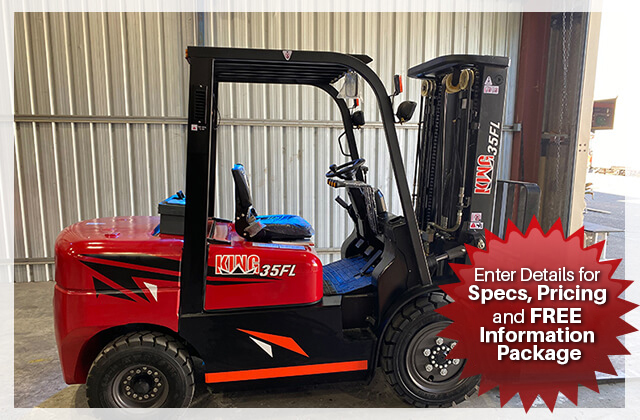
For businesses looking for forklifts in Australia, choosing the right machine starts with understanding the job, not simply comparing prices.
A forklift can become one of the most useful pieces of equipment in a warehouse, construction business, manufacturing facility, agricultural operation, or distribution centre. It can move heavy materials quickly, reduce unnecessary manual handling, improve loading and unloading processes, and make better use of available storage space.
However, not every forklift is suitable for every workplace. A machine that performs well inside a warehouse may not be the best choice for a construction site, while a large outdoor forklift may be impractical in narrow aisles.
The right decision comes from matching the forklift’s capabilities with the real conditions in which it will be used.
Start With the Work You Need to Do
Before looking at individual forklift models, take a step back and examine your daily material-handling requirements.
Ask yourself what the forklift will be expected to move, how often it will be used, where it will operate, and how high materials need to be lifted.
Important considerations include:
- Maximum load weight
- Average load weight
- Load dimensions
- Required lifting height
- Indoor or outdoor operation
- Floor and ground conditions
- Aisle width
- Daily operating hours
- Required travel distance
- Available attachments
- Maintenance requirements
These details can quickly eliminate unsuitable options and help you focus on forklifts that genuinely fit the application.
Forklift Capacity Is More Than a Number
One common mistake is choosing a forklift based only on its advertised lifting capacity.
For example, a forklift rated for a particular weight does not automatically mean it can safely handle every load of that weight at every lifting height. Load centre, attachment configuration, mast height, and the shape of the material can all influence how the machine performs.
Businesses should therefore consider their heaviest realistic loads and discuss the complete application with a knowledgeable supplier.
It is better to choose equipment based on real operating conditions than to discover later that the machine is unsuitable for an important part of the job.
Think About Lifting Height
Lifting height becomes especially important in warehouses and storage facilities.
If pallets are being placed onto high racking, the forklift needs a suitable mast configuration and enough lifting capability to complete the task safely and efficiently.
At the same time, businesses should consider overhead clearance. Doorways, roof structures, lighting, sprinkler systems, racking and other obstacles can influence the practical lifting height available at a particular site.
A forklift should therefore be assessed as part of the complete warehouse layout rather than as an individual machine.
Indoor Forklifts vs Outdoor Forklifts
The operating environment can have a major influence on forklift selection.
Indoor workplaces may prioritise manoeuvrability, compact dimensions, visibility, floor protection, and operating characteristics suitable for enclosed areas.
Outdoor applications can introduce additional challenges such as gravel, uneven surfaces, slopes, dirt, mud and changing weather conditions.
For businesses working across construction sites, farms, yards or other uneven environments, an all-terrain or four-wheel-drive forklift may be worth considering.
The key is to identify the actual terrain rather than selecting equipment based on a general assumption that a more powerful forklift is always better.
Consider Your Warehouse Layout
A forklift needs enough room to operate efficiently.
Before purchasing equipment, measure narrow aisles, loading zones, doorways and turning areas. Think about where pallets are stored and how the forklift will approach them.
A machine with excellent lifting capability can still become frustrating to use if it is too large for the available space.
Manoeuvrability is particularly important in busy warehouses where forklifts operate around racking, pallets, trucks and employees.
Good equipment selection should support the workflow instead of creating additional obstacles.
Diesel Forklifts for Demanding Applications
Diesel forklifts remain an option for businesses that need strong performance in demanding environments.
They can be suitable for applications involving heavy materials, outdoor yards, construction-related work, agriculture and industrial operations.
Forklift King currently lists a range of diesel forklift configurations, including different capacities and all-terrain options. Businesses should compare specifications against their actual requirements rather than choosing purely on engine size or advertised capacity.
Fuel consumption, servicing, operating hours, tyre wear and the working environment should all be included when calculating the long-term cost of ownership.
Attachments Can Make a Big Difference
The basic forks supplied with a forklift may not be enough for every application.
Some businesses need adjustable forks, sideshift systems, rotating forks, specialised attachments or other equipment designed around specific loads.
Attachments can make a forklift much more versatile, but they can also influence the machine’s rated capacity and load centre.
For this reason, businesses should make sure the complete forklift and attachment combination is appropriate for the intended work.
Operators should also be familiar with how the attachment changes the machine’s handling characteristics.
New Forklift or Used Forklift?
Budget is naturally an important part of the purchasing decision.
A new forklift provides the advantage of a known equipment history and access to current specifications and manufacturer support. A used forklift, when properly inspected and maintained, can sometimes offer a practical alternative for businesses with a tighter budget.
When assessing used equipment, don’t judge the machine only by its appearance.
Check the operating hours, service history, tyres, forks, mast, hydraulics, steering, brakes and overall mechanical condition. If possible, have the equipment professionally inspected before committing to the purchase.
Compare Price With Total Value
The cheapest forklift is not necessarily the least expensive option over several years.
A machine that frequently requires repairs or is poorly suited to the application can create downtime and additional costs.
On the other hand, equipment that matches the workload, receives regular maintenance and is operated correctly can provide strong value over its working life.
Businesses should consider purchase price alongside:
- Fuel or energy consumption
- Maintenance
- Replacement parts
- Tyres
- Downtime
- Operator requirements
- Attachments
- Resale value
- Warranty and after-sales support
This broader approach gives a more realistic picture of the investment.
Check Pricing and Specifications Carefully
Once you have identified the type of forklift you need, compare the specifications rather than looking at price alone.
Factors such as mast height, capacity, sideshift, adjustable forks, tyre configuration and lighting can make a meaningful difference to the machine’s usefulness.
For businesses comparing different options, the Forklift Price List provides a useful starting point for reviewing available forklift packages and specifications.
The final decision should still be based on whether the particular configuration matches your workplace and workload.
Don’t Overlook Operator Comfort
Forklift operators can spend many hours in the machine, so comfort and usability should not be ignored.
Seat position, visibility, controls, steering response and access to the operator area can all affect the experience of using the equipment throughout a working day.
A comfortable and well-designed operating environment can also make it easier for operators to maintain concentration during repetitive material-handling tasks.
Businesses should give operators an opportunity to provide feedback when evaluating equipment, particularly when the forklift will be used extensively.
Maintenance Should Be Part of the Buying Decision
Every forklift requires maintenance.
Before buying, find out how servicing is handled, where replacement parts are available and what type of after-sales support is provided.
A good maintenance plan can help identify wear before it develops into a larger mechanical problem.
Regular inspections are also important for workplace safety. Operators should follow the relevant workplace procedures and report defects before using equipment that may not be safe to operate.
Look at Real Customer Experience
Specifications tell you what a forklift is designed to do, but real customer experiences can provide another useful perspective.
When researching equipment, look for genuine feedback about build quality, usability, support, servicing and the ownership experience.
Reading customer feedback can help identify questions that you may not have considered during the initial purchasing process.
Forklift King also provides a dedicated customer reviews section where prospective buyers can explore available customer feedback.
Final Thoughts
Choosing the right forklift is ultimately about matching the machine to the job.
Load capacity, lifting height, operating environment, manoeuvrability, attachments, maintenance, operator requirements and total cost should all be considered before making a decision.
Taking the time to understand these factors can help businesses avoid buying equipment that looks suitable on paper but does not perform well in the real workplace.
A well-matched forklift can become a valuable long-term asset, helping businesses move materials efficiently while supporting a more organised and productive working environment.
Author



Introduction
Dubai has become one of the world’s leading destinations for entrepreneurs, investors, and international companies. Its strong economy, strategic location, modern infrastructure, business-friendly environment, and access to global markets make it an attractive place to launch a new venture.
But with so many opportunities available, one important question remains: What are the most profitable businesses to start in Dubai?
The answer depends on factors such as your investment budget, experience, target customers, business activity, and whether you choose a mainland or free zone setup. In this guide, we explore some of the most promising business opportunities in Dubai and explain what entrepreneurs should consider before starting a company.
Why Start a Business in Dubai?
Dubai offers opportunities across technology, tourism, e-commerce, professional services, real estate, logistics, food, retail, and many other industries. The city’s international business environment also makes it easier for companies to connect with customers and partners from different parts of the world.
For entrepreneurs planning a business setup in Dubai, choosing the right business activity and legal structure is essential. A well-planned setup can help control costs, meet licensing requirements, and create a strong foundation for long-term growth.
1. E-Commerce Business
E-commerce is one of the most attractive sectors for entrepreneurs in Dubai. Consumers increasingly purchase products online, creating opportunities for businesses selling fashion, electronics, beauty products, home goods, specialty products, and more.
Starting an online store can require less physical infrastructure than a traditional retail business. Entrepreneurs can also sell to customers in the UAE and potentially expand into international markets.
A proper Dubai business setup for an e-commerce company should include selecting the appropriate activity, obtaining the required license, and arranging any necessary approvals.
2. Digital Marketing and IT Services
Businesses across Dubai need digital solutions to compete in an increasingly technology-driven market. This creates strong opportunities for digital marketing agencies, web development companies, software businesses, cybersecurity providers, and IT consultants.
For professionals with technical or marketing expertise, an IT or digital services company can be a scalable business model with relatively manageable operating costs.
Working with an experienced business setup consultant in Dubai can help entrepreneurs identify the appropriate license and business structure for their activities.
3. Real Estate Services
Dubai’s property market continues to attract investors, residents, and international buyers. This creates opportunities in real estate brokerage, property management, holiday-home services, and related professional services.
Entrepreneurs interested in this sector should understand that certain real estate activities require specific approvals and licensing requirements. Proper planning is therefore important before launching the business.
4. Tourism and Travel Services
Dubai is a major international tourism destination, creating opportunities for businesses connected with travel and hospitality.
Potential business ideas include travel agencies, tour operators, destination management services, event-related tourism, and specialized travel experiences.
Entrepreneurs can target tourists, corporate travelers, families, and visitors looking for premium or customized experiences.
5. Food and Beverage Business
The food and beverage sector remains one of Dubai’s most popular business categories. Restaurants, cafés, cloud kitchens, catering companies, specialty food stores, and food delivery concepts can all provide opportunities for entrepreneurs.
However, competition in this sector can be high. A successful business requires a clear concept, suitable location, effective marketing, and careful cost management.
Before opening a restaurant or food business, entrepreneurs should understand the relevant business license in Dubai and additional regulatory requirements.
6. Logistics and Transportation
Dubai’s strategic location between major global markets makes logistics and transportation an important part of the local economy.
Entrepreneurs can explore opportunities in freight services, warehousing, courier services, supply-chain management, and specialized transportation.
The growth of e-commerce has also increased demand for efficient delivery and logistics solutions, making this an interesting sector for investors with relevant industry experience.
7. Professional Consultancy Services
Consultancy businesses can be attractive because they can often be operated with relatively lower infrastructure requirements compared with businesses that require large physical premises.
Examples include management consulting, accounting, HR consulting, business advisory, marketing consultancy, and specialized professional services.
Professionals with strong industry knowledge can build a consultancy around a specific niche and serve both local and international clients.
8. Health and Wellness Business
The growing interest in fitness, wellness, beauty, and healthy lifestyles has created opportunities in Dubai’s health and wellness market.
Depending on the specific activity and required approvals, entrepreneurs may consider fitness centers, wellness services, beauty businesses, nutrition-related services, and other lifestyle concepts.
Because some activities are regulated, investors should confirm the licensing and approval requirements before starting operations.
9. Cleaning and Facility Management Services
Commercial buildings, residential communities, offices, hotels, and retail properties create continuous demand for cleaning and facility management services.
This sector can offer opportunities for entrepreneurs who can provide reliable, professional, and technology-supported services.
A carefully planned company formation in Dubai can help establish the right structure for providing these services to residential and commercial customers.
10. Import and Export Business
Dubai’s location and international connectivity make trading an attractive option for entrepreneurs involved in international commerce.
Import and export businesses can focus on products such as consumer goods, electronics, clothing, food products, industrial supplies, and other categories, depending on applicable regulations.
Entrepreneurs should research their target market, suppliers, customs requirements, and the appropriate trade license before starting.
Mainland or Free Zone: Which Is Better?
One of the key decisions during a businesssetupconsultancy.ae is choosing between mainland and free zone setup.
A mainland company can be suitable for businesses that want to operate broadly within the UAE market, while free zones can provide specialized infrastructure and benefits for certain business activities.
The right choice depends on your business activity, customers, ownership requirements, office needs, and expansion plans. There is no single setup that is best for every entrepreneur.
How Much Does It Cost to Start a Business in Dubai?
The Dubai business setup cost varies significantly depending on the business activity, jurisdiction, license type, office requirements, visas, government fees, and other factors.
For this reason, entrepreneurs should create a detailed budget before starting the registration process. Choosing the cheapest license is not always the best strategy; the license must also match the actual business activity and future plans.
How Business Setup Consultancy Can Help
Starting a company involves more than simply obtaining a trade license. Entrepreneurs need to make decisions about business activities, legal structure, jurisdiction, licensing, office requirements, visas, and regulatory approvals.
Business Setup Consultancy helps entrepreneurs understand these requirements and choose a suitable setup based on their business goals and budget.
Whether you are planning an e-commerce company, consultancy, trading business, restaurant, technology company, or another venture, professional guidance can make the business setup in Dubai process more organized and efficient.
Final Thoughts
Dubai offers a wide range of profitable business opportunities for entrepreneurs who choose the right market and develop a practical business strategy. E-commerce, technology, real estate, tourism, food and beverage, logistics, consultancy, and professional services are among the sectors worth considering.
However, profitability depends on more than selecting a popular industry. Market demand, competition, operating costs, licensing requirements, location, and business planning all play an important role.
If you are considering starting a business in Dubai, Business Setup Consultancy can help you understand your available options and plan your company formation according to your business objectives.
Author



Upgrading your phone is exciting. Figuring out what to do with the old one is less so. Most people face the same choice: hand it to the carrier for a trade-in credit or sell it through a buyback service for cash. Both options are convenient, but they work very differently, and the difference in your pocket can be significant. Let’s compare them honestly so you can decide which one makes sense for you.
How Carrier Trade-Ins Work
Carrier trade-in promotions are woven into the upgrade process. But the details matter. Those headline amounts often have you do the following:
- Purchase a particular new phone or an OR.1 upgrade to a higher-end plan.
- New Customer Service Contract for 24 to 36 months.
- And get the value in monthly bill credits instead of actual cash.
- Don’t let your line go idle, or the rest of your credits are forfeited.
- It’s not actually cash. It’s a discount that requires you to stick to just one provider.
How Buyback Works
They buy the phone on your behalf. Provide some details about your model, storage, and condition, and you’ll be quoted a price for the phone and then paid. No new contract, no purchase is required, and no credits to buy and wait for it to appear on your bill.
The price you are offered is a true market value of your phone on the resale market. Since the buyer is shopping for inventory, buyback rates are more straightforward and usually more competitive – especially when it comes to newer products and devices in excellent condition.
The Real Comparison: Cash vs. Credit
Here’s where the two paths diverge.
- Flexibility. The money can be spent anywhere you want to spend it. Use it to buy a new phone from anyone, use it to pay off a bill, or save it.
- Payments. Repayment happens fast, within days. If it’s bills, the payment periods are spread out over many months.
- No commitment. There’s no obligation when you sell your phone. A trade-in deal might be for a lengthy contract, which could end up costing a lot more than the discount was worth.
- Condition stipulations. Carriers are ruthless. If the screen is broken, if the phone won’t turn on, or if the activation lock hasn’t been removed, you may only get a couple of bucks for it. Buyback companies will take any old, damaged phone and still give a quote.
- Carrier lock. Unlocked phones sell for more, generally, as they can be used on any network. A phone with a carrier lock may not fetch as high a price.
When a Carrier Trade-In Makes Sense
A carrier trade-in isn’t necessarily a bad choice. They may work if you:
You already intended to purchase a new phone on that network.
You are satisfied with your plan and plan to stay for many years.
You appreciate one transaction at the shop that’s simple.
- A Short-term offer truly delivers more value to your model.
If each of these applies, then maybe that convenience is worth the sacrifice. Just read the fine print and do the math.
When Selling to a Buyback Service Wins
Buyback often comes out ahead when:
- You prefer to have real cash rather than bill credits.
- There are issues with your phone, a battery that’s no longer good, or an upgraded model.
- You prefer not to sign a new contract.
- You want to get your next phone from the lowest-price seller.
How to Compare Offers Properly
Don’t just go by the biggest number: Give me this easy test:
- Compare a carrier quote with a buyback quote. Read side-by-side.
- Will be paid in: Ask whether payment is made by cash, gift card, or monthly credit.
- Look at the list of requirements. Is there a new program or a purchase that you need?
- Think about the overall cost. For example, a larger credit with a more expensive plan could add up to a lot more money.
- Review the condition policy’s rules. Learn what happens when the phone is scratched or the battery is exhausted.
- If you take a quick look, you’ll often find that the bright, shiny promotion doesn’t appear to be so generous after all.
Tips to Increase Your Payout Either Way
Regardless of the route you take, taking time to get ready is always worth it:
- Delete Your Data and Reset It: You need to back up your data and reset the phone.
- Sign out of iCloud and turn off Find My iPhone.
- Wipe down the device and original accessories if present.
- In describing the phone’s condition, be honest, or your buyer will be surprised with any price changes.
- Cash in before the new model hits—iPhones depreciate rapidly once a newer version hits the market.
A Note on Security
No matter which path you choose, keep your details safe. Wipe the device and turn off your Apple ID. Established buyback companies re-erase devices, but doing a reset yourself is the ideal first step. Stay clear of anonymous internet sellers, where there’s a lot of fraud around payments.
Making Your Decision
The trade-in works to make things easier for you, but there are times when the deal is worthwhile, depending on how well it suits you. However, with the deal come strings, and you have to wait for the money, plus a lengthy contract to boot. With buy-backs, things are much simpler, which explains the better payout.
If you want a quick, fair, and secure option, consider an iPhone buyback Raleigh, NC service like Phone Revolution Hub, where you can get an instant valuation and fast payment without being tied to a carrier.
Author



Top 25 Podcast Marketing Firms Based in the United States

QuickBooks Bank Feeds Not Working: Expert Fix Guide

QuickBooks Delivery Server Down Error: Expert Fix Guide

How to Make Every Congratulations Celebration Memorable

Rolls Royce Cullinan Hire: Experience Luxury on Every Journey

How to Choose the Right Forklift for Your Business in Australia

Opus One, New Chandigarh

Singapore Travel Planning: Essential Ideas for a First Visit May, 2026

Righteous Hoodie – Stylish, Comfortable & Everyday Streetwear

Epson Printer Error Code 0x9E? 10 Fixes That Actually Work

Cybersecurity Consulting Company SequelNet Provides Critical IT Support Services to Medical Billing Firm, Medical Optimum

Meet the Megalodon: The Shark Star of ‘Meg 2’

Reduce Video Game Lag: Level Up Your Gaming Performance

Balancing India’s Entertainment: Cricket vs. Bollywood

Jetsetter’s Secrets: Unveiling Our Favorite Travel Hacks for a Seamless Adventure

The 5 Best Live Sports Streaming Sites: Legal and Exciting!

Hollywood Labor Unrest: The Impact of ‘What About Us?’ Strikes

Unveiling the Magic of Dream Fulfillment at the Late NBA Draft

Illuminate Your Skin: Dr. Axe Unveils Natural Remedies for Lightening Knees and Elbows

Bright Choices: Navigating the Pros and Cons of Skin Whitening Creams with Dr. Axe
-

 Business3 years ago
Cybersecurity Consulting Company SequelNet Provides Critical IT Support Services to Medical Billing Firm, Medical Optimum
-
Entertainment3 years ago
Meet the Megalodon: The Shark Star of ‘Meg 2’
-
Entertainment3 years ago
Reduce Video Game Lag: Level Up Your Gaming Performance
-
 Sports3 years ago
Balancing India’s Entertainment: Cricket vs. Bollywood
-
Entertainment3 years ago
Jetsetter’s Secrets: Unveiling Our Favorite Travel Hacks for a Seamless Adventure
-
Productivity3 years ago
The 5 Best Live Sports Streaming Sites: Legal and Exciting!
-
Art /Entertainment3 years ago
Hollywood Labor Unrest: The Impact of ‘What About Us?’ Strikes
-
Sports3 years ago
Unveiling the Magic of Dream Fulfillment at the Late NBA Draft






