
Technology
Office 365 Tenant to Tenant Migration: A Secure Transition

By

Reviewed
By Melissa Parker
Introduction
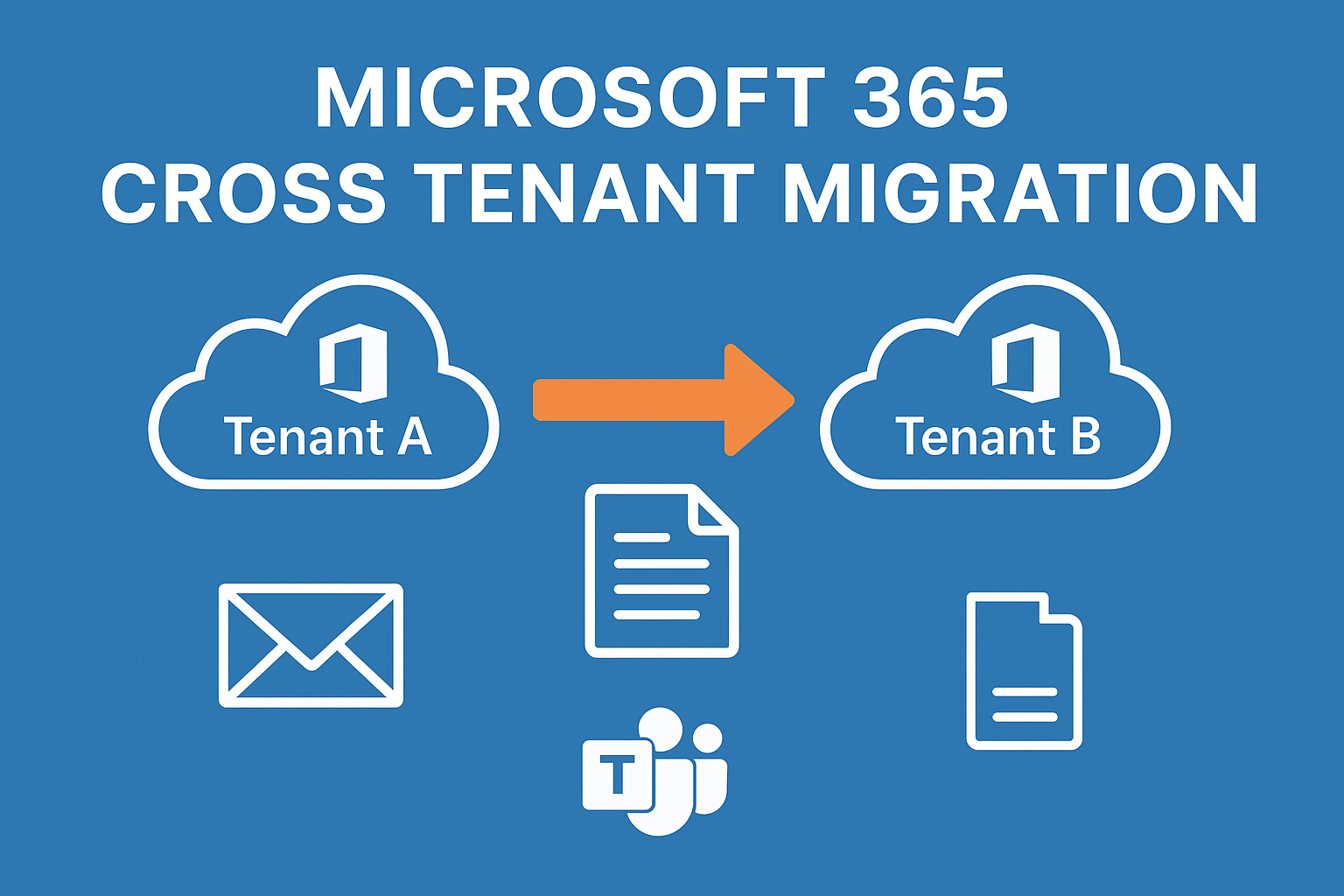
As organizations grow, merge, or restructure, the need to transfer data from one Microsoft 365 tenant to another becomes increasingly common. This process, widely known as Office 365 tenant to tenant migration, involves moving mailboxes, OneDrive data, SharePoint sites, Teams chats, and other workloads from one cloud environment to a new organizational tenant.
However, despite being essential, this workflow is complex. Businesses often face challenges like throttling limits, downtime concerns, security risks, and limitations of manual migration methods. This is where a reliable and automated full-service solution becomes necessary.
MailsDaddy Cross-Tenant Migration Service provides a secure, error-free, and fully managed migration approach designed to simplify even the largest enterprise transitions. Whether your company is facing mergers, acquisitions, or rebranding, MailsDaddy ensures a smooth and efficient migration journey.
Common Challenges in Tenant to Tenant Migration
Performing a tenant-to-tenant migration is not as simple as it sounds. Microsoft provides limited support, and most steps must be managed manually, which increases the risk of errors. Here are some common challenges:
- Microsoft throttling & service limitations that slow down large-scale migrations.
- Downtime during mailbox switching, which disrupts business communication.
- Complex pre-migration planning, including domain unbinding and re-verification.
- Mapping user permissions between source and destination tenants.
- Transferring OneDrive & SharePoint data without losing file hierarchy.
- Migrating Microsoft Teams chats & channels, which is not supported manually.
- Maintaining security, compliance, and audit trails throughout the process.
- Risk of email loss, broken links, or corrupted items during manual exports.
These challenges highlight why businesses prefer automated, professional migration services.
MailsDaddy Cross-Tenant Migration Service
MailsDaddy offers a fully automated and secure solution that eliminates the need for complex scripts or manual configurations. The service is designed for organizations of all sizes and industries.

What the Service Migrates:
- Exchange Online Mailboxes
- OneDrive Files & Permissions
- SharePoint Sites, Lists & Libraries
- Teams Chats, Channels & Group Data
- Microsoft 365 Groups
- Public Folders
- Archive Mailboxes
The process is executed by certified experts who ensure zero data loss and minimal disruption to business operations.
Step-by-Step Migration Approach
1. Pre-Migration Assessment
The MailsDaddy team analyzes your current environment to understand mailbox size, permissions, apps, and user dependencies. This helps in accurate planning and prevents unexpected issues.
2. Domain Preparation & Verification
The domain is unbound from the source tenant and then configured and verified in the new tenant without interrupting existing users.
3. Mapping Users & Workloads
Each user’s mailbox and OneDrive/SharePoint accounts are mapped between tenants. This ensures accurate permission transfer and folder structure preservation.
4. Automated Data Migration
MailsDaddy uses enterprise-grade tools to securely transfer:
- Emails
- Calendars & Contacts
- OneDrive Documents
- SharePoint Sites
- Teams Chats & Channels
All metadata and permissions remain intact.
5. Monitoring & Validation
Dedicated migration experts continuously track the progress and validate migrated items to ensure data integrity.
6. Cutover & Final Sync
A final delta sync ensures no email or file is left behind. The switch from the old tenant to the new one happens smoothly with zero downtime.
Key Benefits of MailsDaddy Cross-Tenant Migration Service
1. Zero Downtime Migration
Employees continue working normally without disruption during the migration.
2. Enhanced Security & Compliance
Encrypted data transfer, audit logs, and compliance with Microsoft security guidelines make the process safe for all industries.
3. Fast & Efficient Migration
Advanced parallel processing speeds up the migration, even for large organizations.
4. Migration of All Workloads
Unlike manual methods, the service supports Teams, Groups, OneDrive, and SharePoint migrations with full accuracy.
5. Experienced Microsoft 365 Experts
The migration is handled by professionals who specialize in Office 365 tenant transitions.
6. Customizable Solutions
Whether it’s 10 users or 10,000+, the service is tailored to your business needs.
Manual vs. Automated Tenant-to-Tenant Migration
| Feature | Manual Process | MailsDaddy Automated Migration |
|---|---|---|
| Mailbox Migration | Slow & complex | Fast & automated |
| Teams Migration | Not supported | Fully supported |
| OneDrive Migration | Requires scripts | Automated & accurate |
| Downtime | High risk | Zero downtime |
| Security | Basic | Enterprise-level |
| Required Skills | Advanced PowerShell | No technical expertise required |
Conclusion: Move to Your New Tenant with Confidence
Office 365 tenant to tenant migration doesn’t need to be stressful or risky. With MailsDaddy Cross-Tenant Migration Service, organizations can experience a smooth, secure, and fully automated transition without losing a single email, file, or permission.
If you’re planning a migration due to merger, rebranding, or restructuring, MailsDaddy provides the expertise, tools, and support to make the journey hassle-free.
About MailsDaddy”
MailsDaddy Software Pvt. Ltd.- A global pioneer in database recovery and exchange migration, has a set of innovative and acclaimed solutions to make things easier in a variety of ways. MailsDaddy is located in New Delhi which is also the capital of India. Maintaining the brand position with global clients. MailsDaddy has expanded its offices in a very short span of time from a single location to the European region with 24*7-lifetime free technical support. Till now we have more than 5 million customers in the world.
The movement of email is happening very fast, so there are bound to be different types of email communication. If you are also connected to any email service and want to migrate the data, then connect with the MailsDaddy software. We provide various types of email conversion, backup, and migration solutions that will surely give you successful results.
MailsDaddy Software has been at the forefront of this field for seven years and has been manufacturing a wide variety of different software. We currently have over 30 types of solutions that are fully capable of doing everything from migrating emails to creating backups.
Explore the service here: https://www.mailsdaddy.com/services/cross-tenant-migration.php
Author


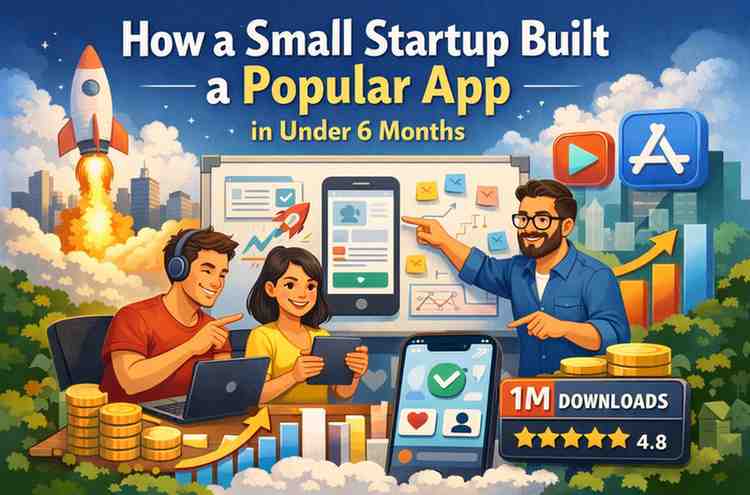
In today’s fast-paced digital landscape, startups face immense pressure to innovate quickly while staying within budget. Mobile applications have become a cornerstone of modern business strategies, enabling companies to reach global audiences, enhance engagement, and generate revenue streams. Despite the challenges, some startups manage to turn their ideas into popular apps in record time.
One remarkable example is a small startup that successfully launched a highly popular app in under six months. Their journey demonstrates the importance of strategic planning, expert collaboration, and a deep understanding of the mobile ecosystem. By leveraging modern mobile app development practices and working with a trusted mobile app development company in Dallas, they overcame typical startup hurdles and achieved extraordinary results.
This blog explores the step-by-step process this startup followed, highlighting the strategies, challenges, and insights that can inspire other entrepreneurs and founders looking to create impactful apps in a short timeframe.

Identifying the Problem and Market Opportunity
Every successful app begins with a clear understanding of the problem it solves. The startup started by analyzing market trends and user behaviors to identify unmet needs in their niche. Instead of building an app based on assumptions, they focused on research-driven insights. They examined competitors, surveyed potential users, and identified common pain points. This approach ensured that their app would address real needs and stand out in a competitive market.
Key steps in this phase included:
- Conducting market research to understand existing solutions and gaps
- Gathering feedback from potential users to define must-have features
- Identifying opportunities where technology could streamline processes or improve user experience
- Benchmarking against competitors to ensure differentiation
By taking this strategic approach, the startup laid the foundation for a product that resonated with users. Their insights helped shape not only the functionality of the app but also its overall design and value proposition. Working with a reputable mobile app development company in Dallas provided them with industry expertise and insights that significantly accelerated this phase, allowing the team to move quickly from concept to prototype.
Assembling the Right Development Team
A common challenge for startups is assembling a skilled and reliable development team without exhausting the budget. The startup addressed this by partnering with IndiaAppDeveloper, a renowned taxi booking app development company and experienced mobile app development company in Dallas. By doing so, they accessed a pool of highly skilled professionals, including app developers, UX/UI designers, and quality assurance specialists.
The team composition included:
- Experienced app developers in Dallas capable of handling both front-end and back-end development
- UX/UI designers focused on creating an intuitive, engaging user interface
- Project managers to coordinate development and maintain timelines
- QA specialists to ensure high standards of performance and reliability
Outsourcing certain aspects to expert developers allowed the startup to maintain agility, reduce development costs, and meet tight deadlines. This collaborative approach ensured that technical expertise was leveraged effectively while keeping the startup team focused on strategic decisions and user experience design.
Planning the Development Process
Efficient mobile app development requires meticulous planning. The startup adopted an agile methodology, breaking the project into manageable sprints and prioritizing features based on impact and feasibility. This approach allowed them to deliver functional components quickly, test them in real-world scenarios, and make iterative improvements.
Critical aspects of their development plan included:
- Defining core features that provided immediate value to users
- Creating a roadmap for additional functionalities to be implemented post-launch
- Scheduling regular sprint reviews to assess progress and make adjustments
- Ensuring transparency and continuous communication between the development team and stakeholders
By structuring the development process around agility, the startup minimized risks, reduced time-to-market, and ensured that the app evolved based on actual user feedback rather than assumptions.
Designing a User-Centric Experience
User experience (UX) can make or break an app. From the beginning, the startup prioritized designing a user-friendly interface with smooth navigation, visually appealing elements, and fast load times. Collaborating with experienced designers from IndiaAppDeveloper ensured that the app’s interface was intuitive and aligned with user expectations.
The key UX strategies included:
- Simplifying the onboarding process to encourage user adoption
- Designing visually appealing interfaces with consistent branding
- Ensuring fast and responsive performance across devices
- Providing clear feedback for user actions, such as notifications and confirmations
Focusing on user-centric design helped the app gain positive reviews early on, which contributed to organic growth and enhanced user trust.
Developing Core Features for Maximum Impact
For an app to become popular quickly, it must offer features that resonate with users. The startup concentrated on delivering high-impact functionalities first. For example, in the case of a taxi booking app, these features were:
- Real-time GPS tracking for accurate ride locations
- Seamless payment integration supporting multiple methods
- Quick and easy booking interface for on-the-go users
- Reliable notifications and updates about ride status
- Ratings and feedback system to maintain service quality
By working with a trusted taxi booking app development company, the startup ensured that these features were implemented effectively, with minimal bugs and maximum usability.
Testing and Quality Assurance
An app’s reliability depends heavily on rigorous testing. The startup invested significant effort in quality assurance to detect performance issues, ensure compatibility, and maintain security standards.
Testing strategies included:
- Conducting cross-device and cross-platform testing to guarantee consistent performance
- Performing usability testing with real users to identify interface improvements
- Implementing automated testing scripts for continuous monitoring
- Ensuring robust security measures to protect user data
By prioritizing QA, the startup launched an app that was not only functional but also stable and secure, which enhanced user satisfaction and encouraged adoption.
Accelerating Time-to-Market
Speed was a crucial factor in this startup’s success. Leveraging agile methodologies, outsourcing to expert app developers in Dallas, and focusing on essential features allowed the team to reduce development time. This approach enabled the app to reach users in under six months, giving the startup a competitive edge.
Key strategies to accelerate time-to-market included:
- Focusing on MVP (Minimum Viable Product) for early launch
- Iteratively adding secondary features post-launch
- Using pre-built frameworks and APIs to avoid building everything from scratch
- Maintaining clear communication channels to prevent delays
This combination of planning, expert collaboration, and efficiency allowed the startup to achieve rapid development without compromising quality.
Launch and Marketing Strategy
Launching an app is more than making it available on app stores. The startup implemented a comprehensive marketing plan to generate awareness and attract initial users.
Marketing strategies included:
- Social media campaigns targeting relevant audiences
- Collaborations with influencers to promote app usage
- Incentive programs such as referral bonuses and discounts
- Local advertising and press coverage to boost visibility
By coupling a strong launch plan with an intuitive, high-quality app, the startup ensured strong initial traction and user engagement.
Post-Launch Growth and Feedback Loop
Even after launch, the startup maintained momentum by continuously monitoring user feedback and analytics. This allowed them to identify areas for improvement and roll out updates promptly.
Key post-launch strategies included:
- Analyzing app usage patterns to identify popular and underused features
- Collecting and responding to user feedback for continuous improvement
- Releasing timely updates to fix issues and introduce enhancements
- Scaling infrastructure to handle increasing user load
A robust feedback loop ensured the app evolved with user needs, sustaining growth and engagement over time.
Lessons Learned from the Startup’s Journey
The experience of this startup offers valuable lessons for other entrepreneurs aiming to create popular apps quickly.
- Market Research Matters: Understand your audience and competitors before starting development.
- Hire Experts Wisely: Partner with a trusted mobile app development company in Dallas to leverage skills you may not have in-house.
- Focus on Core Features: Prioritize functionalities that deliver the most value.
- User-Centric Design: Ensure UX is intuitive, fast, and visually appealing.
- Test Thoroughly: QA is essential to deliver a stable, secure product.
- Agile Methodology: Break development into sprints for faster, more adaptable progress.
- Strategic Marketing: Launch with a plan to attract and retain users.
- Continuous Improvement: Post-launch feedback and updates keep your app relevant.
By applying these principles, startups can turn ideas into successful apps in a relatively short timeframe, even under resource constraints.
Conclusion
The journey of this small startup demonstrates that building a popular app in under six months is achievable with careful planning, expert guidance, and a user-first approach. By collaborating with a professional team like IndiaAppDeveloper, a leading taxi booking app development company, the startup combined technical excellence with strategic insights, resulting in an app that met market needs, delighted users, and achieved rapid growth.
For entrepreneurs looking to replicate this success, the key takeaway is clear: focus on understanding your audience, hire the right development partners, prioritize essential features, and never compromise on quality or user experience. With the right strategies in place, even a small team can achieve extraordinary results in mobile app development.
Author


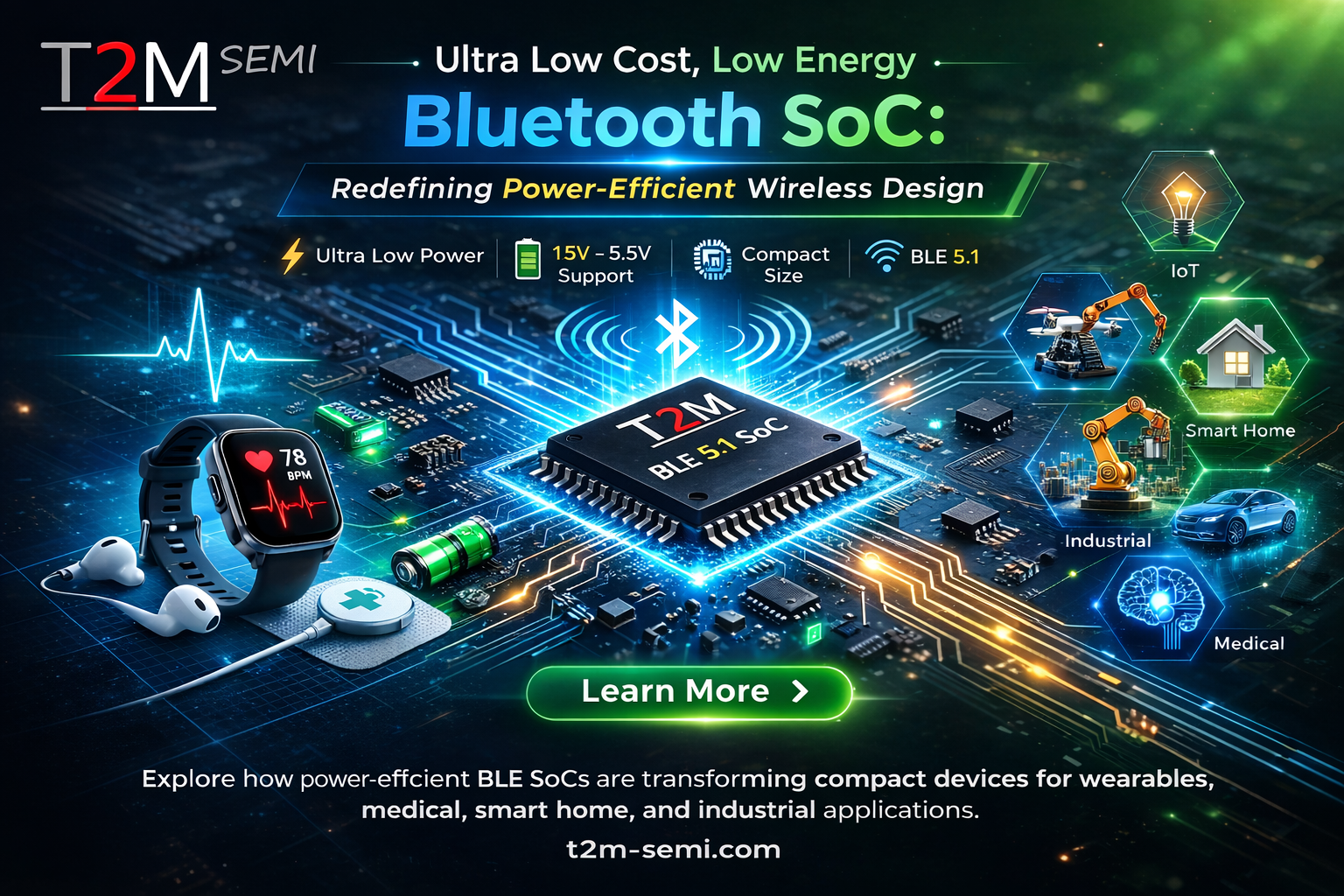
In today’s hyper-connected world, wireless connectivity is no longer a luxury. It has become a basic expectation. Compact connected devices are shaping the future of digital infrastructure. These include wearable health sensors, smart lighting systems, industrial control nodes, and logistics trackers.
However, engineers face several challenges when designing small, battery-powered devices. They must balance power consumption, cost, board space, certification, and system complexity. Each of these factors directly affects product feasibility.
A low-energy Bluetooth SoC solves many of these challenges. It integrates wireless communication, processing, memory, power management, and peripheral interfaces into a single chip. This approach reduces complexity and improves efficiency.
The SoC supports Bluetooth Low Energy (BLE) up to version 5.1. It also includes advanced power optimization features. These capabilities allow developers to build cost-effective and energy-efficient products for medical, consumer, industrial, and smart infrastructure applications.
Built for Extreme Power Efficiency
This SoC runs directly on a single 1.5V battery cell. This design eliminates the need for multi-cell battery configurations. As a result, it reduces system complexity and saves space.
In low-power devices like remote controls and wearable trackers, battery life matters more than processing power. The SoC addresses this need with an efficient power management system. It operates with input voltages between 1.8V and 3.6V. It also supports USB input ranging from 4.5V to 5.5V.
The built-in battery monitor detects low-voltage conditions. It identifies brownout situations and ensures stable operation. The integrated LDO and DC-DC regulators optimize voltage levels across different operating modes.
The SoC consumes about 5mA in active mode at 3V. In sleep mode with SRAM retention, it uses around 1µA. Under external wake-up conditions, it reduces consumption to as low as 0.4µA. These low power levels allow devices to run for months or even years on a small coin cell battery.
Compact Design for Small Devices
Modern IoT and wearable devices demand compact designs. This SoC comes in extremely small package options. These include a 1.6 × 2.0 × 0.5 mm WLCSP and a 3 × 3 × 0.55 mm QFN24.
The WLCSP package suits ultra-small applications like medical patches, smart rings, and sensor nodes. Even in its smallest version, the SoC includes five GPIO pins. The QFN version supports up to twelve GPIOs for expanded functionality.
This high level of integration reduces the bill of materials. It also simplifies PCB layout. The embedded RF matching circuit removes the need for many external components. Designers can even eliminate inductors in some cases, which further lowers system cost.
Reliable Wireless Performance
The SoC supports Bluetooth Low Energy up to version 5.1. It works seamlessly with modern smartphones, tablets, and medical devices. BLE 5.x improves range, speed, and coexistence. These improvements enhance performance in different environments.
The transceiver operates at 1 Mbps and 2 Mbps. It also supports Long Range mode and 250 kbps under IEEE 802.15.4. In addition, it supports ANT and ANT+ protocols. These features make it suitable for fitness and health applications.
The receiver achieves high sensitivity levels. It reaches about -97 dBm for BLE and -100 dBm for IEEE 802.15.4. The transmitter delivers up to +10 dBm output power. This combination ensures strong and stable communication over longer distances.
Because of this performance, the SoC works well in smart homes, industrial networks, and transportation systems.
Integrated Processing and Memory
The SoC includes a built-in microcontroller with a 32-bit processor. It operates at speeds up to 48 MHz. The design focuses on energy efficiency while maintaining strong performance.
The memory system includes 64 kB of Flash and 32 kB of SRAM. The SRAM supports retention, which helps preserve data during low-power modes. This setup allows developers to run BLE stacks, applications, and peripheral controls efficiently.
The chip also includes one-time programmable memory. Developers can use it for secure configuration storage. By combining processing, memory, and RF functions into one chip, the SoC reduces the need for external components and simplifies development.
Advanced Power Management
Efficient energy use remains critical for battery-powered devices. This SoC provides multiple power-saving modes, including active, idle, and sleep states.
It supports fast wake-up while maintaining SRAM data. External triggers can also activate the system when needed. This feature works well for sensor-based applications.
The integrated DC-DC converter improves efficiency during high-current operation. The LDO regulator maintains stable power during low-power modes. Together, these features create a flexible and efficient power system.
Battery monitoring and brownout protection further improve reliability. These features ensure consistent performance in medical and industrial applications.
Flexible Interfaces for System Design
The SoC supports a wide range of digital and analog interfaces. Developers can configure GPIO pins for different applications. The built-in 16-bit PWM supports motor control, LED dimming, and waveform generation.
Communication interfaces include SPI, I2C, UART, and USB 2.0. These allow easy integration with sensors, displays, and external processors. The USB interface also supports firmware updates and diagnostics.
On the analog side, the SoC includes a 14-bit ADC and an internal temperature sensor. These features support environmental monitoring, battery management, and wearable diagnostics without extra components.
Simplified RF Design
RF design often adds complexity and cost. This SoC simplifies the process by integrating the RF matching circuit. Designers no longer need large external matching networks.
The chip supports inductor-free operation in some designs. This reduces the number of passive components and lowers assembly costs.
Developers can also use an optional 32 kHz crystal for precise timing. Alternatively, they can rely on internal resources depending on application needs.
This level of integration reduces development time and accelerates product launches.
Certification and Compliance
Manufacturers must meet regional standards when launching wireless products. This SoC meets major global certifications, including ETSI, FCC, and ARIB.
These certifications simplify product approval. They reduce both time and cost during regulatory processes. The SoC also complies with RoHS standards and uses a lead-free design.
This built-in compliance supports companies that target global markets.
Wide Range of Applications
This SoC supports a variety of applications due to its low power, compact size, and strong performance.
It enables small Bluetooth accessories for smartphones and tablets. It also powers RF remote controls with long battery life. In fitness and health devices, it supports BLE and ANT connectivity.
Wearable devices benefit from its lightweight and efficient design. Smart home systems use it for automation and mesh networking. Industrial systems rely on its RF performance and sensor capabilities.
Healthcare applications use it for remote monitoring and portable diagnostics. Consumer electronics manufacturers value its low cost and easy integration.
Driving Future IoT Innovation
As IoT continues to grow, developers must balance performance, cost, and power efficiency. This SoC helps achieve that balance.
It combines wireless communication, processing, memory, and power management into one compact solution. This allows developers to focus on innovation instead of hardware complexity.
Its low power consumption, multi-protocol support, and reduced component count make it ideal for scalable IoT systems.
Conclusion
The ultra-low-cost BLE SoC offers a practical and forward-looking solution for wireless design. It combines BLE 5.1 support, compact size, efficient power management, and flexible interfaces in a single chip.
Manufacturers can use it to build medical devices, wearables, smart infrastructure, and consumer electronics. It delivers strong performance while keeping costs and power usage low.
As connected devices become smaller and more efficient, integrated SoC platforms like this will play a key role in shaping the future of IoT innovation.
Author



Seats play a defining role in every luxury car. They shape the driving experience, influence posture, and determine long-term comfort. While engines provide motion and materials define appearance, seats create the most direct connection between the vehicle and its occupants. For this reason, luxury car manufacturers treat seat design as a blend of science, craftsmanship, and advanced engineering.
Unlike standard automotive seating, luxury car seats focus on ergonomics, adaptability, and sensory comfort. Every curve, stitch, and mechanism serves a purpose. This article explores how luxury car seats are formed, how they work, and why they represent one of the most complex components in premium vehicles.
The Formation of Luxury Car Seats
The formation of a luxury car seat begins at the design stage. Engineers first analyze human anatomy, driving posture, and pressure distribution. They then translate these findings into seat geometry.
Manufacturers build seat frames using high-strength steel or lightweight aluminum. These materials provide rigidity while allowing controlled flexibility. Once the frame is complete, engineers add foam layers with varying densities. Firmer foam supports posture, while softer foam enhances comfort.
Brands such as Mercedes-Benz invest years in seat research. Their development process ensures that seats remain supportive during long journeys without causing fatigue.

Advanced Engineering Behind Seat Structure
Luxury car seat engineering goes far beyond cushioning. Engineers design multi-layered structures that adapt to body movement. These structures absorb road vibrations while maintaining stability.
Many luxury seats include reinforced side bolsters. These bolsters hold occupants securely during cornering. At the same time, they remain unobtrusive during relaxed driving.
In vehicles like the BMW 7 Series, seat engineering balances firmness and softness. This balance allows the seat to respond dynamically to both driver input and road conditions.
How Luxury Car Seats Work
Luxury car seats rely on mechanical, electrical, and software systems working together. Electric motors control adjustments such as height, tilt, lumbar support, and headrest position. Memory systems store personalized seating preferences.
Sensors embedded within the seat detect body position and movement. Based on this data, the seat adapts support levels automatically. This responsiveness improves comfort during extended drives.
Additionally, advanced suspension seats isolate occupants from road imperfections. As a result, passengers experience smoother rides, even on uneven surfaces.
Performance Contribution of Luxury Seats
Seat performance directly affects driving precision. Proper seating position improves steering control, braking response, and overall safety.
Luxury car seats keep the driver stable during acceleration and cornering. This stability reduces muscle strain and enhances focus. In high-end sedans and grand tourers, seats also contribute to passenger comfort at higher speeds.
For example, the Audi A8 integrates performance-oriented seat contours with comfort-focused padding. This approach supports both dynamic driving and relaxed travel.
Materials Used in Luxury Car Seats
Material selection defines the tactile experience of luxury seats. High-quality leather remains the most popular choice. However, manufacturers use different grades and treatments to achieve softness, durability, and breathability.
Some luxury brands also use premium fabrics and microfiber materials. These options offer excellent temperature regulation and wear resistance. Stitching patterns further enhance visual appeal while reinforcing structural integrity.
In ultra-premium vehicles from Rolls-Royce, artisans hand-stitch seats using carefully selected hides. This craftsmanship ensures uniform texture and long-lasting elegance.
Climate Control and Seat Comfort Technology
Modern luxury car seats actively manage temperature. Heating systems warm seats during cold conditions, while ventilation systems circulate air during warm weather.
Ventilated seats use perforated materials and internal fans. These components prevent heat buildup and moisture retention. Consequently, occupants remain comfortable in all climates.
Some models even include massage functions. These systems use air bladders or rollers to stimulate muscles. Over time, massage features reduce fatigue and improve circulation.
Ergonomics and Long-Distance Comfort
Ergonomics represent a core principle in luxury seat design. Engineers shape seats to support the spine’s natural curvature. Adjustable lumbar support ensures proper alignment.
Headrests also receive special attention. Active headrests adjust position during sudden stops to reduce neck strain. This feature enhances safety without compromising comfort.
Luxury car seats allow drivers to maintain a relaxed posture over long distances. This ergonomic advantage differentiates luxury vehicles from conventional cars.
Noise Reduction and Vibration Control
Luxury seats also contribute to cabin quietness. Specialized foam and padding absorb vibrations transmitted from the chassis. This absorption reduces road noise felt through the body.
Seat mounts include isolation elements that separate the seat from the vehicle floor. These elements dampen movement and vibration. As a result, the cabin feels calm even at highway speeds.
This refinement supports the overall luxury driving experience.
Customization and Personalization Options
Customization plays a major role in luxury seating. Buyers can choose seat colors, stitching patterns, and materials. Some brands even offer bespoke embroidery.
Seat configuration options include executive rear seating with extended leg rests and reclining functions. In vehicles like the Lexus LS, rear seats provide near-lounge comfort.
Personalization allows owners to align the interior with their preferences. This exclusivity strengthens emotional connection to the vehicle.
Safety Integration in Luxury Seats
Safety features integrate seamlessly into luxury car seats. Airbags deploy from seat sides to protect occupants during side impacts. Seatbelt pre-tensioners work in coordination with seat sensors.
Child seat anchoring systems blend into the design without affecting aesthetics. Meanwhile, structural reinforcement protects occupants during collisions.
Luxury seats combine safety and comfort without visible compromise.
Sustainability in Seat Design
Sustainability now influences luxury seat production. Manufacturers increasingly use eco-friendly leather processing and recycled materials.
Plant-based foams and vegan leather alternatives reduce environmental impact. These materials meet strict durability standards while supporting sustainability goals.
This shift reflects changing consumer expectations within the luxury car market.
The Future of Luxury Car Seating
Future luxury seats will become more intelligent and adaptive. Artificial intelligence may adjust seating posture in real time based on fatigue levels.
Biometric sensors could monitor heart rate and stress. Seats may then activate massage or climate features automatically.
Despite technological growth, craftsmanship will remain essential. Comfort, elegance, and human-centered design will continue to guide innovation.
Conclusion
Seats represent one of the most important components in a luxury car. From formation and engineering to performance and personalization, luxury seats reflect thoughtful design and advanced technology. They support the body, enhance safety, and elevate comfort across every journey.
As luxury cars evolve, seats will continue to define the driving experience. Through innovation and craftsmanship, they transform travel into a refined and effortless pleasure.
Author



Homestays in Kasaragod: Backwaters, Beaches, and Tranquility

Dubai Visa Consultancy: Your Guide to Seamless Applications

Romania Government Scholarship For Pakistan’s Students 2026

Mobile App Development: Six-Month Startup Launch

Coral Drive Villas Chennai: Beachfront Luxury on ECR

Mounjaro in Dubai: Neuro-Satiety Protocol at Tajmeels Clinic

Syna World Tracksuit: The Ultimate Streetwear Status Symbol

Air Gap Backup Essentials: Offline, Immutable Security

Ultra Low-Cost BLE SoC: Power Efficiency for Compact Devices

After School Cooking Party: Planning Tips for Parents

Cybersecurity Consulting Company SequelNet Provides Critical IT Support Services to Medical Billing Firm, Medical Optimum

Team Communication Software Transforms Operations at Finance Innovate

Project Management Tool Transforms Long Island Business

How Alleviate Poverty Utilized IPPBX’s All-in-One Solution to Transform Lives in New York City

Breast Cancer: The Imperative Role of Mammograms in Screening and Early Detection

Unstoppable Collaboration: D.C.’s Citi Open and Silicon Valley Classic Unite to Propel Women’s Tennis to New Heights

Embracing Renewal: Sizdabedar Celebrations Unite Iranians in New York’s Eisenhower Park

The Benefits of Starting a Side Hustle for Financial Freedom

New Blood Donation Screening Questions What You Need to Know

Stylishly Timeless: The 5 Types of Sandals You Need in Your Closet
-

 Business3 years ago
Cybersecurity Consulting Company SequelNet Provides Critical IT Support Services to Medical Billing Firm, Medical Optimum
-
Business3 years ago
Team Communication Software Transforms Operations at Finance Innovate
-
Business3 years ago
Project Management Tool Transforms Long Island Business
-
Business2 years ago
How Alleviate Poverty Utilized IPPBX’s All-in-One Solution to Transform Lives in New York City
-
health3 years ago
Breast Cancer: The Imperative Role of Mammograms in Screening and Early Detection
-
Sports3 years ago
Unstoppable Collaboration: D.C.’s Citi Open and Silicon Valley Classic Unite to Propel Women’s Tennis to New Heights
-
Art /Entertainment3 years ago
Embracing Renewal: Sizdabedar Celebrations Unite Iranians in New York’s Eisenhower Park
-
Finance3 years ago
The Benefits of Starting a Side Hustle for Financial Freedom







