
Food Drink
Nutritional Strategies to Ease Breast Cancer Treatment Side Effects

By

Reviewed
By Victoria Madeline

Introduction
Facing breast cancer treatment brings many challenges beyond doctor visits and scans. Side effects like nausea, fatigue, and taste changes can make eating a struggle. Yet, the right nutritional strategies can help ease these symptoms, keep strength up, and improve quality of life. By choosing foods carefully and adjusting meal plans, patients gain more energy, feel less sick, and stay better nourished. In this article, we explore key side effects of breast cancer therapy and offer simple diet tips to help manage them, so you can focus on healing and feeling your best.
Understanding Common Treatment Side Effects
Nausea and Vomiting
Many women experience nausea and vomiting during chemotherapy. Feeling sick to your stomach often leads to low appetite and skipped meals. Without enough nutrients, the body cannot recover well between treatments.
Fatigue and Weakness
Cancer treatments can drain energy fast. Even simple tasks like walking to the kitchen feel hard. When you lack calories and protein, muscles weaken, and fatigue worsens.
Changes in Appetite and Taste
Some treatments alter how food tastes. Things that once smelled good may now seem sour or metallic. Others lose appetite altogether. These changes can derail normal eating habits and make meal planning a puzzle.
Understanding these common challenges is the first step in finding eating strategies that work.

Dietary Strategies for Managing Side Effects
Anti-Nausea Foods
Certain foods naturally calm the stomach. Whenever nausea strikes, try:
- Ginger: Sip ginger tea or nibble on candied ginger.
- Peppermint: Drink peppermint tea or chew sugar-free gum.
- Bland Options: Plain crackers, toast, or rice help settle acid.
Eat small amounts often rather than full meals. This approach keeps nutrients flowing while avoiding overfilling a sensitive stomach.
Energy-Boosting Foods
To fight fatigue, load up on balanced snacks and meals:
- Complex Carbohydrates: Whole grains like oats, brown rice, and whole-wheat bread provide slow, steady energy.
- Lean Proteins: Eggs, chicken, tofu, and beans support muscle strength and repair.
- Healthy Fats: Avocado, nuts, and olive oil boost calories without heavy portions.
Pair a protein with a carb at each meal—such as peanut butter on whole-grain toast—to sustain energy throughout the day.
Adapting to Changes in Taste
Food flavors can seem off during treatment. To cope:
- Try Different Textures: If soups feel bland, switch to crunchy snacks like veggie sticks with hummus.
- Experiment with Spices: Mild cinnamon or vanilla can brighten dishes without overwhelming the palate.
- Serve Foods Cold: Chilled smoothies or salads often taste better than hot meals when mouth sores or metallic flavors trouble you.
Keep a food diary to note which tastes appeal on different days and lean on those favorites for main meals.
Hydration Strategies
Staying hydrated is vital, yet nausea or mouth sores can make water unappealing. Boost fluid intake by:
- Infused Water: Add slices of cucumber, berries, or mint to cold water.
- Herbal Teas: Hibiscus, chamomile, and rooibos teas soothe and hydrate.
- Hydrating Foods: Watermelon, oranges, and cucumber offer both fluids and vitamins.
Aim for six to eight cups of liquids daily, adjusting based on activity level and treatment phase.
Tailoring Nutrition to Individual Needs
Customizing Meal Plans
No two patients have the same side effects or food preferences. Work with a dietitian to craft a meal plan that reflects:
- Your favorite foods and cultural dishes
- Any allergies or intolerances
- Meal timing around treatment sessions
A flexible plan lets you swap foods easily while meeting calorie and nutrient goals.
Consulting with Dietitians
Registered dietitians specializing in oncology nutrition provide expert guidance. They can recommend:
- Specific micronutrient supplements
- Swallow-friendly recipes for mouth sores
- Strategies to boost calories during poor appetite
Meeting regularly ensures meal plans adapt as side effects change over the course of treatment.
Maintaining Nutritional Balance
Prioritizing Nutrient-Dense Foods
When appetite is low, every bite counts. Focus on foods rich in vitamins, minerals, and protein:
- Leafy Greens: Spinach and kale in smoothies or soups.
- Colorful Vegetables: Carrots, peppers, and sweet potatoes for antioxidants.
- Nutrient-Rich Proteins: Greek yogurt, salmon, or eggs.
A simple plate might include salmon, quinoa, and a spinach salad dressed with olive oil—covering multiple nutrient needs in one meal.
Supplements as Complements
Sometimes food alone cannot meet nutrient demands. Supplements may help, but only with doctor approval. Commonly suggested options include:
- Oral Protein Shakes: High-calorie, high-protein drinks between meals.
- Multivitamins: To cover potential gaps in vitamins D, B12, or iron.
- Omega-3 Fatty Acids: For inflammation support and appetite stimulation.
Always discuss supplements with your healthcare team to avoid interactions with medications.
Cautions and Considerations
Avoiding Trigger Foods
Some foods can worsen side effects:
- Spicy or Acidic Foods: May irritate sores in the mouth or worsen heartburn.
- Greasy or Fried Items: Hard to digest and can trigger nausea.
- Sugary Drinks: Provide empty calories without nutritional benefit.
If a food causes discomfort, remove it from your menu until symptoms subside.
Monitoring Weight Changes
Weight can swing both ways during treatment. Track changes weekly and report any loss or gain over five pounds to your care team. Adjust calories or treatment timing if needed to stabilize weight and maintain strength.
Empowering through Nutrition
Promoting Emotional Well-Being
Food is not just fuel—it brings comfort. Sharing meals with loved ones, cooking favorite family recipes, or decorating dishes can lift spirits. Feeling in control of your diet fosters hope and resilience during tough treatment phases.
Practical Tips for Daily Success
- Keep easy-to-grab snacks by your bedside: nuts, cheese sticks, or protein bars.
- Use a slow cooker to prep meals without standing in the kitchen.
- Freeze extra servings in single portions for low-energy days.
- Enlist family or friends to help with grocery runs or meal prep.
These small steps add up, making it simpler to stick with a balanced nutrition plan.
Conclusion
Breast cancer treatment can take a heavy toll on the body, but nutritional strategies offer a powerful way to ease side effects and support recovery. By focusing on anti-nausea foods, energy-boosting meals, and adaptive eating when tastes change, patients can maintain strength and comfort. Personalized meal plans, guided by dietitians, ensure each woman’s unique needs are met. Prioritizing nutrient-dense foods, supplementing wisely, and avoiding trigger items helps stabilize weight and energy. Beyond physical benefits, thoughtful dietary choices foster emotional well-being, giving a sense of control during an uncertain journey. Together, these practical tips and insights can empower women to face treatment with greater resilience and hope for a healthier tomorrow.
Author


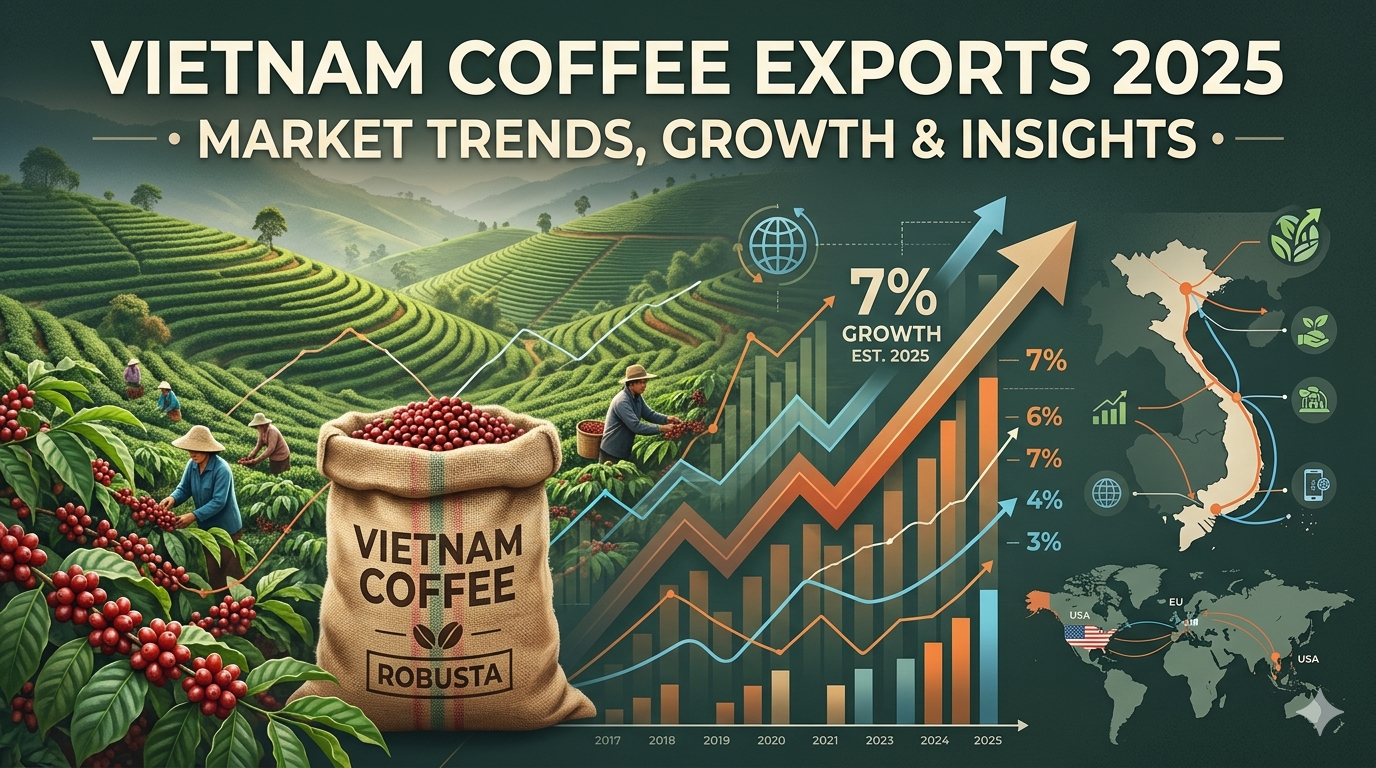
Vietnam has firmly established itself as a powerhouse in the global coffee trade, consistently ranking as the world’s second-largest exporter. Over the past decade, the country has transformed its agricultural landscape, investing heavily in coffee cultivation, processing, and global trade networks. As a result, Vietnam coffee exports have reached unprecedented levels, reflecting both rising global demand and strong pricing trends.
In 2024, Vietnam recorded coffee export revenues of $5.62 billion, marking a significant milestone for the industry. Despite fluctuations in volume due to weather conditions and production challenges, export value surged due to higher global coffee prices. Moving into 2025, the sector continues to expand rapidly, reinforcing Vietnam’s critical role in the international coffee market.
Vietnam Coffee Exports: A Record-Breaking Journey
The growth of Vietnam coffee exports has been nothing short of remarkable. Between January and December 2024, the country exported approximately 1.26 million tons of coffee. While this represented a decline in volume compared to the previous year, the export value increased sharply by over 32%, driven by rising global prices.
In early 2025, the momentum continued. During the first quarter alone, export value exceeded $2.8 billion, reflecting a nearly 74% increase year-over-year. This surge highlights how vietnam coffee exports are increasingly driven by value rather than volume.
By mid-2025, exports had already reached $4.7 billion, and projections indicate that total export revenue could surpass $7 billion by the end of the year. These figures demonstrate the resilience and adaptability of vietnam coffee exporters in a rapidly changing global market.
Key Drivers Behind Export Growth
Several factors are contributing to the impressive performance of vietnam coffee exports:
1. Rising Global Coffee Prices
One of the most significant drivers has been the sharp increase in coffee prices. Average export prices rose above $5,600 per metric ton in 2025, compared to around $3,700 in previous years. This price surge has allowed exporters to generate higher revenues even with reduced volumes.
2. Strong Demand from International Markets
Demand from major markets such as the European Union and the United States has remained robust. Consumers are increasingly appreciating Vietnamese coffee for its strong flavor, affordability, and versatility.
3. Strategic Market Diversification
To mitigate risks such as tariffs and geopolitical uncertainties, vietnam coffee exporters are diversifying into emerging markets in Asia, including China, the Philippines, and South Korea.
Vietnam Coffee Production Landscape
The success of vietnam coffee exports is closely tied to the country’s strong agricultural foundation. Vietnam coffee production is concentrated in regions like Dak Lak, Lam Dong, and Gia Lai, where favorable climate and soil conditions support high yields.
Vietnam produces approximately 1.74 million tons of coffee annually, with Robusta beans accounting for around 95% of total output. This makes Vietnam the world’s leading producer of Robusta coffee.
However, the 2023–2024 season saw a decline in production due to drought conditions, reducing output by nearly 20%. Fortunately, improved weather patterns in early 2025 have supported crop recovery, and production is expected to increase significantly in the 2025–2026 season.
Top Export Markets for Vietnamese Coffee
The global reach of vietnam coffee exports continues to expand, with key markets driving demand:
- Germany remains the largest importer, accounting for nearly 15% of exports.
- United States follows closely, showing strong growth in both volume and value.
- Italy, Spain, and Belgium are major European buyers.
- Japan and South Korea represent important Asian markets.
The European Union collectively accounts for a significant share of total exports, importing hundreds of thousands of tons annually. At the same time, Asian markets are emerging as high-value destinations, offering premium pricing opportunities.
Leading Vietnam Coffee Exporters
The success of vietnam coffee exporters is driven by a strong network of companies that have built global reputations for quality and reliability. Some of the leading players include:
- Intimex Group
- Vinh Hiep Co., Ltd
- Louis Dreyfus Vietnam
- Nestlé Vietnam
- Olam Vietnam
- Simexco Daklak
These companies play a crucial role in expanding vietnam coffee exports, ensuring consistent supply to international markets while maintaining quality standards.
Historical Growth of Vietnam Coffee Exports
Over the past decade, vietnam exports of coffee have shown steady growth, with occasional fluctuations due to market and environmental factors:
- 2014: $3.31 billion
- 2018: $2.89 billion
- 2020: $1.97 billion
- 2023: $3.18 billion
- 2024: $5.62 billion
This upward trajectory highlights the resilience of the industry and the increasing importance of coffee in vietnam exports.
Pricing Trends and Market Dynamics
The pricing environment has significantly influenced vietnam coffee exports in recent years. Export prices have surged due to global supply shortages and increased demand.
At the domestic level, farmgate prices have reached record highs, with Robusta beans selling for over $5 per kilogram. This has led farmers to hold back stock in anticipation of further price increases, creating supply constraints in the short term.
Additionally, there is a growing shift toward value-added products such as roasted and soluble coffee. These products now account for an increasing share of total exports, enhancing profitability for vietnam coffee exporters.
Challenges Facing the Industry
Despite strong growth, the industry faces several challenges:
1. Tariffs and Trade Barriers
Recent tariffs imposed by the United States on Vietnamese coffee have created uncertainty for exporters. This has prompted a shift toward alternative markets in Asia and Europe.
2. Climate Change
Weather variability continues to impact vietnam coffee production, affecting both yield and quality.
3. Supply Chain Constraints
Delays in shipments and logistical challenges can disrupt export flows, particularly during peak seasons.
Role of Vietnam Customs Data in Trade Insights
Access to accurate vietnam customs data is essential for understanding trade trends and making informed business decisions. This data provides valuable insights into export volumes, pricing, and market demand.
Businesses can leverage vietnam customs data to identify emerging opportunities, track competitors, and optimize their supply chains. It also helps stakeholders analyze the performance of vietnam coffee exports across different markets.
Future Outlook for Vietnam Coffee Industry
The future of vietnam coffee exports looks highly promising. With projected export values reaching $7 billion in 2025, the industry is poised for continued growth.
Key trends shaping the future include:
- Expansion into high-value markets
- Increased focus on sustainable farming practices
- Growth in processed coffee exports
- Adoption of advanced technologies in production and logistics
As global demand for coffee continues to rise, vietnam coffee exporters are well-positioned to capitalize on new opportunities.
Key Takeaways
- Vietnam coffee exports are experiencing strong growth driven by high prices and global demand.
- The country remains the world’s leading producer of Robusta coffee.
- Major markets include the EU, the US, and emerging Asian economies.
- Vietnam coffee exporters are focusing on diversification and value-added products.
- Insights from vietnam customs data play a crucial role in strategic decision-making.
Conclusion
Vietnam’s coffee industry has evolved into a global leader, supported by strong production capabilities and expanding export networks. Despite challenges such as climate change and trade barriers, the country continues to demonstrate resilience and adaptability.
With rising demand, premium pricing, and strategic market expansion, vietnam coffee exports are set to achieve new milestones in the coming years. Backed by reliable vietnam coffee production and data-driven insights from vietnam customs data, the industry is well-equipped to maintain its upward trajectory.
As the global coffee market continues to evolve, Vietnam remains at the forefront—delivering quality, consistency, and value to coffee lovers worldwide.
Author



Shilajit has served as a cornerstone of Ayurvedic medicine for thousands of years, and modern science is finally catching up to its potential. This powerful natural resin, harvested from the rocky crevices of the Himalayas, contains over 80 minerals and bioactive compounds. In 2026, Shilajit has surged in popularity across India. Fitness enthusiasts use it for a competitive edge, while professionals rely on it for sustained daily energy. However, this popularity brings confusion regarding its safety and authenticity. This comprehensive guide answers your most pressing questions so you can choose a high-quality supplement with confidence.
What Exactly is Shilajit?
Shilajit is a thick, tar-like resin that seeps from mountain rocks during warmer months. It forms over centuries as plant and microbial matter slowly decompose under extreme pressure and altitude. In Sanskrit, the name means “conqueror of mountains” or “destroyer of weakness.” Ayurveda classifies it as a Rasayana, a substance that promotes longevity and total rejuvenation.
The primary active component is Fulvic Acid. This compound works alongside Humic Acid and trace minerals to support cellular energy and natural detoxification.

Where is it Sourced in India?
Genuine Shilajit comes from the Himalayan range at altitudes between 1,000 and 5,000 meters. Key regions include:
-
Uttarakhand: The Garhwal and Kumaon ranges.
-
Himachal Pradesh: The high-altitude Spiti Valley.
-
Jammu & Kashmir: Remote, rocky highland zones.
At these heights, intense UV exposure and geological pressure create the ideal conditions for mineral accumulation. Himalayan Shilajit typically contains higher Fulvic Acid levels than Altai or Afghan varieties.
Proven Health Benefits and Uses
People use Shilajit today for a variety of wellness goals. Because it supports the mitochondria—the “power plants” of your cells—it provides benefits across several areas:
-
Energy and Stamina: Regular use reduces fatigue and provides sustained mental and physical energy.
-
Physical Recovery: Athletes use it to reduce exercise-induced inflammation and support muscle repair.
-
Hormonal Balance: It is well-known for supporting healthy testosterone levels and reproductive health in men.
-
Cognitive Clarity: The minerals support memory, focus, and overall brain health.
-
Nutrient Absorption: Fulvic acid acts as a “transporter,” helping your body absorb other vitamins and minerals more effectively.
Who Should (and Shouldn’t) Take Shilajit?
Shilajit is suitable for a wide range of adults, but specific groups should exercise caution.
-
Recommended For: Men and women (18+) seeking energy, working professionals managing stress, and athletes focusing on endurance. It is especially beneficial for adults over 40 looking for healthy aging support.
-
Consult a Doctor If: You are pregnant or breastfeeding. Children under 18 should avoid it.
-
Strict Avoidance: Individuals with gout, sickle cell anemia, or thalassemia should stay away. Furthermore, if you take blood-thinners or have kidney conditions, seek medical advice first.
How to Consume Shilajit for Maximum Results
You can find Shilajit in three primary formats. Each requires a different approach to ensure you don’t degrade the active compounds.
| Form | Potency | How to Use |
| Resin | Highest | Dissolve a pea-sized amount (300–500 mg) in warm milk or water. |
| Capsules | Convenient | Take with water; ideal for travel or those who dislike the earthy taste. |
| Powder | Versatile | Mix into smoothies or warm beverages for a measured dose. |
Pro Tip: Take Shilajit in the morning on an empty stomach to maximize absorption. If you have a sensitive stomach, a light meal will not significantly hinder its effectiveness. Consistency is the most important factor; you will likely see the best results after 2–3 weeks of daily use.
How to Identify Authentic vs. Fake Shilajit
The market currently contains many adulterated or synthetic products. Use these four tests to verify your purchase:
-
The Solubility Test: Genuine resin dissolves completely in warm water. It should turn the liquid a rich golden-brown without leaving any sandy residue or sediment at the bottom.
-
The Flame Test: Authentic Shilajit will not catch fire. When exposed to a flame, it may bubble or expand, but it should never burn like plastic or wax.
-
Texture Check: At room temperature, the resin is firm. If you warm it between your fingers, it becomes pliable and sticky. In the fridge, it becomes hard and brittle.
-
The Aroma: Real Shilajit has a distinct, earthy, and slightly bitter smell. It often reminds people of bitumen or wet soil. If it smells like chocolate or has no scent, it is likely a counterfeit.
The Gold Standard: Only buy from brands that provide Third-Party Lab Reports. Ensure the report verifies low heavy metal levels (Lead, Arsenic, Mercury) and confirms a high Fulvic Acid percentage.
Choosing the Best Brand in India
When evaluating Indian brands in 2026, prioritize transparency over a low price. A cheap, low-potency product provides no benefit and may contain harmful contaminants.
-
Source Transparency: The brand should specify the exact Himalayan region and altitude of harvest.
-
Cold-Processing: Look for “low-heat” or “cold-processed” purification. High heat destroys the delicate bioactive compounds.
-
Verified Reviews: Look for authentic feedback and clear return policies. Trustworthy brands stand behind their purity.
Shilajit vs. Ashwagandha: Which is Better?
These two are often compared, but they serve different roles. Ashwagandha is an adaptogen that primarily manages stress and cortisol. Shilajit is a mineralizer that primarily boosts energy and physical performance. Interestingly, many practitioners recommend taking them together. Ashwagandha calms the nervous system while Shilajit nourishes the cells.
Final Thoughts
Shilajit is not a “magic pill,” but it is a powerful lifestyle ally. When you pair it with quality sleep, a balanced diet, and regular movement, it provides a strong foundation for health. Always prioritize quality. Authentic, purity-verified Himalayan Shilajit is a worthwhile investment in your long-term vitality.
Author



Personalized custom printed fast food boxes are the key ingredient of any food enterprise that wants to make a permanent impact. Properly developed packaging has the ability to enhance brand awareness and keep food safe and fresh. The fast food restaurants are now requiring new and viable packaging designs that are aesthetically pleasing and effective.
Companies in Canada and all over the world are moving towards custom-made and recyclable products to provide their customers with a better experience. Due to the emergence of takeout and delivery services, more than ever it has become more essential to invest in Custom Printed Fast Food Boxes, Fast Food Boxes Wholesale, and innovative packaging designs. Packaging can no longer be only functional; it is a marketing instrument.
Branding With Logo
Brand identity is built immediately when you add your logo to the fast food boxes. Fast Food Boxes with Logo help the companies to speak in a business way, and memorably impress people. Custom branding will provide a differentiation in the products and their counterparts to give awareness and loyalty to the customers.

Printed Custom Options
Custom Printed Fast Food Boxes can be customized to your design, colors, and message that will appeal to your audience. Customised Fast Food Packaging assists companies to advertise specials, seasonal offers,s or brand narratives. Flexibility is also available on printing flexibility in terms of size and shape, which offers flexibility in burgers, fries, wraps, and combo meals.
Good printing quality will make logos and graphics stay bright even during heat or wet weather. This strategy will add value to the general attitude about your brand and give the packaging an immediate identity. By discussing custom printing, your shop will be more than just another takeout store.
Wholesale Solutions
Fast Food Boxes Wholesale needs are ideal when dealing with large operations and restaurants that prefer saving money. Bulk purchases lower the unit prices and provide uniformity in the packaging process. Custom boxes Canada has wholesale services that are available to businesses to find good materials in the area and dependable suppliers.
Eco-Friendly Packaging
Fast Food Recyclable Packaging is a trend in the modern food service industry. Human beings are turning out to be conscious of the impact on the environment, and the most desired products are those that are environmentally friendly. The Paper Fast Food Packaging and biodegradable options reduce the waste and save on durability and hygiene requirements.
Creative Packaging Design
The motivation behind Fast Food Packaging Design can very well improve customer experience and brand perception. Mezzo shapes, compartments, and colors of the meals render them appealing to the sight as well as to maintain the safety of the contents. Custom Fast Food Packaging allows restaurants to be creative in design when it comes to burgers, sandwiches, fries, and dessert products.
Functional Features
Convenience is the most important when selecting fast food boxes. Ease of opening tops, locking systems and heat resistance are features that enhance usability. Paper Fast Food Packaging has provided lightweight and durable products, which are app-applier menu items.
The functional designs make the food fresh, hot, and intact during transits. The provision of sauce, cutlery, or napkin portions also has the benefit of convenience to the customers. Functionality and attractive visuals are mixed together so as to form an overall solution to the packaging that would boost customer satisfaction.
Personalization Options
Customized Fast Food Packaging enables organisations to be competitive in the market. On the boxes, custom messages, seasonal graphics, or promotional messages can be imprinted. The strategy will enhance the level of engagement and improve the relationship with consumers.
fast food boxes.
Industry Applications
Maximizing Brand Impact with Professional Fast Food Packaging
Companies that use Custom Fast Food Packaging and Paper Fast Food Packaging show their brand in every location. This constant visibility helps build strong market recognition. High-quality and durable packaging materials assist businesses in satisfying complex operational needs. Furthermore, these materials ensure that every customer enjoys a smooth and professional dining process. Proper packaging also minimizes food waste during transport. Consequently, these smart solutions significantly improve overall service efficiency.
Conclusion: Why Customization Matters
Personalized, custom-printed fast food boxes are a necessary investment for any modern organization. These boxes increase brand awareness while simultaneously boosting customer satisfaction and operational flow. Today’s Fast Food Boxes provide high utility and a visually attractive appearance. Designers create these environmentally friendly products to match the fast-paced dynamics of contemporary dining.
Opportunities such as Custom Printed Fast Food Boxes, Wholesale Fast Food Boxes, and Paper Fast Food Packaging combine style with daily usefulness. Restaurants, food trucks, and caterers can add elements of branding and custom design to their supplies. These features make the dining experience memorable and build long-term customer loyalty. Individualized packaging transforms mediocre food into a powerful selling point. This shift boosts your brand’s visibility and ensures future prosperity.
Author



Robotic-Assisted Body Lift Post-Weight Loss Surgery

Call Center Companies: BPO Services & Customer Support

Curtain & Cushion Design Ideas for Modern House Design

Skin Whitening in Islamabad: Natural Tips, and Skincare Routine

Biological Seed Treatment Market: Trends, Growth, and Future

Essentials Hoodie Care Tips to Make It Last Longer

Joshua Jamal Camo Shorts & Streetwear Collection

Ear Reshaping Without Surgery: Cost, Benefits & Results

Malaysia Export Synthetic Filament Tow: Trends and Market

Airtool: Application Platform for Modern Business Automation

Cybersecurity Consulting Company SequelNet Provides Critical IT Support Services to Medical Billing Firm, Medical Optimum

Team Communication Software Transforms Operations at Finance Innovate

Project Management Tool Transforms Long Island Business

How Alleviate Poverty Utilized IPPBX’s All-in-One Solution to Transform Lives in New York City

Breast Cancer: The Imperative Role of Mammograms in Screening and Early Detection

Unstoppable Collaboration: D.C.’s Citi Open and Silicon Valley Classic Unite to Propel Women’s Tennis to New Heights

Embracing Renewal: Sizdabedar Celebrations Unite Iranians in New York’s Eisenhower Park

The Benefits of Starting a Side Hustle for Financial Freedom

New Blood Donation Screening Questions What You Need to Know

Stylishly Timeless: The 5 Types of Sandals You Need in Your Closet
-

 Business3 years ago
Cybersecurity Consulting Company SequelNet Provides Critical IT Support Services to Medical Billing Firm, Medical Optimum
-
Business3 years ago
Team Communication Software Transforms Operations at Finance Innovate
-
Business3 years ago
Project Management Tool Transforms Long Island Business
-
Business3 years ago
How Alleviate Poverty Utilized IPPBX’s All-in-One Solution to Transform Lives in New York City
-
health3 years ago
Breast Cancer: The Imperative Role of Mammograms in Screening and Early Detection
-
Sports3 years ago
Unstoppable Collaboration: D.C.’s Citi Open and Silicon Valley Classic Unite to Propel Women’s Tennis to New Heights
-
Art /Entertainment3 years ago
Embracing Renewal: Sizdabedar Celebrations Unite Iranians in New York’s Eisenhower Park
-
Finance3 years ago
The Benefits of Starting a Side Hustle for Financial Freedom







