
Technology
Here are 7 strategies to extend the life of your phone’s battery

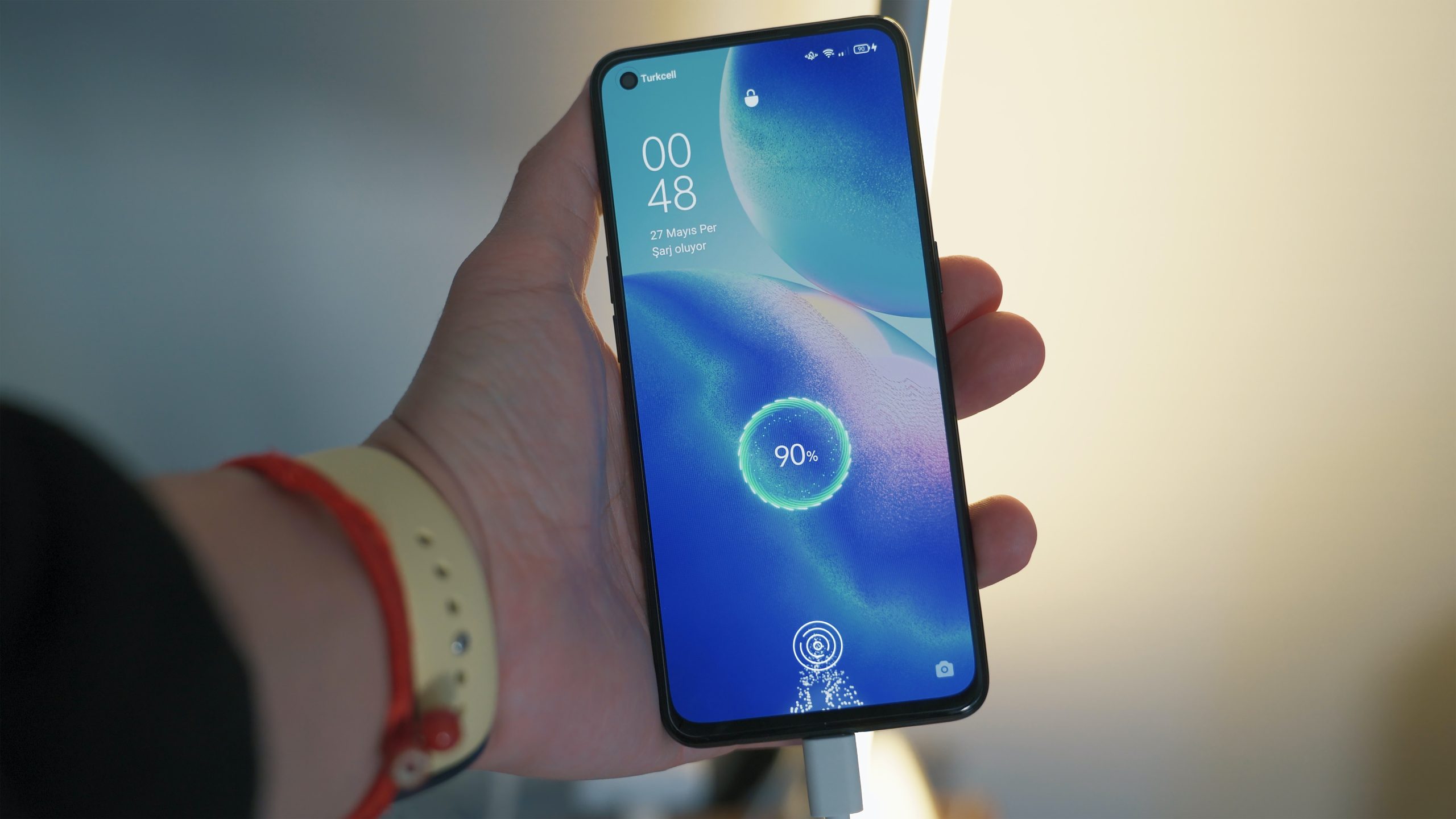
It’s no secret that cell phone batteries don’t exactly thrive under heavy use. Given how often and for how long you use your phone, it’s not surprising that its battery life is short. Thankfully, there are some simple measures you can take to keep your battery functioning for as long as possible. You can get longer use out of your phone’s battery by employing any of these 7 tips, which range from lowering the screen’s brightness to closing unused apps. No matter how much or how little you know about technology, you will be able to extend the life of your battery by reading on.
Switching to a power-saving mode will help you save on your energy bills.
If your phone’s battery is draining too quickly, try switching to power save mode. Your phone’s battery life will be prolonged as a result of this.
An electronic device’s power-saving mode can be activated in various ways. Turning off unused features is one option. The brightness, Wi-Fi, Bluetooth, and GPS settings are all there for you to adjust.

If you want to save power without sacrificing screen quality, try reducing the resolution of your display. If you follow these steps, you can reduce the amount of power your phone uses without sacrificing its performance.
When you get a call or text message, you can choose to either hear a sound or just feel a vibration. To make modifications to the vibration and sound settings, go to “Settings” and then “Sound & Vibration.”
Last but not least, use only the functions and software that are essential to you. If there are any apps on your phone that you never use, you should delete them. These are just a few of the many options you have for conserving battery life on your mobile device.
Reduce the brightness of the screen
Battery life expectations for smartphones are currently very high. You can expect them to last you all day, even with moderate to heavy use. However, you can take additional steps to increase the battery’s longevity. There are few things more draining on battery life than a bright screen.
Turning down the screen’s brightness can extend battery life more than you think. Light output is lower, but you probably won’t be texting in the dark anyway. Turn up the brightness whenever you feel the need.
A number of methods exist for reducing screen brightness. The brightness levels can be adjusted manually in the phone’s settings. This feature is typically located in the “display” or “screen” section of the settings menu. If your phone also has an ambient light sensor, you can enable auto-brightness and let it automatically adjust the brightness to suit the current lighting conditions.
Another strategy for reducing screen glare is to use a dark theme or wallpaper. You can use this to make everything on your screen, including text, icons, and menus, look more subdued. Some getting used to is inevitable, but the potential battery savings are worth the effort. And it looks pretty good too!
You shouldn’t use your phone while it’s charging.
The battery life will decrease more quickly if you keep using the device while it is charging. It’s also dangerous to leave your phone unattended while charging because you could spill liquid on it or drop it, breaking it or electrocuting yourself. To get the most out of your phone’s battery life, avoid using it while it’s charging and unplug it entirely when you’re not using it.
Keep your apps up-to-date at all times.
Maintaining up-to-date app versions is a great way to keep your phone running for longer. Using out-of-date software can reduce battery life and put your device at risk.
If you’re using an iOS device, open the App Store app and swipe down to the bottom right to access the Updates menu. Launch the Google Play Store app on your Android device, then tap the Menu icon (three horizontal lines), followed by My apps & games. A list of apps that are long overdue for an update will be presented. Just click the Update button next to each item to get the most recent revision.
Connect via Wi-Fi rather than cellular data.
If you can, use Wi-Fi instead of your data plan. Using data will drain your battery much faster than connecting to a Wi-Fi network will. If there’s a Wi-Fi network available, use it so you can save your mobile data for when you really need it.
Stop using obsolete software
There are probably a few apps on your phone that you’ve never used. It could be an app you once used but have since forgotten about, or it could be an app you installed on a whim but haven’t touched in a long time. These extraneous programs are consuming space on your hard drive and using up your battery life.
By removing unnecessary applications, you can increase performance and prolong battery life. If you’re having trouble figuring out which apps you can live without, start by removing the ones you don’t use very often, like games and social media. Simply re-download them if you anticipate needing them in the future.
When you only use an app occasionally, it’s a good idea to create a folder on your home screen for it so that it’s out of the way when you don’t need it but easy to access when you do. Having fewer icons on your home screen will make it easier to find the programs you use most frequently.
Lock down your mobile device.
You can lengthen the life of your phone’s battery with regular charging and maintenance. Below are some guidelines to keep in mind:
First and foremost, make sure to clean your phone after each use. The rate at which a battery drains increases if dirt and grime have accumulated on its contact terminals.
Phone use is discouraged during periods of extremely high or low temperatures. Intense heat or cold can reduce the battery’s useful life.
As a third piece of advice, use a screen protector if you must use your phone outside in direct sunlight. Intense solar radiation can degrade batteries and reduce their useful life.
Don’t even think about leaving your phone charging overnight. The capacity and safety of a battery are both negatively affected by overcharging.
The best way to protect your phone is to store it in a cool, dry place when you’re not using it. This will extend the life of the battery.
Author


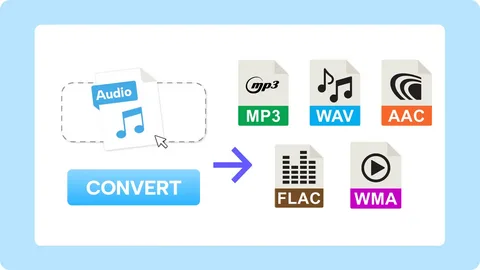
Whether you’re editing a home movie, preparing a podcast, or sharing media across different devices, video & audio converters have become essential tools for everyday digital life. These utilities let you transform media files from one format to another without losing quality making them indispensable for creators, students, and professionals alike. If you’ve ever wondered how to choose the right converter or what formats to use, this guide answers your most important questions.
Format Compatibility and File Types
What is the difference between a video container and a codec?
A container (like MP4 or MKV) is essentially a wrapper that holds the video, audio, and subtitle tracks together in one file. The codec (like H.264 or AAC) is the technology that actually compresses and encodes the data inside that container. Recognizing this difference when utilizing video and audio converters aids you in selecting the appropriate output configurations for your requirements.
Which video formats are the most universally supported?
MP4 with H.264 encoding is the gold standard for compatibility, playing smoothly on virtually every device, browser, and platform. AVI and MOV are also widely recognized, though they tend to produce larger file sizes. For web streaming or sharing on social media, MP4 is almost always the safest choice.
What audio formats should I use for the best quality?
FLAC and WAV are lossless formats that preserve every detail of the original recording, making them ideal for music production and archiving. MP3 and AAC are lossy but deliver excellent quality at much smaller file sizes, which suits streaming, podcasting, and casual listening. Most online video & audio converters support all of these formats.
Can I convert audio extracted directly from a video file?
Yes most modern converters allow you to strip the audio track from a video and save it as a standalone MP3, AAC, or FLAC file. This is especially useful when you want just the soundtrack from a tutorial, a lecture recording, or a music video. The process is fast and does not require any advanced technical knowledge.

Performance, Quality, and Best Practices
Does converting a file multiple times reduce quality?
With lossy formats like MP3 or H.264, each conversion introduces a small amount of quality degradation a process sometimes called “generation loss.” To avoid this, always work from the original high-quality source file and convert only once to your final target format. Lossless formats like FLAC and WAV do not suffer from generation loss.
How do I reduce file size without sacrificing too much quality?
Lowering the bitrate is the most effective way to shrink a file — just be mindful that going too low will cause noticeable blurring or audio distortion. For video, adjusting the resolution (for example, from 4K to 1080p) also dramatically reduces file size. An effective video and audio converter will allow you to preview or gauge the output file size prior to finalizing the conversion.
How long does a typical file conversion take?
Conversion speed depends on the file size, output format, and the processing power of the device or server handling the task. Short clips under five minutes typically convert in seconds, while longer videos may video & audio converters take several minutes. Online powered by cloud servers are often faster than running software locally on older hardware.
Is it safe to use free online converters?
Reputable online converter platforms process your file and deliver the output without storing your data permanently. Always choose a trusted website look for HTTPS, a clear privacy policy, and positive user reviews. Avoid uploading sensitive or personal files to any converter service you haven’t verified.
Use Cases and Practical Applications
How do video & audio converters help content creators?
Video & audio converters allow creators to export projects in the exact format required by each platform whether that’s YouTube, Instagram, TikTok, or a podcast directory. Different platforms have different codec, resolution, and bitrate requirements, and a reliable converter bridges those gaps instantly. This saves hours of re-exporting from editing software.
Can I use converters to make media accessible on older devices?
Absolutely. Older televisions, car stereo systems, and legacy media players often only support specific formats like AVI, MP3, or WMV. Converting modern files into these older formats ensures your media plays back without errors on any device. This is one of the most practical everyday uses of a video & audio converter.
Are there converters designed specifically for batch processing?
Yes many professional-grade tools and some online platforms allow you to queue multiple files and convert them all at once. Batch conversion is a major time-saver when you need to standardize a library of media files or prepare assets for a project. Look for this feature if you regularly handle large volumes of video or audio content.
What is the best way to convert video for use in a presentation?
For presentations, WMV or MP4 are the most reliable formats since they embed cleanly into PowerPoint and Google Slides. Keep the resolution at 1080p or lower to prevent lag during playback, and use a moderate bitrate to keep the file size manageable. A high-quality video and audio converter will provide you with accurate control over all these configurations.
Conclusion
Video & audio converters are powerful, practical tools that remove the barriers between different media formats and the devices or platforms you use every day. Whether you’re a casual user converting a single clip or a creator managing hundreds of files, the right converter makes the process seamless and efficient. Visit multiconverters.net to access a full suite of fast, reliable video & audio converters no downloads required.
Author


Whether you’re checking your phone’s storage, downloading a large file, or comparing cloud plans, understanding how to convert megabytes to gigabytes is a skill that comes up more often than you’d think. An MB to GB converter takes the guesswork out of this process, giving you instant, accurate results without doing the math yourself. Let’s break down everything you need to know.
Understanding the Basics of Digital Storage
What is a megabyte (MB)?
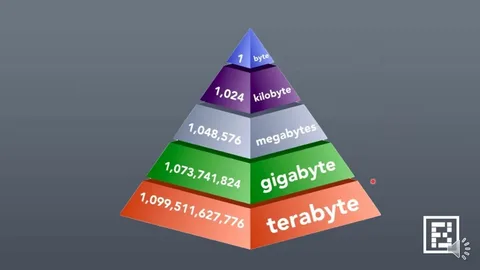
A megabyte is a unit of digital information equal to 1,024 kilobytes in the binary system used by computers. In everyday terms, a single MP3 song typically takes up around 3 to 5 MB, making it a commonly referenced unit for small-to-medium file sizes.
What is a gigabyte (GB)?
A gigabyte is significantly larger than a megabyte it equals 1,024 megabytes in the binary system. Most modern smartphones, laptops, and storage devices are now measured in gigabytes or even terabytes, reflecting how much digital data we consume daily.
What is the difference between MB and GB?
The key difference is scale. One gigabyte contains 1,024 megabytes, which means GB describes much larger quantities of data. Knowing this distinction helps you make smarter decisions when buying storage, choosing a data plan, or downloading files.
Why do computers use 1,024 instead of 1,000?
Computers operate in binary (base-2), so storage units are calculated in powers of 2. Since 2 to the power of 10 equals 1,024, each step up in storage measurement from KB to MB to GB multiplies by 1,024 rather than a round 1,000.
How to Convert MB to GB
How do you convert megabytes to gigabytes manually?
To convert MB to GB, simply divide the number of megabytes by 1,024. For example, 2,048 MB divided by 1,024 gives you exactly 2 GB. This formula works reliably whether you’re dealing with file sizes, RAM, or storage capacity.
How does an MB to GB converter work?
An online MB to GB converter automates this division instantly. You enter the value in megabytes, click convert, and the tool returns the equivalent in gigabytes no calculator needed. Tools like the one on multiconverters.net handle this in real time, saving you time and eliminating human error.
Can you convert GB back to MB?
Yes converting GB to MB is just as simple. Multiply the number of gigabytes by 1,024 to get the megabyte equivalent. So 5 GB equals 5,120 MB, which is useful when comparing storage specs or data caps that use different units.
What is 1,000 MB in GB?
Strictly speaking in binary terms, 1,000 MB equals approximately 0.976 GB. However, in decimal (SI) terms used by many hard drive manufacturers 1,000 MB equals exactly 1 GB. This slight discrepancy is why your device sometimes shows less storage than advertised.
Real-World Applications of MB and GB
How many MB is a typical movie file?
A standard-definition movie typically ranges from 700 MB to 1.5 GB, while a high definition film can easily reach 4 to 8 GB. Knowing these figures helps you plan storage space or estimate how long a download will take on your internet connection.
What is the data consumption of streaming services each hour?
Streaming in standard definition uses roughly 1 GB per hour, while HD streaming can consume 3 GB or more per hour. If your mobile data plan is measured in GB, using an MB to GB converter helps you track usage more intuitively.
A typical smartphone photo taken at 12 megapixels is around 3 to 5 MB. That means 1 GB of storage can hold roughly 200 to 330 photos. Knowing this helps you decide when to back up your gallery or invest in extra cloud storage.
Why does my phone show less storage than it advertises?
Manufacturers often use the decimal definition of a gigabyte (1 GB = 1,000 MB), while your phone’s operating system uses the binary definition (1 GB = 1,024 MB). This gap explains why a “128 GB” device may display only around 119 GB of usable space.
Choosing the Right Tools for Unit Conversion
When should you use an online converter instead of manual math?
An online MB to GB converter is the smarter choice when dealing with large or irregular numbers that are tedious to divide manually. It’s also ideal when you need to convert multiple values quickly or when precision matters, such as in technical or professional settings.
Are all MB to GB converters equally accurate?
Not all converters clearly specify whether they use binary (1,024) or decimal (1,000) as the base. A trustworthy tool will clearly disclose the system it employs and deliver results that align with how your operating system assesses storage. Consistently verify the approach of the tool if precision is essential.
Conclusion
Understanding digital storage doesn’t have to be complicated. A good MB to GB converter removes the friction from everyday data decisions whether you’re managing files, comparing devices, or keeping tabs on your data plan. Bookmark a trusted tool like multiconverters.net so you always have fast, accurate conversions at your fingertips.
Author



Author



Road Bikes: Best Lightweight & High-Performance Cycling

Car Brake Repair: Brake Pad Replacement Services

Cactus Jack Hoodie: Streetwear Culture, Styling & Exclusive Drops

PeaceInWar Fashion: Clothing That Commands Respect

Stussy 8 Ball Hoodie: A Modern Streetwear Look

Video & Audio Converters: Formats, Quality, and Best Practices

MB to GB Converter: Guide to Understanding Digital Storage Units

White Label PPC Services: Cost-Effective Advertising Solutions

Ultrasonic Rhinoplasty: Precision, Innovation, and Rapid Recovery

Realism Hoodie: The Perfect Blend of Art, Fashion, and Street Style

Cybersecurity Consulting Company SequelNet Provides Critical IT Support Services to Medical Billing Firm, Medical Optimum

Team Communication Software Transforms Operations at Finance Innovate

Project Management Tool Transforms Long Island Business

How Alleviate Poverty Utilized IPPBX’s All-in-One Solution to Transform Lives in New York City

Breast Cancer: The Imperative Role of Mammograms in Screening and Early Detection

Unstoppable Collaboration: D.C.’s Citi Open and Silicon Valley Classic Unite to Propel Women’s Tennis to New Heights

Embracing Renewal: Sizdabedar Celebrations Unite Iranians in New York’s Eisenhower Park

The Benefits of Starting a Side Hustle for Financial Freedom

New Blood Donation Screening Questions What You Need to Know

Stylishly Timeless: The 5 Types of Sandals You Need in Your Closet
-

 Business3 years ago
Cybersecurity Consulting Company SequelNet Provides Critical IT Support Services to Medical Billing Firm, Medical Optimum
-
Business3 years ago
Team Communication Software Transforms Operations at Finance Innovate
-
Business3 years ago
Project Management Tool Transforms Long Island Business
-
Business3 years ago
How Alleviate Poverty Utilized IPPBX’s All-in-One Solution to Transform Lives in New York City
-
health3 years ago
Breast Cancer: The Imperative Role of Mammograms in Screening and Early Detection
-
Sports3 years ago
Unstoppable Collaboration: D.C.’s Citi Open and Silicon Valley Classic Unite to Propel Women’s Tennis to New Heights
-
Art /Entertainment3 years ago
Embracing Renewal: Sizdabedar Celebrations Unite Iranians in New York’s Eisenhower Park
-
Finance3 years ago
The Benefits of Starting a Side Hustle for Financial Freedom







