
Technology
Google I/O 2024: Groundbreaking AI Innovations Unveiled – The Future of Smart Technology

By

Reviewed
By Janasis Roth

On Tuesday, Google hosted its annual I/O developer conference, showcasing a plethora of artificial intelligence products and tools. From advanced AI models to AI-powered hardware, Google’s announcements highlight its commitment to AI innovation as it faces competition from companies like OpenAI and Amazon-backed Anthropic.
Gemini 1.5 Pro and Flash AI
Google introduced significant updates to its Gemini AI model. The Gemini 1.5 Pro can now handle extensive data, capable of summarizing up to 1,500 pages of text. This enhanced model aims to improve user productivity by providing concise summaries of lengthy documents.
Additionally, Google revealed the Gemini 1.5 Flash AI model, designed for cost-effective and smaller tasks. This version excels at quickly summarizing conversations, captioning images and videos, and extracting data from large documents.
Translation and Email Summarization
Google CEO Sundar Pichai emphasized improvements in Gemini’s translation capabilities, now supporting 35 languages. Within Gmail, Gemini 1.5 Pro can analyze attached PDFs and videos, providing comprehensive summaries. This feature will streamline email management, making it easier to catch up on lengthy threads and attachments.
Advanced Search and Assistance
Gemini’s new capabilities extend to enhanced search functions within Gmail. For instance, users comparing quotes from different contractors can receive a summarized view of the quotes and anticipated start dates from various email threads. Furthermore, Google plans to replace Google Assistant on Android phones with Gemini, positioning it as a formidable competitor to Apple’s Siri.

Cutting-Edge AI Tools
Google Veo and Imagen 3
Google introduced “Veo,” a model for generating high-definition video, and “Imagen 3,” the latest and highest-quality text-to-image model. These tools promise lifelike images and videos with fewer visual artifacts. They will be available to select creators on Monday and will be integrated into Vertex AI, Google’s machine learning platform.
Audio Overviews and AI Sandbox
Google showcased “Audio Overviews,” a feature that generates audio summaries from text inputs. This tool can speak summaries of lesson plans or provide interactive audio examples of real-life science problems. Additionally, Google’s “AI Sandbox” offers generative AI tools for creating music and sounds from scratch based on user prompts.
Enhancements in Google Search
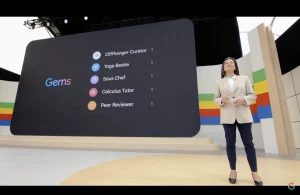
Image by : Yandex
AI Overviews
Launching in the U.S. on Monday, “AI Overviews” in Google Search will provide quick summaries of complex search questions. For example, a search for the best way to clean leather boots will result in a multi-step cleaning process synthesized from various sources on the web.
Multimodal Capabilities and AI Teammate
Google is testing new multimodal capabilities, allowing users to ask questions through video. For example, users can film a malfunctioning record player and receive suggestions based on the identified model. The “AI Teammate” feature will integrate into Google Workspace, building a searchable collection of work from messages, emails, and documents. It can provide detailed analyses and summaries based on user queries.
Project Astra: The Future of AI Assistance
Google’s Project Astra, developed by the DeepMind AI unit, aims to be an advanced AI assistant reminiscent of Tony Stark’s J.A.R.V.I.S. The prototype demonstrated real-time video and audio interactions, such as helping users locate misplaced items and reviewing code. Project Astra’s conversational capabilities aim to launch within Gemini later this year.
AI Hardware Innovations
Trillium TPUs and Nvidia Collaboration
Google announced Trillium, its sixth-generation tensor processing unit (TPU), set to be available to cloud customers in late 2024. These TPUs are crucial for running complex AI operations and will complement Nvidia’s Blackwell GPUs, which Google Cloud will offer starting in early 2025. This collaboration underscores Google’s long-standing partnership with Nvidia, enhancing Google’s ability to provide large-scale tools for enterprise developers.
Conclusion
Google’s I/O 2024 conference showcased its relentless pursuit of AI innovation, unveiling a range of advanced models, tools, and hardware. With significant updates to its Gemini AI, new creative tools like Veo and Imagen 3, enhanced search capabilities, and cutting-edge hardware, Google is solidifying its position as a leader in the AI landscape. As the company continues to develop and refine its AI offerings, users and developers can anticipate more powerful and efficient AI solutions in the near future.
Author



Author



In today’s fast-moving digital world, businesses can no longer rely on traditional methods to capture attention. Social media marketing has evolved into one of the most powerful tools for reaching audiences, building relationships, and driving business growth. However, what truly sets the modern era apart is the integration of artificial intelligence into marketing strategies.
AI has completely changed how brands create content, target users, and measure success. Instead of guessing what might work, businesses now rely on data-driven insights to make smarter decisions. From automated content creation to predictive analytics, Social media marketing powered by AI is more efficient, personalized, and impactful than ever before.
This article explores how AI is shaping Social media marketing, what strategies work today, and how businesses can stay ahead in an increasingly competitive landscape.
Understanding the New Age of Social Media Marketing
At its foundation, Social media marketing involves using platforms like Facebook, Instagram, LinkedIn, and TikTok to connect with audiences. But the approach has shifted dramatically over the years. It is no longer just about posting content; it’s about creating meaningful interactions and delivering value to users.
In the past, marketers focused on posting regularly and hoping for engagement. Today, AI tools analyze user behavior, preferences, and trends to guide content creation. This means every post can be optimized for maximum impact.
Social media marketing has become a balance between creativity and technology. Brands that combine storytelling with data insights are the ones that succeed in building loyal communities and achieving long-term growth.

The Function of Artificial Intelligence in Social Media Advertising
One of the most powerful aspects of AI is predictive analytics. By analyzing past behavior, AI can forecast future trends and help brands create content before it becomes popular. This gives companies a significant advantage in staying relevant.
Additionally, AI improves ad performance by optimizing targeting and budget allocation in real time. Campaigns can be adjusted automatically based on performance data, ensuring better results without constant manual intervention.
Building a Strong Social Media Marketing Strategy with AI
A successful Social media marketing strategy requires careful planning and execution. With AI, this process becomes more efficient and effective.
Defining Clear Goals
Every campaign should start with a clear objective. Whether the goal is to increase brand awareness, generate leads, or boost sales, having a defined purpose ensures that all efforts are aligned.
AI tools can help track progress toward these goals by analyzing performance metrics and identifying areas for improvement.
Understanding Your Audience
Knowing your audience is essential. AI tools can analyze demographics, interests, and behavior patterns to create detailed audience profiles. This allows businesses to deliver content that resonates with specific groups.
Instead of targeting broad audiences, marketers can focus on niche segments, increasing the chances of engagement and conversion.
Selecting the Right Platforms
Different platforms serve different purposes. Instagram and TikTok are ideal for visual content, while LinkedIn is more suited for professional networking. AI can analyze platform performance and recommend where to focus efforts.
Choosing the right platform ensures that your Social media marketing strategy is both efficient and effective.
Content Creation in the Era of AI
Content remains the heart of Social media marketing, but the way it is created has changed significantly with AI.
AI-Generated Content
AI tools can generate captions, blog posts, and even video scripts. While human creativity is still essential, AI helps speed up the process and maintain consistency.
For example, a business can use AI to create multiple variations of a post and test which one performs best.
Visual Content and Engagement
Visual content is more important than ever. Images, videos, and infographics attract attention quickly and encourage interaction. AI tools can suggest design elements, color schemes, and layouts that resonate with audiences.
Short-form videos, in particular, have become a dominant format in Social media marketing. AI can analyze trends and recommend video topics that are likely to go viral.
Personalization at Scale
One of the biggest advantages of AI is personalization. Instead of creating generic content, businesses can tailor messages to individual users. This makes content more relevant and increases engagement.
Personalized content creates a stronger connection with the audience, leading to higher loyalty and better results.
Social Media Advertising with AI Optimization
Paid advertising is a crucial part of Social media marketing, and AI has made it more effective than ever.
AI-powered ad platforms analyze user data to target the right audience. They can adjust bids, optimize creatives, and allocate budgets automatically to maximize performance.
Retargeting campaigns are particularly powerful. They allow businesses to reconnect with users who have shown interest in their products or services. AI ensures that these ads are delivered at the right time to the right people.
This level of precision reduces wasted spending and increases return on investment, making advertising more efficient and profitable.
Influencer Marketing in the AI Era
Influencer marketing has become a key strategy in Social media marketing. Collaborating with influencers allows brands to reach established audiences and build trust quickly.
AI tools help identify the right influencers by analyzing their audience demographics, engagement rates, and content quality. This ensures that partnerships are effective and aligned with brand goals.
Micro-influencers are particularly valuable. They often have smaller but highly engaged audiences, making their recommendations more authentic and impactful.
By combining influencer marketing with AI insights, businesses can create campaigns that feel genuine and deliver strong results.
Measuring Performance and Analytics
Tracking performance is essential in Social media marketing. Without data, it is impossible to know what works and what doesn’t.
AI-powered analytics tools provide detailed insights into metrics such as engagement, reach, impressions, and conversions. They can identify patterns and suggest improvements.
Real-time analytics allow businesses to adjust their strategies quickly. If a campaign is not performing well, changes can be made immediately to improve results.
Continuous monitoring and optimization are key to long-term success in Social media marketing.
Challenges in Social Media Marketing and AI Solutions
Despite its advantages, Social media marketing comes with challenges. One of the biggest issues is keeping up with constantly changing algorithms.
Another challenge is content saturation. With so much content being published ежедневно, standing out can be difficult.
AI helps overcome these challenges by providing insights into trends and user behavior. It allows businesses to create unique, relevant content that captures attention.
Consistency is another challenge. Maintaining a regular posting schedule can be time-consuming, but AI tools can automate scheduling and content management.
Future Trends in Social Media Marketing
The future of Social media marketing is closely tied to technological advancements. AI will continue to play a major role, offering more advanced tools for automation and personalization.
Augmented reality and virtual reality are expected to become more common, providing immersive experiences for users. Brands will be able to create interactive campaigns that engage audiences in new ways.
Voice search and conversational AI will also influence Social media marketing. Businesses will need to adapt their strategies to accommodate these changes.
Staying ahead of these trends will be essential for success in the evolving digital landscape.
Practical Tips to Improve Social Media Marketing Results
To achieve success in Social media marketing, businesses should focus on practical strategies that deliver real results.
First, consistency is crucial. Posting regularly helps maintain visibility and keeps the audience engaged. Second, engagement matters. Responding to comments and messages builds trust and strengthens relationships.
Experimentation is also important. Trying different content formats and strategies helps identify what works best. AI tools can provide valuable insights to guide these decisions.
Finally, focusing on quality over quantity ensures that every piece of content adds value to the audience.
Conclusion: Embracing AI for Social Media Marketing Success
In the modern digital world, Social media marketing has become an essential tool for businesses of all sizes. The integration of AI has transformed how campaigns are created, managed, and optimized.
By leveraging AI tools, businesses can create personalized experiences, improve efficiency, and achieve better results. However, success still depends on understanding the audience, creating valuable content, and maintaining consistency.
The future of Social media marketing is bright, with endless opportunities for growth and innovation. Businesses that embrace AI and adapt to changing trends will be well-positioned to succeed in the competitive digital landscape.
Author



In today’s digital-first economy, the speed of business is often measured by the speed of its transactions. From a startup’s software subscriptions to a multinational’s global travel expenses, credit cards have become the lifeblood of corporate financial workflows. However, this high volume of digital spending creates a significant administrative challenge. Managing and verifying these transactions manually is not just time-consuming; it is a risk to a company’s financial integrity.
This is where credit card reconciliation software enters the fold. By transitioning from manual spreadsheets to automated systems, businesses can ensure that their internal records perfectly mirror their bank statements. In this guide, we explore the mechanics of reconciliation, the shift toward automation, and how to choose a platform that scales with your goals.
Understanding the Reconciliation Process
Before looking at software solutions, it is essential to define the core task. Credit card reconciliation is the formal process of matching internal accounting entries—such as receipts, invoices, and ledger records—against the official statements provided by credit card issuers.
The goal is simple: to ensure every cent is accounted for. This process validates that:
-
Every internal entry has a corresponding bank transaction.
-
No unauthorized or fraudulent charges have occurred.
-
Bank fees, interest, and currency conversions are accurately recorded.
-
There are no duplicate entries or missing records.
Traditionally, finance teams performed this by “ticking and tying” paper statements against spreadsheets. In 2026, where a single mid-sized company might process thousands of transactions monthly, this manual approach is no longer sustainable.

Why Automation is Replacing Manual Workflows
Manual processes are inherently “reactive”—you often only discover an error at the end of the month during the closing process. Automated credit card reconciliation software changes this dynamic to a “proactive” one.
1. Reducing the Human Margin of Error
Humans are prone to data entry errors, especially when dealing with repetitive tasks like comparing long lists of numbers. Software algorithms do not get tired; they identify discrepancies with 100% consistency, ensuring that your financial data remains a “single source of truth.”
2. Fraud and Duplicate Detection
The faster you catch a discrepancy, the faster you can resolve it. Automated systems flag duplicate charges or unauthorized transactions in real-time. This early detection is vital for maintaining a secure financial environment and protecting company assets.
3. Accelerating the Month-End Close
Finance teams often dread the “month-end close” because of the sheer volume of reconciliation required. Automation allows for “continuous reconciliation,” where transactions are matched as they happen. This turns a week-long closing process into a matter of hours.
Core Features of Corporate Credit Card Reconciliation Software
If you are evaluating a corporate credit card reconciliation software, look for these six “must-have” features to ensure maximum ROI.
Automated Transaction Matching The software should use advanced algorithms and AI to match data across multiple sources—bank feeds, ERP systems, and payment gateways—without human intervention.
Real-Time Data Integration A modern tool must integrate directly with your bank via APIs. This allows the system to pull transaction data instantly, providing a live view of your company’s spending and liabilities.
Exception Handling and Alerts The system shouldn’t just find errors; it should tell you about them. When the software finds a mismatch—such as a missing receipt or an incorrect amount—it should automatically notify the relevant department or employee to resolve the issue.
ERP and Accounting Integration Whether you use QuickBooks, NetSuite, or SAP, your reconciliation tool must “speak” to your accounting platform. This ensures that once a transaction is reconciled, it is automatically updated in your general ledger.
AI-Powered OCR (Optical Character Recognition) High-end platforms allow employees to snap photos of receipts. The AI then “reads” the receipt, extracts the date, vendor, and amount, and automatically matches it to the credit card swipe.
Multi-Card and Departmental Management For large enterprises, the software must handle hundreds of cards across different departments. It should provide granular visibility into who is spending what, where, and why.
How the Automation Workflow Operates
The transition to automate credit card reconciliation typically follows a four-step cycle:
-
Data Ingestion: The software pulls digital statements from the credit card provider and fetches the general ledger data from the company’s accounting software.
-
The Matching Engine: The system applies “matching rules” (e.g., match by date, amount, and vendor). AI handles variations, such as recognizing that “Starbucks” on a receipt is the same as “SBUX” on a bank statement.
-
Exception Resolution: Any items that don’t find a match are placed in an “exceptions bucket.” A human controller only intervenes here, saving hours of searching through the 95% of transactions that matched correctly.
-
Final Reporting: Once reconciled, the system generates a summary report for audits, tax compliance, and internal financial analysis.
Challenges of Sticking to Manual Methods
Ignoring the shift toward credit card reconciliation automation creates a “technical debt” that can hinder a company’s growth. Common challenges include:
-
Inaccurate Financial Reporting: Unreconciled accounts lead to skewed balance sheets.
-
Audit Risks: During a tax or internal audit, missing documentation or unresolved discrepancies can lead to heavy penalties.
-
Employee Burnout: Requiring skilled finance professionals to perform “data entry” tasks lowers morale and prevents them from focusing on strategic financial planning.
Choosing the Right Platform for Your Business
When selecting a business credit card reconciliation automation platform, prioritize scalability. A tool that works for 10 cards might fail when you have 500. Ensure the provider offers robust security—specifically SOC 2 compliance—to protect your sensitive banking credentials.
Furthermore, look for a user-friendly credit card reconciliation app. If the mobile interface is difficult to use, your employees won’t upload their receipts, which breaks the reconciliation chain at the very first link.
The Future of Financial Accuracy
As we move further into 2026, we are seeing the rise of predictive reconciliation. Future systems will not just find errors; they will predict spending trends and suggest budget adjustments automatically. Businesses that adopt these tools today aren’t just saving time; they are building a more resilient, transparent, and efficient financial future.
Investing in a solution like Optimus Fintech allows your team to move away from the “grunt work” of matching numbers and toward the strategic work of growing the business. In the modern economy, accuracy isn’t just a goal—it’s a competitive advantage.
Author



The Rise and Identity of Corteiz Clothing

Buy Lab-Certified Gemstones Online: Elora Gems 2026

Custom Earring Box Design: BoxesGen & CustomBoxesLab

The Power of Human Connection: Manual Guest Post Outreach

You Should essential hoodie Shop at hoodies Official Store

Epson Printer Troubleshooting Guide: 2026 Fixes

Cox.net Yahoo Email: Guide to Fix Login, Sync & Email Issues

Best Air Cleaners for Home: Types, Benefits, and Maintenance Tips

Canon Printer Support: Quick Ways to Contact Customer Care

Packaging Companies: Trends, Top Players & Packaging Solutions

Cybersecurity Consulting Company SequelNet Provides Critical IT Support Services to Medical Billing Firm, Medical Optimum

Team Communication Software Transforms Operations at Finance Innovate

Project Management Tool Transforms Long Island Business

How Alleviate Poverty Utilized IPPBX’s All-in-One Solution to Transform Lives in New York City

Breast Cancer: The Imperative Role of Mammograms in Screening and Early Detection

Unstoppable Collaboration: D.C.’s Citi Open and Silicon Valley Classic Unite to Propel Women’s Tennis to New Heights

Embracing Renewal: Sizdabedar Celebrations Unite Iranians in New York’s Eisenhower Park

The Benefits of Starting a Side Hustle for Financial Freedom

New Blood Donation Screening Questions What You Need to Know

Stylishly Timeless: The 5 Types of Sandals You Need in Your Closet
-

 Business3 years ago
Cybersecurity Consulting Company SequelNet Provides Critical IT Support Services to Medical Billing Firm, Medical Optimum
-
Business3 years ago
Team Communication Software Transforms Operations at Finance Innovate
-
Business3 years ago
Project Management Tool Transforms Long Island Business
-
Business3 years ago
How Alleviate Poverty Utilized IPPBX’s All-in-One Solution to Transform Lives in New York City
-
health3 years ago
Breast Cancer: The Imperative Role of Mammograms in Screening and Early Detection
-
Sports3 years ago
Unstoppable Collaboration: D.C.’s Citi Open and Silicon Valley Classic Unite to Propel Women’s Tennis to New Heights
-
Art /Entertainment3 years ago
Embracing Renewal: Sizdabedar Celebrations Unite Iranians in New York’s Eisenhower Park
-
Finance3 years ago
The Benefits of Starting a Side Hustle for Financial Freedom







