
Technology Explained
Epson Toll-Free Numbers in the USA: Complete Guide


Epson is a well-known manufacturer of printers, scanners, projectors, and other imaging products. Millions of customers in the United States use Epson printers for home, office, and business applications. However, users may occasionally encounter problems such as printer offline errors, Wi-Fi connectivity failures, printing issues, paper jams, and software installation difficulties.
If you are searching for Epson Toll-Free Numbers in the USA, Epson Customer Service Number, or Epson Printer Helpline Number, this guide explains how to locate official support contacts, understand available assistance options, and troubleshoot common Epson printer problems.
How to Find Official Epson Toll-Free Numbers in the USA
Epson provides customer service through different support channels depending on the product category, warranty coverage, and technical issue.
The best way to find an official Epson Toll-Free Number in the USA is to visit Epson’s verified support website.
Follow these steps:

- Visit the official Epson website at epson.com.
- Select the United States region.
- Navigate to the Support section.
- Search for your Epson printer model.
- Open the Contact Support page.
- Review available telephone support options.
- Confirm whether the listed number is toll-free.
- Check customer service operating hours before calling.
Not every Epson support telephone number is necessarily toll-free. Availability and calling charges may vary depending on the support department and telephone service provider.
Epson Customer Service Number for Printer Support
Customers searching for the Epson Printer Customer Service Number generally need assistance with installation, printer connectivity, software configuration, or troubleshooting.
Epson’s official support resources may provide assistance with:
- Printer installation and initial setup
- Wireless network configuration
- Printer offline troubleshooting
- Driver installation and software updates
- Printing and scanning problems
- Error messages and maintenance procedures
- Warranty information and repair options
For manufacturer-authorized assistance, always obtain contact details directly from Epson’s official website.
Common Epson Printer Problems and Solutions
Epson Printer Offline
An Epson printer may display an offline status even when connected to a computer or wireless network.
Possible causes include incorrect printer settings, network interruptions, outdated drivers, or pending print jobs.
To resolve this problem:
- Restart the Epson printer and computer.
- Check the USB or wireless connection.
- Confirm that the printer is connected to the correct network.
- Clear pending print jobs.
- Verify the printer’s status in system settings.
- Update compatible Epson printer drivers.
If the problem continues, consult Epson’s official model-specific troubleshooting instructions.
Epson Printer Not Connecting to Wi-Fi
Wireless connectivity problems are common among Epson printer users.
A printer may fail to connect because of incorrect Wi-Fi passwords, weak network signals, router configuration problems, or incompatible wireless settings.
Try restarting the wireless router, moving the printer closer to the router, and reconnecting it through the printer’s wireless setup menu.
Confirm that the selected wireless network is supported by your printer model.
Epson Printer Not Printing
If your Epson printer is connected but does not print, the problem may involve empty ink cartridges, clogged printhead nozzles, paper feed errors, or software configuration issues.
Check the printer’s ink levels, paper tray, and error messages. Run a nozzle check if your printer supports that feature.
Updating or reinstalling the appropriate printer driver may also resolve printing problems.
Epson Printer Won’t Scan
Scanning problems can occur because of outdated scanner software, incorrect device settings, or network connectivity issues.
Check the scanner connection and ensure that compatible Epson scanning software is installed.
Restarting the printer and computer may help restore scanner communication.
Epson Printer Helpline Number for Installation Assistance
Installing an Epson printer usually involves connecting the device to a computer or wireless network and installing compatible software.
Users searching for the Epson Printer Helpline Number may need assistance with initial printer setup, driver downloads, wireless installation, or scanner configuration.
Before contacting support, prepare your printer model number, computer operating system, connection type, and any displayed error messages.
This information can make troubleshooting more efficient.
Other Ways to Contact Epson Customer Service in the USA
Besides telephone assistance, Epson offers several official customer support resources.
Online Troubleshooting
Epson’s support website provides frequently asked questions, troubleshooting instructions, and product-specific technical information.
Printer Driver Downloads
Users can download compatible drivers, firmware, and software utilities for supported Epson printer models.
Product Manuals
Official product manuals provide installation instructions, printer maintenance information, and troubleshooting procedures.
Warranty and Repair Services
Customers experiencing hardware problems can review warranty eligibility and locate available authorized repair services.
Independent Third-Party Printer Troubleshooting Assistance
Some users may choose independent technical assistance for general printer troubleshooting.
Independent Third-Party Assistance: +1-804-460-7160
This telephone number is provided for independent printer troubleshooting inquiries. It is not an official Epson toll-free number, Epson customer service number, or Epson-authorized helpline. Toll-free status has not been established.
Before contacting any independent service provider, verify the provider’s identity, pricing, services, and privacy practices.
Frequently Asked Questions
What is the official Epson toll-free number in the USA?
Epson’s official telephone contact options vary by product and support department. Visit Epson’s United States support website to find current verified numbers and determine whether they are toll-free.
Does Epson provide customer service for wireless printer issues?
Yes. Epson offers troubleshooting resources for wireless setup, network connectivity, and compatible printer software.
Is Epson customer service available 24 hours a day?
Telephone support hours depend on the product and support channel. Check the official Epson contact page for current availability.
How do I contact Epson printer technical support?
Visit Epson’s official support website, select your printer model, and review the available telephone and online support options.
Can Epson help with printer driver installation?
Epson provides official driver downloads, software utilities, and installation instructions for supported products.
Conclusion
Finding verified Epson Toll-Free Numbers in the USA can help customers access appropriate assistance for printer installation, connectivity problems, printing failures, and scanner issues.
Whether you are searching for an Epson Customer Service Number, Epson Printer Customer Care Number, or Epson Printer Helpline Number, always verify the telephone number and its toll-free status through Epson’s official website.
Disclaimer
This article is published for independent informational and troubleshooting purposes. It is not affiliated with, sponsored by, authorized by, or endorsed by Epson or Seiko Epson Corporation.
The number +1-804-460-7160 is an independent third-party contact number and must not be represented as an official Epson customer service or toll-free number.
Epson and associated product names are trademarks of their respective owners. For official Epson technical support, warranty assistance, authorized repairs, and verified telephone numbers, visit Epson’s official website. Independent services may have separate terms, conditions, and charges.
Author








Dubai has become an important destination for businesses investing in digital products, mobile technology, and customer-focused applications. From startups launching new ideas to established companies improving their digital services, organizations are looking for reliable development partners that can turn business requirements into practical mobile solutions.
A professional Mobile App Development Company in Dubai, UAE can help businesses plan, design, develop, test, and maintain applications for their customers and employees. Whether the project involves an eCommerce platform, a healthcare application, a fintech product, or an on-demand service, the right development partner should understand the business model, target audience, technical requirements, and long-term growth objectives.
Custom app solutions can also help businesses automate everyday processes, improve customer engagement, simplify transactions, and deliver services through convenient digital experiences. However, selecting a development company requires more than comparing prices or looking at a portfolio. Businesses should consider technical capabilities, industry experience, communication, security practices, and post-launch support.
This guide explores the services businesses should expect, the technologies involved, and 10 mobile app development companies to consider when planning a project in Dubai and across the UAE.
Why Businesses in Dubai Invest in Custom Mobile App Development
Mobile applications have become an important part of how businesses communicate with customers, manage operations, and deliver services. A well-planned application can provide a direct channel between a business and its users while creating opportunities for better service delivery.
Here are some common reasons businesses invest in mobile application development in Dubai.
Better Customer Experience
A mobile app gives customers convenient access to products, bookings, payments, support, and account information. Features such as personalized dashboards, push notifications, secure login, and real-time updates can make everyday interactions easier.
Improved Business Operations
Custom business applications can automate repetitive tasks, manage workflows, track orders, and connect different systems. These capabilities are useful for logistics companies, retail businesses, healthcare providers, and service-based organizations.
New Revenue Opportunities
Businesses can use mobile apps to introduce subscription plans, in-app purchases, digital marketplaces, loyalty programs, and online payment options. The right revenue model depends on the target audience and the product’s purpose.
Scalable Digital Products
A scalable application can accommodate new features, additional users, and changing business requirements. An experienced app development team can plan the architecture, database, APIs, and infrastructure to support future improvements.
Mobile App Development Services in Dubai
A full-service mobile app development agency may provide several services throughout the product lifecycle. The exact scope depends on the company and the project.
Custom Mobile App Development
Custom mobile app development focuses on creating software around a business’s specific requirements rather than relying entirely on ready-made templates. The process may include requirement analysis, application architecture, frontend and backend engineering, third-party integrations, and deployment.
Custom solutions are useful for businesses that need specialized workflows, unique features, or integration with existing systems.
iOS App Development
iOS app development involves building applications for iPhone and, where required, iPad and other Apple platforms. Development teams commonly use Swift and Apple’s development tools to create applications that follow platform conventions and provide a consistent user experience.
Android App Development
Android app development services help businesses reach users across a broad range of devices. Depending on the project, developers may use Kotlin, Java, or suitable cross-platform frameworks.
Performance testing across different screen sizes, operating system versions, and device configurations is an important part of Android development.
Cross-Platform App Development
Cross-platform development allows teams to build applications for multiple operating systems using a shared codebase where appropriate. Flutter and React Native are two commonly used technologies.
This approach can reduce duplicated development work, although native development may be more suitable for applications requiring specialized device features or platform-specific performance.
UI/UX Design and Prototyping
Mobile app UI/UX design covers the screens, navigation, visual elements, and interactions users experience. Wireframes and clickable prototypes help businesses evaluate the product before investing in full development.
For the UAE market, companies may also need Arabic and English interfaces, right-to-left layouts, and culturally appropriate content.
AI-Powered Mobile App Development
Artificial intelligence can support features such as recommendations, conversational assistants, document processing, intelligent search, and workflow automation. The value of AI depends on the actual business problem, available data, privacy requirements, and expected user benefit.
App Testing, Launch, and Maintenance
A reliable development process includes functional testing, usability checks, security reviews, performance testing, and compatibility testing. After release, ongoing maintenance may cover bug fixes, operating system updates, monitoring, security patches, and new features.
Top 10 Mobile App Development Companies in Dubai, UAE
The following companies are potential options for businesses seeking custom mobile app solutions in Dubai and the wider UAE. This is a practical shortlist, not an independently verified ranking of the ten best providers. The order does not imply that one company is objectively better than another.
1. Appikr Labs
Company overview: Appikr Labs provides mobile application development services for startups, small and medium-sized businesses, and larger organizations. Its website describes full-cycle app development, from understanding project requirements and designing prototypes to development and delivery.
Location: Conrad Business Tower, Office 29–30, Suite 2103, Sheikh Zayed Road, Al Thanyah Fifth, Dubai, UAE.
Core services: Custom mobile app development, iOS and Android applications, cross-platform development, web development, and AI-powered solutions.
Key strengths to evaluate: Businesses considering Appikr Labs can review its portfolio, relevant industry experience, proposed technology stack, development process, and approach to ongoing support. Its suitability will depend on the requirements and complexity of the project.
Suitable for: Businesses seeking a development partner for custom mobile applications, digital platforms, or technology-led products.
2. Dubai App Developers
Company overview: Dubai App Developers focuses on mobile applications, AI-powered products, cloud solutions, and digital platforms for businesses in Dubai and the wider Gulf region.
Its technology offering includes iOS, Android, Flutter, React Native, AI development, AWS cloud services, and cloud migration. The company also emphasizes UAE-specific considerations such as Arabic-first interfaces, RTL support, and data-residency requirements.
Location: Dubai, UAE.
Core services: Android app development, iOS app development, cross-platform applications, UI/UX design, testing, deployment, and maintenance.
Key strengths to evaluate: Review its relevant project portfolio, development approach, quality assurance practices, and ability to support applications after launch.
Suitable for: Businesses seeking a locally based development partner for custom mobile applications and ongoing product improvements.
3. Mobiiworld
Company overview: Mobiiworld is a digital engineering agency with mobile application development among its core services. Its website highlights native development for Apple and Android platforms, along with technologies such as Swift, SwiftUI, Kotlin, and Flutter.
Location: Dubai, UAE.
Core services: Native iOS and Android development, cross-platform applications, web development, and digital experience solutions.
Key strengths to evaluate: Its native application capabilities may be relevant to projects requiring platform-specific experiences. Businesses should also review the agency’s design process, integration experience, and enterprise delivery capabilities.
Suitable for: Organizations looking for native mobile applications or mobile products that form part of a broader digital experience.
4. ToXSL Technologies
Company overview: ToXSL Technologies provides custom software and mobile application development services in Dubai and the UAE. The company currently reports 14+ years in business, 5,000+ projects delivered, 2,500+ clients, and 300+ team members.
Its mobile development services include Android and iOS applications, custom software, AI solutions, and scalable digital products. The company also highlights industry-focused solutions across areas such as banking, real estate, healthcare, logistics, and other business sectors.
Location: Dubai, UAE.
Core services: iOS and Android development, Flutter and React Native applications, AI-enabled solutions, and custom software development.
Key strengths to evaluate: Ask about the team’s experience with your preferred framework, the complexity of previous projects, integration requirements, and how it manages testing and delivery.
Suitable for: Startups and established businesses exploring custom applications, cross-platform development, or AI-related features.
5. TekRevol
Company overview: TekRevol offers digital product development services for businesses seeking to turn ideas into mobile applications. Its work covers application planning, design, engineering, and related software solutions.
Location: Dubai, UAE.
Core services: Custom mobile app development, iOS and Android applications, cross-platform development, UI/UX design, and digital product development.
Key strengths to evaluate: Businesses should assess its experience with similar business models, project management approach, technical documentation, and ability to maintain a product over time.
Suitable for: Businesses developing customer-facing mobile products, service platforms, or applications that require customized features.
6. DeviceBee
Company overview: DeviceBee is a Dubai-based mobile app development company that works with startups, SMEs, enterprises, and organizations in the UAE. Its current website reports 700+ projects delivered, 150+ clients, and 13 years of experience.
The company’s mobile development capabilities include native iOS and Android applications as well as Flutter and React Native solutions. It also offers AI-powered applications, UI/UX design, backend/API development, quality assurance, DevOps, and post-launch support.
Location: Dubai, UAE
Core services: Mobile app development, AI development, custom software, and digital product engineering.
Key strengths to evaluate: Review its experience with your industry, technical architecture, integration requirements, project estimates, and quality assurance process.
Suitable for: Businesses seeking mobile applications alongside custom software or AI-enabled functionality.
7. Konstant Infosolutions
Company overview: Konstant Infosolutions is one of the established names appearing prominently in current Dubai mobile app development directories. Clutch currently lists the company with a Dubai presence and identifies mobile app development as its primary service focus.
Location: Dubai, UAE.
Core services: Native Android and iOS applications, Flutter and React Native development, UI/UX design, and custom digital solutions.
Key strengths to evaluate: Ask to see applications similar to your planned product and confirm whether the proposed team can handle backend services, integrations, deployment, and post-launch improvements.
Suitable for: Businesses seeking a mobile app development agency for consumer applications, business platforms, or specialized digital products.
8. AppVerticals
Company overview: AppVerticals provides mobile and software development services, with an emphasis on applications built around specific business requirements. Its service offering includes backend components and integrations needed to support functional mobile products.
Location: Dubai, UAE.
Core services: Custom mobile applications, Android development, iOS development, backend engineering, APIs, and third-party integrations.
Key strengths to evaluate: Check its experience with authentication, payment processing, admin dashboards, data security, and the integrations required by your business.
Suitable for: Organizations that need custom application functionality and integration with existing systems.
9. Hidden Brains
Company overview: Hidden Brains offers software engineering and IT consulting services across multiple technology areas. Its capabilities include mobile application development and broader systems that support business operations.
Location: Dubai, UAE, with broader international operations.
Core services: Mobile app development, custom software development, web applications, enterprise solutions, and digital product engineering.
Key strengths to evaluate: Businesses with complex requirements should review its experience with enterprise systems, backend architecture, security, and long-term technical support.
Suitable for: Companies seeking mobile applications that connect with wider business systems or form part of a larger digital transformation initiative.
10. Suffescom Solutions
Company overview: Suffescom Solutions provides software and mobile application development services for businesses pursuing custom digital products. Its service portfolio includes mobile applications and supporting technologies that can be tailored to different project requirements.
Location: Dubai, UAE, with wider service coverage.
Core services: Mobile app development, custom software, cross-platform applications, AI-related development, and digital product engineering.
Key strengths to evaluate: Review the proposed development team’s relevant experience, project milestones, application security, delivery process, and support arrangements before making a decision.
Suitable for: Businesses comparing development partners for custom mobile applications, software platforms, and feature-rich digital products.
Research note: Company descriptions summarize publicly presented service offerings and are not a guarantee of delivery quality. Confirm each company’s current Dubai office details, service availability, portfolio, and commercial terms directly before signing a contract.
How to Choose the Right Mobile App Development Company in Dubai
Selecting a development partner is an important decision because the quality of the planning, engineering, and delivery process can influence the product’s long-term success.
1. Review Relevant Portfolio Projects
Look for applications that share your business model, technical requirements, or target audience. A company that has built eCommerce apps may not necessarily have the experience required for a regulated fintech product or a complex enterprise application.
Ask for live app links, case studies, and an explanation of the company’s contribution to each project.
2. Confirm the Technology Stack
Your development partner should explain why a particular technology is appropriate for your product.
For example:
- Swift or SwiftUI may suit native iOS applications.
- Kotlin may suit native Android development.
- Flutter or React Native may suit certain cross-platform applications.
- Cloud services and backend APIs may support applications that require real-time data or substantial user activity.
The decision should reflect product requirements, not just the popularity of a framework.
3. Understand the Development Process
A transparent mobile app development process generally covers discovery, requirement analysis, UI/UX design, prototyping, development, testing, deployment, and maintenance.
Confirm who will manage the project, how frequently progress will be shared, and how changes to the scope will affect cost and timelines.
4. Discuss Data Security and Privacy
Applications that handle personal information, financial transactions, location data, or medical information need appropriate security controls.
Discuss secure authentication, access management, encryption, data retention, backup procedures, vulnerability testing, and relevant UAE legal requirements. Compliance depends on the nature of the business and the data being processed.
5. Compare Proposals Carefully
A lower quotation may not include everything required to launch and maintain an application. Compare proposals based on deliverables, milestones, assumptions, exclusions, ownership of source code, third-party costs, and support arrangements.
6. Confirm Post-Launch Support
Mobile applications need updates as operating systems change, integrations evolve, and users request improvements. Before signing a contract, clarify the warranty period, maintenance fees, response times, and ownership of application accounts and code repositories.
Mobile App Development Cost in Dubai, UAE
The cost of custom mobile app development depends on the product’s complexity, design requirements, integrations, technology stack, and delivery schedule. There is no single price that applies to every project.
| Application type | Typical scope |
|---|---|
| Basic app or MVP | Core features, standard screens, and limited integrations |
| Mid-level business app | User accounts, dashboards, APIs, notifications, and additional workflows |
| Advanced application | Real-time functionality, complex integrations, advanced security, or AI features |
| Enterprise application | Multiple user roles, large-scale integrations, complex workflows, and extensive security requirements |
For an accurate estimate, prepare a feature list and request an itemized proposal from multiple providers. Ask whether the quotation includes design, development, testing, app-store deployment, hosting, third-party licenses, and maintenance.
How Long Does Mobile App Development Take?
Project timelines depend on the scope, team size, technical complexity, and availability of requirements.
A small minimum viable product may take several weeks to a few months, while a more complex business application can take several months or longer. Enterprise projects may require additional time for integrations, security reviews, user acceptance testing, and approvals.
A realistic project plan should identify major milestones, dependencies, testing periods, and the process for approving changes.
Industries Using Custom Mobile App Solutions in Dubai
Mobile applications support a wide range of business models across the UAE.
- eCommerce and retail: Product catalogs, online ordering, digital payments, loyalty programs, and order tracking.
- Healthcare: Appointment scheduling, patient portals, telehealth features, and secure communication.
- Real estate: Property listings, virtual tours, lead management, and viewing bookings.
- Fintech: Account management, transaction interfaces, payment experiences, and financial dashboards, subject to applicable regulations.
- Logistics: Delivery tracking, fleet management, route planning, and proof of delivery.
- Travel and hospitality: Booking systems, itinerary management, guest services, and customer support.
- Education: Digital learning, course management, student portals, and assessment tools.
- On-demand services: Booking, dispatch, live status updates, customer reviews, and service-provider management.
The best solution depends on the specific operational challenges and customer needs within each industry.
Final Thoughts
Finding the right Mobile App Development Company in Dubai, UAE starts with understanding what your business needs from the application. A suitable partner should offer relevant technical expertise, clear communication, realistic planning, and a practical approach to long-term support.
Compare the companies in this guide using the same criteria, review their actual work, and request detailed proposals before making a decision. Whether you are launching a new startup product or improving an existing business platform, a well-planned custom mobile application can help you deliver better digital experiences and support sustainable business growth.
Frequently Asked Questions
How do I find a reliable mobile app development company in Dubai, UAE?
Review relevant portfolios, client references, technical expertise, project estimates, security practices, and maintenance terms. Compare proposals against the same requirements so you can evaluate each company fairly.
What services does a mobile app development company provide?
Services commonly include business analysis, UI/UX design, iOS and Android development, cross-platform engineering, backend development, API integration, testing, deployment, and ongoing maintenance.
Should I choose native or cross-platform app development?
Native development may be appropriate when an application requires deep platform integration or specialized performance. Cross-platform development can be suitable when a shared codebase supports the required features and user experience. The right choice depends on the product.
How much does it cost to build a mobile application in Dubai?
The cost depends on features, design, integrations, security requirements, and project complexity. Request an itemized quotation based on a defined scope rather than relying on a generic estimate.
Can a development company maintain my app after launch?
Many providers offer maintenance and support, but the scope varies. Confirm whether the agreement covers bug fixes, operating system updates, security patches, performance monitoring, and new features.
Do Dubai app developers build applications for both iOS and Android?
Many providers offer both platforms, either through separate native development teams or cross-platform frameworks. Confirm which approach the company recommends and whether both platforms are included in the quotation.
What should I prepare before contacting an app development agency?
Prepare a summary of your business objectives, target users, essential features, preferred platforms, reference applications, integrations, budget range, and desired launch timeframe. These details help the development team provide a more realistic proposal.
Author


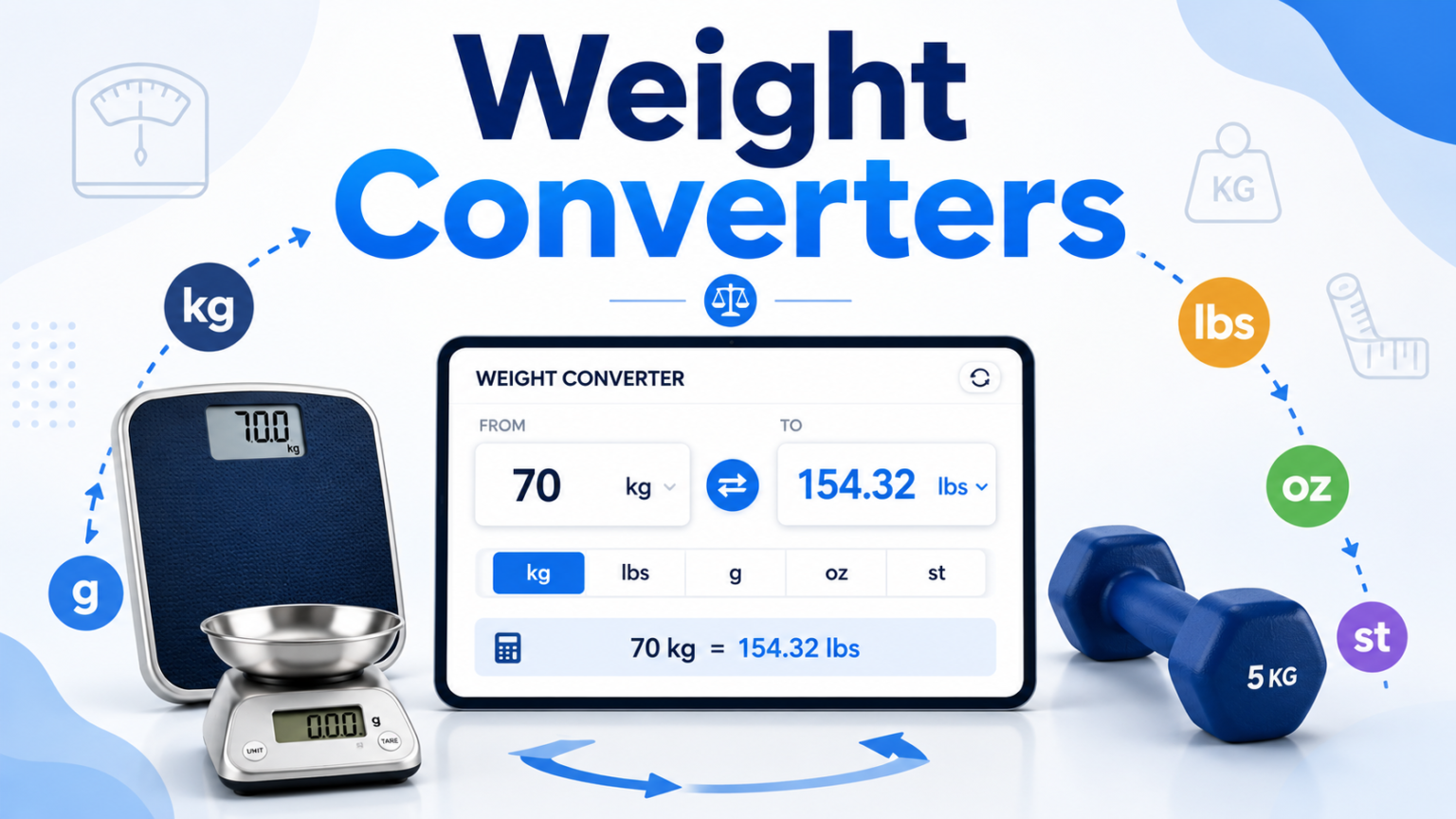
Converting weight from one unit to another may seem like a simple task. However, it can become confusing when you work with different measurement systems. A recipe may use grams, while your kitchen scale shows ounces. Similarly, a shipping company may list a package in kilograms, while the delivery calculator asks for pounds. These small differences can create unnecessary confusion.
A Weight Converter makes this process much easier. Instead of searching for conversion formulas or calculating numbers manually, you can enter the value, select the units, and get the result almost instantly. This approach saves time and reduces the risk of common calculation mistakes. It also helps people handle different measurement systems without needing to memorize complicated conversion factors.
Why Is Weight Conversion Important?
Weight conversion plays a role in many everyday activities. You may need it while cooking, shopping online, exercising, studying, or sending a package. International websites often use metric measurements, while many American websites continue to use pounds and ounces.
For example, a product might weigh 5 kilograms, but you may want to know its weight in pounds before purchasing it. A simple conversion can provide the information you need. The same principle applies when you follow a recipe from another country or compare product specifications from different manufacturers.
Manual calculations can also become difficult when you work with unfamiliar units. Therefore, using a Weight Converter gives you a convenient way to handle these situations without unnecessary effort.
What Weight Units Can You Convert?
Weight measurement includes many units. Some appear in everyday situations, while others have specific uses in particular industries.
Kilograms and grams are among the most common metric units. People use them for groceries, food ingredients, body weight, and product measurements. Milligrams are useful when measuring very small quantities, particularly in scientific and pharmaceutical settings.
The imperial system includes pounds and ounces. These units appear frequently in the United States and remain common in cooking, fitness, retail, and shipping. Stones also remain familiar in the United Kingdom and Ireland, especially when people discuss body weight.
Other units have more specialized purposes. Metric tons and short tons help businesses measure large quantities of materials. Precious metal markets often use troy ounces instead of standard ounces. Meanwhile, jewelers use carats when measuring gemstones.
A good Weight Converter should make it easy to move between both common and less familiar units. This saves you from searching for separate conversion formulas whenever you encounter an unfamiliar measurement.
Why Is Manual Conversion Difficult?
Manual conversion does not always produce reliable results. Even when you know the correct formula, you can make a mistake while entering or multiplying the numbers. A misplaced decimal point can change the final answer considerably.
The problem becomes greater when you need several conversions. Suppose you start with stones and pounds and want the final result in kilograms. You may need to complete more than one calculation. Each additional step creates another opportunity for an error.
People also tend to rely on rounded conversion factors. While approximations work for quick estimates, they may not provide enough accuracy for professional tasks. Shipping calculations, scientific measurements, and commercial transactions often require more precise results.
A digital tool removes much of this uncertainty. It performs the calculation consistently and provides the result without requiring you to remember the formula.

How Accurate Is an Online Weight Converter?
Accuracy depends on the conversion standards and formulas used by the tool. Reliable converters use established relationships between measurement units. For example, one kilogram equals approximately 2.20462 pounds.
The number of decimal places also matters. Everyday tasks usually do not require extreme precision. However, scientific work, jewelry measurements, and other specialized applications may require additional decimal places.
A useful Weight Converter should display enough digits to support the purpose of the calculation. At the same time, users should understand that displayed values may involve rounding. The tool may calculate a highly precise result internally but show only a selected number of decimal places.
For ordinary tasks, this rounding rarely creates a meaningful problem. However, professionals who work with strict measurement requirements should always check the precision they need before using the result.
Who Can Benefit From Weight Conversion Tools?
Almost anyone can benefit from quick weight conversions. However, some users need them more frequently than others. A simple conversion tool can save time and make everyday tasks much easier. It also helps users avoid common mistakes when working with unfamiliar measurement units.
Home Cooks and Bakers
Cooking often involves measurements from different countries. An American recipe may use ounces and pounds, while a European recipe may list ingredients in grams. Bakers especially need accurate measurements because small changes in ingredient quantities can affect the final result.
A converter helps cooks translate measurements quickly. As a result, they can follow international recipes without constantly searching for conversion formulas.
Fitness Enthusiasts
People who track their body weight or workout progress may encounter different measurement systems. One fitness app might use kilograms, while another uses pounds. A converter makes it easier to maintain consistent records.
It can also help when users compare fitness programs, equipment specifications, or international training resources.
Online Shoppers
Product descriptions do not always use the same units. A website may list a product in kilograms, while a buyer thinks in pounds. Converting the measurement gives shoppers a clearer idea of the item’s actual weight.
This information can also help when estimating shipping requirements or comparing similar products.
Businesses and Logistics Professionals
Weight conversions play an important role in shipping and international trade. Businesses often move products between countries that use different measurement systems. Accurate figures can help companies calculate shipping costs and communicate product specifications clearly.
A reliable converter also reduces the time employees spend performing repetitive calculations. Therefore, it can support smoother day-to-day operations.
Make Weight Conversion Faster and Easier
Weight conversion does not need to involve complicated formulas or repeated calculations. With the right online tool, you can convert measurements quickly and focus on the task that actually matters.
Whether you are preparing an international recipe, checking your fitness progress, comparing products, or managing shipping information, a Weight Converter can simplify the process. It reduces manual work, limits common calculation errors, and provides convenient access to multiple measurement units.
For quick and dependable conversions, you can use a free converter and get your results within seconds. Instead of worrying about conversion factors, you can spend your time on the task itself. Accurate measurement starts with using the right units, and a reliable conversion tool makes that process much easier.
Final Thoughts
Weight conversion has become a simple part of many everyday tasks. From cooking and fitness tracking to online shopping and business shipping, people often need to switch between different measurement units. Doing these calculations manually can take time and may lead to avoidable mistakes.
A reliable Weight Converter offers a faster and more convenient solution. It lets you convert measurements without memorizing formulas or performing complicated calculations. Most importantly, it helps you work confidently with both metric and imperial units.
Whether you need to convert grams to ounces, kilograms to pounds, or tons to another measurement, an online converter can make the process easier. With accurate results available within seconds, you can save time and focus on what matters most. Therefore, keeping a dependable conversion tool within reach can make everyday measurement tasks much simpler.
Author


What if your brand ads appeared next to content that you would never want your customers to see? What if those ads appeared beside violent, misleading, offensive, or adult content? For most brands, that situation would feel completely inappropriate and unsafe. This risk can affect your campaigns without you noticing it. You may look at your impression numbers and assume that everything is working well. However, some of those impressions could come from placements that damage your brand image instead of strengthening it.
In today’s digital advertising environment, these placements can happen within milliseconds. That makes Brand Safety one of the most important concerns for advertisers.
Digital advertising now stretches across websites, mobile apps, social media, online videos, retail media, and Connected TV (CTV). Programmatic advertising allows brands to reach huge audiences across these channels. However, this scale also creates a major challenge. Brands have less control over where their ads finally appear.
So, how can advertisers protect their reputation while still reaching the right audience? The answer starts with understanding why traditional methods no longer provide enough protection.
Why Brand Safety Has Become More Difficult
Advertising no longer depends on a few predictable platforms. Today, brands can launch campaigns across thousands or even millions of digital properties at once. Programmatic technology makes this possible by making automated buying decisions in real time. That speed creates enormous opportunities. At the same time, it makes manual monitoring almost impossible.
A single campaign can reach users across websites, apps, social platforms, video channels, retail media networks, and CTV services. Each channel comes with different types of content and different levels of transparency.
Furthermore, not every premium-looking placement guarantees a safe environment. Made-for-advertising (MFA) websites, user-generated content, and AI-generated content can create additional risks.
CTV also adds another layer of complexity. Streaming platforms and FAST channels continue to grow, but advertisers may not always receive enough visibility into the exact content surrounding their ads. As a result, brands need a smarter and more continuous approach to protecting their reputation.
Why Traditional Methods Often Fall Short
Many advertisers still depend on keyword blocklists, URL blocklists, and post-bid monitoring. These tools can help, but they cannot solve every problem. Keyword blocklists look for specific words. The problem is that a single word can appear in completely different contexts. A news article discussing a sensitive topic, for example, may contain a risky keyword while still offering a suitable advertising environment.
This approach can create two problems. It may block perfectly safe content while allowing genuinely harmful content to slip through. URL blocklists face a similar challenge. They can block known websites, but the internet changes constantly. New pages, domains, videos, and social posts appear every minute. A list that looks effective today can quickly become outdated.
Post-bid monitoring creates another limitation. It tells advertisers where an ad appeared after the placement already happened. By that point, the brand has already taken the risk. The bigger issue remains context. These traditional methods often focus on surface-level signals instead of understanding what the content actually means.

Contextual Advertising Offers a Smarter Approach
Contextual advertising takes a different route. Instead of simply searching for individual keywords, it analyzes the meaning and context of the content. This approach helps advertisers determine whether a page, video, or piece of content fits their suitability requirements before serving an ad.
For example, a page may contain a sensitive keyword while discussing an educational or harmless topic. A contextual system can consider the complete meaning instead of automatically blocking the placement. That makes Brand Safety more precise and practical.
Contextual analysis can examine several factors at once. These include the topic, sentiment, tone, intent, and overall quality of the content. It can then make decisions before the ad appears. This pre-bid approach matters because it prevents risky placements instead of simply reporting them afterward.
How AI Makes Contextual Protection Stronger
Artificial intelligence can take contextual advertising even further. Modern AI systems can analyze large amounts of content quickly and identify patterns that traditional filters may miss. For instance, AI can look beyond individual words and understand how those words work together. It can identify the broader subject of an article and recognize the intent behind the content.
AI can also evaluate tone. That matters when content uses sarcasm, controversy, humor, or indirect language. A simple keyword filter may struggle with these situations, while an AI-powered system can examine the surrounding context. Visual content creates another challenge. Images and videos can contain information that text-based systems cannot detect. AI can analyze visual elements as well, which becomes especially valuable for video advertising and CTV campaigns.
Multilingual advertising also benefits from AI. Global brands need protection across different languages, cultures, and expressions. AI can help advertisers evaluate content at a much larger scale. Most importantly, AI can keep working continuously. It has the capability to adjust to fresh subjects, trends, slang, and new content types without depending solely on manually revised lists.
What Effective Brand Safety Looks Like Today
A strong Brand Safety strategy does not depend on one tool. Instead, it combines multiple layers of protection. First, advertisers should use pre-bid contextual analysis to identify risky environments before an ad appears. This approach reduces the need to fix problems after they occur.
Second, brands should create custom suitability settings. Every brand has different values, audiences, and risk levels. A filter that works for one company may not work for another. Third, continuous monitoring should remain part of the strategy. Digital content changes constantly, so advertisers cannot treat protection as a one-time setup.
Fourth, protection should cover every major advertising channel. Display, mobile, video, social media, and CTV all need attention. Limiting protection to one channel can leave major gaps elsewhere. Finally, AI-powered optimization can help campaigns respond to changing conditions. This becomes increasingly important as advertisers expand into new formats and platforms.
Why Context Matters for Every Impression
Reaching the right audience represents only one part of a successful advertising campaign. The environment surrounding an ad also influences how people perceive a brand. Imagine seeing an advertisement from a trusted company beside disturbing or misleading content. Even if the company had nothing to do with that content, the association could still affect the viewer’s perception.
That is why Brand Safety should remain a core part of digital advertising strategy rather than an afterthought. Advertisers need tools that understand content, not just keywords. They also need technology that works before an impression happens, not only after the damage occurs.
Conclusion
Trust develops one impression at a time. Every placement contributes to how people view a brand. Modern advertising gives businesses incredible reach, but that reach comes with greater responsibility. Programmatic buying, CTV, user-generated content, and AI-generated media have made the digital landscape more complex than ever.
A smarter approach combines contextual intelligence, AI, custom suitability controls, and continuous monitoring. Together, these layers help brands make better decisions before their ads appear.
Ultimately, effective Brand Safety is not about avoiding the internet’s complexity. It is about understanding that complexity and using the right technology to navigate it. Because reaching the right person matters. But reaching that person in the right environment matters just as much.
Author



As-Built Drawings for Commercial Renovations: Complete AEC Guide

Why orSlow Japanese Workwear Is Becoming a Go-To Choice for Everyday

White Label GPS Tracking Software Build Your Own GPS Brand

Back, Neck & Shoulder vs Full Body Massage: Which Is Best?

AutoCAD Supports Accurate Shop Drawing Production in US Construction

Skin Toner: Core Ingredients, Benefits and Suitable Skin Types

Men’s Vitality Power Booster in Pakistan: Price, Features

Family Restaurant in Rajkot: Why Zaika Is Perfect for Weekend Dinners

How AI Is Changing Local SEO for Doctors and Clinics

Outsourcing CAD to BIM Services: Benefits for AEC Firms

Cybersecurity Consulting Company SequelNet Provides Critical IT Support Services to Medical Billing Firm, Medical Optimum

Meet the Megalodon: The Shark Star of ‘Meg 2’

Reduce Video Game Lag: Level Up Your Gaming Performance

Balancing India’s Entertainment: Cricket vs. Bollywood

Jetsetter’s Secrets: Unveiling Our Favorite Travel Hacks for a Seamless Adventure

The 5 Best Live Sports Streaming Sites: Legal and Exciting!

Hollywood Labor Unrest: The Impact of ‘What About Us?’ Strikes

Unveiling the Magic of Dream Fulfillment at the Late NBA Draft

Illuminate Your Skin: Dr. Axe Unveils Natural Remedies for Lightening Knees and Elbows

Bright Choices: Navigating the Pros and Cons of Skin Whitening Creams with Dr. Axe
-

 Business3 years ago
Cybersecurity Consulting Company SequelNet Provides Critical IT Support Services to Medical Billing Firm, Medical Optimum
-
Entertainment3 years ago
Meet the Megalodon: The Shark Star of ‘Meg 2’
-
Entertainment3 years ago
Reduce Video Game Lag: Level Up Your Gaming Performance
-
 Sports3 years ago
Balancing India’s Entertainment: Cricket vs. Bollywood
-
Entertainment3 years ago
Jetsetter’s Secrets: Unveiling Our Favorite Travel Hacks for a Seamless Adventure
-
Productivity3 years ago
The 5 Best Live Sports Streaming Sites: Legal and Exciting!
-
Art /Entertainment3 years ago
Hollywood Labor Unrest: The Impact of ‘What About Us?’ Strikes
-
Sports3 years ago
Unveiling the Magic of Dream Fulfillment at the Late NBA Draft






