
Business
D365 F and O: Guide to Microsoft Dynamics 365 Finance

By

Reviewed
By Allie Carper
Introduction
In today’s fast-changing business world, companies need tools that help them run smoothly, save time, and grow faster. Microsoft Dynamics 365 Finance and Operations, also known as D365 F and O, is one of those powerful tools. It helps businesses manage everything from money to products and people—all in one place. Whether you’re a small business trying to expand or a large company looking to improve operations, D365 F and O can be a great solution. In this guide, we’ll explore what it is, how it works, and why it matters.
What is D365 F and O?
D365 F and O stands for Dynamics 365 Finance and Operations. It is a cloud-based business software made by Microsoft. It helps businesses manage their finances, supply chain, inventory, manufacturing, sales, and more. Instead of using many different tools for different tasks, D365 F and O brings everything into one system. This makes work easier and helps teams stay on the same page.
It is part of the larger Microsoft Dynamics 365 suite, which includes other tools like Dynamics 365 Sales, Customer Service, and Human Resources. But D365 F and O focuses mainly on two things: Finance and Operations.
Key Features of D365 Finance and Operations
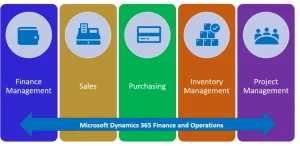
Image by: Yandex.com
D365 F and O comes with many useful features that make business tasks faster and more organized. Let’s look at some of the main ones:
1. Financial Management
This feature helps you manage budgets, payments, expenses, and all things related to money. You can track how your business is doing, make smarter financial decisions, and stay compliant with tax laws.
2. Supply Chain Management
From getting raw materials to delivering products to customers, this feature helps you control the entire supply chain. It helps reduce delays, manage inventory, and make sure the right products are always in stock.

3. Manufacturing
If your company builds products, this feature helps plan and control the process. It tracks materials, workers, machines, and time. This helps reduce waste and improve product quality.
4. Warehouse Management
Managing stock is easier with D365 F and O. It keeps track of what’s in your warehouse, where it is, and how much of it you have. This prevents overstocking or running out of important items.
5. Project Management
You can use this feature to plan, budget, and track projects. It’s helpful for businesses that work on many projects at once and need to keep everything on schedule and within budget.
6. Human Resources
Hiring, onboarding, payroll, and staff management are simple with D365 F and O. While there’s a separate HR module in the Dynamics 365 family, basic HR functions are included here too.
Benefits of Using D365 F and O
Using D365 F and O can make a big difference in how a business runs. Here are some key benefits:
1. Centralized Data
All your business data is in one place. This helps reduce mistakes and gives a clear view of how the business is doing.
2. Real-Time Insights
With built-in reports and dashboards, you can see important data live. This means faster decisions based on facts, not guesswork.
3. Better Productivity
Since many tasks are automated, your team spends less time on manual work and more time on things that matter.
4. Scalability
As your business grows, D365 F and O grows with you. You can add features and users without switching systems.
5. Cloud-Based Access
You can access the system from anywhere. This is great for teams working remotely or businesses with multiple locations.
6. Integration with Other Microsoft Tools
D365 F and O works well with tools like Microsoft Teams, Excel, Power BI, and Outlook. This means your team can work smoothly without switching between apps.
Who Should Use D365 Finance and Operations?
D365 F and O is best suited for medium to large businesses. It’s especially helpful for:
- Manufacturers
- Retailers
- Distributors
- Construction firms
- Professional service providers
- Global companies with complex operations
If your company deals with large amounts of data, manages multiple departments, or has a global presence, D365 F and O can help bring everything together.
How is D365 F and O Different from Other ERP Systems?
There are many ERP (Enterprise Resource Planning) systems out there, but D365 F and O stands out for a few reasons:
- It is cloud-based, which means lower IT costs and better security.
- It’s part of the Microsoft ecosystem, making it easier to integrate with other tools you already use.
- It is updated regularly with new features and improvements.
- It offers AI-powered features that give helpful recommendations and automate routine tasks.
Getting Started with D365 F and O
Starting with D365 F and O is easy if you have a plan. Here are a few steps to guide you:
- Define Your Needs: Know what your business needs from an ERP system. Which areas need improvement?
- Choose a Partner: Work with a Microsoft-certified partner who can help with setup and training.
- Train Your Team: Make sure your staff knows how to use the system. Microsoft offers many helpful training tools.
- Start Small: Begin with the most important modules, then expand over time.
- Keep Improving: Use reports and feedback to keep making your business better.
Common Challenges and How to Handle Them
Like any big change, switching to D365 F and O may come with challenges:
- Learning curve: Some users may find the system complex at first. Solution: Offer training and support.
- Data migration: Moving data from old systems can be tricky. Solution: Plan and test data migration carefully.
- Customization: You may need to adjust the system to fit your business. Solution: Work with experts who know how to customize D365 F and O.
Conclusion
D365 F and O is a powerful tool that helps businesses manage finance, supply chain, projects, and more—all from one place. It offers real-time data, better control, and easier teamwork. In a world where speed and accuracy are key, using a smart system like Dynamics 365 Finance and Operations can give your business a strong advantage. Whether you’re managing money, making products, or running projects, D365 F and O helps you do it better, faster, and smarter.
Author
-

What is Microsoft Dynamics 365 Finance and Operations
Microsoft Dynamics 365 Finance and Operations is an enterprise resource planning (ERP) solution designed for medium to large organizations. It helps businesses manage their global financial systems, operations, and supply chains with increased efficiency and real-time insights. By unifying Dynamics 365 finance and operations, it enables better decision-making, automates routine processes, and enhances productivity through artificial intelligence and advanced analytics.
This cloud-based platform supports a wide range of business functions, including financial management, budgeting, project management, inventory, procurement, and manufacturing. Dynamics 365 Finance and Operations also integrates seamlessly with other Microsoft products like Office 365 and Power BI, offering a unified and user-friendly experience.

Organizations use it to improve financial visibility, ensure global compliance, streamline operations, and adapt quickly to changing market conditions. It’s especially valuable for companies seeking digital transformation and scalability without compromising control or security.




Author



Most enterprises don’t struggle because of lack of tools, they struggle because of too many disconnected ones.
Finance runs on one system. Operations on another. Reporting lives somewhere else. Automation is layered on top. Over time, this creates friction across the organization, slowing down execution and increasing operational risk.
This is where a unified Enterprise Application Platform becomes essential. Instead of connecting multiple tools, businesses are starting to rethink how systems are designed from the ground up and platforms like Airtool are emerging at the center of that shift.
The Hidden Cost of Disconnected Enterprise Systems
Fragmented systems don’t just create technical complexity, they directly impact business performance.
A typical enterprise software architecture often includes multiple SaaS tools stitched together through integrations. While this may work initially, it introduces long-term inefficiencies.
Key operational issues:
- Data duplication across systems
- Inconsistent reporting across departments
- High dependency on integration layers
- Delays in executing cross-functional workflows
- Difficulty in scaling systems without rework
Over time, teams spend more effort managing systems than improving business processes.

Rethinking Platform as a Service for Enterprises
The concept of platform as a service has evolved. It’s no longer just about hosting applications, it’s about running entire business operations on a unified system.
A modern Enterprise Application Platform provides:
- A shared data model across applications
- Built-in workflow execution
- Native analytics and reporting
- Embedded automation capabilities
- Flexible deployment across environments
This creates a foundation where systems are not just connected—they are inherently aligned.
How Airtool Changes the Architecture Layer
Airtool as an Operational Framework
Airtool is designed as a full-stack enterprise platform that integrates multiple layers of business systems into one runtime environment.
Rather than separating application logic, data handling, and automation, Airtool brings them together into a cohesive framework.
What makes this approach different:
- Applications and data operate within the same system
- Automation is embedded, not added externally
- Reporting is generated from live operational data
- Changes can be implemented without disrupting workflows
This reduces the need for external dependencies and simplifies how systems evolve over time.
Book a demo with Airtool to see how a modern enterprise platform can support your business automation strategy and reduce system complexity.
Core Capabilities That Enable Business Automation
A modern enterprise platform must go beyond basic functionality. It should actively support how businesses operate at scale.
Key capabilities include:
- Unified Data Management
All business entities transactions, users, workflows exist within a single data structure. - Process Automation Engine
Business rules and workflows are executed automatically without manual intervention. - Dynamic Application Layer
Interfaces and processes adapt based on underlying data and logic. - Real-Time Reporting
Insights are generated directly from operational data without external tools. - Flexible Deployment Models
Systems can run in cloud, private environments, or hybrid setups.
These capabilities allow organizations to move faster while maintaining control.
Use Case: Automating Multi-Department Operations
Consider a company managing procurement, finance, and operations across different systems.
Before a unified platform:
- Procurement data must be manually shared with finance
- Approval workflows are handled through emails
- Reports are generated from outdated data
- System updates require coordination across teams
After implementing a unified platform like Airtool:
- Procurement and finance operate on shared data
- Approval workflows are automated within the system
- Reports reflect real-time operational activity
- Changes are applied instantly without system downtime
This significantly reduces delays and improves overall efficiency.
Comparison: Layered Systems vs Unified Platform Architecture
| Layered SaaS Model | Unified Platform Model |
| Multiple tools for each function | Single system for all functions |
| Heavy reliance on APIs | Built-in system integration |
| Delayed data synchronization | Real-time data consistency |
| Complex maintenance | Simplified system management |
| Limited cross-functional visibility | Full operational transparency |
A unified enterprise platform simplifies architecture while improving performance.
Why Enterprises Are Moving Toward Unified Systems
The shift toward unified platforms is not just a trend, it’s a response to growing operational demands.
Enterprises are adopting unified systems to enable faster execution, simplify integration complexity, support real-time decisions, reduce infrastructure overhead, and scale automation within a flexible, modern enterprise software architecture
Airtool in Context: A Practical Platform Approach
In practical terms, Airtool enables organizations to consolidate their systems into a single operational layer. Instead of managing multiple tools, teams can build and run their applications within one platform.
This approach aligns development, operations, and analytics in a way that traditional systems cannot easily achieve.
To understand how this model works in detail, you can explore Airtool’s low-code application platform and enterprise capabilities here:
It provides a clearer view of how unified systems can replace fragmented architectures.
Conclusion: Moving Beyond System Integration
The future of enterprise systems is not about better integrations, it’s about eliminating the need for them.
A unified Enterprise Application Platform allows organizations to operate with greater clarity, speed, and control. By bringing applications, data, and automation into one system, businesses can reduce complexity and focus on execution.
Airtool represents this shift by offering a platform designed for modern enterprise needs where systems are not just connected, but inherently unified.
Author




Author



Robotic-Assisted Body Lift Post-Weight Loss Surgery

Call Center Companies: BPO Services & Customer Support

Curtain & Cushion Design Ideas for Modern House Design

Skin Whitening in Islamabad: Natural Tips, and Skincare Routine

Biological Seed Treatment Market: Trends, Growth, and Future

Essentials Hoodie Care Tips to Make It Last Longer

Joshua Jamal Camo Shorts & Streetwear Collection

Ear Reshaping Without Surgery: Cost, Benefits & Results

Malaysia Export Synthetic Filament Tow: Trends and Market

Airtool: Application Platform for Modern Business Automation

Cybersecurity Consulting Company SequelNet Provides Critical IT Support Services to Medical Billing Firm, Medical Optimum

Team Communication Software Transforms Operations at Finance Innovate

Project Management Tool Transforms Long Island Business

How Alleviate Poverty Utilized IPPBX’s All-in-One Solution to Transform Lives in New York City

Breast Cancer: The Imperative Role of Mammograms in Screening and Early Detection

Unstoppable Collaboration: D.C.’s Citi Open and Silicon Valley Classic Unite to Propel Women’s Tennis to New Heights

Embracing Renewal: Sizdabedar Celebrations Unite Iranians in New York’s Eisenhower Park

The Benefits of Starting a Side Hustle for Financial Freedom

New Blood Donation Screening Questions What You Need to Know

Stylishly Timeless: The 5 Types of Sandals You Need in Your Closet
-
 Business3 years ago
Cybersecurity Consulting Company SequelNet Provides Critical IT Support Services to Medical Billing Firm, Medical Optimum
-
Business3 years ago
Team Communication Software Transforms Operations at Finance Innovate
-
Business3 years ago
Project Management Tool Transforms Long Island Business
-
Business3 years ago
How Alleviate Poverty Utilized IPPBX’s All-in-One Solution to Transform Lives in New York City
-
health3 years ago
Breast Cancer: The Imperative Role of Mammograms in Screening and Early Detection
-
Sports3 years ago
Unstoppable Collaboration: D.C.’s Citi Open and Silicon Valley Classic Unite to Propel Women’s Tennis to New Heights
-
Art /Entertainment3 years ago
Embracing Renewal: Sizdabedar Celebrations Unite Iranians in New York’s Eisenhower Park
-
Finance3 years ago
The Benefits of Starting a Side Hustle for Financial Freedom







