
Business
Cross Dock Logistics: Speeding Up Your Supply Chain

We’ve all faced this – we place an order online, get excited about it, track it every hour, and then wait and wait. Even though the product is shown near you, it feels like it’s crawling its way to you. Why? The reason could be that it is still there in the warehouse only, or maybe it got shuffled between trucks and spent more time waiting than moving.
Now, if there were no delays, the products could skip storage space and head straight to the next truck. Sounds like a dream, right? But this is exactly what cross dock logistics promises. Before jumping in, let’s unpack reality.

What is Cross Docking?
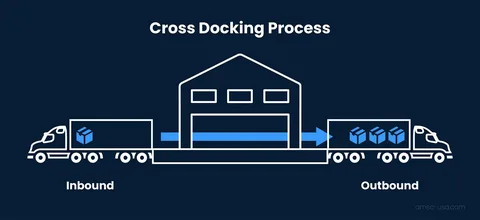
Think of this for a moment – there’s a truck full of goods that arrives at a distribution centre. Instead of loading everything into storage, the products are quickly sorted and moved onto another truck headed straight for stores or customers.
There are no shelves, no dusty warehouse waiting room, just in-and-out. This is what cross dock logistics is. It eliminates the “holding inventory” step and focuses on speed.
Why Businesses Get Excited About It
The pitch for cross docking is tempting, and for good reason.

- Speed – Products move faster. If you’re selling goods that need to hit the shelves quickly (think fresh food or seasonal products), this is a big win.
- Lower costs – Less warehousing means fewer storage fees and reduced overhead.
- Efficiency – With fewer hands and less handling, the chances of mistakes or damaged goods go down.
- Happier customers – Faster turnaround means you can keep up with today’s “I want it now” expectations.
In a world where Amazon has set the bar sky-high, it makes sense that more businesses are exploring cross dock services as a way to keep up.
But Here’s The Catch…
For every success story, there’s also a cautionary tale. Cross docking looks amazing on paper, but it comes with some challenges you can’t ignore.
IT’S NOT FOR EVERY PRODUCT. If you sell items that need long-term storage or don’t move quickly, cross docking might create more chaos than convenience.
HIGH COORDINATION NEEDED. Trucks, suppliers, and retailers all need to sync perfectly. If one piece of the puzzle falls behind, the whole system stalls.
UPFRONT SETUP COSTS. To make cross docking work, you need the right infrastructure, sorting areas, trained staff, and technology to track goods in real time. Not every business has the budget or scale for this.
NOT GREAT FOR UNPREDICTABLE DEMAND. If your sales spike and dip, having no buffer, like warehouse inventory, can leave you scrambling when orders surge.
So, is it the Right Fit For You?
Here’s where the decision-making comes in. Ask yourself:
- Do your products sell quickly or have short shelf lives?
- Can your supply chain partners keep up with tight timelines?
- Is your business large enough to justify the setup?
- Do your customers expect super-fast turnaround?
If you answered “yes” to most of these, cross docking might give you the edge you’re looking for. But if you’re unsure, it might be better to stick with traditional warehousing, or even a hybrid model that combines both.
Real-World Scenarios Where Cross Docking Makes Sense
Let’s take a sneak peek at a few industries where cross docking really shines:
- Grocery & Fresh Food – You, me, no one wants to buy week-old vegetables. So, speed is everything here.
- Retail during peak seasons – Yes, the peak seasons here are the Black Friday and holiday shopping. During these times, moving goods fast without clogging warehouses is a lifesaver.
- E-commerce giants – All the online sellers that are big can use cross docking to cut storage costs and ship quickly where the demand is high.
- Pharmaceuticals – Shipping medicines on time is crucial because they have expiration dates and strict handling needs.
The Hidden Costs People Don’t Talk About Much
Here’s something that often gets overlooked: while cross docking can reduce storage costs, it can actually raise expenses elsewhere.
- More trucks on the road = higher transportation costs.
- More staff needed for sorting and handling in shorter windows.
- Advanced tracking systems aren’t optional, they’re mandatory if you want things to run smoothly.
So while you save on warehouses, don’t assume the overall logistics bill will automatically shrink. It’s more about redistributing costs than eliminating them.
Bringing It All Together
Cross dock logistics isn’t some magic fix. It’s a tool, and like any tool, it only works if you’re using it for the right job. For the right business, it can mean faster deliveries, lower overhead, and happier customers. But for the wrong one, it can create more headaches than it solves.
So before you choose cross docking, take a step back. Look at your products, your demand patterns, your partners, and your budget. Then ask yourself:
Is speed the only thing I need? Or is reliability just as important?
Because at the end of the day, the smartest logistics choice isn’t the trendiest one, it’s the one that actually works for your business.
Frequently Asked Questions
How fast does cross docking actually work?
It can be really quick! In a well-run setup, goods might only spend a few hours, or even less, at the dock before heading out to the next truck. Think of it like a pit stop in a car race: in and out, no sitting around.
Can small businesses use cross docking too?
It’s usually better for medium to large businesses because of the setup costs and coordination required. Small businesses can still get some benefits with a mix of cross docking and traditional storage.
Can perishable items be handled safely?
Definitely, but you need the right setup. For food, medicine, or anything that spoils, you’ll need temperature-controlled storage and careful handling. That way nothing goes bad while moving quickly.
Author




Author



Most enterprises don’t struggle because of lack of tools, they struggle because of too many disconnected ones.
Finance runs on one system. Operations on another. Reporting lives somewhere else. Automation is layered on top. Over time, this creates friction across the organization, slowing down execution and increasing operational risk.
This is where a unified Enterprise Application Platform becomes essential. Instead of connecting multiple tools, businesses are starting to rethink how systems are designed from the ground up and platforms like Airtool are emerging at the center of that shift.
The Hidden Cost of Disconnected Enterprise Systems
Fragmented systems don’t just create technical complexity, they directly impact business performance.
A typical enterprise software architecture often includes multiple SaaS tools stitched together through integrations. While this may work initially, it introduces long-term inefficiencies.
Key operational issues:
- Data duplication across systems
- Inconsistent reporting across departments
- High dependency on integration layers
- Delays in executing cross-functional workflows
- Difficulty in scaling systems without rework
Over time, teams spend more effort managing systems than improving business processes.

Rethinking Platform as a Service for Enterprises
The concept of platform as a service has evolved. It’s no longer just about hosting applications, it’s about running entire business operations on a unified system.
A modern Enterprise Application Platform provides:
- A shared data model across applications
- Built-in workflow execution
- Native analytics and reporting
- Embedded automation capabilities
- Flexible deployment across environments
This creates a foundation where systems are not just connected—they are inherently aligned.
How Airtool Changes the Architecture Layer
Airtool as an Operational Framework
Airtool is designed as a full-stack enterprise platform that integrates multiple layers of business systems into one runtime environment.
Rather than separating application logic, data handling, and automation, Airtool brings them together into a cohesive framework.
What makes this approach different:
- Applications and data operate within the same system
- Automation is embedded, not added externally
- Reporting is generated from live operational data
- Changes can be implemented without disrupting workflows
This reduces the need for external dependencies and simplifies how systems evolve over time.
Book a demo with Airtool to see how a modern enterprise platform can support your business automation strategy and reduce system complexity.
Core Capabilities That Enable Business Automation
A modern enterprise platform must go beyond basic functionality. It should actively support how businesses operate at scale.
Key capabilities include:
- Unified Data Management
All business entities transactions, users, workflows exist within a single data structure. - Process Automation Engine
Business rules and workflows are executed automatically without manual intervention. - Dynamic Application Layer
Interfaces and processes adapt based on underlying data and logic. - Real-Time Reporting
Insights are generated directly from operational data without external tools. - Flexible Deployment Models
Systems can run in cloud, private environments, or hybrid setups.
These capabilities allow organizations to move faster while maintaining control.
Use Case: Automating Multi-Department Operations
Consider a company managing procurement, finance, and operations across different systems.
Before a unified platform:
- Procurement data must be manually shared with finance
- Approval workflows are handled through emails
- Reports are generated from outdated data
- System updates require coordination across teams
After implementing a unified platform like Airtool:
- Procurement and finance operate on shared data
- Approval workflows are automated within the system
- Reports reflect real-time operational activity
- Changes are applied instantly without system downtime
This significantly reduces delays and improves overall efficiency.
Comparison: Layered Systems vs Unified Platform Architecture
| Layered SaaS Model | Unified Platform Model |
| Multiple tools for each function | Single system for all functions |
| Heavy reliance on APIs | Built-in system integration |
| Delayed data synchronization | Real-time data consistency |
| Complex maintenance | Simplified system management |
| Limited cross-functional visibility | Full operational transparency |
A unified enterprise platform simplifies architecture while improving performance.
Why Enterprises Are Moving Toward Unified Systems
The shift toward unified platforms is not just a trend, it’s a response to growing operational demands.
Enterprises are adopting unified systems to enable faster execution, simplify integration complexity, support real-time decisions, reduce infrastructure overhead, and scale automation within a flexible, modern enterprise software architecture
Airtool in Context: A Practical Platform Approach
In practical terms, Airtool enables organizations to consolidate their systems into a single operational layer. Instead of managing multiple tools, teams can build and run their applications within one platform.
This approach aligns development, operations, and analytics in a way that traditional systems cannot easily achieve.
To understand how this model works in detail, you can explore Airtool’s low-code application platform and enterprise capabilities here:
It provides a clearer view of how unified systems can replace fragmented architectures.
Conclusion: Moving Beyond System Integration
The future of enterprise systems is not about better integrations, it’s about eliminating the need for them.
A unified Enterprise Application Platform allows organizations to operate with greater clarity, speed, and control. By bringing applications, data, and automation into one system, businesses can reduce complexity and focus on execution.
Airtool represents this shift by offering a platform designed for modern enterprise needs where systems are not just connected, but inherently unified.
Author




Author



Robotic-Assisted Body Lift Post-Weight Loss Surgery

Call Center Companies: BPO Services & Customer Support

Curtain & Cushion Design Ideas for Modern House Design

Skin Whitening in Islamabad: Natural Tips, and Skincare Routine

Biological Seed Treatment Market: Trends, Growth, and Future

Essentials Hoodie Care Tips to Make It Last Longer

Joshua Jamal Camo Shorts & Streetwear Collection

Ear Reshaping Without Surgery: Cost, Benefits & Results

Malaysia Export Synthetic Filament Tow: Trends and Market

Airtool: Application Platform for Modern Business Automation

Cybersecurity Consulting Company SequelNet Provides Critical IT Support Services to Medical Billing Firm, Medical Optimum

Team Communication Software Transforms Operations at Finance Innovate

Project Management Tool Transforms Long Island Business

How Alleviate Poverty Utilized IPPBX’s All-in-One Solution to Transform Lives in New York City

Breast Cancer: The Imperative Role of Mammograms in Screening and Early Detection

Unstoppable Collaboration: D.C.’s Citi Open and Silicon Valley Classic Unite to Propel Women’s Tennis to New Heights

Embracing Renewal: Sizdabedar Celebrations Unite Iranians in New York’s Eisenhower Park

The Benefits of Starting a Side Hustle for Financial Freedom

New Blood Donation Screening Questions What You Need to Know

Stylishly Timeless: The 5 Types of Sandals You Need in Your Closet
-

 Business3 years ago
Cybersecurity Consulting Company SequelNet Provides Critical IT Support Services to Medical Billing Firm, Medical Optimum
-
Business3 years ago
Team Communication Software Transforms Operations at Finance Innovate
-
Business3 years ago
Project Management Tool Transforms Long Island Business
-
Business3 years ago
How Alleviate Poverty Utilized IPPBX’s All-in-One Solution to Transform Lives in New York City
-
health3 years ago
Breast Cancer: The Imperative Role of Mammograms in Screening and Early Detection
-
Sports3 years ago
Unstoppable Collaboration: D.C.’s Citi Open and Silicon Valley Classic Unite to Propel Women’s Tennis to New Heights
-
Art /Entertainment3 years ago
Embracing Renewal: Sizdabedar Celebrations Unite Iranians in New York’s Eisenhower Park
-
Finance3 years ago
The Benefits of Starting a Side Hustle for Financial Freedom







