
Development
Carbide Boring Bar Price & Setup Guide for CNC Lathes

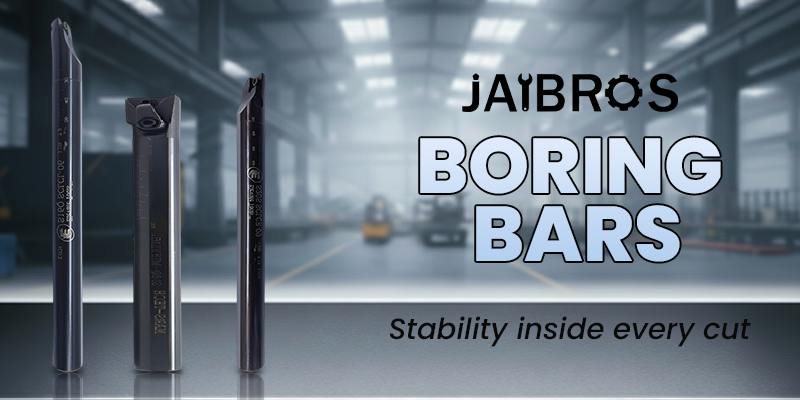
CNC lathes are widely used in modern manufacturing for producing highly accurate cylindrical parts. These machines perform a variety of operations such as turning, drilling, threading, and internal machining. One of the most important tools used in internal turning operations is the carbide boring bar. This tool allows machinists to enlarge and finish internal holes with high precision and smooth surface quality.
However, achieving accurate results in internal machining does not depend only on the tool itself. Proper setup techniques are equally important for maintaining machining stability and preventing problems such as vibration, tool wear, or poor surface finish. Internal machining is more challenging than external turning because the tool operates inside the workpiece where space is limited, and cutting conditions are more demanding.
Understanding Internal Turning on CNC Lathes
Internal turning, also known as boring, is the process of enlarging or finishing an existing hole inside a workpiece. The operation is usually performed after drilling to achieve higher dimensional accuracy and smoother internal surfaces.
To perform this task effectively, machinists use a specialised CNC tool designed for internal cutting operations. These tools must be rigid enough to resist cutting forces while operating inside the material.
A properly installed carbide boring bar helps maintain stability during machining and allows operators to achieve tight tolerances in internal dimensions.


Importance of Proper Tool Setup
The performance of any machining operation depends greatly on how well the tool is set up in the machine. Even high-quality tools can perform poorly if they are not installed correctly.
Proper setup helps reduce vibration, improve surface finish, and increase tool life. A well-positioned carbide boring bar ensures that cutting forces are distributed evenly and that the tool remains stable during the machining process.
Incorrect setup, on the other hand, can lead to tool deflection, poor surface quality, and inaccurate internal diameters.
Choosing the Correct Tool Size
Selecting the correct tool size is the first step in setting up a boring operation. The diameter of the tool should match the size of the bore while still maintaining adequate rigidity.
If the tool is too small for the hole, it may lack the stiffness required to resist cutting forces. This can lead to vibration and reduced machining accuracy.
Many workshops keep a carbide boring bar set that includes multiple tool sizes. This allows machinists to select the most suitable tool for different internal diameters and machining requirements.
Having access to multiple tool sizes improves flexibility and ensures better machining performance.
Maintaining Proper Tool Overhang
Tool overhang refers to the portion of the tool that extends beyond the tool holder. Excessive overhang reduces rigidity and increases the chances of vibration during machining.
To maintain stability, machinists should keep the tool overhang as short as possible while still reaching the required machining depth. A properly positioned carbide boring bar with minimal extension will perform more efficiently and produce smoother internal surfaces.
Shorter overhang improves tool rigidity and helps reduce the risk of chatter during internal turning operations.
Aligning the Tool with the Workpiece Centerline
Correct alignment is another critical factor in boring operations. The cutting edge of the tool should be positioned exactly on the centerline of the workpiece.
If the tool is set above or below the center line, the cutting forces become uneven. This can result in poor chip formation, reduced cutting efficiency, and increased tool wear.
A correctly aligned carbide boring bar ensures smooth cutting action and helps produce accurate internal diameters. Proper alignment also reduces stress on the cutting edge and improves tool life.
Controlling Vibration During Machining
Vibration, commonly known as chatter, is one of the biggest challenges in internal machining. Chatter can damage the workpiece surface and shorten the life of the cutting tool.
To minimize vibration, machinists should ensure that the workpiece is securely clamped and the tool holder is rigid. Machine condition also plays an important role in maintaining stability.
High-rigidity tools such as solid carbide boring bars are especially effective in reducing vibration because carbide material is significantly stiffer than many other tool materials.
Maintaining stable machining conditions allows operators to achieve better surface finishes and more consistent results.
Selecting the Right Cutting Parameters
Cutting speed, feed rate, and depth of cut all influence the performance of a machining operation. Incorrect cutting parameters can cause excessive heat, rapid tool wear, or poor surface finish.
Operators should follow recommended cutting parameters based on the workpiece material and the specifications of the carbide boring bar being used.
Balanced cutting conditions allow the tool to operate efficiently while maintaining stable machining performance. Adjusting feed and speed carefully helps maintain dimensional accuracy and extend the life of the cutting tool.
Managing Heat and Chip Removal
Internal machining generates significant heat because the cutting tool operates inside the workpiece. If heat is not controlled properly, it can damage the cutting edge and affect machining accuracy.
Using an effective coolant system helps control temperature and improve chip evacuation. Coolant also reduces friction between the tool and the workpiece.
Proper cooling conditions allow the carbide boring bar to maintain its cutting efficiency and produce consistent machining results. Efficient chip removal also prevents chips from accumulating inside the bore, which can interfere with the cutting process.
Evaluating Tool Cost and Performance
When selecting cutting tools, machinists often compare the carbide boring bar price offered by different suppliers. Price can vary depending on factors such as tool material, coating technology, and brand reputation.
Although carbide tools may have a higher initial cost, they provide excellent durability and a long service life. This reduces the need for frequent tool replacements and improves overall productivity.
Choosing high-quality tools ensures better machining performance and helps maintain consistent production results.
Conclusion
Internal turning operations require careful planning and proper setup to achieve accurate machining results. Because the cutting tool works inside the workpiece, stability and rigidity are extremely important for maintaining precision.
The carbide boring bar is widely used in CNC lathe operations because it offers excellent strength, durability, and vibration resistance. When combined with proper setup techniques such as correct tool size selection, minimal overhang, and accurate alignment, it allows machinists to produce high-quality internal surfaces.
Using high-rigidity tools like solid-carbide boring bars and maintaining optimal cutting conditions can significantly improve machining performance.
By following proper setup practices and investing in reliable tooling solutions, CNC operators can achieve efficient and precise internal machining results.
FAQs
What is a carbide boring bar used for in CNC lathes?
A carbide boring bar is used for internal turning operations to enlarge or finish holes with high precision and smooth surface finish.
Why are solid carbide boring bars preferred for internal machining?
They provide higher rigidity and vibration resistance, which improves machining accuracy and surface quality.
What factors influence carbide boring bar price?
The price depends on tool material, coating technology, size, brand, and overall durability.
Why do machinists use a carbide boring bar set?
A carbide boring bar set includes multiple tool sizes, allowing operators to select the most suitable tool for different machining applications.
5. How can vibration be reduced during boring operations?
Vibration can be reduced by minimizing tool overhang, ensuring proper tool alignment, and using rigid tools and stable workpiece clamping.
Author








The agricultural landscape of 2026 is witnessing a monumental shift. What was once a niche interest for organic hobbyists has officially entered the mainstream. Today, the biological seed treatment market represents a fundamental change in how the world produces food. Large-scale farmers are moving away from traditional chemical dependencies. Instead, they are integrating biological solutions into their row crop systems at an unprecedented rate. This evolution focuses on two main pillars: protecting the plant and enhancing its natural potential.
The Two Pillars of Biological Treatment
Strategic analysis of the 2026 market shows a clear division based on what the treatment actually does for the seed.
1. Seed Protection (The Defensive Shield)
Currently, Seed Protection dominates the industry with a massive 68.6% market share. This segment focuses on biocontrol ingredients. These biological agents act as a living shield for the seedling. They defend the plant against soil-borne pathogens and aggressive pests during its most vulnerable stage.
In 2026, the “biological-first” strategy has become the gold standard. Most Integrated Pest Management (IPM) programs now lead with biologicals. They only turn to synthetic chemicals as a last resort. This shift reduces the chemical load on our soil while providing robust protection that grows alongside the plant.

2. Seed Enhancement (The Growth Engine)
While protection is about defense, Seed Enhancement is about offense. This segment includes bio-stimulants and bio-fertilizers. It is currently the fastest-growing part of the market. Farmers use these treatments to improve germination rates and boost early-stage root vigor.
Specifically, microbials that assist with nitrogen fixation and phosphorus solubilization have become invaluable. In regions where the soil is nutrient-depleted, these biological “boosters” allow plants to access nutrients that were previously locked away. This leads to stronger crops and, ultimately, higher yields for the grower.
Breaking Down the Biological Types
The technology driving this market is diverse. To understand the 2026 landscape, we must look at the three primary categories of biological inputs.
The Power of Microbials (58% Share) Beneficial bacteria and fungi remain the undisputed kings of the market. Strains like Bacillus, Rhizobium, and Trichoderma are the primary drivers of success. These tiny organisms form symbiotic relationships with the plant’s roots. They don’t just sit on the surface; they become part of the plant’s ecosystem. Because of their proven track record in the field, microbials continue to receive the most investment and research.
The Rise of Botanicals (24% Share) Plant-derived extracts are gaining significant ground. These “botanicals” offer a natural way to deter pests without leaving synthetic residues behind. They are especially popular in the specialty crop sector and organic farming. Consumers today demand “clean label” produce, and botanicals help farmers meet those strict requirements while keeping their crops healthy.
Specialized Bio-Solutions (18% Share) The remaining portion of the market consists of bio-based polymers and enzymes. These technical components serve a vital role. They improve the performance of seed coatings and help the plant survive “abiotic stress.” This means the plant can better handle extreme weather, such as unexpected droughts or heatwaves, which are becoming more common in our changing climate.
Regional Dynamics: A Global Perspective
The 2026 outlook varies significantly by region. Each area faces unique regulatory hurdles and environmental challenges.
-
North America (43.5% Share): North America leads the world in biological adoption. This is due to the massive scale of commercial corn and soybean farming in the United States. Furthermore, strong regulatory support for sustainable inputs has turned the U.S. into a global innovation hub. American companies are currently pioneering “shelf-stable” formulations that allow living microbials to survive longer in storage.
-
Europe (27% Share): Europe is the “regulatory conscience” of the market. The European Union has implemented the world’s most aggressive chemical phase-out mandates. This has created an immediate vacuum that biological providers are rushing to fill. In Europe, using bio-pesticides isn’t just a choice; it is becoming a legal necessity for many growers.
-
Asia-Pacific (The Growth Leader): This region is expected to show the highest growth rate through 2031. China and India are leading a massive push for food security. They recognize that long-term productivity requires healthy soil. Consequently, there is a domestic surge in demand for organic produce and sustainable farming methods.
The Competitive Battlefield
The competitive landscape of 2026 is a mix of traditional agribusiness giants and agile biotech firms. These leaders are expanding their reach through massive acquisitions and the launch of “multi-strain” products.
Bayer AG currently holds approximately 18% of the market, followed closely by BASF SE at 15%. Other major players include Syngenta Group, Corteva Agriscience, and Novozymes A/S. Companies like UPL Limited, FMC Corporation, and Koppert B.V. are also securing significant territory. Even smaller, specialized firms like Valent BioSciences and Precision Laboratories are carving out high-value niches by focusing on specific microbial strengths.
The 2031 Strategic Forecast: Precision Biologicals
If we look ahead to 2031, the market is moving toward a concept called Precision Biologicals. This represents the ultimate marriage of biology and technology. We anticipate that biological treatments will soon integrate with digital soil mapping.
Imagine a tractor that knows exactly which microbes are missing from a specific patch of dirt. The system will apply a custom “microbial cocktail” tailored to the biological deficiencies of that exact plot of land. This level of precision will eliminate waste and maximize the effectiveness of every seed planted.
Additionally, two major technical breakthroughs will define the next decade. First, Advanced Encapsulation will extend the shelf-life of microbials, making them easier to ship and store. Second, the development of Climate-Resilient Inoculants will ensure that these biologicals can perform even in the face of extreme weather.
Conclusion: A Sustainable Future
The biological seed treatment market is no longer a “future” possibility—it is our current reality. By choosing biology over chemistry, the agricultural industry is taking a massive step toward long-term sustainability. These treatments protect our water, restore our soil, and ensure that we can feed a growing global population without destroying the planet.
As we move toward 2031, the combination of high-tech digital mapping and deep biological insights will make these treatments the premier choice for every high-efficiency farm on earth. The journey from niche to mainstream is complete, and the era of the biological seedling has officially begun.
Author


The global agricultural sector currently finds itself at a crossroads. As we move through the second quarter of 2026, the Potassium Sulfate Price Index reveals a world divided by divergent economic forces. Potassium sulfate ($K_{2}SO_{4}$), also known as Sulfate of Potash (SOP), remains the preferred fertilizer for high-value crops. However, the cost to procure this essential nutrient is far from uniform across the globe.
In March and early April 2026, the market showed a distinct “split” personality. While Western markets like Europe and North America faced sharp inflationary pressure, Asian and African markets enjoyed a rare period of relative stability. To understand why these regions are moving in opposite directions, we must look closely at production costs, seasonal demand, and the logistical hurdles of modern trade.
Regional Breakdown: Winners and Losers in the Pricing Game
1. Europe: The Epicenter of Inflation
Europe witnessed the most dramatic shift in the Potassium Sulfate Price Index this month. Prices surged by a staggering 11.9%, reaching a high of USD 0.66/kg. This jump did not happen in a vacuum. Higher input costs—specifically energy prices required for the Mannheim process—pushed manufacturers to raise their rates. Additionally, steady demand from the Mediterranean fruit and vegetable sectors kept supply tight. According to current forecasts, European prices will likely remain firm through the end of the spring planting season.
2. North America: Sustained Upward Momentum
Not far behind Europe, the North American market saw a 6.5% increase, with prices hitting USD 0.82/kg. This region currently holds the title for the highest price point globally. The driver here is a combination of strong domestic agricultural demand and rising inland transportation costs. Farmers in California and Florida, who rely heavily on SOP for citrus and nut crops, are feeling the pinch as production expenses continue to climb.

3. Northeast Asia: A Cooling Market
In a surprising turn, Northeast Asia recorded a 1.7% decline in prices, settling at USD 0.57/kg. This softening of the market is a direct result of improved local production output. As supply availability increased, the pressure on prices eased. This region currently offers the most competitive rates for buyers, though market analysts suggest this “dip” may be temporary as export activity picks up later in the year.
4. Africa and Southeast Asia: The Pillars of Stability
In these regions, the word of the month is “consistency.”
-
Africa: Prices held steady at USD 0.69/kg. Balanced supply levels and predictable import patterns have prevented the volatility seen in the West.
-
Southeast Asia: Prices remained unchanged at USD 0.65/kg. The region’s focus on rice and palm oil production provides a steady baseline for demand, allowing the price index to remain flat.
Defining the Commodity: Why $K_{2}SO_{4}$ Matters
To the uninitiated, potassium sulfate might seem like just another industrial chemical. However, in the world of high-stakes agriculture, it is indispensable. Unlike the more common Muriate of Potash (MOP), SOP does not contain chloride. Many high-value crops—such as tobacco, grapes, berries, and various nuts—are sensitive to chloride. Using a chloride-free fertilizer ensures higher yields and better fruit quality.
This “premium” status is exactly why Potassium Sulfate Prices are so closely watched. When prices rise, the cost of the berries in your grocery store or the wine in your cellar eventually follows. The price trend reflects not just the cost of dirt and minerals, but the cost of global food security and quality.
The Six Pillars Driving Price Fluctuations
Understanding the Potassium Sulfate price trend requires looking at six critical factors that dictate the market’s movement:
-
Raw Material Flow: The availability of MOP and sulfuric acid is the starting point. If these ingredients become scarce, the price of the final resin or powder inevitably spikes.
-
The Energy Equation: Producing SOP is energy-intensive. When global gas or electricity prices fluctuate, factory gates prices adjust almost instantly.
-
Agricultural Cycles: Demand is not constant. It peaks during regional planting seasons, creating temporary supply “crunches.”
-
Logistics and Freight: Moving heavy bags of fertilizer across oceans is expensive. Rising shipping rates in 2026 have added a hidden layer of cost to every kilogram sold.
-
Governmental Influence: Subsidies in certain developing nations can artificially lower prices, while environmental regulations in the West can increase production costs.
-
Climate and Weather: A late frost or a prolonged drought can shift a farmer’s fertilizer needs overnight, causing sudden ripples in the local price index.
The Strategic Path Forward for Businesses
For procurement managers and agricultural investors, navigating the 2026 market requires a proactive strategy. You cannot simply react to the Potassium Sulfate price today; you must anticipate where it will be in six months.
Data-Driven Procurement
Analyzing the Potassium Sulfate price chart over the last few years shows a clear pattern of seasonal peaks. Smart buyers are now securing contracts during the “off-season” to avoid the double-digit percentage hikes seen in Europe this March.
Diversified Sourcing
Given the price disparity between Northeast Asia ($0.57) and North America ($0.82), logistical flexibility is key. Companies that can pivot their supply chains to source from high-output, lower-cost regions will maintain a significant competitive advantage.
Future Outlook: What Lies Ahead?
The Potassium Sulfate future price remains cautiously optimistic. While short-term regional volatility is guaranteed, the long-term demand for high-quality food will support gradual price growth. As the global population nears new milestones, the pressure on arable land increases. This necessitates high-efficiency fertilizers that can squeeze more life out of every acre.
Furthermore, we are seeing a shift toward “green” SOP production. New technologies aim to reduce the carbon footprint of fertilizer manufacturing. While these sustainable practices may initially increase the Potassium Sulfate price index, they ensure the long-term viability of the industry in a world increasingly focused on ESG (Environmental, Social, and Governance) standards.
Final Verdict on the March 2026 Trend
In conclusion, the Potassium Sulfate market in March 2026 serves as a reminder of the fragility of global supply chains. The 11.9% increase in Europe and the 1.7% decrease in Asia prove that “global prices” are a myth—every market is local.
For the remainder of 2026, expect North America to remain the most expensive theater for SOP, while Asia continues to offer the most relief to buyers. By keeping a close eye on the Potassium Sulfate price history and staying informed on regional news, stakeholders can navigate these turbulent waters and ensure their crops—and their bottom lines—continue to grow.
Author



Choosing the right roofing material is an important decision for homeowners. A roof protects the house from the weather, improves the appearance of the building, and adds long-term value to the property. Many people today compare modern metal roofing with traditional concrete tiles when planning a residential roof.
When discussing metal roofing options, stone coated roof tiles are often considered because they combine strength, durability, and modern design. Both metal roof tiles and concrete tiles offer protection for houses, but they differ in installation cost, maintenance needs, durability, and overall value.
Understanding these differences helps homeowners choose a roofing solution that balances performance and budget. This article explains how metal roof tiles and concrete tiles compare, and which option is more cost-effective for residential buildings.
Why Choosing the Right Roof Matters
A roof is one of the most important parts of a house. It protects the building from rain, heat, wind, and environmental damage. A weak roofing system may lead to problems such as water leakage, structural damage, or frequent repairs.
Homeowners often face several challenges when selecting roofing materials:
- High installation expenses
- Ongoing maintenance costs
- Damage caused by weather conditions
- Heavy roofing materials that stress building structures
- Short lifespan of low-quality roofing
Selecting the right material can solve many of these issues by offering durability, safety, and long-term cost savings.
Understanding Metal Roof Tiles
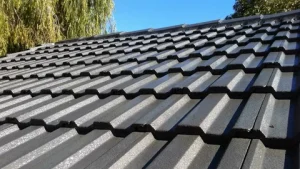
Metal roofing has become increasingly popular in modern residential construction. One widely used type is stone coated metal roof tiles, which combine steel strength with a protective stone layer.
The base structure is made from steel, which is then coated with protective layers and finished with natural stone granules. This design improves durability and provides an attractive roof appearance.
Many stone coated metal roofing manufacturers develop these roofing products to withstand harsh weather conditions while maintaining long service life.
Key Features of Metal Roof Tiles
- Steel core that provides structural strength
- Protective coatings that resist corrosion
- Natural stone surface for durability and appearance
- Lightweight construction suitable for residential structures
- Strong resistance to wind, rain, and heat
Because of these features, metal roof tiles have become a reliable option for modern housing projects.
Understanding Concrete Roof Tiles
Concrete tiles are widely used in traditional construction. These tiles are made from cement, sand, and water, which are moulded into specific shapes and hardened to create roofing units.
Concrete roofing materials are known for their solid structure and long history in building construction.
Key Features of Concrete Tiles
- Made from cement-based materials
- Heavy structure requiring strong roof framing
- Basic resistance to weather conditions
- Commonly used in traditional houses
Although concrete tiles provide reliable protection, their weight and maintenance needs may affect long-term cost efficiency.
Installation Cost Comparison
Initial installation cost is often the first factor homeowners consider when choosing roofing materials.
Concrete tiles are usually less expensive during the initial installation phase. The materials are widely available, and many builders are familiar with installing them.
However, the weight of concrete tiles may require additional structural reinforcement in the building. This can increase overall construction expenses.
Metal roofing systems, such as stone coated metal roof tiles, may have a slightly higher material cost initially. However, they are lightweight and easier to install, which can reduce labour and structural support costs.
When considering total project expenses, lightweight roofing systems may offer better value.
Structural Weight and Building Impact
The weight of roofing materials plays an important role in building safety and long-term structural stability.
Concrete tiles are significantly heavier than metal roof tiles. Because of this weight, buildings must have strong roof framing to support the load.
In older houses or lightweight construction designs, heavy roofing materials may place unnecessary pressure on the structure.
Metal roof tiles provide an advantage because they are lighter. This reduces stress on the building framework while still maintaining strong durability.
Lightweight roofing also improves installation efficiency and safety during construction.
Durability and Weather Resistance
Durability is essential for homeowners who want roofing materials that last for many years without frequent repairs.
Metal roofing systems are designed to handle various environmental conditions. The steel base layer provides strength, while protective coatings help prevent corrosion.
Many stone coated metal roofing suppliers provide products specifically designed to resist heavy rain, wind pressure, and extreme temperatures.
Concrete tiles are also durable, but they may develop cracks over time due to environmental stress or impact damage. In some cases, broken tiles may need replacement to maintain roof integrity.
Modern metal roofing technology offers strong durability with fewer risks of structural damage.
Maintenance Requirements
Maintenance costs can significantly affect the long-term value of a roofing system.
Concrete tiles may require periodic inspection and repairs. Cracks, moss growth, or shifting tiles can occur over time, especially in humid climates.
Repairing or replacing individual tiles can increase maintenance expenses.
Metal roofing systems usually require minimal maintenance. Protective coatings help prevent corrosion, and the stone surface reduces the risk of algae growth.
Because of these characteristics, metal roofing may reduce ongoing maintenance costs for homeowners.
Energy Efficiency Benefits
Energy efficiency is another important factor in modern residential construction.
Metal roof tiles can reflect heat from sunlight, helping maintain comfortable indoor temperatures. This may reduce cooling costs during hot weather.
Stone-coated roofing materials also help improve insulation performance by reducing heat absorption.
Concrete tiles provide moderate insulation but may absorb heat during prolonged exposure to sunlight.
Energy-efficient roofing materials can help homeowners reduce electricity usage over time.
Long-Term Cost Value
While installation cost is important, homeowners should also consider long-term value when choosing roofing materials.
Concrete tiles may appear affordable initially, but maintenance, repairs, and structural requirements may increase overall expenses.
Metal roofing systems provide durability, lightweight construction, and lower maintenance needs. These advantages can reduce long-term costs for homeowners.
Companies like Roofi India provide high-quality roofing materials at an affordable price while maintaining excellent product standards.
By maintaining direct contact with manufacturers, Roofi ensures reliable product supply and consistent quality for residential construction projects.
Why Many Homeowners Choose Metal Roofing
Modern homeowners increasingly prefer metal roofing systems because of several advantages.
These include:
- Lightweight design that reduces structural pressure
- Strong durability in different weather conditions
- Lower maintenance requirements
- Long lifespan compared with many traditional materials
- Attractive appearance that improves property value
These benefits make metal roofing a practical option for residential buildings.
How Roofi Supports Residential Roofing Solutions
Roofi is recognised as India’s leading trusted stone coated roofing tiles supplier, offering reliable roofing products designed specifically for residential buildings.
With over 10 years of experience in this industry, the company understands the roofing needs of modern homeowners. Their products are selected carefully to ensure durability, safety, and performance.
Roofi focuses on delivering quality products that meet construction standards while remaining accessible to customers. The company has successfully served 100+ happy customers, demonstrating strong trust and reliability.
By working closely with stone coated metal roofing manufacturers, Roofi ensures that homeowners receive dependable roofing materials designed for long-term performance.
The company specialises only in residential buildings, helping homeowners choose roofing solutions that protect their homes while providing long-term value.
Final Thoughts
Both metal roof tiles and concrete tiles protect residential buildings, but their cost-effectiveness depends on several factors.
Concrete tiles offer a traditional roofing option with moderate installation costs. However, their heavy structure and maintenance needs may increase long-term expenses.
Metal roofing systems, such as stone coated sheets, provide strong durability, lightweight construction, and lower maintenance requirements. These advantages make them a practical and cost-effective choice for modern homes.
For homeowners seeking long-lasting roofing solutions that balance performance and value, metal roof tiles offer a reliable option.
With experienced suppliers like Roofi supporting the process, homeowners can confidently invest in roofing materials that provide protection, durability, and long-term savings.
Author



Call Center Companies: BPO Services & Customer Support

Curtain & Cushion Design Ideas for Modern House Design

Skin Whitening in Islamabad: Natural Tips, and Skincare Routine

Biological Seed Treatment Market: Trends, Growth, and Future

Essentials Hoodie Care Tips to Make It Last Longer

Joshua Jamal Camo Shorts & Streetwear Collection

Ear Reshaping Without Surgery: Cost, Benefits & Results

Malaysia Export Synthetic Filament Tow: Trends and Market

Airtool: Application Platform for Modern Business Automation

HydraFacial Treatment: Skin Rejuvenation with Vortex Technology

Cybersecurity Consulting Company SequelNet Provides Critical IT Support Services to Medical Billing Firm, Medical Optimum

Team Communication Software Transforms Operations at Finance Innovate

Project Management Tool Transforms Long Island Business

How Alleviate Poverty Utilized IPPBX’s All-in-One Solution to Transform Lives in New York City

Breast Cancer: The Imperative Role of Mammograms in Screening and Early Detection

Unstoppable Collaboration: D.C.’s Citi Open and Silicon Valley Classic Unite to Propel Women’s Tennis to New Heights

Embracing Renewal: Sizdabedar Celebrations Unite Iranians in New York’s Eisenhower Park

The Benefits of Starting a Side Hustle for Financial Freedom

New Blood Donation Screening Questions What You Need to Know

Stylishly Timeless: The 5 Types of Sandals You Need in Your Closet
-

 Business3 years ago
Cybersecurity Consulting Company SequelNet Provides Critical IT Support Services to Medical Billing Firm, Medical Optimum
-
Business3 years ago
Team Communication Software Transforms Operations at Finance Innovate
-
Business3 years ago
Project Management Tool Transforms Long Island Business
-
Business3 years ago
How Alleviate Poverty Utilized IPPBX’s All-in-One Solution to Transform Lives in New York City
-
health3 years ago
Breast Cancer: The Imperative Role of Mammograms in Screening and Early Detection
-
Sports3 years ago
Unstoppable Collaboration: D.C.’s Citi Open and Silicon Valley Classic Unite to Propel Women’s Tennis to New Heights
-
Art /Entertainment3 years ago
Embracing Renewal: Sizdabedar Celebrations Unite Iranians in New York’s Eisenhower Park
-
Finance3 years ago
The Benefits of Starting a Side Hustle for Financial Freedom







