
Business
Business with QuickBooks App Integration for Seamless Accounting

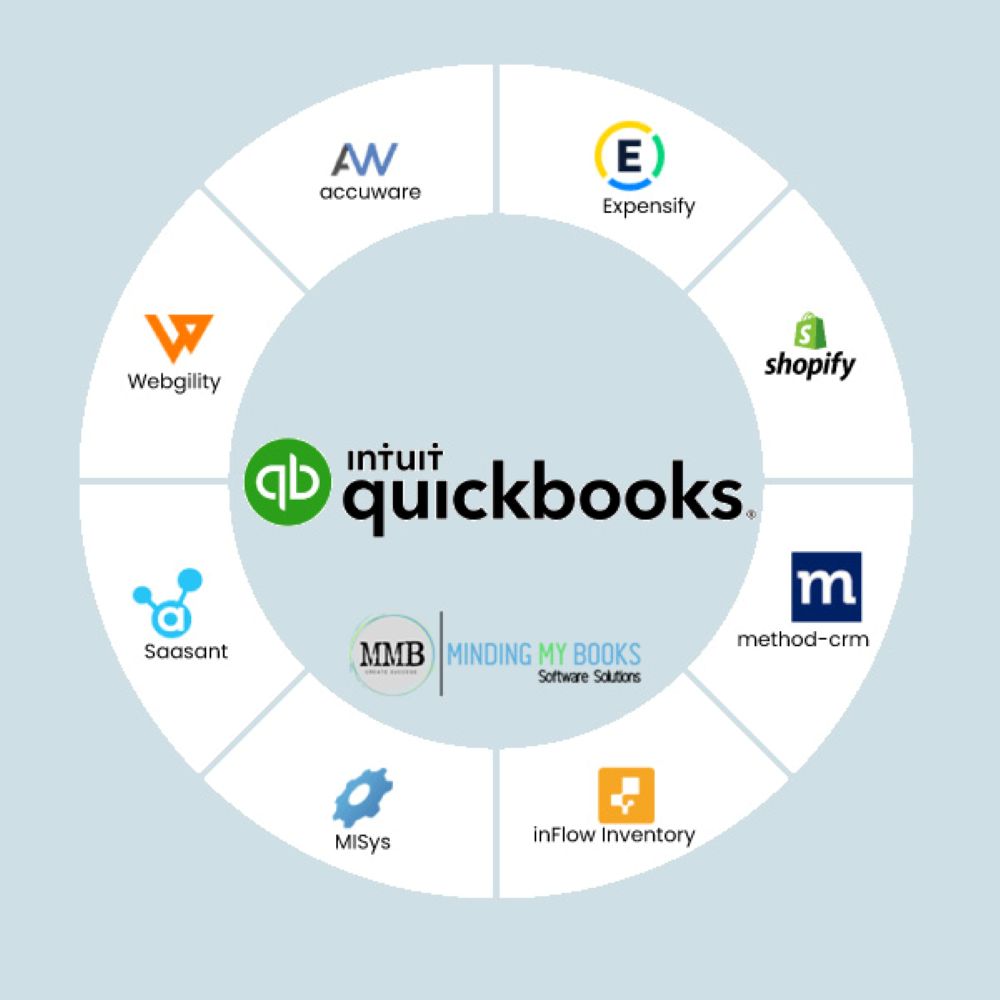
In the modern business world, efficiency is no longer just a goal; it is a requirement for survival. To keep a company running smoothly, financial data must be precise, organized, and refreshed in real-time. At Minding My Books, we have seen firsthand how much energy small businesses and accounting teams waste when they are forced to jump between disconnected software systems. Consequently, we champion QuickBooks App Integration as the ultimate solution for those looking to automate their data flow, eliminate the drudgery of manual entry, and bring true simplicity to the bookkeeping process.
What Exactly is QuickBooks App Integration?
At its heart, this technology serves as a digital bridge. It allows you to link the third-party applications you already use—such as your time-tracker, your payment processor, or your payroll system—directly to your QuickBooks account. Instead of forcing you to move data by hand, these integrations ensure that your information moves automatically into one centralized location.
By doing so, you move away from the era of messy spreadsheets and risky manual uploads. Integration ensures that every time a sale is made or an expense is recorded, your books update themselves. As a result, you gain a much clearer picture of your company’s financial health without spending hours in front of a computer screen.

The Massive Benefits of a Connected Ecosystem
Choosing apps that communicate fluently with QuickBooks does more than just save a few minutes here and there. It fundamentally changes how your business operates. When your digital tools talk to each other, several major advantages emerge:
- A Dramatic Drop in Data Entry: You no longer need to type the same invoice details into two different systems. Information syncs across platforms instantly.
- Superior Financial Clarity: Your dashboard becomes a window into the soul of your business. You can see detailed transaction data from your sales platforms without leaving your accounting software.
- End-to-End Task Automation: From tracking daily employee expenses to generating recurring invoices, the system handles the “busy work” on your behalf.
- A Focused Path to Growth: Ultimately, every hour you save on bookkeeping is an hour you can spend on sales, marketing, and scaling your brand.
For instance, an e-commerce brand can link its storefront, its shipping software, and its merchant account to QuickBooks. In turn, this creates a 24/7 automated workflow that requires zero human intervention to stay accurate.
Leading Third-Party Apps for Your Business
There is a vast library of tools ready to be integrated. Depending on your industry, certain apps can act as “superchargers” for your accounting. Here are a few notable examples:
- Avalara: This tool is a lifesaver for those struggling with tax laws. It automates sales tax calculations and ensures your filings are always compliant.
- Handifox: If you manage physical goods, this app provides robust inventory and sales tracking that stays perfectly in sync with your ledger.
- Method: CRM: This bridge allows your sales team and your accounting team to see the same customer data, leading to much smarter client management.
- MISys: Specifically designed for the manufacturing sector, this provides a full-scale ERP integration to track materials and production costs.
- Procore: For those in the construction industry, this app offers real-time financial syncing, making project management far less stressful.
By integrating these specialized tools, you move away from a fragmented business model and toward a unified, efficient ecosystem.
Why Professional Support is Essential
While many software companies claim their apps are “plug-and-play,” the reality of data migration is often more complex. This is exactly why so many businesses seek out the experts at Minding My Books. Integrating multiple platforms requires a deep understanding of both accounting principles and cloud technology.

Therefore, we don’t just “click a button.” We assess your specific business needs, configure the software to handle your unique tax requirements, and ensure that no data is lost during the transition. Furthermore, we provide comprehensive training for your staff. This ensures that once the system is live, your team has the confidence to maintain it effectively.
Boosting Productivity Through Seamless Flow
The most immediate impact of a successful integration is a surge in productivity. Specifically, it addresses three major bottlenecks:
First, it destroys repetitive labor. Manual data entry is the “silent killer” of productivity. By automating the flow of invoices and payments, you free your staff to engage in high-value analysis rather than low-value typing.
Second, it streamlines the management of your finances. When your payroll and sales figures flow directly into your ledger, the month-end reconciliation process becomes a breeze. As a result, tax season is no longer a source of anxiety, but a routine administrative task.
Third, it builds a foundation for automation. Beyond just moving data, these integrations allow you to automate triggers. For example, when a payment is received in your gateway, QuickBooks can automatically mark an invoice as paid and send a thank-you note to the customer.
The Strategic Value: Real-Time Insights and Scalability
In a volatile market, making decisions based on “last month’s data” is dangerous. Fortunately, QuickBooks app integration provides a real-time window into your cash flow and profitability. Consequently, you can spot a dip in sales or an increase in overhead the moment it happens, allowing for rapid course correction.
Moreover, this setup is built for growth. As your business expands, your operational needs will change. You might hire more employees or open a new sales channel. A connected system is inherently scalable; you can simply add a new module or app to your existing framework without having to rebuild your entire accounting department.
Accuracy, Compliance, and Peace of Mind
Human error is an inevitable part of manual bookkeeping. However, integrated systems significantly reduce this risk. Because the data is pulled directly from the source, the chance of a “typo” ruining your balance sheet is virtually eliminated. This level of accuracy is crucial for staying compliant with tax authorities and maintaining the trust of your investors or bank. Why Professional Integration Services are the Right Choice
Although it might be tempting to try a DIY approach, professional services offer a level of security that a manual setup cannot match. Our experts test every connection for security and data integrity. In short, we ensure that your integrations are an asset to your business, not a liability.
Take the Next Step Today
If you are tired of being buried in paperwork and want to regain control of your time, it is time to embrace the future of accounting. Minding My Books is ready to help you connect your favorite apps and build a financial system that works for you, not against you.
Contact us today to speak with a certified QuickBooks ProAdvisor. We will help you select the ideal integration path tailored specifically to your industry and your goals.
Author


The global agricultural sector currently finds itself at a crossroads. As we move through the second quarter of 2026, the Potassium Sulfate Price Index reveals a world divided by divergent economic forces. Potassium sulfate ($K_{2}SO_{4}$), also known as Sulfate of Potash (SOP), remains the preferred fertilizer for high-value crops. However, the cost to procure this essential nutrient is far from uniform across the globe.
In March and early April 2026, the market showed a distinct “split” personality. While Western markets like Europe and North America faced sharp inflationary pressure, Asian and African markets enjoyed a rare period of relative stability. To understand why these regions are moving in opposite directions, we must look closely at production costs, seasonal demand, and the logistical hurdles of modern trade.
Regional Breakdown: Winners and Losers in the Pricing Game
1. Europe: The Epicenter of Inflation
Europe witnessed the most dramatic shift in the Potassium Sulfate Price Index this month. Prices surged by a staggering 11.9%, reaching a high of USD 0.66/kg. This jump did not happen in a vacuum. Higher input costs—specifically energy prices required for the Mannheim process—pushed manufacturers to raise their rates. Additionally, steady demand from the Mediterranean fruit and vegetable sectors kept supply tight. According to current forecasts, European prices will likely remain firm through the end of the spring planting season.
2. North America: Sustained Upward Momentum
Not far behind Europe, the North American market saw a 6.5% increase, with prices hitting USD 0.82/kg. This region currently holds the title for the highest price point globally. The driver here is a combination of strong domestic agricultural demand and rising inland transportation costs. Farmers in California and Florida, who rely heavily on SOP for citrus and nut crops, are feeling the pinch as production expenses continue to climb.

3. Northeast Asia: A Cooling Market
In a surprising turn, Northeast Asia recorded a 1.7% decline in prices, settling at USD 0.57/kg. This softening of the market is a direct result of improved local production output. As supply availability increased, the pressure on prices eased. This region currently offers the most competitive rates for buyers, though market analysts suggest this “dip” may be temporary as export activity picks up later in the year.
4. Africa and Southeast Asia: The Pillars of Stability
In these regions, the word of the month is “consistency.”
-
Africa: Prices held steady at USD 0.69/kg. Balanced supply levels and predictable import patterns have prevented the volatility seen in the West.
-
Southeast Asia: Prices remained unchanged at USD 0.65/kg. The region’s focus on rice and palm oil production provides a steady baseline for demand, allowing the price index to remain flat.
Defining the Commodity: Why $K_{2}SO_{4}$ Matters
To the uninitiated, potassium sulfate might seem like just another industrial chemical. However, in the world of high-stakes agriculture, it is indispensable. Unlike the more common Muriate of Potash (MOP), SOP does not contain chloride. Many high-value crops—such as tobacco, grapes, berries, and various nuts—are sensitive to chloride. Using a chloride-free fertilizer ensures higher yields and better fruit quality.
This “premium” status is exactly why Potassium Sulfate Prices are so closely watched. When prices rise, the cost of the berries in your grocery store or the wine in your cellar eventually follows. The price trend reflects not just the cost of dirt and minerals, but the cost of global food security and quality.
The Six Pillars Driving Price Fluctuations
Understanding the Potassium Sulfate price trend requires looking at six critical factors that dictate the market’s movement:
-
Raw Material Flow: The availability of MOP and sulfuric acid is the starting point. If these ingredients become scarce, the price of the final resin or powder inevitably spikes.
-
The Energy Equation: Producing SOP is energy-intensive. When global gas or electricity prices fluctuate, factory gates prices adjust almost instantly.
-
Agricultural Cycles: Demand is not constant. It peaks during regional planting seasons, creating temporary supply “crunches.”
-
Logistics and Freight: Moving heavy bags of fertilizer across oceans is expensive. Rising shipping rates in 2026 have added a hidden layer of cost to every kilogram sold.
-
Governmental Influence: Subsidies in certain developing nations can artificially lower prices, while environmental regulations in the West can increase production costs.
-
Climate and Weather: A late frost or a prolonged drought can shift a farmer’s fertilizer needs overnight, causing sudden ripples in the local price index.
The Strategic Path Forward for Businesses
For procurement managers and agricultural investors, navigating the 2026 market requires a proactive strategy. You cannot simply react to the Potassium Sulfate price today; you must anticipate where it will be in six months.
Data-Driven Procurement
Analyzing the Potassium Sulfate price chart over the last few years shows a clear pattern of seasonal peaks. Smart buyers are now securing contracts during the “off-season” to avoid the double-digit percentage hikes seen in Europe this March.
Diversified Sourcing
Given the price disparity between Northeast Asia ($0.57) and North America ($0.82), logistical flexibility is key. Companies that can pivot their supply chains to source from high-output, lower-cost regions will maintain a significant competitive advantage.
Future Outlook: What Lies Ahead?
The Potassium Sulfate future price remains cautiously optimistic. While short-term regional volatility is guaranteed, the long-term demand for high-quality food will support gradual price growth. As the global population nears new milestones, the pressure on arable land increases. This necessitates high-efficiency fertilizers that can squeeze more life out of every acre.
Furthermore, we are seeing a shift toward “green” SOP production. New technologies aim to reduce the carbon footprint of fertilizer manufacturing. While these sustainable practices may initially increase the Potassium Sulfate price index, they ensure the long-term viability of the industry in a world increasingly focused on ESG (Environmental, Social, and Governance) standards.
Final Verdict on the March 2026 Trend
In conclusion, the Potassium Sulfate market in March 2026 serves as a reminder of the fragility of global supply chains. The 11.9% increase in Europe and the 1.7% decrease in Asia prove that “global prices” are a myth—every market is local.
For the remainder of 2026, expect North America to remain the most expensive theater for SOP, while Asia continues to offer the most relief to buyers. By keeping a close eye on the Potassium Sulfate price history and staying informed on regional news, stakeholders can navigate these turbulent waters and ensure their crops—and their bottom lines—continue to grow.
Author


Vietnam has firmly established itself as a powerhouse in the global coffee trade, consistently ranking as the world’s second-largest exporter. Over the past decade, the country has transformed its agricultural landscape, investing heavily in coffee cultivation, processing, and global trade networks. As a result, Vietnam coffee exports have reached unprecedented levels, reflecting both rising global demand and strong pricing trends.
In 2024, Vietnam recorded coffee export revenues of $5.62 billion, marking a significant milestone for the industry. Despite fluctuations in volume due to weather conditions and production challenges, export value surged due to higher global coffee prices. Moving into 2025, the sector continues to expand rapidly, reinforcing Vietnam’s critical role in the international coffee market.
Vietnam Coffee Exports: A Record-Breaking Journey
The growth of Vietnam coffee exports has been nothing short of remarkable. Between January and December 2024, the country exported approximately 1.26 million tons of coffee. While this represented a decline in volume compared to the previous year, the export value increased sharply by over 32%, driven by rising global prices.
In early 2025, the momentum continued. During the first quarter alone, export value exceeded $2.8 billion, reflecting a nearly 74% increase year-over-year. This surge highlights how vietnam coffee exports are increasingly driven by value rather than volume.
By mid-2025, exports had already reached $4.7 billion, and projections indicate that total export revenue could surpass $7 billion by the end of the year. These figures demonstrate the resilience and adaptability of vietnam coffee exporters in a rapidly changing global market.

Key Drivers Behind Export Growth
Several factors are contributing to the impressive performance of vietnam coffee exports:
1. Rising Global Coffee Prices
One of the most significant drivers has been the sharp increase in coffee prices. Average export prices rose above $5,600 per metric ton in 2025, compared to around $3,700 in previous years. This price surge has allowed exporters to generate higher revenues even with reduced volumes.
2. Strong Demand from International Markets
Demand from major markets such as the European Union and the United States has remained robust. Consumers are increasingly appreciating Vietnamese coffee for its strong flavor, affordability, and versatility.
3. Strategic Market Diversification
To mitigate risks such as tariffs and geopolitical uncertainties, vietnam coffee exporters are diversifying into emerging markets in Asia, including China, the Philippines, and South Korea.
Vietnam Coffee Production Landscape
The success of vietnam coffee exports is closely tied to the country’s strong agricultural foundation. Vietnam coffee production is concentrated in regions like Dak Lak, Lam Dong, and Gia Lai, where favorable climate and soil conditions support high yields.
Vietnam produces approximately 1.74 million tons of coffee annually, with Robusta beans accounting for around 95% of total output. This makes Vietnam the world’s leading producer of Robusta coffee.
However, the 2023–2024 season saw a decline in production due to drought conditions, reducing output by nearly 20%. Fortunately, improved weather patterns in early 2025 have supported crop recovery, and production is expected to increase significantly in the 2025–2026 season.
Top Export Markets for Vietnamese Coffee
The global reach of vietnam coffee exports continues to expand, with key markets driving demand:
- Germany remains the largest importer, accounting for nearly 15% of exports.
- United States follows closely, showing strong growth in both volume and value.
- Italy, Spain, and Belgium are major European buyers.
- Japan and South Korea represent important Asian markets.
The European Union collectively accounts for a significant share of total exports, importing hundreds of thousands of tons annually. At the same time, Asian markets are emerging as high-value destinations, offering premium pricing opportunities.
Leading Vietnam Coffee Exporters
The success of vietnam coffee exporters is driven by a strong network of companies that have built global reputations for quality and reliability. Some of the leading players include:
- Intimex Group
- Vinh Hiep Co., Ltd
- Louis Dreyfus Vietnam
- Nestlé Vietnam
- Olam Vietnam
- Simexco Daklak
These companies play a crucial role in expanding vietnam coffee exports, ensuring consistent supply to international markets while maintaining quality standards.
Historical Growth of Vietnam Coffee Exports
Over the past decade, vietnam exports of coffee have shown steady growth, with occasional fluctuations due to market and environmental factors:
- 2014: $3.31 billion
- 2018: $2.89 billion
- 2020: $1.97 billion
- 2023: $3.18 billion
- 2024: $5.62 billion
This upward trajectory highlights the resilience of the industry and the increasing importance of coffee in vietnam exports.
Pricing Trends and Market Dynamics
The pricing environment has significantly influenced vietnam coffee exports in recent years. Export prices have surged due to global supply shortages and increased demand.
At the domestic level, farmgate prices have reached record highs, with Robusta beans selling for over $5 per kilogram. This has led farmers to hold back stock in anticipation of further price increases, creating supply constraints in the short term.
Additionally, there is a growing shift toward value-added products such as roasted and soluble coffee. These products now account for an increasing share of total exports, enhancing profitability for vietnam coffee exporters.
Challenges Facing the Industry
Despite strong growth, the industry faces several challenges:
1. Tariffs and Trade Barriers
Recent tariffs imposed by the United States on Vietnamese coffee have created uncertainty for exporters. This has prompted a shift toward alternative markets in Asia and Europe.
2. Climate Change
Weather variability continues to impact vietnam coffee production, affecting both yield and quality.
3. Supply Chain Constraints
Delays in shipments and logistical challenges can disrupt export flows, particularly during peak seasons.
Role of Vietnam Customs Data in Trade Insights
Access to accurate vietnam customs data is essential for understanding trade trends and making informed business decisions. This data provides valuable insights into export volumes, pricing, and market demand.
Businesses can leverage vietnam customs data to identify emerging opportunities, track competitors, and optimize their supply chains. It also helps stakeholders analyze the performance of vietnam coffee exports across different markets.
Future Outlook for Vietnam Coffee Industry
The future of vietnam coffee exports looks highly promising. With projected export values reaching $7 billion in 2025, the industry is poised for continued growth.
Key trends shaping the future include:
- Expansion into high-value markets
- Increased focus on sustainable farming practices
- Growth in processed coffee exports
- Adoption of advanced technologies in production and logistics
As global demand for coffee continues to rise, vietnam coffee exporters are well-positioned to capitalize on new opportunities.
Key Takeaways
- Vietnam coffee exports are experiencing strong growth driven by high prices and global demand.
- The country remains the world’s leading producer of Robusta coffee.
- Major markets include the EU, the US, and emerging Asian economies.
- Vietnam coffee exporters are focusing on diversification and value-added products.
- Insights from vietnam customs data play a crucial role in strategic decision-making.
Conclusion
Vietnam’s coffee industry has evolved into a global leader, supported by strong production capabilities and expanding export networks. Despite challenges such as climate change and trade barriers, the country continues to demonstrate resilience and adaptability.
With rising demand, premium pricing, and strategic market expansion, vietnam coffee exports are set to achieve new milestones in the coming years. Backed by reliable vietnam coffee production and data-driven insights from vietnam customs data, the industry is well-equipped to maintain its upward trajectory.
As the global coffee market continues to evolve, Vietnam remains at the forefront—delivering quality, consistency, and value to coffee lovers worldwide.
Author




Author



Potassium Sulfate Prices Forecast 2026: Trends & Outlook

Vietnam Coffee Exports 2025: Key Markets & Industry Insights

Native App Development Trends: AI, IoT, Cloud & Future Insights

Metal Roof Tiles vs Concrete Tiles: Cost & Roofing Choice

Custom Packaging Boxes USA – Elevate Your Brand with Artsy Packaging

Warehouse Management System for Real-Time Control

Ammonia Price Forecast 2026 Signals Key Global Trends

Shilajit Resin Brands in India (2026): Top 7 Authentic Options

Drop Tester: Features, Benefits & Best Quality Testing Solutions

Quick Easy Personal Loan Without PAN Card: Options & Tips

Cybersecurity Consulting Company SequelNet Provides Critical IT Support Services to Medical Billing Firm, Medical Optimum

Team Communication Software Transforms Operations at Finance Innovate

Project Management Tool Transforms Long Island Business

How Alleviate Poverty Utilized IPPBX’s All-in-One Solution to Transform Lives in New York City

Breast Cancer: The Imperative Role of Mammograms in Screening and Early Detection

Unstoppable Collaboration: D.C.’s Citi Open and Silicon Valley Classic Unite to Propel Women’s Tennis to New Heights

Embracing Renewal: Sizdabedar Celebrations Unite Iranians in New York’s Eisenhower Park

The Benefits of Starting a Side Hustle for Financial Freedom

New Blood Donation Screening Questions What You Need to Know

Stylishly Timeless: The 5 Types of Sandals You Need in Your Closet
-

 Business3 years ago
Cybersecurity Consulting Company SequelNet Provides Critical IT Support Services to Medical Billing Firm, Medical Optimum
-
Business3 years ago
Team Communication Software Transforms Operations at Finance Innovate
-
Business3 years ago
Project Management Tool Transforms Long Island Business
-
Business3 years ago
How Alleviate Poverty Utilized IPPBX’s All-in-One Solution to Transform Lives in New York City
-
health3 years ago
Breast Cancer: The Imperative Role of Mammograms in Screening and Early Detection
-
Sports3 years ago
Unstoppable Collaboration: D.C.’s Citi Open and Silicon Valley Classic Unite to Propel Women’s Tennis to New Heights
-
Art /Entertainment3 years ago
Embracing Renewal: Sizdabedar Celebrations Unite Iranians in New York’s Eisenhower Park
-
Finance3 years ago
The Benefits of Starting a Side Hustle for Financial Freedom







