
Development
Biological Seed Treatment Market: Trends, Growth, and Future


The agricultural landscape of 2026 is witnessing a monumental shift. What was once a niche interest for organic hobbyists has officially entered the mainstream. Today, the biological seed treatment market represents a fundamental change in how the world produces food. Large-scale farmers are moving away from traditional chemical dependencies. Instead, they are integrating biological solutions into their row crop systems at an unprecedented rate. This evolution focuses on two main pillars: protecting the plant and enhancing its natural potential.
The Two Pillars of Biological Treatment
Strategic analysis of the 2026 market shows a clear division based on what the treatment actually does for the seed.
1. Seed Protection (The Defensive Shield)
Currently, Seed Protection dominates the industry with a massive 68.6% market share. This segment focuses on biocontrol ingredients. These biological agents act as a living shield for the seedling. They defend the plant against soil-borne pathogens and aggressive pests during its most vulnerable stage.
In 2026, the “biological-first” strategy has become the gold standard. Most Integrated Pest Management (IPM) programs now lead with biologicals. They only turn to synthetic chemicals as a last resort. This shift reduces the chemical load on our soil while providing robust protection that grows alongside the plant.

2. Seed Enhancement (The Growth Engine)
While protection is about defense, Seed Enhancement is about offense. This segment includes bio-stimulants and bio-fertilizers. It is currently the fastest-growing part of the market. Farmers use these treatments to improve germination rates and boost early-stage root vigor.

Specifically, microbials that assist with nitrogen fixation and phosphorus solubilization have become invaluable. In regions where the soil is nutrient-depleted, these biological “boosters” allow plants to access nutrients that were previously locked away. This leads to stronger crops and, ultimately, higher yields for the grower.
Breaking Down the Biological Types
The technology driving this market is diverse. To understand the 2026 landscape, we must look at the three primary categories of biological inputs.
The Power of Microbials (58% Share) Beneficial bacteria and fungi remain the undisputed kings of the market. Strains like Bacillus, Rhizobium, and Trichoderma are the primary drivers of success. These tiny organisms form symbiotic relationships with the plant’s roots. They don’t just sit on the surface; they become part of the plant’s ecosystem. Because of their proven track record in the field, microbials continue to receive the most investment and research.
The Rise of Botanicals (24% Share) Plant-derived extracts are gaining significant ground. These “botanicals” offer a natural way to deter pests without leaving synthetic residues behind. They are especially popular in the specialty crop sector and organic farming. Consumers today demand “clean label” produce, and botanicals help farmers meet those strict requirements while keeping their crops healthy.
Specialized Bio-Solutions (18% Share) The remaining portion of the market consists of bio-based polymers and enzymes. These technical components serve a vital role. They improve the performance of seed coatings and help the plant survive “abiotic stress.” This means the plant can better handle extreme weather, such as unexpected droughts or heatwaves, which are becoming more common in our changing climate.
Regional Dynamics: A Global Perspective
The 2026 outlook varies significantly by region. Each area faces unique regulatory hurdles and environmental challenges.
-
North America (43.5% Share): North America leads the world in biological adoption. This is due to the massive scale of commercial corn and soybean farming in the United States. Furthermore, strong regulatory support for sustainable inputs has turned the U.S. into a global innovation hub. American companies are currently pioneering “shelf-stable” formulations that allow living microbials to survive longer in storage.
-
Europe (27% Share): Europe is the “regulatory conscience” of the market. The European Union has implemented the world’s most aggressive chemical phase-out mandates. This has created an immediate vacuum that biological providers are rushing to fill. In Europe, using bio-pesticides isn’t just a choice; it is becoming a legal necessity for many growers.
-
Asia-Pacific (The Growth Leader): This region is expected to show the highest growth rate through 2031. China and India are leading a massive push for food security. They recognize that long-term productivity requires healthy soil. Consequently, there is a domestic surge in demand for organic produce and sustainable farming methods.
The Competitive Battlefield
The competitive landscape of 2026 is a mix of traditional agribusiness giants and agile biotech firms. These leaders are expanding their reach through massive acquisitions and the launch of “multi-strain” products.
Bayer AG currently holds approximately 18% of the market, followed closely by BASF SE at 15%. Other major players include Syngenta Group, Corteva Agriscience, and Novozymes A/S. Companies like UPL Limited, FMC Corporation, and Koppert B.V. are also securing significant territory. Even smaller, specialized firms like Valent BioSciences and Precision Laboratories are carving out high-value niches by focusing on specific microbial strengths.
The 2031 Strategic Forecast: Precision Biologicals
If we look ahead to 2031, the market is moving toward a concept called Precision Biologicals. This represents the ultimate marriage of biology and technology. We anticipate that biological treatments will soon integrate with digital soil mapping.
Imagine a tractor that knows exactly which microbes are missing from a specific patch of dirt. The system will apply a custom “microbial cocktail” tailored to the biological deficiencies of that exact plot of land. This level of precision will eliminate waste and maximize the effectiveness of every seed planted.
Additionally, two major technical breakthroughs will define the next decade. First, Advanced Encapsulation will extend the shelf-life of microbials, making them easier to ship and store. Second, the development of Climate-Resilient Inoculants will ensure that these biologicals can perform even in the face of extreme weather.
Conclusion: A Sustainable Future
The biological seed treatment market is no longer a “future” possibility—it is our current reality. By choosing biology over chemistry, the agricultural industry is taking a massive step toward long-term sustainability. These treatments protect our water, restore our soil, and ensure that we can feed a growing global population without destroying the planet.
As we move toward 2031, the combination of high-tech digital mapping and deep biological insights will make these treatments the premier choice for every high-efficiency farm on earth. The journey from niche to mainstream is complete, and the era of the biological seedling has officially begun.
Author


Talent Development Services play a crucial role in helping organizations build a skilled, adaptable, and future-ready workforce. By focusing on continuous learning, leadership training, and employee growth, these services enable businesses to stay competitive in an ever-evolving market. Specifically, effective Talent Development Services include personalized training programs, mentorship opportunities, and performance coaching that align employee goals with organizational objectives. Consequently, companies that invest in these services not only improve employee engagement and retention but also foster innovation and productivity. In today’s dynamic work environment, leveraging Talent Development Services is no longer optional; rather, it is a strategic necessity for sustainable success.
Beyond Traditional Training
Furthermore, Talent Development Services do much more than just provide usual training. Instead, they help create a culture within a company where people constantly strive to improve. To achieve this, these services identify skill gaps, help high-performing employees excel further, and prepare teams for both current and future challenges. By utilizing tools such as workshops, online learning, leadership programs, and feedback systems, Talent Development Services empower employees to take charge of their own professional growth.
Aligning Skills with Strategy
Moreover, one of the key benefits of Talent Development Services is their ability to ensure that the workforce possesses the specific skills needed to meet company goals. For instance, companies can design tailored plans to help employees acquire necessary knowledge, whether they are focusing on technical proficiency, “soft” interpersonal skills, or leadership development. As a result, this proactive approach ensures that employees are not only competent in their roles but also feel happy and motivated. Ultimately, Talent Development Services make this possible by providing the framework companies need to teach their employees how to succeed.

Why better skills mean faster business growth today
When their staff aren’t hesitant to embrace the most cutting-edge digital technologies available, successful businesses move at a breakneck pace. Once your employees have access to specialized Talent Development Services, they will no longer be shackled by outmoded practices and will instead act as fearless trailblazers. Because professional eyes will be keeping a check on your work to make sure it’s solid rather than shaky, this foresight will protect your reputation for a long time. Every move your team makes is supported by concrete, honest proof of improved outcomes in every sales season and project launch, giving you a powerful feeling of professional agency.
Reaching top levels of excellence across the globe
You need to surround yourself with capable coaches and mentors who can help you achieve your vision and the objectives set forth by the boardroom mission. Discovering assistance that aligns with your dedication to perfection and absolute truth will allow you to surpass technical obstacles and achieve greater heights. Hire Talent Development Services firm in India is a regular and trustworthy way for astute owners to have access to top-notch talent at an affordable price. Using world-class talent from all around the globe makes producing amazing outcomes much simpler.
How experts take the heavy building weight for you
Stop squandering time on basic coordination mistakes that damage reputations quickly if your firm updates its everyday workplace procedures. If you want to escape the high-volume administrative clamor of coordinating your own manual teaching practices, hire talent development services from India is a great option. Experts oversee lesson and file coordination, while technology handles the monthly data build for your staff and internal board members. A mundane office job becomes an exhilarating adventure where everyone feels like they are contributing to a greater, highly accomplished goal with this change.
Turning your budget into a secret weapon for victory
Learning becomes much more than simply another tedious administrative duty in the middle of a hectic week when you make it your main objective. If you want your money’s worth, invest in Talent Development Services. Your employees will know how to attract customers and make a sale.
Because technology is enabling the launch of every project in a wide variety of nations, the board may finally play the role of explorer, and the brave will achieve success. To finish your roadmap and establish your reputation in a fast-paced industry where rivals never wait for you to catch up, consistency is key.
Making the final choice for durable success
To succeed in a competitive industry, you need to take calculated risks and rely on the world’s top assistants to help you achieve your goals. Discovering experts that really understand your spirit and purpose allows you to complete your development strategies and see your numbers increase. Choosing the best tools from the web’s map of technological alternatives is essential for finishing the long marathon to success.
Now is the time to make a final decision and include Talent Development Services in your long-term plan for success. You should select a professional group and Hire Talent Development Services company from India immediately if you are prepared to alter your everyday outcomes and lead with pride. Hire Talent Development Services agency is a certain way to keep your business afloat and maintain your position as industry leader for years to come.
Author




Author


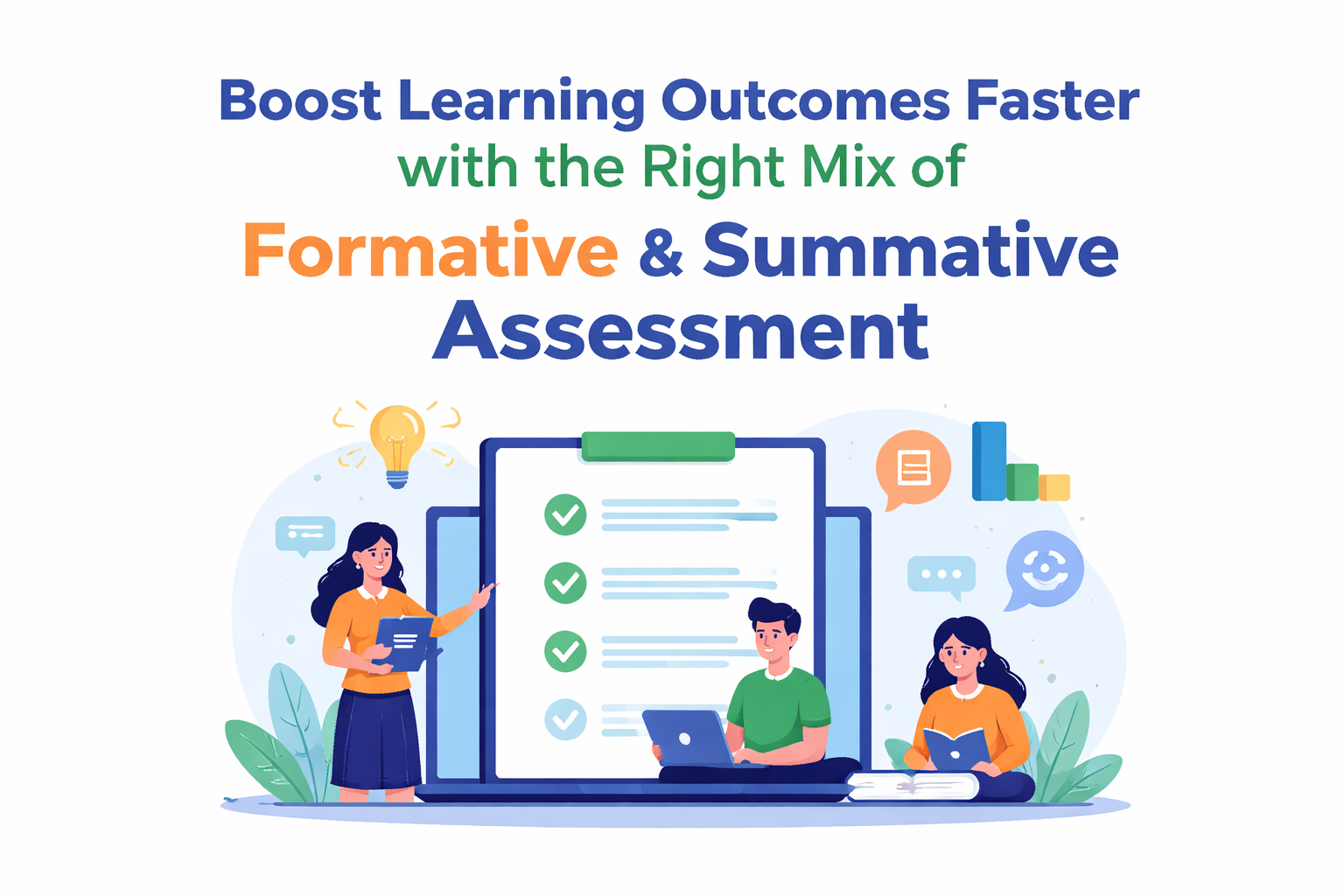
In today’s evolving education landscape, improving Learning Outcomes is a top priority for educators, institutions, and training organizations. With the rise of digital learning and advanced evaluation tools, simply testing students at the end of a course is no longer enough. Instead, a balanced approach using Formative and Summative Assessment is essential to ensure continuous improvement and measurable success.
By combining ongoing feedback with final evaluations, educators can create a powerful system that not only measures performance but also enhances learning at every stage. Let’s explore how the right mix of these assessment strategies can accelerate learning outcomes and build a more effective education framework.
Understanding Formative and Summative Assessment
Before diving into strategies, it’s important to understand the difference between the two:
Formative Assessment:
Formative assessment is an ongoing process that takes place during the learning journey. It includes quizzes, discussions, assignments, and feedback sessions that help identify learning gaps early.
Key benefits:
- Provides real-time feedback
- Helps students improve continuously
- Encourages active participation
- Supports personalized learning paths
Summative Assessment:
Summative assessment evaluates student performance at the end of a course or module. Examples include final exams, projects, and standardized tests.
Key benefits:
- Measures overall achievement
- Determines competency levels
- Helps in grading and certification
- Evaluates curriculum effectiveness
Both play distinct yet complementary roles in enhancing learning outcomes.

Why a Balanced Approach Matters
Relying only on summative assessments often leads to a “learn-and-forget” cycle, where students focus on passing exams rather than understanding concepts. On the other hand, using only formative assessments may lack structure in measuring final performance.
A balanced mix ensures:
- Continuous learning improvement
- Better retention of knowledge
- Accurate performance evaluation
- Increased student engagement
When integrated effectively, Formative and Summative Assessment create a feedback-driven learning ecosystem.
The Role of Cognitive Learning Theory
The concept of Cognitive Learning Theory emphasizes how learners process, store, and apply information. According to this theory, learning is most effective when students actively engage with content and receive timely feedback.
Formative assessments align perfectly with this theory by:
- Reinforcing concepts through repetition and feedback
- Encouraging critical thinking and problem-solving
- Helping learners connect new knowledge with existing understanding
Summative assessments, meanwhile, validate whether the knowledge has been successfully retained and applied.
By aligning assessments with Cognitive Learning Theory, educators can significantly enhance learning outcomes and ensure deeper comprehension.
Leveraging Technology with Online Exam Management Systems
Modern education is increasingly powered by technology, and tools like an Online Exam Management System play a crucial role in implementing effective assessments.
How it helps:
- Automates test creation and evaluation
- Provides instant feedback for formative assessments
- Tracks student progress over time
- Generates detailed performance analytics
With such systems, educators can easily balance formative and summative assessments while maintaining consistency and accuracy. These platforms also make it easier to scale assessments across institutions and remote learning environments.
Joining Assessments with Choice Based Credit System
The Choice Based Credit System has transformed how education is structured by offering flexibility and a student-centric approach. It allows learners to choose courses based on their interests and pace their learning accordingly.
In this system, the role of assessments becomes even more critical.
Integration strategies:
- Use formative assessments to guide students in elective subjects
- Apply summative assessments to measure course completion and credit allocation
- Provide continuous feedback to help students make informed academic choices
By joining Formative and Summative Assessment with the Choice Based Credit System, institutions can ensure both flexibility and accountability in education.
Strategies to Combine Formative and Summative Assessment Effectively
To truly boost learning outcomes, educators need a structured approach. Here are some proven strategies:
1. Start with Clear Learning Objectives:
Define what students should achieve at the end of the course. Align both formative and summative assessments with these goals.
2. Use Frequent Low-Stakes Assessments:
Incorporate quizzes, polls, and short assignments regularly. These formative tools help identify gaps without putting pressure on students.
3. Provide Actionable Feedback:
Feedback should be timely, specific, and constructive. This helps students improve before final evaluations.
4. Design Meaningful Summative Assessments:
Ensure final exams or projects test practical understanding, not just memorization.
5. Leverage Data and Analytics:
Use insights from your Online Exam Management System to track performance trends and adjust teaching strategies.
6. Encourage Self-Assessment:
Allow students to evaluate their own progress. This builds responsibility and enhances learning engagement.
Benefits of the Right Assessment Mix
When implemented correctly, the combination of formative and summative methods delivers significant advantages:
- Improved Learning Outcomes: Continuous feedback ensures steady progress
- Higher Student Engagement: Interactive assessments keep learners involved
- Better Knowledge Retention: Reinforcement through formative assessments
- Accurate Performance Measurement: Summative assessments validate learning
- Enhanced Teaching Effectiveness: Data-driven insights help refine strategies
This balanced approach not only benefits students but also empowers educators to deliver high-quality education.
Future of Assessments in Education
As education continues to evolve, assessments are becoming more dynamic, personalized, and technology-driven. The integration of AI, adaptive testing, and advanced analytics will further enhance how Formative and Summative Assessment are conducted.
Institutions that embrace this shift—while aligning with frameworks like Cognitive Learning Theory and the Choice Based Credit System—will be better positioned to deliver impactful learning experiences.
Conclusion
Improving learning outcomes requires more than just traditional testing methods. By combining the strengths of Formative and Summative Assessment, educators can create a continuous learning cycle that supports growth, engagement, and success.
With the support of modern tools like an Online Exam Management System and alignment with educational frameworks such as Cognitive Learning Theory and the Choice Based Credit System, institutions can transform their assessment strategies and achieve faster, more meaningful results.
Author



Talent Development Services: Workforce Skills & Business Growth

Best Mobile App Development Company in 2026: How to Choose

BTEC Assignment Help for Better Grades & Academic Success

SIL Barcelona 2026: Global Logistics & Supply Chain Event Guide

Unreal vs Unity Engine 2026: Which One Should You Choose?

Modern Clothes Nuns Wear: Comfort, Modesty, and Practicality

Barbas Hats: Bold, Stylish Hats Designed to Stand Out

BIM & Prefabrication for GCs: Faster, Cleaner Construction

FragmentClothing: Complete Review of the Brand

Affordable Dermal Fillers in Islamabad: Natural Results

Cybersecurity Consulting Company SequelNet Provides Critical IT Support Services to Medical Billing Firm, Medical Optimum

Team Communication Software Transforms Operations at Finance Innovate

Project Management Tool Transforms Long Island Business

How Alleviate Poverty Utilized IPPBX’s All-in-One Solution to Transform Lives in New York City

Breast Cancer: The Imperative Role of Mammograms in Screening and Early Detection

Unstoppable Collaboration: D.C.’s Citi Open and Silicon Valley Classic Unite to Propel Women’s Tennis to New Heights

Embracing Renewal: Sizdabedar Celebrations Unite Iranians in New York’s Eisenhower Park

The Benefits of Starting a Side Hustle for Financial Freedom

New Blood Donation Screening Questions What You Need to Know

Stylishly Timeless: The 5 Types of Sandals You Need in Your Closet
-

 Business3 years ago
Cybersecurity Consulting Company SequelNet Provides Critical IT Support Services to Medical Billing Firm, Medical Optimum
-
Business3 years ago
Team Communication Software Transforms Operations at Finance Innovate
-
Business3 years ago
Project Management Tool Transforms Long Island Business
-
Business3 years ago
How Alleviate Poverty Utilized IPPBX’s All-in-One Solution to Transform Lives in New York City
-
health3 years ago
Breast Cancer: The Imperative Role of Mammograms in Screening and Early Detection
-
Sports3 years ago
Unstoppable Collaboration: D.C.’s Citi Open and Silicon Valley Classic Unite to Propel Women’s Tennis to New Heights
-
Art /Entertainment3 years ago
Embracing Renewal: Sizdabedar Celebrations Unite Iranians in New York’s Eisenhower Park
-
Finance3 years ago
The Benefits of Starting a Side Hustle for Financial Freedom







