
Technology
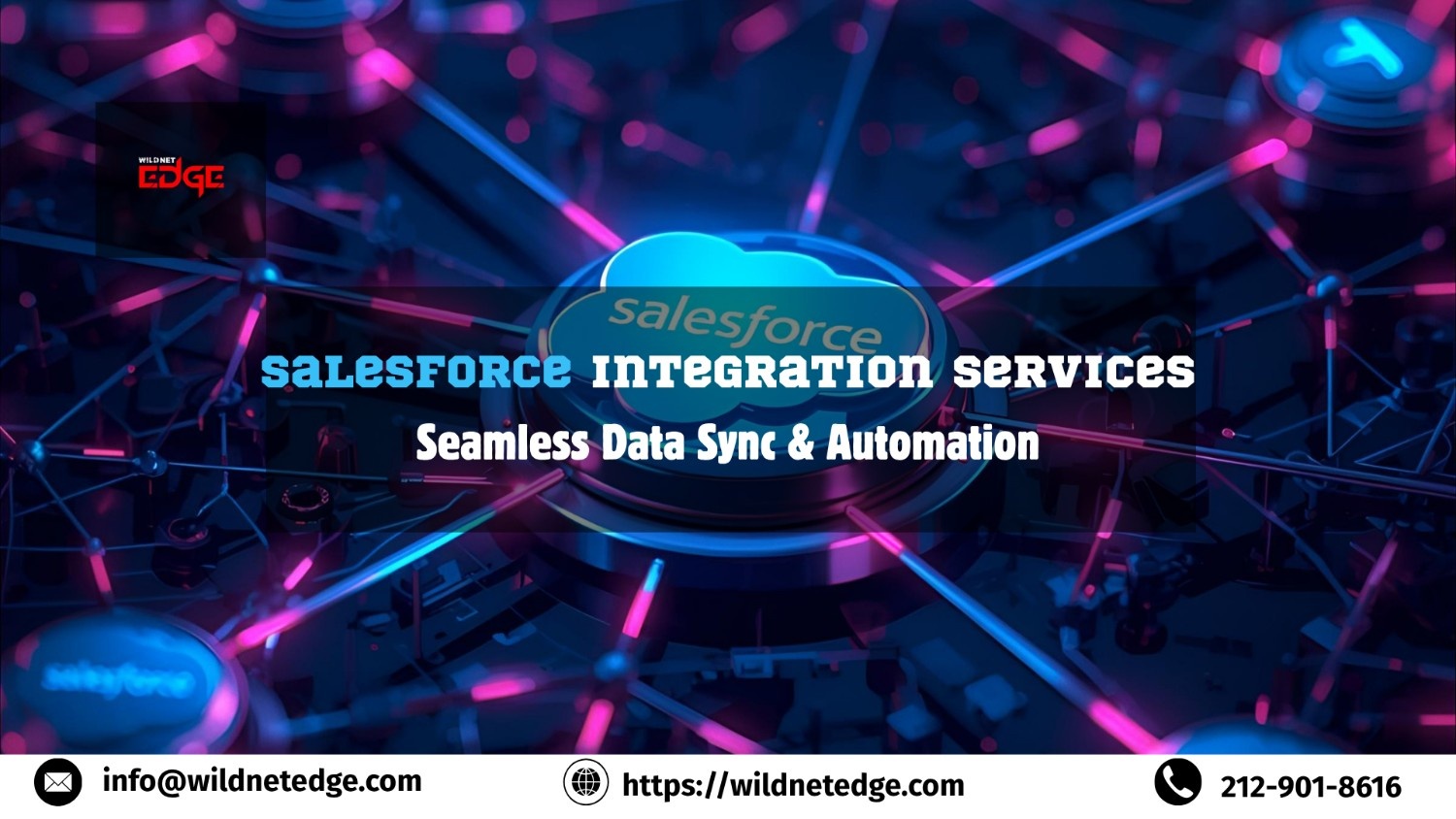
How to Transform Salesforce into Your Ultimate Business Nerve Center

By

Reviewed
By Zoe Carlos
Introduction
Salesforce is the world’s leading Customer Relationship Management (CRM) platform, offering incredible power on its own. However, in today’s complex enterprise environment, your data lives everywhere: in your ERP, your marketing automation tools, your eCommerce platform, and your BI systems.
When Salesforce operates in a silo, its true value is capped. Data is fragmented, processes are manual, and customer visibility is incomplete.
Salesforce Integration is the key to unlocking its full potential. By connecting Salesforce with your entire tech stack, you ensure data flows seamlessly, processes run intelligently, and your teams collaborate without silos, turning your CRM into the genuine nerve center of your business operations.
Rise of Salesforce as a Business Nerve Center
Salesforce has rapidly become one of the most important tools for businesses around the world. Initially designed as a customer relationship management (CRM) platform, it has grown into an all-in-one solution that helps companies manage sales, marketing, customer service, and more.
As businesses face increasing demands to streamline operations, boost productivity, and offer better customer experiences, Salesforce has risen to the occasion. Its cloud-based system connects different parts of a company, allowing teams to collaborate more effectively and work smarter. Today, Salesforce is not just a tool—it’s the central hub for business operations, helping companies make data-driven decisions and stay ahead of the competition.

Why Use Salesforce as Your Business Nerve Center?
Most companies use Salesforce mainly for tracking sales and managing customer info. But it can do much more. Salesforce has powerful tools to bring together marketing, sales, customer service, and operations. This creates a single platform where everyone in your company can access the data and tools they need.
Some benefits of making Salesforce your nerve center include:
- Improved team collaboration: Everyone works with the same up-to-date information.
- Better customer insights: A full view of customer history helps tailor communication.
- Streamlined processes: Automate repetitive tasks to save time.
- Faster decision making: Real-time data and reports provide clear answers.
- Scalability: Salesforce grows with your business and adapts to changing needs.
By centralizing your business in Salesforce, you reduce data silos and increase efficiency across the board.
Benefits of Transforming Salesforce into Your Nerve Center
Transforming Salesforce into your business nerve center can bring numerous benefits. First, it provides a unified platform where all business data is stored, making it easy to access and analyze. Sales, marketing, customer service, and other departments can work with the same data, improving communication and coordination. This leads to faster decision-making and a more personalized customer experience.
Additionally, Salesforce’s automation features help reduce repetitive tasks, allowing employees to focus on higher-value activities. With powerful analytics and reporting tools, businesses can gain valuable insights into performance, trends, and customer behavior. Overall, Salesforce helps businesses become more efficient, data-driven, and customer-focused.
Making Salesforce your business nerve center creates many positive outcomes:
- Faster customer responses: Teams have complete information at their fingertips.
- Higher sales efficiency: Sales reps spend less time on admin and more on selling.
- Better marketing results: Clear tracking of leads and campaign ROI.
- Improved customer satisfaction: Faster problem resolution and personalized service.
- Data-driven growth: Easy access to insights supports smart planning and innovation.
- With Salesforce as the hub, your business runs more smoothly and is ready to grow.
The Role of Salesforce in Your Business
Salesforce plays a critical role in centralizing and connecting all aspects of a business. It serves as the backbone for managing customer relationships and tracking business performance. By integrating various tools and systems within one platform, Salesforce allows companies to break down silos between departments.
For example, sales teams can view customer interactions and sales data in real-time, while marketing teams can track campaign effectiveness and customer engagement. It also plays a key role in decision-making by providing real-time analytics and dashboards. As businesses grow, Salesforce can scale with them, adapting to new needs and opportunities, which makes it a long-term solution for managing complex operations.
How to Transform Salesforce into Your Ultimate Business Nerve Center
- Seamless Integration Across Your Entire Ecosystem: Our integration services are designed to eliminate data bottlenecks and achieve operational transparency by syncing Salesforce with critical business applications:
- Financial & ERP Systems: Connect Salesforce to platforms like SAP, Oracle, NetSuite, and QuickBooks to achieve a unified view of the order-to-cash process, enabling real-time invoice synchronization and accurate financial forecasting.
- Marketing & Sales Automation: Integrate with tools like HubSpot, Marketo, Pardot, or Mailchimp to create a unified customer journey. This allows for unified campaign tracking, dynamic lead scoring, and automated handoffs between marketing and sales.
- Service & Support Tools: Establish bi-directional data flow with tools such as Zendesk, Freshdesk, or ServiceNow to unify case histories, manage SLAs effectively, and provide service agents with complete customer interaction records.
- eCommerce and CPQ (Configure, Price, Quote): Sync platforms like Shopify, Magento, or BigCommerce with Salesforce CPQ and custom product catalogs to ensure connected quoting, accurate pricing, and up-to-date inventory visibility directly within the CRM.
- Business Intelligence (BI) & Analytics: Power your dashboards and predictive models with real-time data by integrating Salesforce with BI platforms like Tableau, Power BI, Snowflake, and Looker.
- Legacy Systems & Custom Tools: For unique or industry-specific homegrown platforms, we leverage custom APIs and middleware to ensure even the oldest systems can securely communicate with the modern Salesforce platform.
Integration Mechanics: Real-Time vs. Batch
Achieving seamless integration requires selecting the right tools and methodology. Our experts utilize a variety of technical approaches:
- API-based Integration: Using REST and SOAP APIs for direct, custom, secure connections.
- Middleware & iPaaS: Employing industry-leading platforms like MuleSoft, Dell Boomi, Workato, or Jitterbit for rapid deployment, low-code orchestration, and enterprise-grade security.
- Native Salesforce Tools: Utilizing built-in features like Custom Apex Triggers for object-level logic and Event-based technologies (Platform Events, Change Data Capture) to facilitate real-time data synchronization.
- Batch Sync: Used for large data transfers or systems where a slight delay (e.g., overnight) is acceptable and efficient.
Our Proven 7-Step Salesforce Integration Approach
Our methodology is built for reliability and designed for performance, ensuring minimal downtime and maximum data integrity throughout the process:
- Discovery & Requirements: Define project goals, capture current pain points from stakeholders (Sales, Service, Operations), and map how Salesforce must support the end-to-end customer journey.
- Solution Architecture: Design a secure and scalable environment, choosing the right mix of clouds, features, and integration points, while defining metadata structure.
- Data Modeling & Migration Prep: The critical pre-work step of cleaning, normalizing, and deduplicating your data. We build migration maps and sandbox validations for error-free imports.
- Configuration & Customization: Set up the internal structure of Salesforce, including profiles, sharing rules, workflows, custom fields, and lead routing that matches your team’s processes.
- Integration Setup: The execution phase—connecting Salesforce with all required third-party systems (ERP, BI, etc.) using the planned APIs and middleware.
- UAT, QA & Training: Run rigorous User Acceptance Testing (UAT) in a sandbox environment. Address bugs and data gaps, then deliver structured training sessions for end-users and administrators.
- Go-Live & Hypercare: Deploy to production with confidence. We provide 24/7 support and monitoring during the critical first 30 days to ensure smooth user adoption and immediate system performance.
Challenges in Transforming Salesforce into a Nerve Center
While transforming Salesforce into your business nerve center brings many benefits, it also presents challenges. One common issue is customization—Salesforce is highly flexible, but tailoring it to fit the specific needs of your business can take time and expertise. It may require hiring skilled professionals or investing in training for your team.
Data migration is another challenge, as businesses need to move large volumes of information from older systems into Salesforce without losing any important details. Integration with other tools, such as accounting software or HR systems, can also be tricky. Lastly, businesses may face resistance to change from employees who are used to older ways of working. Overcoming these challenges requires careful planning, good leadership, and proper support.
The Future of Salesforce as a Business Nerve Center
The future of Salesforce looks bright as it continues to evolve to meet the needs of businesses in a digital-first world. As companies increasingly rely on artificial intelligence (AI) and machine learning, Salesforce is incorporating more AI-driven features to enhance automation, predictive analytics, and customer insights. New updates and features are also focused on improving ease of use, helping businesses manage even more complex operations seamlessly
. In the coming years, Salesforce will likely become even more integrated with other business systems, allowing for smoother workflows across different platforms. As digital transformation accelerates, Salesforce will remain a key player in helping businesses become more agile, data-driven, and customer-centric.
Conclusion: Intelligent Integration Starts Here
Integrating Salesforce should not be a risky or complicated ordeal. When done correctly, it is the pathway to unprecedented operational efficiency and a single source of truth for your customer data.
Whether you need to unify customer records, sync complex financial data, or connect a vast array of legacy systems, partnering with experienced integration specialists ensures your solution is not just functional, but secure, scalable, and truly valuable.
Ready to unify your tech stack and maximize your Salesforce investment? Speak to a Salesforce Integration Specialist Today.
Frequently Asked Questions (FAQs)
Q1: What types of platforms can you integrate Salesforce with?
A: We integrate Salesforce with virtually any platform. This includes Enterprise Resource Planning (ERP), financial systems, data lakes, marketing automation tools, eCommerce platforms, ticketing systems, or even older, custom-built databases using custom APIs or dedicated middleware.
Q2: How do you ensure data security during the integration process?
A: Data security is paramount. All our integrations are governed by industry standards like OAuth 2.0, are encrypted in transit, and are built using secure APIs and identity frameworks. We adhere to relevant guidelines such as GDPR, HIPAA, and SOC 2 where applicable.
Q3: Do you support real-time data synchronization?
A: Absolutely. We use advanced technologies like Salesforce Platform Events, Streaming APIs, and robust middleware tools (like MuleSoft) to ensure instant, real-time data synchronization where your business processes require it.
Q4: What if we already have partial integrations running?
A: We begin with a full audit of your current setup. We then strategically optimize what is working, replace any broken or unstable connections, and ensure your entire tech stack communicates reliably and securely under a unified architecture.
Q5: What is iPaaS, and why is it important for integration?
A: iPaaS stands for Integration Platform as a Service. Platforms like MuleSoft or Dell Boomi are important because they provide a centralized, low-code environment to orchestrate complex data flows, ensuring high availability, enterprise-grade security, and easier maintenance compared to building custom, point-to-point connections.
Author













Author



Dallas has emerged as one of the most competitive commercial hubs in Texas. Companies across the city compete for attention on Google, social media, paid advertising platforms, and local search results. As competition grows, simply having a website no longer guarantees visibility.
Businesses need a clear strategy that matches how local customers search, compare, and choose services. They also need to reach potential customers at the right stage of the buying journey.
A strong Digital Marketing strategy can help businesses attract relevant visitors, generate qualified leads, and build long-term brand visibility. It can combine search engine optimization, content creation, paid advertising, social media, website improvements, and local search tactics.
Why Dallas Businesses Need a Strong Online Strategy
Dallas has a diverse and rapidly growing business environment. Local companies often compete within specific neighborhoods, while others target customers throughout the wider Dallas-Fort Worth area.
A company may serve customers in Uptown, Downtown Dallas, Oak Lawn, Lake Highlands, or Bishop Arts. Meanwhile, businesses targeting the larger DFW market may also compete with companies in Plano, Irving, Frisco, and Fort Worth.
Customers seldom reach out to a company without conducting some research beforehand. They may search Google, read reviews, compare prices, explore services, or visit several websites before making a decision.
Therefore, businesses need to remain visible throughout this process. A well-planned online strategy can help them appear when potential customers actively look for their products or services.
Build a Strong Local Search Presence
Local search can provide significant value for businesses that serve customers in specific areas. A company can improve its local visibility by optimizing its website, Google Business Profile, service pages, location pages, and customer reviews.
For example, a Dallas home improvement company could create content around searches such as kitchen remodeling in Dallas or bathroom renovation near me. These searches often show stronger buying intent than broad searches.
Instead of trying to reach everyone, local optimization focuses on people who already need a particular service. This approach can bring more relevant traffic and improve the chances of generating inquiries.
Create Content That Answers Customer Questions
Good content should help people make decisions. It should not simply repeat keywords across multiple pages.
A strong Digital Marketing plan can include service pages, location-based content, blog posts, guides, FAQs, and comparison articles. Each piece should address a genuine customer question or concern.
For instance, a local business could explain pricing factors, expected timelines, service options, common mistakes, or preparation steps. This information gives potential customers useful answers before they contact the company.
Helpful content can also build trust. When a business consistently provides clear and relevant information, customers may view it as a knowledgeable option within its industry.
Turn Website Visitors Into Leads
Generating website traffic represents only one part of the process. Businesses also need to turn that traffic into meaningful actions.
A confusing website can cause visitors to leave before they make an inquiry. Therefore, companies should make the next step simple and obvious.
A conversion-friendly website should include:
- Clear descriptions of products or services
- Strong and relevant calls to action
- Easy-to-find contact information
- Simple inquiry forms
- Click-to-call options for mobile users
- Customer reviews and trust signals
- Straightforward navigation
- Fast-loading pages
- Mobile-friendly design
These improvements can make the customer journey smoother. They can also help businesses get more value from the traffic they already receive.
Combine SEO With Paid Advertising
Search engine optimization can build visibility over time. Paid advertising, on the other hand, can place a business in front of potential customers much faster.
A balanced strategy can combine organic search with Google Ads, remarketing, social media advertising, digital marketing and targeted campaigns. Businesses can then compare performance across different channels.
Paid campaigns can also provide valuable insights. For example, advertising data may reveal which search terms generate the most inquiries. Businesses can use those findings to improve their website content and organic search strategy.
However, paid advertising should not operate without a clear goal. Campaigns need relevant landing pages, suitable audiences, strong offers, and ongoing performance monitoring.

Strengthen Your Social Media Presence
Social media gives Dallas businesses another opportunity to connect with customers. The appropriate platform varies based on the audience and sector. Facebook and Instagram can work well for local services and visual businesses. LinkedIn can support B2B companies and professional services. Meanwhile, TikTok and YouTube can help brands reach audiences through short-form and educational video content.
Businesses can use social media to showcase completed projects, customer experiences, team members, product demonstrations, special offers, and community involvement.
Most importantly, businesses should focus on consistency. Posting random content simply to remain active rarely creates meaningful results. Instead, each post should have a clear purpose and provide something useful or interesting to the audience.
Use Data to Make Better Marketing Decisions
One major advantage of online marketing involves access to measurable data. Businesses can track website traffic, search rankings, leads, conversions, advertising results, engagement, and other important metrics. This data assists businesses in knowing what is effective and what requires enhancement.
For example, a service page may receive hundreds of visitors but generate very few inquiries. That result could indicate a weak call to action, unclear messaging, poor user experience, or an offer that does not match customer expectations. Data gives businesses an opportunity to investigate the problem. Instead of guessing, marketers can make changes based on actual customer behavior.
What to Look for in a Dallas Marketing Agency
Choosing an agency should involve more than comparing monthly fees. Businesses need a partner that understands their industry, customers, competitors, and service area.
A reliable agency should offer a clear strategy and explain how each activity supports the company’s goals. It should also provide transparent reporting and regular performance updates.
Look for experience in areas such as:
- Local SEO
- Content strategy
- Competitor research
- Website conversion optimization
- Paid advertising
- Social media marketing
- Performance tracking
- Reputation management
Most importantly, avoid agencies that offer the exact same package to every client. Your business has different customers, challenges, and goals. Your strategy should reflect those differences.
Create a Connected Growth Strategy
Successful online growth rarely comes from one marketing channel. SEO, content, paid advertising, social media, local search, reputation management, and website optimization should work together.
A Dallas marketing agency can connect these channels around shared business objectives. This approach creates a smoother path from initial search to website visit, inquiry, and eventual customer.
For example, local SEO can attract people searching for a service. Helpful content can answer their questions. A strong website can encourage them to contact the business. Reviews can then provide additional confidence before they make a decision.
This connected approach can create more consistent results than relying on one tactic alone.
Final Thoughts
Dallas businesses operate in a competitive digital environment. Customers have more choices, and they can compare companies within seconds. As a result, businesses need more than an attractive website. They need a strategy that puts them in front of the right audience and makes it easy for potential customers to take action.
Effective Digital Marketing combines visibility with trust, useful content, strong websites, and measurable campaigns. Businesses that continually review their data and improve their strategy can build stronger online visibility over time.
The key is to focus on the customer first. Understand what people search for, answer their questions, remove obstacles, and provide a clear reason to choose your business. With a consistent and connected approach, Dallas companies can attract better prospects and create sustainable opportunities for growth.
Author


AI tools such as ChatGPT Search have transformed the way people find information online. In the past, most people entered a few keywords into a search box and opened several websites to find the right answer. Today, you can ask a complete question and receive a direct, conversational response with relevant sources.
However, better technology does not always guarantee better results. Search Engine quality of your answer often depends on the quality of your question. A vague prompt may produce a general response, while a detailed prompt can help you find information that closely matches your needs.
That means you need to rethink how you search. Instead of treating AI like a traditional search box, you can treat it like a research assistant. Here are five practical ways to get more useful and accurate answers.
Ask a Clear and Specific Question
One of the easiest ways to improve your results is to stop relying on short keywords. A traditional Search Engine can work well with simple phrases, but AI tools can understand complete questions and detailed instructions.
For example, instead of searching for:
- Keyword search: “AI marketing tools”
- Try asking:
- AI prompt: “What are the best AI marketing tools for small businesses in 2026? Compare their main features, pricing, and best use cases.”
The second prompt gives the AI much more information. It explains what you are looking for, who the tools should suit, and which details matter most.
As a result, you are more likely to receive a focused answer instead of a general list. You can also mention your goal directly. For example, tell the AI whether you want to increase website traffic, create social media content, generate leads, or improve email marketing. The more clearly you describe the task, the easier it becomes for the AI to understand what you actually need.

Give Context Before You Search
Context can make a major difference. AI can provide more relevant recommendations when it understands your situation. For instance, searching “Which laptop is best?” leaves many important questions unanswered. Instead, you could write: “I am a computer science college student. I need a laptop under $1,000 for programming, research, and video calls. Which models should I consider?”
Now the AI knows your budget, your field of study, and the tasks you need to perform. Therefore, it can focus on options that fit your requirements rather than suggesting every popular laptop.
This approach works for many types of research. You can provide your location when looking for restaurants or travel destinations. You can mention your experience level when searching for software or courses. Likewise, you can include your budget when comparing products.
In short, context helps the Search Engine understand why you are searching. It can then narrow down the information and make the results more useful.
Tell the AI How You Want the Information Presented
You should not assume that the AI will automatically organize information in the way you prefer. Instead, tell it what the final answer should look like. For example, rather than asking: “Compare SEO tools.”
You could ask: “Compare these five SEO tools based on keyword research, pricing, ease of use, and features. Present the information in a simple table and recommend the best option for a small business.”
This simple instruction can save you considerable time. Instead of reading several long paragraphs, you can receive information in a format that makes comparison easier.
You can request bullet points, step-by-step instructions, pros and cons, summaries, checklists, or comparison tables. You can also ask for a short answer when you only need the main points.
Furthermore, you can tell the AI how detailed you want the response to be. If you are a beginner, ask for simple explanations. If you already understand the subject, request a more advanced response.
Use Follow-Up Questions to Explore the Topic
Another major advantage of AI search is the ability to continue a conversation. You do not need to create a completely new search whenever you think of another question. Instead, you can begin with a broad question and gradually explore the subject. For example, your research might begin with: What are the main benefits of solar energy for a small business? Then you could ask: “What are the biggest disadvantages?” After that, you might ask: “Which government incentives are currently available?” Finally, you could say: “Summarize the benefits, risks, and incentives in a simple comparison.”
This approach makes research feel more natural. You can respond to the information you receive and ask for clarification when something seems unclear. It also prevents you from creating one extremely long prompt that tries to cover everything at once. Start with the main question. Then use follow-ups to explore specific areas. Think of AI as a conversational research assistant rather than a traditional Search Engine. You can guide the conversation until you find the information you need.
Always Check the Sources
AI can make research faster, but you should not assume every answer is automatically accurate. AI tools can occasionally provide outdated information, misunderstand a source, or make factual errors.
This matters even more when you research health, finance, law, technology, or current events. Information in these areas can change quickly, so older sources may no longer provide an accurate picture.
Therefore, take a moment to review the citations and links included with the answer. Look for information from reliable sources, including government agencies, official company websites, universities, academic publications, and established news organizations.
You can also ask the AI to verify important claims. For example, ask, “What sources support this information?” You can also request, “Verify these statistics using reliable sources published within the last year.” This extra step can help you identify outdated or questionable information before you rely on it.
Final Thoughts
AI has made online research faster and more conversational Search Engine. However, the quality of your results still depends heavily on the way you ask questions. Start with a clear goal. Add useful context. Tell the AI how you want the answer organized. Then, use follow-up questions to explore the subject further. Finally, verify important information through reliable sources.
These habits can improve your research whether you are studying for school, working on a business project, comparing products, or learning something new. The key is simple: the clearer your question, the more useful your answer is likely to be. With practice, you can turn AI into a much more effective research tool and find relevant information with less effort.
Author


Car Maintenance: 7 Essential Summer Checks for Safer Driving

Digital Marketing Launceston: Grow Your Business Online

Drafting Services: Accurate CAD Solutions for Construction

Ghostwriter Cost 2026: Pricing, Services and Hiring

Carsicko Hoodie’s: Modern Streetwear Styling and Outfit Ideas

Business Opportunities in Brazil 2026: Ideas & Investment Tips

Best Cashback Mortgages UK: Compare Deals & Savings

Loan Settlement: Process, Credit Score Impact & Repayment Tips

Everyday Style: Common Projects Sneakers UK Styling Tips

Commercial Truck Financing Options for Business Owners

Cybersecurity Consulting Company SequelNet Provides Critical IT Support Services to Medical Billing Firm, Medical Optimum

Meet the Megalodon: The Shark Star of ‘Meg 2’

Reduce Video Game Lag: Level Up Your Gaming Performance

Balancing India’s Entertainment: Cricket vs. Bollywood

Jetsetter’s Secrets: Unveiling Our Favorite Travel Hacks for a Seamless Adventure

The 5 Best Live Sports Streaming Sites: Legal and Exciting!

Hollywood Labor Unrest: The Impact of ‘What About Us?’ Strikes

Unveiling the Magic of Dream Fulfillment at the Late NBA Draft

Illuminate Your Skin: Dr. Axe Unveils Natural Remedies for Lightening Knees and Elbows

Bright Choices: Navigating the Pros and Cons of Skin Whitening Creams with Dr. Axe
-

 Business3 years ago
Cybersecurity Consulting Company SequelNet Provides Critical IT Support Services to Medical Billing Firm, Medical Optimum
-
Entertainment3 years ago
Meet the Megalodon: The Shark Star of ‘Meg 2’
-
Entertainment3 years ago
Reduce Video Game Lag: Level Up Your Gaming Performance
-
 Sports3 years ago
Balancing India’s Entertainment: Cricket vs. Bollywood
-
Entertainment3 years ago
Jetsetter’s Secrets: Unveiling Our Favorite Travel Hacks for a Seamless Adventure
-
Productivity3 years ago
The 5 Best Live Sports Streaming Sites: Legal and Exciting!
-
Art /Entertainment3 years ago
Hollywood Labor Unrest: The Impact of ‘What About Us?’ Strikes
-
Sports3 years ago
Unveiling the Magic of Dream Fulfillment at the Late NBA Draft






