
Business
OEM Manufacturing Companies in India: Top 10 Industry Leaders

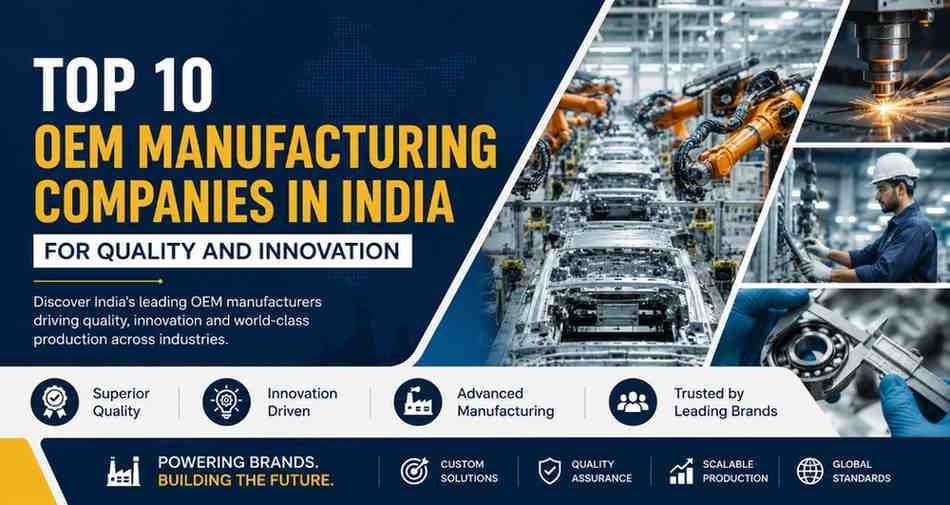
India has emerged as one of the world’s leading manufacturing destinations, attracting businesses looking for reliable OEM manufacturing partners. From automotive and engineering to consumer products and industrial equipment, OEM manufacturing companies in India are helping brands develop high-quality products while maintaining cost efficiency and production scalability.
With growing investments in technology, automation, and product innovation, Indian manufacturers are increasingly serving both domestic and global markets. Businesses today are looking beyond production capacity and prioritizing manufacturers that can deliver quality, consistency, and long-term value.
To help businesses identify the right OEM manufacturing partner, we have compiled a list of the top OEM manufacturing companies in India known for their manufacturing excellence, innovation, and industry expertise.
How We Ranked These OEM Manufacturing Companies
The companies featured in this list were evaluated based on:
- Manufacturing capabilities
- Product quality and consistency
- Industry experience
- Innovation and technology adoption
- Production scalability
- Customer reputation
- Market presence
1. Jindal Lifestyle
Jindal Lifestyle is a trusted OEM manufacturing company in India specializing in custom stainless steel components and solutions for multiple industries. The company works with businesses across home and kitchen appliances, automotive, healthcare, and retail and hospitality sectors, delivering products that combine durability, functionality, and quality.
Its manufacturing capabilities cover cookware, cutlery, modular fittings, automotive components, medical-grade equipment, and customized hospitality solutions. With a strong focus on precision engineering, quality control, and customer requirements, Jindal Lifestyle helps brands develop reliable products while maintaining consistency in production.

Key Strengths
- Custom OEM manufacturing solutions
- Stainless steel component expertise
- Multi-industry manufacturing capabilities
- Strong quality assurance processes
- Scalable production and timely delivery

2. Tata AutoComp Systems
Tata AutoComp Systems is one of India’s leading OEM suppliers in the automotive industry. The company manufactures a wide range of automotive systems and components for vehicle manufacturers across India and international markets.
Backed by strong engineering capabilities and continuous investment in research and development, Tata AutoComp has established itself as a reliable partner for major automotive brands seeking innovative and high-performance solutions.
Key Strengths
- Automotive systems and components
- Strong engineering expertise
- Global manufacturing presence
- Focus on innovation and R&D
- Long-standing industry reputation
3. Bharat Forge
Bharat Forge is a globally recognized manufacturing company specializing in precision-engineered components for automotive, aerospace, defense, railways, and industrial sectors. The company is known for its advanced manufacturing infrastructure and technological capabilities.
Its commitment to innovation and operational excellence has helped Bharat Forge build a strong presence in both domestic and international markets.
Key Strengths
- Precision manufacturing expertise
- Advanced engineering solutions
- Global customer base
- Strong technology adoption
- Diverse industry portfolio
4. Motherson Group
Motherson Group is one of India’s largest OEM manufacturing companies, serving the automotive and industrial sectors. The company supplies integrated systems and components to leading global brands and operates manufacturing facilities across multiple countries.
Its ability to combine innovation with large-scale production has made Motherson a preferred manufacturing partner worldwide.
Key Strengths
- Global manufacturing operations
- Automotive component expertise
- Scalable production capabilities
- Strong customer partnerships
- Innovation-driven manufacturing
5. Dixon Technologies
Dixon Technologies has become one of India’s leading electronics OEM manufacturers. The company provides manufacturing services for smartphones, televisions, appliances, lighting products, and consumer electronics.
Its large-scale production facilities and commitment to quality have helped Dixon become a trusted manufacturing partner for several well-known domestic and international brands.
Key Strengths
- Consumer electronics manufacturing
- High-volume production capabilities
- Modern manufacturing facilities
- Strong quality control systems
- Experienced OEM partner
6. JBM Group
JBM Group operates across automotive, engineering, and industrial manufacturing sectors. The company is recognised for its focus on automation, innovation, and operational efficiency.
Through advanced manufacturing technologies and engineering expertise, JBM continues to deliver high-quality OEM solutions for businesses across multiple industries.
Key Strengths
- Industrial manufacturing expertise
- Automated production systems
- Engineering-driven approach
- Diverse manufacturing solutions
- Focus on continuous improvement
7. Amber Enterprises India
Amber Enterprises is a leading OEM manufacturer in the consumer durable segment. The company is widely known for its manufacturing capabilities in air conditioning systems and appliance components.
Its strong production infrastructure and technical expertise have helped Amber establish long-term partnerships with leading consumer brands.
Key Strengths
- Consumer durable manufacturing
- Product engineering support
- Large-scale production facilities
- Industry-specific expertise
- Strong market presence
8. Wipro Infrastructure Engineering
Wipro Infrastructure Engineering is known for manufacturing hydraulic systems, industrial equipment, and engineering solutions. The company focuses heavily on innovation, technology, and manufacturing excellence.
Serving customers across various industrial sectors, Wipro Infrastructure Engineering has built a reputation for reliability and quality.
Key Strengths
- Industrial equipment manufacturing
- Engineering and hydraulic solutions
- Innovation-focused operations
- Advanced production processes
- Global customer reach
9. TVS Motor Components Division
TVS Motor Components Division is a trusted OEM supplier in the automotive sector, manufacturing high-quality components and systems for vehicle manufacturers.
The company’s emphasis on quality, durability, and performance has helped it maintain a strong position within India’s automotive manufacturing ecosystem.
Key Strengths
- Automotive OEM parts manufacturing
- Strong quality standards
- Reliable production capabilities
- Extensive industry experience
- Trusted automotive supplier
10. Havells Manufacturing Division
Havells is widely recognised for its electrical products and consumer appliances. In addition to its own product portfolio, the company supports OEM manufacturing through its modern production facilities and quality-focused processes.
Its commitment to product innovation and manufacturing excellence continues to strengthen its position within India’s manufacturing sector.
Key Strengths
- Electrical and appliance manufacturing
- Advanced production facilities
- Strong quality assurance
- Product innovation capabilities
- Efficient manufacturing operations
Comparison Table: Top OEM Manufacturing Companies in India
| Company | Industry Focus | OEM Capabilities | Key Strength |
| Jindal Lifestyle | Home & Kitchen Appliances, Automotive, Healthcare, Retail & Hospitality | Custom Stainless Steel OEM Manufacturing | Multi-Industry Expertise |
| Tata AutoComp Systems | Automotive | Components & Systems | Engineering Expertise |
| Bharat Forge | Engineering & Industrial | Precision Manufacturing | Advanced Technology |
| Motherson Group | Automotive | Integrated Systems | Global Presence |
| Dixon Technologies | Electronics | Consumer Electronics Manufacturing | Large-Scale Production |
| JBM Group | Engineering & Industrial | OEM Manufacturing Solutions | Automation |
| Amber Enterprises | Consumer Durables | Appliance Manufacturing | Manufacturing Capacity |
| Wipro Infrastructure Engineering | Industrial Equipment | Engineering Solutions | Innovation |
| TVS Motor Components | Automotive | OEM Parts Manufacturing | Reliability |
| Havells Manufacturing Division | Electrical Products | Contract Manufacturing | Quality Standards |
Final Thoughts
India’s manufacturing ecosystem continues to expand, creating opportunities for businesses seeking reliable OEM manufacturing partners. The companies featured in this list have built strong reputations through quality production, innovation, engineering expertise, and the ability to meet evolving industry demands.
Whether your business requires automotive components, consumer electronics, industrial equipment, healthcare products, or customized stainless steel solutions, selecting the right OEM manufacturing company can play a crucial role in product quality and business growth.
Among these manufacturers, Jindal Lifestyle stands out for its ability to serve multiple industries through customized stainless steel OEM manufacturing solutions. Its expertise across home and kitchen appliances, automotive, healthcare, and hospitality sectors makes it a valuable partner for businesses seeking flexibility, quality, and long-term manufacturing support.
As demand for OEM manufacturing continues to grow, companies that invest in innovation, quality assurance, and customer-focused production will remain at the forefront of India’s manufacturing industry.
Author


Artificial intelligence is out of the experimental phase, and 2026 is set to be the year it becomes embedded into the core of everyday business operations. From automated decision-making to intelligent customer experiences, companies across every industry are rethinking how software is built and who builds it. It is this transition that is why more and more organisations are looking for a trusted AI software development company to help them through their digital transformation journey. These companies have the technical depth, industry expertise and engineering discipline to turn ambitious AI ideas into working products. If you’re a startup building your first machine learning feature and an enterprise reworking legacy systems, the right AI software development agency can make or break a stalled project or a scalable success story. In contrast, picking the wrong partner could mean wasted budgets and AI features that never earn user trust. In this guest post, we’ll take a look at the trends shaping the AI landscape in 2026, why partnering with an experienced AI software development company is more important than ever, and what’s in store for companies that adopt intelligent software proactively, as opposed to reactively.
The numbers tell the story. Industry surveys show that the majority of enterprises now run at least one AI system in production, up sharply from just a few years ago, and spending on AI-related software development continues to climb year over year. What used to be a pilot project in an innovation lab is now a line item in core IT budgets. It’s not just about bigger bets; it’s about moving from isolated experiments in AI to systems that directly impact revenue, operations, and customer experience. For those businesses still on the sidelines, 2026 looks set to be the year that “wait and see” becomes a real competitive risk.
What Is Driving the AI Boom in 2026
A number of forces are coming together to move AI from being a competitive advantage to being a baseline business requirement. Cloud infrastructure is more mature, computing is cheaper, and pre-trained models are far more accessible, reducing the barrier for companies of all sizes to experiment with intelligent features. Simultaneously, customer expectations have changed, and users demand fast, personalised and predictive digital experiences as a standard, not a luxury.
This is where you need an AI software development company to help. Building production-grade AI is not just plugging in an API. This needs careful data engineering, model selection, good governance, and the ability to work with current business processes. An experienced AI software development company will be aware of these layers and can help organisations avoid the pitfalls of hasty AI adoption, such as poor data quality, unreliable outputs or systems that do not scale.
Why Businesses Need an AI Software Development Company Now
The gap in performance between companies that are good at using AI and those that are not is widening fast. Firms that lag are at risk of being left behind in efficiency, satisfaction of customers and speed of innovation. Partnering with an expert AI software development company helps organisations to speed up their pace without compromising quality and security.
Also, an established AI software development company has experience across industries. That means they’ve probably faced similar challenges before, whether in healthcare, finance, retail or logistics. That experience results in fewer expensive mistakes and a faster road from concept to deployment. Partnering with a specialist AI development company also means companies can get access to niche expertise such as machine learning engineers, data scientists and MLOps specialists without the headache of building an internal team from scratch.
Key AI Development Trends Businesses Should Watch in 2026
Artificial intelligence is fast changing the way companies make products and conduct their business. Looking ahead to 2026, a few key trends will define the future of AI development: It is important for businesses to understand these trends if they want to stay competitive.
1. Agentic AI Systems Take Center Stage
Autonomous AI agents capable of multi-step planning and execution are becoming mainstream. Instead of answering a single question, these systems can research, decide and act across connected tools. More and more businesses are turning to the top AI software development company to create agentic workflows that automate complete business processes ranging from customer support resolution to supply chain coordination.
2. Domain-Specific AI Models Gain Ground
The generic one-size-fits-all models are being replaced by smaller industry-specific data-tuned systems. These specialised models are generally more accurate, cheaper to run and easier to govern. An expert AI software development firm can help businesses to fine-tune models around proprietary datasets, giving them a defensible edge over competitors relying on generic tools.
3. Multimodal AI Becomes Standard
It’s no longer novel to have artificial intelligence systems that understand text, images, audio and video together. In 2026, multimodal capabilities will be built into everyday apps through visual search and voice-driven interfaces. A veteran AI software development company can develop such multi-modal pipelines that will work reliably at scale.
4. Responsible AI and Governance Take Priority
As global rules on data protection and algorithmic accountability become more stringent, governance can no longer be ignored by businesses. A good AI software development company will bake in compliance, explainability and bias testing throughout the development lifecycle. That lowers risk — legal risk and social risk — to the company.
5. AI-Native Software Architecture
Creative teams are building software with AI baked in from the ground up, rather than adding AI to existing tools. We have to rethink data pipelines, infrastructure, and experience for users in general if we want to use AI first. A business AI software development company can ensure these systems are done right the first time.
6. Edge AI and On-Device Intelligence
AI workloads are moving to edge devices, not just to the cloud, to reduce latency and to keep sensitive data secure. If they want to deploy models closer to where the data is generated, an experienced AI software development partner can help companies find the right balance between performance, cost and privacy.
7. AI-Augmented Software Development Itself
AI is also interestingly changing the way we build software. Automated testing, AI-powered code review, and coding assistants are all speeding up development cycles. A modern AI software development services provider uses these tools internally to deliver the projects faster without compromising code quality.
How to Choose the Right AI Software Development Company
Not every technology partner can deal with the complexity of today’s AI projects. Assess an AI Software Development Company based on their history of deployed AI solutions, transparency about data usage, and a team with expertise in both the technical and ethical aspects of AI. Another thing that is good is to choose a custom AI software development company that customises its approach for your specific industry instead of using a generic template. Asking for case studies, client references and information on their MLOps practices can reveal whether a potential AI software development partner is really ready to support long-term growth, rather than just a single project.
It is worth pressure-testing the relationship early on before signing up with any partner. Ask how they will manage data security and ownership, how they plan to manage a model that performs poorly after launch and whether their pricing includes ongoing maintenance and retraining, and not just the initial development. A reliable AI Software Development Company will not only welcome such questions but will answer them in specifics, not vague reassurances. Red flags: fuzzy responses on past projects, unwillingness to share references, push to make a commitment before a technical discovery phase. Vetting a partner properly up front saves you far more time and budget than fixing a mismatched engagement down the line.
The Future of AI Software Development
Beyond 2026, AI development will most likely be even more collaborative between humans and machines, with autonomous agents doing the routine engineering work, while human developers will focus on strategy, creativity and oversight. The role of an AI Software Development Company will shift from a service provider to a long-term strategic partner embedded within a company’s innovation roadmap.
We expect to see even deeper integration between AI and core business intelligence tools, with predictive insights being provided in real time to all departments. Sustainability will be a greater driver of AI infrastructure decisions, which will incentivise an AI software development company to optimise models for energy efficiency and performance. Enterprise organisations that partner long-term with a reliable AI software development company will be better positioned to adapt as these changes roll out, rather than scrambling to catch up with the next big technology leap.
At the end of the day, the organisations that view AI as a continuous capability, not a one-off project, will surge ahead. One of the most important technology decisions a business will make in the next few years is the decision of an artificial intelligence software development company.
Conclusion
AI is no longer a side experiment for forward-thinking companies — it’s becoming the foundation of how products are built, decisions are made, and customers are served. The trends defining 2026, from agentic systems and domain-specific models to responsible governance and AI-native architecture, all lead to one conclusion: real expertise is critical for successful AI adoption. You can capitalize on these trends to deliver real results with the help of an experienced AI Software Development Company that can provide the technical infrastructure, domain expertise, and ongoing support.
Technologies are changing, and companies that partner with a trusted AI Software Development Company can innovate faster, reduce risk, and stay competitive rather than trying to address this complexity on their own. The right AI app development company will help shape the companies that emerge in 2026 and lead their industries into an increasingly intelligent future. Platforms like Contrank can also support businesses in improving their online visibility and strengthening their digital presence. Companies that don’t formalize this kind of collaboration risk falling behind in a fast-paced market where speed and smart automation are rewarded.
Author


A well-designed kitchen is more than a place to prepare meals. It is an essential part of a home where functionality, convenience, and style come together. Choosing the right fittings can help create a kitchen that looks elegant while supporting everyday needs. For homeowners seeking a Haffele kitchen dealer in Thrissur, City Ceramics offers access to Haffele fittings and premium kitchen and bathroom solutions designed to combine performance with elegance.
Whether you are planning a new kitchen or considering improvements to your existing space, selecting suitable fittings is an important step. With a focus on quality solutions and refined design, City Ceramics provides an option for exploring Haffele products for modern kitchen and bathroom spaces.
Why Choose a Haffele Kitchen Dealer in Thrissur?
Kitchen fittings play an important role in the overall appearance and functionality of a kitchen. From supporting daily activities to contributing to the design of the space, the right choices can make a noticeable difference in how a kitchen looks and feels.
When searching for a Haffele kitchen dealer in Thrissur, homeowners can explore the solutions available at City Ceramics. The company features Haffele fittings alongside premium kitchen and bathroom solutions that focus on performance and elegance.
Choosing fittings should involve more than considering their appearance. It is also important to think about how they will support everyday use, complement the kitchen layout, and fit into the overall design of your home.
By exploring the available Haffele options, customers can identify products that suit their design preferences and functional requirements. This approach helps make the selection process more focused and aligned with individual needs.
Discover Haffele Kitchen Fittings at City Ceramics
Kitchen fittings contribute to the usability and visual appeal of a kitchen. Well-considered selections can help create a cohesive interior where individual components complement the overall design.
City Ceramics offers Haffele fittings for customers interested in premium kitchen solutions. These products provide an opportunity to explore options that align with a preference for elegant design and practical performance.
When selecting kitchen fittings, consider the layout of your space, the way you use your kitchen, and the appearance you want to achieve. A coordinated approach can help bring together the different elements of your kitchen while maintaining a consistent design.
For homeowners comparing available solutions, City Ceramics provides a starting point for exploring Haffele fittings in Thrissur. Reviewing the available options and discussing your requirements can help you make a more informed selection for your home.
Combine Performance with Elegant Kitchen Design
An attractive kitchen should also support the practical demands of everyday life. Design and functionality work together to create a space that feels comfortable, organised, and suitable for regular use.
Haffele fittings available through City Ceramics are presented as part of premium kitchen solutions designed around performance and elegance. This combination makes them worth exploring for homeowners who want their kitchen fittings to contribute to both the usability and appearance of their space.
Before choosing fittings, consider how they will complement your cabinets, overall layout, and preferred interior style. Coordinating these elements can help create a kitchen that feels balanced rather than visually cluttered.
It is equally important to consider your everyday requirements. Think about the functions you need, the available space, and the features that would make your kitchen more convenient to use. These considerations can guide your selection and help you focus on solutions that match your priorities.
Explore Premium Bathroom Solutions at City Ceramics
A home’s design extends beyond the kitchen. Bathrooms also benefit from thoughtful product selection, particularly when the goal is to combine visual appeal with everyday functionality.
City Ceramics offers premium kitchen and bathroom solutions, providing customers with an opportunity to explore products for different areas of their homes. The emphasis on performance and elegance supports a design approach that considers both practical requirements and overall appearance.
When planning a bathroom, consider the available space, the intended design, and the functionality you expect from the selected products. Keeping these priorities in mind can help you create a coordinated space that complements the rest of your home.
Exploring the available solutions at City Ceramics can help homeowners understand the options relevant to their projects. For specific product features, dimensions, finishes, or availability, it is advisable to confirm the details directly with the company before making a purchase.
How to Select the Right Kitchen Fittings for Your Home
Choosing kitchen fittings becomes easier when you begin with a clear understanding of your requirements. Instead of making decisions based only on appearance, consider how each selection will contribute to the complete kitchen design.
Here are a few practical considerations:
1. Evaluate your kitchen layout: Understand the available space and identify the fittings that suit your kitchen’s arrangement.
2. Define your design preferences: Consider whether you prefer a contemporary, understated, or more refined interior style.
3. Prioritise functionality: Think about the features that will support your everyday cooking and kitchen activities.
4. Focus on coordination: Choose fittings that complement your cabinets and other design elements for a consistent appearance.
5. Confirm product details: Discuss available Haffele options with City Ceramics and verify specifications before finalising your selection.
Following these steps can help you compare options more effectively and choose fittings that align with your practical needs and aesthetic preferences.
Visit City Ceramics for Haffele Kitchen Solutions in Thrissur
Finding suitable kitchen fittings is an important part of creating a functional and visually appealing home. From considering the overall layout to selecting products that complement your preferred style, every decision contributes to the final result.
For those looking for a Haffele kitchen dealer in Thrissur, City Ceramics offers access to Haffele fittings and premium kitchen and bathroom solutions designed for performance and elegance.
Explore the available options, clarify your requirements, and confirm product specifications before making your decision. Whether you are planning a new kitchen or improving an existing space, City Ceramics can be a starting point for discovering Haffele fittings that complement your home’s design goals.
Choose kitchen and bathroom solutions with careful attention to functionality, appearance, and suitability for your space to create interiors that reflect your preferences and everyday needs.
Author


The Importance of Continuous Learning in Leadership
Business leadership is not just about managing people, making decisions, or achieving financial targets. It is also about learning, adapting, and growing with changing business needs. In today’s competitive environment, new technologies, customer expectations, and market trends are constantly changing how companies operate. Business leaders who continue learning are better prepared to handle these changes and guide their organizations toward long-term success. Continuous learning helps leaders improve their knowledge, develop new skills, and make informed decisions that benefit both employees and businesses.
Staying Ahead in a Changing Business Environment
The business world rarely stays the same for long. New competitors enter the market, customer preferences evolve, and innovative business models create fresh opportunities. Leaders who depend only on their previous experience may struggle to respond effectively to these developments. Continuous learning allows business leaders to stay informed about industry trends, emerging challenges, and new opportunities. By regularly exploring new ideas and gaining knowledge, leaders can adjust their strategies, identify potential risks, and keep their organizations competitive in a rapidly changing marketplace.
Improving Decision-Making Skills
Every business leader makes decisions that influence employees, customers, finances, and future growth. Some decisions involve everyday operations, while others determine the long-term direction of an organization. Continuous learning helps leaders understand different perspectives, evaluate available information, and consider the possible consequences of their choices. Whether they are studying business strategy, financial management, or customer behavior, leaders who keep learning can make more thoughtful and informed decisions. This approach reduces dependence on assumptions and encourages a more practical, evidence-based way of solving business problems.
Developing Stronger Leadership Abilities
Effective leadership requires more than professional experience or technical knowledge. It also involves communication, emotional intelligence, conflict resolution, and the ability to motivate others. These skills develop through practice, feedback, and continuous improvement. Business leaders who invest time in learning can better understand their teams, manage difficult conversations, and build stronger professional relationships. Continuous leadership development helps managers become more confident, adaptable, and approachable. As a result, employees are more likely to trust their leaders, share ideas, and work together toward common business goals.
Encouraging Innovation and Creative Thinking
Innovation is essential for businesses that want to remain relevant and discover new ways to serve customers. However, innovation often begins when leaders are willing to question existing practices and explore unfamiliar ideas. Continuous learning introduces business leaders to different perspectives, technologies, and problem-solving methods. Reading industry publications, attending professional events, and discussing ideas with experienced professionals can inspire fresh approaches to everyday challenges. Leaders who remain curious create an environment where experimentation and creative thinking are encouraged, helping their organizations discover better products, services, and business processes.
Helping Businesses Adapt to New Technologies
Technology continues to transform business operations, from customer service and marketing to data analysis and project management. Artificial intelligence, automation, and digital collaboration tools are changing how organizations work. Business leaders do not need to become experts in every new technology, but they should understand how these tools can support their business objectives. Learning about emerging technologies enables leaders to identify useful investments, improve productivity, and prepare employees for digital change. A leader who understands technological developments is also better positioned to balance innovation with practical considerations such as cost, security, and employee training.
Building a Culture of Continuous Learning
A company’s learning culture often reflects the behavior of its leadership team. When leaders actively seek knowledge, welcome feedback, and acknowledge their mistakes, employees receive a clear message that professional growth matters. Businesses can encourage this culture through training programs, mentoring sessions, workshops, and opportunities to learn new skills. Leaders should also make learning accessible during regular working hours rather than treating it as an unnecessary extra responsibility. When learning becomes part of the workplace culture, employees are more likely to improve their performance, share knowledge, and contribute to organizational growth.
Strengthening Employee Engagement and Retention
Employees want opportunities to develop their abilities and build meaningful careers. When businesses invest in professional development, they demonstrate that they value their workforce beyond immediate job responsibilities. Leaders who understand this connection can create better development plans, support career progression, and identify employees’ individual strengths. Continuous learning also helps managers recognize when team members need additional guidance or new challenges. A workplace that supports learning can improve employee motivation, strengthen engagement, and encourage talented professionals to remain with the organization. This can also reduce the costs associated with frequent recruitment and employee turnover.
Improving Communication and Emotional Intelligence
Strong communication is one of the most valuable skills a business leader can develop. Leaders must explain expectations, provide constructive feedback, resolve disagreements, and communicate organizational changes clearly. Continuous learning helps them improve these abilities while developing greater awareness of how their words and actions affect others. Learning about emotional intelligence, active listening, and workplace psychology can make professional interactions more productive. Leaders who communicate with clarity and empathy are better equipped to build trust, manage conflict, and maintain positive working relationships, especially during periods of uncertainty or organizational change.
Managing Challenges and Uncertainty More Effectively
Every business experiences challenges, including economic pressure, changing regulations, customer complaints, and unexpected operational problems. Experienced leaders may have encountered similar situations before, but every challenge can introduce new circumstances that require a different response. Continuous learning encourages leaders to examine past experiences, explore alternative solutions, and prepare for future risks. Instead of reacting emotionally or relying on outdated methods, they can approach problems with greater flexibility. A commitment to learning helps business leaders become more resilient and better prepared to guide their teams through uncertainty.
Creating Better Long-Term Business Strategies
Successful business strategies require an understanding of market conditions, customer needs, financial performance, and competitive developments. These factors can change significantly over time, making regular learning essential for strategic planning. Business leaders who expand their knowledge can identify weaknesses in existing plans and recognize opportunities that others may overlook. Learning about market research, financial forecasting, and business development can also improve resource allocation. Continuous learning supports better strategic thinking by helping leaders connect current business decisions with long-term organizational objectives. This creates a stronger foundation for sustainable growth rather than focusing only on short-term results.
Practical Ways Business Leaders Can Continue Learning
Continuous learning does not always require expensive courses or long periods away from work. Leaders can begin by reading industry reports, listening to educational podcasts, attending webinars, or completing short online courses. They can also learn through mentoring relationships, professional networking, team discussions, and feedback from colleagues. Setting aside just 20 to 30 minutes each day for professional development can gradually produce meaningful improvements. The most important step is to make learning a regular habit. By choosing learning activities that match their business goals, leaders can strengthen their skills without disrupting their daily responsibilities.
Measuring the Impact of Continuous Learning
To make learning valuable, business leaders should consider how new knowledge improves their work and organizational performance. For example, a communication course might help a manager conduct more effective meetings, while a technology workshop could lead to a more efficient workflow. Leaders can measure progress through employee feedback, improved productivity, customer satisfaction, project outcomes, and the successful implementation of new ideas. Not every learning activity produces immediate financial results, so it is important to evaluate progress over time. Connecting learning with practical business outcomes helps organizations understand its value and identify areas for further development.
Conclusion: Continuous Learning Is Essential for Successful Leadership
Continuous learning is one of the most valuable habits a business leader can develop. It supports better decision-making, stronger communication, improved employee engagement, innovation, and long-term strategic planning. As industries and technologies continue to evolve, leaders must remain open to new ideas and willing to improve their abilities. By investing in their own development and encouraging employees to do the same, business leaders can build adaptable teams and more resilient organizations. Ultimately, continuous learning is not simply a professional development activity; it is a long-term commitment to becoming a better leader, creating new opportunities, and achieving sustainable business growth.
Author



Top 10 Psychology Conferences 2026 in the USA

Commercial Cabinet Shop Drawings: Key Details for Accurate Fabrication

AI Development Trends Businesses Should Watch in 2026

Colour Plane: Inspiring Better Design Through Colour and Creativity

Cole Buxton Clothing | Free Shipping | Shop Now

How 3D Interior Rendering Transforms Architectural Design

Traditional Ayurvedic Herbs and Their Place in Modern Wellness

Why a Good Bassinet Makes Life Easier for NZ Parents

Why take Private tour of Gibbston Valley

Work Visas, Job Changes, and the Details That Decide NZ Visa

Cybersecurity Consulting Company SequelNet Provides Critical IT Support Services to Medical Billing Firm, Medical Optimum

Meet the Megalodon: The Shark Star of ‘Meg 2’

Reduce Video Game Lag: Level Up Your Gaming Performance

Balancing India’s Entertainment: Cricket vs. Bollywood

Jetsetter’s Secrets: Unveiling Our Favorite Travel Hacks for a Seamless Adventure

The 5 Best Live Sports Streaming Sites: Legal and Exciting!

Hollywood Labor Unrest: The Impact of ‘What About Us?’ Strikes

Unveiling the Magic of Dream Fulfillment at the Late NBA Draft

Illuminate Your Skin: Dr. Axe Unveils Natural Remedies for Lightening Knees and Elbows

Bright Choices: Navigating the Pros and Cons of Skin Whitening Creams with Dr. Axe
-

 Business3 years ago
Cybersecurity Consulting Company SequelNet Provides Critical IT Support Services to Medical Billing Firm, Medical Optimum
-
Entertainment3 years ago
Meet the Megalodon: The Shark Star of ‘Meg 2’
-
Entertainment3 years ago
Reduce Video Game Lag: Level Up Your Gaming Performance
-
 Sports3 years ago
Balancing India’s Entertainment: Cricket vs. Bollywood
-
Entertainment3 years ago
Jetsetter’s Secrets: Unveiling Our Favorite Travel Hacks for a Seamless Adventure
-
Productivity3 years ago
The 5 Best Live Sports Streaming Sites: Legal and Exciting!
-
Art /Entertainment3 years ago
Hollywood Labor Unrest: The Impact of ‘What About Us?’ Strikes
-
Sports3 years ago
Unveiling the Magic of Dream Fulfillment at the Late NBA Draft